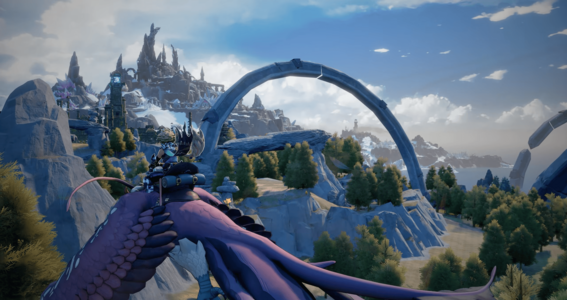





| Wuthering Waves | |||
|---|---|---|---|
| Release Date | Gameplay & Story | Pre-Register & Pre-Order | Review |
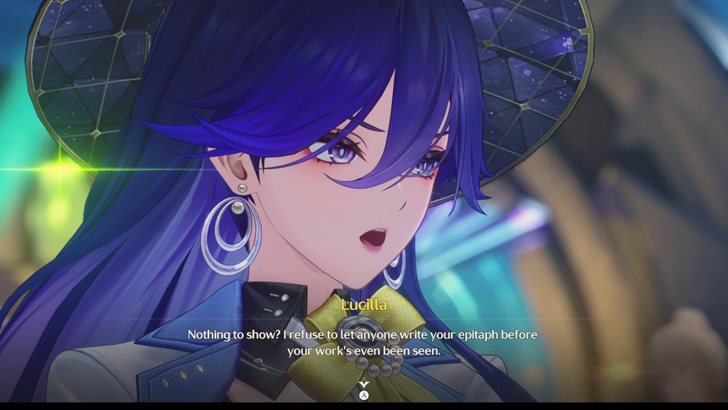
Wuthering Waves version 3.4 segue story focuses on the Startorch Academy president Lucilla and the students of Rabelle College. Read our story review to see what it did well, what it didn't do well, and if its story is something to be remembered.
Overview
What is Wuthering Waves?
In Wuthering Waves, you take on the role of a mysterious newcomer simply known as the "Rover." Waking up without any memories or connections and in a world beset by creatures known as Tacet Discords, they must navigate the war-torn landscapes, underground factions, and roaming monsters to find the truth about themselves and the world.
After escorting Lucy back to her reality, the Rover receives a message from Startorch Academy President, Lucilla. Due to the loss of the Exostrider, the academy’s Synchronist Program is on the verge of having all its funding pulled. This is a crisis, but is it the kind that requires the Rover’s intervention? And is Lucilla worth getting the Black Shores tangled in politics in the first place?
| Mobile App Store Pages | |||||
|---|---|---|---|---|---|
 App Store App Store |
 Google Play Google Play |
||||
| PC | |||||
 Epic Games Epic Games |
 Dedicated Client Dedicated Client |
 Steam Steam |
|||
| Consoles | |||||
 PlayStation PlayStation |
 Xbox Xbox |
||||
Wuthering Waves Story Review (3.4 Lucilla Segue): Glory to the Faceless Many
Knowing Your Limit
The past twelve months have delivered some of the most narratively-defining chapters in Wuthering Waves’ history. From Lupa and Mya’s emotional back-and-forths back in June, through the emotional peaks of Phrolova, Aemeath, and Denia, all the way to the monumental Edgerunners collaboration just a few days ago, the game has been on an absolute roll. It’s currently riding a narrative high so potent that even those who only marginally play gacha games can't escape the noise.
Anyway, welcome back to the corner of the internet where I review every Wuthering Waves story chapter.
Our latest subject drops us directly into the fallout of version 3.3. During the first phase, the epic clash against the Threnodian, Aleph-1, has left Lahai-Roi without the centralizing research subject of the entire Startorch Academy; the Exostrider. Left to deal with the aftermath, Lucilla’s story pulls the camera right down to earth, focusing entirely around the messy administrative results of the Exostrider’s disappearance.
This, unlike the grand scale of most conflicts the Rover involve themselves in, is a conflict at the micro scale. It tests the weight of rationality, obligations, and trust against the dreams and commitment of those that players have likely taken for granted this entire time; the student body of Startorch Academy, or more specifically those of Rabelle College.
WARNING: HEAVY SPOILERS FOR THE 3.4 SEGUE STORY BELOW
Where a Savior Falls When There’s No Calamity
In the sophisticated web of Wuthering Waves’ factions, the Rover holds an illustrious string of aliases like The Laureate, Cat’s Eye, and Hero of Heroes that tie them to influential families and global superpowers. Yet, it is their rarely invoked role as the Chief Steward of the Black Shores that carries the greatest political gravity. As the institutional superior to The Shorekeeper who leads a widely respected and very influential multinational organization, you would expect the Rover to be a massive deal in any table they sat in.
In fact, early on in the story, Aemeath appears before you to imply exactly that: the Rover is simply too major of a player to be ignored, and they can sway any faction as long as they’re willing to leverage their influence and connections. Else, they would have to bear the grudge of not just the Black Shores, but also that of multiple other nations.
This expectation relies on a design philosophy often embraced by players and writers alike. That is, that the protagonist must exude "Main Character Energy." By some unspoken law, a protagonist must manifest their role through active, undeniable weight. The supporting cast must be drawn to them, the plot must move by their will, and they must ultimately be able to save everyone.
Strangely enough, though, it seems as if Wuthering Waves has recently been hellbent on making sure that the protagonist doesn’t fit that mold. While sure they do still attract all the supporting characters around them, it is far from the truth that the plot moves by their will, and it is most certainly not true that they can save everyone. Take Avidius from Septimont, for example; his death still haunts Rover to this day. Of course, Denia also counts, too. Heck, the Rover was only the enabler of the Exostrider’s victory in version 3.3; it is Lahai-Roi’s people that should take most of the credit for saving the world.
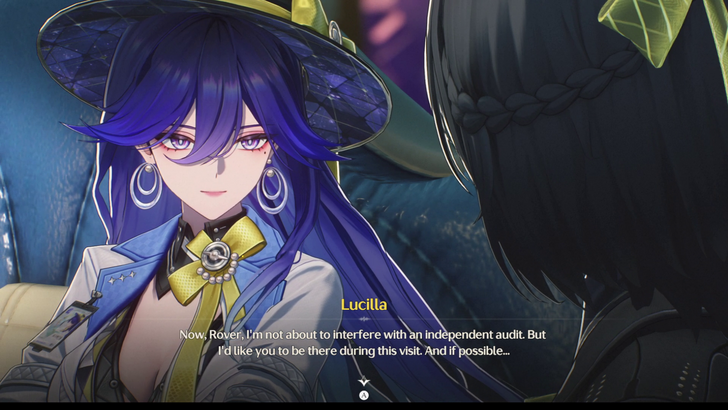
Now comes Lucilla’s segue, ironically and brilliantly paralyzing the Rover’s urgency using the very titles that they could wield and cow everybody with during catastrophes. With the setting being a much more grounded, institutional crisis where the backup pilot students of Rabelle College are facing mass expulsion and the Synchronist Program itself possibly getting cancelled after the disappearance of the Exostrider mech, the president of Startorch Academy resorts to more formal means to save her students. That is, by requesting the independent but widely trusted organization Black Shores to audit the college.
Obviously, this move dragged our protagonist straight into the bureaucratic minefield as the de facto leader of the Black Shores. But while most storylines would make the endgame rather obvious—side with your allies, fight against red tape, maybe beat up a representative or two—Wuthering Waves first slaps you with the infallible rationality of the circumstances. That is, the world savior cannot simply risk entangling an organization committed to saving the world into petty politics for the sake of a school, almost entirely paralyzing them. The Shorekeeper even goes further by questioning Lucilla herself: can she—a figure so deeply tethered to the increasingly suspicious New Federation—even be trusted?
Unlike what you may expect, especially from a genre that tends to rely on providing as much gravitas to the protagonist as possible to sell the experience, this shackle does not disappear, even at the very end. Because while the segue does allow the Rover to learn more about Lucilla, she maintains a semblance of aloofness unseen even from Augusta, the ruler of Septimont, cleverly using your literal status as a mere student in her academy to keep you at arm's length.
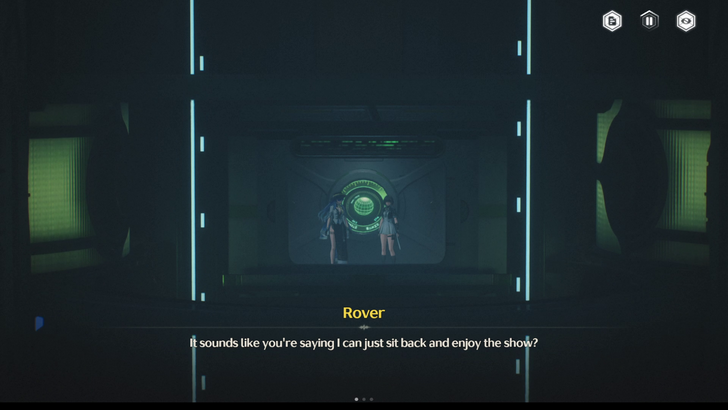
You can actually feel that you’re a mere observer, or at the very least a helper here to an extent similar to an extent similar to the previous phase’s Edgerunners collaboration. Except this time, it’s not because you want the other party to face their fears themselves, but because you literally do not have a choice. Following the current trend, this is yet another deliberate attempt to not only share the spotlight with a new cast of characters, but to once again demonstrate that the Rover is fundamentally limited by the world’s systems.
This is, of course, a risk. Many players prefer having a flawless Mary Sue or Gary Stu as a protagonist because of the unique satisfaction that comes with pure power fantasies. But in exchange for losing that omnipotence, Kuro Games turns the Rover into an actual story character and less of a walking phenomenon. The world no longer revolves around them. They have to carefully consider their options, avoid endangering the things built by the people around them, and respect a system that they ultimately cannot take responsibility for. Even when they can exert their true influence and power, the script dictates it only really happens when there are immediate lives at stake.
In a way, that’s kind of a tragedy in itself. But that’s not even the most important takeaway from this chapter.
The Lament of the Faceless Trailblazers
To truly understand Lucilla and what she’s fighting for, you must first understand the world that she has built. And that’s the opening scenes of the segue’s purpose. It opens not with a conflict backdropped by a greater threat—instead, it presents you its issue and immediately follows it with a slice-of-life dose of school comedy in peacetime. You watch as a student from the Exostrider Engineering class tries to woo Aalto with her singing, how a guy from the Department of Voidmatters makes Lucilla drop her smiling facade into one of pure shock and cringe, and how Mornye struggles to keep her students awake in one of her extremely complicated lectures.
—And you watch as Chisa once again gets unceremoniously sidelined after just two scenes where she barely gets any lines that sound like she's reading them straight out of a marketing phamplet.
In many ways, it feels less like a main story scenario and more like the prelude to an event, complete with astrites waiting for you after every minigame you accomplish. They even selected the Black Shores’ resident funny man Aalto to suffer through this slice-of-life shenanigans despite trying desperately to be the bureaucratic straight man that’s expected of him when he landed the role of auditor.
But beneath the sitcom laughter and childish banter, the underlying theme is a far heavier beast. And that’s despite this story having absolutely nothing to do with saving the world. In fact, it doesn’t even focus much on Lucilla herself. Instead, this is a narrative dedicated entirely to Startorch Academy—specifically the student body of the school's most expensive section, Rabelle College—and the lengths she is willing to go to protect them.
"So," I hear you ask all the way from my gaming den as I listen to vtubers on the side, "why should I care about people I’m never going to meet again after we move on from Lahai-Roi?" To that, I answer with one word: Appreciation.
Wuthering Waves is attempting to tell you that a hero’s story isn’t purely their own. Behind them, hundreds and thousands of people move to make sure that the hero can save the day. And that idea is made manifest by the Rabelle College students.
"Startorch Academy will be the cradle for Synchronists and the vanguard of our collective hope."
That was what their admission letter said. And they all cling to those words. Thousands of them, fully knowing that they are just backups among thousands, entirely aware that their roles meant that their contributions to mankind’s survival are heartbreakingly small. Yet, as they would demonstrate repeatedly throughout the segue story, and through the tragedies archived in Lucilla’s memories, they would gladly sacrifice themselves in the hundreds just so they could lead civilization forward by even one, agonizingly tiny step.
This is the kind of inspirational story that usually escapes grand heroic epics, especially when viewed by players so desensitized to legendary chosen-one protagonists wielding absolute power. That is, the "rabble," too, possess an immense, terrifying amount of bravery that they would dedicate their entire lives to a path where mediocrity, tragedy, and obsolescence were the default result.
It’s absolutely, without a doubt, one of the most inspirational stories Wuthering Waves has ever delivered. Yes, even beating the epic conclusions of versions such as 2.7. These students, after all, are the closest analogies to people like us, who are simply one among billions.
To see them stand with absolute, unwavering confidence to rush headlong into the unknown while being fully being aware of the insignificant flames that each of them carry is nothing short of powerful. And despite seeing the crushing weight of reality bearing down on them, they still challenge future prospects, arrogantly prepared to extinguish their very lives just for that one, infinitesimal chance that they might spark a single, miniscule shift in the world.
This is what Lucilla was fighting for. It proves that the very qualities that made the Black Shores deem her as untrustworthy weren’t born out of political ambition, but rather out of profound and genuine love for her students and an unshakeable trust she had for their potential. She is their vanguard against the shady investors of the New Federation and the world itself, sacrificing her own peace to ensure that as many of them achieve their dreams as possible.
And the Rover, for the first time, could only bask in the brilliance of these faceless people. Though they may have initially thought of funding the college using the Black Shores' bottomless pockets, doing so would have been an insult to their commitment. This was their fight, and they were going to prove to the entire world that their fragile, fierce futures were worth investing in.
The Cinematic Flex of a Padded Scenario
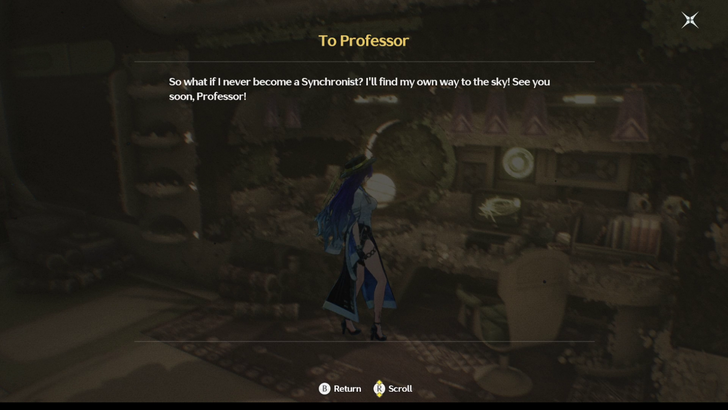
Though I could go on all day talking about how great it is for a story that’s so focused on the macroscopic consequences of a world-devouring threat to provide an opportunity for the small heroes to deny a fate of mediocrity and stagnation, there are actual problems that should be mentioned lest it gets buried under the romance of it all.
First of all, the writing structure is just above average. While it’s effectively masked by the humor of the early stages, it’s hard to not notice once the conflict picks up. The most glaring structural trip occurs midway through the chapter, where ghostly voices arbitrarily dump lore about Lucilla’s past. It feels incredibly forced, accompanied by mandatory combat encounters that feel like an inexplicable freebie slapped onto an online shopping order. While it made sense to encounter those there due to the area’s theme, its placement felt off considering how meticulous Lucilla supposedly is.
Those kinds of reveals should have been saved later on to take advantage of a moment of vulnerability from her. Plus, it didn’t fit well with the scenario that followed directly after that, as it was essentially grouping her secrets into a one package deal instead of giving them the thematic distinction that they deserve.
And speaking of enemy encounters, there’s quite frankly too much of them here. Considering the story and the events that transpired, there should have only been two enemy encounters, max, throughout the chapter. It’s obvious why, though. Ultimately, Kuro Games does need to sell Lucilla as a playable character, so it wouldn’t help at all if players only had a couple of tries to test her kit, not to mention she’s strong enough that every encounter barely lasts a few seconds. But if you’re just trying to immerse yourself in the story, it’s hard not to notice the dissonance.
It ain’t that bad, though. Far from it. Because once again, Wuthering Waves has this almost uncanny ability to strangle anything that’s underperforming with a rope, tie them onto the back of its audiovisual truck, and pull the overall experience forward with the presentation. Take for example the weirdly-placed flashbacks. Sure it feels out of place, but who cares when you’re treated with context-appropriate filters that make it seem like you’re traveling back in time, or when the entire stage itself is beckoning you to beat the enemies to see what’s at the light at the end of the figurative tunnel.
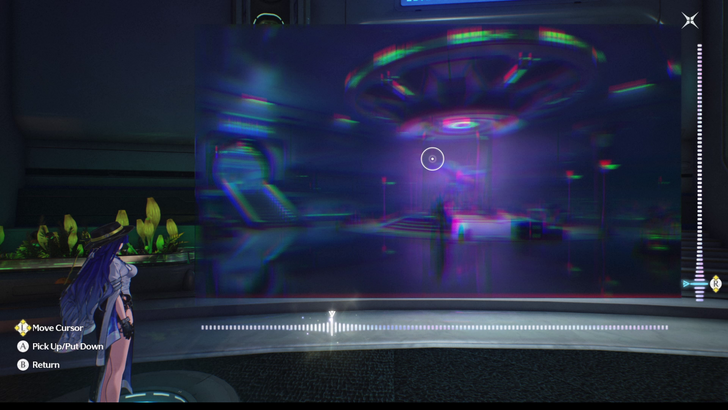
The same can be said for the rather unimpressive new puzzle added to the game. On paper, the puzzle merely asks you to place pictures of specific areas into obvious slots to unlock the path forward. Mechanically, it's trivial. But the visual execution? Absolutely brilliant. It looks like the images themselves are eating away at reality itself, chewing through the environment as if it was cheese. This is even more impressive when you get to the point where you replace a wall with a screenshot from your phone. The moment you step through, it feels as though you are being seamlessly warped into a pocket dimension, altering your reality just to fit inside a landscape the physical size of a bathtub.
Incredible stuff, as usual.
In Memory of the Future Pioneers
Wuthering Waves’ segue stories aren’t the kind that people tend to remember from start to finish. For example, I’m willing to bet most people have already forgotten the vast majority of the characters involved in version 2.1’s segue story besides Phoebe and the ultimate fish lover himself, Mr. Starbuck. They’re meant to be fillers, or accessories to the grander story.
There are exceptions, though. Luuk’s segue quest, for example, was particularly memorable because it was set right after the emotional devastation players experienced during the first phase of version 3.1 and built off of it. But unfortunately, the same can’t be said for this segue. Not exactly.
I believe players will forget most of the fine details of this patch in a few months’ time—whether it’s Sigrika’s badgering, Lynae repeatedly offering to mod Aalto’s bike—even the names and faces of the students who have voiced their powerful resolve will likely evaporate from your mind. However, you will remember the respect that you felt for the students of Startorch Academy. You will remember that in Lahai-Roi, there are a bunch of kids who are prepared to give up their lives to push humanity forward, even if the chances are infinitesimally slim. And you will know that the only reason they’re able to do so is because the academy’s president will always have their backs.
Ultimately, "We Choose the Sky" is a story of the unsung, faceless heroes of Lahai-Roi, fighting for the microscopic piece of the world that they can reach and desperately clawing their way back to space with everything they have. That is something special to be remembered, and perhaps the best way to end Wuthering Waves' space romance arc.
Game8 Reviews

You may also like...
 |
Wuthering Waves Story Review [3.4 Edgerunners Collab] | Still Scarring Us Years Later. Amazing. RPG, Anime, Gacha |
 |
Wuthering Waves Review (3.0 - 3.3) | Should You Play in 2026? RPG, Action, Gacha |
 |
Arknights: Endfield Review RPG, Anime, Gacha |
 |
Neverness to Everness Review | Good Mileage Expected RPG, Gacha |
 |
Zenless Zone Zero Review RPG, Action, Anime, Gacha |