
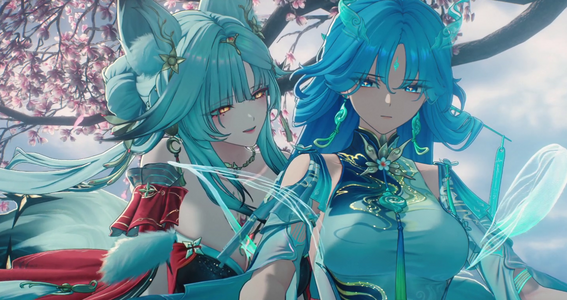




Wuthering Waves Version 3.6 Phase 1 story picks up with the introduction of Qingxiao as she helps you hunt down the arc’s main villain, Muyu. Read our story review to see what it did well, what it didn't do well, and if its story is something to be remembered.
Overview
What is Wuthering Waves?
In Wuthering Waves, you take on the role of a mysterious newcomer simply known as the "Rover." Waking up without any memories or connections and in a world beset by creatures known as Tacet Discords, they must navigate the war-torn landscapes, underground factions, and roaming monsters to find the truth about themselves and the world.
| Mobile App Store Pages | |||||
|---|---|---|---|---|---|
 App Store App Store |
 Google Play Google Play |
||||
| PC | |||||
 Epic Games Epic Games |
 Dedicated Client Dedicated Client |
 Steam Steam |
|||
| Consoles | |||||
 PlayStation PlayStation |
 Xbox Xbox |
||||
Wuthering Waves Review: It Cultivated Great Ideas, but Harvested a Trainwreck
I Miss Lahai-Roi Already
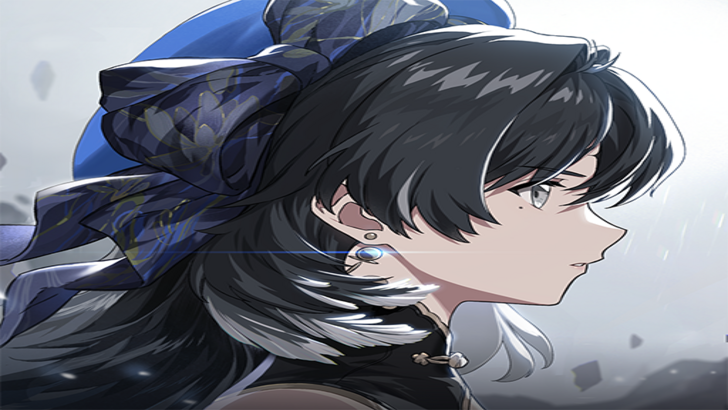
The existence of excellent chapters like 3.1 Phase 1 and the Cyberpunk collab proves that Wuthering Waves can cook up some of the best stories in the genre when it puts its mind to it. Unfortunately, it is also perfectly capable of burning the kitchen down, as demonstrated by abject failures like Version 1.0 and the glorified character story that was 2.6 Phase 2. After all, there’s practically no live-service game out there that has consistently produced excellent story updates. Even some of the most beloved gacha game stories, like Arknights’ and Blue Archive’s, are hardly spotless.
And while Wuthering Waves’ Version 3.6 Phase 1 story is hardly short on good ideas, it is unfortunately such a sterling example of a kitchen nightmare that it brought back some rather unpleasant memories of wishing for better days to come.
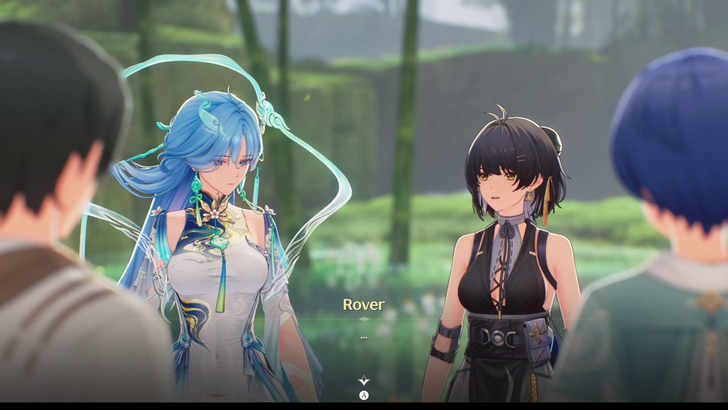
The most frustrating thing about Wuthering Waves’ latest chapter is that it’s obvious what it’s trying to do. Its exploration of cultivation (eugh), humanity, and the sacrifices individual people make in the pursuit of something greater than themselves (compared to 3.4 Lucilla Segue's collective concept) is genuinely cool. Qingxiao is even a wonderful character to build those ideas around, despite my disdain for cultivation-type characters due to how flat most of them are.
Unfortunately, having good ideas and knowing how to tell them well are two very different things. Version 3.6 repeatedly stumbles over itself trying to connect those ideas together, just like Version 3.5. It often introduces conflicts, revelations, and character developments before giving the player enough reason to understand why they matter, leaving their eventual payoffs feeling contrived rather than earned. But unlike the previous chapter, 3.6 isn't introducing a new region, so it can't cushion those problems with strong worldbuilding. What you get is a story that’s surprisingly thought-provoking, yet bafflingly contrived.
The Structure is a Mess
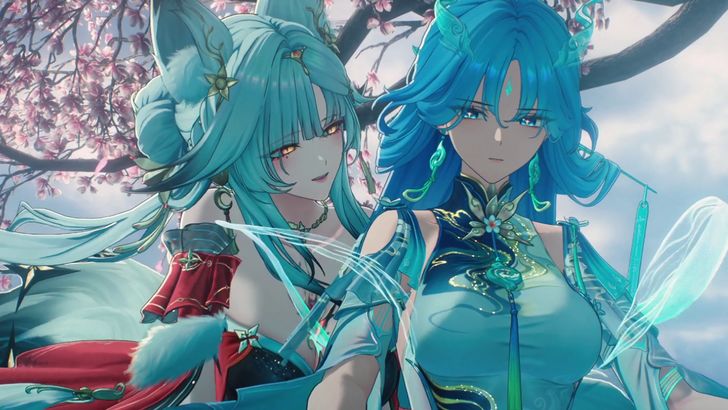
Version 3.6’s story runs into its biggest problem almost immediately. After seeing Suisui off as she returns to Mengzhou, you get a playful but strangely uneventful farewell before the game abruptly cuts to a flashback introducing Qingxiao. It shows Hsin inviting her to live in Xuanfang Hold—because, like most sages in cultivation stories, she’s basically a shut-in—and hints at why someone who supposedly pursues cultivation and detachment would instead serve as one of Xuanfang’s Wardens.
And that’s it. That’s the entire setup for meeting Qingxiao, presented chronologically right after saying goodbye to Suisui. More importantly, it exemplifies perhaps the biggest problem with Version 3.6’s story: it repeatedly answers questions that the story never properly taught the player to ask.
Good narrative setup isn't just about explaining things before they happen. It's about establishing a question, conflict, or desire in the audience and then giving them a reason to care about its answer. Version 3.6 frequently gets this sequence backwards: it introduces the answer first, then expects the player to reconstruct the question afterward.
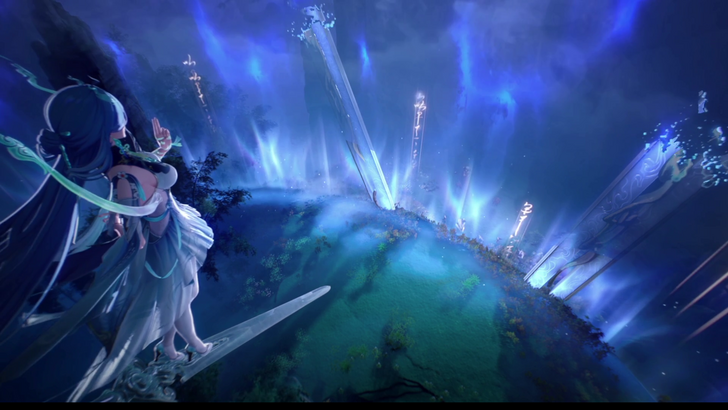
The problem manifests in several ways. Sometimes the game assumes you still remember a setup from a month ago. Sometimes the relevant information is buried in an optional journal or a passing remark from a bystander. And sometimes the setup simply isn't there at all.
Take that flashback, for example. It attempts to answer why Qingxiao, a supposed cultivator who should have little interest in worldly affairs, spends her time protecting Xuanfang as a Warden. That's a great question to address, but dropped out of nowhere after a month-long patch gap, it feels less like an organic reveal and more like the story scrambling to fill a gap it forgot to build during Version 3.5. That flashback belonged at the very end of Version 3.5 where it could have built anticipation for 3.6, rather than being shoehorned into the opening minutes of a new patch after the momentum had already gone cold.
A lot of the chapter’s more fundamental issues revolve around this. For example, it keeps introducing themes centered around cultivation when the previous chapter was mostly your standard hero story. So instead of feeling like a direct continuation of the narrative, it reads like a jarring genre shift.
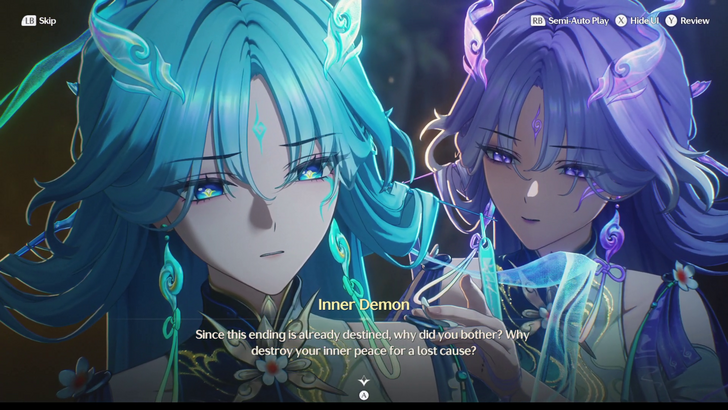
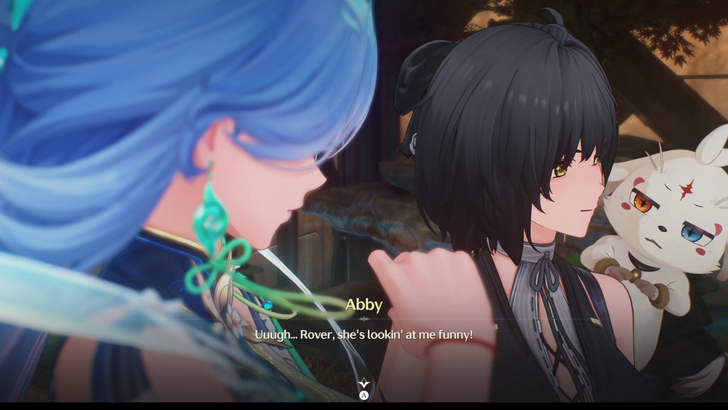
Then, there are all these abrupt conflict devices that pop out of nowhere. One of the most offensive is the introduction of Qingxiao’s inner demon, who looks suspiciously like Cantarella if she wore a Xuanfang robe. She has quite frankly no setup at all besides Qingxiao suddenly telling Rover that they should stab her if she turned on them. Like, how am I supposed to react to that?
It kinda reminds me of those CGI mana dragons Studio DEEN pulled out of nowhere in Fate/Stay Night: a replacement for an established mechanism that exists largely because the script can’t adapt the original method for mana exchange because… reasons. Anyway, we've seen Wuthering Waves manifest inner conflicts as physical forms before, like with Carlotta, but at least hers had a proper explanation rooted in the circumstances. Qingxiao's, meanwhile, feels like a shortcut for externalizing an inner conflict the story hadn't properly established and couldn’t solve without resorting to visualization.
Really, it’s not that the ideas are necessarily bad. I already expected Mengzhou to center around cultivation the moment I saw floating cities and flying swords, for example, and I do see the sense in manifesting Qingxiao’s internal conflict as an alternate version of herself. It’s just that they’re so poorly telegraphed that they look like they were slapped onto the script at the last minute.
Sword Flight Has No Place Here
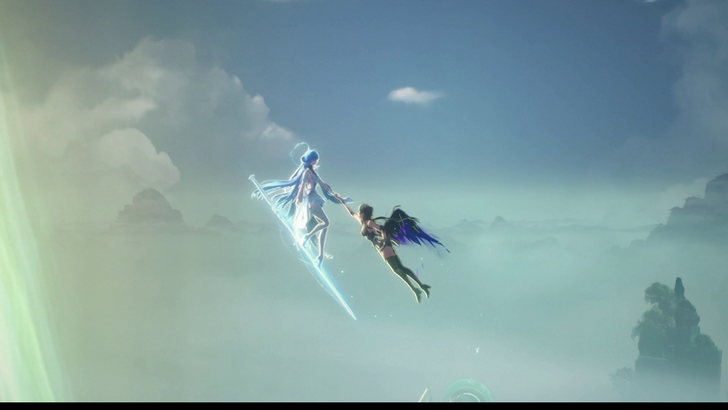
That brings us to Sword Flight—Wuthering Waves’ latest attempt at reinventing the Version 1.0 glider, and perhaps the clearest example of the chapter bending its own logic to make it happen.
Plot-wise, Sword Flight is introduced by Qingxiao to Rover, who finds it strangely fascinating despite already possessing Rinascita’s far more flexible Flight Module and the technologically superior Aerial Gliding function on the Expedition Motorbike. Sure, fine—Rover being easily impressed by shiny local tricks is something I can accept in a fantasy region.
Inevitably, Rover learns the skill herself, because of course she does. The real problem isn't that Rover learns Sword Flight, but the absurd logical backflips the script performs to force it to happen.
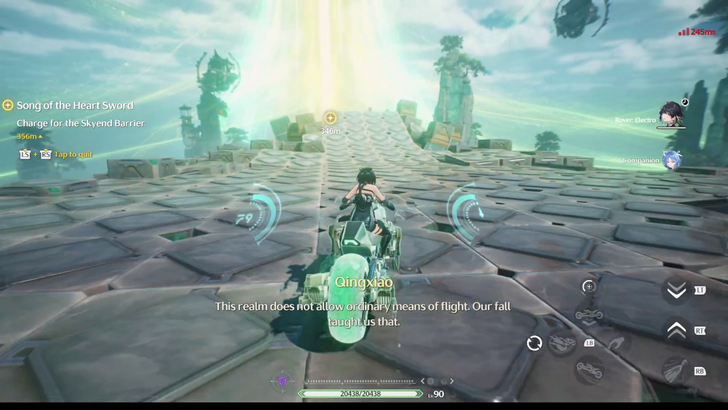
First, the game throws Rover and Qingxiao into a pocket dimension where conventional methods of flight
are disabled. The local Cloud Shuttles, powered by Xuanfang's mechanist arts, are established as the sole exception. Yet, when Rover tries to use her Expedition Motorbike glide function, a feature that should have been retrofitted with Xuanfang mechanics that the locals use themselves, it suddenly fails to function despite the vehicle itself still functioning well outside of that.
Meanwhile, Qingxiao’s Sword Flight mysteriously works just fine. This directly contradicts an earlier cutscene where the pair fell into this world precisely because Qingxiao couldn't maintain her flying swords. How did she even know Sword Flight would work if so? And what even qualifies as conventional
flight if Xuanfang mechanist arts allow massive Cloud Shuttles to navigate the zone, but bar a scientifically engineered bike that’s probably now half made with local parts?
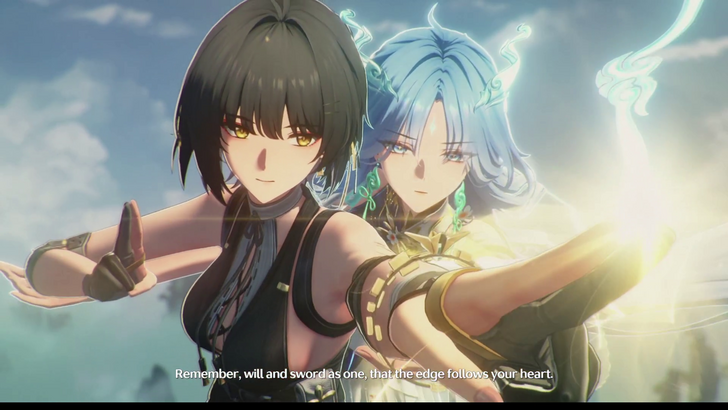
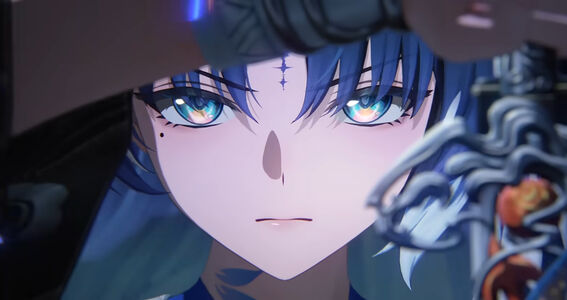
The story jumps through burning hoops of anti-logic just to manufacture a contrived scenario where Qingxiao has to teach Rover the skill in a close-quarters, intimate cutscene (which does look nice—if you don’t read between the lines). But instead of feeling romantic or impactful, it just feels rather awkward and baffling because the narrative setup leading into it makes absolutely no sense.
To make matters worse, Sword Flight isn’t even an enjoyable way to traverse the map. It's restricted to hyper-specific interaction points, locking you into a predetermined path toward a set destination. Unlike the freedom offered by Rinascita’s Flight Module or the Expedition Bike's Glide, Sword Flight is essentially a glorified, on-rails public transit line that happens to lack a timetable.
Thankfully, Sword Flight appears to be a strictly localized gimmick. At least, I hope it stays that way, if only to spare us from ever revisiting the logical backflips required to teach it to Rover in the first place.
A Great Subversion Thrown Against the Wall
Qingxiao is an Interesting Character Handicapped by the Writing
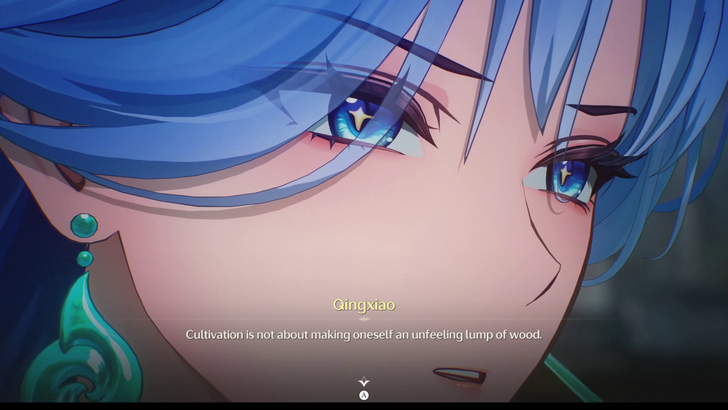
The issue of improper setup is ultimately the biggest reason Version 3.6 is so frustrating. Underneath all the contrivance, there are actually a lot of great ideas here, and Qingxiao—the chapter's featured character—is perhaps the biggest victim of its shortcomings.
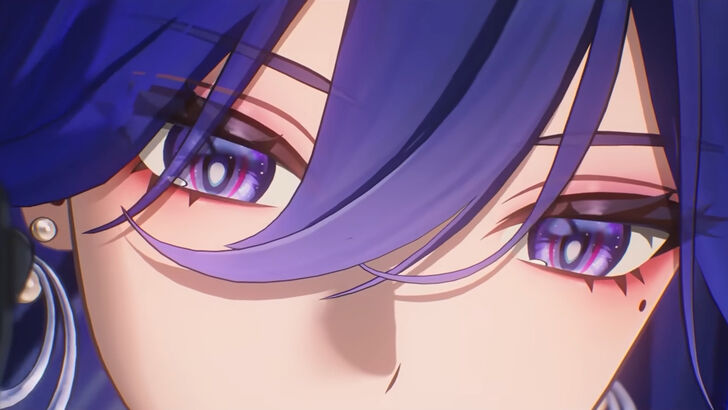
Qingxiao is one of the Xuanfang Wardens and its paragon: the region's strongest guardian and a cultivator who has lived for just over 200 years. She's introduced as the stereotypical secluded cultivator, and at first glance, she embodies the archetype perfectly. She's stupidly powerful, enigmatic, speaks like she’s submitting a poem to a competition, and has spent centuries meditating on a mountain while avoiding contact with the unwashed masses.
Unfortunately, Qingxiao actually rather sucks at the “avoiding contact” part.
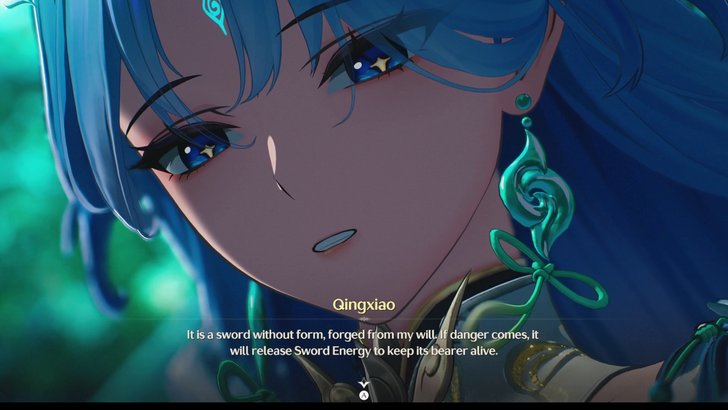
She repeatedly risks herself to save as many people as possible, even when doing so means expending energy that could be used for more pressing matters (like, I don’t know, shutting herself in a room). More importantly, the story establishes that these activities are precisely what a proper cultivator is supposed to abstain from.
Ironically, that’s what makes Qingxiao interesting. And it’s not just because most typical cultivator-type characters are flat in terms of characterization—though that’s certainly a big part of it. It’s because her very failure to let go of her connections and karma is what makes her strong. That's a direct retaliation against the well-established trope where cultivationists commit themselves to maxing out their unemployment and introvertedness stats in pursuit of enlightenment.
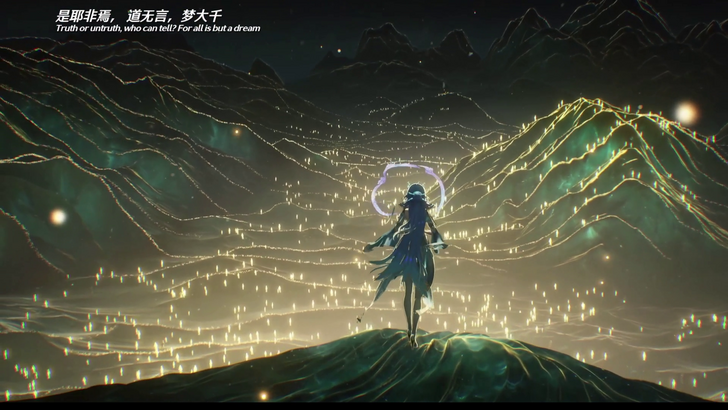
In a nutshell, Qingxiao can harness the “Sword Will” of others—their determination and desire to live, I believe—and turn it into literal power. The stronger that will is, the sharper the blades she creates from it; the more people there are, the more swords she can create. In other words, caring for others isn't merely something she stubbornly refuses to give up; it's the foundation of her strength.
Unfortunately, the writing does a poor job of letting the interesting parts of Qingxiao's character speak for themselves. Even setting aside the lack of setup, why did the story need to manifest her inner conflict as an alternate version of herself? Her struggle is fundamentally psychological. Turning it into a literal person risks cheapening the resolution by replacing an internal conflict with something far more visually straightforward.
On top of that—
Rover’s Gravity Works Against the Story
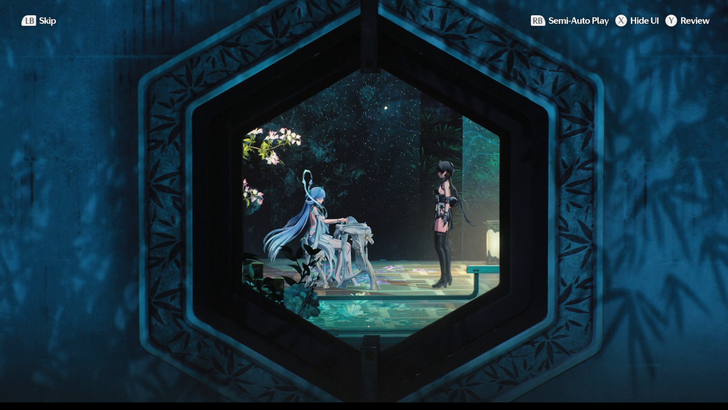
One of the worst parts of the game's attempt to give Qingxiao depth is how hard it tries to push a connection between her and Rover. It does this from practically every angle, ranging from mentorship, comrades in arms, romance (because of course), and, most importantly to Rover’s overarching development, even a history as past acquaintances.
Unfortunately, though, it fails in almost every single one except their development as battle buddies. And that’s because other than all the fighting they do, the story simply doesn’t show enough to properly justify everything else. Qingxiao’s “mentorship,” for example, is basically only limited to teaching Rover how to use Sword Flight. Yet for some reason they made the latter latch onto that fact from that point onward just because she’s “technically” the first disciple Qingxiao has had.
… Even though Qingxiao herself admitted that Rover wasn’t the first person she ever taught any arts to.
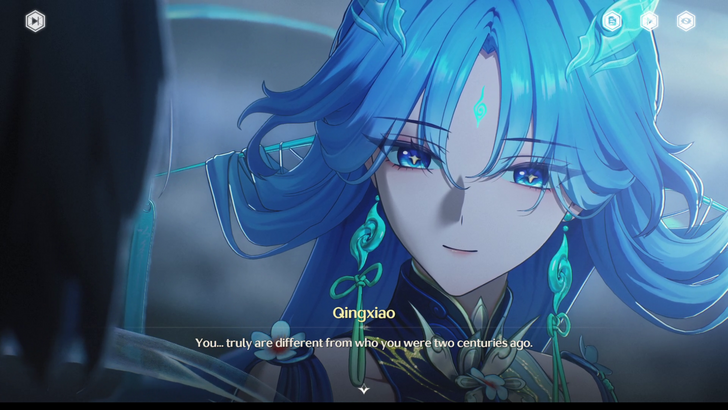
There’s also strangely a lot of holding hands here, displaying some sort of attempt at creating some romantic tension (because of course). However, it just comes off as Qingxiao being weirdly touchy since by those points they haven’t even experienced any extreme situations that organically let them develop past being sisters in arms.
Ironically, and rather tragically enough, there’s one thread that could have made all this feel more natural. That is, Qingxiao knew Rover from before the latter’s memory wipe, back when she still personally commanded and wielded the power of the Sentinels. However, the story also gimped this hard by not digging into these events enough. That’s because this revelation had been given so little attention that it made it seem like it was just a passing remark that lacked any real significance besides a cool splash image.
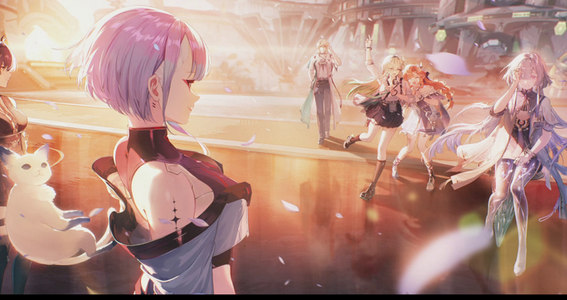
What’s even more painful is that Qingxiao already had very important personal connections that the story heavily promoted. If they had focused her development around those, such as her friendship with the Celestial, Ruoying (the best-looking NPC so far, fight me), or her service under the Sentinel, Hsin, then we could have developed Qingxiao without the burden of having to explain and make sense of any new relationships.
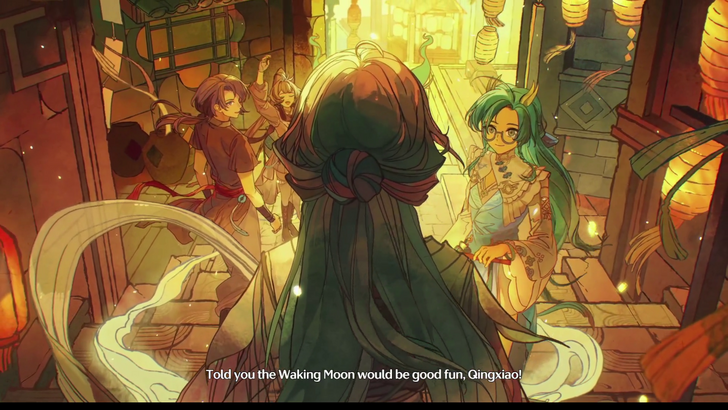
On top of that, Ruoying and her ascension into a Celestial is a direct consequence of Qingxiao’s “failures” in letting go of her worldly connections. Hsin, too, plays a direct part in it as the one who gave her the duty of protecting Xuanfang and its people, thereby tethering her to the region’s worldly affairs.
These plot threads could have developed Qingxiao into one of Wuthering Waves' most memorable regional characters, especially for anyone who loves a good guardian-of-the-people story. And the best part is that the game already did this successfully with both phases of Version 2.4 and the Cyberpunk collab; they’ve already demonstrated that Rover doesn't need to be the center of every story.
Instead, we get pushed into this awkward journey where Rover's presence keeps getting in the way of what could have been a cool story centered around Qingxiao.
The Surviving Good
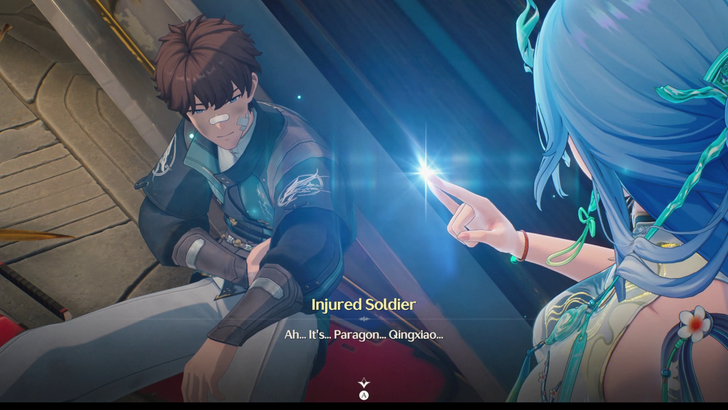
Of course, not everything involving Qingxiao was sucked into Rover’s gravitational pull. Some genuinely good ideas survive mostly intact, even if the story's structural problems keep them from reaching their full potential.
For starters, the story does a surprisingly good job of making Qingxiao a sympathetic character. She understands the burden of her powers, the expectations placed upon her, and the responsibility of her position. More importantly, her conflict isn't really about whether she should care about others; it's whether everything she sacrificed by remaining connected to them was worth it.
Ironically, the story initially makes this seem like a much simpler conflict. We get plenty of scenes from her past showing her trying to detach herself from earthly affairs, along with flashbacks of her mentor teaching her to let go of karma. But these scenes don't really depict someone struggling with that philosophy. Qingxiao simply accepts what she's taught and moves forward with her life while following her own path. And that's actually a good thing.
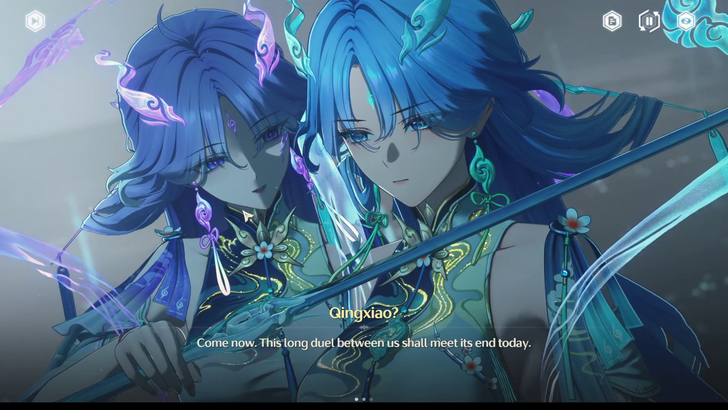
The story spending more time showing us that Qingxiao was taught to abandon her attachments than showing us why she struggled to do so is deliberate. By leading us to believe that her conflict is simply whether she should embrace or reject those attachments, the eventual reveal that her real struggle is whether everything she sacrificed by remaining attached to them was worth it becomes far more surprising and, despite its poor delivery, genuinely satisfying.
Unfortunately, this is also where the chapter stumbles into one of its biggest missed opportunities.
It establishes a surprisingly interesting contrast between Qingxiao and Rover's humanity, only to do almost nothing with it. For context, Rover should be around a million years old or so (basically a dinosaur), at least according to Shorekeeper. They're unimaginably ancient, yet their recent memory wipe has left them with a mental age somewhere between a mischievous teenager and a reasonably mature adult. Qingxiao, meanwhile, isn't particularly old by the absurd standards of Wuthering Waves—especially compared to characters like Shorekeeper, Camellya, and possibly Hiyuki. If you boil her character down, she's essentially just an ordinary girl who happened to end up burdened with far more expectations and responsibilities than she could reasonably handle.
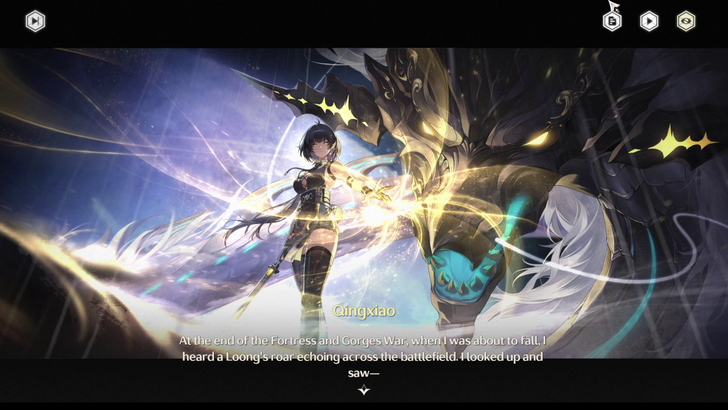
And that's where the irony lies: despite having lived for only a fraction of the others' lifespans, it's Qingxiao who outwardly appears more detached from ordinary human life.
Except she actually made peace with that contradiction a long time ago. Qingxiao knows she'll never completely rid herself of her connections to people and their affairs. Rather than continuing to fight that reality, she's accepted it as part of who she is. Her distant demeanor isn't the result of rejecting humanity; it's simply how someone who has already come to terms with her place in the world behaves. Rover, meanwhile, is almost the inverse. They're far more willing to form personal friendships and involve themselves with individual people, but as shown during Lahai-Roi's epilogue, they ultimately have to maintain a certain distance from worldly affairs that aren't related to the Lament.
Basically, Qingxiao looks detached but has accepted her attachment to the world; Rover looks socially connected but is ultimately defined by their need to stand apart from ordinary worldly affairs. That's a stupidly good thematic mirror. And ironically, it could have been the perfect justification for putting these two characters together. Instead of forcing mentorship, romance, and a bunch of awkwardly established history onto them, the story could have simply explored how two people who seem to occupy opposite ends of the spectrum actually understand humanity in completely different ways. Instead, the story barely acknowledges that the mirror exists.
Everything Else is a Mixed Bag
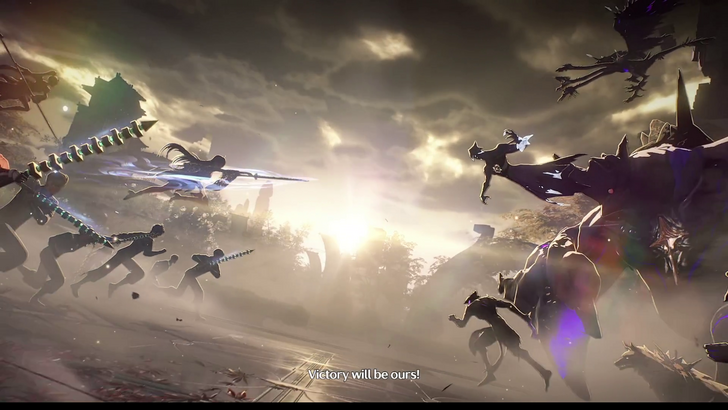
Now that we’re done with all my main complaints, it’s time to talk about everything else that does need mention in quick order.
First up, Version 3.6 carries over the previous chapter’s behavior in giving more context to older characters, which is very nice. There’s much less this time, however, such as a mention of Yinlin’s previous extremist group. One major development, though, is Changli's side of the story. That is, we finally see Xuanmiao, Changli’s master, once again, depicted as a direct acquaintance of Qingxiao and one of the reasons why the latter became willing to be more true to herself and form explicit connections with others. This also implies a deeper connection between Qingxiao and Changli, which could be a great thread to follow when we finally visit Mengzhou.
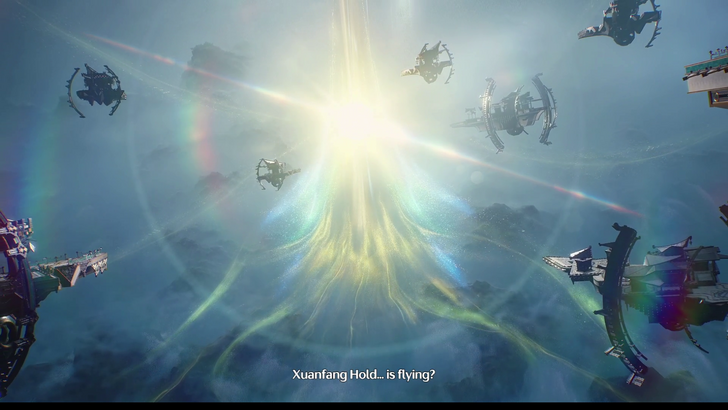
Version 3.6’s visual presentation has also improved considerably over the previous update. Sure, part of that comes from simply having more to look at than the region itself, especially when Qingxiao starts manifesting building-sized swords, but the bigger improvement is in how the camera is used. The chapter frequently uses its environments to establish atmosphere, and it generally does a good job of making its locations feel imposing.
On the other hand, the sound effects are… well, they’re simply just not there sometimes. I don’t know if it’s a bug or not, but that’s my experience so it is what it is. The result is obvious enough; the immersion’s not that good if you rely a lot on both the visuals and audio. In fact, it’s sometimes bad enough that it actively pulls you off the game. For example, the explosion and/or crashing sound effects are weirdly missing whenever you ram ships into each other. Like, if that doesn’t make you raise your eyebrows, little will.
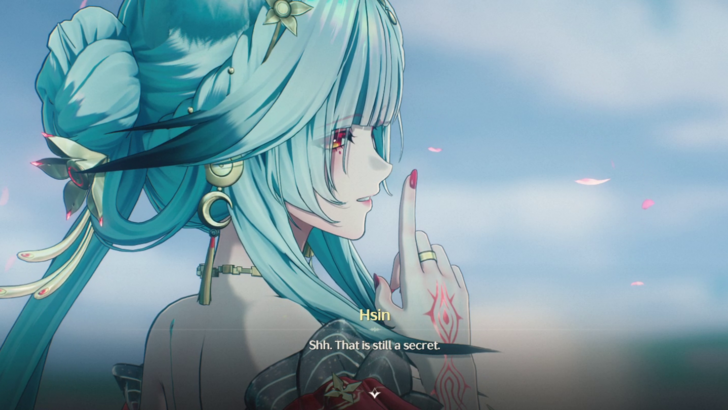
Most importantly, however, Version 3.6 seems to have forgotten that it was supposed to develop the mystery surrounding Hsin’s disappearance. There are perhaps two scenes—three if you really stretch the definition—that meaningfully advance it, and even those barely do anything. Basically, the most it moved is when Hsin appeared at the end, explained why she can’t directly interfere with Muyu’s villainy, and when she was questioned about her whereabouts, she basically just avoids the question and peaces out.
We've spent an entire patch waiting for answers, only for the mystery to emerge from the other side almost completely intact. Like, huh?
That’s troublesome, especially since the next version seems to be the last one before we move on. In other words, there’s at most three more story chapters in Xuanfang. And that means those chapters will have to carry the heavy burden of developing Hsin’s disappearance plot all by themselves; an extremely hefty weight to carry around considering it’s such a major storyline. For reference, Lahai-Roi’s major conflicts—saving Aemeath and fending off Aleph-1—were teased from the beginning and developed gradually throughout the arc until the painfully average conclusion.
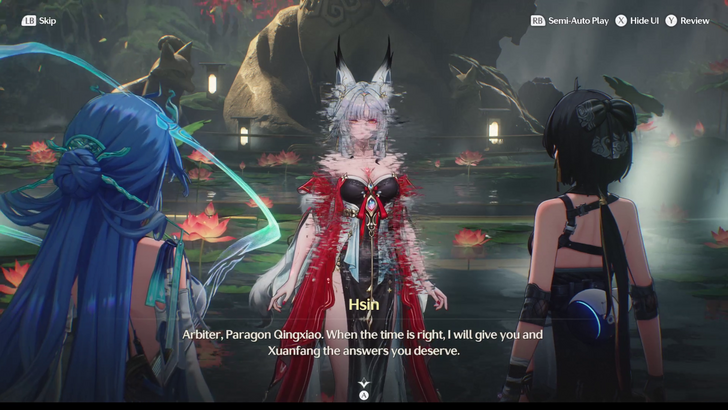
Overall, Version 3.6’s story is frustrating precisely because there’s so much worth salvaging from it. Its ideas are actually very interesting, Qingxiao is a character with enormous potential, and there are even moments where the writing manages to say exactly what it wants to say. But the chapter repeatedly sabotages itself with weak setup, forced developments, and an insistence on forcing Rover into relationships that would have been stronger without them. In that sense, it’s a rather tragic case of a story whose ideas are far better than the execution can support.
Compared to the story chapters released before it, that puts Version 3.6 somewhere in the middle-to-lower half of the pack. It’s not a complete disaster like, say, 2.6 Phase 2 or the ever-bullied 1.0, because there’s far too much good material here for that. But it’s not a particularly successful execution of those ideas at all, either. Hopefully, Version 3.6’s second half can redeem the update and put us back on track.
Game8 Reviews








Darrell I am regular reader, how are you everybody? This piece of writing posted at this web site is in fact good.
@Avi displaying no romantic attraction is different from providing the setting that pushes for that interpretation. you cannot say that the writers never had that intention. they obviously did. yheres way too many events in this chapter that does so. And even if that wasnt the case, regardless of what kind of connection they tried to push between Rover and Qingxiao it is true that it hurt what could have been a better story if they focused instead on Qingxiao and mb Hsin
I thought I was one of the few that reads and cares about the writing and overall narrative in the game. I'm glad to see I'm not the only one! Very well made critique. I feel the same way about a lot of characters in WuWa lately. Lots of potential, but never taking that potential and making something greater with it. Something else I have noticed is that when you step on what's clearly stone floor, it sounds like wood or grass. I also dislike how every road is so wide to fit the bike now..
Who wrote this because this didn’t read as any romance. She literally displayed no romantic attraction, and helping someone WALK after they’re weakened isn’t romantic. Of course a man would say something this dumb.