



"You can build a house, tame a monster, and when you come home, the monster will say something like ‘welcome home’ to you. Just that alone lets the player create a really warm, peaceful world. So it's become a title, a game, that draws a clear line separating itself from the conventional craft-RPG approach of making monsters fight or enslaving them."
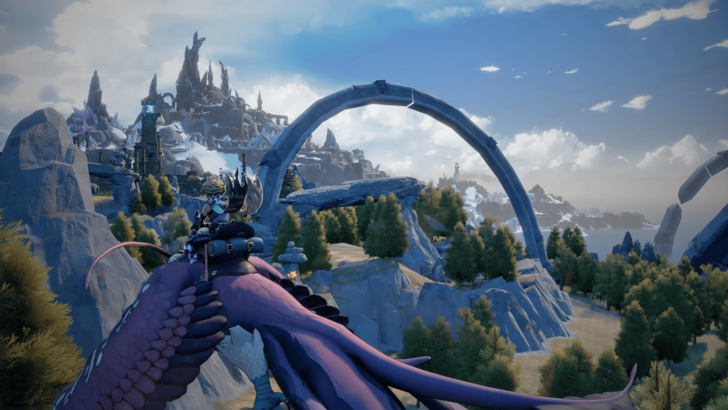
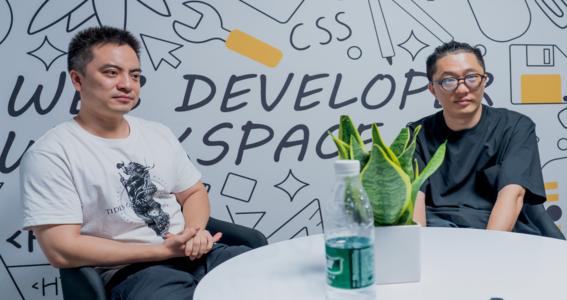
We sat down with Magnus Games Studio to discuss Wild Wild Eden, a monster-taming survival crafting game with a different take on the genre. Assistant Producer Raycley Zhang outlined several of the game’s core pillars, including exploring a massive world, complex monster systems, and the studio's goal of helping players form deeper bonds with the creatures in the game.
Wild Wild Eden Wants a Different Relationship Between Players and Monsters
Forming Genuine Bonds with the Monsters
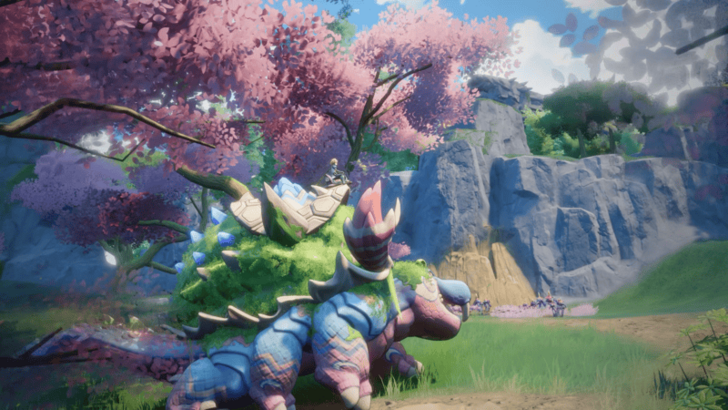
Monster-taming survival games often turn their creatures into workers or combat units, but Wild Wild Eden is deliberately trying to build a different kind of relationship between players and the monsters they meet. According to assistant producer Raycley Zhang, players will not necessarily need to use their creatures for fighting at all.
Zhang directly contrasted the game’s approach with titles such as Palworld and ARK, where monsters are commonly put to work or brought into battle. In Wild Wild Eden, simply living alongside a monster can be part of the experience.
"In both Palworld and ARK, monsters fight — or rather, monsters exist but essentially get enslaved and made to work; that's how current craft-RPGs tend to be. But in Wild Wild Eden, you don't necessarily have to fight monsters at all as a separate thing. You can build a house, tame a monster, and when you come home, the monster will say something like ‘welcome home’ to you. Just that alone lets the player create a really warm, peaceful world."
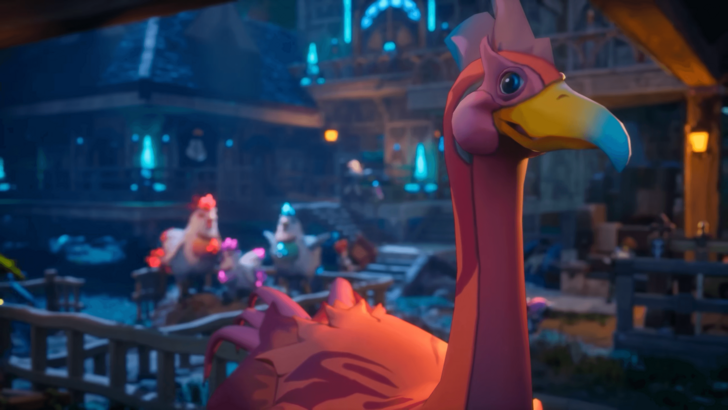
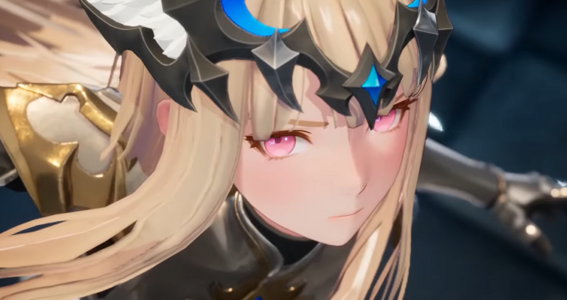
That focus on companionship also influences how the creatures themselves are being designed. The team has studied the skeletal structures of real animals, including wolves, dogs, foxes, rabbits, pigs, and ostriches, when creating its monsters. The idea is for them to retain enough familiarity that players can form an attachment to them, or even try to create a monster resembling a real-life pet.
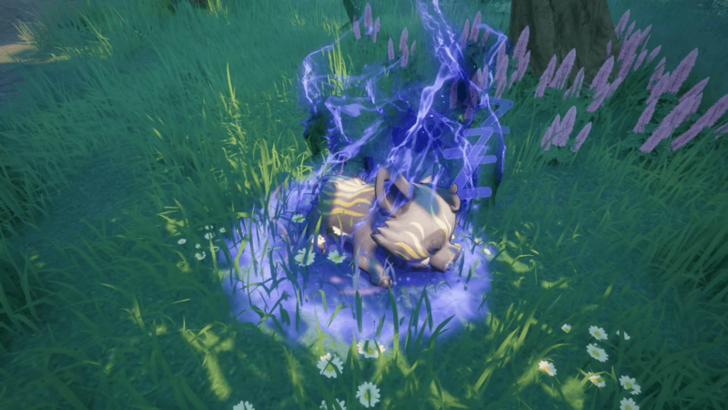
Wild Wild Eden’s focus on forming attachments with monsters could eventually extend to something much more consequential: letting them die. Magnus Games Studio is considering giving monsters finite lifespans, with Zhang suggesting that knowing a companion will not be around forever could make the time spent with it more meaningful.
"Maybe it’s actually better to have that kind of limit, so you have precious experiences and precious adventures with a monster up until it eventually dies."
The idea has not been finalized, and Zhang stressed that it is one of the systems the studio wants to explore with players during Early Access. The team is still weighing whether monsters should have a lifespan at all, how long that lifespan should be, and how players might respond to losing a creature they have spent considerable time raising and adventuring with. Death may not necessarily be permanent either, as Zhang floated the possibility of an item that can bring deceased monsters back to life.
Monsters of the Same Species Can Be Completely Different
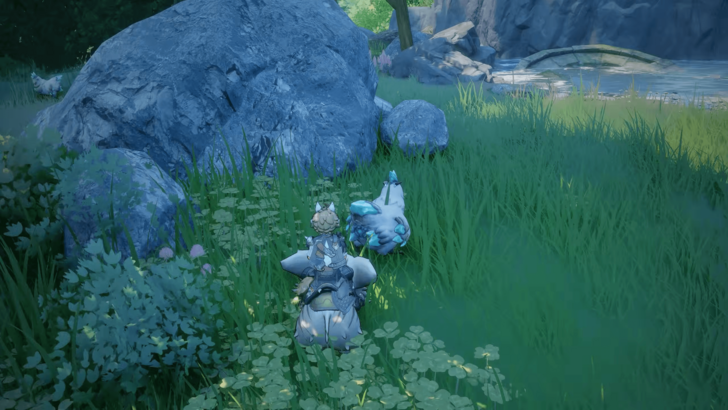
One of Wild Wild Eden’s more ambitious systems is the amount of variation that can exist within a single monster species. Rather than treating each species as a fixed creature with one appearance and one role, Magnus Games Studio is building monsters that can differ in color, traits, abilities, and even behavior depending on how they develop.
Zhang used pigs as an example, explaining that a golden pig and a so-called strongest pig could technically belong to the same species while still functioning very differently. Those differences are not limited to combat stats or appearances. Zhang explained that one variant might be better at finding mushrooms, while another could specialize in gathering vegetable seeds, giving individual monsters different practical roles around the player’s settlement.
The region a monster spawns in can also shape its capabilities. Creatures born in volcanic regions may naturally resist heat, while those originating from colder areas could gain resistance to low temperatures. Another is a system called aura, which creates variations depending on what players feed the monsters.
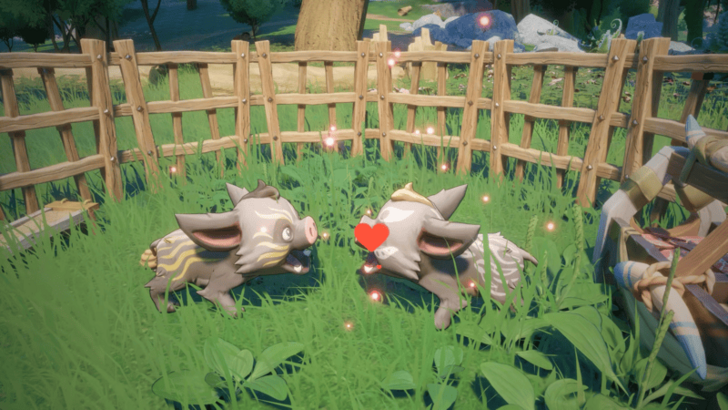
Breeding adds another layer of variation. Zhang said cross-breeding could produce monsters that are cuter, stronger, adapted to particular environments, or better suited as companions. The result is a system where collecting one species does not necessarily mean you have seen everything that species can offer. Instead, different combinations can result in monsters with different appearances, traits, and practical abilities. As Zhang put it, the "complexity and appeal of the breeding system is the key point."
Cross-breeding pushes that variation further. Using a panda as an example, Zhang explained that breeding two versions of the same species could produce something entirely new: whether that is a cuter panda, a stronger one, a variant adapted to volcanic regions, or one "that's easy to keep around as a companion you can call family." The studio’s panda example shows how broad that system could become, as they are building a system that allows for that kind of variation.
Combat and Multiplayer Will Give Players Bigger Challenges to Take On
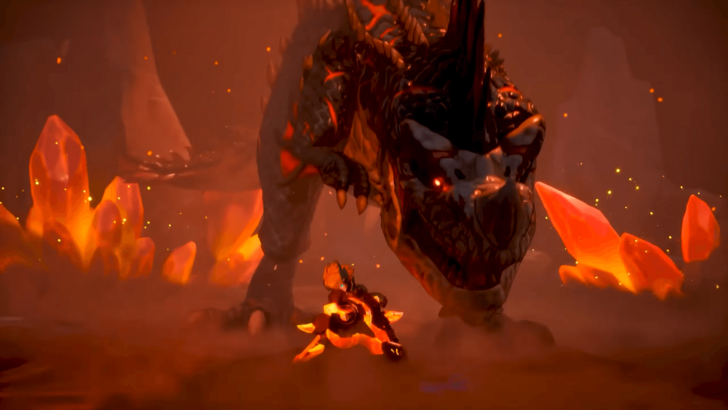
Although Wild Wild Eden’s trailers have focused more heavily on exploration, building, and its monsters, combat is still intended to be a substantial part of the game. Zhang said the team simply has not revealed much of that side yet, adding that they "do intend to make the combat and battle elements fairly strong as well."
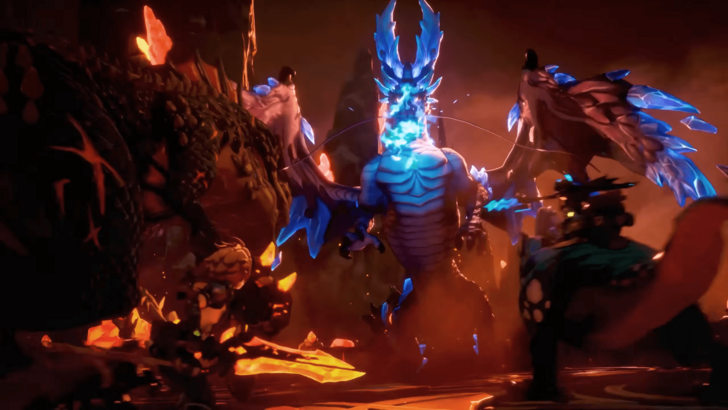
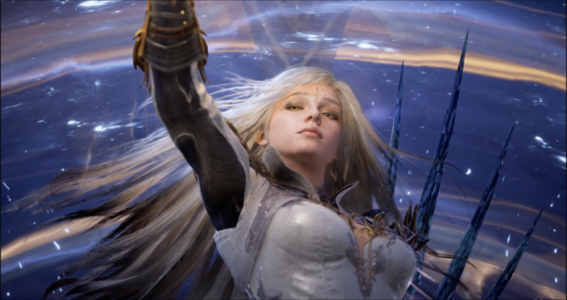
Much of that combat will come through dungeon progression and larger encounters. Zhang teased enemies that have yet to be fully revealed, including a Rex and dragons, with the latter also appearing as a final boss-type encounter in existing footage.
Multiplayer should add another layer of depth to those encounters. The team is currently designing Wild Wild Eden to support more than twenty players, with missions built around different roles rather than simply having everyone attack the same target. Zhang gave examples such as players taking on different responsibilities while defeating a dragon or retrieving a rare monster egg, and noted that the studio plans to keep expanding the variety of multiplayer missions over time.
Wild Wild Eden Is Being Built for Hundreds of Hours of Gameplay
Building Your Own Eden
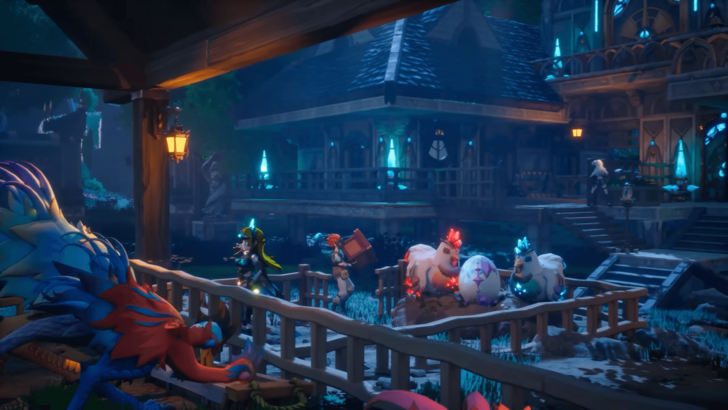
Wild Wild Eden is being designed as a game players can potentially spend hundreds of hours with, not because of any single system but because several of its core features are meant to keep unfolding over time. A major part of the game’s promised longevity comes from the sheer amount of space players will be able to explore. Zhang said the game will feature five continents, but the explorable world will extend well beyond their surface areas, with locations beneath the ocean and up in the sky as well.
"There are five continents within the map, and there are dungeons both under the ocean and up in the sky, so simply as dungeons, there are extremely deep ones."
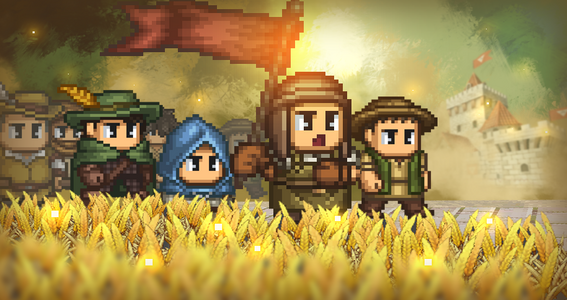
That sense of exploration is also tied directly to the game’s title. Zhang explained that Wild Wild Eden follows people leaving an essentially uninhabitable world in search of somewhere new to settle. The protagonist pioneers this unfamiliar land in search of their own Eden, with the Wild side of the name representing the frontier they are venturing into. Zhang described "continuously pioneering further and further into unexplored territory" as the core of the game’s concept, with the larger goal of exploring the world and eventually finding a new place to call home.
Building Can Be Simple or Detailed
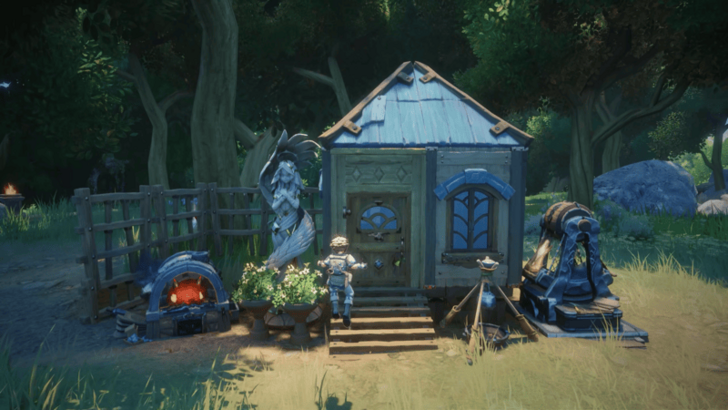
Building is another system Wild Wild Eden is using to support long-term play, with Magnus Games Studio aiming for a middle ground between accessibility and depth. Zhang compared the approach directly to ARK and Palworld, describing ARK as highly manual and hardcore while Palworld is easier as it leans much more heavily on automation.
Rather than forcing every player into the same construction workflow, Wild Wild Eden is intended to let people choose how involved they want to be. Players who are less interested in manually managing every part of a settlement can make use of automation, while those who enjoy base-building can spend more time adjusting smaller details and customizing their structures.
"We took the good parts from in between: Wild Wild Eden has a system that lets even building beginners properly automate things, while also, for the pattern where hardcore builders, like in ARK, really want to fuss over the details, there are fine-tuned adjustment options and detailed building features available too."
Wild Wild Eden Is Being Built Together With Its Players
Early Access Is About Expanding the Game, Not Just Finishing It
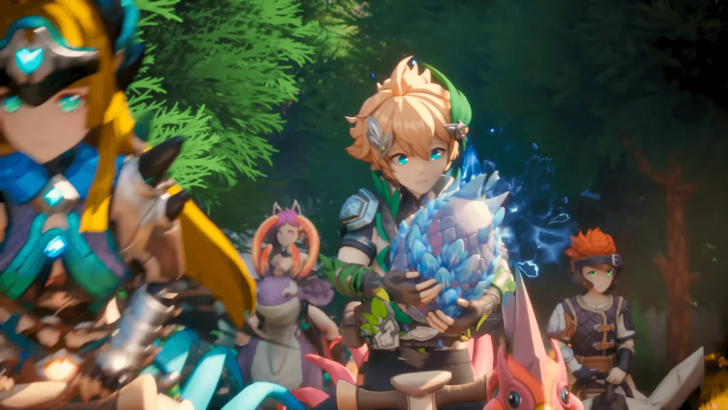
Magnus Games Studio does not appear to be treating Early Access simply as a way to release Wild Wild Eden before its core systems are ready. Zhang said the team wants players to already be able to experience the game "essentially fully," including multiplayer, by the time Early Access begins.
"Our aim is to bring development to a point where, by early access, players can play the whole thing essentially fully, including multiplayer, with confidence and satisfaction."
Instead, Early Access will give the studio a chance to determine how far some of Wild Wild Eden’s systems should ultimately go. Zhang raised questions such as whether players would want a few hundred monsters or several thousand, what kinds of multiplayer missions to add, and how systems like monster lifespan, death, and possible resurrection should work. The team also wants player feedback to help shape the depth of the game’s story.
That involvement could extend beyond feedback alone. Magnus Games Studio is planning community campaigns around Early Access where players can submit monster ideas through Discord, with the top three submissions potentially being implemented in the game. Zhang also discussed a separate panda design contest, where fan-created designs could become part of the species and then produce further variations through cross-breeding. The studio is considering continuing these kinds of campaigns even after Early Access begins.
Wild Wild Eden Will Continue to Evolve Beyond Its Current Demo
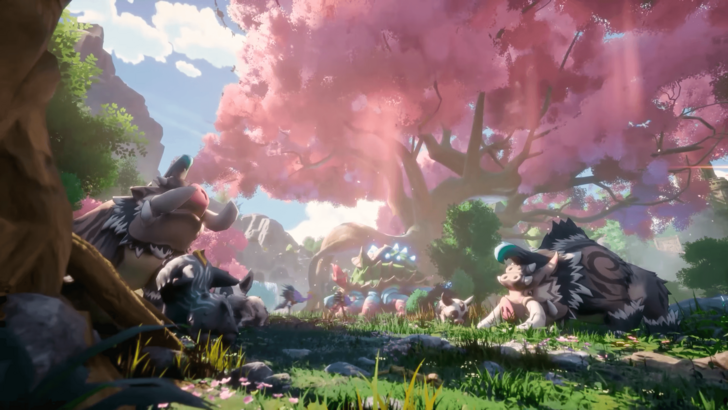
The version of Wild Wild Eden shown at Gamescom was not dramatically different from the earlier BiliBili World demo. Zhang said the team spent roughly a month adjusting monster taming, debugging, and making other smaller fixes rather than rebuilding the demo around major new features.
More substantial changes are planned for later builds. Zhang said the team intends to further improve systems such as building and multiplayer for an updated version around the end of the year or early the following year. With Early Access also intended to incorporate player feedback into everything from monster numbers to multiplayer missions and other mechanics, the current demos appear to represent only an early look at systems Magnus Games Studio plans to continue expanding over time.
Wild Wild Eden is being developed in collaboration with Shueisha Games, and Zhang suggested that the project could become an important part of the publisher’s push toward creating original properties of its own.
While the wider Shueisha name is closely associated with established IP such as Naruto and One Piece, Zhang explained that Shueisha Games strongly wants to build and release original IP globally. "I think this will end up being a key, flagship title for Shueisha Games as they build out their own original IP."
Magnus Games Studio is already preparing another Wild Wild Eden demo for early next year. Zhang said the team is aiming to have improvements to systems such as multiplayer and building ready for that version, describing it as a "New Year update version."
Full Interview with the Team
I've heard that Wild Wild Eden can offer something like hundreds of hours of gameplay — what kind of elements allow it to be played that deeply?
Raycley Zhang: Yes. I think there are broadly three main points when it comes to that. One is simply that there are quite a lot of areas — there are five continents within the map, and there are dungeons both under the ocean and up in the sky, so simply as dungeons, there are extremely deep ones. Having dungeons as an RPG element is one point.
As for the second point — this time, the concept is centered on a kind of coexistence or symbiosis with monsters, living together with them. Within that, the breeding system is quite appealing — or rather, it has a lot of variation. To be specific about what that variation means: differences in color, and types that differ by area, like a volcano type or a water type. There's also things like aura, and variation that comes from what you feed them — that complexity and appeal of the breeding system is the key point.
For the third and final point — that's building/construction. For example, in ARK there's no automation at all, so it's hardcore — you have to build everything yourself. On the other hand, in something like Palworld, things become automated, so it ends up being very easy. We took the good parts from in between: WWE has a system that lets even building beginners properly automate things, while also, for the pattern where hardcore builders — like in ARK — really want to fuss over the details, there are fine-tuned adjustment options and detailed building features available too. So that attention-to-detail approach means that, when it comes to building, it's a system you can play very deeply.
Raycley Zhang: There's one more thing. This one's quite important — multiplayer. Right now we're designing for multiplayer with twenty or more players, and within that multiplayer mode, we've put a lot of thought into things like what role you play for a given mission — say, defeating a dragon — or what role you take on when going to retrieve a rare monster egg. That is, how missions work in multiplayer, and what role you play within this craft-survival experience — we've been quite particular about that, and we also plan to keep increasing the variety of missions.
That sounds interesting. I'd like to ask a bit more specifically about the second point, the variety of monsters. I think you mentioned things like aura — as a kind of collecting element, within one single species of monster, is it possible to, say, create the strongest version of that monster, or have different versions of what's technically the same monster?
Raycley Zhang: Yes, there is. For basically everything — the strongest version of a monster. Take, say, a pig: you could create the strongest pig, and then this pig — you could also make, say, a golden pig. And this pig actually behaves differently depending on whether it's golden, the strongest version, or an ordinary pig. For example, the golden one, when foraging for food, will dig up things like mushrooms rather than ordinary feed — that's what pigs do. An ordinary golden pig, though, can't go looking for mushrooms. The strongest pig, meanwhile, instead of mushrooms, can go find things like vegetable seeds, for instance. So depending on the variation in materials, all the functions change too — meaning that even for what's nominally the same pig, its behavior and its aptitudes can differ. That's the kind of thing we're thinking about.
Game8: So even when you say "strongest pig," it's not just about combat — it's really about that kind of aptitude, that kind of thing, right—
Raycley Zhang: Yes.
Game8: Right. So the image is that each individual monster has its own different aptitude — is that correct?
Raycley Zhang: Exactly right. Also, depending on the region — for example, a dragon or bird born in a volcanic region will be resistant to volcanoes or heat, while one from a tundra region will be resistant to cold — we're thinking of giving them that kind of trait as well.
Raycley Zhang: There's one more thing — these "Double Twin" monsters are actually created by properly researching the skeletal structure of real, living animals — things like ostriches, wolves, dogs, foxes, rabbits, pigs, and so on — and turning them into monsters, so people end up feeling real attachment to them. Things like wanting to create a monster that resembles a pet they actually own, or wanting to turn their current pet into one of these "Double Twin" monsters and applying for that. We're planning to run a kind of monster-creation campaign on our user Discord, where the top three submissions actually get reflected in the game as monsters — we're thinking of running that kind of campaign around early access, and possibly continuing it even after early access.
Game8: That's really interesting — the way a single monster can become many different models. That applies to appearance, and of course to abilities as well, it sounds like.
Raycley Zhang: Exactly right. Right now we're thinking of running a panda campaign — soliciting panda character designs from users, like whether a shaggy, fluffy panda design would be good, or maybe a sharper-looking panda — we're planning to run a bit of a design contest along those lines. That's the plan.
Game8: So, for example — say you run an art contest — it's not just that the winning panda design becomes the design; rather, within that one species of panda, there really would be many different models existing and coexisting. So there'd be one model designed by a particular user, and then there'd also be others.
Raycley Zhang: That's right. Yes. Probably the winning panda would become the main model, and then, for example, when you cross-breed it with a different panda, something new comes out of it — whether that turns out to be a cuter panda, a stronger panda, a panda that's strong in volcanic regions, or a panda that's easy to keep around as a companion you can call family — we're building a system that allows for that kind of variation.
That's wonderful. I can really see how much focus is on the design and variation of these monsters, and on how attached you can grow to them. Moving on to the next question — in the trailers I've seen so far, combat elements haven't really been front and center. How would you say that is — does the game lean toward not really centering on combat? I don't love calling it a cozy game,
but is it leaning more in that direction? What do you think?
Raycley Zhang: Well, actually, we do intend to make the combat and battle elements fairly strong as well.
Game8: Oh, is that right.
Raycley Zhang: Yes — as you progress through the dungeons, there's stuff we haven't announced yet, like a Rex, or a dragon — the kind of dragon that appears as a final boss fight in the trailer — so we do plan to build out this combat element quite substantially. So please look forward to that.
Thank you. So it sounds like we can just look forward to that, then. I'd like to ask a bit about the story. In the game's description text, there was mention of the world having been destroyed, but it also said that might not actually be true — so I'd like to ask a bit about that background and the story. What kind of story does the game have?
Raycley Zhang: I see, thank you. Well, there's actually a background story behind why we named it "Wild Wild Eden" in the first place. To begin with, the inhabitants of what was essentially an uninhabitable planet went in search of a new planet — and those people, or rather the protagonist, goes and settles, pioneers that new land, the "Wild" of Wild Wild, in search of a land of happiness, or rather, their own Eden. That's roughly the background of the story. I think that covers it.
In these unexplored lands — for example, areas with ancient ruins, obtaining dragon eggs floating in the sky, things sunk in the ocean — playing around with various monsters across that kind of world, traveling through it and finding, um, a new home for yourselves, and along with that — that's right — doing craft-survival together with the monsters that come along with you, the monsters you tame. That's really the core of our concept — continuously pioneering further and further into unexplored territory.
Game8: Thank you. So my understanding is that there's a good degree of freedom in that story as well.
Raycley Zhang: That's right, yes — there is quite a lot of freedom.
Before this there was a demo at BiliBili World, and now there's a demo here at Gamescom. Has there been any major change between the two?
Raycley Zhang: Well, there's no really major change, but we spent about a month making adjustments to things like monster taming, and doing debugging-type fixes. As for the CBT/OBT here — I think that'll be around the demo early next year — at that point we're planning to have improved things like multiplayer, and, well, the monster... "breakdown"/decay system, and send it all out having addressed those areas. Yes. It'll be a New Year update version.
Nao (interpreter): There's the the building system and also multiplayer system part. They want to update it, update in the ROM by the end of this year or early next year.
Given the background that you're making this game together with Shueisha, I'd like to ask what's changed as a result of working with Shueisha.
Raycley Zhang: That's a tough one. Shueisha holds a lot of different IPs — they have things like Naruto and One Piece — but as Shueisha Games, building their own original IP — that is, releasing this Wild Wild Adventure with real confidence as a work of their own, and putting it out globally — there's a strong desire behind that. So I think this will end up being a key, flagship title for Shueisha Games as they build out their own original IP. Not sure that fully answers the question, though.
My understanding is that this will be released via early access this time, correct? Right — early access titles have of course been increasing recently, but the definition of early access is still, essentially, that the product isn't fully complete yet, meaning there's some degree of risk for players. So for players taking on that risk, I'd like to ask why they should go in feeling confident about WWE.
Raycley Zhang: Yes. When it comes to early access, our aim is to bring development to a point where, by early access, players can play the whole thing essentially fully — including multiplayer — with confidence and satisfaction. That said, for example, regarding the release system I mentioned earlier: how many [monsters] do we actually need — a few thousand, or would a few hundred be enough; what kinds of multiplayer missions should exist; and then there's the matter of monster lifespan — when do they die, and can that monster actually come back to life afterward? For example, whether picking up some kind of stone from the ancient ruins could revive it. We really want to build things like the depth of WWE's story properly together with our users, and that's the reason we currently have early access in place.
Nao (interpreter): So when they release the early access, they plan to make sure that they will have the multiplayer mode and all the modes are implemented. But the reason why they did their planning for the early access is that based on communication with the fans and the reception of how they react to this day, they want to gauge how many monsters they will need. Like exactly would that be like, you know, a couple of thousand monsters for you to train or a couple of hundred that would be enough or, you know, that that kind of number wise, they would like to gauge, uh, how much they will need. And then also they want to-[JP:] What's the number, roughly? About how many monsters?
Raycley Zhang: Also, multiplayer missions.
Nao (interpreter): And also other thing is that what kind of missions they will add on to multiplayer mode so that those are something that they want to put the games out as early access and kind of communicate with the players and fans to plan for the future updates.
With early access, from the very first release, it'll already be in a state that's plenty enjoyable, and on top of that, you're saying it's fine to imagine it growing quite a bit further from there — is my understanding correct that it could potentially reach something like several thousand monsters?
Raycley Zhang: That's right, yes. If that's something users find really appealing, then that's certainly a possibility. And regarding the monster lifespan I mentioned earlier — the idea that monsters actually die — the thinking is that maybe it's actually better to have that kind of limit, so you have precious experiences and precious adventures with a monster up until it eventually dies. That's one way we've considered it, so it's definitely something we want to think through during early access.
Nao (interpreter): So another part that he was talking about is the lifespan for the monsters that you own. You know that like if there's any limit to the monsters you would have as pet, maybe your experience with that monster would be different because you only have, let's say like three months, and you want to do all these missions together with this pet and, you know, experience this life with them and would that be better for the player to have that kind of limit or you don't need a limit actually. So that kind of stuff also they want to explore and see how the reception from that events. And another thing he was saying that like after, let's say, you know, they put the lifespan like life, life and limit to the monster. And if you find this magical stone in the dungeon of ruins, maybe that animal, you know, you can bring that pet back to life, you know, would that be something good future to have? Or, you know, they have a lot of possibility and options that they are thinking about. So that's, I think something that they will take you with that event with the early access.
This has run long, but as a final question — right now you're planning a PC release, but is a console release also on your radar?
Raycley Zhang:
Yes, we're currently actively considering it. On the Games [Shueisha Games] side, we've had some discussions with various console companies, and we can say that it's a possibility going forward. Yes.
Nao (interpreter):
So actually at the Gamescom, they are discussing with different first party partners and so hopefully something good comes out from that. But definitely consider.
Game8: It really does seem like it's shaping up to be an interesting game.
Raycley Zhang: Thank you.
This is a period when a lot of monster games are coming out, so I was thinking of asking a question about that too, but honestly I feel like there's already plenty here, and there are elements that set this apart, so I felt I didn't really need to ask that. The monster side of things really does have a strong element to it — the depth of variation and so on is really interesting. Yeah, I'm really looking forward to it. Yes.
Raycley Zhang: There are cases where people compare us a lot to Palworld — sometimes people bring up both Palworld and ARK as examples. In both Palworld and ARK, monsters fight — or rather, monsters exist but essentially get enslaved and made to work; that's how current craft-RPGs tend to be. But in WW, you don't necessarily have to fight monsters at all as a separate thing. You can build a house, tame a monster, and when you come home, the monster will say something like "welcome home" to you. Just that alone lets the player create a really warm, peaceful world. So it's become a title, a game, that draws a clear line separating itself from the conventional craft-RPG approach of making monsters fight or enslaving them.
Game8: I see, I see. So with those dungeon elements, there are players who want to master combat, and there are players who aren't so interested in that — so either way, both types can fully enjoy the game.
Raycley Zhang: Exactly.
Game8: Understood. Right. Yes, thank you very much. I'm glad I got to ask about this.







%u Article writing is also a fun, if you be acquainted with then you can write or else it is complex to write.<a href='http://0629.ru/redirect?url=http://content-tm.ru/bitrix/redirect.php?goto=https://www.realmsofthedragon.org/w/index.php?title=B2b_Sales:_An_Extremely_Simple_Method_That_Works_For_All' target='_black' rel='nofollow'>http://0629.ru/redirect?url=http://content-tm.ru/bitrix/redirect.php?goto=https://www.realmsofthedragon.org/w/index.php?title=B2b_Sales:_An_Extremely_Simple_Method_That_Works_For_All</a>