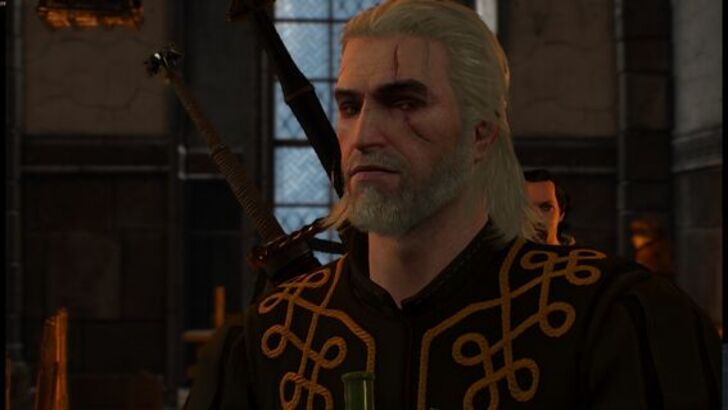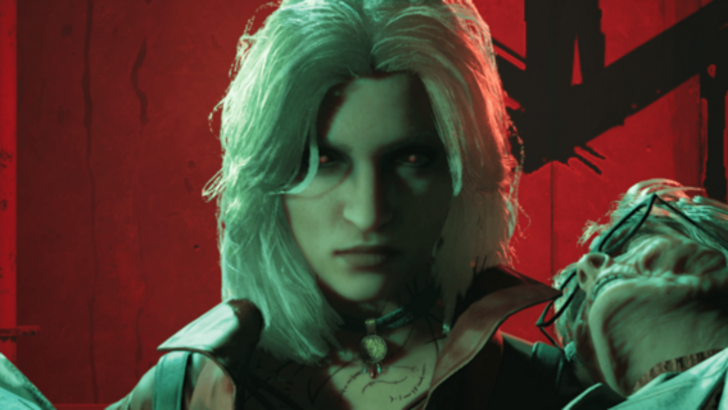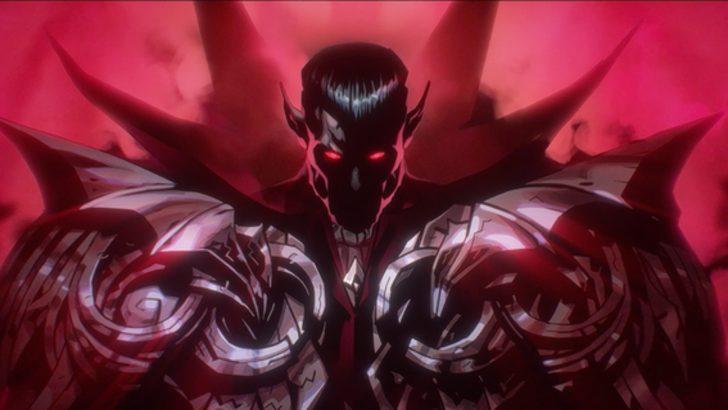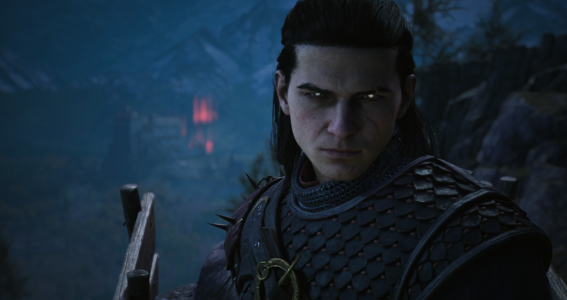




The Blood of Dawnwalker is an open-world ARPG about the human Coen of Laslea possessing mysterious vampiric powers. Learn more about the game’s plot, gameplay, release date, our review about the game, and more.

The Blood of Dawnwalker Walkthrough & Guides Wiki
Overview
What is The Blood of Dawnwalker?
The Blood of Dawnwalker is an open-world ARPG that borrows from the familiar formula of CD Projekt Red’s The Witcher series. It features third-person action combat alongside deep RPG systems, allowing players to customize Coen’s arsenal, equip skills, and develop his vampiric and witchcraft powers.
Set in the 14th century in a fictional village nestled in the Carpathian Mountains of Europe. It follows Coen, a human transformed into a Dawnwalker who can shift between his human form during the day and a bloodthirsty vampire, or Vrakhiri, by night.
Created by former CD Projekt Red devs, the game blends mature and philosophical themes with elements of ancient European folklore, including vampires and witches. Players are also encouraged to experience multiple playthroughs, as its 30-day time limit means the entire story and its outcomes cannot be experienced in a single run.
The Blood of Dawnwalker features:
⚫︎ Open World RPG About a Human by Day, Vampire by Night
⚫︎ Choices Matter with Multiple Branching Paths
⚫︎ 30, 40 and 60fps Graphics Modes
⚫︎ 30-Day In-Game Timer
⚫︎ Three Romance Options to Choose From
⚫︎ Multiple Endings That Carry Over in the Planned Sequel
For more gameplay details, read everything we know about The Blood of Dawnwalker’s gameplay and story.
| Digital Storefronts | ||
|---|---|---|
 Steam Steam |
 Playstation Playstation |
 Xbox Xbox |
$69.99 |
The Blood of Dawnwalker Review: This Fresh RPG Has Ambition Running Through Its Veins
A Fresh-Blooded RPG
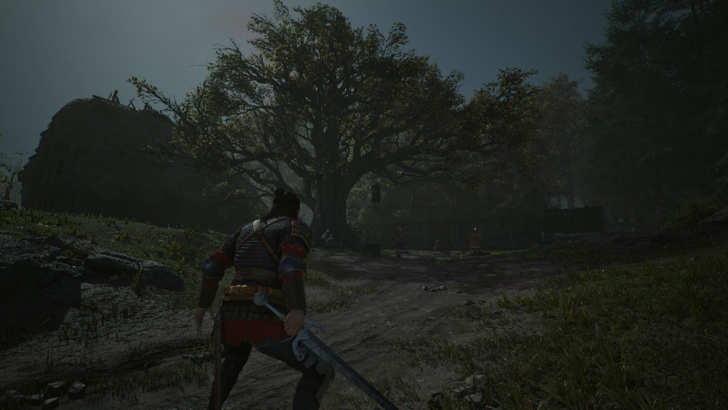
When CD Projekt Red’s The Witcher 3: Wild Hunt proved there was still a massive audience for dark-fantasy RPGs built around multiple branching choices, it showed what the genre could achieve when paired with ambition. While BioWare had already found success with the Dragon Age series, The Witcher 3 took the formula to another level. It transformed Geralt’s linear stories into a grand open-world adventure that seamlessly blended exploration with a well-written story filled with moral ambiguity, giving players the freedom to shape both their character and their journey.
But that success story belongs to CD Projekt Red and them alone.
Rebel Wolves, on the other hand, has something fresh to offer with The Blood of Dawnwalker. Made up of former CD Projekt Red developers who worked on the aforementioned Witcher series as well as Cyberpunk 2077, there’s a lot of pressure on this new studio to live up to the giants that came before them. With Geralt of Rivia out of the picture, the questions surrounding this new IP are no longer tied to anything written by Sapkowski. Instead, the game tells an original story centered around the iconic vampire mythos, set during Europe’s darkest days in the 14th century when plagues and wars were just a regular Tuesday.
The Blood of Dawnwalker carries the same level of gravitas as The Witcher series, with an ambitious vision that proves a studio with similar experience can replicate CDPR’s acclaimed RPG formula while also unfortunately inheriting some of the familiar issues that once plagued it.
Rebel Wolves’ willingness to take bold risks introduces its own polarizing design choices, most notably with the controversial 30-day timer. Safe to say, those risks paid off well as it successfully separated itself from its CDPR roots with its overwhelming open-world. After spending more than 50 hours exploring the ins and outs of Coen of Laslea’s story, I’ve seen firsthand the grand vision Rebel Wolves has for this new series.
A World That’s Not Always Black and White
The world of Dawnwalker (just to simplify its name) feels much like what you’d expect from a dark-fantasy version of Europe, with bloodthirsty vampires, swarms of spectral souls and other ancient mysticism lurking throughout its feudal villages.
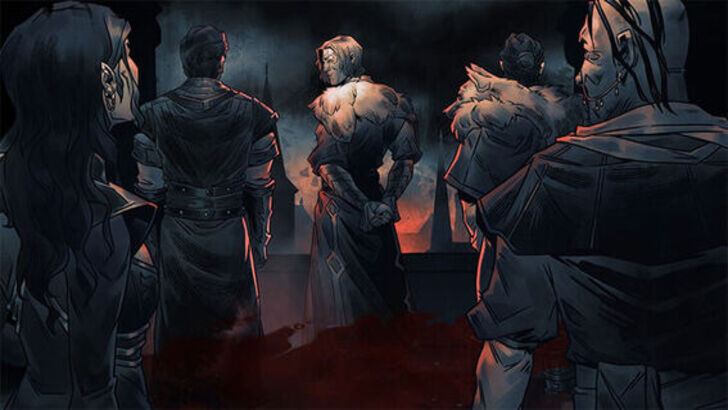
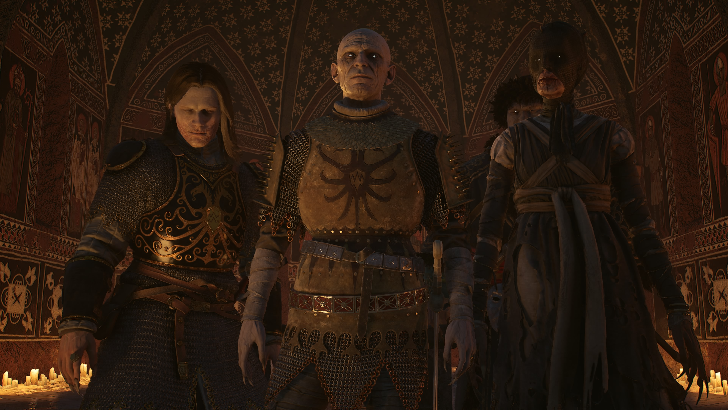
Nestled somewhere within the Carpathian Mountains is the fictional region of Vale Sangora, the game’s only playable open-world map. What was once a land ruled by a tyrannical king is now controlled by Brencis and his band of Vrakhiri, immortal vampires who feed on the blood of its inhabitants through mandatory blood tithes while also providing them free healthcare using their own blood.
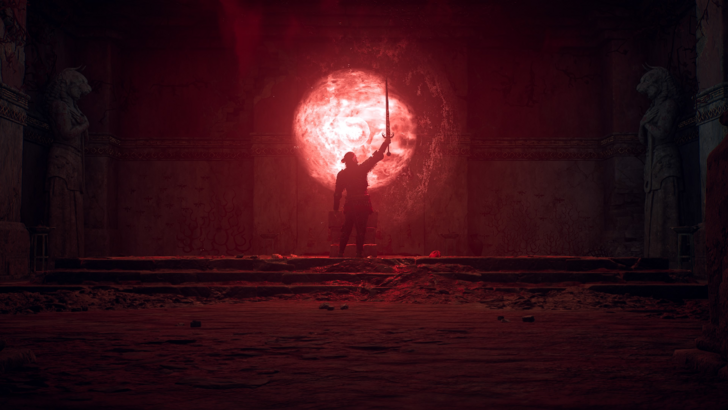
What impressed me most about Dawnwalker’s story is how it puts you right in the middle of its dark and utterly miserable medieval world, where choosing the lesser evil is often the only option. Not everything is black and white in its grand story, as Coen encounters not only citizens who oppose Brencis’ rule, but also those who find solace in it. When making these choices, it often comes down to what makes the most sense for you as a player, rather than what might be best for the world as a whole.
These moments are highlighted through the game’s selection of fantastic side quests, which shed more light on the struggles of its people and give you a better understanding of how Brencis’ rule affects its citizens. Much like Geralt’s adventures in The Continent, you’ll stumble upon unexpected stories that can leave you emotionally damaged, like one involving a missing sibling searching for her long-lost brother, only to discover that pixies are somehow involved in their story. But there are also moments when you come face-to-face with the other Vrakhiri themselves, leaving you conflicted over whether they were ever truly our enemies or if it’s simply the Stockholm syndrome talking.
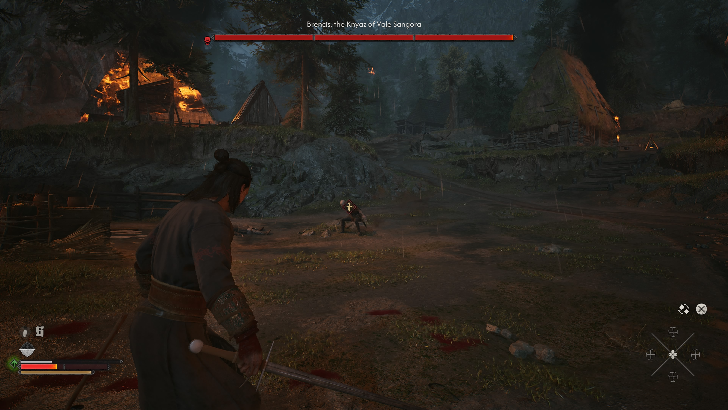
The vampire lore in this game is also something that should impress even the most die-hard vampire fans, as it isn’t simply borrowing aspects from the ageless tales of Dracula or Nosferatu. Instead, it takes a much more personal approach, following Coen who has become a monster as he races to save his family before the Vrakhiri bleeds them dry. What Dawnwalker brings to the table feels genuinely unique, and it’s all made better with its alluring mystery surrounding Coen’s newfound powers, with plenty of hidden lore waiting to be uncovered as the story builds toward its climactic moments.
Combat Doesn't Have Enough Fangs
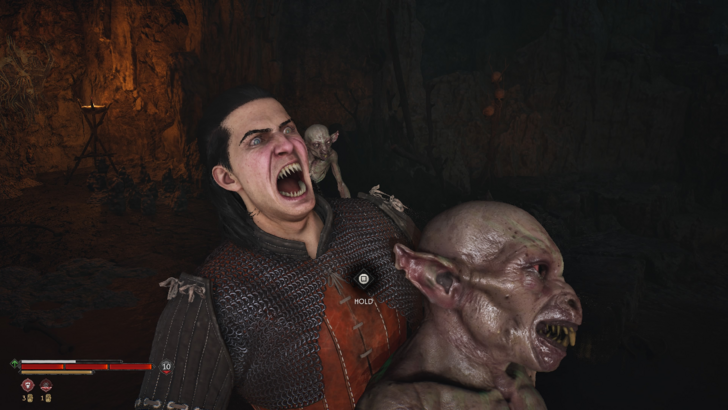
The Blood of Dawnwalker’s gameplay is something I’m pretty indifferent to. As someone who found The Witcher 3’s combat system too unintuitive and barebones, seeing Rebel Wolves make the same mistake with Dawnwalker’s combat is disappointing.
For starters, the movement system in this game is very finicky. Most of the time, Coen gets stuck on random objects or he glitches his way around as I stalk through the rooftops of Svartrau looking for points of interest. It’s not exactly game-breaking, but it’s jarring enough that I’m surprised this is the same problem I experienced with Geralt and Roach’s movement in Wild Hunt. How it has crept its way into Dawnwalker despite running on a completely different game engine still eludes me.
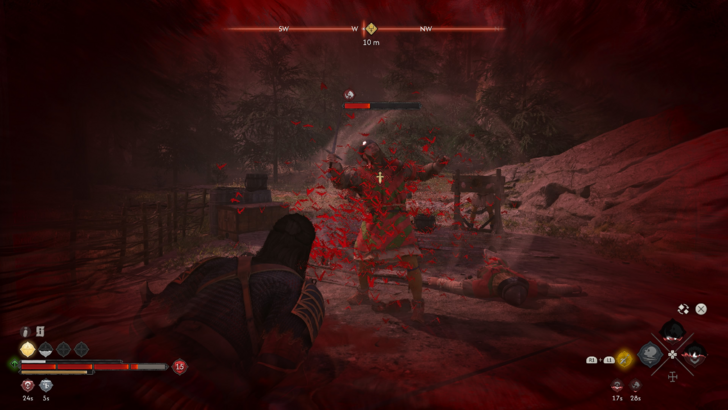
In Dawnwalker’s melee combat, you’re essentially just waiting for your turn to strike or parry. This makes every encounter feel overly reactive, with barely any room for emergent combat situations, as you’re either waiting for your cooldowns to end or watching for the enemy to telegraph its next attack so you can land the perfect parry. It also doesn’t help that there’s a severe lack of enemy variety and most of them are bullet-sponges. There were moments when I didn’t even want to bother fighting a group of wolves because I’d been fighting the same enemies for what felt like half the game.
As for being a Dawnwalker, there’s also no truly distinguishable difference between playing as a vampire or human. Most of Coen’s skills feel too similar to one another, leaving little room for buildcrafting or experimentation unless you’re focused on min-maxing your character. Yes, Coen may have bloodthirsty tendencies toward even his closest NPCs, but they’re not as restrictive as you’d think unless you’re simply not paying attention to your controls.
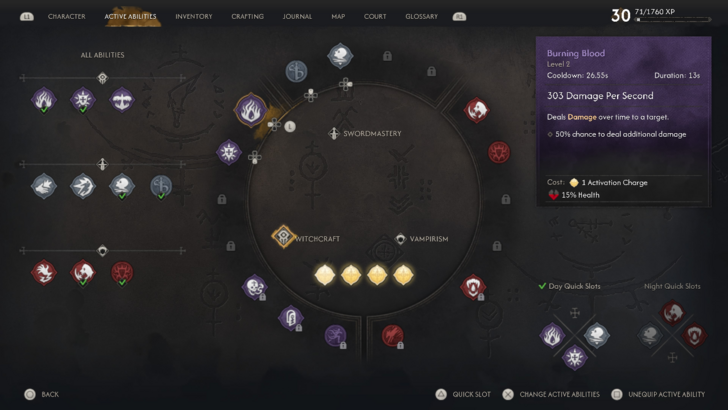
It is also counterproductive that the game makes its progression unnecessarily complicated. Coen needs to find specific manuals and recipes to unlock certain skills rather than simply learning them immediately. It’s an immersive form of progression, which I don’t necessarily see as a problem because it adds detail, but quality of life matters a lot in a game that already treats time as a precious resource. This gets even more complicated when upgrading a skill point also uses in-game time as well. But it’s something I’ll talk more about later.
So, most of the time, I’ve been holding off on spending skill points, leaving me with more than 15 unused by the end of the game. I only saved them for the most important aspects of my playstyle, which mostly revolved around the overpowered Artery Strike and a couple of Witchcraft spells. Voracious Bite was also my only reliable vampire ability, with the others mostly serving as situational buffs. None of them were even fully upgraded because I was still missing their manuals and upgrades scattered throughout the open world.
That said, this is Rebel Wolves’ debut project after The Witcher 3, and not everything it carried over from CDPR’s previous issues is questionable. The Blood of Dawnwalker’s melee combat is an improvement over Geralt’s steel and silver sword maneuvers. The omnidirectional attacks make combat a little less tedious, and there’s something incredibly satisfying about perfectly parrying an enemy before slicing them into mincemeat in a cinematic coup de grace. I just wish the cooldowns weren’t as frequent, especially when compared to the way Geralt uses his Witcher Signs.
30 Days of Dawnwalking
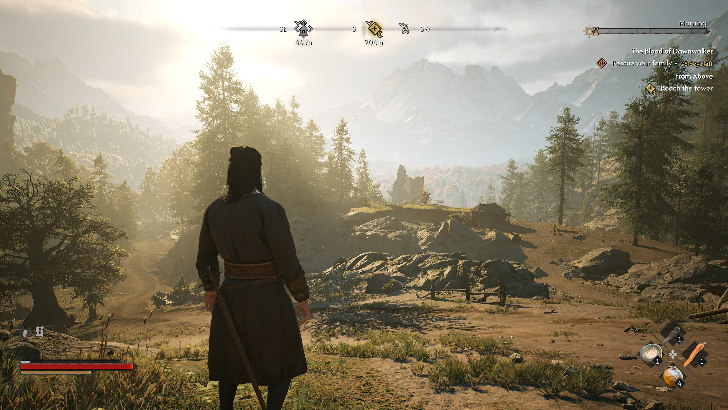
Now for The Blood of Dawnwalker’s big elephant in the room.
Completing most side quests, upgrading abilities, and progressing the story all take up time within its diegetic 30-day cycle. Unlike other RPGs where you can freely take on as many side quests as you want without worrying about the consequences, this game treats time as a resource, similar to how modern Persona games use their day-to-day activities.
This is arguably one of the more polarizing aspects of Dawnwalker, but the criticism surrounding it has been blown out of proportion by some players. Personally, it took a while to click for me but now it’s one of my favorite RPG mechanics in a long while because it actually punishes players for taking their sweet time doing god knows what. One of the biggest problems with The Witcher 3’s story was that Geralt had so many distractions, from finding question marks scattered across Skellige to playing Gwent, while his adopted daughter was out there fighting for her life. The Blood of Dawnwalker remedies that problem by putting an actual time limit on your progression, giving your choices and actions a greater sense of urgency.
This makes every activity feel like a constant battle between "Should I do this now?" and "Should I save it until I have more time?"
But don’t let it intimidate you, as the 30-day timer gives you plenty of breathing room to experience most of what the world has to offer. For starters, time doesn’t really move when you’re just strolling in its open world and killing random mobs of enemies. In my playthrough, I completed most of the major side quests involving characters like Anca and Lacra, and still had nine days left to tackle other activities I had missed, such as restoring broken shrines or upgrading my Witchcraft abilities, which admittedly weren’t a big part of my playstyle.
There’s an impressive amount of choice layered into Dawnwalker’s time-bound activities, and it’s one of the game’s most ambitious features. The intentionality of this system is so apparent because you can opt out of certain activities that don’t benefit your playthrough, like how I ignored most Witchcraft upgrades because I prefer swords over spells. However, the system desperately needs more consistency, especially now that a sequel is already in the works. Improvements like clearly indicating how much time each activity consumes could do wonders, because the amount of time certain actions take feels inconsistent throughout my playthrough. A simple act like Coen destroying a barrel of blood can cost three bars of time, while digging up a treasure only costs two.
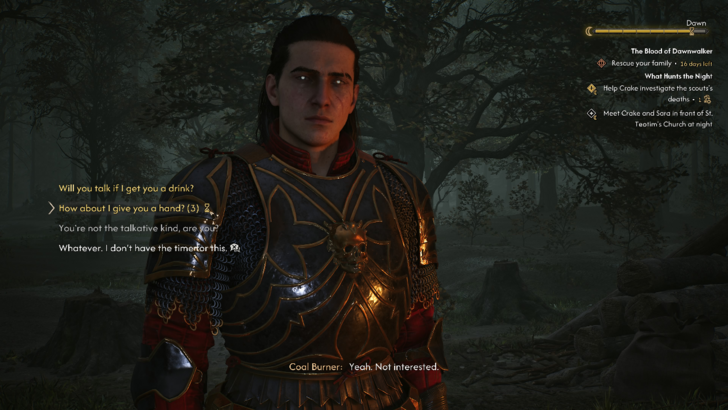
It’s also worth noting that the game’s progression isn’t entirely linear. You can technically ignore all these activities, hunt down none of the three Vrakhiri, and focus on one particular quest path towards the final boss, almost like heading straight for Calamity Ganon in Breath of the Wild. Doing so, however, leaves you severely underpowered.
There’s a real Zelda-like progression to Dawnwalker, something I never expected to see in an RPG. The game pulls this off surprisingly well because most of the activities scattered throughout its world are optional, but taking the time to complete them gives you far more advantages than disadvantages.
Not the Best Game for Unreal Engine 5
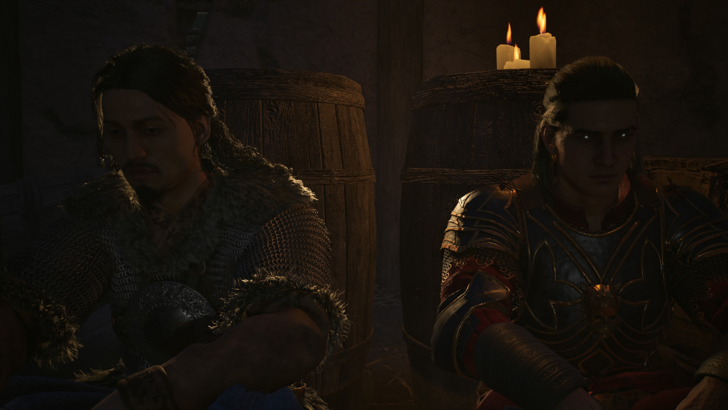
One other thing I’d also like to mention is how much Dawnwalker suffers in quality because of Unreal Engine 5’s wonkiness. Many of the game’s biggest problems, aside from its combat, come from how poorly optimized this game can be.
Playing on my base PS5 in Balanced Mode helps a bit, as the visuals are much crisper and the atmosphere feels a tad more immersive at 40fps. However, visual glitches still pull me out of the experience. Light streaks not working as intended and shadows going haywire around Coen’s neck are so common that I’m not even surprised when I see them. They’re likely tied to Unreal Engine 5’s inner workings, though I’m no expert in the field to say exactly what’s causing them.
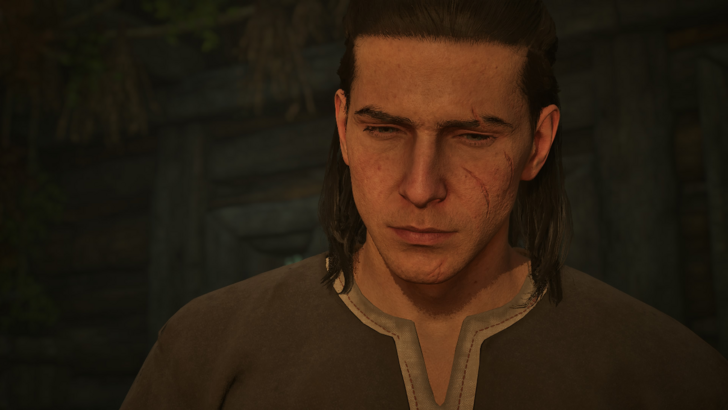
Cutscenes also suffer from bizarre pop-ins that can ruin otherwise dramatic moments. Performance can tank when dashing through Vale Sangora using Coen’s speed powers, while menu navigation can also be a chore due to its lack of quality of life. There are even instances where icons become so low-quality that I couldn’t make sense of what I was looking at.
Don’t get me wrong, The Blood of Dawnwalker is a beautiful game, but Unreal Engine 5 isn’t doing it any favors compared to what The Witcher 3 managed to achieve with CDPR’s now-defunct REDengine. It’s disappointing because there’s so much promise in Dawnwalker’s dark-fantasy setting, and I can’t help but feel it could have been even more impressive if Rebel Wolves had more time to refine its mastery of the engine.
Letting the Right Characters In
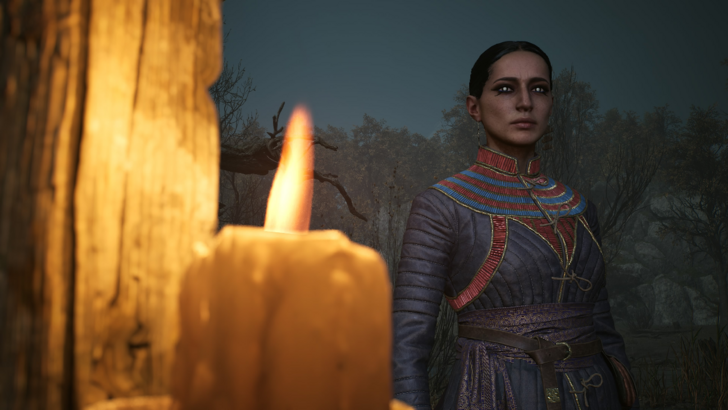
While Dawnwalker’s combat and visuals aren’t anything worthwhile, its writing and character work are far from disappointing and the best I’ve seen this year.
These characters feel like real people struggling to find meaning in a world completely devoid of hope. Every major quest in Dawnwalker is dedicated to fleshing out the game’s major cast, each of whom plays an important role in your journey to take down Brencis. Anca helps empower Coen’s Witchcraft abilities, Lacra strengthens his Vrakhiri powers, and Crake focuses on his swordfighting mastery. While they may serve as stepping stones for upgrades, their personal stories are deeply woven into these quests, giving you a clearer picture of who they are and why they matter to the story as well.
This is also where Rebel Wolves seamlessly weaves romance into these stories. In between these side quests, you can nudge Coen toward either genuine flirting or a more platonic relationship with each of these three candidates, which made me appreciate how Coen’s character develops because you get to see more of his human side when he’s not solely focused on saving his family.
Oddly enough, you can even spot traces of Witcher 3’s character-work throughout the game, from Yennefer’s personality reflected in Lacra, to Triss’ softness with the Witch, Anca. Though that shouldn’t take away from their originality as characters, as it's already clear that these fresh cast of faces have their own motivations.
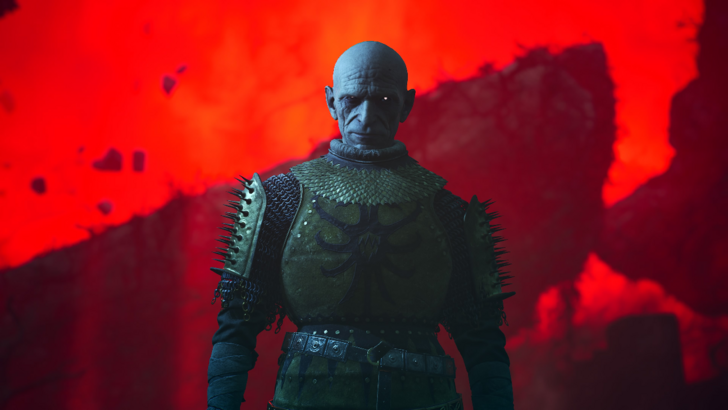
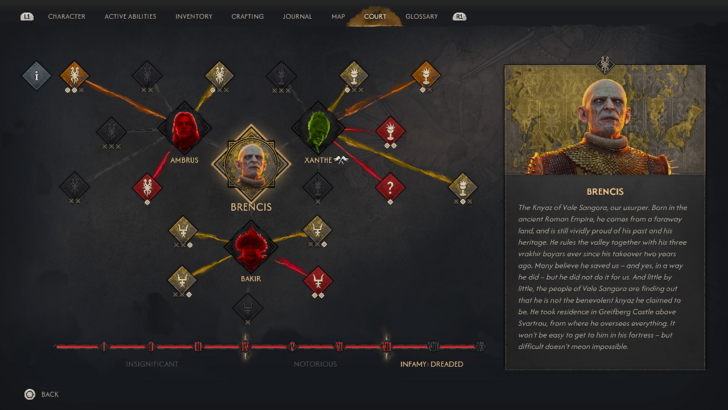
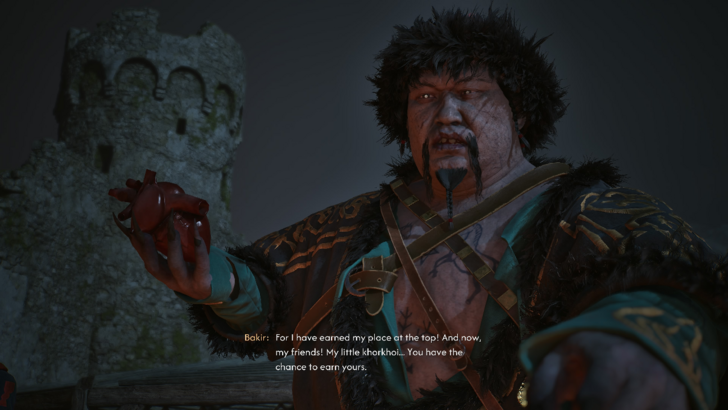
Aside from the main cast of heroes, the villains are also some of the most compelling characters in the game. Brencis’ Court of vampires, namely Bakir, Xanthe, and Ambrus, each parallel Coen’s allies rather than existing as mere fodder for his bloodlust. Getting to them takes a while, as you need to complete a couple of side activities that piss them off enough to earn an invitation to their audience.
That sense of choice, extending even to its villains, is another reason why I like Dawnwalker’s story. Unlike Coen's three romanceable characters, these three Vrakhiri also have their own unique options at the end of their questlines, allowing you to either use them as a means to an end or simply take them down in one fell swoop.
It’s during these villainous encounters where I have to give credit to Rebel Wolves, because not every game can make me stop and think twice before saying, "Huh, maybe the villain isn’t exactly bad."
Is The Blood of Dawnwalker Worth It?
Quality Eclipses Its Flaws, and I’m Hungry for More
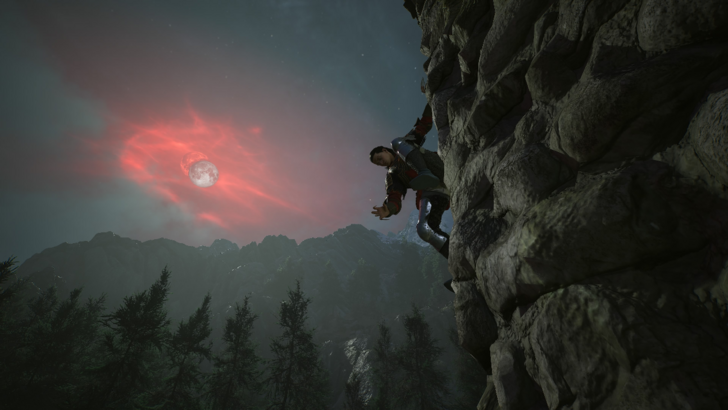
The Blood of Dawnwalker isn’t afraid to embrace its freshness in the RPG scene, delivering an ambitious entry carried by its stellar writing and novel 30-day time limit. Yes, there are clear design flaws that taint its otherwise impressive dark-fantasy setting, from its barebones gameplay that could use more work to its poorly optimized Unreal Engine 5 performance. But the level of quality coursing through Dawnwalker’s veins ultimately eclipses these issues, and a couple of updates could go a long way toward fixing them.
While it’s hard not to compare it to The Witcher 3 due to their many similarities, Dawnwalker ultimately proves that it’s more than just a shadow of its silver-haired peer. Coen’s journey leaves plenty of room for this new series to grow, and I’m genuinely hungry to see where this fresh-blooded IP goes next.
FAQ
How Many Romance Options are in The Blood of Dawnwalker?
The Blood of Dawnwalker has three romance options to choose from: the witch Anca, the Vrakhiri Lacra, and Crake, the leader of the Manumits.
What Happens When the 30-day Timer Ends in The Blood of Dawnwalker?
When the 30-day timer ends, you can still finish the main story, as the game immediately pushes you toward the final boss and the endgame. However, any unfinished tasks and side quests will be left behind.
Are There Multiple Endings in The Blood of Dawnwalker?
The Blood of Dawnwalker has four major endings: The Turncoat, Folk Hero, Patricide, and Knyazmaker. Which ending you get ultimately depends on the choices you make and which side you choose to support by the end of the game.
The Blood of Dawnwalker Recommended Guides
 Main Quests Main Quests
|  Side Quests Side Quests |
 Endings Endings |
 Choices Choices |
 Romance Romance |
 Bosses Bosses |
 Abilities and Perks Abilities and Perks |
 Best Builds Best Builds |
 Weapons Weapons |
 Armours Armours |
 Accessories Accessories |
 Items Items |
 News & Game Info News & Game Info |
 Review Review |
Game8 Reviews