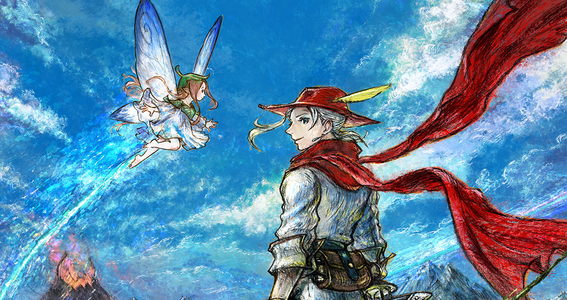




Another Eden Begins is a turn-based JRPG where players travel through different eras, build parties, and battle enemies with Chain Skills. Read our review to see what it did well, what it didn't, and our overall impressions of the game.
Overview
What is Another Eden Begins?
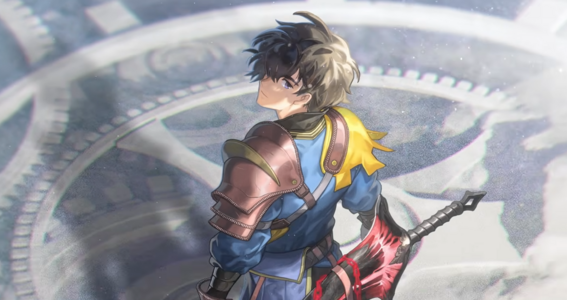
Another Eden Begins is a single-player turn-based JRPG that follows Aldo, a young man who travels across different eras to save his kidnapped sister, Feinne. Players explore a world spanning the past, present, and future, recruit a large roster of characters, and battle enemies using Chain Skills, Valor Change, and Another Force. The game also features character-focused Ally Quests, multiple endings, a New Game+ mode that carries progress forward, and a variety of weapons and equipment to collect and craft.
Another Eden Begins features:
⚫︎ Turn-Based Combat with Chain Skills and Another Force
⚫︎ Time-Traveling Adventure Across Multiple Eras
⚫︎ Large Character Roster and Fully Voiced Ally Quests
⚫︎ Exploration with Hidden Areas and Interactable Environments
⚫︎ Multiple Endings and New Game+
⚫︎ Four Swappable Parties with Valor Change
| Digital Storefronts | |||||
|---|---|---|---|---|---|
 Steam Steam |
 Switch Switch |
 Switch 2 Switch 2 |
|||
| $39.99 | $44.99 | ||||
Another Eden Begins Review: Proof That the Classics Still Work
Revisiting a Familiar Premise
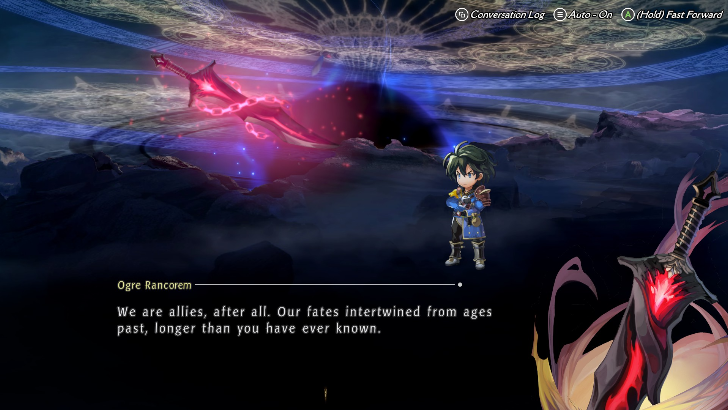
Masato Kato helped shape the JRPG landscape with Chrono Trigger, one of the genre's defining adventures and a game that helped establish time travel as a powerful storytelling tool in JRPGs. More importantly, it understood how much mileage a story could get out of making the past, present, and future part of the same adventure. Decades later, Another Eden Begins puts Kato's fascination with time back at the center of a new adventure, bringing a classic style of JRPG into the modern era.
Another Eden Begins doesn't attempt to reinvent the genre. Instead, it understands what makes these familiar ideas work in the first place. Its journey across different eras gives its world room to change and connect in unexpected ways, while its characters and turn-based combat give the adventure enough substance to stand on its own. None of these ideas are new, but the game rarely treats familiarity as a substitute for substance.
The result is a JRPG that can stand alongside the giants that came before it without needing to imitate them outright. Another Eden Begins is proof that the classics still work.
More to the Story Than Meets the Eye
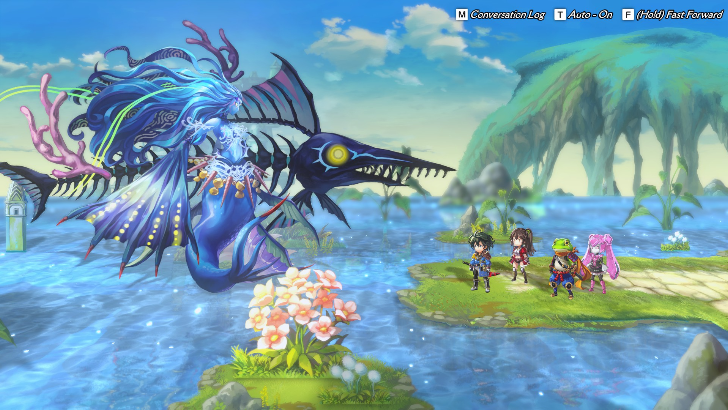
Another Eden Begins (AEB) tells the kind of JRPG story that has been around for decades. The story centers on Aldo and Feinne, orphaned siblings found in a forest and raised in the quiet village of Baruoki. After Aldo joins the village guard, his peaceful life is upended when Feinne is kidnapped by the Beast King, setting him on a journey through space and time to bring her back. The premise is familiar, but the game understands that a good JRPG doesn't need to reinvent the wheel when the old one still works.
Despite moving between different eras and steadily expanding the scope of its conflict, the narrative remains remarkably easy to follow. The story is largely linear, and Aldo's reason for moving from one place to the next is almost always clear. What starts as a mission to rescue Feinne gradually draws Aldo into the conflicts of each era, eventually revealing a calamity that threatens every timeline. That escalation doesn't come out of nowhere, either. The game steadily builds on concepts it establishes earlier, making the adventure feel less disconnected than I initially expected.
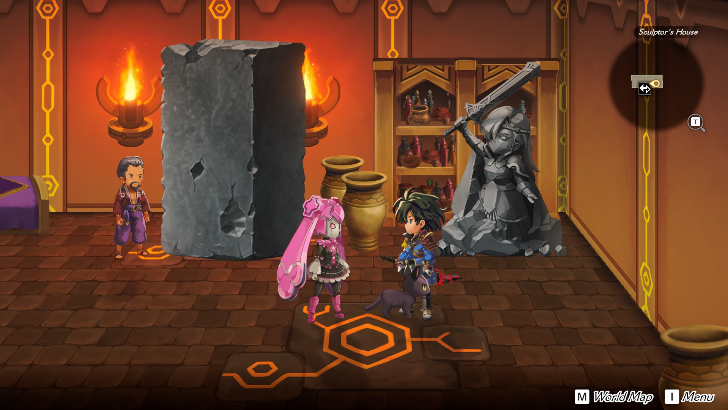
The time-traveling premise is at its best when the different eras stop feeling like separate levels and start feeling like parts of the same world. That connection isn't limited to the main story, either. Speaking to a sculptor in Antiquity can alter the statue back in Baruoki, with the original unfinished statue in the past moved aside as the sculptor works on the new one. It's a minor, easily missable interaction, but it makes the timeline feel tangible rather than merely decorative. This is the kind of thing I want from a time-traveling JRPG: not just different periods to visit, but a world where those periods feel connected. AEB generally understands that distinction.
The game even carries that sense of continuity into its smaller details. NPC dialogue in major cities can change as the story progresses, occasionally offering another perspective on events unfolding throughout the three eras. These details aren't necessary to understand the plot, and the game could have gotten away with leaving them out. Instead, they give revisiting familiar places a little more meaning and reward paying attention to how the world changes over time. The game doesn't need to constantly explain why its timeline matters. It gives the player enough room to notice.
Clarity With a Limited Perspective
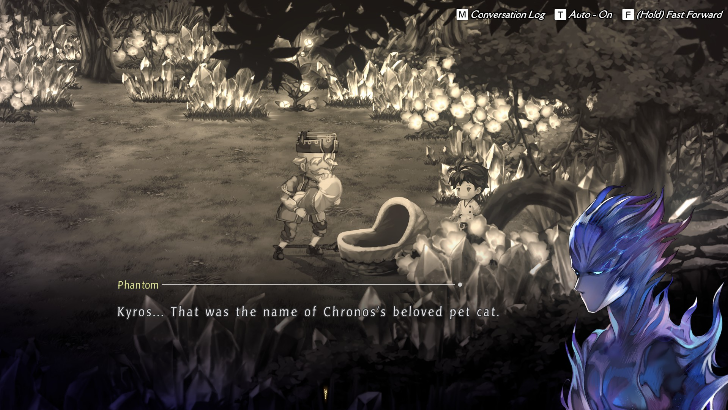
A classic JRPG can get surprisingly complicated once its initial rescue mission turns into a world-spanning crisis. Another Eden Begins understands that the trick isn't to explain everything immediately, but to give the player enough information to follow Aldo's next step. There were very few moments where I found myself wondering whether I had missed an explanation or simply forgotten an important detail. Not everything is spelled out, but there is generally enough information to keep each development grounded without drowning the player in exposition.
That clarity is especially important because Aldo and the player are both working with incomplete information. Unlike some games that pull back the veil to show what notable characters are doing outside the protagonist's perspective, Another Eden Begins keeps its narrative focus mainly on Aldo. As such, when more information comes to light, our assumptions are challenged, and we have to deal with the consequences of decisions made without the full picture. An early decision that seems necessary at the time can eventually set off a chain of events far beyond what Aldo intended, turning a seemingly contained problem into a much larger threat.
His setbacks, therefore, feel less like arbitrary obstacles placed in his path and more like natural consequences of navigating circumstances he doesn't fully understand. The story gives Aldo plenty of room to make mistakes, but it also allows him to learn from them and keep moving forward. That is what makes the structure work: the game takes the familiar JRPG progression from a personal rescue mission to a crisis of much greater scale, but lets that escalation emerge through Aldo's limited understanding rather than simply announcing the next threat. The result is a story that can become increasingly elaborate without losing the straightforward momentum that made the journey easy to follow in the first place.
Characters That Make the Journey Personal
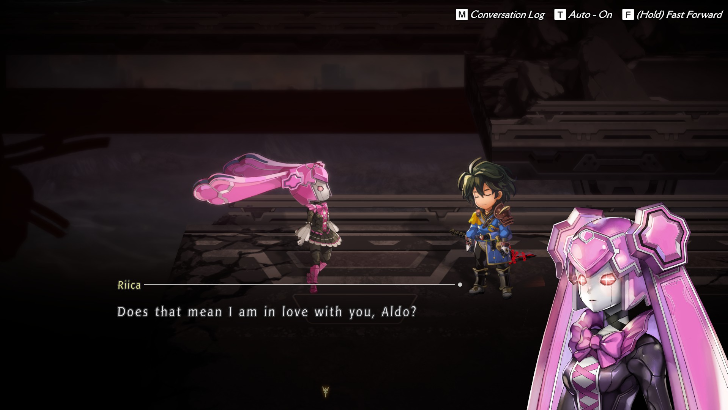
A large JRPG cast has to serve two purposes: its members need to support the main narrative, but they also need enough room to develop either during or beyond it. That balance is part of what makes a long-form JRPG adventure feel like a journey shared with a party, rather than simply a sequence of objectives. Another Eden Begins handles the second part more consistently than the first. Its Ally Quests give individual characters room to explore their personalities and relationships with Aldo through smaller conflicts that would have been difficult to fit into the main story.
Riica, Aldo's ever-stalwart and curious android companion, is one of the better examples of this. Her attempts to understand human emotions give her a distinct place within the group, particularly when that curiosity leads her to some hilariously misguided conclusions about things like love. Her Ally Quests don't need an elaborate subplot to make those traits memorable. They simply give her enough room to bounce off Aldo and explore an aspect of her character that the main story never had the time to address.
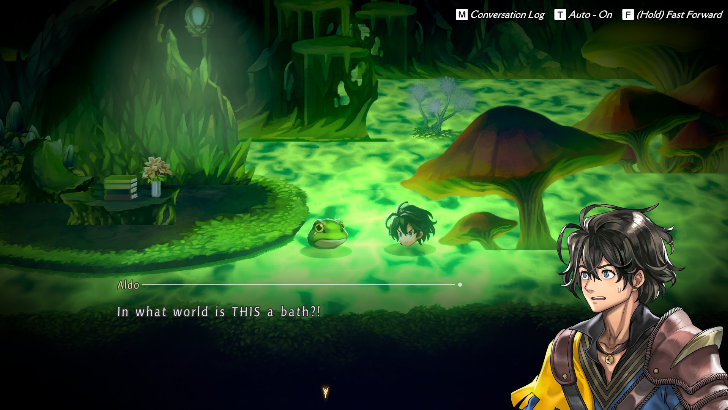
The catch is that most of this characterization is kept firmly within the Ally Quests. For a ragtag anachronistic group, the main story doesn't always make as much use of that potential. The party generally works together without much interpersonal friction, and there isn't much disagreement over the decisions they make. The characters travel through different eras together, but the story only occasionally lets that displacement meaningfully affect their relationships. There are opportunities for characters to react to unfamiliar technology, customs, and ways of life, but these moments are relatively sparse given how central time travel is to the adventure.
That makes the Ally Quests an effective, if somewhat compartmentalized, solution. They allow the cast to develop without forcing every member of the roster to compete with Aldo and the central plot for attention. Another Eden Begins understands that a large cast needs dedicated space to develop, but the characterization is often more effective when it emerges naturally from the journey itself. The trade-off is that some of the party's best characterization exists outside the main journey, where these characters have more freedom to simply be themselves. As a result, the cast often makes the adventure feel more populated and personable, but less often makes it feel like a journey shaped by the relationships within the party.
Tried-and-True Gameplay, With a Twist
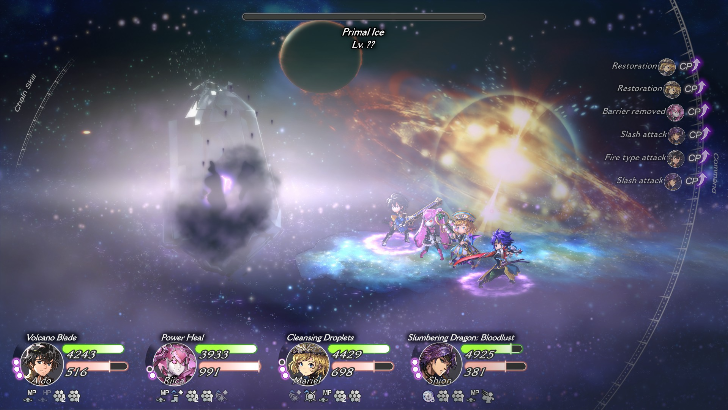
Another Eden Begins doesn't try to make its combat more complicated than it needs to be. Its turn-based system is built around familiar JRPG fundamentals, with four-character parties, different attack types, elemental weaknesses, buffs, and debuffs. The foundation is straightforward, but the systems built around it give party composition and coordination greater importance without making the combat feel needlessly elaborate.
Chain Skills are the clearest example of this approach. Each character has a Chain Skill with its own activation condition, with Chain Points earned through actions such as landing critical hits or attacking elemental or attack-type weaknesses. Because those conditions vary between characters, building a party becomes less about choosing four individually strong units and more about finding combinations that can consistently activate their Chain Skills. Successful activations can also help fulfill the conditions of another, creating opportunities for characters to feed into one another.
That gives the familiar party-based structure more weight, especially since characters can directly enable one another's abilities. The system still relies on exploiting weaknesses and coordinating a party, but it gives those ideas more room to interact. The result is a combat loop that rewards understanding how a team functions without requiring every battle to become a complicated puzzle.
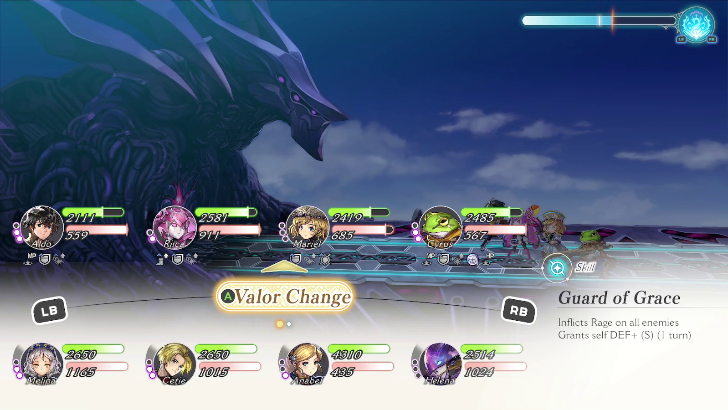
Valor Change extends that same philosophy to the wider roster. The Another Party system provides up to three additional teams that can be swapped into battle once enough Valor Charges have been accumulated, while the character initiating the change activates their Valor Skill to buff the incoming party or debuff enemies. A party that cannot exploit an enemy's weakness can give way to one that can, while existing debuffs remain in effect after the switch. Members of the Another Party also gain experience passively, making it easier to maintain a wider roster without constantly rotating characters into the active party. Valor Change gives that wider roster a practical purpose, allowing specialized teams to remain useful without turning party management into a chore.
Another Force, on the other hand, provides a more conventional form of combat momentum. Its gauge fills through battle, and activating it temporarily allows the party to use skills without consuming MP while preventing enemies from acting. It can be used to provide a much-needed burst of damage during a difficult encounter, or as a means to rapidly reapply buffs and heal when a difficult encounter brings the party to its knees. I primarily used it as a DPS tool, but having the option to save it for a dangerous situation gives the mechanic some flexibility.
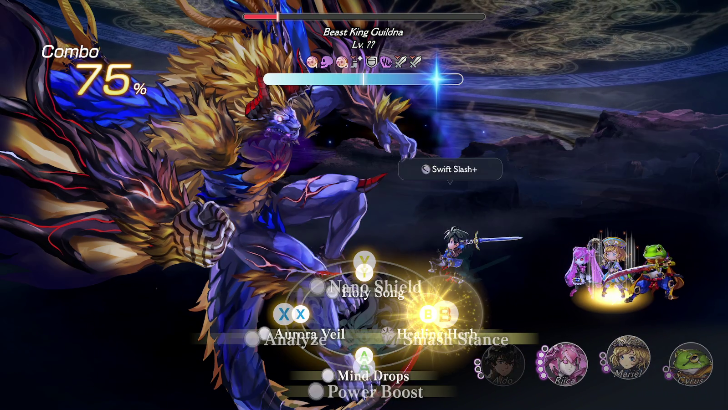
Unlike Chain Skills and Valor Change, Another Force is less concerned with how party members interact and more focused on giving the player control over the pace of a fight. That distinction helps keep the combat from feeling like every system is competing for attention. Some mechanics add depth to party-building, while others simply provide a means to sway the tide of battle back in the party's favor.
Together, these systems give Another Eden Begins' combat more depth without losing the accessibility of its turn-based foundation. Chain Skills make party members matter to one another, Valor Change gives the wider roster a practical purpose, and Another Force provides a straightforward way to control combat momentum. The game doesn't need to reinvent turn-based combat to make it engaging. It understands which familiar ideas are worth preserving, then gives them enough room to work together.
Keeping the Focus on the Adventure
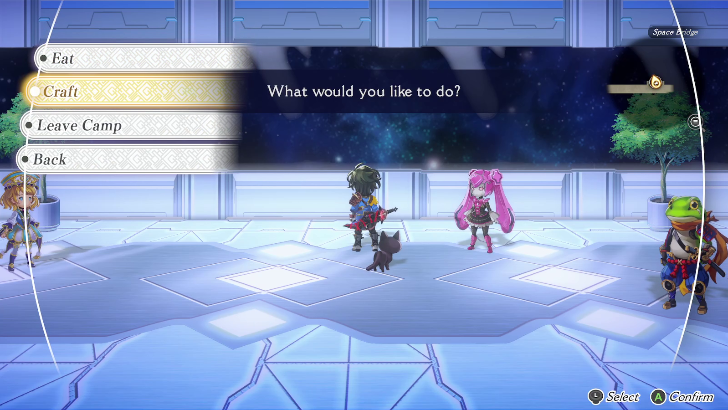
The appeal of equipment progression in Another Eden Begins is how little friction exists between finding an upgrade and putting it to use. Weapons and armor can be crafted from materials found throughout the world or purchased with Git, and the game indicates where those materials can be found. Equipment from shops and chests can carry a party through much of the campaign, providing multiple ways to keep the roster equipped without making upgrades feel like a separate progression system.
Camps reinforce that straightforward approach by providing natural points to prepare for the next challenge. Positioned throughout larger areas, they restore HP and MP while providing access to crafting, food buffs, and party management. Their placement creates a familiar rhythm of exploration, preparation, and then tackling whatever major encounter lies ahead. The main inconvenience is that food can only be consumed at Camps, which can occasionally turn a missed preparation step into unnecessary backtracking.
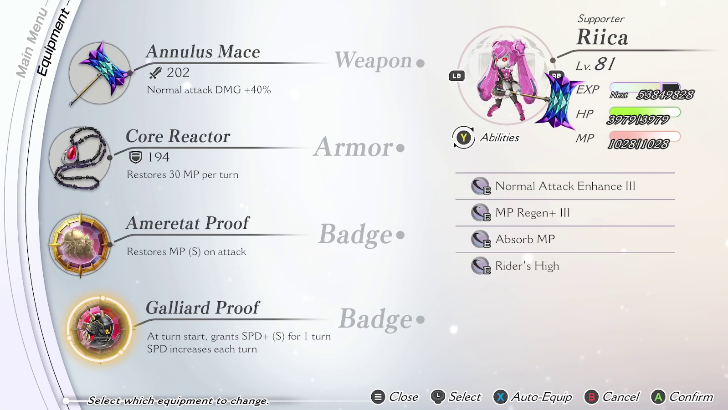
The late-game economy introduces a more noticeable wrinkle. The final chapters provide plenty of Git, but some weapon shops remain unavailable before the first clear, limiting opportunities to spend those resources on a larger roster. This never becomes a progression wall, but it can leave some characters considerably less prepared than others toward the end of the campaign.
Another Eden Begins ultimately understands why this kind of progression has remained effective across generations of JRPGs. Like Chrono Trigger, it keeps equipment and preparation straightforward enough that the focus stays on the journey, while each upgrade still provides a tangible sense of progress. Equipment is easy to understand, upgrades are generally attainable through normal play, and Camps establish a useful rhythm of preparation and exploration, with their arrival serving as both a relief and a warning for what lies ahead. Its few rough spots are hard to ignore, but they don't undermine an otherwise restrained approach that works in its favor.
Good Looks, Sounds Better
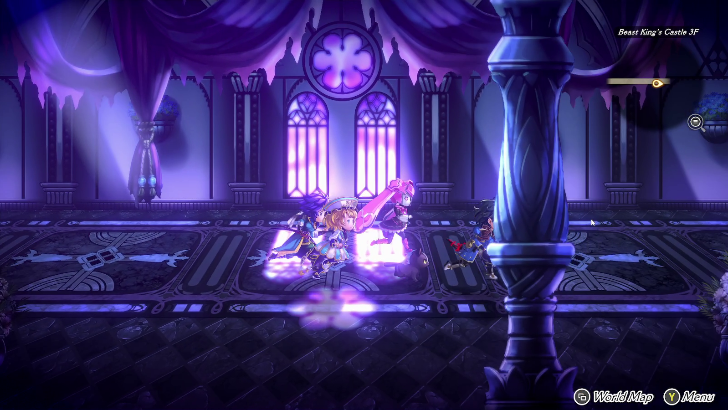
Another Eden Begins doesn't need to constantly chase spectacle to make its presentation effective. Its visuals largely stick to familiar conventions, using small 2D sprites, simple animations, and restrained ability effects while allowing the environments to establish each era's identity. The presentation isn't especially ambitious on a technical level, but it is charming and readable, which gives the world and its characters room to stand out.
That restraint also makes the game's larger moments more impactful. Major encounters can dramatically alter their surroundings or fill the screen with elaborate attack animations, while Another Force provides some of the biggest visual flourishes in combat. Skills fly by in rapid succession, the background changes, and Aldo can finish the sequence with a massive sword slash. The game doesn't need every attack to look spectacular when it can save that spectacle for moments that deserve it.
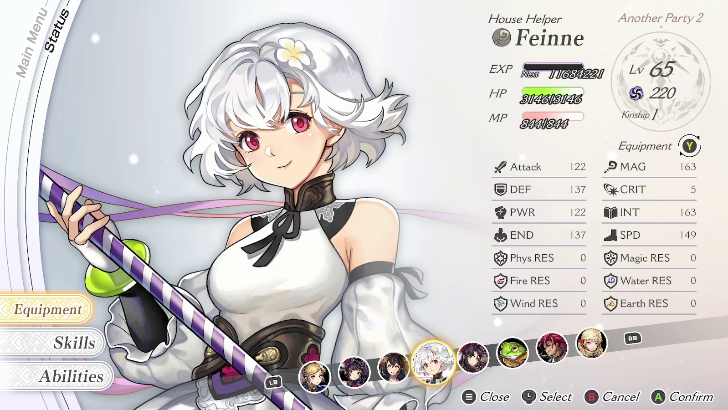
The interface is where this otherwise restrained approach starts to falter. Some skill descriptions are vague about what abilities actually do. For example, a healing skill was described as “Restores an ally (L),” and it never specified whether it restored HP or MP. I had to get into a fight to figure out what it actually did. Managing a larger roster can also make the Equipment and Abilities menus cumbersome, with character selection tied to the current party layout and inventory screens requiring plenty of scrolling. Overall, the underlying systems are manageable, yet the menus sometimes add friction where the rest of the game tries to avoid it.
The audio, meanwhile, shows how familiar presentation choices can still be remarkable when they are executed well. Different regions and cities have their own themes, giving them a distinct identity even when the visuals remain relatively understated. Much of the music comes from the original Another Eden soundtrack, including one of my favorites, “Hurry Up!” (急げ!). Its fast rhythmic snares and staccato violin create an immediate sense of momentum, while the French horns gradually swell into the arrangement. It starts energetic and steadily builds into something triumphant, giving the track the kind of lift that makes it stick. It's the kind of song that made me stop and think, “Yep, that's the heroic theme right there.”
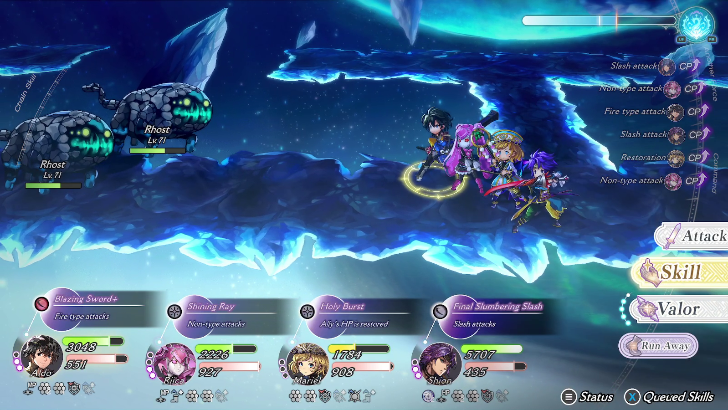
That same strength carries into the voice acting and combat audio. Most important dialogue receives voice work, including the Ally Quests, and the performances give these smaller stories more personality through comedic timing and character-specific delivery. Distinct sounds for different weapon types and elemental attacks also give individual actions their own weight, reinforcing the impact of combat without overwhelming the presentation.
Another Eden Begins doesn't need to reinvent its presentation to make it memorable. Its visuals understand the value of readability and selective spectacle, while its music, performances, and effects show how familiar tools can still be remarkable when they are executed well. The interface is the main exception, occasionally making otherwise manageable systems more cumbersome than they should be, but the overall presentation succeeds because it understands which conventions are worth preserving, and where it is worth breaking away from them.
Is Another Eden Begins Worth It?
An Adventure Worth Reliving
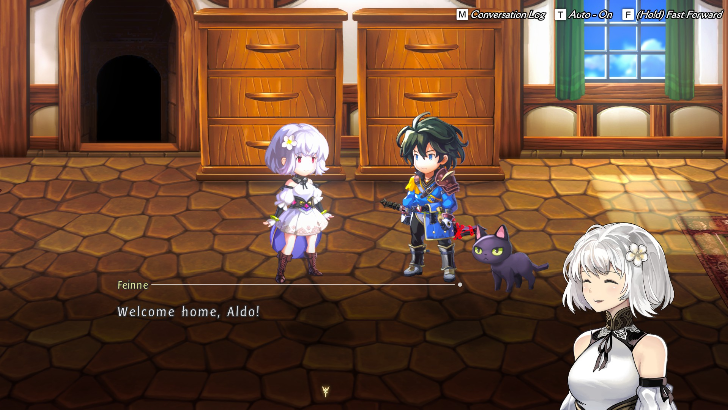
Another Eden Begins embraces the traditions of the classic JRPG without making them feel outdated. The game fully commits to being a straightforward adventure built around earnest characters, familiar turn-based combat, and a big time-traveling story. Rather than constantly trying to reinvent those ideas, it focuses on executing them well and gives each one the care it needs to work.
The experience isn't without its rough edges. Some of the interface is cumbersome, certain mechanics could explain themselves better, and the visual presentation is modest outside of its bigger moments. Those shortcomings rarely interfere with what makes the journey compelling, though, because the game's strongest qualities come from its fundamentals: a story that steadily expands in scope, combat that rewards engaging with its systems, characters worth getting attached to, and a soundtrack that elevates the adventure at every turn.
Another Eden Begins ultimately proves that the classics still work. Its time-traveling adventure, party-based combat, earnest characters, and sense of discovery feel like a formula from another era, yet none of it feels out of place in a modern JRPG. It doesn't need to reinvent those ideas to justify its existence. It simply is a great old-fashioned JRPG, and that's more than enough reason to recommend it.
Game8 Reviews