




| Wuthering Waves | |||
|---|---|---|---|
| Release Date | Gameplay & Story | Pre-Register & Pre-Order | Review |
Wuthering Waves is holding a collaboration event with Cyberpunk: Edgerunners, complete with a dedicated scenario featuring core crew members Lucy and Rebecca. Read our story review to see what it did well, what it didn't do well, and if its story is something to be remembered.
Overview
What is Wuthering Waves?
In Wuthering Waves, you take on the role of a mysterious newcomer simply known as the "Rover." Waking up without any memories or connections and in a world beset by creatures known as Tacet Discords, they must navigate the war-torn landscapes, underground factions, and roaming monsters to find the truth about themselves and the world.
This time, they find themselves in a chance encounter with two visitors from another world. Materializing deep within the Somnoire's Dream Nodes, Lucy and Rebecca bring with them a heavy, familiar landscape of regret and phantom corporate warfare born straight from Lucy's subconscious trauma. The Rover is now forced to navigate an emotionally charged mystery where the boundary between living memory and psychological nightmare is completely unrecognizable.
| Mobile App Store Pages | |||||
|---|---|---|---|---|---|
 App Store App Store |
 Google Play Google Play |
||||
| PC | |||||
 Epic Games Epic Games |
 Dedicated Client Dedicated Client |
 Steam Steam |
|||
| Consoles | |||||
 PlayStation PlayStation |
 Xbox Xbox |
||||
Wuthering Waves Story Review (3.4 Edgerunners Collab): Still Scarring Us Years Later. Amazing.
Standard-Setting Quality
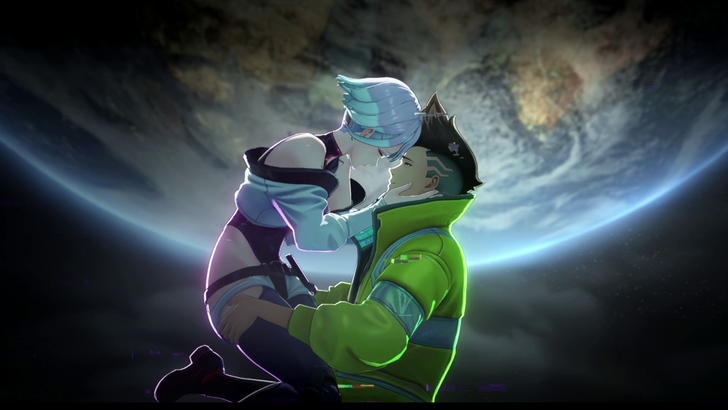
Mentioning Edgerunners to Cyberpunk and anime enjoyers typically elicits two kinds of responses: sustaining emotional damage and the opening lines of “I Really Want to Stay at Your House” suddenly playing in their head, or the urge to open Cyberpunk 2077 and turn Adam Smasher into a smoking pile of electronics. Oftentimes both, really. Fans regard it with the same grief and cope as other beloved titles like Tengen Toppa Gurren Lagann, complete with an ungodly amount of alternate ending fanfiction, to the point that it will often make people who haven’t watched it do a double take.
You could say that a collaboration between Wuthering Waves and Edgerunners, in effect, is a dream come true for many. But there’s no doubt that until its announcement last year, there was no way it would have been on the bingo cards of more than a handful of people. In addition, Wuthering Waves was still recovering from the blow it inflicted on itself back in its early days, so the expectations weren’t sky-high yet.
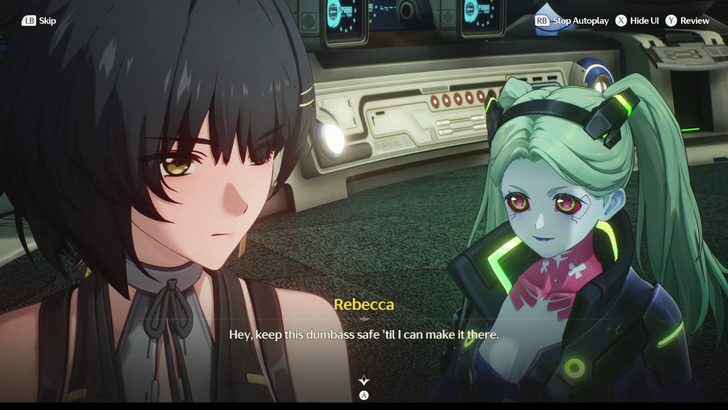
But after multiple hard-hitting versions such as 2.2, 2.4, 2.5, and 3.1, things changed. The story quality of those versions inadvertently increased the expectations people had for the Edgerunners collaboration. If Wuthering Waves could deliver such great, emotional stories without standing on the shoulders of anything else other than what it has created prior, what could it do when worldbuilding has already been done for it?
Magic, that’s what.
WARNING: HEAVY SPOILERS FOR THE EDGERUNNERS COLLABORATION BELOW
Faithfulness to the Source Tragedy
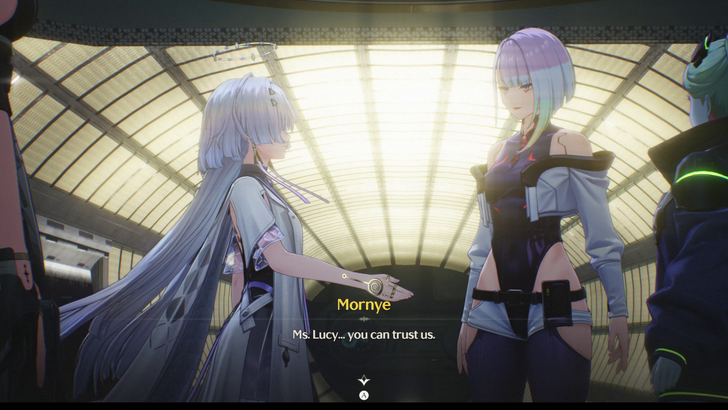
When talking about a collaboration, people often discuss its faithfulness to the source and how it fits thematically to the base title. Like, what the hell was HoYo thinking when they added Aloy to Genshin Impact, or when Square Enix for some reason added Katy Perry to Final Fantasy Brave Exvius? Not only were they wholly inappropriate to the game they were featured in, but their scenarios (or lack thereof) were a surreal and painful experience to sit through.
That is far, far, far from what Wuthering Waves has pulled off. It didn’t just ask itself how their collaboration with the widely beloved anime series Edgerunners could be faithful to the source material, no. It went further and demanded from themselves that they be faithful to the tragedy that its fans experienced as a takeaway from watching until the end.
The entire collaboration story is a deep dive into Lucy’s psyche following the events of the anime. In-game, this manifests as countless sleepless nights that gradually and persistently gnaw at her heart before the events of the main story. Desperate for a moment of peace, she surrenders to a hypnosis-induced sleep—only to awaken within one of the Somnoire’s Dream Nodes.
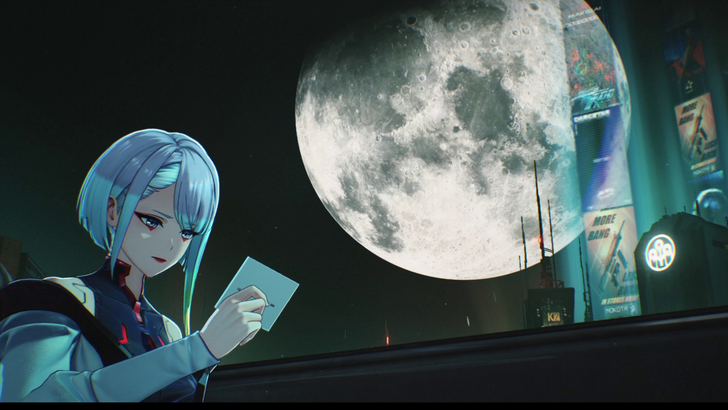
To the uninitiated, Wuthering Waves’ Somnoire is a mystical, otherworldly realm that contains all the dreams, memories, and emotions of the planet Solaris-3 converging onto it. The game’s protagonist, the Rover, shares an intimate connection with it. Hence, it’s not a surprise that this is where they cross paths with Lucy—as well as Rebecca.
Wait, “Rebecca?” you might ask. Isn’t she, you know, dead? Smashed by, heh, Adam Smasher?
This is where the narrative gets juicy. At the start of the scenario, you aren't given any context regarding the timeline, leaving the chronological entry point of the collaboration a complete mystery. The physical presence of a living Rebecca, combined with the revelation that David literally just kicked the bucket a moment earlier inside this dreamscape, initially tricks you into believing this convergence occurred sometime before the anime’s brutal climax. And even with the later flashbacks, it's difficult to ascertain anything because of how natural Rebecca carried herself. Like, if a convergence happened at a specific point in Lucy's life, maybe it also happened at an earlier point in Rebecca's and David's? Not an absurd thought if you want in without any preconceptions.
Wuthering Waves intentionally feeds into this tiny hope that you might get to play with the core crew members of Edgerunners during their happiest days, going so far as to imply that they could simply revive David thanks to the fantasy rules of the Somnoire and offering a clean escape from the cold reality of Night City. Well, guess what? That’s not happening. And Kuro Games and CD Projekt Red had the sadistic audacity to dangle that possibility in front of you for a significant amount of time just to let the hope get ripe enough for a satisfying reaping.
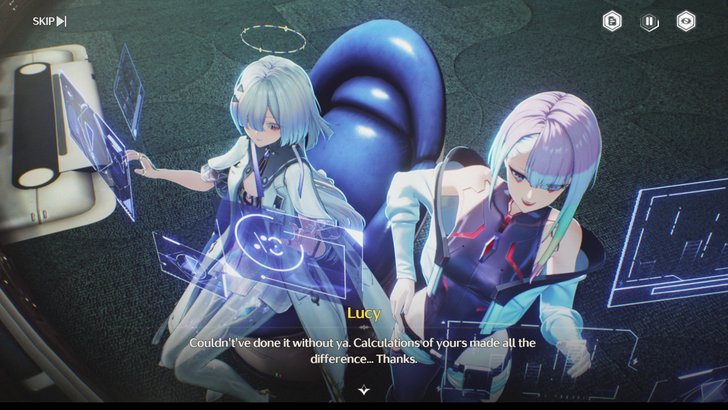
The collaboration scenario with Edgerunners isn’t an escape from the tragic events of the anime. It’s not an alternate reality where the characters chose to live different lives together that resulted in their mutual survival, either. This is a blatant, on-the-nose attempt using means and resources at Wuthering Waves’ disposal to give Lucy the one thing the anime so cruelly denied her: closure. And it was pulled off beautifully.
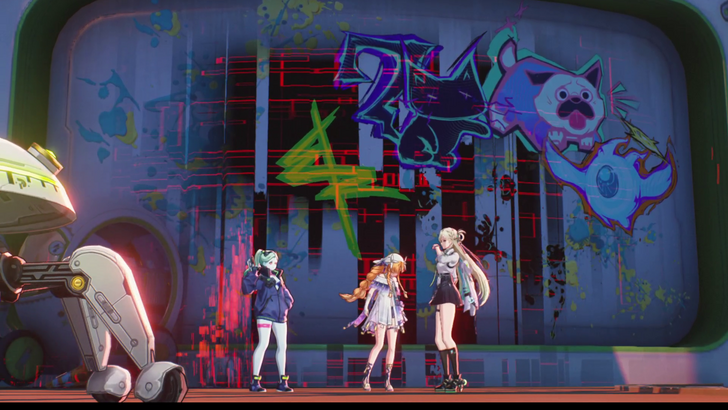
It all starts with the drip-feeding of relevant information. Rebecca’s hand suddenly “glitching” momentarily, for instance. To those who have played through Wuthering Waves’ versions 3.1 to 3.3, a mere glance would trigger a ton of red flags and comparisons with Aemeath. Yet, the circumstances at that point are different because Rebecca is obviously present. She even bonds with Lynae and Sigrika over graffiti and video games, runs from Dr. Luuk’s medical examinations, and crashes at the onslaught of Professor Mornye’s technical jargon. And, of course, she just drops the F-bomb every chance she gets. It’s very typical of her as the adorable, unhinged, loose cannon everyone knows and loves.
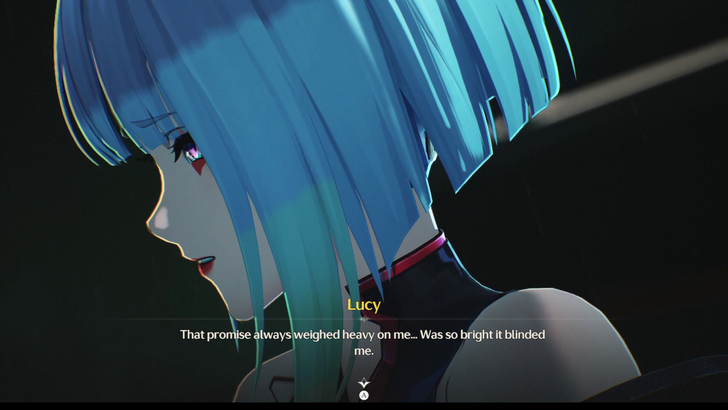
That’s far from where it ends, though. Lucy’s constant visions of David, Adam Smasher’s ominous provocations, the Corpos’ constant attacks targeting Lucy—these only make sense if, and only if, the worst had already come to pass. And, in a vulnerable moment deep within the Somnoire, in the dream world’s faithful recreation of the Japantown Penthouse that she shared with David, she finally clears the air.
Lucy knew she was chasing a ghost. She knew that Rebecca was already dead. She knew that she ended up in a different world through a dream. But despite everything, she still yearned for David, she still regretted not talking more with Rebecca, and she still feared Arasaka.
—And that was exactly why David appeared with them, why Rebecca was able to throw profanities around again, and why Adam Smasher and the Corpos were attacking her and Startorch Academy. They weren't real. She had dragged her own ghosts, her own regrets, and her own trauma into existence, weaponizing the very properties of the Somnoire against herself. And to defeat them meant piecing together the symbol of Lucy’s happiest moments: the Edgerunner insignia—David’s signature—and reviving its owner once again using the dream world’s fantastical properties.
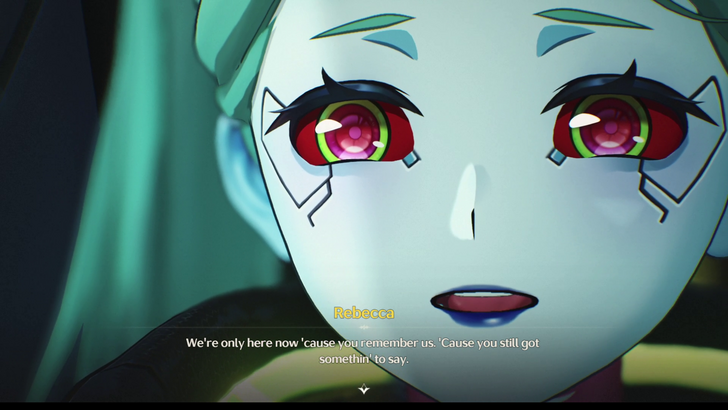
This is, undoubtedly, one of the peaks of this collaboration scenario—and it’s not even the best one. The entire incident of Lucy crossing over and the catastrophe that is the Corpos’ attack on Startorch Academy is a physical manifestation of a mental state so wracked with guilt, regret, and fear that it created those nightmares. And you could hear it in her voice, read it in her lines, during the time she opened up to Rover at the rooftop of her and David’s penthouse. Her words bleed with what was and what could have been. But more than Rebecca, she was most anxious about facing David again. She had lost him once, after all; the only man she had ever loved. There was no way she could stand losing them again.
But what she did not know was that since the very beginning, Rebecca had already known that she was dead. And very likely, David knew too. They were, after all, a product of Lucy’s memories and dreams. The only reason why Rebecca pretended that there was nothing wrong was so that Lucy wouldn’t be tortured even further. Even in death, Rebecca cared so much that she only burdened Lucy with the truth at the very end, all so she could face her fears all at once.
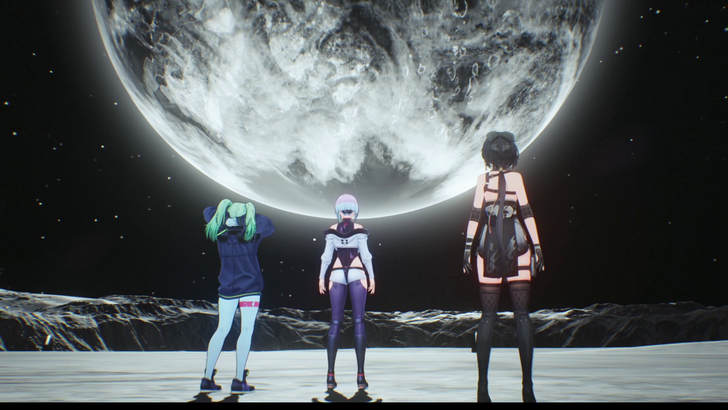
Of course, as you would expect from a gacha story, much more a collaboration scenario, the heroes triumphed at a location deeply connected to Lucy’s dreams—the moon. There, she finally gained the courage to look toward the future and face the ghosts of her past. And as David materialized from the fragments of the symbol that bound them, Lucy was finally able to leap into his arms once again.
Now, that all sounds incredibly cheesy, right? True. But the way Wuthering Waves handled the conclusion, despite how predictable it was on paper, needs to be celebrated. The developers obviously did their homework here, and they made sure that the ending meant much more than just saying goodbye.
In the videogame Cyberpunk 2077, if you go to the North Oak Columbarium, you can find the niches of David and Rebecca where their cremains are interred. On their epitaph, Lucy wrote the following:
For Rebecca: “I regret not finishing our conversation.”
For David: “You didn't take me to the moon, but you were there with me.”
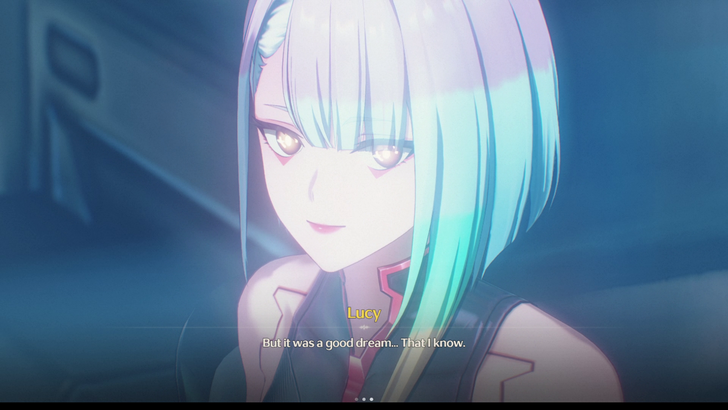
With fear conquered, what was left was regret and yearning.. And this is what I believe Wuthering Waves’ ultimate gift to Lucy—and, in turn, the Edgerunner fandom—truly is: an alternate universe continuation and conclusion to their story, blessed by CD Projekt Red themselves.
The entire campaign gave Lucy the opportunity to have a proper talk face-to-face with Rebecca, and the ending provided a brief, but deeply important moment with David on the moon. It is a piece of wish-fulfillment at a near-shameless level, basically a developer-budget fanfic, but it understands that the only way to "do justice" to a tragedy is to honor the grief, not fix it.
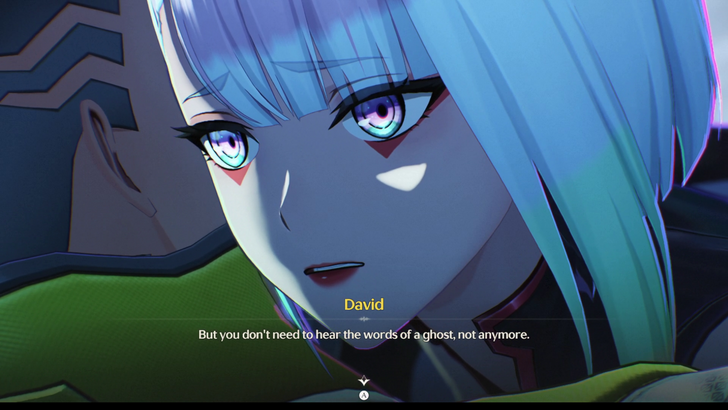
The latter scene was particularly bittersweet. Lucy obviously still yearned, and David had to remind her: they were dead, and the words of a ghost mean nothing. But all the same, he and Rebecca both dearly hoped that she would be happy. And while sharing a final moment together, they disappeared in a cluster of light.
—Damn, I can’t believe I cried over a fanfiction.
Wuthering Waves Through The Edgerunners’ Perspective
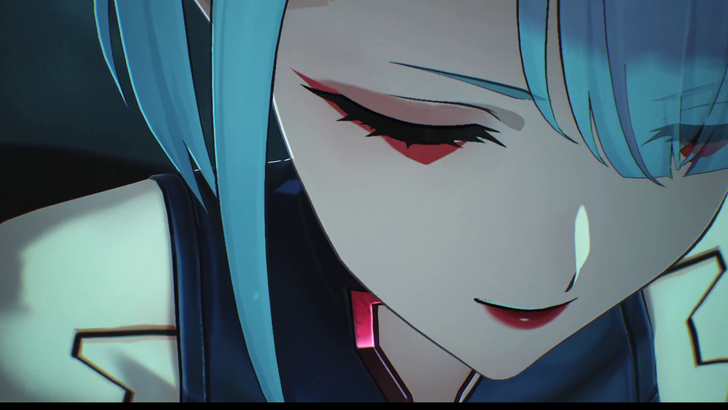
Surprisingly, this collaboration scenario didn’t try to center the story around the Rover. Kuro Games was disciplined enough to set our protagonist aside as much as they could without completely sidelining them. Hell, I would venture to say that the Rover here has been demoted into a plot device.
This was a story about Lucy and Rebecca, pure and simple, where the only catch was that it was told through the setting of Lahai-Roi and the Somnoire, and gilded with an alternate support cast such as Lynae and Sigrika.
… Yes, unfortunately (or more like, as expected), Potential Girl Chisa has been entirely ignored once again.
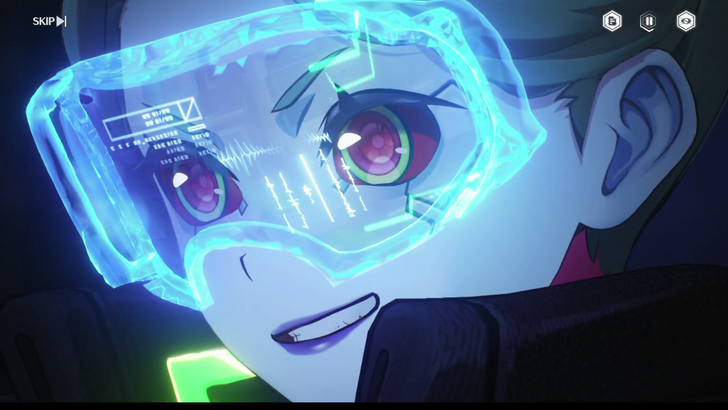
The purpose of every gacha game, and every story that releases along with it, is ultimately to sell a character. A convenient, easy way to do this is to just make the character as attractive and appealing to a wide demographic as possible. And though there’s no doubt that both Lucy and Rebecca are attractive (the former, especially), Wuthering Waves still honored both by fleshing out their characters with an amazing story faithful to the tragedy of its ending set within its universe.
Yeah, said story does have an element of pacing and predictability issues—I mean, you can practically smell when the scene’s preparing to drop enemies on your head—but that barely matters once you manage to lock into the setting.
Anyway, let’s start with Rebecca, the short, hotheaded gremlin of David’s crew. Admittedly, she’s not as fiery or unpredictable in Wuthering Waves’ collab scenario as she was in the anime—a shame, really, until you realize why.
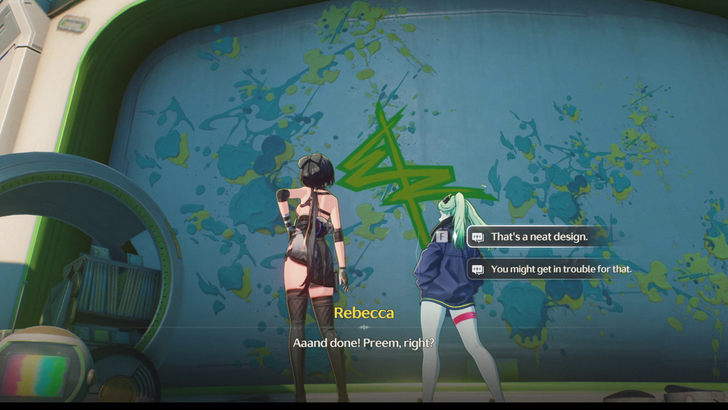
This characterization of Rebecca is the result of a chronological manifestation where she’s alive despite knowing that she’s dead. On top of that, she knows full well that Lucy was the reason why she can walk and talk again. Because of this, she consciously restrains her usual erratic impulses, actively trying to avoid getting in her friend’s way and only showing glimpses of her old, trigger-happy self when interacting with the rest of the cast.
It is an incredibly well-meaning nod to her personality behind all the loud vulgarities in Edgerunners. Her extreme loyalty to her friends and her perceptiveness in noticing David’s descent into cyberpsychosis all manifested in her Wuthering Waves appearance. Hell, even her self-sacrificing nature was faithfully brought over, beautifully exemplified by her restraint when given the opportunity to speak to David; she gives that precious moment entirely to Lucy, completely putting aside her own lingering feelings for him, just like she always had.
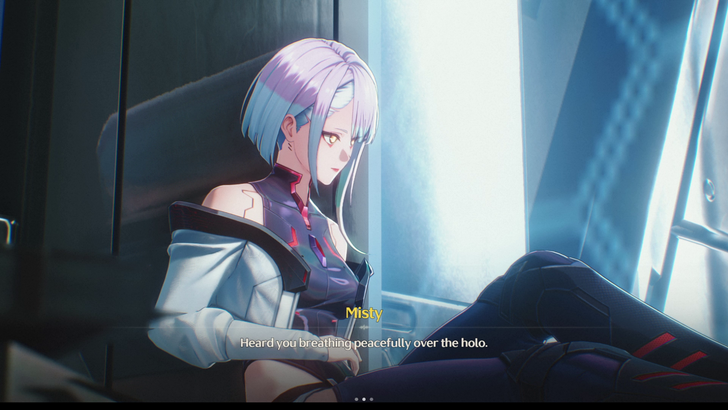
On the other hand, Lucy… she’s less of a character at the beginning than she is a representation of the anime’s ending. Kuro Games spent so much of the game’s cutscene budget for flashbacks and reminiscing that Lucy’s character itself barely budged until everything came together in the end. It’s highly likely intentional, though. Because once we pass that point, an entire scenario’s worth of development for her comes in all at once.
It’s wonderful how the game took its sweet time before getting into real movement. It truly felt like a sort of continuation to Edgerunners thanks to the weight they gave it. And even then, the ending wasn’t a depiction of Lucy finally escaping from the shackles of her past. Instead, the message to her was simple… "Thank you," and "Take care of yourself."
Grief, after all, cannot just be overcome within one gacha version's duration. That would have been disrespectful to the sacrifice of the cast in reality. This can be plainly seen from her wistful look at the conclusion when David and Rebecca disappear from her arms once more. Despite finally being able to exchange some of the words she so desperately wanted to tell them, it'll never be equivalent to her life back when they were with Maine and the others. Still, to respect their wishes, she ultimately gave up the Ivory Gatekeeper’s invitation to permanently stay in Solaris, despite obviously being enticed to, and went back to her world.
—Beautiful… they really are trying to sell you the banners with everything they’ve got. Unfortunately, the economics for it ain’t good, but we’re not here to talk about that! This is a story review, after all.
Playing the Dream
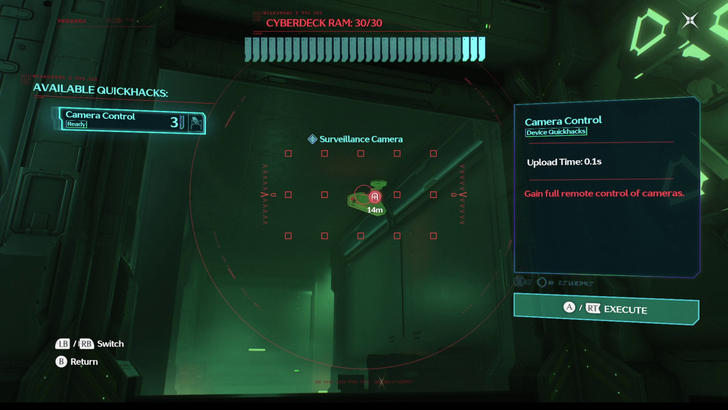
The gameplay attached to the Wuthering Waves’ Edgerunners collab features a combination of the return of the first-person perspective introduced in version 2.7 during Galbrena’s Apex Legends-like parkour section, an Expedition Motorbike chase sequence that you can actually fail, an entirely new minigame, and the usual exploration-plus-combat combo expected from it.
None of these detract from the narrative experience at all. In fact, the first person sequence where you walk through Lucy’s nightmares while Adam Smasher runs his mouth in the background is an incredibly immersive experience. However, compared to its best iteration back in 2.7 where you can actually see yourself put new breathing holes onto enemies and use them as landing cushions, complete with being able to see Galbrena’s arms, legs, and prodigious chest—we all looked down, of course—this version only really featured the perspective. So it could have been much better, like if Lucy would look at her shaking hands as she dealt with her internal conflict or something.
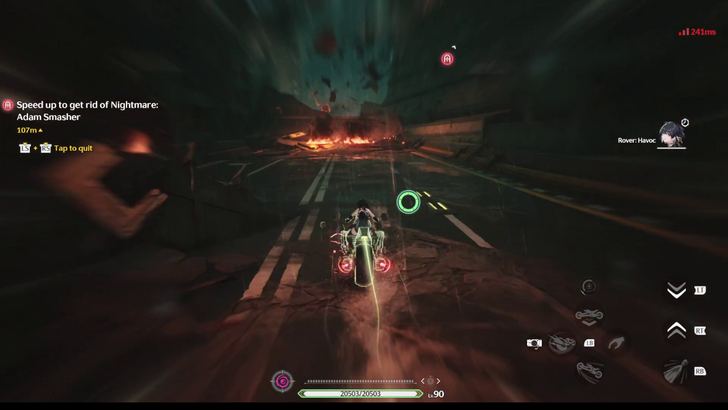
The Expedition Motorbike chase scene was, however, the far more enjoyable sequence. Unlike the very railroaded and QTE-heavy sequences we used to get, vehicle-based or otherwise, this one is far more punishing to mistakes on your end. I, myself, failed a single jump six times in a row because I forgot how physics worked. These were undoubtedly introduced to make full use of the fact that Night City, similar to Lahai-Roi, has functioning roads. That, and Edgerunners also had a lot of action-packed chase scenes.
Unfortunately, this one’s also not as satisfying as it could have been given what we’ve already seen possible with the game. For example, if they allowed you to shoot at the enemies—something possible since 3.0—while running from them, it could have turned into a much more interactive and action-packed experience instead of just navigating through roadblocks, dodging missiles, and jumping on rubble. In fact, there was an obvious attempt at this, as evidenced by the fact that you can hack missiles and enemies while on the move. But that begs the question: since you could hack them anyway, why can’t you also shoot them down?
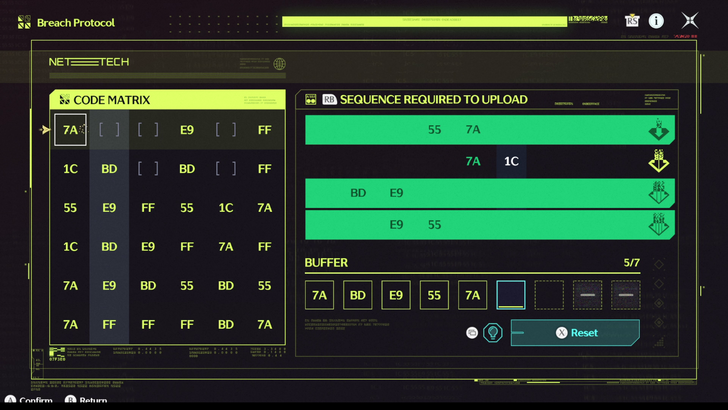
Lastly, we have the new hacking minigame, which requires you to string together a specific sequence of numbers from a grid while rotating between selecting them from the same row to the same column, and—
—Look, it’s basically Cyberpunk 2077’s Breach Protocol minigame ported into Wuthering Waves, okay?
Unfortunately, though mostly for me, I’m terrible at pattern-based puzzles, so I tend to waste a ton of time with these. But it’s incredibly entertaining and really made me feel like my Wuthering Waves files were somehow hacked and replaced with Cyberpunk data. Immersion! And though it does have a function that just straight up shows you the answer, you wouldn’t use it yourself, right?
Right?
So how do all these break up dialogue? Not by much. Unlike most patches and story quests, there are far more cutscenes and narrative-focused gameplay sections than usual. Though it does help that we’re not just running back and forth between one combat and exploration section after another, it does feel rather weird when Wuthering Waves usually tries to integrate the best cutscenes at its peak moments.
It’s somewhat understandable, though. Judging by all the exposition-heavy sections, Wuthering Waves is obviously prioritizing storytelling more than usual. It’s similar to how Aemeath’s section was handled, where the cutscenes were the focus of the main story quest. These were only broken up by extended exploration sequences that, at the end of the day, were still used to tell the story rather than to break up the narrative.
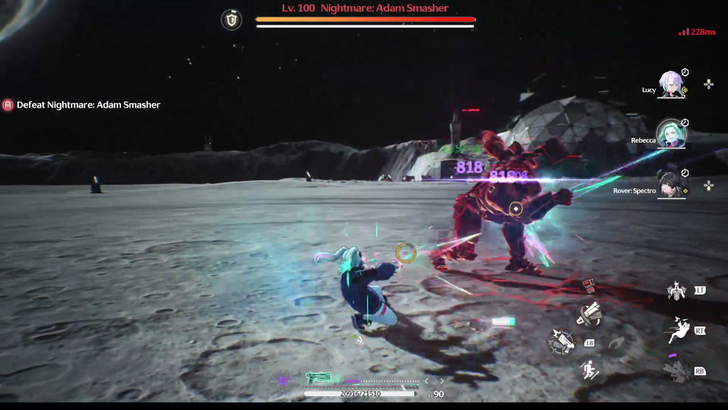
On the one hand, it feels great because it manages to maintain the emotional momentum from start to end. It’s also what made the ultimate boss fight against Adam Smasher such a satisfying experience because you’re riding on a sentimental high that’s been sustained since the very start of the story. On the other hand, it can get quite exhausting. Though it’s less of a game than usual, it’s still tiring in a different sense. And, you can only be sad for so long until you need a break, after all.
All-in-all, the gameplay experience is excellent. It’s immersive, decently fresh, and effectively complements the story. But it could definitely be better and more action-packed to satisfy the craving of specific people who just want to turn those irritating Corpos into smoking craters on the floor.
The Signature Cinematic Experience
Would it be such a surprise to say that the Edgerunners collab scenario has amazing cinematography? This is Wuthering Waves, after all; they’ve been pulling off insanely satisfying audiovisual experiences since I believe 1.1… Man, 1.0 was such a disappointment, huh?
It doesn’t capture the visual magic of the anime’s vibrant, neon-soaked aesthetics, sure—though it’s been recreated faithfully on Rebecca’s combat kit. But the way each cutscene lingered, how every character’s actions were slow and deliberate, how every camera angle was chosen—bar the moments when we could control Rebecca, every scene was a stark reminder that you are playing Wuthering Waves, one of mobile gaming’s best cinematography gurus, and not a videogame adaptation of Edgerunners.
This is absolute confidence on the game’s part. Despite knowing that there would be a ton of new players coming in to experience the Edgerunners collaboration, Kuro Games is convinced that they can reel them in using their own signature style of cinematography and aesthetics. And who can blame them, especially after how hard these qualities carried version 3.3, phase 1’s otherwise just-above-average story?
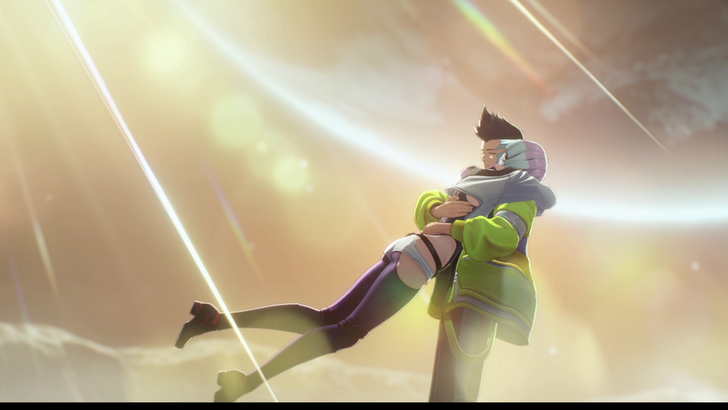
Of course, that doesn’t mean it relied purely on its own media. This is readily apparent the moment “I Really Want to Stay at Your House” started playing, which was used to amazing effect during the final scenes between Lucy, Rebecca, and David.
It was also the only easily-recognizable piece of music from the original franchise Wuthering Waves borrowed, and they really made sure to use it at the perfect moment just to kick us in the gut and let the dam overflow. The effect was pure magic; an apt description for the majority of the quest, regardless of whether you’re just watching Rebecca, Lynae, and Sigrika bond over graffiti and videogames, or Lucy watching the moon with David one final time.
These carefree moments, though in a dream, that capture scenes Edgerunner fans have repeatedly depicted through artworks and fanfiction really drive home how much Wuthering Waves honors the other party and its circumstances. They don’t put them in situations far removed from where they would usually be found so they could fit in their world. Instead, the world put them in almost painfully familiar environments so they could be themselves, all the while presenting it to the player using the same cinematography that made Wuthering Waves’ audiovisuals some of the best in the genre.
Sets a Sky-High Standard
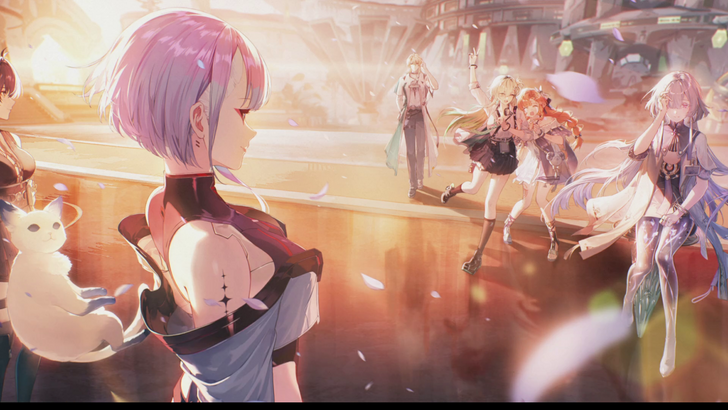
I want people to understand that Wuthering Waves’ collaboration with Edgerunners isn’t just a victory in terms of confidence, quality, and payoff. It sets a standard for future major collaborations that don’t just involve custom liveries on your Expedition Motorcycle. I myself have played through many, many, many gacha collaborations and I personally believe this may be one of the best, if not the best one in terms of execution and passion that it can only really be compared to, say, Punishing Gray Raven's collaboration with Devil May Cry.
It is a statement that sets sky-high expectations from the developers; one that they now have to match or exceed each time a deeply beloved franchise makes its way to the game. And, in a way, that’s probably the worst part about this collaboration. Such expectations can easily turn the Edgerunners collab into a baseline that’s too difficult to reach. But that’s an issue for the future Wuthering Waves to address, anyway.
The game treats the anime’s tragic circumstances as a landscape to paint on rather than a hurdle to be jumped over. It doesn't treat Lucy’s trauma as a box to tick for a quick crossover event; it treats it as sacred scripture. That’s why it succeeded here.
Both Kuro Games and CD Projekt Red obviously treated this collaboration effort with as much love and care as they could. They have managed to write a story that, while dubious in canonicity to the original franchise (I BELIEVE), can still influence your perception of the story in such a way that looking at Lucy's epitaphs to Rebecca and David in Cyberpunk 2077 can elicit an entirely new set of emotions.
Though it is a piece of media that leaves you exactly where the anime left you; wistful, slightly aching, and staring blankly at your monitor as the credits roll, you still come out of it with a tiny, hard-won speck of closure. And for a gacha story to do that, especially with the limited time it has, that isn't just impressive.
It's practically a miracle.
Game8 Reviews

You may also like...
 |
Wuthering Waves Review (3.0 - 3.3) | Should You Play in 2026? RPG, Action, Gacha |
 |
Arknights: Endfield Review RPG, Anime, Gacha |
 |
Seven Knights Re:Birth Review RPG, Anime, Gacha |
 |
Neverness to Everness Review | Good Mileage Expected RPG, Gacha |
 |
Zenless Zone Zero Review RPG, Action, Anime, Gacha |




also the collab contained some spoilers from the anime, if not all the spoilers on how they died, but how david and the brother of beca did it, to me this collab was the best, as for the gacha, you gotta pull lucy yes or yes, collab characters even if you wont find them use are a must have to pull, you wont see em anymore