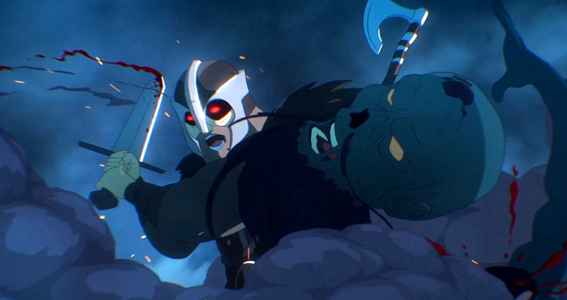




Valheim is a hardcore survival game set in the lost 10th realm of Yggdrasil. Read our review of the long-awaited 1.0 build to see what it did well, what it didn’t, and whether it’s worth buying.
Valheim Walkthrough & Guides Wiki
Overview
What is Valheim?
Valheim is a co-op multiplayer hardcore survival game by Iron Gate and Coffee Stain Publishing that's set in the titular "lost" 10th realm of Yggdrasil. Long since severed by Oden the Allfather from the rest of the Nine Realms, Valheim is now on the rise once more as powerful creatures called Forsaken threaten to overtake destiny. Players must take the role of fallen warriors called to the Allfather's service once more, surviving and growing stronger in Valheim to eventually take down the Forsaken and earn their place in Valhalla.
Now entering its 1.0 release after a little over five years in early access, Valheim will introduce the new Deep North biome to returning players, bringing with it an entirely new tier of progression, and the game's long-awaited ending.
Valheim features:
⚫︎ Hardcore survival across 9 major biomes across the realm
⚫︎ 8 bosses to prepare for and build towards
⚫︎ 8 major tech tiers to unlock, build, and craft with
⚫︎ Modular base-building with structural support and ventilation mechanics
⚫︎ 1-10 player co-op/PvP, with dedicated servers
| Digital Storefronts | |||||||
|---|---|---|---|---|---|---|---|
 Steam Steam |
 Xbox Xbox |
 PS PS |
 Switch 2 Switch 2 |
||||
| $29.99 | |||||||
Valheim Review: The Quintessential Hardcore Survival Experience
The Deep North is Here; The Full Saga Awaits!
Hubris. This was what I entered this review with, when what I should’ve been carrying in my heart was humility. Having 100%’d my fair share of survival games and spent my free time running circles around cannibals in Sons of the Forest, I didn’t think much of Valheim going in, and my pride wouldn't let me fathom exactly what I was in for. Having played it from start to finish—including its new Deep North biome that came with its 1.0 release—however, I can only bow my head in deference to what I now consider the quintessential hardcore survival experience.
Without being hyperbolic, this game pretty much has everything a hardcore survival gamer could ask for. Base-building? Out the wazoo, and complete with ventilation and structural weight mechanics. Combat? Simplified to start, but opens to a wide range of equipment options and playstyles. Survival? Spread across stamina, health, healing, magic, comfort, and like ten other stats to keep players busy. Progression? Tiered by biome across 9 major areas, each with a game’s worth of tech and recipes to unlock.
This game is so much without ever being too much, and with the addition of the Deep North biome, this saga finally has an end. Before we dwell too much on the end, though, let us first discuss the beginning.
Epic Animations Tell a Tale of Legendary Heroes

Though not many would expect a hardcore survival game like Valheim to have a developed story past the inciting event that contextualizes the rest of the game, that’s exactly what it has. Set in the titular "lost" tenth realm of Yggdrasil, Valheim sees the spirits of powerful warriors slain in Midgard take on a second life before they enter Valhalla. Sworn to hunt down the powerful entities destined to undo Oden’s plans, these warriors must survive and grow stronger across Valheim’s various locales as they build and craft everything they need to do so.
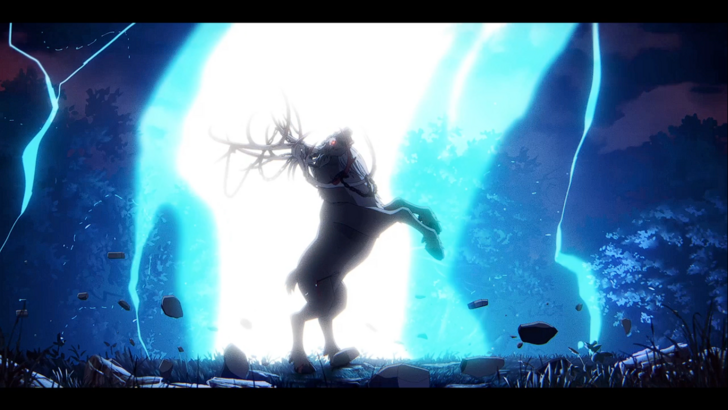
It’s a strong start for any game, but Valheim isn’t just any game. Carrying this story forward through its many narrative milestones are beautifully animated cutscenes that introduce players to the next leg of their journey. These aren’t just ten-second-long flash animations either; they’re TV-worthy, minute-long, action-packed sequences that serve to push the players’ energy to their next set of challenges, while also giving them a taste of what’s to come. I consider it a neat little reward for conquering the boss at the end of each biome’s progression—given in addition to that boss’s drops, of course.

This represents Valheim’s narrative formula for the entire game: Set-up, hardcore survival gameplay, and then a pay-off at the end that also serves as the set-up to the next biome. It is efficient, effective, and of incredibly high quality considering it’s completely unnecessary. I’m not complaining though. A free work of art between each boss to hype me up for the next one? Sign me up!
But in discussing just the animations between each narrative milestone, we’re glossing over a LOT of the gameplay that occurs in the interim. Let’s get to those next.
From Basic Hovels to Grand Feasting Halls
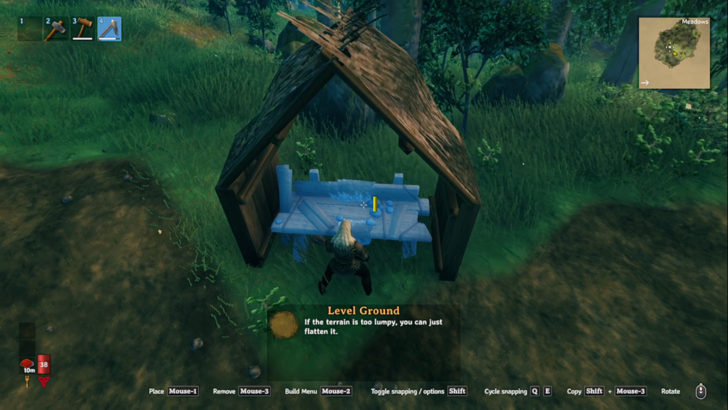
Valheim is a survival game. That much is made apparent by the first night of every fresh playthrough, which is often not too dissimilar from the traditional Minecraft start (i.e., punching trees, smacking rocks, running away from monsters, and building a shelter). Once players manage the basics of their survival, which usually come in the form of food, light, and a means to defend themselves, then comes the issue of shelter, and that’s when my favorite mechanic from Valheim kicks in.
Base-building! Almost every survival game has it, and Valheim is no different. What does make Valheim different is the granularity of its base-building, such that prefabs are completely off the table, and factors hardly ever conceived in other survival games make up the core of its operation. See, instead of building entire sections of base at a time, players are required to build wall-by-wall, tile-by-tile, and shingle-by-fragile-shingle, all while concerning themselves with wild concepts such as structural integrity, building ventilation, and workstation proximity.
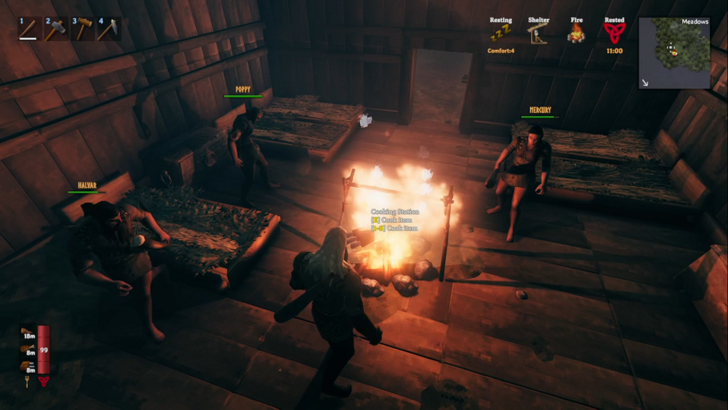
That’s hardcore survival for you. A basic 3x3x3 box hut is doable, yes, but completely ill-advised, as seven of those nine floor cells will be taken by required structures like the workbench, campfire, chest, and bed. Not to mention the fact that the workbench won’t be usable because floor tiles don’t count as roofing, and that the lack of ventilation will literally kill any player in their sleep from smoke inhalation. It’s not like players can just opt out of the fire either, because that’s needed for the bed to work.
Every building ends up being an ecosystem of structural stress, ventilation paths, efficient floor plans, and proximity-based construction. Then, and only then, can something like aesthetics even be considered.
Now this might sound like bellyaching, but I actually love that the game forces players to contend with these factors. As the saying goes, restrictions breed creativity, and I often found myself creating more beautiful structures than I’m normally capable of because of what I’m NOT allowed to do, rather than what I was allowed.
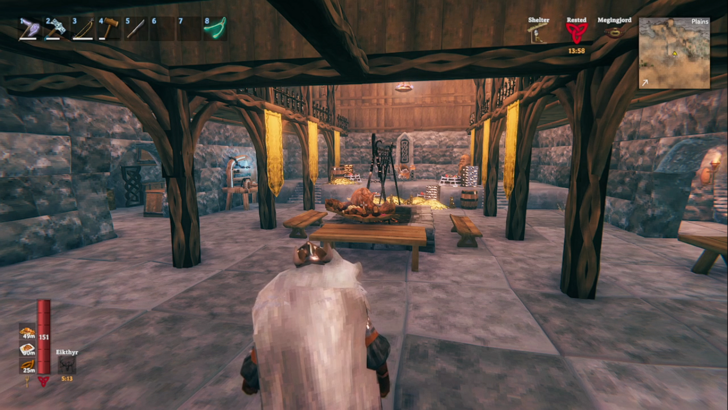
Suddenly, room layouts are forced to make sense, workbenches exist where they should, and things of similar function are placed close together. Hardcore, tedious, and time-consuming as it may be to grapple with the simple realities of gravity and good ventilation practices in a context where I am otherwise forced to suspend disbelief, I found myself enjoying the pain.
That’s not to say that all the pleasure of base-building in Valheim is wrought from pain either, because to match the restrictions placed by its systems, the game also gives players an absolute toybox of options to build their Viking-themed houses with.
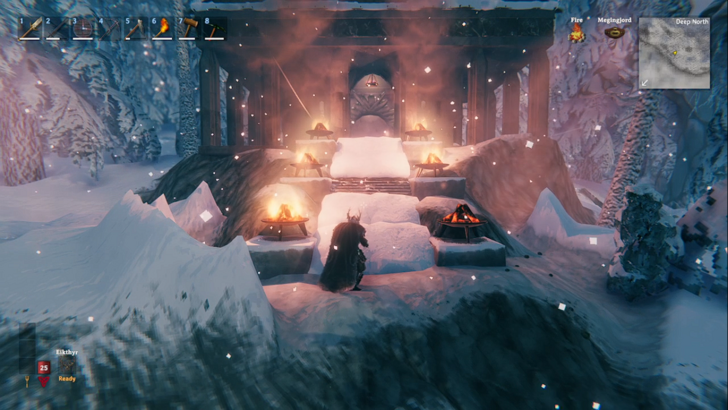
Be it a traditional Viking longhouse, a Stave Church, or a geographically misplaced Parthenon, Valheim has the pieces for players to make it so, and all they have to do is get the materials themselves. Therein lie the next pieces to Valheim’s gameplay puzzle: combat and exploration.
Rewarding Preparation and Strategy with the Greatest of Challenges
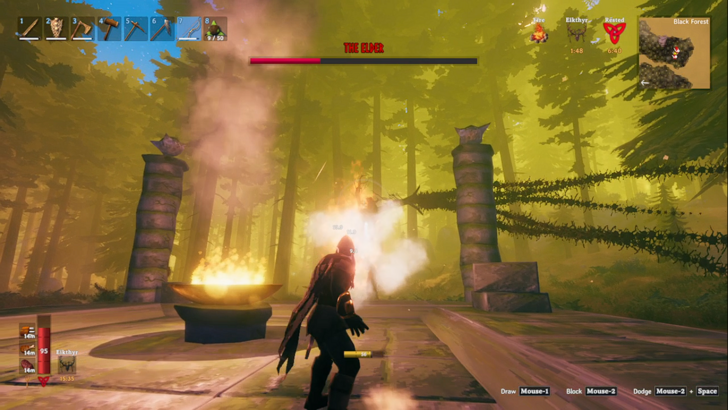
Whenever players aren’t building up their bases in Valheim, they’re either toughing it out in the wilds to get materials, fighting monsters for their loot, or doing a bit of both as they map out the surrounding areas. Crafting recipes only show up once the materials for them are gathered, so staying in one place and perpetually living off of wood and stone is simply not viable. So, the gameplay loop as it is consists of gathering materials through exploration and combat, then putting them to use for base improvements, then using said improvements to push toward the next tier of advancement. Rinse, repeat.
It’s a solid system propped up by two pillars, both already mentioned. Combat is simple to start, but opens up to an RPG’s worth of weapon and armor selections as players progress. What starts as whack-a-mole in the forest with a bat will eventually evolve into something closer to a soulslike with the integration of parries, equipment loads, special attacks, set bonuses, temporary buffs, weapon properties, and so much more. There’s even a magic system that doesn’t come online until players reach more than half of the game’s many biomes.
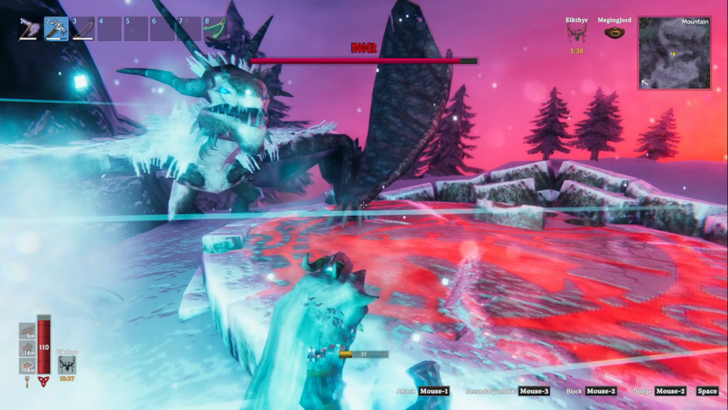
Exploration, on the other hand, is a veritable challenge from start to finish for one simple reason: hazards. Worse than monsters, these natural hazards are uncompromising and largely unavoidable, forcing players to play smart or craft specific counters just to pass by. From the very trees players harvested landing on flattening unlucky passersby to literal hellscapes (both of the frozen and burning varieties), Valheim has an environment to challenge even the hardiest of survival game aficionados.
The reward, then, is progression. Survive the bears and dungeons of the Black Forest, and you get access to copper and bronze for your gear and bases. Get past the undead-ridden mires of the Swamp, and you get Iron. Climb the Mountain biome and cull its wolf population to access Silver. That’s not even mentioning all the other unlocks players can get with every new biome accessed; these are just the big ones. It’s an easy enough concept to follow, and not one too unique for a survival game.
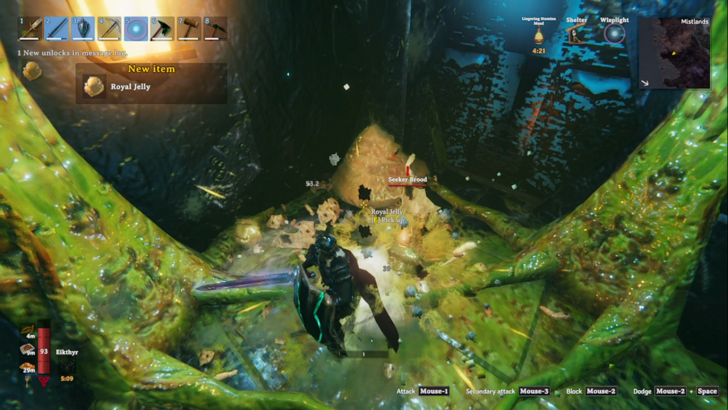
The nuance is in the difficulty gap between each step forward. Valheim never pulls its punches unless you specifically asked it to at the start. There is no speedrunning this game unless you’re some kind of savant, because once you use your progression to get past that biome’s boss, you’re back to square one come the next biome. Not literally, as you get to keep everything unless you died, but the difficulty spike in both combat and exploration is the most drastic I’ve seen in almost any survival game I’ve encountered.
Again, this may sound like I’m bellyaching about the game’s balancing. In truth, I admire how Valheim tackles the issue that plagues some survival games out there, and this includes even the most hardcore ones. Nothing about this game is exploitable to the point of clear advancement. Anything short of just cheating or being a god-tier gamer only serves to expedite progress, never bypass it. Farms can be made, strategies can be followed, but by the end of the day, it’s purely a numbers game.
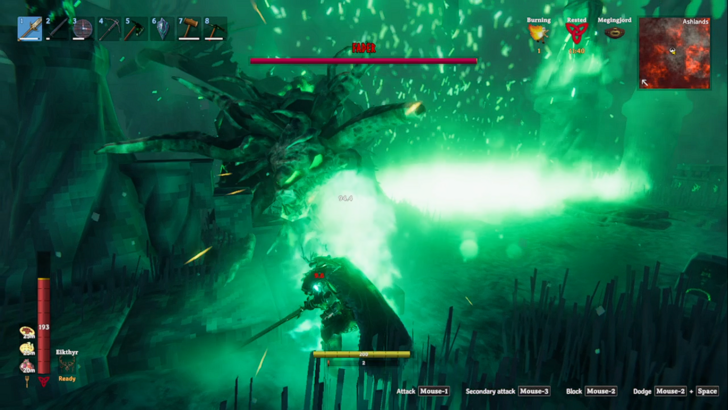
The game isn’t actually an open world, despite how it looks, as you are barred by glass ceilings left and right. In the same vein as Valheim’s building restrictions breeding creative building practice, these glass ceilings reward players for being strategic, preparing accordingly, and utilizing that biome’s advantages to their absolute capacity. In short, it’s quite the challenge, but one that encourages players as much as it dares them to step forward. This, along with the game’s story, carries a perpetual momentum that makes it so the excitement never runs out of gas, only the players’ real-life stamina does.
The Deep North is the Perfect Capstone
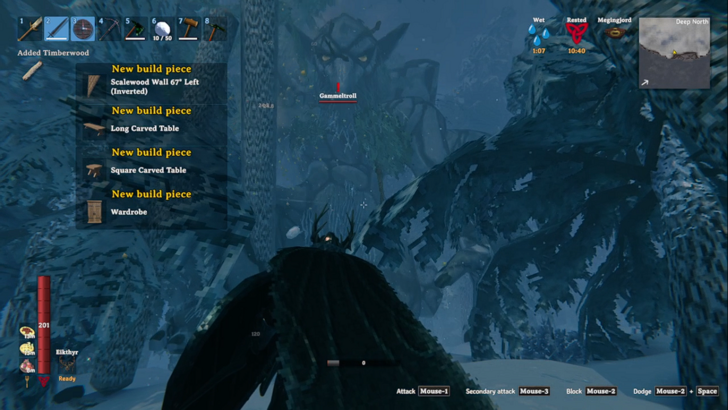
Setting aside a discussion specifically for the Deep North biome releasing with the game’s 1.0, I consider it the perfect capstone to this ascending spire of challenges. I can’t and won’t spoil too much, as discovering what makes a new biome tick is half the game’s fun, but if I can condense the Deep North experience into a phrase, I’d say that it’s the simplest, yet hardest challenge the game will ever muster against the player.
I mean that sincerely. No freezing gimmick like with the Mountains biome, no Mists like in the Mistlands, and no swarming like in the Plains. It’s all the fundamentals players learned through the other biomes, just cranked up to 11 and all the time. There are a few surprises here and there, some deep beneath the earth, and others just under the topsoil, but know that the Deep North will be the true challenge for any fallen warrior that made it that far.
If there was ever a way to end Valheim, this was it.
Great Visuals at No Cost, Integrated Audio that Waxes Atmospheric
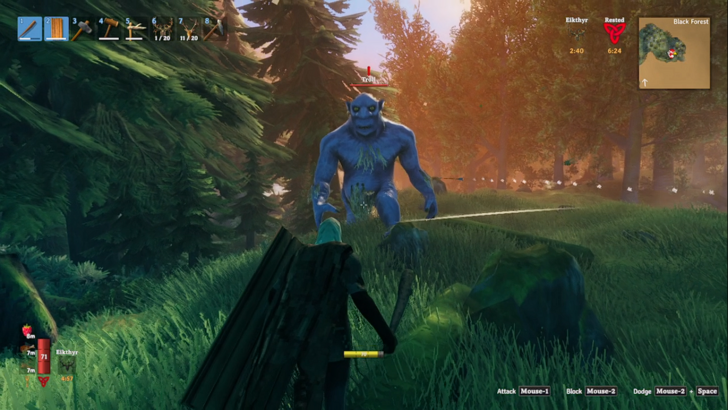
Moving on to presentation now, Valheim is a low-poly masterpiece that demands no more from a player’s system than something like Lethal Company, R.E.P.O., or Megabonk. The game runs surprisingly well on even the highest settings and through even the most mediocre setups budget players can muster. That much is appreciable, and very helpful towards the game’s otherwise cooked approachability—more on that later.
It helps immensely that the game is as simplified as it is, considering how much it has in store for the player, because otherwise, world load times would be downright offensive.
On the topic of the game’s audio now, it’s hard to separate the game’s VFX and sound engineering from its gameplay, as audio cues are a legitimate resource players can use in combat and while exploring. This makes Valheim a much more atmospheric and cohesively immersive experience than ever, despite how it looks.
Not for Casuals, and Might Even Deter Some Veterans
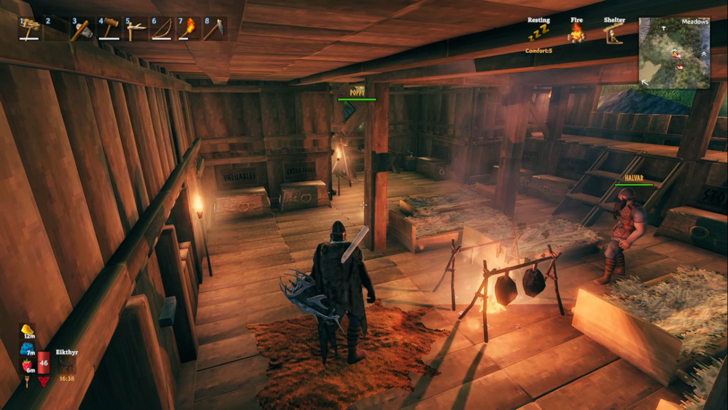
Unfortunately, with the absolute girth of content Valheim has, and the tall ask of play hours getting through all of them will require you (numbering in the tens to hundreds), Valheim is an intimidating beast. I’m not even just talking about newbies to the title or genre either; survival game virtuosos like myself and my closest all had to choke back the frogs in our throats as soon as we realized that the 10-hour stint in the meadows we barely survived was just the tutorial.
This is not a casual game by any stretch of the imagination. It will demand from the player blood, sweat, and tears. In exchange for rewarding gameplay and unforgettable moments, perhaps, but a toll will be exacted nonetheless. Not everyone can spare what the game demands, so it will turn away many players at various points in its progression. Many early, some late.
One thing is for sure, though: those who stayed won’t ever live to regret it, as they will be part of the most unforgettable survival experience ever on their path to Valhalla.
The Saga Comes to an End
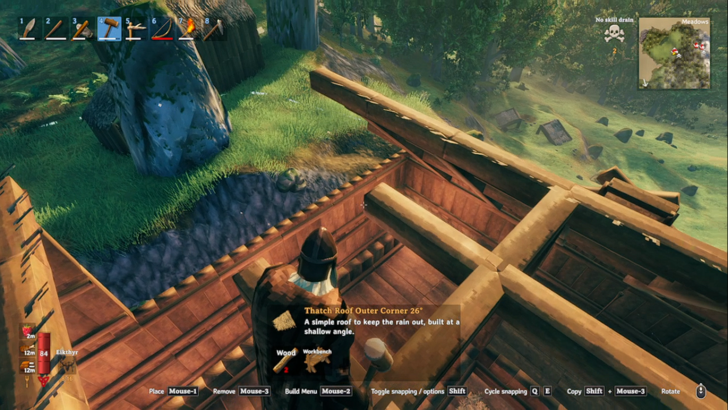
And thus, the last pages of this saga are written, and this review comes to a close. Valheim isn’t a perfect game, but it is the perfect hardcore survival game. It has challenges in spades and in unrelenting force, but has the variety, content, and artisanal craftsmanship to match. It is never difficult for no reason, and is never difficult for long, so long as the player keeps their torches ever moving forward.
And what a good time that will be with the game’s tiered structure and pervasive narrative and mechanical momentum, brought to it by a masterful application of animated cutscenes and purposeful difficulty balancing. It may put off the inexperienced and the intimidated, but I believe that the quintessential hardcore survival experience must achieve exactly that to hold the title.
Is Valheim Worth It?
Absolutely—Now More Than Ever!
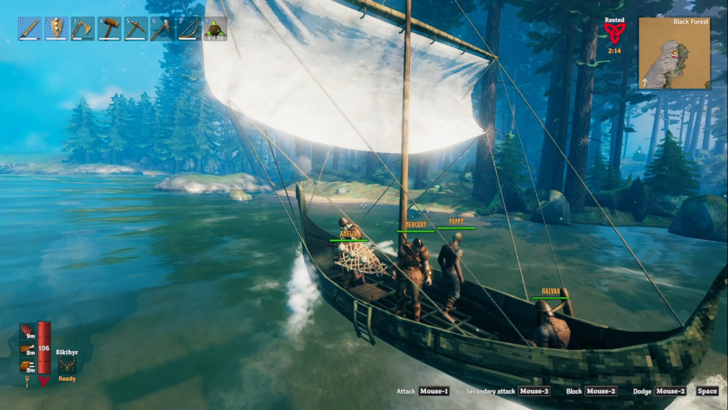
In exchange for the tens to hundreds of hours of quality gameplay it offers, Valheim will only set its players back $29.99. Not exactly a cheap game in a vacuum, nor one in the context of multiplayer, but with the sheer value and density of its content, it can repay itself in no time.
That said, value is mostly dependent on how much free time someone can pour into the game, so casual players may be given pause, if not outright intimidated by the prospect. It doesn’t have universal appeal, but it doesn’t hide itself from scrutiny, and is easily avoidable for anyone who can’t milk it for its value.
For those who can, this is an absolute steal twice over.
FAQ
Does Valheim have PvP Content?
According to the game’s developers, Valheim was designed to be a single-player or co-op experience, up to a maximum of 10 players per server. While PvP-only content is not available, PvP can be toggled on and off via each player’s inventory and status menu, accessible via the Tab key on Keyboard and Mouse controls, or the Y button on Xbox controllers.
It should be noted that this toggle only affects friendly-fire damage, and that only players who have this option toggled on can damage each other.
Will Valheim’s 1.0 Release Affect Existing Saves?
No. According to the game’s official FAQ regarding its 1.0 release, existing saves made prior to the 1.0 release will not be affected in any way and can be played as normal with the new content.
Will Valheim’s 1.0 Release Affect Achievements Made on Early Access Saves?
Yes. According to the game’s official FAQ regarding its 1.0 release, the game’s achievement system will only begin tracking achievements from the point of the 1.0 version’s download, ignoring all achievement completions accomplished prior.
Achievements, such as those gained by slaying the Forsaken, will have to have their conditions met again to be completed.
Valheim Related Guides
 Walkthrough
 Boss Guides
 Weapons
 Armor
Armor Tips and Tricks
 Items and Materials
 Buildings
 Biomes
 Monsters
 Best Weapon Types
 Message Boards
 News and Updates
 Skills
 Forsaken Powers
 Dungeons
 Trinkets
 Valheim 1.0 Review
Game8 Reviews