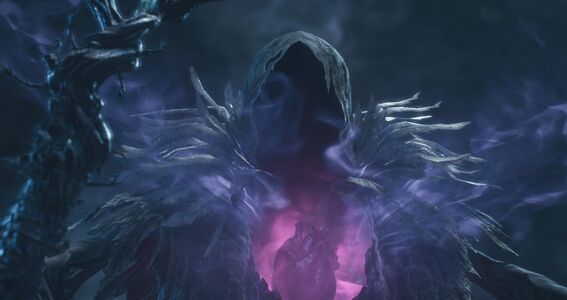



| Dragon's Dogma 2: Dark Arisen | |
|---|---|
| Release Date | DLC Review |
Dragon’s Dogma 2: Dark Arisen is the long-awaited expansion to Capcom’s fantasy open-world action RPG, in which players explore an abandoned kingdom in the cold north. Read our review to see what it did well, what it didn't do well, and if it's worth buying.

Dark Arisen DLC Guide and All Content
| Digital Storefronts | |||||||
|---|---|---|---|---|---|---|---|
 Steam |
 PS |
 Xbox |
|||||
| $29.99 Expansion Only |
|||||||
| Hours Played | 53 Hours |
|---|---|
| Content Completed Date | October 20, 2026 |
Dragon's Dogma 2: Dark Arisen Review: There’s Beauty in Simplicity When You Know It Already Works
You know what’s funny? The fact that Dragon’s Dogma 2 is going through the exact same thing its predecessor did, even going so far as to have the exact same name for its expansion. Starting from a heavily criticized base game for its design and technical faults, to cult-classic RPG status, thanks to how much its expansion completely overhauled the game. You may think it’s a coincidence, but I call it fate. Like, you can’t ignore the fact that the game's narrative is about realizing it’s a cycle that repeats until a new Arisen finally breaks it (or preserves it). But I digress.
One thing’s for certain, though: the Dark Arisen expansion finally realizes what Dragon’s Dogma 2 was trying to push for all these years.
The DLC adds the content it desperately needed to bridge the gap between the lethargic midgame experience leading up to its brutal endgame with the Unmoored World, and then some. But it’s not just the expansion that’s doing the heavy lifting here. The many patches that Capcom released over the course of the year overhauled the game in a good way, resulting in a completely different experience from what it had since its release.
A Completely New Region Hiding an Even Darker Secret
If you’ve played Dragon’s Dogma 2, then you’d be familiar with how most of its main missions go. Accessing the DLC is no different; you talk to Captain Brant to fill you in with the details happening around the kingdom of Vernworth. He overhears a rumor about another Arisen discovered in the far north of the kingdom, a treacherous, abandoned region called Norgan.
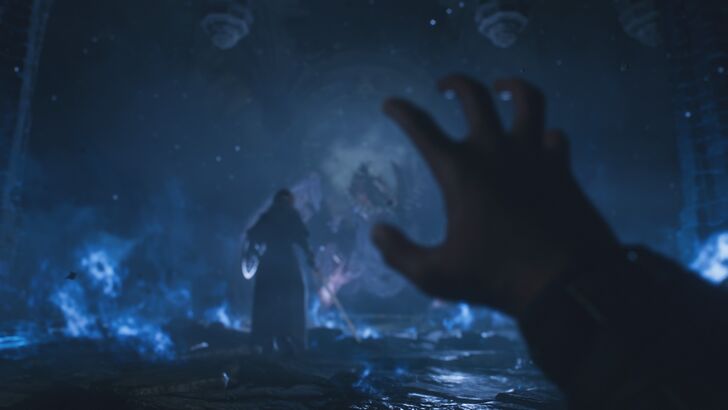
By all accounts, it feels like just another day for the Arisen. Just another baseless rumor that lacks credibility. But that all changes when you get a nightmarish premonition where the kingdom is engulfed in a sinister darkness. Buildings engulfed in blue flames, ghouls rising from the ground, and an ominous moon that seems like it's staring back at you. It becomes clear this isn’t just some rumor, so you journey north to investigate this long-lost kingdom, only to find there’s not much to see in this abandoned, freezing wasteland.
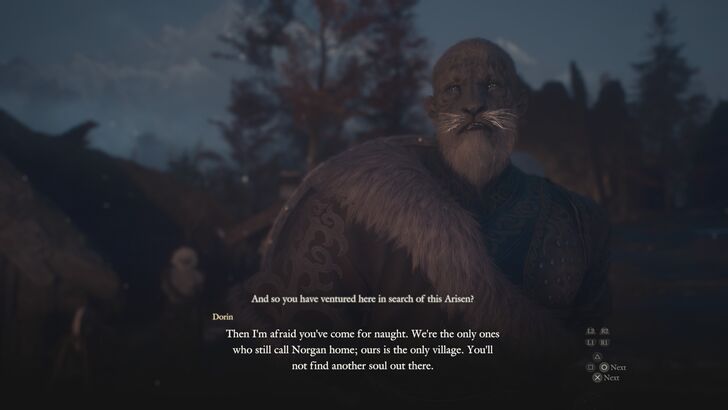
Shortly after arriving in Norgan, you find a small settlement that briefs you on the situation in the region. Absolutely no one has visited the area recently, and there isn’t anyone else besides the people in the settlement that call the region home. So now you’re chasing a ghost in a region where the elements, the beasts, and even the Viking-looking bandits are out to kill you. Not a great start if you ask me. All of these lead you to check out the nearest stronghold for answers, as the locals have reported seeing something lurking in its empty halls.
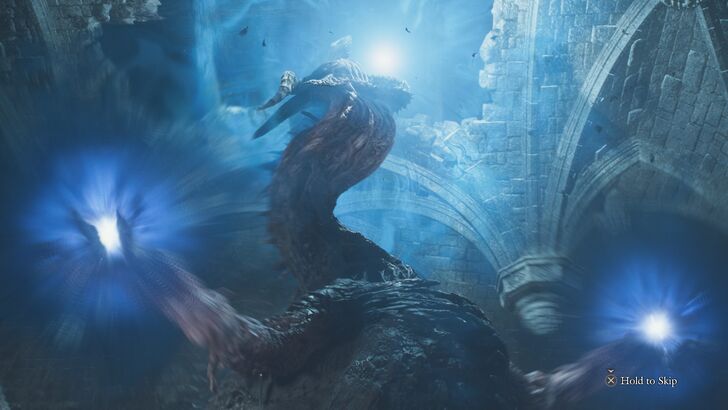
It’s here where the story immediately ramps up to eleven. You find yourself face-to-face with a dragon breaking out of the stronghold out of nowhere, and with nowhere left to run, you decide to fight it. But something’s amiss here; the dragon looks lifeless, with its eye sockets hollow, and it has an ominous glow around it. It all seems hopeless until a mysterious warrior comes in, telling you that this isn’t your fight and that you should leave immediately.
I think this is already an infinitely better setup than its base game. Sure, it’s not the most interesting way to do it, but the change of pace is quite refreshing. Especially given that Dragon’s Dogma’s narrative tends to go on huge tangents with its political drama. This time, the mystery surrounding this other Arisen, this undead dragon, and this cold, merciless frozen wasteland is what’s driving the story rather than its b-plots.
In other words, the storytelling is very direct. In the DLC, every quest leads up to the mystery of why there’s an undead dragon on the loose, why there’s another Arisen, and, most importantly, how you’re supposed to address the problem. They don’t waste time with you going from city to city to get a hint of where the Grigori is, only to ask you to solve their city’s troubles before you can actually go on your way to slay the red menace.
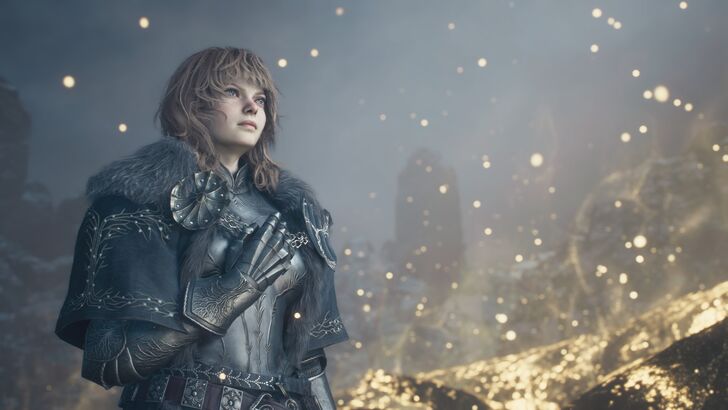
The ending of the DLC is also done rather well in both the DLC's main campaign and its short post-game story, keeping the same simple, easy-to-understand plot without overcomplicating things. It resolves all of its plot threads and even leaves a little bit open to interpretation in its post-game content about who the true villain is and how they came to be. It’s a perfectly serviceable narrative that does a really good job of enhancing the base game in the grand scheme of things, especially considering that you have access to the DLC as soon as you’re midway through the main campaign.
Not Just the Dark Arisen’s Efforts
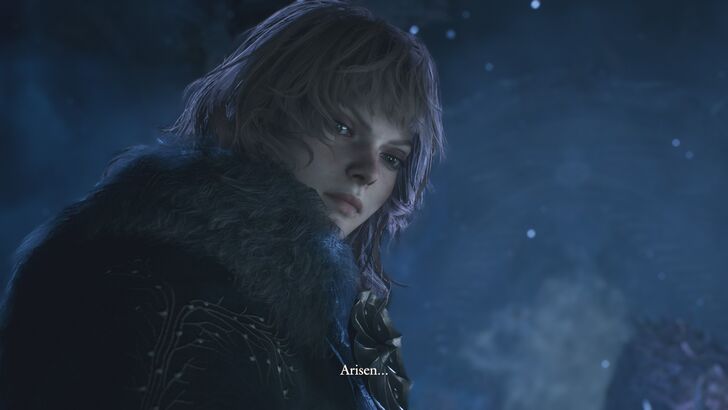
Before I talk about anything further, let me address the elephant in the room. Yes, it’s not actually the expansion that’s making the game ultimately better; it was the recent overhauls that they made to improve the game’s design and make everything a lot more convenient. While this does put a spotlight on whether I should rate the DLC based on the expansion's content, the reality is that everything feels better because of how much the base game improved.
There are some design choices in its improvements here that "betray" the game’s intentional open-world friction. This, of course, refers to the Eternal Ferrystone and how it trivializes much of the backtracking you have to do. For context, convenience, or the lack thereof, is a big part of Dragon’s Dogma’s design. Much of the exploration relies on its limited fast-travel options and emphasizes an exclusive, player-curated experience.
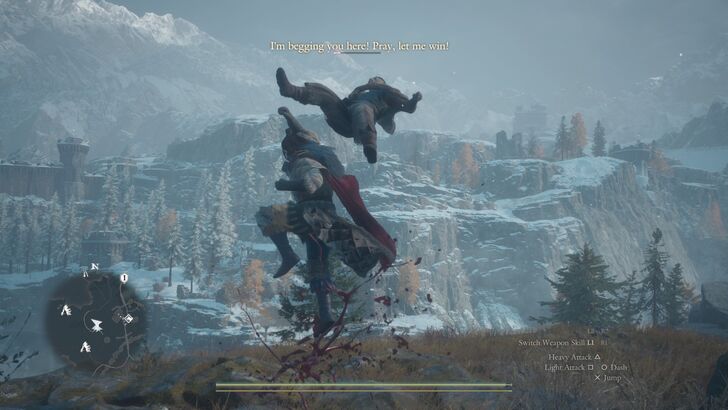 ]
This created a unique gameplay loop that forced players to explore the game’s massive world and deal with the random moments that happen during their expeditions. This also meant that players would have to carefully consider where they place their own points of convenience with the Portcrystals (the game’s placeable fast-travel points) they find, as well as consider how they travel with a finite number of Ferrystones that they can bring and use.
However, this friction is forced, which obviously means it isn’t something everyone will enjoy. Doing the trek from Bakbattahl to the Volcanic Island isn’t exactly enjoyable, even for someone like me who’s played enough of the game to make 3 different save files. Granted, I can’t exactly say how much of this was already planned before the DLC was even conceived. After all, the first game added this same feature in its DLC, so it could be something that was already planned before all of this can even be argued.
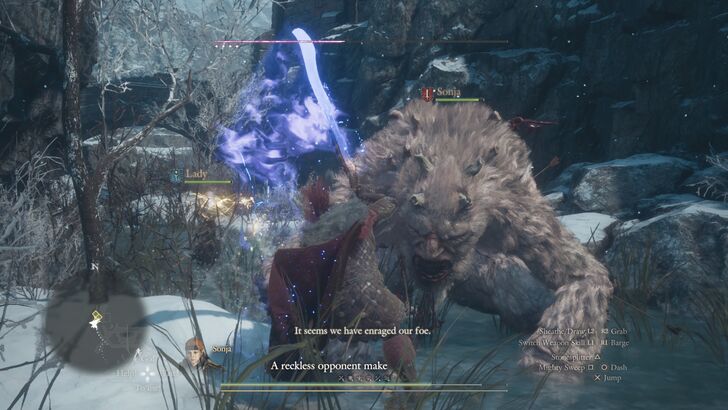
In contrast to the Ferrystone conundrum, features like Hard Mode and the new "reset" feature to compensate for it are certainly welcome additions. These add to the game’s overall replayability, which already reinforces just how much it asks you to play even more times than you think is necessary. Overall, Dragon's Dogma 2 is a far cry from what it originally was two years ago. And it’s only gotten better since then, with various performance improvements, gameplay-related design upgrades, bug fixes, and more.
Lost Rites, Found Power
One thing that many were worried about was the progression, as people would be overleveled to all hell before the DLC comes out. But those worries were alleviated when people found out the hard way that none of the base game’s equipment did any meaningful damage. Similar to how they did it in the first Dark Arisen, the expansion is more gear-driven than tied to your character’s level.
This means that even players with level 200 characters are on the same playing field as someone who immediately jumped into the DLC at level 40. This means progression is purely reflected in the gear you have, which has its own pros and cons we’ll discuss later. For now, let’s focus on the individual mechanics, starting with the new dungeons in the DLC, the Lost Rites Trials.
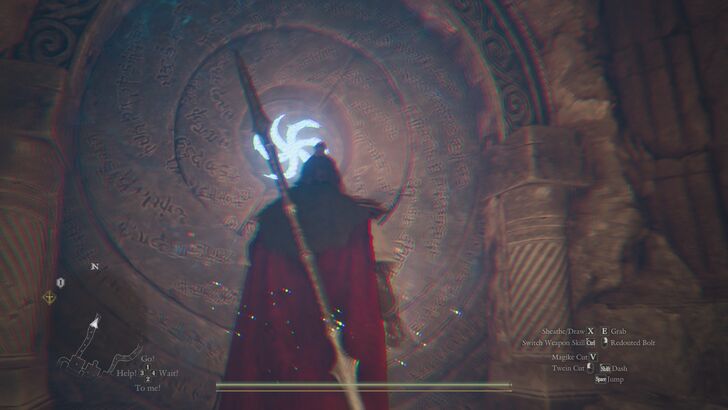
The Lost Rites Trials are new explorable dungeons throughout Vernworth that, when completed, grant players gear with strength relative to their location. Additionally, these dungeons give an item called Offering Flame, which is needed to fully unlock progression in Norgan (we’ll talk about this later!). From a new playthrough perspective, these dungeons enhance the base game’s exploration and progression, giving players more content to engage with as they journey through Vernworth.
Like their rewards, these dungeons vary in difficulty, mostly depending on where they’re located in the world. Additionally, these dungeons may impose certain conditions before you can even enter, such as requiring only two skills to be equipped, locking the player into certain Vocations, or even requiring that players be accompanied only by their Main Pawn.
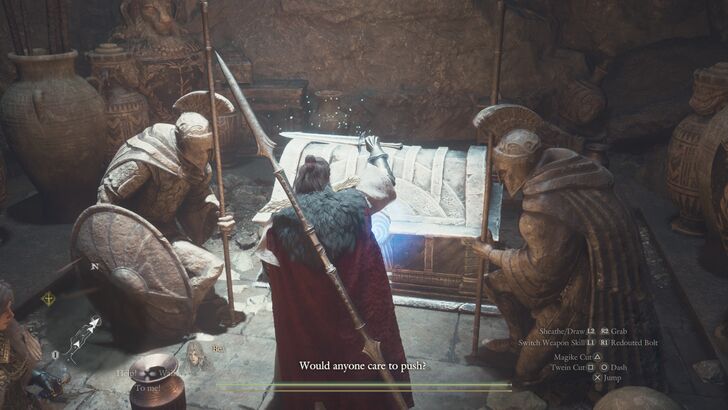
In terms of design, these are fairly straightforward. As they’re just big caves with stronger enemy variants to fight, with some conditions involved. However, this linearity comes across as a bit disappointing, especially given that the bar to beat was BitterBlack Isle (BBI) in the previous game. The linearity of the dungeons doesn’t really add any flavor, making them just another landmark once everything is said and done. I will concede that some of these Lost Rites Trials are great for introducing completely new enemies to fight, but these are few and far between.
Re-educating With Norgan’s Vocations
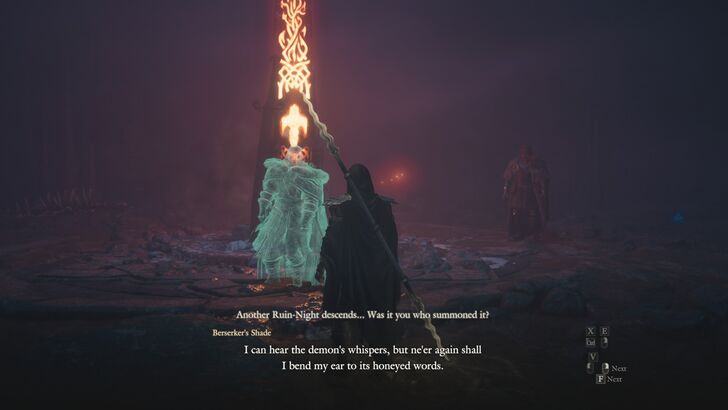
Let’s move on to the next progression mechanic introduced: the Obelisks of Benediction. Throughout Norgan, you will come across interactable Obelisks that are tied to specific Vocations or classes. After finding said Obelisk, you offer Discipline Points (DCP) to get a Vocation-specific upgrade. It could be in the form of a new ability and its improved form, raw stat upgrades tied to the Vocation’s strengths, or even higher drop rates for Vocation-specific equipment.
However, to fully appreciate these rewards, players must complete one of the aforementioned Lost Rites Trials to obtain an Offering Flame, which can be used to activate these monuments. It’s a very simple system: you pay a fine, you get stronger. It may not be the most glamorous side-progression system out there, but it gets the job done. More importantly, this encourages players to explore more. Instead of just rushing through the DLC, you’d be coerced to explore the nooks and crannies to find the Obelisk of the Vocation that you prefer.
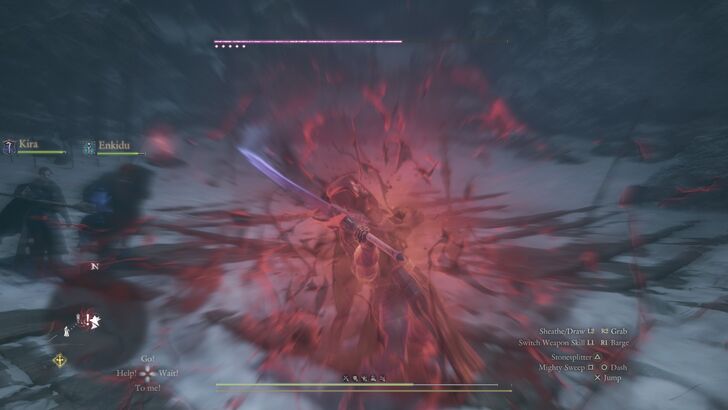
Lastly, remember how I mentioned that each Obelisk has a new skill for each vocation? At the DLC’s post-game, revisiting these locations lets you challenge past Maisters who grant you new skills after you beat them. I can’t stress enough just how amazing some of these skills are, as they are definite game-changers in amplifying a Vocation to its fullest potential.
One example is the Warrior’s Blood Pact, which has become one of my favorites because it completely eliminates the Vocation's weakness of being the slowest among the rest. Activating the skill grants you a buff that allows you to stack an invisible gauge by dealing and taking enough damage.
At maximum charge, you can reactivate the skill, which not only restores your Stamina to full but also grants a buff that lets you forgo charging your attacks and skills, and deals more damage. This turns you into the ultimate berserker, swinging around a hunk of metal with reckless abandon without caring for timing or charging your hits. Sure, your HP will constantly drain when the buff is up, but that is a price I’m willing to pay to kill my enemies three times faster.
Relics Induce a Weird Progression Flow
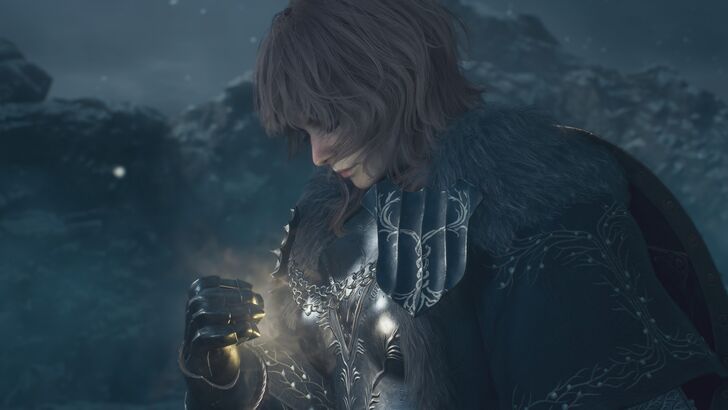
All of these bring us to the actual meat of the DLC: how is the progression in the first place? For those who are unfamiliar with the series, it’s always been more of a gear-dependent RPG, where levels are the second-most important factor in your strength. But this is even more the case in the current iteration, as stat growths aren’t a thing anymore, so you could level without caring too much about which Vocation you’re using for the first 100 levels.
This is both a good and bad thing, and in the context of the DLC, it reinforces these in a big way.
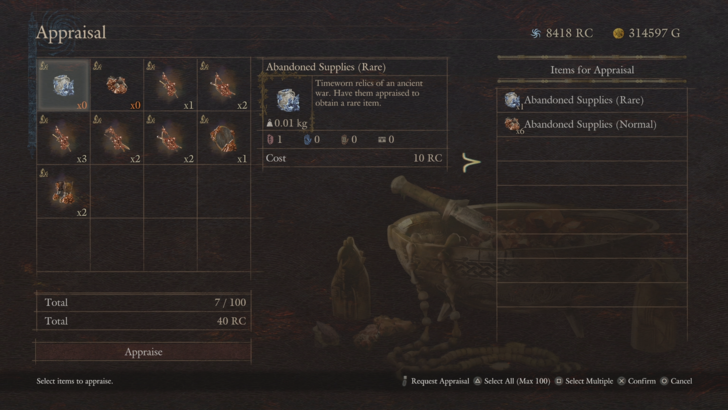
The good news is that progression is pretty much tied to its content. You don’t have to worry about trivializing the expansion because you will never obtain gear in the base game that’s stronger than the gear in Norgan. So, any playthrough, regardless of how deep you are in the base game, is as fresh as starting at level 1. You’ll go through the same phase of seeing that your weapons are merely tickling the first few enemy mobs you encounter, scrounging every relic you find for appraisal.
Speaking of, the process of finding new gear is also quite easy. You get random relics from mobs or treasure chests, then ask someone in town to appraise them for you, hoping they're useful. It might be worrisome that the gear is randomized, but to be honest, they give out so much of it that it doesn’t even feel like a problem. You’ll almost always have a usable weapon or armor in no time, or better yet, just play on Warfarer so you can equip anything. Problem solved.
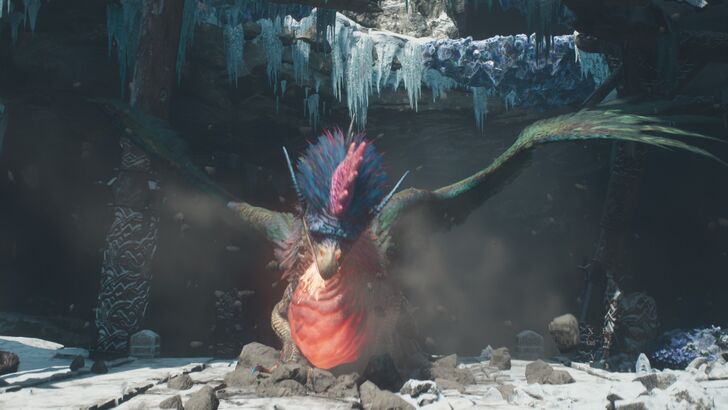
Enemy designs are also great in the DLC, with clear progression and distinct strength in their visual and gameplay design. From the simple direwolves and Beorcans to much bigger threats like the fire-breathing chicken wyvern Gagana and the Lesser Demons that roam the land, these new enemies provide a welcome challenge that makes you want to experience more of the already patented gameplay experience.
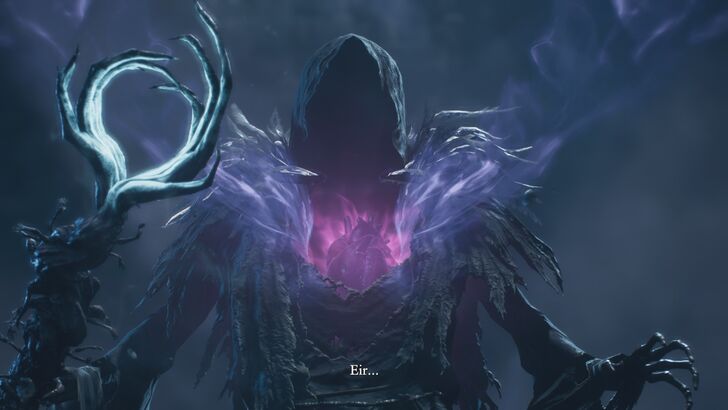
The bad news, however, is that going back to Vernworth will further diminish the base game’s difficulty. Keep in mind that the game recommends being at least level 40 to go to Norgan, which is definitely not close to the endgame at all. I get that you can circumvent this by playing the game in its new Hard Mode, but even then, having a full set of basic gear in the expansion is already endgame level for the base game.
This is where the DLC felt restricted in its design, as exploring Norgan had to be relegated to mid-game content because of the base game’s post-game in the Unmoored World. The result is a weird progression in both the mid-game and post-game, as the DLC spikes your power level to heights the base game can never match.
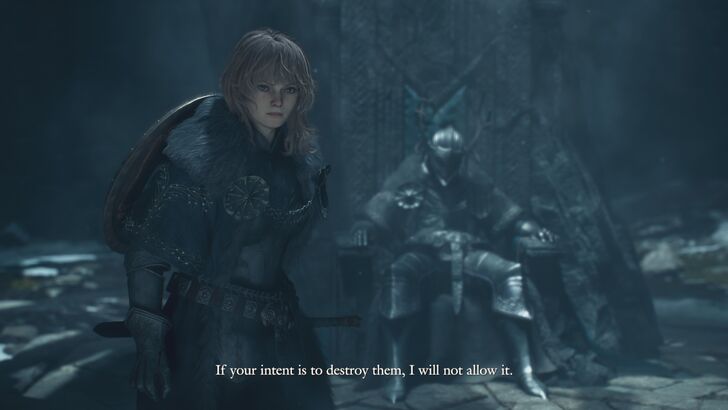
In the mid-game, you’ll move back and forth between the two regions to complete the Lost Rites Trials and explore Norgan. This becomes a problem—you become way too overpowered midway through the base game’s story because of the gear you need to actually survive the enemies around Norgan.
On the other hand, the post-game Lost Rites Trials do require stronger DLC gear, but they still run into the same problem of making the base game too easy. But the bigger problem is that you’ll move back into Norgan regardless, as the best weapons and armor are offered in defeating the post-game content in the DLC. Taken as a whole, this isn’t that big of a deal. The update did give you the Eternal Ferrystone, so you shouldn’t really have a problem moving back and forth. But it doesn’t make it any less weird.
Is Dragon's Dogma 2: Dark Arisen Worth It?
Absolutely! It’s Time to Book a Trip to Norgan
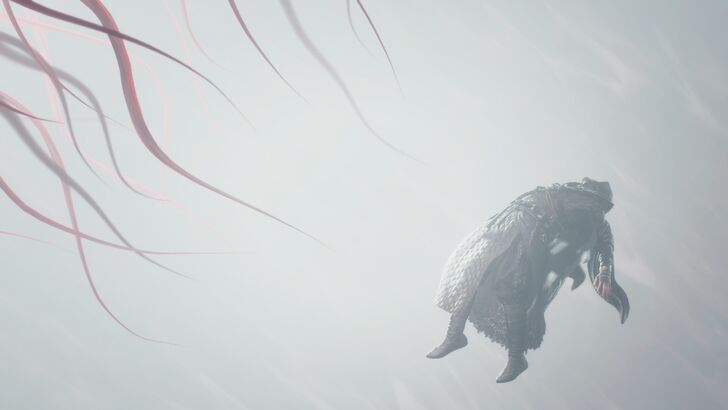
If there’s ever a time to get into Dragon’s Dogma 2, it's now. The improvements made to the game through its multiple updates and the DLC as a whole have immensely enhanced the overall experience, making it feel like the game that was promised back in 2024. I’d highly recommend this game for those looking for a fantasy action RPG that’s much more grounded in how it feels and plays.
While much of its additional content is rather simplistic, what was added was what it desperately needed to reinforce its overall gameplay loop. It’s still rather funny to think about the core theme of the series about breaking cycles, yet somehow, we get a case of history repeating itself with how the DLC basically repeats its own brand of success. Nevertheless, I’m all for it, and I’m glad I got to experience, or rather re-experience, this game in its best form.
FAQ
How Do I Access the Dark Arisen DLC in Dragon’s Dogma 2: Dark Arisen?
The DLC can be accessed as soon as you unlock Vernworth in the main story. Talk to Captain Brandt to receive the quests for the Lost Rites Trials and the Dark Arisen DLC.
Can I Still Access Norgan When I’m in the Unmoored World in Dragon’s Dogma 2: Dark Arisen?
If you were able to receive the quest before entering the Unmoored World, then yes, you will still be able to access the new region. But if your current playthrough is in the Unmoored World without receiving the quest from Captain Brandt, then you will have to start a new game plus or use a completely new save to be able to travel to Norgan.
Dragon's Dogma 2: Dark Arisen Related Guides
| Dark Arisen DLC Guides | |
|---|---|
| Dark Arisen DLC |
 Lost Rites |
 Dark Arisen Review |
- |
| Dragon's Dogma 2 Wiki Contents | |
 Walkthrough |
 Quests |
 Vocation |
 Tips and Tricks |
 Weapons |
 Armors |
 Interactive Map |
 Romance |
 Character Creator |
 Pawns |
 Items |
 Augments |
 Monsters |
 NPCs |
 Weapon Skills |
 Core Skills |
 Trophies and Achievements |
 Choices |
 Collectibles |
 News and Game Info |
 Updates and Patch Notes |
 Bugs and Errors |
Game8 Reviews