




| Tomodachi Life: Living the Dream | |||
|---|---|---|---|
| Release Date | Gameplay & Story | DLC & Pre-Order | Review |
Overview
What is Tomodachi Life: Living the Dream?
Tomodachi Life: Living the Dream is the third entry in the beloved Tomodachi series, released to the Nintendo Switch on April 16, 2026. This marks the series’ comeback, a full decade after the release of Tomodachi Collection in 2009 and Tomodachi Life in 2013.
Tomodachi Life centers around social simulation, following the day-to-day interactions of characters called Miis that are created by the player, who in turn takes care of them. They move into the game's island as residents and live out an eventful life by meeting fellow Miis, becoming friends, falling in love, and even making families.
Tomodachi Life: Living the Dream features:
⚫︎ Extended Relationship and Gender Options
⚫︎ Advanced Mii Customization
⚫︎ Creative Asset Design
⚫︎ Island Layout and Building Placement
⚫︎ Redesigned Mii Housing
⚫︎ Miis Have Little Quirks
⚫︎ Local Play Only
For more gameplay details, read everything we know about Tomodachi Life: Living the Dream's gameplay and story.
| Digital Storefronts | |||||||
|---|---|---|---|---|---|---|---|
 Switch Switch |
|||||||
| $59.99 |
Tomodachi Life: Living the Dream Review: It’s Dumb in the Best Way Possible
I’m More Than Happy With This Fever Dream
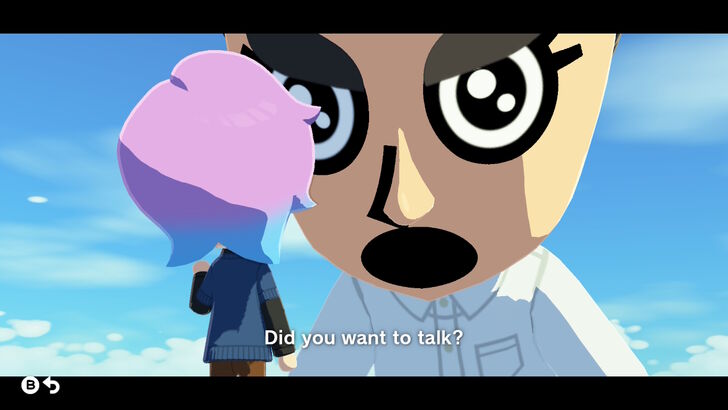
They say life is a tapestry of profound choices, but they clearly haven’t spent three hours watching a digital avatar of their middle-school crush act as though they were a bowling pin for their capricious god’s amusement. Existence in Tomodachi Life: Living the Dream is a fever dream narrated by a text-to-speech program that hasn’t quite mastered the concept of human joy. I came to this island to be a benevolent deity; instead, though, I spent my Wednesday morning rubbing a Mii’s head until he stopped crying about tripping over, only to watch him fall in love with a '90s horror icon.
It has been thirteen years since Nintendo last let us play house with our own psyche. I have seen the cycles of drama, the friendships bloom and wither, and the sheer unpredictability that defines this game. Living the Dream shows that the dream we aspire to is often deeply, wonderfully stupid, and I really would not like it any other way.
Meet Jimmii. Jimmii’s Cool.
Here’s Jimmii. Just a dude, just a guy, freshly spawned into Love Island with nothing but four walls, a dream, and the faint hope that someone might one day sit next to him and not immediately leave. Then came Sad-a-Mii, bright, friendly, and nothing like the ’90s horror icon she was based on. Jimmii, struck by what can only be described as destiny, took a liking to her almost instantly.
However, Luke S. Maxx showed up. Within minutes of arriving, he started framemogging poor Jimmi. He was a whirlwind of manosphere energy, which made Jimmii feel like a beta in comparison. He even had Sad-a-Mii’s face tattooed on his cheek, which is… a choice. However, as soon as the two talked it out, the bitter rivals discovered a deeper camaraderie, bonding under the starlit sky while the object of their affection was left utterly bewildered and ignored. Just as Jimmii thought he’d figured things out, though, in walks MiiPDG, ready to stir the pot and once again turn Jimmii’s world upside down.
That, at least, is the headcanon that played out on my island.
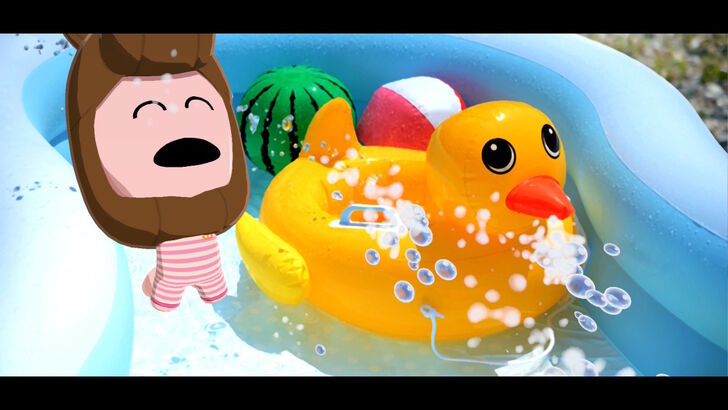
You are the ruler of your island, a caretaker who handles the daily needs of your Miis. They turn to you for everything: a new shirt, a meal, or help navigating a crush on a neighbor. Your job is to guide them toward their own version of happiness, however strange that might look.
Because Tomodachi Life: Living the Dream lacks an actual plot, the story becomes whatever you decide it is. Because of this, the lines between the story and the gameplay fade away, since making this up is the main point of the game. Once you let your Miis loose, everything that transpires after becomes a mix of your own creative choices and the total randomness of the AI.
Hilarity is almost always guaranteed. One moment you are watching a serious heart-to-heart, and the next, two characters are having a literal food face-off, or an older Mii is being turned back into a child.
Imagination’s the Limit When Creating Your Characters
It helps that the character creation here is absurdly flexible. You can make Miis that look like real people, cursed creations, or something in between. The tools are simple at a glance—hair, eyes, nose, the usual suspects—but there’s a surprising amount of control once you start nudging sliders and stacking details.
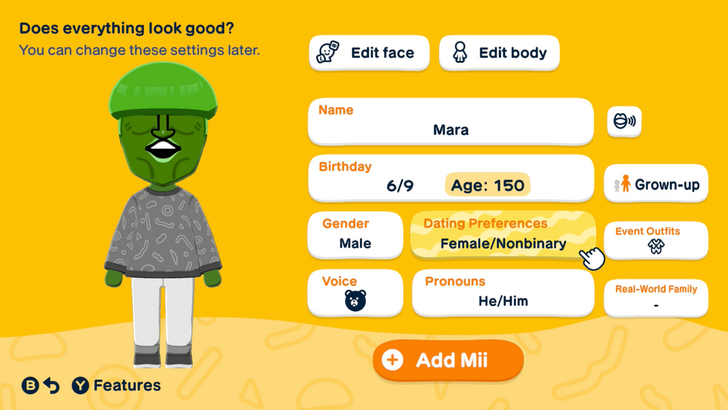
And if the presets don’t satisfy you, the draw feature lets you take the wheel completely and sketch in whatever your brain can come up with, for better or worse. I’ll admit that I’m not exactly gifted in this department, but I still spent an embarrassing amount of time with a friend trying to translate Mara from the Shin Megami Tensei series into Living the Dream. The result was… not perfect, but the jank gives it charm. It feels handmade in a way that suits the game.
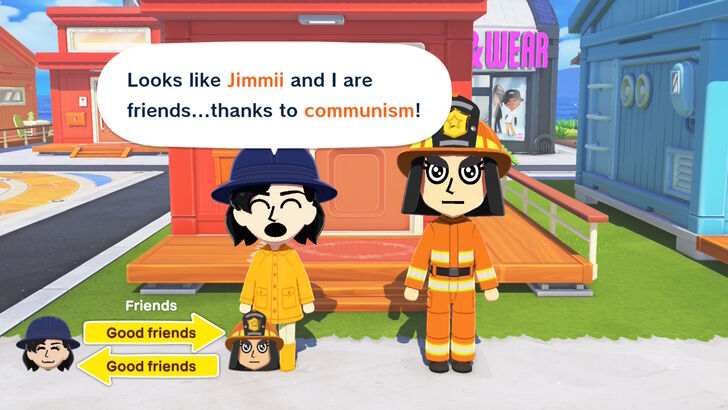
That sense of control extends beyond looks. Personality is shaped through simple scales that define how your Miis behave, like how they talk, how they react, and even how they carry themselves when they walk around the island. There are 16 personality types in total, and you really do see the difference once they start interacting. Some are easygoing, some are more restrained, and some feel like they’re one bad conversation away from spiraling. I also appreciate the inclusion of non-binary options this time around. It’s a small change, but it helps the island feel more inclusive of the people you might actually want to put into it.
Once your Miis are up and running, the game will ask you things like what one Mii should say to another to break the ice, and you can answer as sincerely or as unhinged as you want. And with room for up to 70 Miis, things get chaotic fast. You can play matchmaker, push friendships, or just sit back and watch your plans fall apart when two people decide they simply do not vibe. Sometimes, they click in ways you expected. Sometimes, they don’t. Sometimes, a third wheel shows up and upends the whole situation.
And that’s really where the game is at its best. It finds meaning in the smallest and strangest moments. There’s sincerity to it, even when it’s being ridiculous.
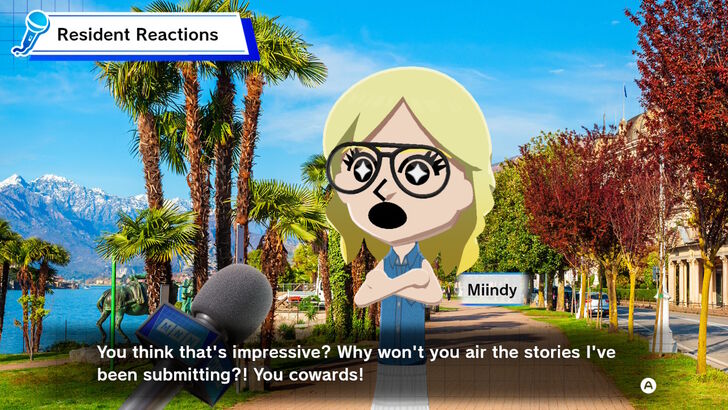
However, at the end of the day, it remains a cozy sandbox built on repetition. Dialogue loops, quirks lose their novelty, and the magic can wear thin if you play for too long without shaking things up. That happened to me back on the 3DS; there were more than a few moments where I spammed the A button because I had already witnessed the same old routine of Miis getting to know each other.
Regardless, I sank nearly a hundred hours into the 3DS version without a second thought, and I’m already over 30 hours into Tomodachi Life: Living the Dream. The real limit has always been what you bring to the experience. Invest enough imagination, and the game gives you just enough back to keep the stories going.
Your Island and You, Now With the Powers of a Deity
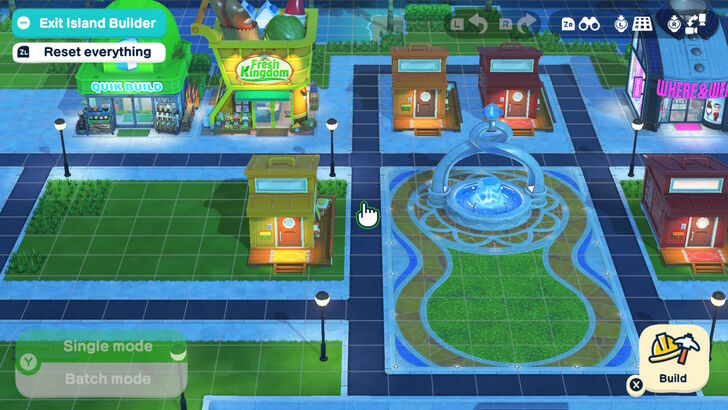
The biggest change in Living the Dream, perhaps, is that the island is no longer just something you stare at from afar. It’s now a space you can touch and reshape. You can pick up buildings and move them around like Lego pieces, stretch out patches of land, or carve little ponds wherever it feels right. It’s not as deep as the terraforming in Pokémon Pokopia or even Animal Crossing: New Horizons, but it gives you just enough control to make the island feel personally yours. I found myself spending more time than I expected just tweaking paths and colors, sometimes even sketching my own patterns when the presets didn’t quite satisfy me.
That same idea carries over to how you take care of your Miis. This is where the new Wishing Fountain ties everything together. You’re no longer just tossing food and clothes at them to fill invisible meters; now, every small act—feeding them, helping them make friends, fixing their problems, even playing little games—earns you what the game calls Warm Fuzzies, which I can only describe as bottled good vibes. Once you’ve collected enough, you pour it into the fountain, and when it overflows, the entire island levels up. Shops expand, new areas open, and your toolbox for shaping the island grows with it.
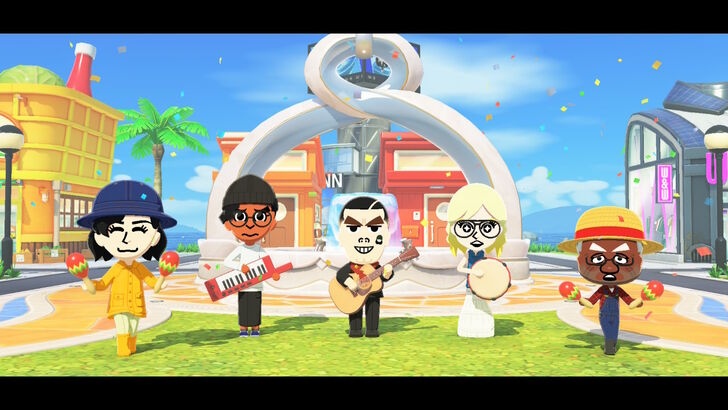
What I like most about this loop is how it feeds back into your Miis themselves. As they level up, they start to feel more like your versions of them. You can give them new quirks, hand them personal items, and slowly shape how they act in ways that go beyond just picking a personality type at the start. One of mine developed a habit of doing a dramatic pose mid-conversation, which was not planned, but now feels essential to who they are.
Could’ve Had Better Multiplayer Features

Despite how much fun I am having with my island, it is hard to ignore the areas where the game holds itself back. In 2026, it’s a bit strange to play a game about relationships and not be able to connect with actual people online. You can’t visit a friend’s island across the country, can’t browse other players’ creations, can’t even punch in a code just to see how someone else designed their Miis.
To be fair, I can see the reasoning. The game gives you a lot of freedom with how your Miis look and act, and not all of it is… wholesome. Opening that up online would probably lead to some cursed creations slipping through the cracks. Sharing your Miis is limited to local wireless, which means you and another player have to be in the same room.
Still, it’s pretty unfortunate. Tomodachi Life on the 3DS lets you share Miis through QR codes, which makes it easy to swap characters with people halfway across the world. Here, though, if I want someone to experience my version of Jimmii, they’d have to physically show up.
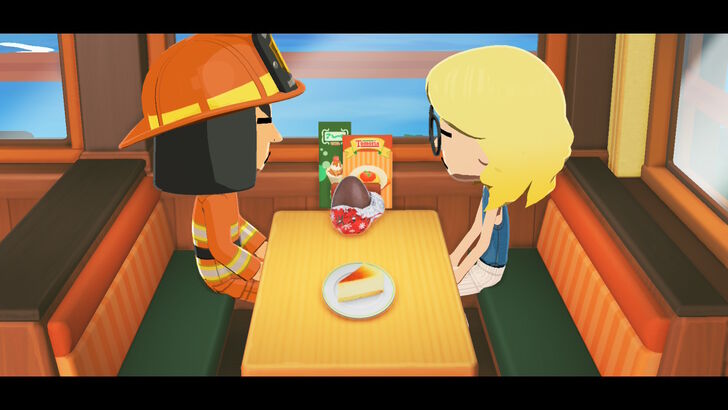
That limitation also puts more pressure on you to do everything yourself. I ended up getting better at making Miis simply because I couldn’t rely on grabbing someone else’s designs online. It’s nice, sure, but it also means that the game misses out on the kind of shared creativity that keeps communities alive.
I would’ve loved to see Mara wander into a stranger’s island or get a random postcard from a friend’s save file. Even something small like that would’ve gone a long way. C'est la vie, perhaps. There’s always hope that Nintendo gives Tomodachi Life: Living the Dream an update that overhauls its multiplayer features.
Is Tomodachi Life: Living the Dream Worth It?
Yes, It’s a Glorified Meme Generator
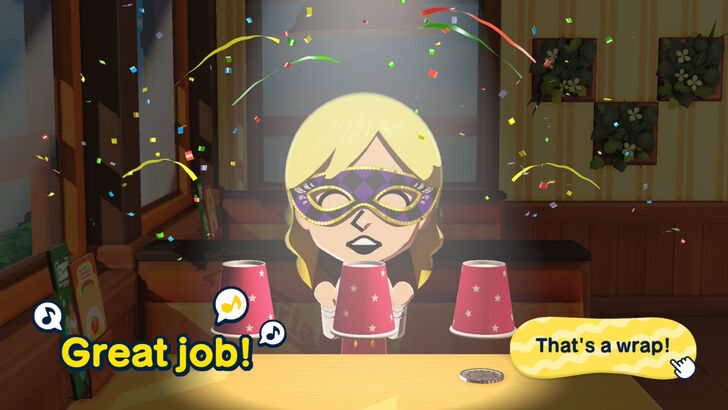
Tomodachi Life: Living the Dream costs $60, and sure, I do wish it were a bit cheaper. But at the same time, it’s the kind of game that silently eats your free time without asking permission. I’m already over 30 hours in, and it still feels like I’ve only scratched the surface of what my island could become. There’s a lot to do, a lot to tweak, and an absurd number of little stories waiting to happen if you just let the game run its course.
However, do keep in mind that, for as many strange and oddly touching moments as the game can produce, there are stretches where you’ll start to notice the seams. Conversations will repeat, and certain events come back a few too many times. It’s the nature of a system built on looping behavior. You can feel it, especially during longer sessions, when the magic dips just a little, and you start to recognize the script behind the curtain.
Even so, I keep coming back to it. Maybe it’s because it took thirteen years to get here, or maybe it’s just the way the game finds small ways to charm you when you’re not expecting it. I know the limits are there. I know the lack of online features will bug me the next time I want to show my island to a friend halfway across the world. But none of that matters when I see a Mii I modeled after a friend doing a celebratory jump because I bought him a new hat.
Tomodachi Life: Living the Dream FAQ
How to Make Miis Fall in Love in Tomodachi Life: Living the Dream?
To help your Miis fall in love in Tomodachi Life: Living the Dream, first ensure their dating preferences are set to be compatible within their profile settings. Once configured, you can actively foster their connection by using the new direct interaction controls to encourage flirting, gifting, and spending time together.
Game8 Reviews














I honestly can't wait for my game to come 🥹