


DragonSword: Awakening is the newest action RPG that serves as the spiritual successor to the beloved MMO, Dragon Nest. Read our review to find out our score, our thoughts about the game, and whether it’s worth buying or not.
Overview
What is DragonSword: Awakening?
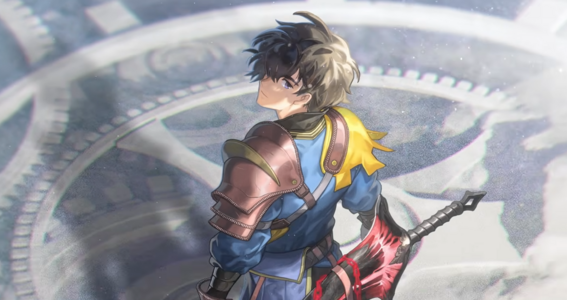
DragonSword: Awakening is an anime-style open-world action-adventure RPG set in the continent of Orbis. Players take on the role of Lute, a young boy making his way to the eponymous kingdom, the first one built by humankind. Along the way, he meets the mercenary Johnny and the elf Castella, who quickly become entangled in his life and add a splash of color to his days.
However, in the distance, a shadow looms over the otherwise peaceful continent, threatening its very existence. Lute’s fate changes, and he is tasked with the ambitious quest of finding the Heroes of old and discovering their secrets to take down the Dragon—will he and his comrades rise to become the Heroes to save the land from its demise?
DragonSword: Awakening features:
⚫︎ Open-World Action RPG
⚫︎ Gacha-Like Progression
⚫︎ Trio-Based Tag Action
⚫︎ 19 Playable Characters
⚫︎ Lengthy Narrative
⚫︎ Side Quests
| Digital Storefronts | |||||
|---|---|---|---|---|---|
 Steam Steam |
|||||
| $29.99 |
DragonSword: Awakening Review: High-Quality Action RPG With a Gacha DNA
A Gacha With 100% Pity Rate
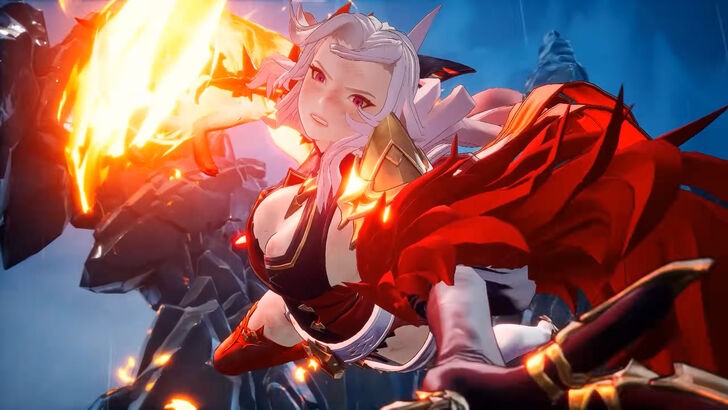
The transition from a live-service game into a full single-player package is quite tricky, especially when everything you’ve built around it is meant to fuel the live-service. Take Granblue Fantasy: Relink, for instance: it pivoted to a full-fledged action RPG from what was originally intended as a gacha game. While it has been successful since its release, its decade-long development period suggests that this pivot isn’t easy to execute.
But one could also argue that being labeled a spiritual successor is almost just as tricky, especially when the "sequel" doesn’t really have the same bones as the original, only slightly similar. The hardest part about a spiritual successor is the expectation it brings, since a subtle difference in its design can be magnified by the original game’s hardcore fans. In the case of SAROS, most fans believed that the difficulty didn’t match RETURNAL’s challenge, even though it was still quite difficult.
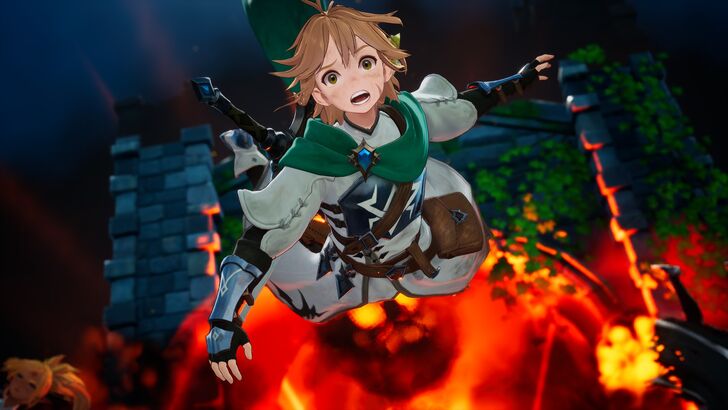
And then, we have HOUND13’s DragonSword: Awakening, a game that’s pivoted from a nearly-completed gacha to a full-fledged action RPG, while also proving to be a worthy spiritual successor to one of the most beloved MMOs during its time, Dragon Nest. Safe to say, the game has some insanely steep hills to climb.
After trying the game, I have to say I was fairly impressed with what they were able to do, especially when you know the context of the game’s development. However, its gameplay flaws are fairly noticeable, especially since it stems from its origins as a gacha. Nevertheless, the game manages to feel complete despite these issues, and its great visuals, interesting narrative, and sprawling world make it certainly worth the trouble that the game has gone through.
Interesting Narrative Held Back By Inconsistency
DragonSword: Awakening follows the story of Lute, a young boy with the gift of healing magic, traveling alone to the land of Orbis. There, he finds himself forcefully inducted into the mercenary crew led by Johnny, a boisterous captain, alongside Castella and Aria. As they try to make a name for themselves as a mercenary group making a living, things take a turn for the future of Orbis when the mythical Origin Dragon has returned after 60 years.
The Johnny Mercenaries must find the mythical Six Heroes, confront the Dragon’s arrival, and work toward getting stronger to earn the title of Dragon Sword, where they will soon realize that there are more secrets to unravel behind the true events of years past as well as Lute’s existence.
While the premise of the story may seem rather basic, the dynamics among its characters and its moving parts make for a compelling story. The worldbuilding takes into account just how wide the pool is for what the game considers its main cast of characters, and this shows in how the narrative uses Lute.
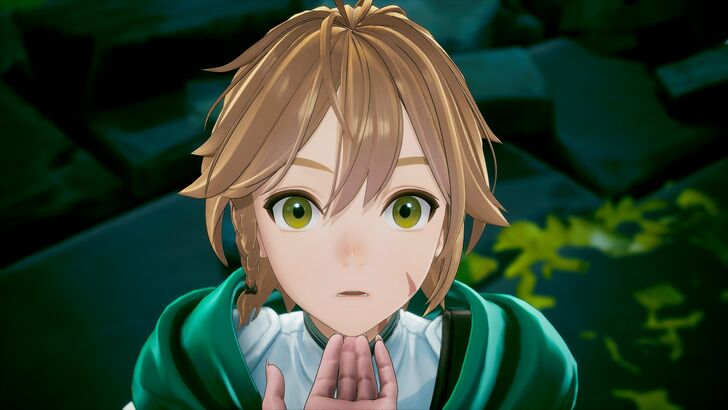
For instance, Lute doesn’t actually have the most screen time in most scenes; he’s mostly there to react to the group’s wild antics and be the workhorse forced to do the menial tasks. But by the time you learn more about the truth of the Six Heroes, as well as the hints that point to Lute’s actual involvement in the bigger picture, his character starts to become a mystery that you piece together as you learn about what actually happened during the events that happened 60 years ago.
Without spoiling everything outright, only a small part of the myth behind the Six Heroes is known to the public, so part of the story involves meeting each of them as they recount the events that actually occurred during and after the fight with the Origin Dragon. And this is where it gets even more interesting, as the Six Heroes aren’t as heroic as everyone thought they were.
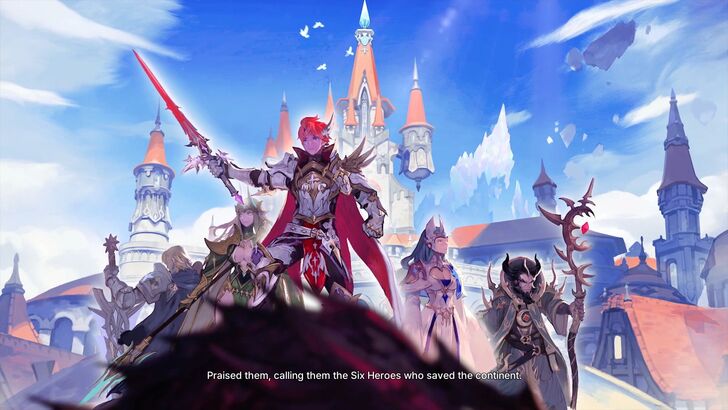
One question that’s asked early on is why are there only five commemorative statues of a group that consists of six people? This becomes the crux of the whole narrative, and in turn, becomes the driving force of why you need to find the aging heroes, as well as find out who Lute really is.
And that’s not all, as the rest of the cast also pull their weight in creating an entertaining narrative.
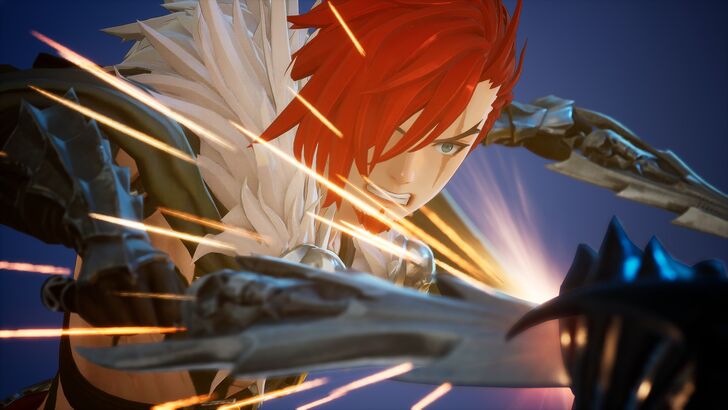
One particular example is Johnny, who serves as the crew's "irresponsible" mouthpiece. He is framed as the stereotypical joker with a heart of gold, as he’s willing to do whatever it takes to make his crew stand out and get ahead while helping those in need.
This comes to a head during one of the first climactic moments of the story, where he’s the only one who discovers Lute’s identity early on.
Maybe it’s because I’m a sucker for initially comedic characters who get forced into serious situations, but the way the game showcases Johnny’s capabilities and serious personality as a mercenary captain was one of the biggest reasons why I found the story so compelling.
However, the narrative isn’t perfect, as the dynamics of its moving parts also introduce multiple problems.
The inconsistency in its pacing becomes apparent early on, as some seemingly important events feel like they go by too quickly with little consequence or drag on for no reason.
One specific example of this was the leaders of Orbis holding a strategy meeting to determine how to proceed with the events that had occurred so far.
For some reason, this whole meeting was split into four cutscenes, and at the end of each one you have to physically talk to the person to continue the meeting. While this may seem like a minor problem, this expounds on the game’s issue with quest design, which I’ll talk about later.
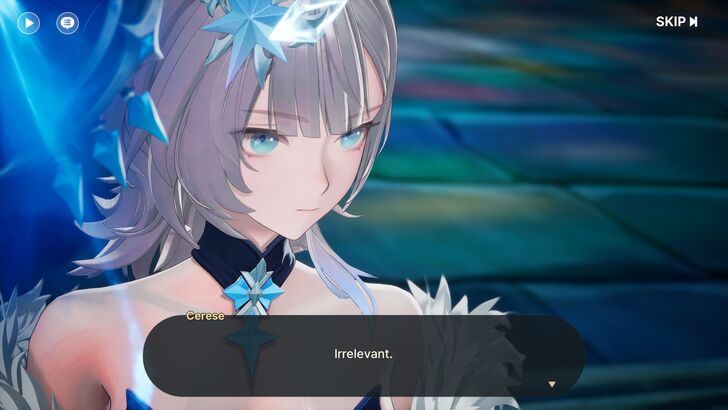
Another problem is the number of what end up being "filler episodes," especially when they drag on too long given the looming world-ending threat that’s about to arrive. It’s a very jarring tonal shift, especially when a major event just happens, and then suddenly you’re doing a fetch quest to transport a box from A to B.
Despite these issues, the narrative remains highly compelling, especially when it gets going and reaches its climactic moments. This, alongside the colorful cast, made for an entertaining story that kept me interested in learning more about the world of Orbis and the smaller bits of lore scattered throughout the continent.
Stunning Overall Presentation
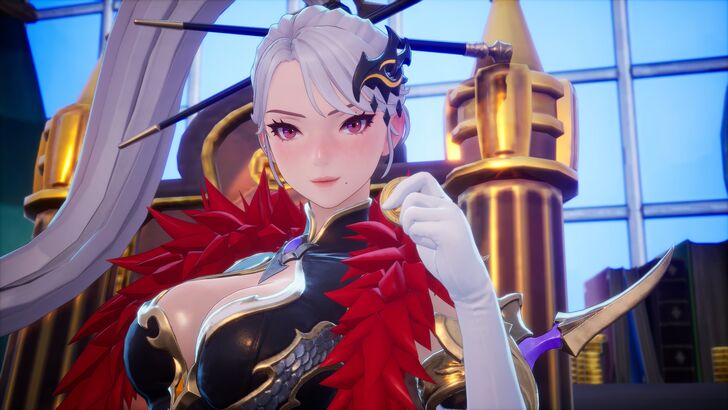
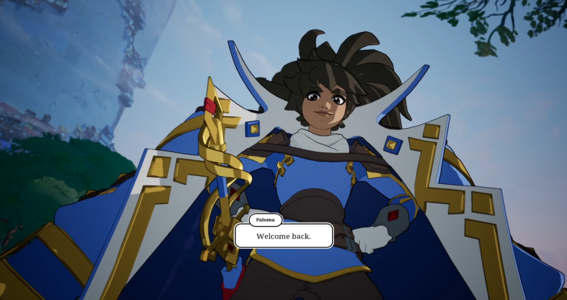
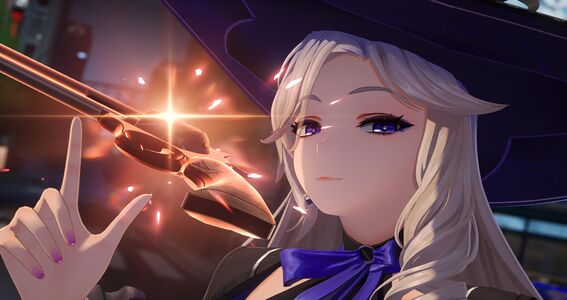
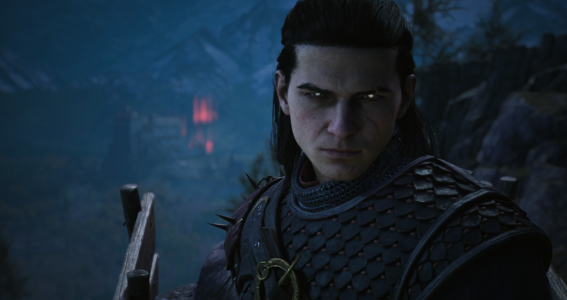
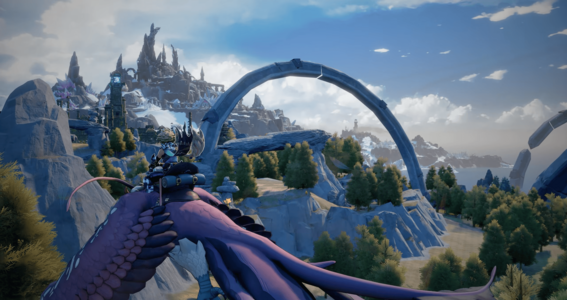
One of the game’s biggest strengths is its overall presentation. From its thematic aesthetic to its character designs and all the way to its animations, DragonSword: Awakening makes sure every cutscene is remarkable. This pretty much enhances the overall experience with its stellar visuals always coming through in its narrative sequences or in gameplay segments.
A particular weakness that was noticeable was the game’s UI. While it’s mostly serviceable in its functionality, there are times when it looks off and other times when it doesn’t feel helpful at all. One particular example of this is in the game’s Trait Dungeons, where it displays a certain encounter's weaknesses in words rather than the logo of its element.
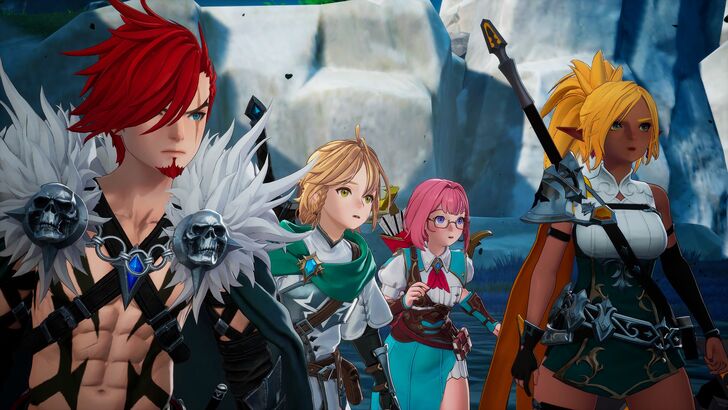
I’m not joking when I say that I’m actually 20 hours in and I still don’t know the elements by their actual names. This is because these aren’t normally shown in the inventory or character screen, where you spend a lot of your time; only the logo of the elements is displayed there instead. So imagine my confusion when it’s displaying a bunch of words that I’ve never seen before.
Thankfully, this wasn’t that big of a deal, as I was still able to brute-force the encounters with my team, but I do imagine that it would be much faster if I actually knew what element was the best against that encounter.
Aside from that, the sound design was also quite well done, specifically the voice acting. While I may not understand Korean, the performances are colorful and expressive enough to provide context for certain events alongside the subtitles. This was an unexpected aspect that I didn’t think would be that impactful to my enjoyment of the game.
Formulaic Gacha-Style Gameplay Loop
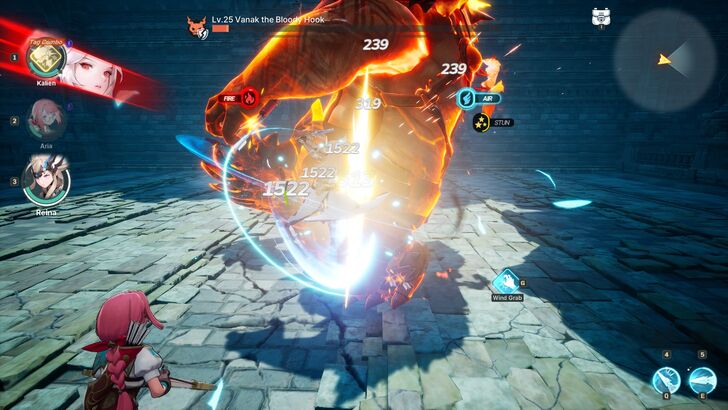
Let me first address the elephant, or rather elephants, in the room regarding DragonSword: Awakening’s gameplay.
Yes, the game being comparable to Mihoyo’s Genshin Impact is very much obvious. The gameplay loop of an open-world RPG, combined with its look and certain mechanics, does, in fact, feel very similar to that of the aforementioned gacha.
Yes, the gameplay loop of character-swapping and tagging is very much a staple in the gacha space. You’d find this not only in Genshin, but also in other gacha games like Wuthering Waves, Neverness To Everness, and many more.
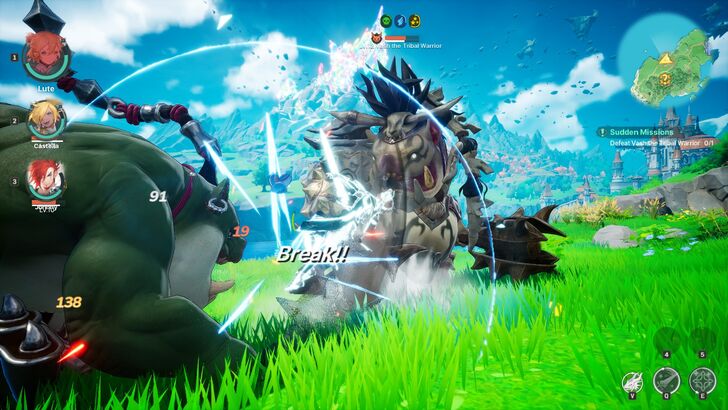
Unfortunately, if you were expecting a combat as deep as the level of its spiritual predecessor, Dragon Nest, then you’ll be sorely disappointed. While the MMO prides itself on being the "fastest MMO out there," this is not the case for DragonSword: Awakening. The game is mostly inspired by gachas, and I would say the Dragon Nest inspiration is mostly aesthetic.
These comparisons, while valid, are only one part of the problem. In fact, these comparisons lead into the game's main weakness: the gameplay loop feels formulaic, largely because it borrows many elements from other gacha games. It’s come to a point where the open-world style RPG has become too saturated, and it doesn’t feel as novel anymore.
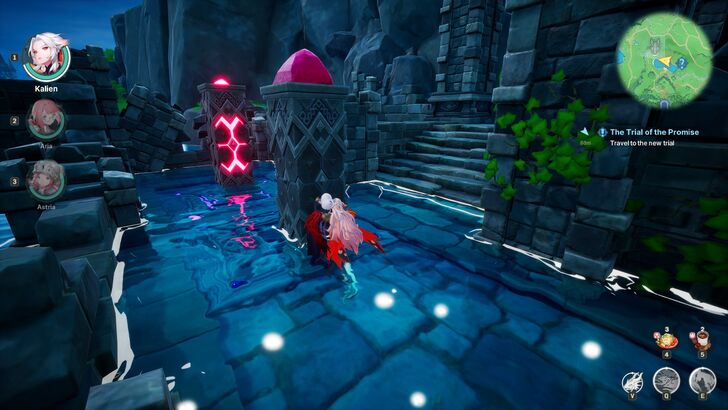
Exploration in DragonSword: Awakening doesn’t feel as organic as it should in most open-world RPGs, and I would attribute this mostly to its DNA of being a gacha game first before being a full action RPG. While it may be unfair to say it boils down to mostly just going from one point of interest to another, that is what ends up happening.
This ended up happening to me, where I ended up checking the Mercenary Guide most of the time to get the locations of certain World Bosses or Dungeons and beeline to them immediately to gain access to either reap their rewards or another Warp point.
That isn’t to say that exploration is completely irrelevant, as there are hidden puzzles in the world that do reward you for actually doing the legwork of finding them. But most of the time, these do end up being a smaller side activity for you to do when you’ve run out of things to grind for.
Let’s move on to its combat, where it actually has some redeeming qualities beyond its simplicity. First off, fighting in DragonSword: Awakening feels great. The animations are snappy, the feedback is felt, and the simple controls allow you to learn it without much of an issue.
Another reason it feels great is the Tag system, which allows you to make use of multiple characters in a given moment while shining a light on another engaging aspect of the game: team-building. Team-building in gacha games is nothing new, and DragonSword: Awakening highlights this with its tag system that primarily relies on triggers.
For example, Lute’s Swordgrab ability can be used when an enemy is Stunned, so building around Lute would mean that you would want members of your team that can effectively accumulate Stun using their attacks and abilities. This would allow you to rotate your tags constantly and take advantage of free skill uses that are separate from that character’s basic abilities.
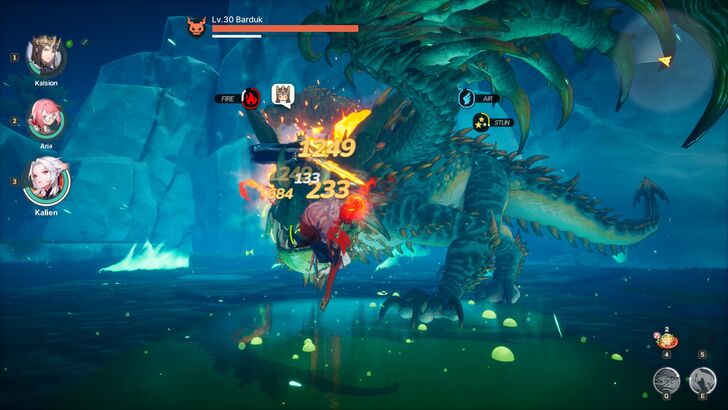
The reason why the Tag mechanic is paramount to the combat is because of the Break gauge. A successful Break on the enemy means that you have a window where enemies don’t have Super Armor, and you can freely attack them without the fear of retaliation. This also includes Boss enemies, meaning that team synergy as well as individual character strength of being able to inflict strong Break damage means that every fight becomes a cakewalk.
In my case, I mostly used a team centered on the Burn mechanic. The trio of Kalien, Aria, and Kalsion had highly synergistic abilities that allowed me to maintain consistent uptime on my skills, Break the enemy as soon as possible, and switch members as needed. Aside from the three of them being able to abuse the Tag mechanic, they’re also quite strong individually in how they function and play.
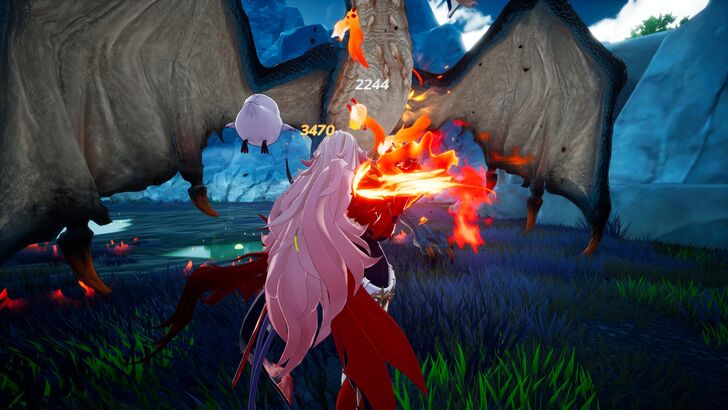
Despite the engaging aspect of creating teams and the constant tagging, this also introduces another problem: its simple mechanics allow the difficulty to plummet entirely. Now, I won’t lie and say that the game was an absolute cakewalk all the time, but I also won’t say that there was an encounter that felt remotely threatening the moment I got this particular trio together.
There was no hard execution involved in what I was doing. It was a constant loop of getting my abilities out, tagging when available, then attacking to deal more damage and build up more Burn to get even more abilities out. Rinse and repeat.
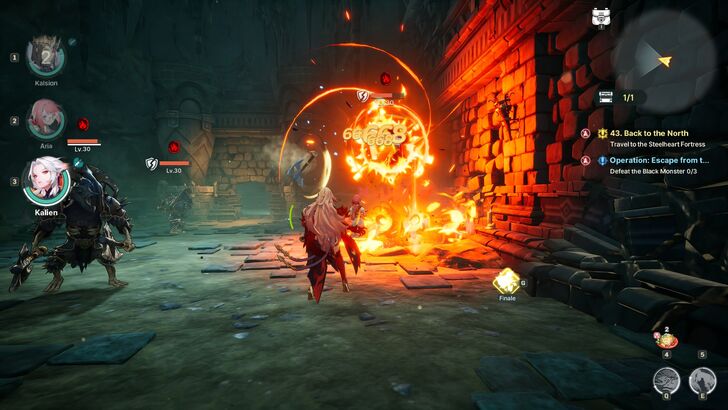
The combat loop basically devolved into "when and where am I going to use my Tag, if not immediately?" One can argue that knowing when to tag could be considered depth, as tagging allows you to break aggro and the character that was tagging out is immune to any damage. However, when 90% of combat doesn’t need you to think about this type of nuance, then it might as well not exist.
Yet, while the combat itself can feel rather shallow and lackluster when you start reading into its mechanics, it’s actually compounded even more because of its gacha-like progression.
Gacha Elements Magnify Its Slow Progression
While I already sound like a broken record at this point about the game’s systems, it’s the progression where you can feel it most. For those who have not experienced a gacha game, progression mostly works like an MMO. You get a certain currency to trade in for power, which can come in the form of upgrading skills, leveling up, getting equipment, and many more.
This is very much the case for everything related to progression in DragonSword: Awakening, where you can clearly see the Gacha-like grind. You do an encounter for a specific currency or equipment, then repeat it as many times as you need.
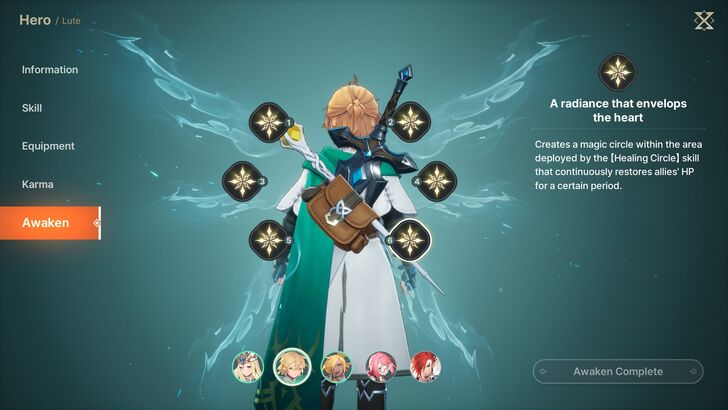
Now, does that mean that the gacha progression is only negative? No, definitely not. For one, you actually are able to get most of the cast without having to gamble currency away. I say most, because some characters are story-gated, and you’ll have to progress through the game’s eighty chapters to unlock all of them.
However, this style of progression is where its main problem lies. The inherent grindiness of the game means that you’re forced to repeat encounters that don’t necessarily present any challenge, and therefore you’re subject to even more of its repetitive combat loop.
This leads to its systems clashing: the overall progression lengthens the actualization of your dream team, forcing you to keep engaging in a shallow combat loop with simple mechanics and low difficulty, compounded by sheer repetition.
If it takes more than enough time to make your dream team, what more if you want to make more teams?
Is DragonSword: Awakening Worth It?
Worth It, But Prepare For a Grind
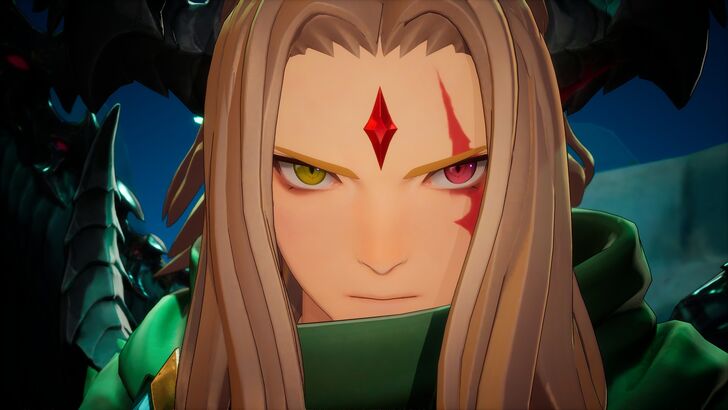
While I’ve gone on and on about the weaknesses of DragonSword: Awakening’s gameplay, it’s still a game that’s worth the price it asks for. For $29.99, the high quality of its visuals, sound design, and even its narrative make it a game that’s worth experiencing, especially if you’re already a fan of the gacha-style gameplay. It offers up to 20-30 hours of gameplay, and that’s not counting the total grinding that you’ll have to do to fully cap out your dream team.
I would highly recommend it to people who’ve already dabbled in gachas and don’t want to invest in another one, as the 100% pull rate on the characters you want is a big plus for anyone, really. However, I will still warn interested players that it will be fairly grindy, maybe not to the same levels as your average gacha game, but it would still eat up a considerable amount of time.
Game8 Reviews