



The Guild 1 Remake: Europa 1410 is a sandbox strategy title set in the 15th century. Learn more about the game’s plot, gameplay, release date, our first impressions, and more.
Everything We Know About The Guild 1 Remake: Europa 1410
The Guild 1 Remake: Europa 1410 Overview
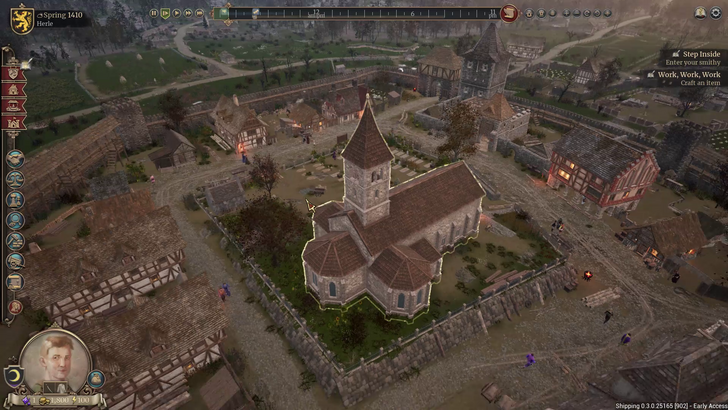
The Guild 1 Remake: Europa 1410 is a medieval economic and political simulation developed by Ashborne Games and published by THQ Nordic. Acting as a direct series reboot inspired by the 2002 classic Europa 1400: The Guild, the game drops players into a top-down isometric 15th-century sandbox where they must guide a fledgling household from humble beginnings into a dominant dynasty.
Players can choose from diverse legal and illicit professions, ranging from blacksmithing and alchemy to underground thievery, to accumulate wealth, manipulate town hall politics through bribery or blackmail, and secure a multi-generational legacy by raising heirs before characters age and pass away.
The Guild 1 Remake: Europa 1410 Release Date
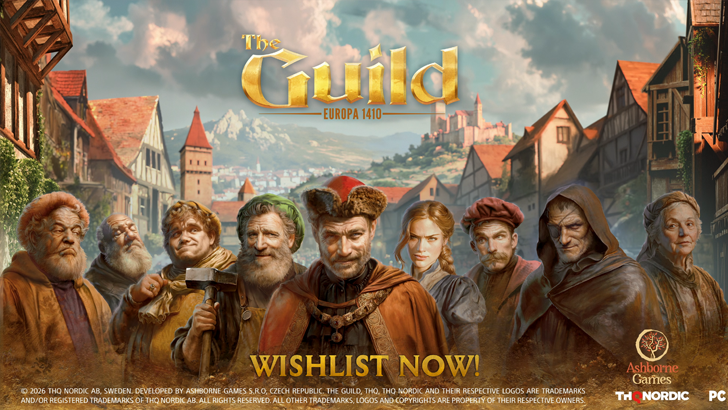
The Guild - Europa 1410 is releasing in Early Access in September 17, 2026 for PC via Steam. Wishlisting is open, and a demo is available on Steam.
| Digital Storefronts | |||||
|---|---|---|---|---|---|
 Steam Steam |
|||||
| Wishlist Only |
The Guild 1 Remake: Europa 1410 Review (First Impressions)
Living the 1400s Dream
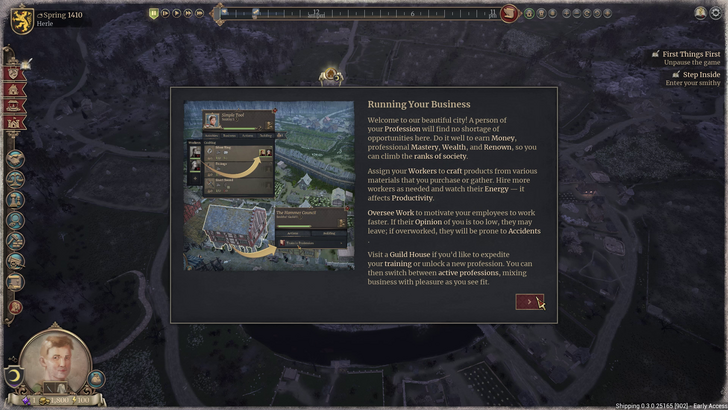
Ah yes, the 15th century, when noblemen ruled the land while citizens broke their backs with hard labor in harsh conditions. Corruption, disease, and all other problems plagued the land, but that won’t stop you from creating your own dynasty and living in wealth.
The Guild 1 Remake: Europa 1410 lets you live out a 15th-century rags-to-riches journey driven entirely by your choices. Returning to the simulation-heavy design of the 2002 cult classic Europa 1400, this remake focuses on a top-down, management-driven strategy experience.
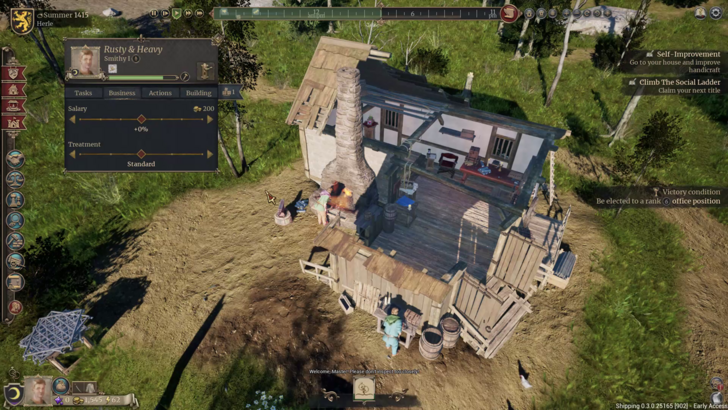
The game nails the authentic medieval atmosphere right off the bat, capturing the dark, muddy charm of 15th-century Central European towns with impressive visual polish powered by Unreal Engine 5. From atmospheric lighting hitting timber-framed workshops to the bustling crowd paths, it feels remarkably alive.
Hard Work Works
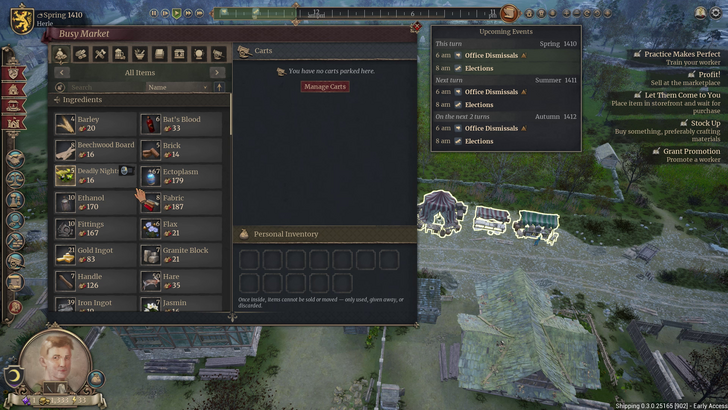
The economic loop is straightforward but deep: start with a humble trade like blacksmithing or alchemy, and build your way up to a multi-workshop empire. It gives you plenty of options for how to succeed, which makes you feel like a real owner of a legitimate business.
However, you aren't just clicking "produce"; you actively manage raw material procurement, balance worker wages, monitor supply-and-demand dynamics in town markets, and adjust price margins to squeeze out your competitors. This makes every decision critical to your success and pushes you to be more careful about how you approach each obstacle and challenge.
Adding a layer of fun (and stress) comes from logistics. Your supply chain relies on actual carts rolling down the roads, so speed, capacity, and route safety matter. Transporting high-value goods makes your wagons prime targets for rival thugs and bandits, making hired guards and strategic warehouses just as vital as manufacturing.
That said, prepare to spend a lot of time staring at menus. Underneath the pretty medieval streets and the immersive 15th-century charm lies a hardcore spreadsheet simulator driven by non-stop micro-management. It might scare off casual players, but this complex web of systems is precisely what gives The Guild 1 Remake its unique, addictive charm for long-time fans of the series.
Your Dynasty, Your Choice
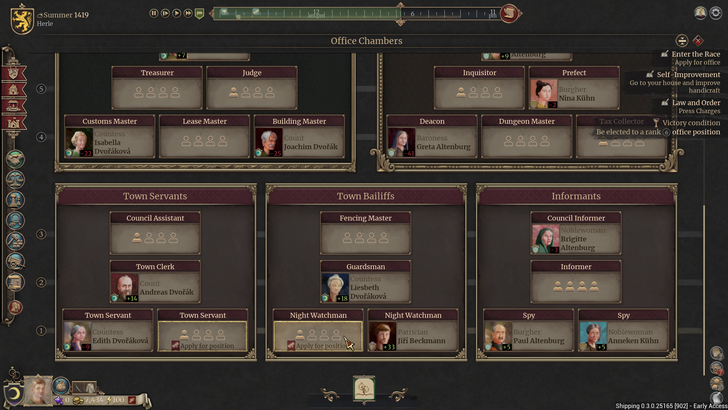
The game truly shines in its classic sandbox freedom, where economic power is merely a stepping stone to social domination. Earning wealth opens the doors to the Town Hall, where you can buy political office, bribe council members, pass local ordinances, or use blackmail to derail a rival's campaign.
Alternatively, turning to illicit professions like thievery, extortion, and banditry gives you a dark, high-risk playstyle focused on sabotaging competitors' supply lines and mugging wealthy citizens. This level of agency lets you carve your own path to victory, giving players an immensely satisfying sense of control as their scheming comes to life.
It’s not just about picking a good or bad route either, as the game lets you blur those lines however you see fit. You can act as a law-abiding citizen in front of most of the city, but also secretly engage in nefarious dealings in the back. This freedom is what makes the moral sandbox click, letting you freely mix honest trade, political corruption, and crime so every victory feels uniquely earned.
Family Matters
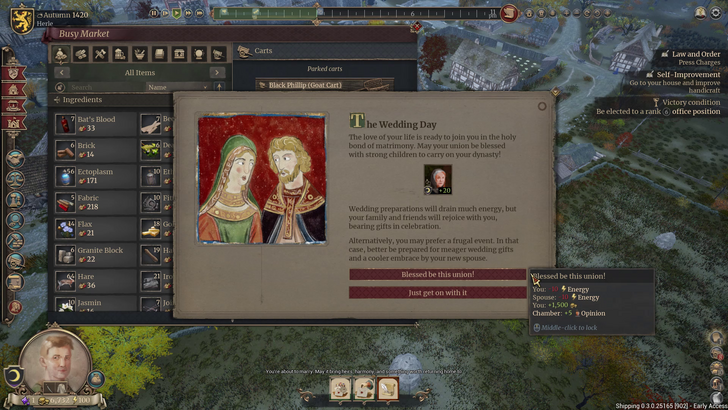
Aside from your profession, you may also opt to build your own family. Because your primary character will eventually grow old and die, securing a family lineage by courting a suitable spouse and raising heirs is critical to passing down your hard-earned workshops, titles, and political seats before the grave takes you.
While the dating system is fairly straightforward, small touches like giving gifts and going on dates keep the courtship engaging. Watching the marriage prompt finally pop up feels incredibly satisfying, making all that romantic effort feel like a meaningful step toward securing your family lineage.
A Bit More Polish
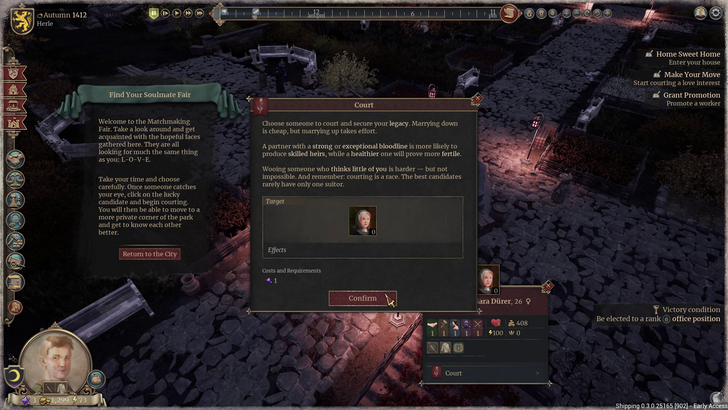
Despite its strong foundation, the game is heavily hindered by severe UI/UX friction. The interface desperately needs a modern overhaul, as simple actions are buried under a mountain of clunky, multi-nested submenus, tiny non-descript icons, and repetitive click paths.
Everyday operations, like setting up a basic supply cart route, assigning worker priorities, or just checking workshop output, quickly turn into an exhausting chore. Instead of focusing on your overarching strategy, you spend half your time wrestling with the user interface just to find basic information.
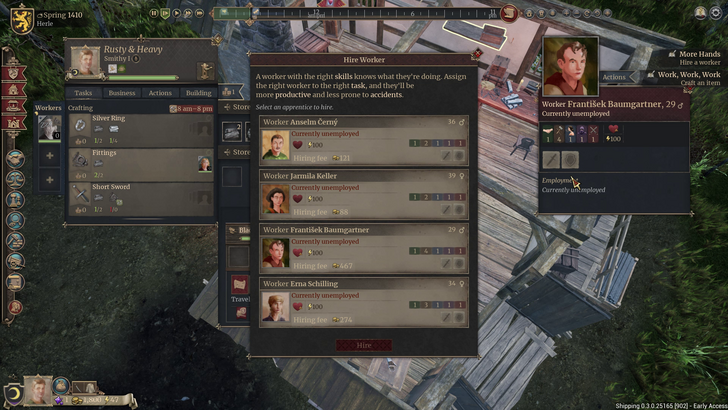
Compounding these design issues is a notoriously bare-bones tutorial experience. The game essentially throws you into the deep end of a hyper-complex medieval economy with minimal hand-holding, leaving crucial systems like automated trade routes, tax laws, and courtroom defense totally unexplained.
Newcomers are forced to learn core automation tools and essential mechanics through a punishing cycle of trial, error, and financial ruin. For a game with this much strategic depth, the steep learning curve sometimes feels less like a rewarding challenge and more like a barrier to entry.
However, if Ashborne Games can clean up the tedious user interface, guide players on learning certain aspects of the game, and inject a bit more flair into the character interactions before full release, newbies and fans of the original classic are in for the definitive medieval simulator they have been waiting two decades to play.
Game8 Reviews

You may also like...


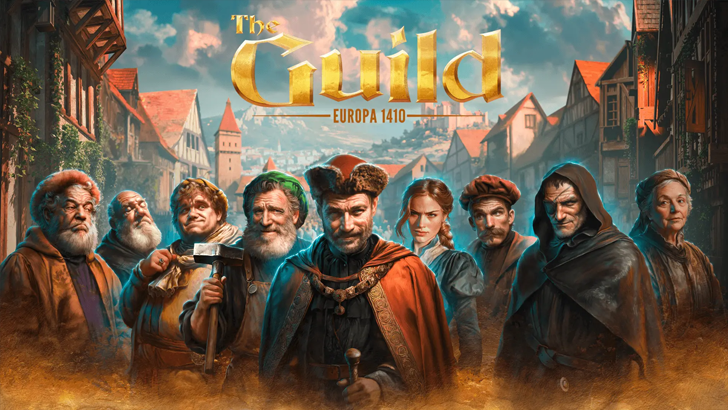
The Guild 1 Remake: Europa 1410 Product Information
 |
|
| Title | The Guild 1 Remake: Europa 1410 |
|---|---|
| Release Date | September 17, 2026 (Early Access) |
| Developer | Ashborne Games |
| Publisher | THQ Nordic |
| Supported Platforms | PC |
| Genre | Strategy, RPG |
| Number of Players | 1 |
| ESRB Rating | RP |
| Official Website | The Guild 1 Remake: Europa 1410 Official Website |