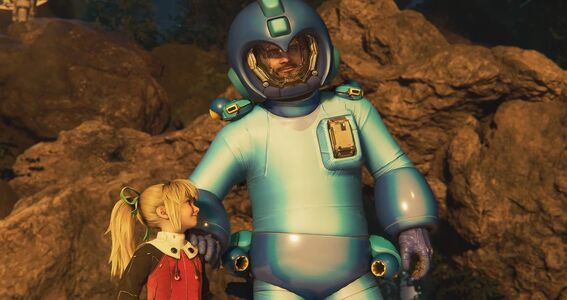



Minecraft Dungeons approaches the dungeon crawler genre with a simpler and friendlier format. Learn more about the game’s plot, gameplay, release date, our review of the game, and more.
Overview
What is Minecraft Dungeons?
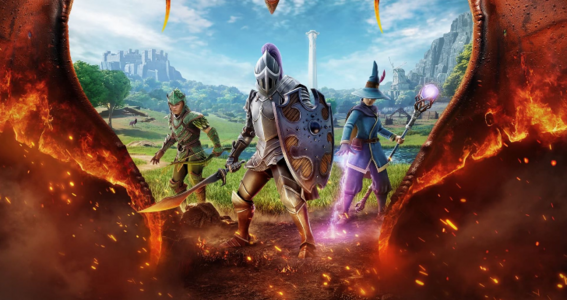
Minecraft Dungeons is a top-down ARPG that puts a twist on the familiar Minecraft formula. Inspired by titles like Diablo, it takes players through a mix of procedurally generated and handcrafted dungeons, where they battle challenging bosses and hunt for better gear through its loot-based progression system.
Like its voxel-based predecessor, Minecraft Dungeons also supports up to four players in online co-op, letting friends team up across multiple biomes and take on some of the game's toughest encounters together.
Minecraft Dungeons features:
⚫︎ Diablo-inspired Combat System
⚫︎ An Original Story in the Minecraft Universe
⚫︎ Distinct Minecraft Visuals
⚫︎ Loot-Driven Progression
⚫︎ 4-Player Online Co-Op
⚫︎ Replayable Missions and Adjustable Difficulty Levels
| Digital Storefronts | ||
|---|---|---|
 Steam Steam |
 Playstation Playstation |
 Xbox Xbox |
 Switch Switch |
||
Minecraft Dungeons Review
A Simplified Dungeon Crawler
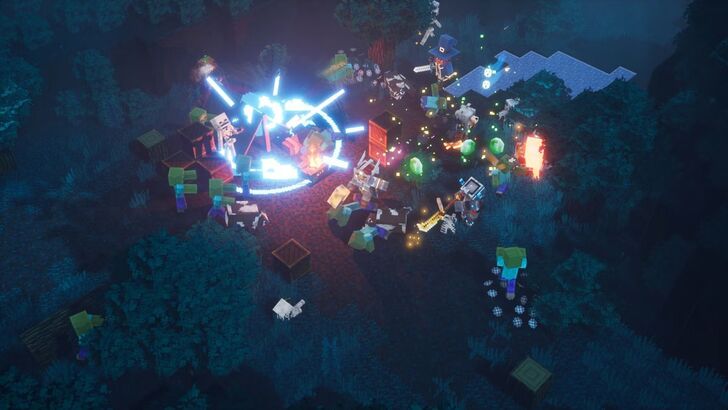
Still holding the title of the top-selling game since its 2011 release, Minecraft carries a reputation almost synonymous with video games. Without a doubt, Mojang's second-ever title, Minecraft Dungeons, was met with much anticipation. Pivoting away from the survival-craft genre of the original, Minecraft Dungeons brings its own take on dungeon crawlers, but did it live up to the expectations of the genre and its name?
Dungeon crawlers, popularized by the Diablo series, Path of Exile, Hades, and the like, offer fast-paced, action-based combat. Minecraft Dungeons takes a faithful approach, carrying over the iconic blocky visuals and the popularized top-down, isometric view. Familiar characters and biomes return, and the game delivers its own spin in its equipment and enchantment system. However, having played other, more-nuanced series, these systems in Minecraft Dungeons can’t help but feel simplified.
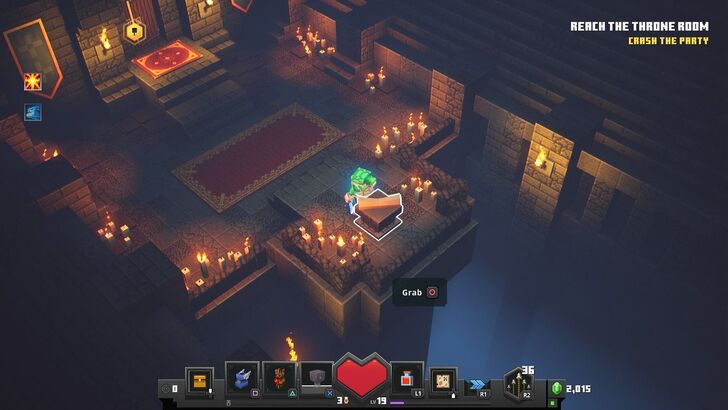
Sure, without the arduous expectations and seriousness other series hold, Minecraft Dungeons is enjoyable for returning and new players alike, but don’t expect to spend hundreds of hours in the game perfecting builds and runs. The lack of complexity is either an attempt to make it more charming or to appeal to much younger audiences. With this, Minecraft Dungeons does not necessarily fail to offer the cornerstones of the hack-and-slash experience, but the absence of in-depth systems makes the gameplay repetitive and less customizable compared to other series.
Short and Limited Gameplay
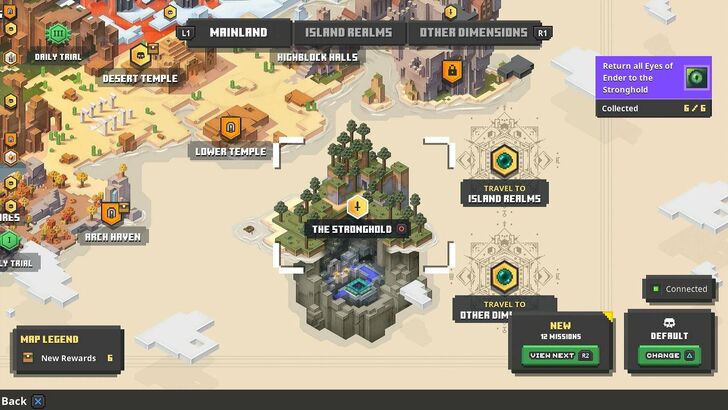
Minecraft Dungeons adapts the familiar grind of climbing tiers for increased risk and reward. Missions have increasingly difficult threat levels, and there are 3 game difficulty modes to choose from. However, greater difficulties offer little change of pace. With only 14 base game levels to choose from, the game is short, and running the same levels over and over again in other difficulties becomes less and less inspiring.
The levels are procedurally generated with chance-based loot and chests, but they follow predictable arrangements. Repeating objectives such as lighting beacons and solving stone patterns can also grow tiresome, and even feel unnecessary in more difficult modes since some objectives remain narrative-based even when the story is completed. Despite this, the short levels are enjoyable in the first few runs, and it’s not to say the game did not attempt to deviate from the template.
With the release of the 6 DLCs, Minecraft Dungeons expands its base game with 25 new levels and new items and gear to collect. New biomes and game collectibles add a few more hours of gameplay, such as traversing the frigid cold of Creeping Winter or finding all Eyes of Ender to unlock The End. However, the added price tags are not the answer for the base game’s insufficiencies. With only 4-6 new levels per DLC, the added content could have been approached as free updates instead of separate, paid expansions. Missing out on the new content and experience feels like a deliberate disadvantage, as the base game remains lackluster without the expansions.
A Wacky Immersion
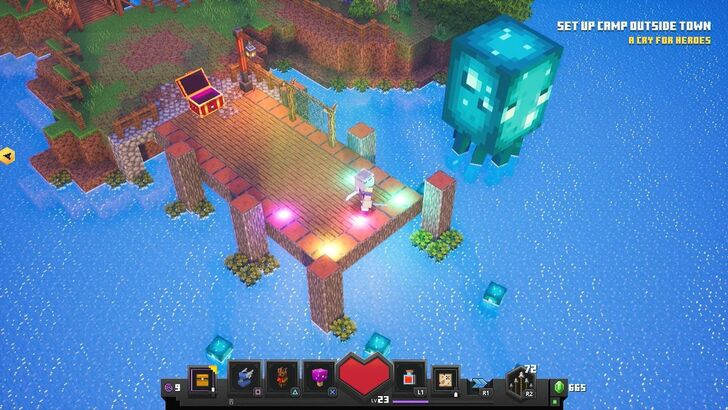
Minecraft Dungeons brings the established world of the popular IP in a different light. The biomes are introduced in configurations never seen before, and their unique environmental quirks force you to adjust your strategy on the fly. Harpoon arrows, for example, travel faster underwater than normal ones, and the jungle is filled with enemies that inflict poison.
The biome mechanics aren’t particularly challenging, and one can force their way through these hurdles with enough finesse, but this is where I found the most immersion. The game inspires the use of certain equipment to enhance quality of life or circumvent impediments, and countless times I have reconsidered swapping my gear for a run. For example, carrying a satchel artifact that provides water-breathing potions made it unnecessary to seek out oxygen bubbles on the map, and equipping the Frost armor gives extra resistance to freezing effects.
Along with other items that negate mob damage, such as artifacts that block projectiles or prevent wind gusts, the game is successful in keeping me invested and aware of the small mechanics, but they are not too frustrating to make me want to quit.
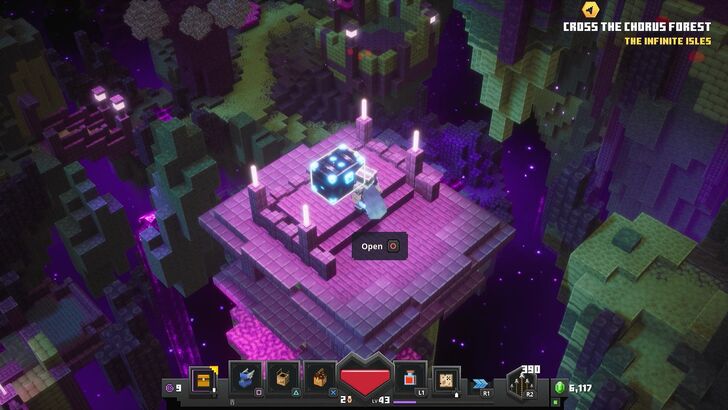
Furthermore, secrets that dot the world, such as chests and chambers that unlock secret levels, and easter eggs like the cow level, all encourage exploration. The game has a layer of adventure that keeps it far from a simple traversal from point A to point B, and many times I have deviated from the main objective to see what the maps tuck away that made the experience more rewarding.
Overall, the little surprises and fun mechanics give contrast to the gruesome and serious tone other series have, and it’s safe to say that Minecraft Dungeons makes its mark in the market through its personality.
Story Progression Highlights the Bosses
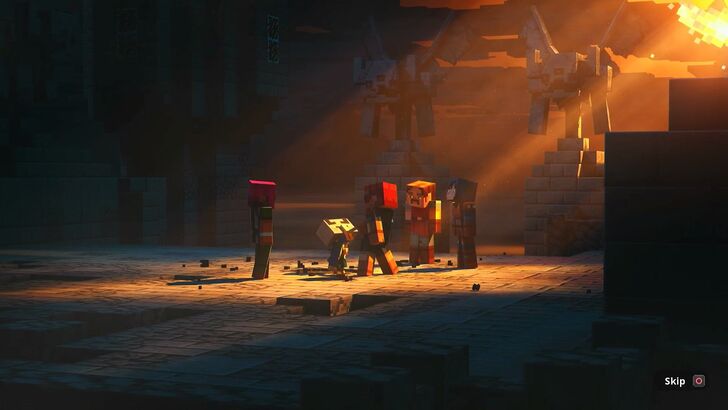
The main antagonist of the story is the Arch-Illager, an original character created for Minecraft Dungeons. The missions revolve around freeing villagers from his capture and crippling the war effort made for his revenge, but these point-and-click objectives fail to present the narrative as something deep. It’s not until meeting the bosses that the stakes would actually feel dire.
That’s because the story is barely interacted with aside from the cutscenes, as the world remains in a constant, predictable state to tell if the story has progressed. Even the narrations at the start of each level remain the same in harder difficulty modes, and mission objectives don’t change. Clearly, the story is meant to only give supportive direction, and the bosses shine where the narrative lacks. Characters such as the Enderman and Evoker return as major foes, and, along with new enemies summoned by the Arch-Illager, the bosses are the main motivation for progressing in the game, rather than the story.
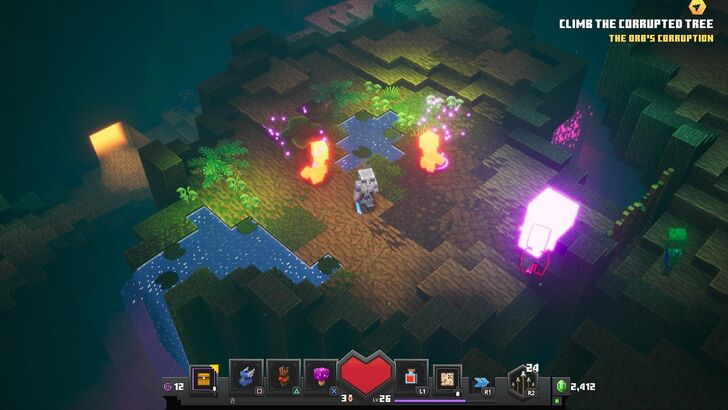
Unlike the normal mobs, brute strength becomes ineffective with most bosses. The phases and special mechanics make the fights more critical, so defeating them feels like a measure of how much I progressed in the game. These boss fights prepare the player for that final battle with the big bad Arch-Illager himself, and the struggles feel like part of the narrative.
I have learned many times to carry an AOE artifact when facing the Illusioner’s clones, and dealing with Redstone Golems became less fatal upon knowing that they are vulnerable when they’re summoning mines. Still, the game feels unchanged with the story ignored, and I would rather focus on the bosses as a form of milestone instead of the story.
Limited Build Customization
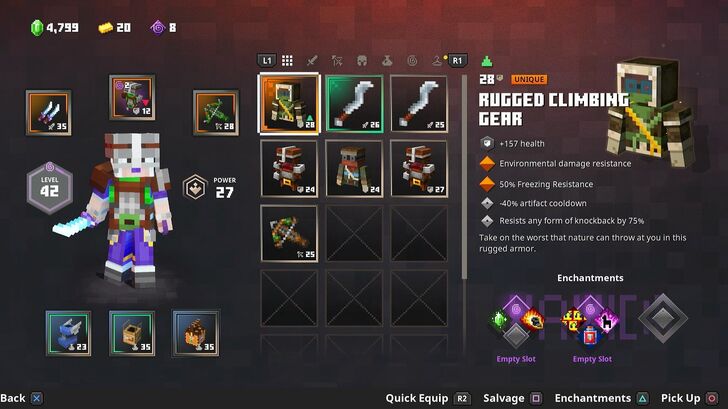
Equipment builds in Minecraft Dungeons feel limited in contrast to other dungeon crawler series. Other series such as Diablo IV have various damage types that can stack among other elemental multipliers and mob conditions, and Path of Exile 2 presents various rotational end-game activities. Gear stats in Minecraft Dungeons are limited to at most 5, and the player doesn’t have the traditional, fixed stats that increase based on level. While this simplification is a good introduction to the genre, managing only a few stats and equipment doesn’t allow for the in-depth customization experienced players seek.
Minecraft Dungeons attempts to alleviate this lack of nuance with the enchantment and gilding system through the Enchantsmith or Ancient Hunts. Enchantments add additional effects, such as critical hits or fire damage, to weapons and armor, and gilding an item means adding an enchantment as an innate stat. Despite this, some enchantments are irrelevant and unhelpful. With enough raw power, it’s easy to blaze through the battlefield with any build without much thought to the mobs' behaviors. Having fire aspect or crowd control enchantments becomes unnecessary when more damage gets the job done faster.
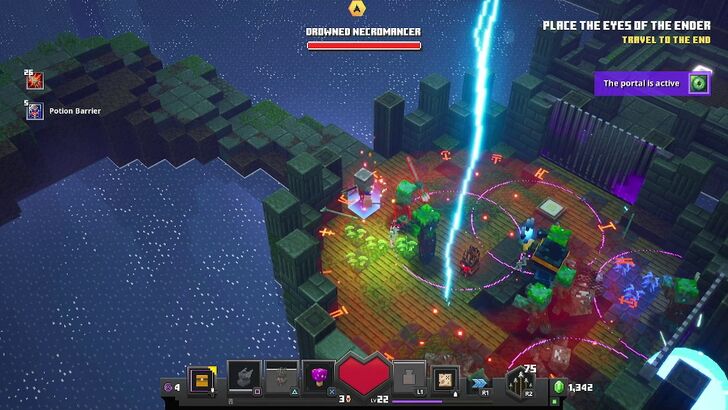
While other builds are available to try just for fun or as a variation, there’s little incentive to spend resources to create a bespoke build to revolve around one enchantment or effect because the levels are short. Creating specialized builds, let’s say a build for the undead or poison negation, becomes irrelevant 1 to 2 levels later.
Even with semi-endless mechanics such as the Tower and Apocalypse Plus, which offer weekly rotational floors and 25 threat level multipliers respectively, the levels can be monotonous because the mobs rarely offer a unique challenge. Although the game attempts to raise the difficulty by introducing enchanted mobs, which are enemies with increased health pools, stacked buffs, and more serious damage, it’s easy to fall into the plodding strategy of defeating mobs just as fast as you can and call it a day.
Swapping builds may lighten this toil as the game presents class-like configurations. For example, equipping items with Soul Gathering lets players drain defeated enemies as a resource to use artifacts such as Soul Healer or the powerful Corrupted Beacon that have lesser cooldowns. However, after breaking down the template of the sub-builds, it’s noticeable that the combinations are few. All hammers perform the same, as do the swords and glaives. Some unique armor may have different effects, such as lifesteal or damage reduction, but focusing on the main few stats, such as health, damage reduction, and overall damage, already sets the build for a good run, regardless of enchantments and the niceties other stats offer.
Is Minecraft Dungeons Worth It?
Enjoyable If You Have Low Expectations
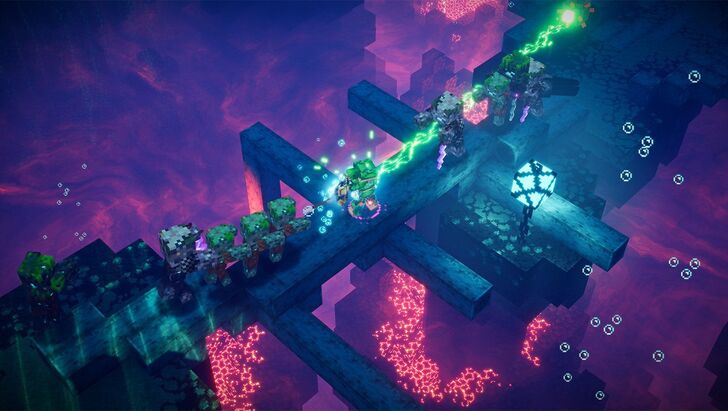
Minecraft Dungeons shows that dungeon crawlers can be unserious, low-risk, and friendly fun, and can be enjoyed as a simpler format of the dungeon crawler genre. However, the base game feels limited, and it lacks the depth other series have. This is easily recommendable to younger audiences who want to experience the action-based genre. Otherwise, experienced players should expect the short gameplay and shallow story progression, or wait for the sequel, Minecraft Dungeons II, to see how they improve on the game’s shortcomings.
Minecraft Dungeons Related Guides
 Best Builds Best Builds |
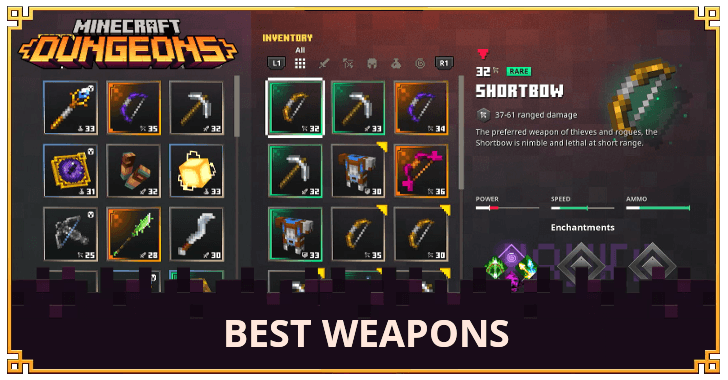 Best Weapons Best Weapons |
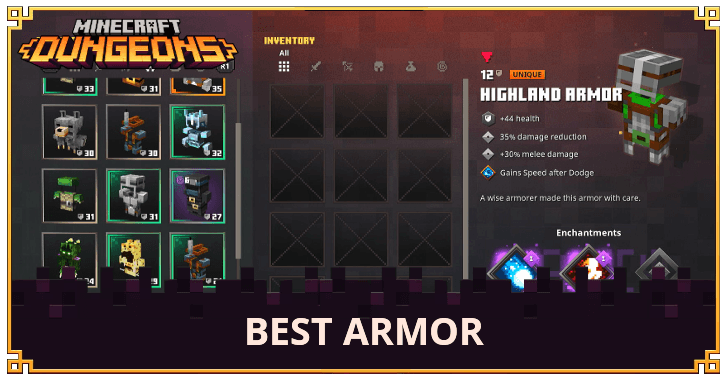 Best Armor Best Armor |
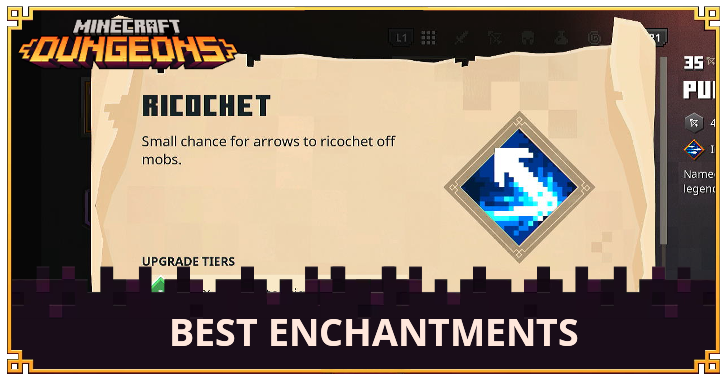 Best Enchantments Best Enchantments |
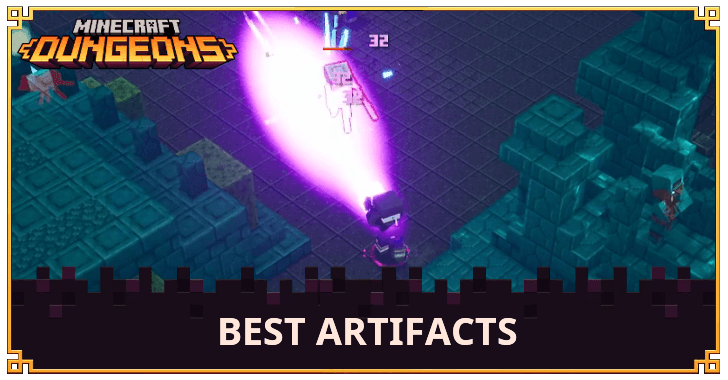 Best Artifacts Best Artifacts |
 How to Unlock the Church How to Unlock the Church |
 All Rune Locations All Rune Locations |
 All Eyes of Ender Locations All Eyes of Ender Locations |