



| Yunyun Syndrome!? Rhythm Psychosis | |||
|---|---|---|---|
| Release Date | Gameplay & Story | DLC & Pre-Order | Review |
Overview
What is Yunyun Syndrome!? Rhythm Psychosis?
Yunyun Syndrome!? Rhythm Psychosis is a rhythm-based game that combines four-key rhythm gameplay with narrative-driven progression. The story follows Qtie, a reclusive individual who becomes fixated on Yunyun, a demon character from Execution Angel Guiltina. Through receiving "denpa signals," Qtie begins producing online posts that evolve into conspiracy theories through community interpretation.
Yunyun Syndrome!? Rhythm Psychosis features:
⚫︎ Rhythm Gameplay
⚫︎ Social Media Post System
⚫︎ Narrative Involving Conspiracy Theories
⚫︎ Multiple Difficulty Modes: Normal, Hardcore Gamer, Tryhard, Degenerate
For more gameplay details, read everything we know about Yunyun Syndrome!? Rhythm Psychosis's gameplay and story.
| Digital Storefronts | |||||
|---|---|---|---|---|---|
 Steam Steam |
|||||
| $16.99 |
Yunyun Syndrome!? Rhythm Psychosis Review: Made My Heart Go Doki Doki
The Rhythm Game That Will Keep You Inside the House
It’s been a while since I’ve sunk my teeth into a rhythm game—let alone one on PC. Growing up, arcades were my go-to, and if I wasn’t glued to a racing game, I was strumming away on Guitar Hero. Then came my first smartphone, and suddenly I had Cytus in my pocket. From there, it spiraled to Patapon on the og PSP. But generally, I had more mobile rhythm games, since touchscreens just made sense to me. They were immediate and tactile.
So coming into Yunyun Syndrome!? Rhythm Psychosis, I honestly didn’t know what to expect. What I didn't expect though was how easy it was going to be. The game keeps things grounded with a simple four-key layout, and instead of feeling limiting, it actually makes everything click faster. There’s no overwhelming control scheme to wrestle with, no steep input learning curve. Compared to something like Osu! where precision and complexity can spike hard depending on the mode.
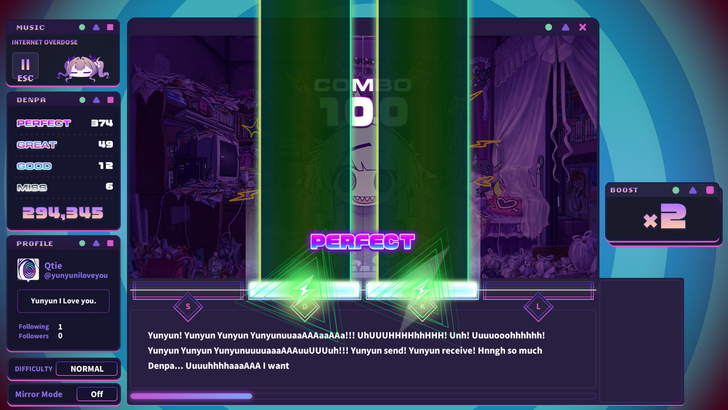
And that simplicity lowers the barrier just enough that you can focus on what actually hooks you: the rhythm, the flow, and that addictive "one more song" feeling. It’s also surprisingly forgiving, but I’ll get into that properly later.
A Shut-In, a Demon, and a Lot of Conspiracies
Yunyun Syndrome!? Rhythm Psychosis follows Qtie—a shut-in whose entire world pretty much revolves around her obsession with Yunyun, a demon and antagonist from Execution Angel Guiltina. And in the most unhinged, perfectly on-brand way possible, that obsession doesn’t just stay in her head. Yunyun starts sending her these denpa signals and of course, Qtie is exactly the kind of person who’s ready to receive them.
What follows is less structured storytelling and more raw, emotional overflow. Every time Qtie picks up on these signals, she spirals and starts dumping out pages of chaotic, barely-filtered thoughts. It’s messy, it’s intense, and it is something that’s only for herself… at least at first. Because then Yunyun pushes her to do the one thing that changes everything: post them online.
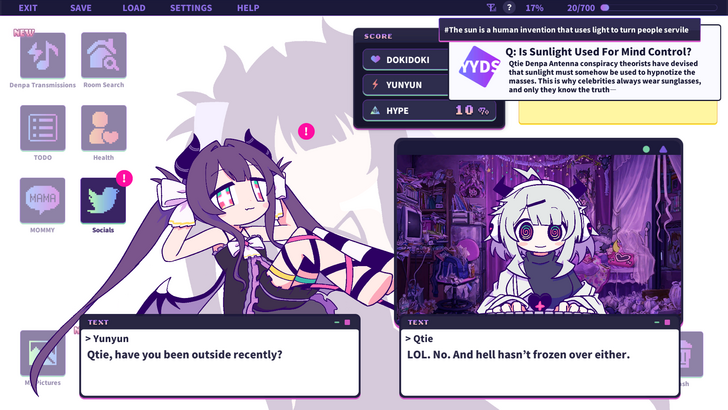
What starts as incoherent, almost diary-like rambling somehow catches fire. Qtie builds a following—not just of Yunyun fans, but people who begin dissecting her posts, twisting them, elevating them into full-blown conspiracy theories. Suddenly, her word vomit isn’t just noise anymore. It starts being meaningful, or at least, people really want it to be.
This is what keeps pulling players forward. You’re not just clearing songs for the sake of it, you’re also watching this feedback loop spiral further out of control. Every post, every theory, every reaction makes you curious about how far this will go. How does something so chaotic turn into something people believe in? And more importantly, how does it all end?
The Loop Loudly Takes Over
At its core, the loop in Yunyun Syndrome!? Rhythm Psychosis is deceptively straightforward. You’re playing a four-key rhythm game using S, D, K, and L, with the usual mix of inputs: single taps, holds, and those rapid repeated presses that test your consistency more than your reflexes. But what happens around those rhythm sections is where the game starts layering in its identity.
Between rounds, you’re given Qtie’s posts to upload, split into three categories:
⚫︎ Doki Doki - boosts her HP
⚫︎ Yunyun - restores energy
⚫︎ Hype - lets you choose a specific conspiracy theory to share
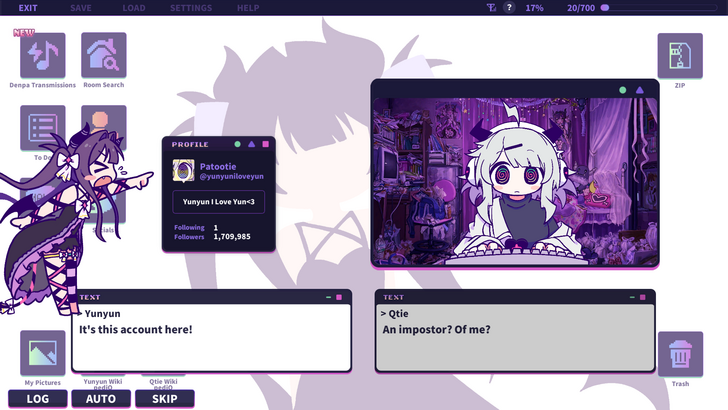
Each post also comes with a star rating, and the combinations you pick don’t just affect your stats, they influence the kind of content Qtie puts out. And because those posts are semi-randomized, you’re never fully in control of what comes out the other end.
Structurally, the game splits into two phases. The first has you building Qtie’s presence, spreading the gospel of how "amazing" Yunyun is, all while dealing with a fake account trying to impersonate her. It’s grounded, in a sense because you’re still focused on growth and influence.
Then the second half shifts the goalpost: you’re now pushing Qtie’s denpa levels to 100%. And by that point, you already know this isn’t going somewhere normal. I won’t spoil it, but the ending of the first part got me a bit teary, and moving forward and seeing a somewhat normal Qtie definitely gave me a bit of a whiplash.
What really gets me, though, is how the simplicity of it all becomes the hook. Nothing here is mechanically overwhelming. In fact, it’s because everything is so easy to grasp, so achievable in small bursts, that you keep going. One more run to get a better post combination. One more share to see what theory comes out of it. One more push toward that next threshold. It doesn’t demand much and that’s exactly why you end up giving it hours.
The Psychosis in the Rhythm
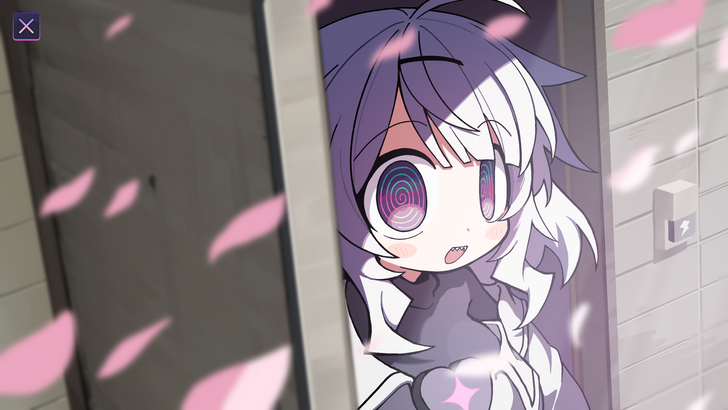
Which makes the whole thing kind of ironic, because while the gameplay loop is simple, the story is anything but. At first glance, Yunyun Syndrome!? Rhythm Psychosis comes off as this goofy, almost self-aware take on a shut-in obsessing over a fictional character. (That alone made me sign up.) It’s chaotic, a little too real, and easy to latch onto. But the longer you stay with it, the more that tone starts to… slip.
Because the Psychosis part of the title isn’t just there for flavor. The deeper you go down Qtie’s path, the more the game starts to feel like a full-on psychological horror. Not in the loud, jumpscare kind of way but in the slow, creeping sense that something is very, very wrong.
I started questioning everything. Who—or what—is Yunyun, really? Is she just a manifestation of Qtie’s obsession? A fictional character bleeding into reality because Qtie wants her to? Or is she something internal? A split personality, maybe, trying to shield Qtie from whatever trauma she’s carrying? Or maybe she’s something worse… is she something that found Qtie at her most vulnerable and decided to take advantage of that?
The game never rushes to answer you, and honestly, that kept me locked in. Because now, I wasn’t just playing to progress, I’m also playing to understand.
Qtie Needs 100% Denpa and Yunyun Reminds You of It
And since we’re on the topic of the story, I’m going to be completely honest, the first half of the game moves quickly. You set goals, you reach them, you get answers almost immediately. It is structured, satisfying, controlled. The latter half? Not so much. Progress slows down. Payoffs take longer. You’re putting in more time without the same instant feedback you got earlier. And normally, that’s where a game risks losing me.
But, I didn’t stop. Because even when the game isn’t rewarding me as quickly, something else is pushing me forward. Every milestone or so, Yunyun kind of breaks the fourth wall. There’s this pressure, this constant reminder that Qtie needs to reach 100% denpa.
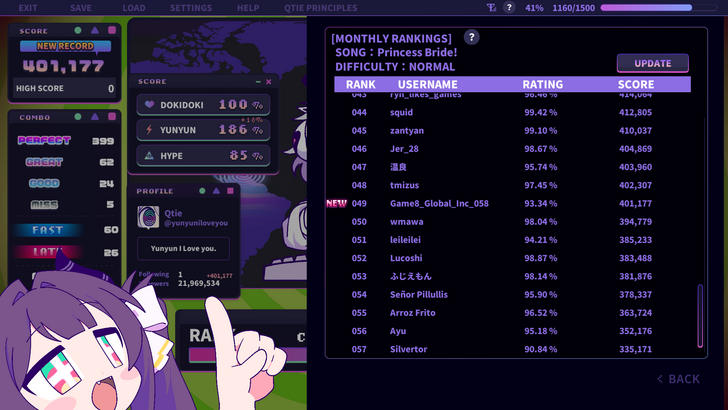
And yeah, maybe it’s a little creepy. But it’s also weirdly convincing. To the point where you’re not entirely sure if you’re continuing because you want answers, or because the game has gotten very good at making you feel like you have to.
Zoned-In Flow vs. Button-Mashing Freedom
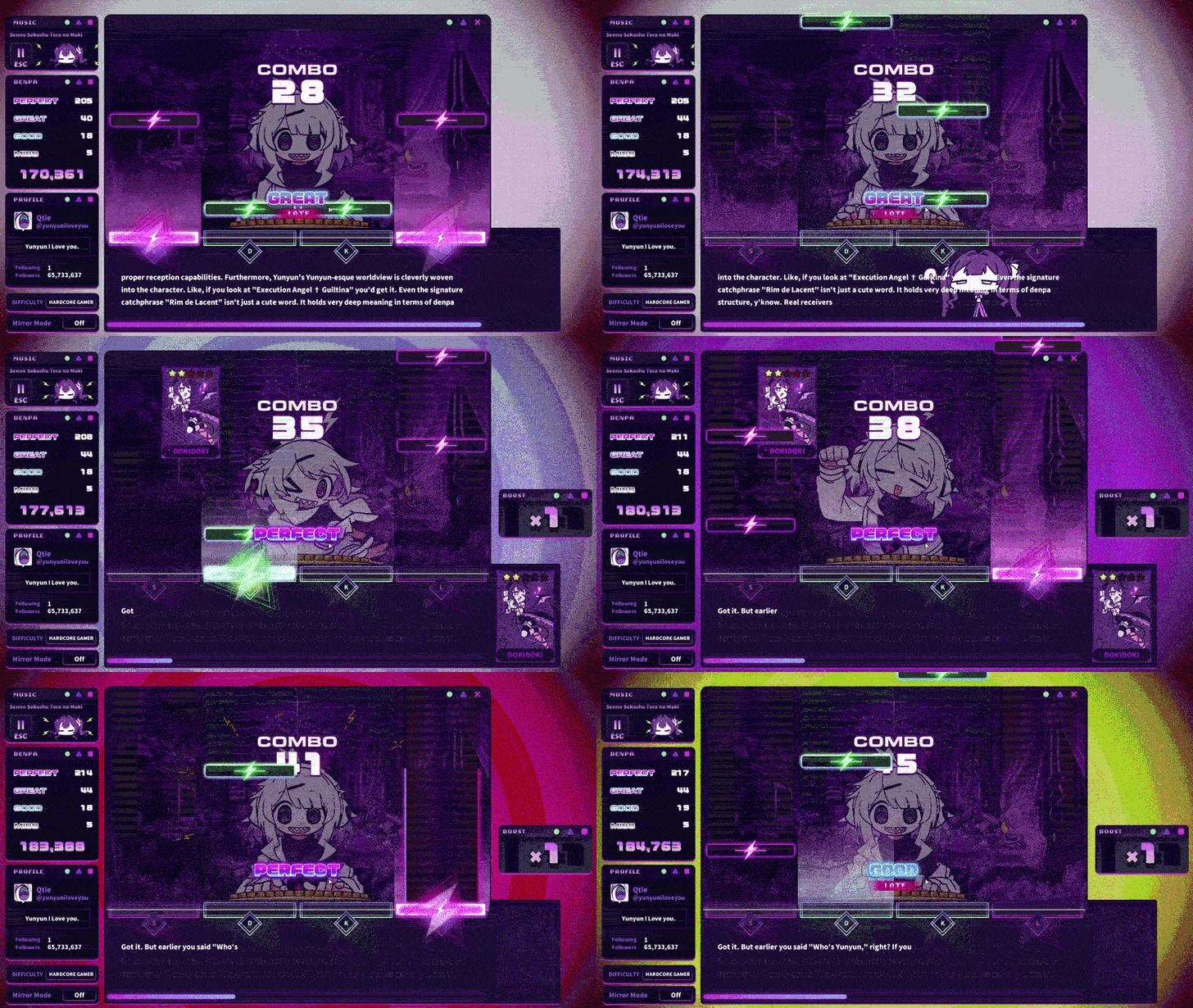
So play you will. And when you strip everything back, the gameplay itself does feel good. The tracks hit, the charts generally line up with the beat in a satisfying way, and once you settle in, you can enter that familiar rhythm-game trance. You know the one, where you stop actively "reading" every note and just… feel it.
Most of the time, I found myself locking my gaze dead center on Qtie’s face and letting my peripherals do the work. Hands moving almost on autopilot, trusting that my timing would carry me through. And it worked! (At least for Normal mode.) The game is built in a way that allows that kind of zoning out, which makes it incredibly easy to just sink into.
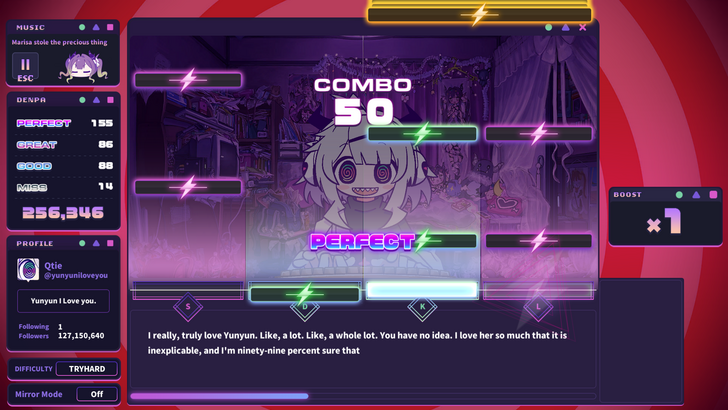
But this is why I’m also divisive. Yunyun Syndrome!? Rhythm Psychosis is very forgiving. And I don’t just mean in the "generous timing windows" kind of way. I mean that you can press buttons that don’t have incoming keys, and not be punished for it. The only real punishment comes from completely missing notes or being noticeably early or late.
What that leads to, especially on higher difficulties like Tryhard and Degenerate (yes, those are the actual names, alongside Normal and Hardcore Gamer), is something you don’t always expect in rhythm games: You can kind of… button mash your way through it.
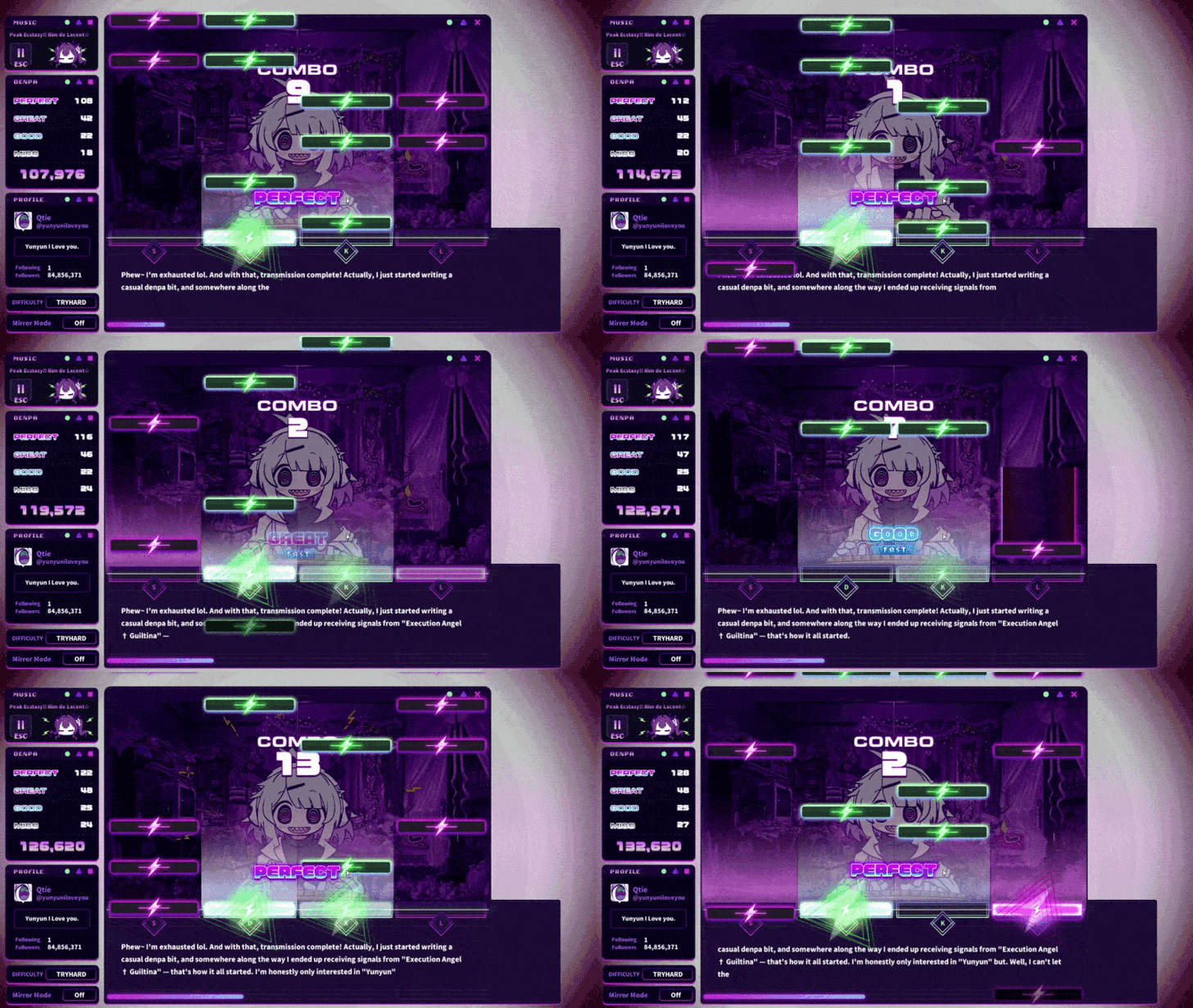
Another reason why it works too is because of how densely packed some of the note patterns are. Inputs get so close together that frantic tapping can still register as great. So, you can brute force your way, if you want to. Now, whether that’s a good or bad thing really depends on you.
If you’re not a hardcore rhythm game player, this is honestly a huge plus. It lowers the skill floor even further and makes it possible to clear higher difficulty without needing perfect accuracy or muscle memory. You still get the experience, the progression, and the story without hitting a wall.
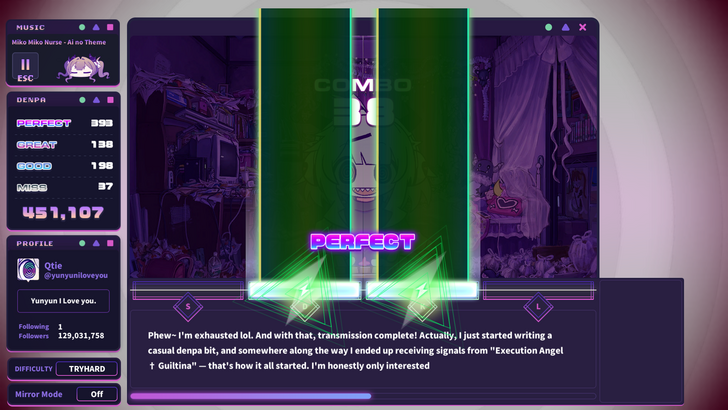
But if you are someone who thrives on precision, who enjoys mastering every note and executing inputs exactly as intended, this is something you’ll definitely notice. And it might take away from that sense of tight, skill-based satisfaction you’d expect from the genre.
Chaotic Denpa Tracks and Overwhelming SFX Fight for Your Attention
And to be fair even if you end up button mashing your way through some sections, it still works with the music. The tracks are chaotic, catchy, and just the right kind of overwhelming that they stick in your head even after playing that song. There’s this noisy, almost unhinged charm to them that perfectly matches Qtie’s state of mind.
But then… there’s the SFX. See you’ve got two major sound layers on top of the music: the usual hit sounds when you press notes and Qtie’s typing SFX, which plays constantly alongside everything else
Individually, I actually like both. The hit sounds give you that satisfying confirmation, and Qtie’s typing adds a lot to the immersion and it reinforces the idea that everything you’re doing is feeding directly into her posts, her thoughts, her spiral.
The problem is that both are cranked up to compete with the music. So instead of complementing the track, they clash with it. It turns into this wall of sound where everything is fighting for your attention at the same volume. And during more intense songs, it can feel like pure auditory chaos.
I do understand though that might actually be the point. This is a game that thrives on overstimulation, on blurring the line between rhythm, noise, and narrative tension. So in a weird way, the overwhelming audio kind of fits the theme.
But from a player perspective? It can get distracting. Still, even with that, the music itself hits hard. The tracks are memorable, energetic, and perfectly in line with the game’s identity, which also helps in keeping you locked in, even when your ears are getting absolutely blasted.
Conspiracy Crafting, Energy Drinks, and Chasing Every Possible Ending
Outside of the core loop, though, Qtie’s posts aren’t just flavor, they function as a whole side system that quietly deepens how you play. Take Doki Doki, for example. It’s not just your safety net, it can be exchanged for Energy Drinks, which then boost the star ratings of the posts you’ll get in the next round. It’s a really strong way to tilt the odds in your favor. How you actually exchange for them, though… I’m going to leave that for you to discover yourself, because it’s the kind of mechanic that makes you stop and go, "wait, what?" in the most unhinged way.
Then there’s Hype, which gives you a surprising amount of control. Instead of leaving everything up to chance, you can actually steer which conspiracy theories the world latches onto for a given post. And trust me, you’ll want that control. Because each conspiracy theory has its own star level, and if you’re aiming to fully complete them, you’ll need to push each one to five stars. The catch? You don’t just unlock that outright, you have to send the same theory out into the world multiple times, building it up piece by piece until it reaches its maximum level.
And once you do? You’re rewarded with an "ending."
Not THE ending… an ending. One tied specifically to that theory. Some are just bizarre, others spiral into something much darker, and a few feel like they escalate way beyond what you’d expect from something that started as a random post. Do they occasionally feel like they’re burning the world down in the process?
…maybe.
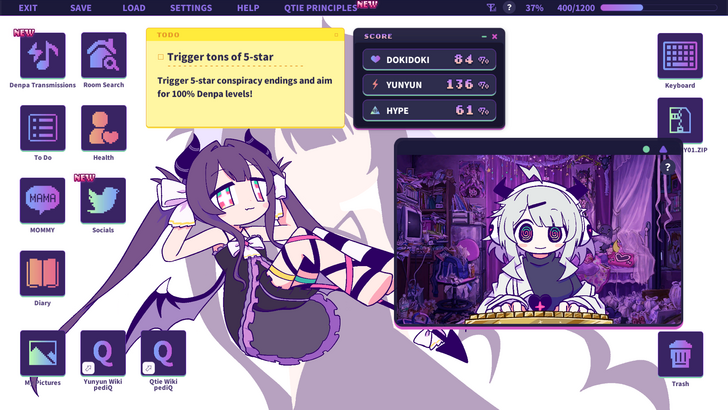
But the game doesn’t really let you sit with that for long. Because right after, Qtie is back in her chair, still receiving Yunyun’s denpa signals like nothing ever happened. It can get confusing if you try to pin it down too logically. I tried. It didn’t work.
At some point, you just learn to roll with it, to treat each theory as its own contained descent, its own "If" scenario playing out to its conclusion. And in a weird way, it reinforces the game’s central push: keep going, keep uncovering, keep chasing every possible outcome. After all, everything will come to an end, so we might as well see every ending, right?
Is Yunyun Syndrome!? Rhythm Psychosis Worth It?
Offer Your Kokoro and Watch the Spiral Unfold
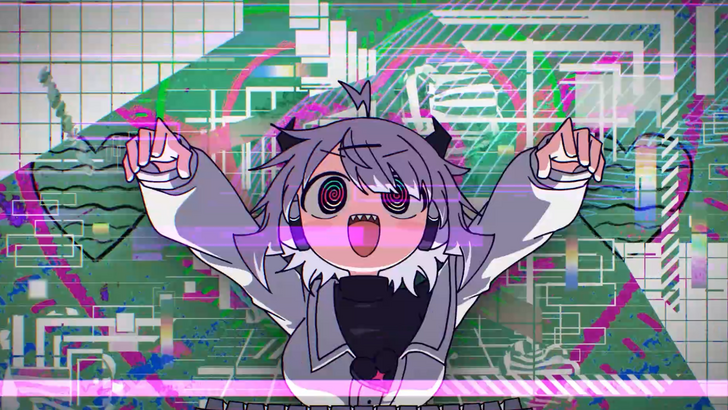
For $16.99, you’re getting a rhythm game you can technically finish in around 10 hours, but calling it just a "playthrough" doesn’t feel right. Because you’re not just clearing songs. You’re actively participating in Qtie’s spiral. Every note you hit, every post you push out, every theory you help amplify, it all feeds into something that keeps growing, getting louder, getting harder to ignore.
And if you’re the kind of player who doesn’t stop at "cleared," there’s a lot more waiting for you. Every track to master, every difficulty tier to push through, every pattern to clean up until it finally feels perfect will definitely take you longer than 10 hours. That’s where the real time sink begins, after finishing the story.
At the end of the day, Yunyun Syndrome!? Rhythm Psychosis isn’t just about hitting notes or chasing endings, it’s about everything happening in between. The rhythm gameplay, the absurd but oddly compelling sharing of posts, the slow unraveling of Qtie’s mind. It’s a game that keeps shifting its weight between mechanics and narrative until they start feeling inseparable. And once you step back from it, what stays with you isn’t just the songs or the scores, it’s the feeling that you were part of something constantly spiraling forward, whether you fully understood it or not.
Yunyun Syndrome!? Rhythm Psychosis FAQ
What is The Minimum System Requirement for Yunyun Syndrome!? Rhythm Psychosis?
| System | Minimum |
|---|---|
| OS | Windows 10, 11 (64bit) |
| Processor | Core i5-9400 |
| Memory | 8 GB RAM |
| Graphics | GeForce GTX 1050 Ti 4GB |
| Storage | 3 GB |
Game8 Reviews

You may also like...
 |
People of Note Review RPG, Action, Adventure, Puzzle, Music |
 |
Rift of the NecroDancer Review Music |
 |
Afterlove EP Review Simulation, Music |
 |
Sayonara Wild Hearts Review Action, Music |
 |
Spirit City Lofi Sessions Review Simulation, Music |