


Overview
What is Ys Memoire: Revelations in Celceta?
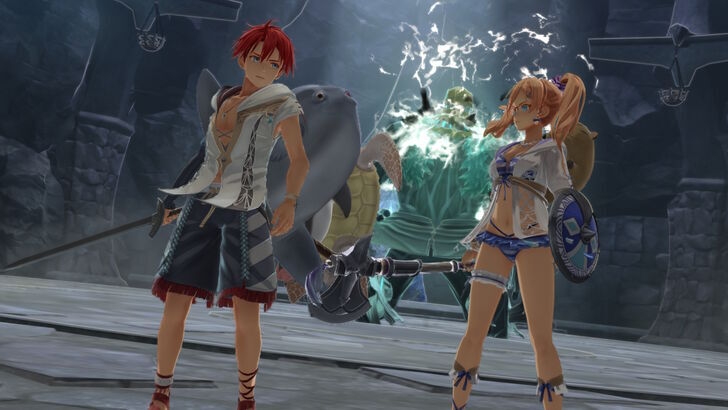
Ys Memoire: Revelations in Celceta is an action RPG by Nihon Falcom and a remastered version of Ys: Memories of Celceta, brought to Nintendo Switch on April 28, 2026. The story follows series protagonist Adol Christin, who awakens in the mysterious land of Celceta with no memory except his name. As he searches for his lost past, he partners with the thief Duren and becomes involved in a dangerous mission to map the uncharted Great Forest—an expedition that no one has ever survived. Along the way, Adol encounters people who seem to know him.
This remaster features updated presentation and a newly arranged soundtrack alongside the original.
Ys Memoire: Revelations in Celceta features:
⚫︎ Party-Based Real-Time Combat System
⚫︎ Large, Interconnected World
⚫︎ Multiple Party Members with Progression Systems
⚫︎ Choice Between Remastered or Classic Soundtrack
| Digital Storefronts | |||||
|---|---|---|---|---|---|
 Switch Switch |
|||||
| $29.99 |
Ys Memoire: Revelations in Celceta Review: Still Stuck in 2012
Adol Christin Has 40 Years of Baggage
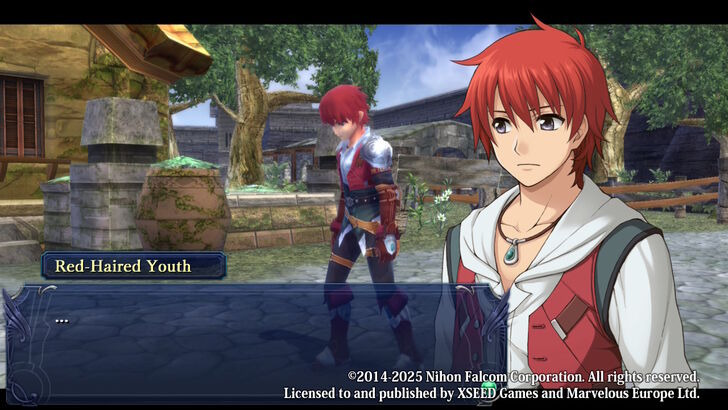
Getting into the Ys series can feel like a daunting task for anyone standing on the outside looking in. Unlike Final Fantasy or the Tales games, where you can basically pick a cool-looking cover and start playing because each story is its own universe, Ys follows the same protagonist through his entire life. It isn’t even like Nihon Falcom’s other big series, Trails. In those games, the world is connected, but you can at least start at the beginning of a specific arc or region. With Ys, trying to figure out the "right" order isn’t as easy; do you follow the order the games came out, or the order of Adol’s age?
This confusion hits its peak with Ys Memoire: Revelations in Celceta. This 2026 Switch release is a remaster of the 2012 RPG, but even its place in history is a bit of a headache. See, this is actually the third different version of Ys IV. Back in the ‘90s, two different companies made two different versions of the fourth game at the same time, and neither was technically "official" according to the original creators. It wasn't until the 2012 version—which this remaster is based on—that Falcom officially confirmed this.
Regardless of the confusing history, Ys Memoire: Revelations in Celceta is a fun JRPG. It didn’t get a lot of love back in 2012, mostly because it launched on the PlayStation Vita (PS Vita), which meant, like a lot of great games on that system, not everyone had the opportunity to play it. It was re-released on PC and the PlayStation 4 a couple of years later, but by then, you could already feel its PS Vita origins oozing out of its datedness. Unfortunately, as fun as the game is, it feels dated still, in 2026.
An Adventurer is Born
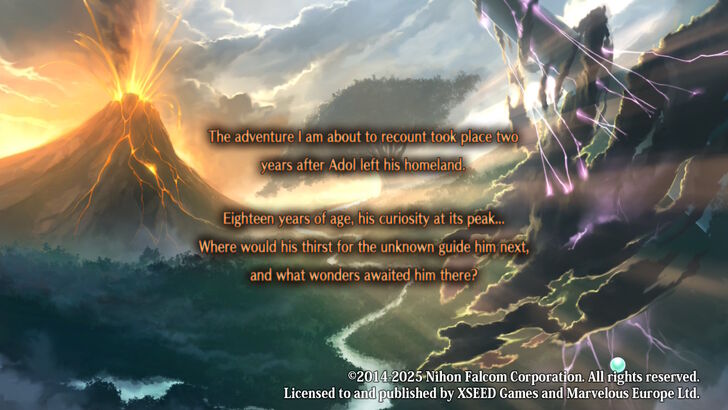
To understand where we are with Ys Memoire: Revelations in Celceta, it helps to look at the bigger picture of the series. For nearly forty years, the Ys games have functioned as a collection of travel journals written by a legendary adventurer named Adol Christin. Although most RPGs eventually change protagonists, Ys sticks with Adol as he travels from one region to the next, usually getting shipwrecked and losing all his legendary gear in the process.
Each game is basically a lost chapter of his life. In the case of Revelations in Celceta, we are looking at one of his earliest journeys. It takes place after his first major adventures in the land of Esteria but long before his later, more famous exploits. It’s just a snippet of his humble beginnings that shows his journey to the world-saving hero he eventually becomes.
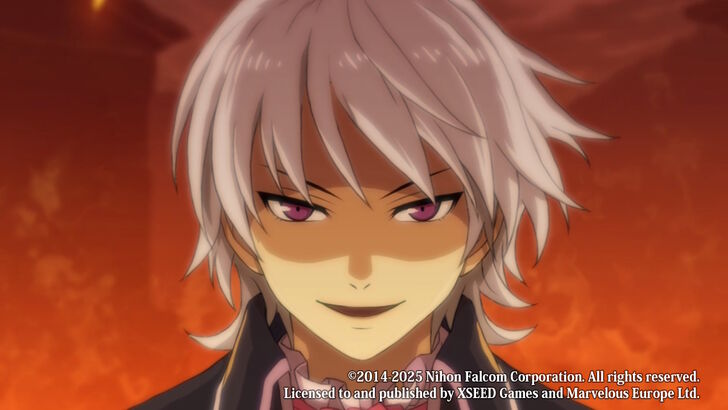
The game starts with Adol stumbling into the frontier town of Casnan, exhausted and completely stripped of his memories. He doesn’t know who he is or how he got there, but he is quickly recognized by an information dealer named Duren, who claims they were traveling together just days prior. Because the local government is desperate to map out the Great Forest of Celceta, the Governor-General strikes a deal. Adol and Duren are tasked with returning to the forest to create a complete map of the region.
As you push further into the woods, the plot thickens from being simply about mapping the forest into something much larger, involving ancient civilizations and gods who once ruled the region. You are uncovering the ruins of a lost empire and realizing that Adol played a much bigger role in recent local events than he initially thought.
A huge part of the storytelling is tied directly to the gameplay through Adol’s recovery of his lost memories. Instead of just getting a massive dump of information through dialogue, you find glowing orbs of light scattered across the map. Touching these triggers short flashbacks that show glimpses of Adol’s childhood or his recent past in Celceta before he lost his memories. Sometimes, just sitting down at a campfire in the middle of the woods will trigger a conversation or a memory that fills in the blanks. These are fairly unobtrusive, as they are bite-sized lore drops that are integrated well enough to feel natural without becoming a constant distraction.
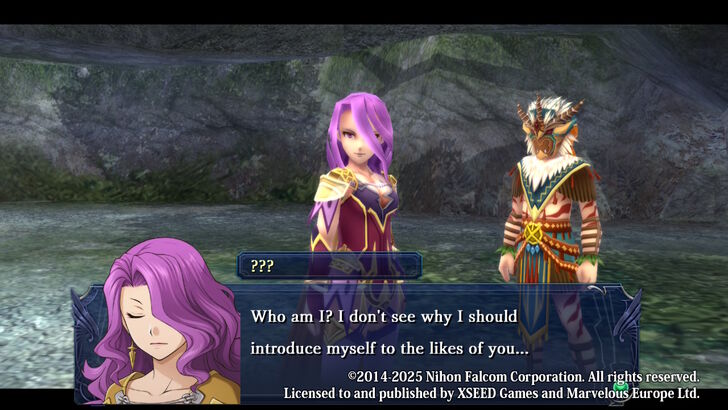
I will admit that the game makes use of some very common anime tropes. The amnesiac hero is the most obvious one, and if you've played a lot of JRPGs, you’ll likely see some of the big twists coming from miles away. There are moments where the characters are standing around, acting shocked by a revelation that I had already figured out an hour earlier. It’s not a story that’s going to redefine the genre or blow you away with complex political intrigue.
That said, the game is paced quite well. It’s not a massive 100-hour epic that drags on for weeks; you can comfortably wrap up the main story in about 20 to 25 hours. Because the game isn't that large in scope, the story beats move along at a steady pace without too much filler getting in the way (unless, of course, you do a lot of its side quests).
A Party of Archetypes That At Least Grow Out of Them
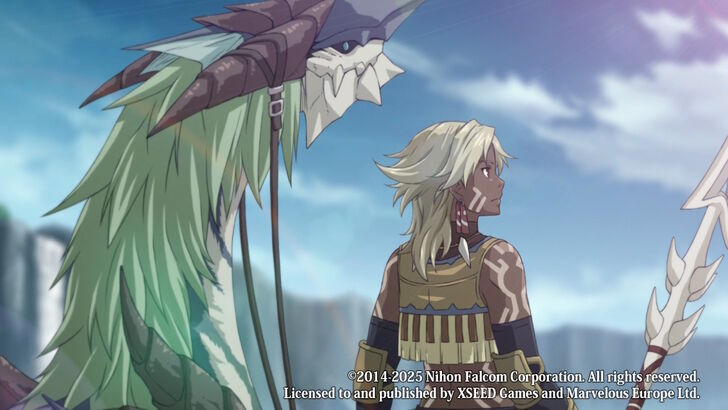
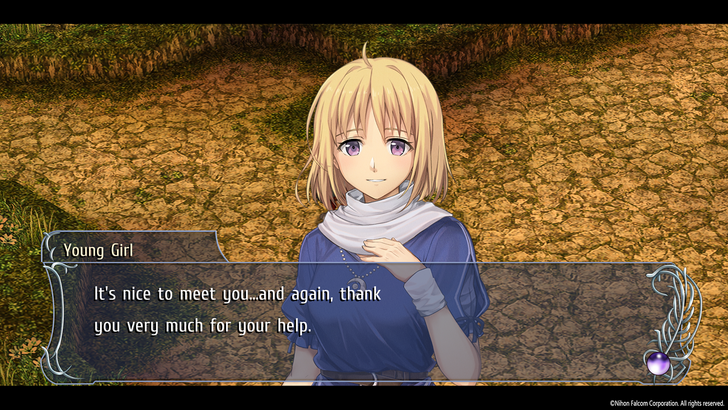
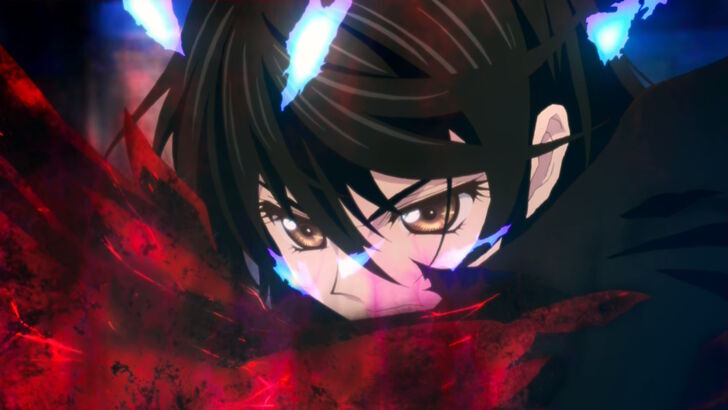
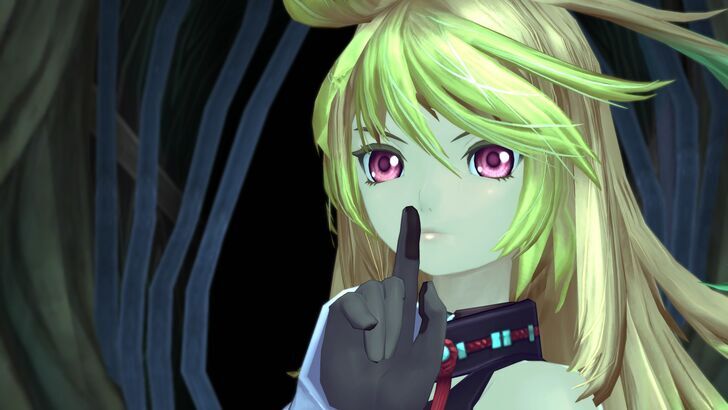
This brisk pace is helped by the fact that you’re surrounded by a solid cast of companions who make the journey more enjoyable. You’ll spend most of your time with Duren, the bruiser who acts as the group's voice since Adol is mostly silent. He’s joined by others like Karna, a skilled warrior from a forest village; Ozma, a young leader who cares for sacred beasts; Calilica, a bright but stubborn girl on a personal mission; and Frieda, a warrior with ties to the forest’s ancient past.
Even though they start out as simple archetypes, personal mysteries eventually begin to overlap with the main mystery of the forest. By the end, their individual struggles for their homes and families become wound into Adol’s quest to save the region.
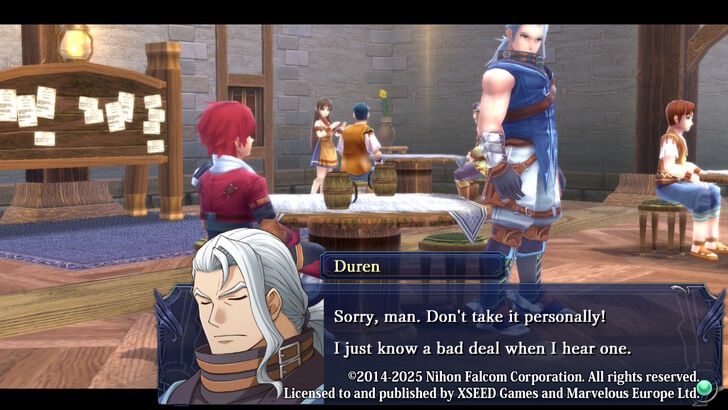
An example of this is Duren. When you first meet him in Casnan, he’s the quintessential information dealer, a cynical, street-smart bruiser whose sole interest in Adol seems to be the pay. However, as the plot progresses, you discover that this persona is a mask worn to hide his history and identity. I won’t give too much away, but suffice it to say that he is far more connected to Adol than he initially appears.
Combat is Fast and Mindlessly Fun
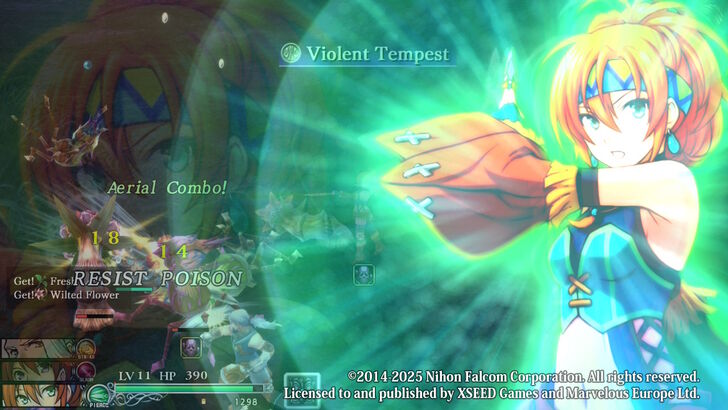
Much of the game’s combat is fun, which helps balance out the more predictable parts of the story. It is a real-time action game where you can field a party of up to three characters at once. You can swap between them instantly with the press of a button, which is necessary because the combat revolves around a "weapon triangle." Every character falls into one of three damage types: Slash, Strike, or Pierce. If you’re fighting an enemy with a hard shell, you’ll want to switch to a Strike user like Duren to crack it open. Hitting an enemy with their specific weakness triggers a "Break" state, which causes them to take more damage and drop extra items.
If you’re quick with it, you can break the game with Flash Guard and Flash Moves. The former happens when you block at the exact moment an attack lands; it nullifies the damage and gives you a brief window of guaranteed critical hits. The latter occurs when you dodge at the last second; it slows down time for everything except your party, so you can unleash a flurry of attacks while enemies are frozen in place.
Each character can equip four Skills at a time, and you trigger them by holding a shoulder button and pressing one of the face buttons. These consume Skill Points that charge up as you hit enemies. Characters also have EXTRA Moves, which are basically ultimate abilities. You build up a yellow gauge during combat, and once it’s full, you can let loose a screen-clearing attack that has a cool character cut-in.
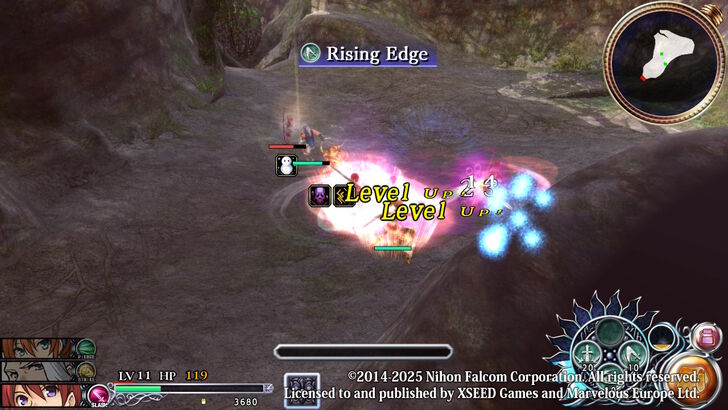
The game’s combat, however fun it is, still involves a lot of button-mashing.It can get repetitive, and you’ll likely feel that fatigue by the final act. In fact, save for the boss battles, you can pretty much ignore the weapon triangle and special skills; you can simply press the attack button during encounters and be just fine. The game might not reach the heights of Ys VIII: Lacrimosa of Dana or Ys X: Proud Nordics, but I really enjoyed its combat system because it satisfies two different types of players.
On one hand, you can mindlessly button-mash your way from one end of the map to the other and have a great time. On the other hand, if you like minmaxing like me, there is a surprisingly deep crafting system. You’ll find yourself heading back to town constantly to use the plant and animal materials you gathered in the forest. You can feed these materials into your weapons and armor to boost specific attributes like attack and defense, or even add elemental effects. I spent a lot of time specifically tuning my gear to inflict status ailments like Burn or Freeze, which made the tougher encounters much more manageable.
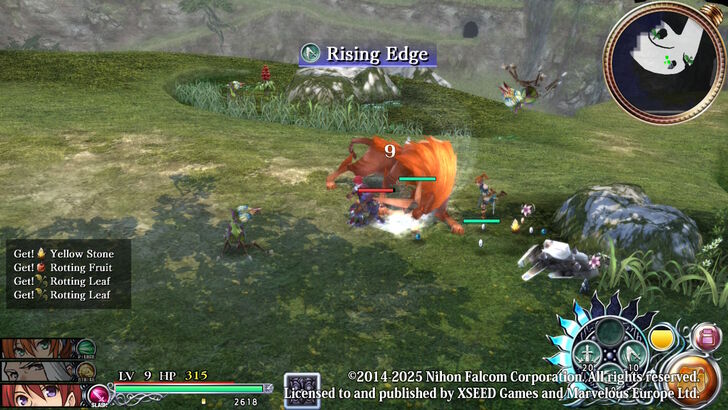
Because the combat is so fast-paced, grinding levels is never a hassle. You’re moving so quickly that you don’t even have to worry about stopping to pick up loot that enemies drop. The companion AI is actually smart enough to run around and grab whatever materials you leave behind.
They even hold their own during boss fights; there were several times when I felt like I was the one being a burden to my AI teammates because they were dodging and weaving better than me.
The boss fights themselves usually have some sort of gimmick, like a giant centipede that you have to chase around a circular arena, or a giant bee that summons smaller bees. They aren't the most creative bosses in the world, and I did see one get stuck in a weird animation loop once until I beat it, but they provide a decent enough challenge from the fodder you meet in the map.
Dated JRPG With Lots of Backtracking
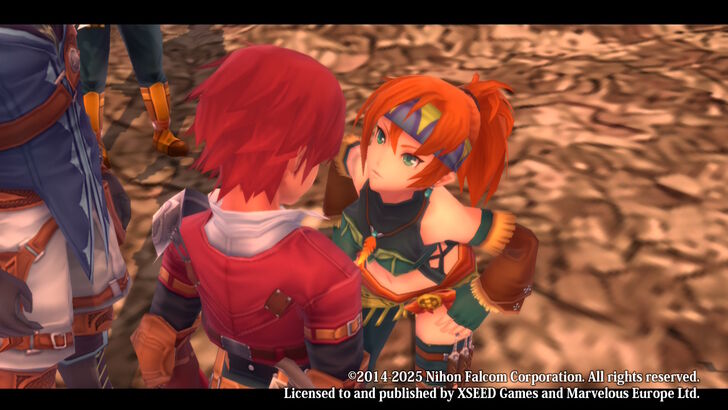
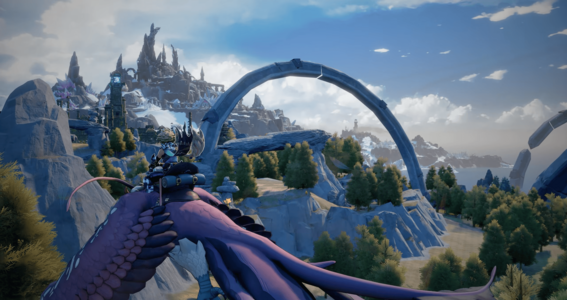
It’s harder to be enthusiastic about the technical side of things, however. This is a remaster, yes, but it doesn’t feel like much has changed. Aside from some newly arranged tracks that do admittedly sound great, the game still looks and feels like it’s stuck in 2012.
The character models show their age even with the HD touch-up. Animations are stiff, and the low polygon counts give them a noticeably blocky look. Environments don’t fare much better, with muddy textures and simple geometry for rocks, trees, and even buildings. Pop-in is also an issue; enemies can disappear just a few steps away, sometimes even respawning immediately if you turn back.
Map design doesn’t help matters. The Great Forest is large but visuallyt bland, as it relies heavily on recycled assets that blur everything into the same greens and browns. Even caves repeat the same patterns, which makes areas hard to distinguish without constantly checking the map. What’s worse is that, for some reason, at least until far, far later in the game, you can only warp between waypoints of the same color. As a result, if you need to bring a quest item back to a town that uses a different colored monument, the game essentially forces you to bunny-hop as you backtrack to town.
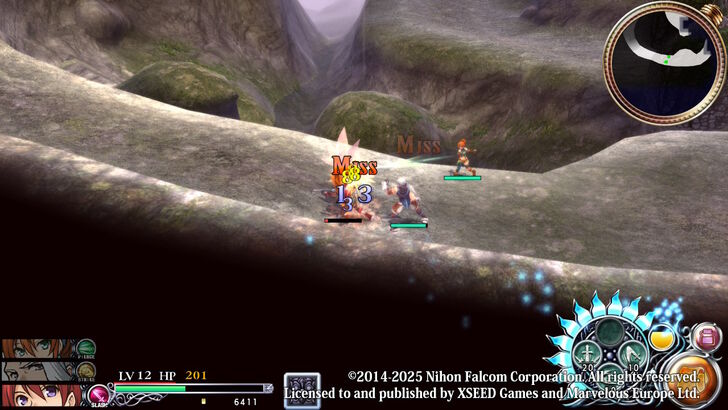
Because the environment is so repetitive, exploring isn't fun. Usually, you explore a game to see new sights or find cool details, but here, the lack of variety makes you stop caring about the world. Instead of looking at the scenery, you find yourself just staring at the map to make sure you aren't lost. It turns the journey into a chore where you are just trying to get from one point to the next rather than enjoying the adventure.
Is Ys Memoire: Revelations in Celceta Worth It?
Only If You Haven’t Played It Before
I like Ys Memoire: Revelations in Celceta. It is a solid JRPG that manages to be fun despite its age. However, liking the game doesn’t mean I can ignore its obvious flaws. Its story is full of cliches, combat can feel repetitive, and there is no getting around the fact that the visuals are extremely dated. The $30 retail price is quite fair for a campaign that lasts about 20 to 25 hours. If you are a completionist who wants to uncover every inch of the map and finish all side quests, you can easily stretch that playtime even further.
However, that is for a new player. Unless you’re a diehard fan of the series, you should think twice if you have played this entry before. This version doesn’t add new secrets or story sequences. It is mostly the same game with better sound and slightly cleaner assets. If you already beat it on PC or PS4, there isn’t much reason to buy it again.
If you have yet to play it, just go into this purchase with your eyes open. Remember that you are buying a 2012 handheld game that hasn't changed much. If you can accept the muddy graphics and the older design choices, there is a lot of fun to be found here.
Ys Memoire: Revelations in Celceta FAQ
What is the difference between Ys Memoire: Revelations in Celceta and Ys: Memories of Celceta?
Not much. Ys Memoire: Revelations in Celceta is a sharpened version of the 2012 original that runs in high definition with much better sound quality. The main difference is that it adds a brand-new music soundtrack, though it still lets you switch back to the old music if you prefer.
Game8 Reviews