



| Yoshi and the Mysterious Book | |||
|---|---|---|---|
| Release Date | Gameplay & Story | Pre-Order & DLC | Review |
Overview
What is Yoshi and the Mysterious Book?
Yoshi and the Mysterious Book is a family-friendly adventure centered around discovering and documenting creatures inside a magical living encyclopedia. The premise follows a simple journey across multiple illustrated islands, each acting as a contained habitat filled with unique species to study and understand.
Yoshi and the Mysterious Book features:
⚫︎ Creature Focused Exploration
⚫︎ Illustrated Storybook-style Visuals
⚫︎ Progression Through Discovery
⚫︎ Revisitable Habitats
⚫︎ Relaxed Pacing
For more gameplay details, read everything we know about Yoshi and the Mysterious Book's gameplay and story.
| Digital Storefronts | |||||
|---|---|---|---|---|---|
 Switch 2 Switch 2 |
|||||
| $59.99 |
Yoshi and the Mysterious Book Review: Whimsical Discoveries
Feels Like Being a Kid
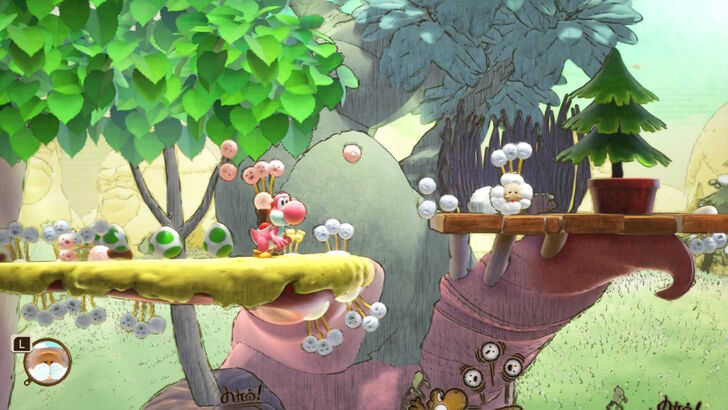
Who doesn’t love a game that makes them feel like a child again? There’s something timeless about simple, colorful adventures that immediately pull you in no matter how old you are. Whether it’s puzzle-focused experiences like Is This Seat Taken?, classic platformers, or household names like Super Mario Bros. and Kirby and the Forgotten Land, these kinds of games all share one thing in common: they understand how to capture the attention of gamers of all ages.
That same feeling is exactly what Yoshi and the Mysterious Book leans into. At first glance, it looks like a game made purely for children, with its bright presentation, straight-forward mechanics, and storybook-inspired world. But once I spent more time with it, I realized there was a surprising amount of depth hidden beneath that simplicity. It constantly introduces new ideas, small twists, and clever interactions that keep the experience engaging instead of feeling like a mindless walk from one level to the next.
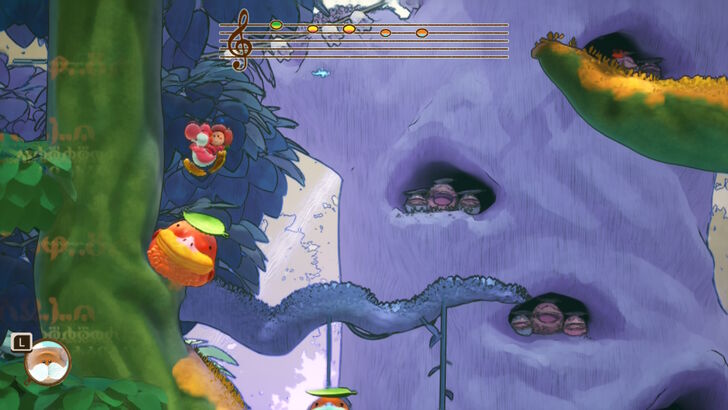
That doesn’t mean everything lands perfectly. Its story doesn’t go beyond being a straightforward excuse to start the plot, and some of its core ideas occasionally feel a little too safe. Still, what makes the game work is how effortlessly charming it is from beginning to end.
Yoshi Doesn’t Care About Bowser Jr.
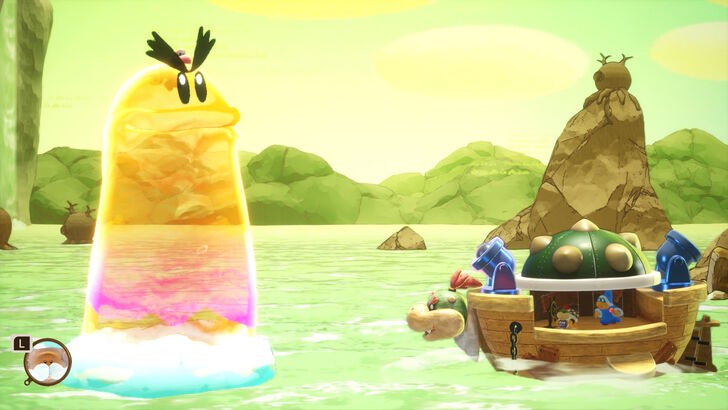
Yoshi and the Mysterious Book begins with Bowser Jr. stumbling upon a strange book hidden within their castle, immediately setting off on a journey to uncover the mystery behind what we later learn is the Bewilder Bird. If you’ve recently watched The Super Mario Galaxy Movie that released earlier this year, then seeing him take such a prominent role here will probably feel familiar since he carries a surprisingly large presence there as well. But even with Bowser Jr. kicking things off, this is still very much Yoshi’s adventure from beginning to end.
Things properly start once Bowser Jr. crash-lands onto Yoshi Island with the mysterious book in tow, where we quickly discover that the book itself is essentially a massive living encyclopedia. Also known as Mr. E, the book has lost track of the knowledge and worlds contained within its pages, prompting the Yoshis to dive into its chapters and slowly restore what’s been forgotten.
And honestly, that’s about all there is to the narrative. Outside of Bowser Jr. believing you’re competing against him to find the Bewilder Bird first, the game barely tries to build anything more substantial. The story doesn’t even act as a connective tissue between levels, and it certainly doesn’t try to be something meant to emotionally invest you in the journey.
Is the game better because of that simplicity? Not really. There were definitely moments where I wished the world and characters had more personality beyond their surface-level charm, especially because the setting itself feels like it could have supported something more memorable. But at the same time, the lack of narrative depth never actively harms the experience either. The game clearly prioritizes momentum over storytelling, and in practice, that means you’re rarely stuck sitting through lengthy cutscenes when all you really want is to jump back into the next whimsical challenge waiting inside the book.
Curious Little Creature Researcher
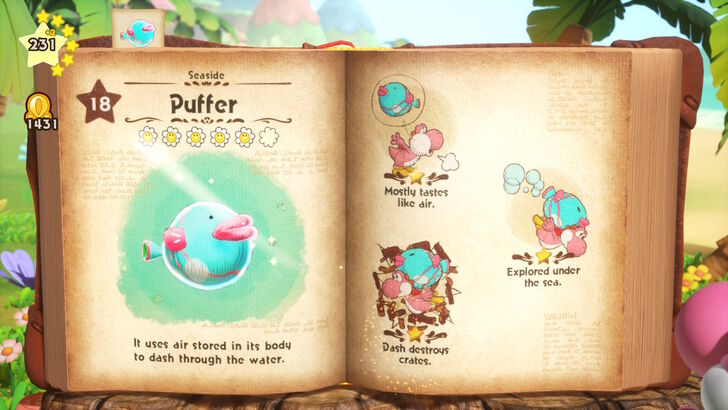
If you really boil Yoshi and the Mysterious Book down to its absolute core, the entire gameplay loop is essentially just creature watching. And somehow, that ends up being far more engaging than it sounds.
The mysterious book is divided into six main chapters—eventually expanding to ten once you finish the game—with each chapter acting as its own distinct island ecosystem filled with colorful inhabitants and strange little behaviors to uncover. But what makes exploration satisfying is that these islands don’t immediately reveal everything to you. The more creatures you discover and understand, the more each location slowly opens up, making progression feel like naturally learning how an ecosystem functions.
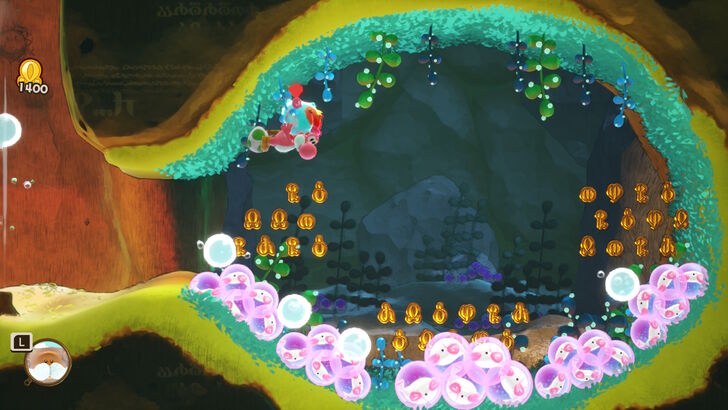
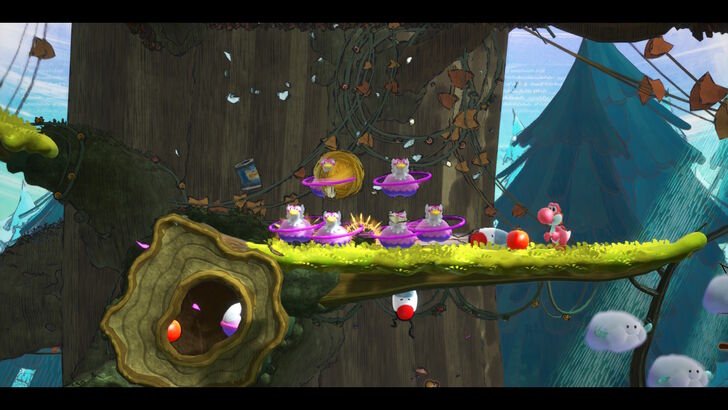
That process of understanding the creatures becomes the heart of the experience. You’re constantly completing small objectives tied to their habits and personalities, whether that’s figuring out what they eat, observing how they behave in certain situations, or even rescuing smaller creatures from dangerous ones. Every species feels inspired by something familiar while still having enough personality to stand out on its own. Some resemble exaggerated versions of real-world animals like porcupines with offensive quirks, while others lean fully into the game’s playful imagination, like birds fused with umbrellas or so obsessed with hula hoops that their entire function is spinning one around.
What surprised me most was how much depth the game squeezes out of such a simple premise. Repeatedly observing creatures and compiling information about them sounds like something that could become repetitive within an hour. And while it does, the game keeps introducing new interactions and behaviors that make you genuinely curious about what bizarre thing you’ll encounter next. More importantly, it taps into that same childhood feeling of poking at everything just to see what happens. That’s ultimately where Yoshi and the Mysterious Book shines the brightest; not by overwhelming players with complexity, but by making curiosity itself feel rewarding.
Creatures Make You Curious
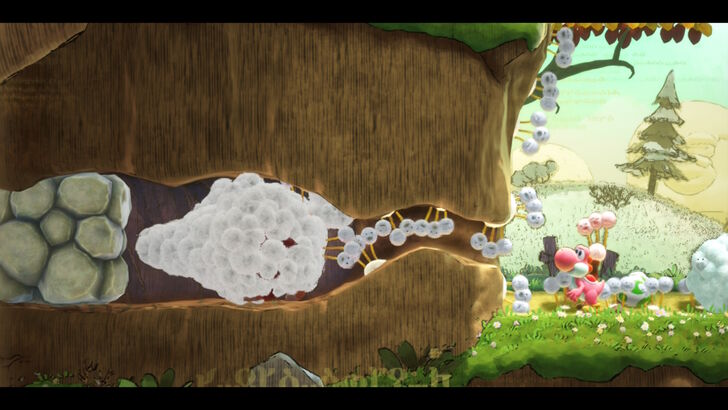
And honestly, the more I played, the more I realized that Yoshi and the Mysterious Book is almost educational. Keyword: almost. One creature in particular that gave me both immense joy and absolute horror was the Scatterpuff. In-game, it’s treated as an invasive species that rapidly multiplies and destroys everything in its path. Watching flowers wither away because of these fluffy little monsters was strangely upsetting, especially because they look harmless at first glance. The thing is, Scatterpuffs resemble little floating cotton balls, which immediately made me wonder, is cotton actually invasive?
So naturally, I ended up researching it. Turns out, I was completely wrong to make that assumption. Cotton itself actually supports local ecosystems in many environments. But while digging deeper, I stumbled into learning about cotton jassids, tiny leafhoppers that damage crops like cotton and okra. At first, I thought that had to be the inspiration behind Scatterpuffs… except they look absolutely nothing alike.
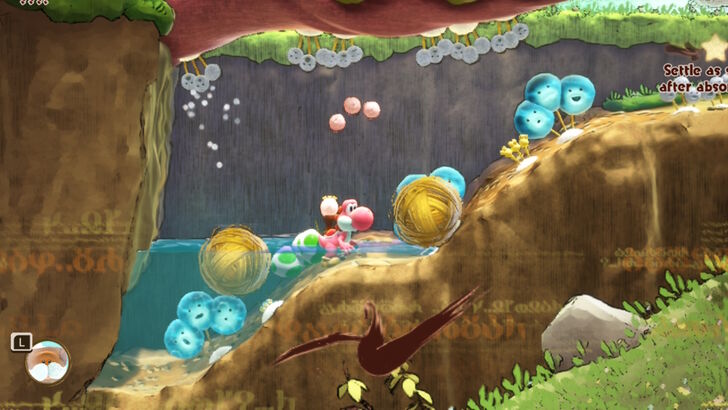
Then it finally clicked. Scatterpuffs don’t spread like cotton at all. They spread like dandelions. Suddenly everything made sense. The way they multiply, float around, and aggressively overtake areas mirrors how invasive dandelions can damage crops and disrupt environments. That realization genuinely made me stop and appreciate how cleverly the game designs its creatures. Even when it exaggerates things into something whimsical and cartoonish, there’s often a real-world idea buried underneath it.
And that’s what I found so impressive about the game’s philosophy. It constantly encourages players to be curious. I didn’t know what cotton jassids were before playing this. I also admittedly never realized just how damaging dandelions could actually be in agricultural spaces. But because the game sparked that initial curiosity, I ended up stepping outside the game entirely just to learn more about what inspired these creatures in the first place.
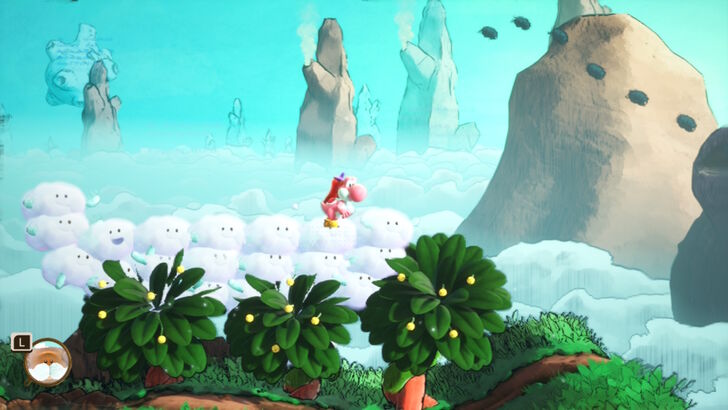
Maybe that sounds insignificant to adults who already know these things, but for younger players—who are very clearly the target audience here—that kind of design can genuinely matter. Yoshi and the Mysterious Book quietly teaches its players to ask questions, look things up, and connect fictional ideas to the real world instead of simply consuming what’s in front of them and moving on. And honestly, that might be one of the most valuable things a game like this can do.
Discovering New Things While Backtracking
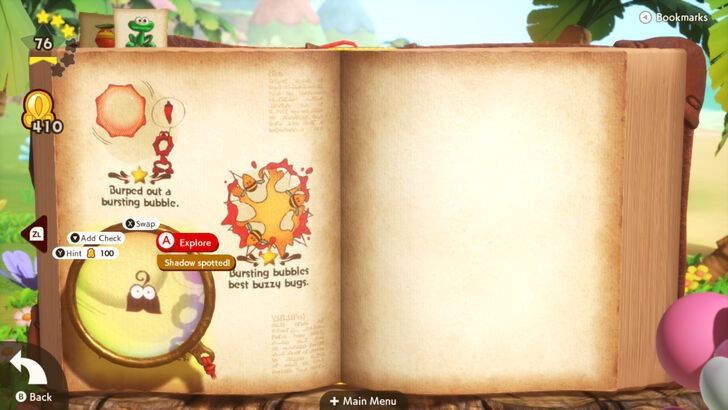
Another design choice I really ended up appreciating is how Yoshi and the Mysterious Book handles progression and creature discovery in a way that isn’t linear. After completing the first chapter, the game introduces an ink-like blob that lingers on creatures you haven’t fully studied yet. It’s not intrusive, but it’s just noticeable enough to nudge you into going back and filling in the gaps you missed. Instead of forcing completionism, it gently reminds you that there’s still more to understand in the world you’ve already seen.
But even beyond that, the structure goes deeper than simple revisits. Some discoveries are deliberately locked behind other creature interactions, meaning your understanding of the ecosystem expands in layers rather than straight lines. For example, there’s a bee creature that can grow not just in overwhelming swarms, but also in size. But they will only evolve into this after you’ve unlocked the frog-like creature that will allow you to deal with the situation. Its ability to use its bubble-like attacks gives you a tool to deal with those large bee swarms.
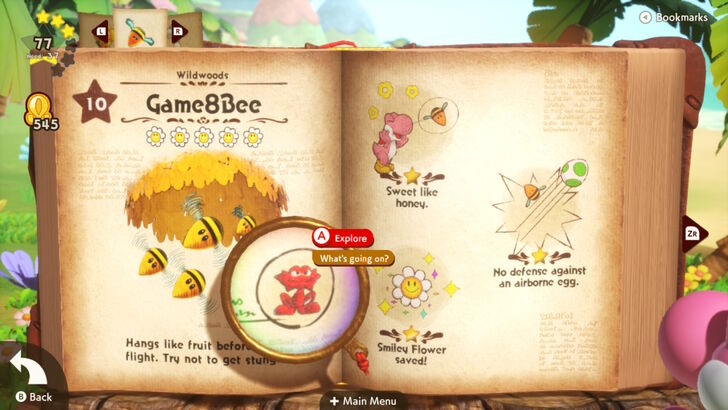
And that’s where the game’s structure encourages exploration. It recontextualizes earlier encounters based on what you’ve learned since then. You’re constantly being pulled back into familiar areas, but with new knowledge and abilities that make those spaces feel different the second time around.
That design choice turns backtracking into anticipation, making it very effective. In the end, this loop reinforces that discovery doesn’t stop when you move forward. It keeps unfolding, even in places you thought you already understood.
Confusing Discoveries
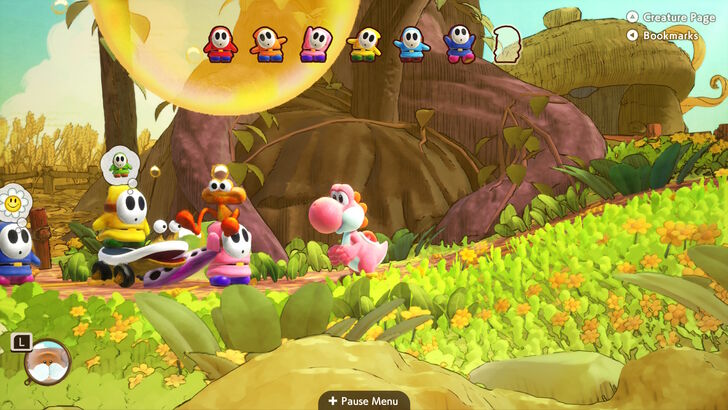
But of course, it’s not all rainbows and sunshine, because one of the game’s more confounding aspects is its uneven difficulty when it comes to finishing certain habitats. There’s very little middle ground. It’s either extremely straightforward, or it becomes oddly frustrating; not because the challenge itself is difficult, but because the logic behind it sometimes just doesn’t make sense.
One particular example involves a habitat centered around Shy Guy. The objective here is simple, collect all the different color variants of Shy Guys. In practice, though, it becomes unexpectedly tedious. For the longest time, I was stuck searching for the final missing color, convinced I had already thoroughly explored every corner of the habitat. I kept going through the entire page, revisiting areas I was sure I had fully cleared, yet that last one just refused to appear.
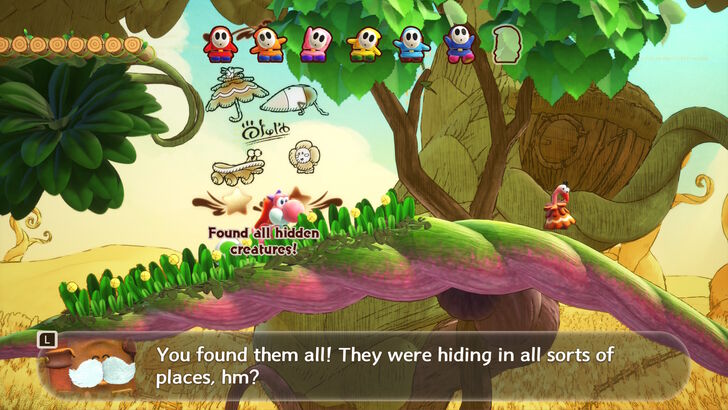
And then, when I finally did find it, the moment didn’t feel satisfying, instead, it felt confusing. I had been through that exact spot multiple times already, and yet it never triggered or appeared until suddenly it did. It almost gave the impression that its spawning or visibility wasn’t consistent, which made the whole process feel more random than intentional.
When a game like this relies so heavily on observation, curiosity, and pattern recognition, moments like this break that trust. Instead of feeling like I missed something clever, I started questioning whether I had done something wrong, or worse, whether the game itself was behaving unpredictably. And when that happens, the sense of discovery that the game builds so carefully starts to lose some of its impact.
Relaxing Loop Eventually Becomes Boring
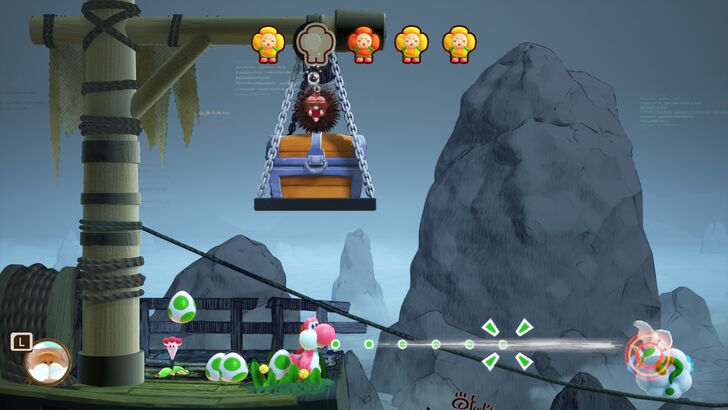
And you might think that all that variety would be enough to keep things fresh, but strangely enough, it still starts to feel repetitive after a while. Not in a draining or exhausting way, just in that quiet, "okay, I think I’m done for now" kind of way you get during a game night when the energy naturally tapers off.
That feeling comes from the fact that, at its core, you’re always circling back to the same foundational loop. No matter how many different creatures you’re observing, puzzles you’re solving, or habitats you’re revisiting, the structure underneath rarely changes. It’s still about entering an area, studying its inhabitants, completing objectives, and moving on—then repeating the process with a new coat of paint.
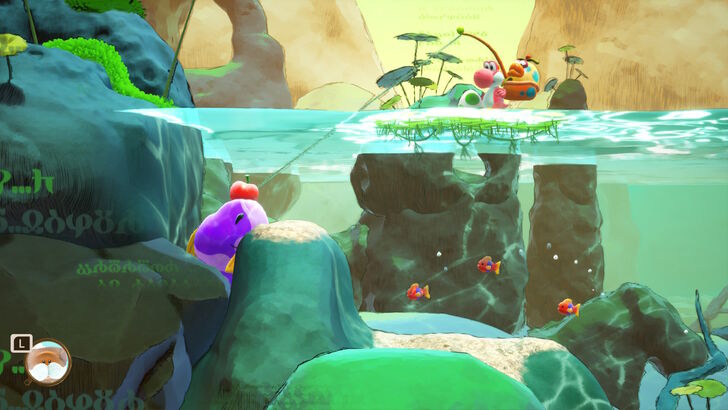
Is that necessarily a bad thing? Not really. The game never pretends to be something it isn’t, and there’s a certain comfort in that consistency. But it does mean it’s not the kind of experience you’d want to rush through or "complete" in one sitting. The repetition eventually becomes more noticeable the longer you play, even if each individual moment still holds some charm.
Ultimately, it works best as something you dip into when you want to unwind. It’s a game that fits more into short, relaxed sessions rather than marathon playthroughs, where you can slowly chip away at discoveries without pressure.
Is Yoshi and the Mysterious Book Worth It?
It’s a Charming Experience That’s Not For Everyone—And That’s Okay
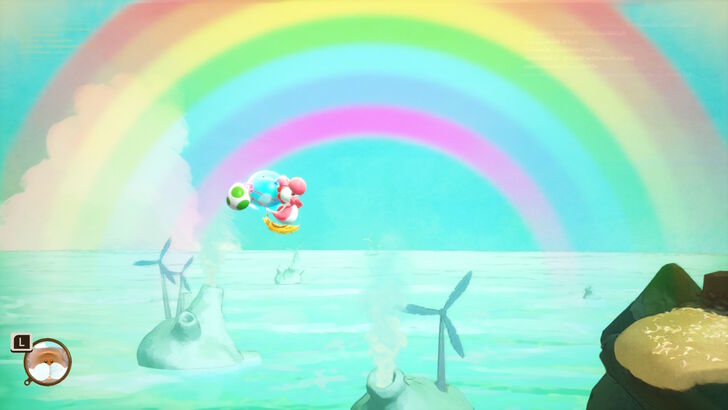
So is Yoshi and the Mysterious Book worth $60? Only for some. While it’s an objectively decent game—even a very charming one—it’s also not something that will land with everyone. If you’re a kid, have a kid, or are looking for something to gift a kid, then this is honestly a strong pick. It encourages curiosity, observation, and that kind of "what happens if I try this?" mindset that makes it really easy to get absorbed into its world. There’s a lot of value in that kind of gentle, exploratory design, especially for players who are still developing how they interact with games.
And even outside of that audience, if you’re someone who enjoys relaxed, discovery-driven experiences where the focus is more on exploration than challenge, there’s definitely something here worth appreciating. It’s the kind of game that doesn’t demand your full attention all at once; it lets you unwind rather than stress over mechanics or difficulty spikes.
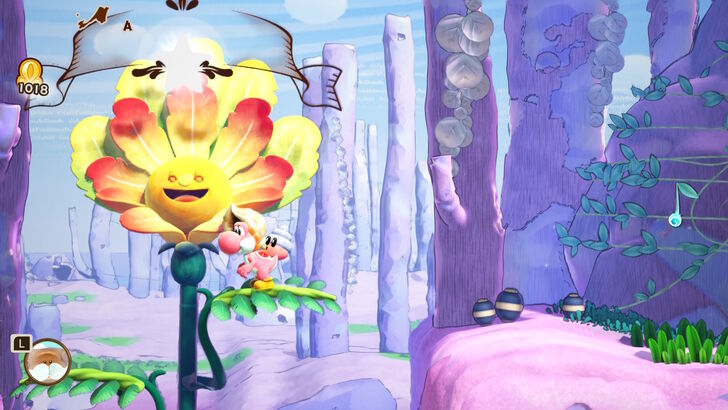
But if you’re expecting something with tighter pacing, deeper mechanical systems, or a stronger sense of long-term variety in its core loop, then you might find better options elsewhere. It doesn’t quite evolve enough to keep the majority of players consistently engaged from start to finish, and its simplicity—while intentional—can eventually start to feel limiting.
In the end, it’s a game that knows exactly what it wants to be: a soft, curious little adventure inside a living storybook. It’s a charming game that’s best enjoyed slowly, not intensely.
Yoshi and the Mysterious Book FAQ
How Do I Gain Stars To Unlock New Chapters In Yoshi and the Mysterious Book?
You can gain stars by completing discoveries in each habitat.
How Many Chapters Are There In Yoshi and the Mysterious Book and How Many Stars Does Each Chapter Need Before It Can Be Unlocked?
There are a total of 10 chapters for Yoshi and the Mysterious Book, namely:
⚫︎ Wildwoods - 0 Stars
⚫︎ Mountaintops - 20 Stars
⚫︎ Seaside - 65 Stars
⚫︎ Settled Valley - 114 Stars
⚫︎ Bug Country - 167 Stars
⚫︎ Remote Isle - 218 Stars
⚫︎ Underground - 285 Stars
⚫︎ Tallest of Trees - 353 Stars
⚫︎ Miniworld - 421 Stars
⚫︎ Moon - 500 Stars
For the full walkthrough and guide, check out our page below:
Game8 Reviews