


| Warhammer 40K Rogue Trader | |||
|---|---|---|---|
| Release Date | Gameplay & Story | Pre-Order & DLC | Review |
| Switch 2 Review | The Infinite Museion Review | ||
Warhammer 40K: Rogue Trader’s The Infinite Museion DLC is finally out, and it adds and changes quite a lot of mechanics! Learn more about the game, our score, our review, and whether it’s worth playing.
Overview
What is Warhammer 40K: Rogue Trader The Infinite Museion?
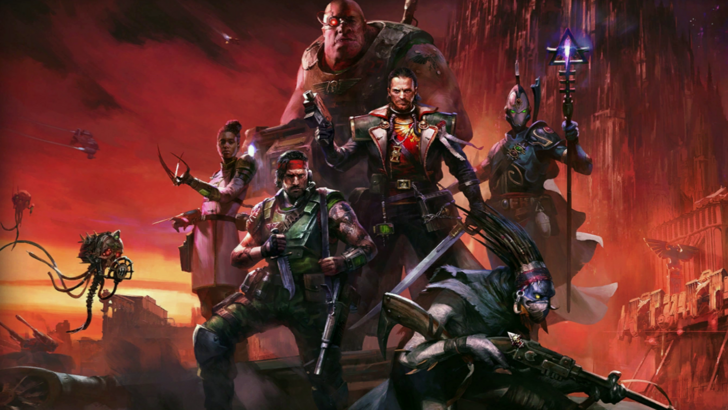
Warhammer 40K: Rogue Trader is the first CRPG made in the historic Warhammer 40K franchise, developed and published by Owlcat Games. It plays similarly to their previously released and highly regarded CRPG, Pathfinder. The game features a custom character who will be employed as a Rogue Trader, leading a crew of psykers, marksmen, and other warriors through the vast and perilous Koronus Expanse, with the goal of exploration and profit for the Imperium of Man.
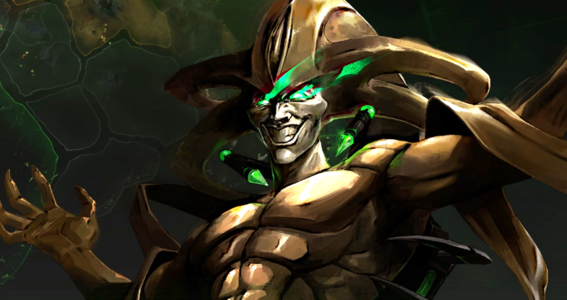
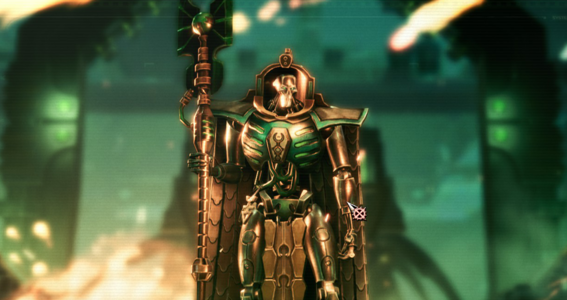
The Infinite Museion is the game’s third DLC and the first of two DLCs for 2026. The DLC explores the elusive Necron overlord, Trazyn the Infinite, and his vault of artifacts, the Infinite Museion. The game also adds a new Augmentation system that turns cybernetics from mere cosmetics into build-altering bonuses.
Warhammer 40K: Rogue Trader The Infinite Museion features:
⚫︎ Trazyn the Infinite
⚫︎ New Quests
⚫︎ 4 New Zones
⚫︎ New Companion: Eogunn Februs
⚫︎ Companion Rework: Uralon
⚫︎ Completely New Story Branches
⚫︎ New Augmentation Feature - Forge World Characters Update to Match
For more gameplay details, read everything we know about Warhammer 40K: Rogue Trader The Infinite Museion’s gameplay and story.
| Digital Storefronts | ||
|---|---|---|
 Steam Steam |
 Playstation Playstation |
 Xbox Xbox |
 Switch 2 Switch 2 |
 GoG GoG |
 Epic Epic |
| $49.99 | ||
Warhammer 40K: Rogue Trader The Infinite Museion Review: A Good Night At the Museion
Still Better Than Most DLCs
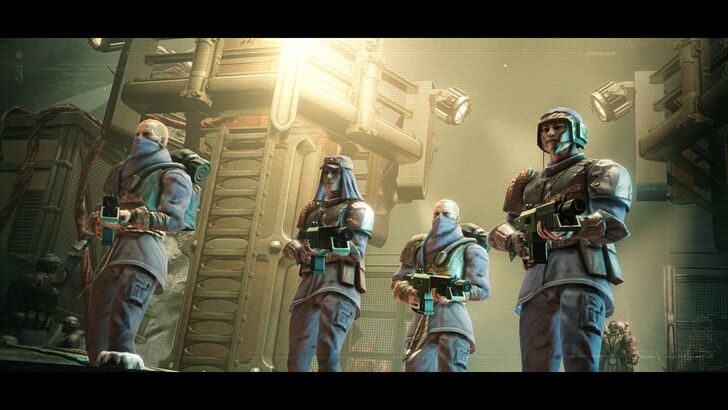
I don’t think it’s a hot take to say that Warhammer 40K is a franchise that’s been killing it lately. With the recent announcement of Dawn of War 4 and the immense success of Space Marine 2, the series has been in an interesting spot, with many of its other titles serving as experiments to see whether they can break into their respective genre spaces.
One of those titles is the franchise’s first CRPG: Rogue Trader. Similar to the franchise, the game is nothing short of a triumph, easily boasting 100+ hours of gameplay, massive build customization, and crazy-good choice-driven worldbuilding. Since its release in 2023, the game has improved a lot with countless patch updates and two very good expansions in Void Shadows and Lex Imperialis.
Now it looks to continue its hot streak with The Infinite Museion, and I have to say—it’s pretty good, but it plays too safe compared to its previous DLCs. It doesn’t meet the same highs as the other DLCs did, as the lack of a new Archetype and safer quest design certainly hurts its case. Nevertheless, the DLC still offers a very good experience that actually changes up the game’s established builds with the introduction of the Augmentations.
Also, Trazyn the Infinite is in the game, so of course it’s expected to at least be good, right?
A Night At the Museion
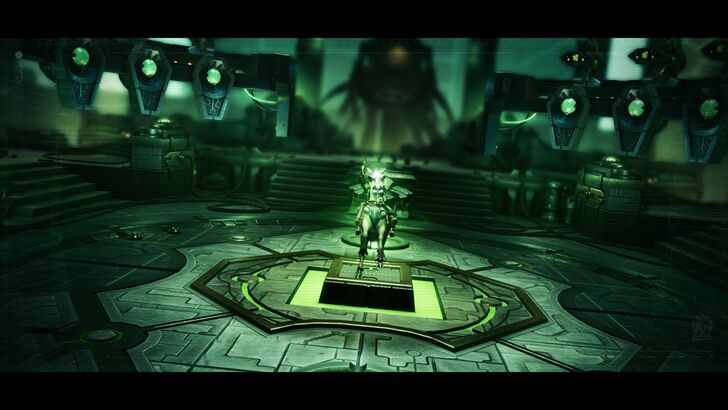
The Infinite Museion story is intriguing, and we’ll first talk about the DLC’s core story before getting into the new companion. Without going into too much detail, the Rogue Trader is looking to follow the footsteps of their ancestor, Seberian Von Valancius, and find out what he was investigating before he disappeared.
This brings the crew to the planet Zarkov, a Frontier World with a colony that’s actually a long-lost group that once served the Von Valancius dynasty. While solving the inhabitants' problems, the investigation leads the group to a lost tomb—Seberian’s last known location—where they discover that he was investigating something beyond their understanding: the Necrons.
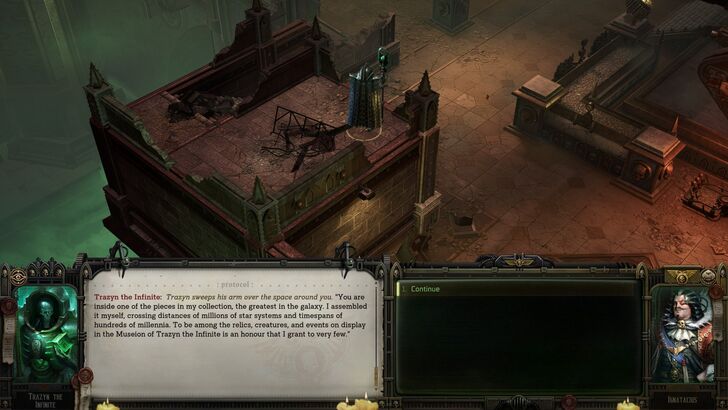
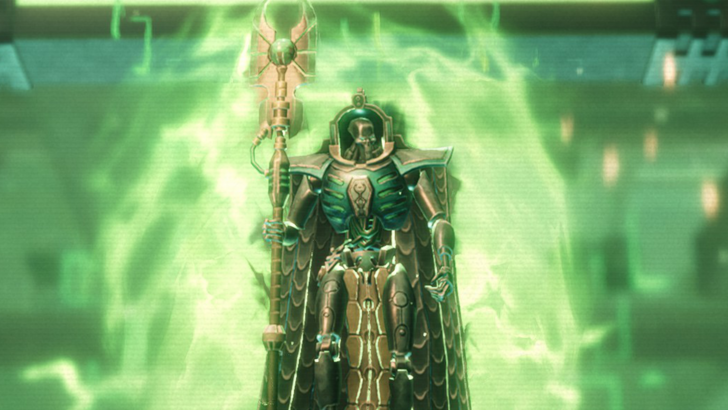
Now I won’t spoil too much of the story from here on, especially since the highlight of the story is the Necrons, and, of course, Trazyn the Infinite himself making an appearance. It’s undeniable that Trazyn’s presence carries the DLC, and as a casual Necron enjoyer in tabletop, I was extremely happy to say that he was done justice.
His snarky, yet curious attitude mixed with the Necron’s patented superiority complex made for a character that stole the show every time he was on screen—and Owlcat capitalized on him being a massive character by giving him the spotlight every time.
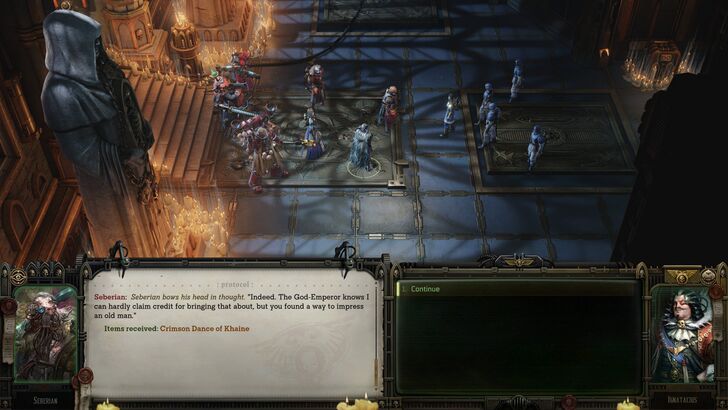
But if I were to give a brief summary of how the DLC matches up to the rest, I’d say that the whole experience is a consistent playthrough all throughout. If anything, I’d actually have to give props to Owlcat Games for making the DLC feel relevant to the whole story as it went on.
Sure, it may not have been able to match Void Shadows' amazing setups, great characters, and massive worldbuilding moments, but it definitely beat out Lex Imperialis for being a much better experience in Acts 4 and 5. It ended up being an enjoyable experience, one that definitely surprised me by the impact that it had on the overall story.
Decent Companion But Nothing Too Crazy
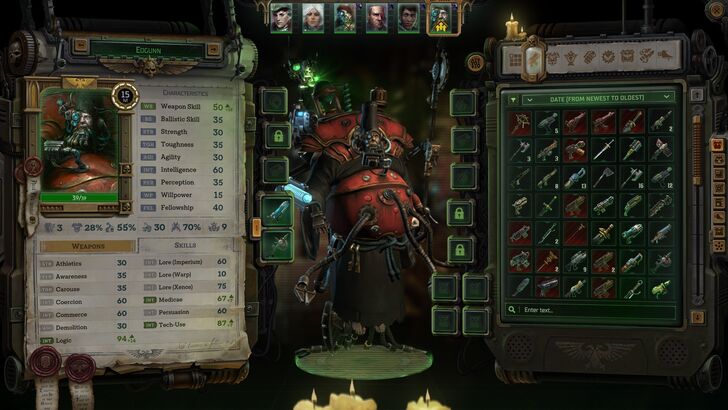
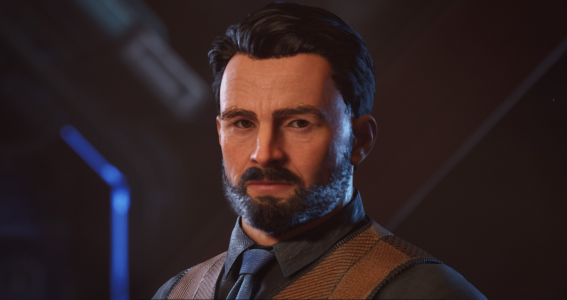
Moving on to The Infinite Museion’s new companion, Eogunn Februs, he’s actually pretty cool in both form and practice. He’s an Adeptus Manipulus, or a different kind of Tech-Priest that can channel more of the Motive Force by storing and using energy within them. By consequence, however, they tend to be more mechanical than your average Tech-Priest.
Eogunn is an extremely curious character, which alerts us to his clear flaw: he is willing to do whatever it takes to succeed in his experiments. In the real world, this would be a determined and headstrong character trait to have. But in Warhammer 40K, this is a very dangerous line to hopscotch around, as he could easily be labeled as a heretic depending on the scale of his experiments.
The first time I met him in Sector Bionica (one of the game’s new zones), I couldn’t help but be on guard around him. Just from his speech pattern and how he interacted with others, I could tell something was a little off about him. This was proven in his first companion quest, where he brutally experimented on three humans with different backgrounds. His goal? To combine all of their consciousnesses into one body, a Triasomata.
Look, I know it’s Warhammer 40K, and that’s part of the schtick, but that doesn’t make it any less mortifying to hear. And, honestly, that’s not actually what bothered me the most. What really bothered me was how black and white it was for him—almost like a procedure of sorts. When the whole "experiment" ended up badly, he didn’t even feel bad. In fact, he wanted to keep going just so he would know where he went wrong, even if he followed all his procedures.
Of course, being the Rogue Trader, you have the final say in the matter, but you can clearly see that he might be an individual that you need to keep in check. His extreme curiosity certainly makes his character interesting, as he’s quick to forego principles and tenets for the sake of sating his curiosity.
Clearly, there’s a reason for this curiosity, but I won’t spoil anymore, especially since I think his story is one of the more compelling companion questlines compared to some of the others that feel more tacked on than anything. I was pleasantly surprised by how much I enjoyed his storyline and how much influence you can have on his character, similar to Kibellah.
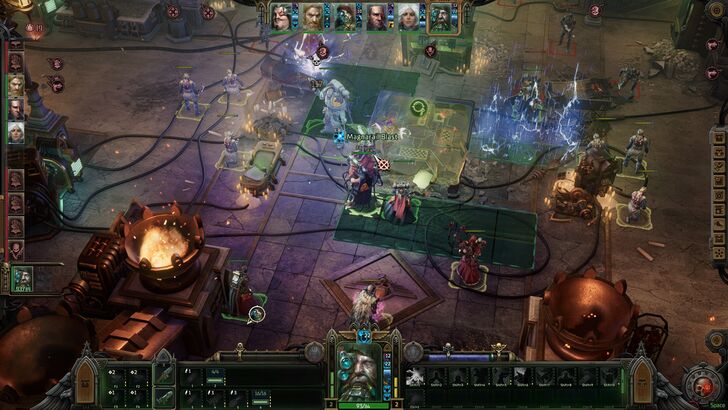
However, it’s in his gameplay where the problem kind of pops up. Compared to the likes of Kibellah and Solomorne, who have new Archetypes tied to their additions, Eogunn is simply an Officer with a few exclusive skills. His Adeptus Manipulus background gives him access to amazing support buffs and allows him to utilize shock damage to strengthen both his and his allies’ damage output.
But it’s not nearly enough. For starters, having exclusive skills means his inclusion will mostly be niche and less flexible than the rest of the cast. This is especially true when compared to the other Officers that you’ll eventually get by progressing, like Cassia and Jae, who are already very good on their own.
All in all, he’s a cool character with cool-themed skills to back it up. It’s just that outside of these, he doesn’t come bearing a balance-changing Archetype. Don’t get me wrong, he’s not a bad character per se, it’s more of just not having that much new stuff in his kit to make it feel like he’s a unique character.
Significant Gameplay Updates Change the Game
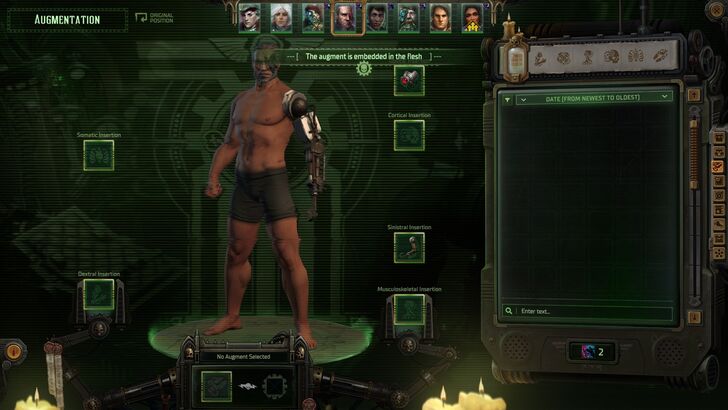
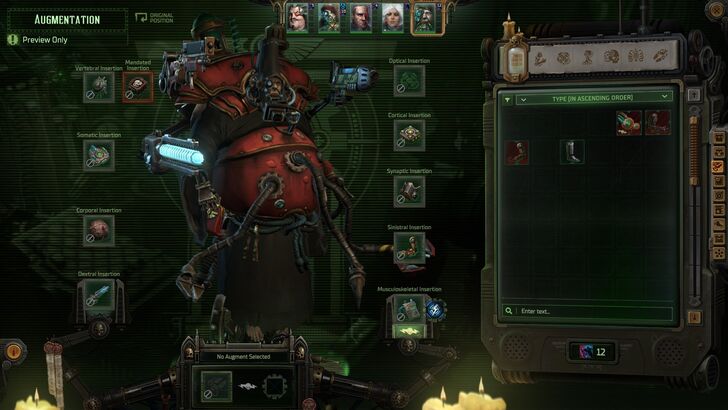
Next, let’s move on to the new gameplay addition and how it drastically changes the game. Augmentations are the newly added gearing system that lets you replace certain body parts with cybernetic ones. There’s a catch, though: each cybernetic augment has both a positive and a negative attribute. And also that they take more shock damage, depending on how many augments they have.
These contrasting bonuses could be something like being able to equip two-handed weapons on that specific cybernetic arm, but not being able to use anything else other than basic attacks with that arm. Or, it could even be an augment that gives you a totally new ability, and a downside that simply lowers your Weapon Skill or Ballistic Skill.
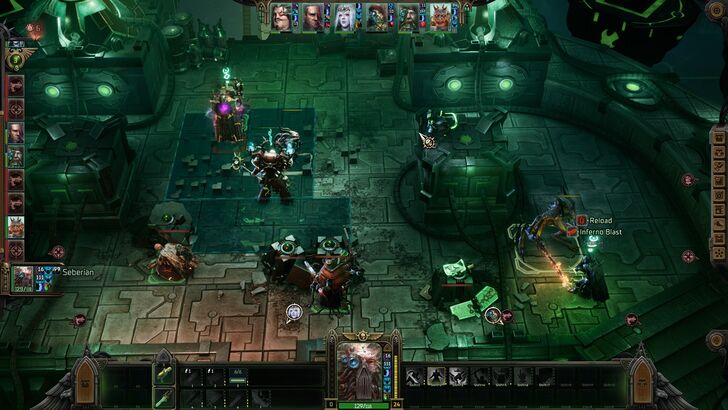
Though it may seem simple on the surface, it actually changes a lot of things, even in the base game. For instance, all Forge World characters have augments already, meaning that they already have at least one of these cybernetic enhancements installed. Characters like Jae and Pasqal are among those who benefit immediately from this new system. But that’s not all—this also means that other qualified characters, meaning those who aren’t Cassia, Space Marines, or xenos characters, can have augments if you choose to do so.
This means that characters like Abelard, Argenta, Heinrix, and the like can have a variety of different bonuses depending on what you put on. And don’t think this is just a one-item deal, either. As characters can have multiple different augmented body parts, like arms, legs, and even parts of their faces, if you really want to.
This opens up a lot of build paths for several characters, and it might actually lead to some very destructive builds when you get the right mods and pieces together. I, for one, enjoyed being able to experiment a lot more. Given the game’s inherent difficulty curve at max difficulty (Daring), builds tend to become a lot more rigid because of how strong certain talents and characters are.
Is Warhammer 40K: Rogue Trader The Infinite Museion Worth It?
Yes! It’s Still an Exhibit Worth Checking Out!
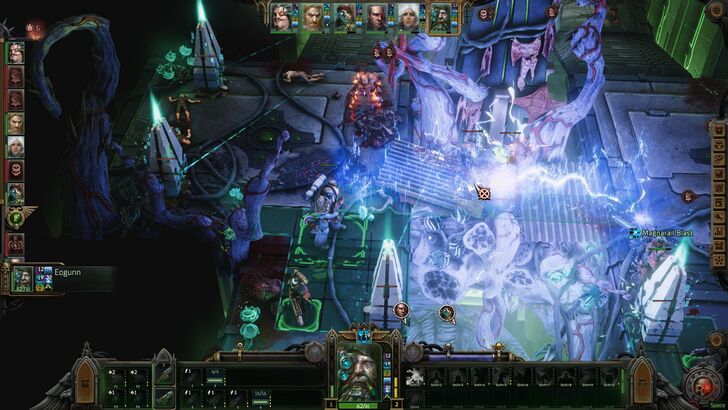
I won’t waste any more of your time. The Infinite Museion DLC is definitely worth the time, effort, and money, even if it doesn’t match up to Rogue Trader’s previous DLCs, and there are a few reasons why: First, it’s a lot of content, with 12-15 hours of gameplay just from the added missions, fights, areas, scenarios, and dialogue.
Second, the Augmentations really were a welcome addition to spice things up for the cast, as it becomes harder to improvise a build on-the-fly rather than planning it out the moment you hit New Game on the title screen. Lastly, Trazyn the Infinite’s character is just so damn good that his inclusion in the already chaotic story of Rogue Traders is an absolutely perfect fit.
It’s an easy recommendation for any Warhammer 40K fan, any CRPG fan, and, of course, players who have the base game but are on the fence about it. This is your sign to start playing Rogue Trader and start spreading the good word of the Emperor for the glory of Mankind.
FAQ
How Do I Access The Infinite Museion DLC in Warhammer 40K: Rogue Trader?
If your save file has the DLC installed, you should be able to access the DLC as soon as you reach Act 2.
Does The Infinite Museion DLC Have Specific Endings in Warhammer 40K: Rogue Trader?
Yes, fully dependent on the choices you make during the DLC’s questlines.
Game8 Reviews