



| Thick As Thieves | |||
|---|---|---|---|
| Release Date | Gameplay & Story | Pre-Order & DLC | Review |
Overview
What is Thick As Thieves?
Thick as Thieves is a stealth-action game developed by OtherSide Entertainment and published by Megabit. It puts players into the shoes of master thieves stealing valuable treasure from the land of Kilcairn, an alternate Scottish city set in the 1910s where technology and magic coexist in odd yet fascinating ways.
As master thieves, players take on dangerous heists across two available maps. Using a variety of tools infused with technology and magic, players must master the art of thievery to steal coveted treasures like magical tomes, ritual scrolls, and secret correspondence. The game features a 4-hour campaign playable solo or with a friend through 2-player co-op, where teamwork is just as essential as hiding in the shadows.
Thick As Thieves features:
⚫︎ Stealth-Action Gameplay like Thief & Deus Ex
⚫︎ 2-Player Online Co-Op
⚫︎ 4-Hour Campaign
⚫︎ Steampunk World Mixed with Magic
⚫︎ 2 Maps Available
⚫︎ 2 Playable Thieves
For more gameplay details, read everything we know about Thick As Thieves’s gameplay and story.
| Digital Storefronts | |||
|---|---|---|---|
 Steam Steam |
 Playstation Playstation |
 Xbox Xbox |
 Epic Epic |
| $4.99 | |||
Thick As Thieves Review: A Good Heist With Loose Ends
One With the Shadows
In a landscape dominated by first-person shooters and annual sports re-releases, the stealth genre often gets overlooked. Not everyone finds it enjoyable to stay cooped up in a corner and wait for the right moment to strike. When the genre was popularized by games like Deus Ex and Thief, it gained some mainstream traction, but you don’t often see people asking for new stealth games on the market, unless it’s a new immersive sim or something from Hideo Kojima.
From Warren Spector, studio director of Deus Ex and Thief: Deadly Shadows, comes Thick as Thieves, a brand-new game built around what makes stealth games so compelling: the sheer dopamine rush of successfully completing your objective without alerting enemies and getting away scot-free. It’s a game that begs the question: what if you could build a stealth experience with potentially endless content that you can also share with a friend? Unfortunately, while it shows promise by blending stealth and co-op in interesting ways, it currently suffers from a barebones structure and a noticeable lack of endgame content.
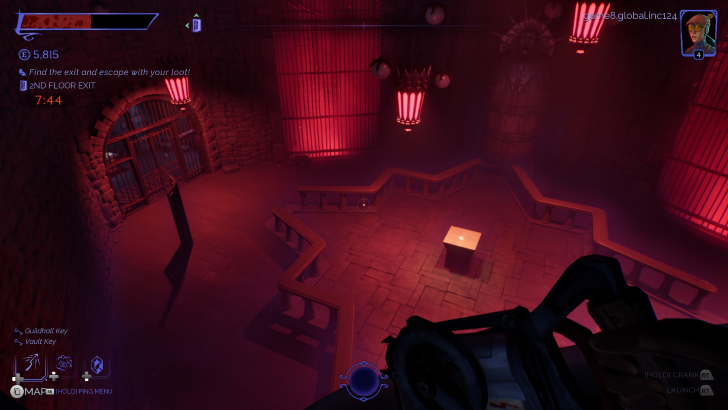
For a brief history about Thick as Thieves, it was originally revealed a year ago as a four-player competitive PvPvE extraction experience where players race to steal items first. It played in a similar space to titles like ARC Raiders and Marathon, though it leaned more heavily on first-person stealth rather than gunfights with mechanical enemies or aliens.
It was eventually reworked and pivoted into a two-player co-op and single-player experience, as revealed by the developers during the latest Triple-i Gaming Showcase on April 9. This shift left fans questioning the game’s current direction, with concerns about the value it has on offer, or how its content could carry its stealth gameplay mechanics. Now that I’ve played enough of Thick as Thieves, I’ve become more curious about what its PvPvE could have been instead of this barebones stealth-action game made up of jerry-rigged features.
Honor Among Thieves
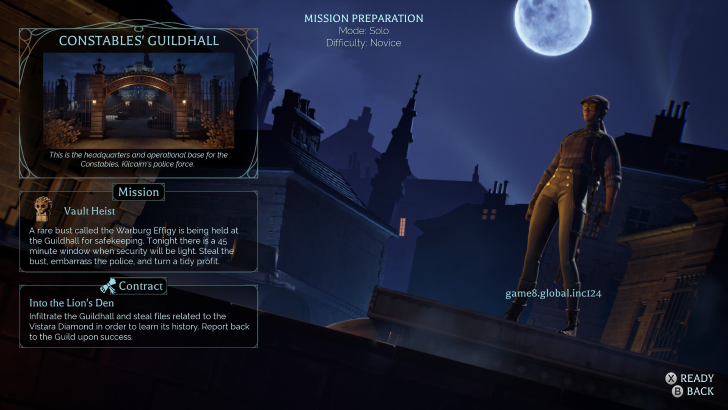
In Thick as Thieves, you’re thrown into a world where technology and magic collide, and staying in the shadows proves difficult when floating eyes, mechanical turrets, and spectral guards haunt nearly every corner. Similar to steampunk-inspired games with magical elements like BioShock Infinite or Dishonored, Thick as Thieves relies on both technology and magic as sources of power, resulting in bizarre tools and weaponry like a pickpocket fairy that can steal a guard’s key from a distance, or a magical gem that lets you see through walls and spot nearby guards.
Throughout its roughly four-hour campaign, you’re tasked with stealing just about anything with a high enough price tag, whether it’s an ancient ritual scroll, secret correspondence letters, or fabled Russian egg with a time limit of 45 minutes otherwise your magical getaway portal disappears forever. These aren’t exactly compelling story moments, as you’re mostly carrying out jobs for a mysterious employer, but the early hours serve as the game’s tutorial sections, allowing you to soak in the sights and familiarize yourself with the setting and stealth gameplay. This becomes especially useful if you plan on trying its harder difficulty content later on, with or without a friend.
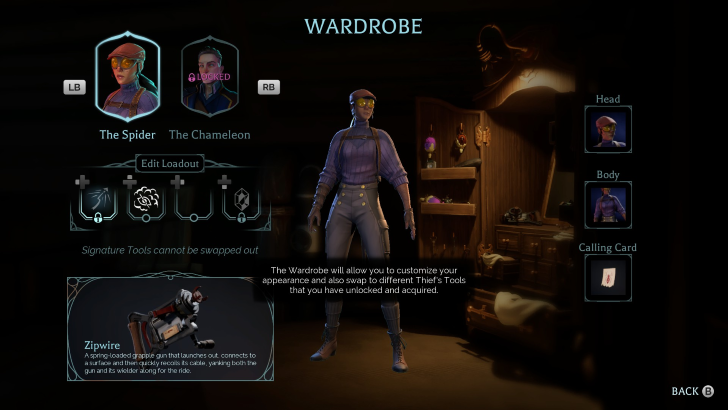
Players picking up Thick as Thieves shouldn’t expect anything grand from a storytelling perspective, especially those hoping it will be a spiritual successor to titles like Deus Ex or Thief in terms of narrative depth. It doesn’t feature a cast of deeply layered characters with extensive backstories, making the plot feel disconnected from the otherwise compelling setting of Kilcairn, almost as if the story simply stitched together missions and dialogue to fill the gaps. It’s difficult to empathize with the characters’ motivations or arcs because, for the most part, they barely exist. Instead, you just play as one of two thieves available at launch: The Spider and The Chameleon.
These characters function more like classes you’d find in other games, each equipped with their own unique gameplay mechanics, such as The Spider’s grappling hook. Story-wise, there’s little difference between the two, and once you finish the game’s roughly four-hour campaign, you’re mostly left to carve your own path, whether that means tackling heists differently or teaming up with a friend for faster runs and more unpredictable encounters.
Tools of the Trade
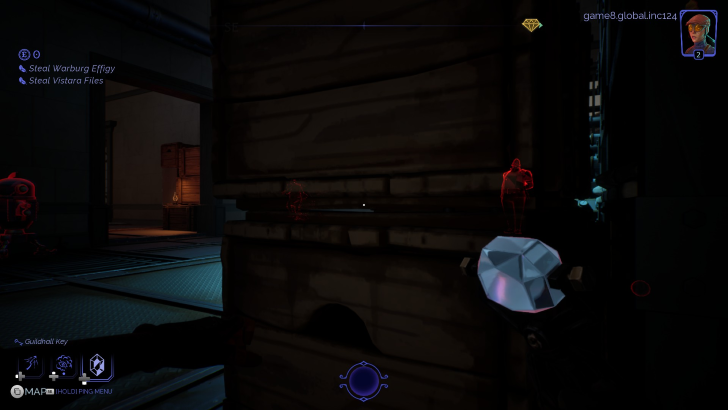
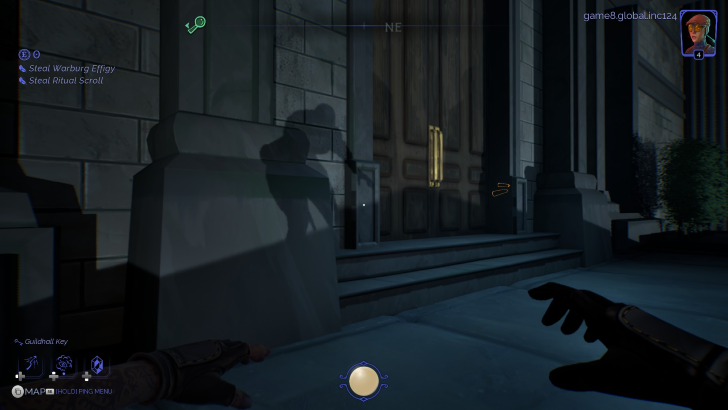
The core gameplay loop of Thick as Thieves is built around the same stealth mechanics fans of first-person titles like the aforementioned Deus Ex and Thief will immediately recognize, though it leans far more toward Thief’s style of stealth. Players are encouraged to stay hidden in the shadows and avoid the prying eyes of guards rather than talk their way through situations or manipulate NPCs into revealing secrets like JC Denton. The thrill of slipping through the shadows and completing an objective without alerting a single guard are some of the highs you can achieve in Thick as Thieves’.
The missions in Thick as Thieves are not linear, as its two distinct maps provide an open-ended stealth experience where you can fulfill objectives however you like. Do you want to go loud, or take on everything silently while leaving no trace behind? Thick as Thieves currently features 16 contracts that serve as its campaign. These essentially function as a story mode while also introducing players to the game’s mechanics and stealth systems, though players should not expect too much from their structure, as most missions boil down to stealing item A or item B with barely any meaningful changes to the environment.

While players can choose whether or not to pursue these contracts, completing them unlocks rewards such as access to the second map, cosmetics for your characters, and additional tools for thievery. They are not replayable once all 16 contracts are completed, but you are not missing much in terms of story content either, as most of the narrative is told through notes and correspondence from your mysterious employer.
You simply drop into one of the game’s two maps and are tasked with stealing either a set amount of valuables or a heavily protected magical item locked inside a vault, which usually requires grabbing a key from a guard standing just a few meters away. Players familiar with stealth games already know how this dance works: constantly staying on the move, surveying the environment, and carefully forming an actionable plan before making your next step.

The game’s varied selection of thief tools is what makes the thievery so satisfying. In every run, you can bring three tools to assist in your grand heists, with a fourth slot reserved for your class skill. These unlockable gadgets allow players to prepare their loadouts before a major heist begins, giving them advantages that suit their preferred playstyle. Will you pick a trash-talking fairy that distracts guards by constantly taunting them, giving you the perfect opportunity to sneak past while they are too busy getting ragebaited by your magical pet? Or a quieter approach like a pickpocket fairy can steal a guard’s key from a distance, reducing the need to make noise or get dangerously close?
So far, there are only two classes available in Thick as Thieves. The Spider comes equipped with her signature Grappling Hook, allowing her to quickly reach high places and slip through alternate entry points, while The Chameleon can use his disguise ability to pose as a security guard and casually walk through the front door without raising suspicion.
Knowing which guards patrol a level and understanding its objectives gives you ample time to prepare your loadout, reducing the chances of making costly mistakes whenever you get spotted. Inviting a friend into co-op also opens up more ways to deal with threats, as one player can serve as a distraction with a noise-heavy kit while the other takes a stealthier approach and heads straight for the objective.
Stealth is Just Too Fun

One of the things I deeply appreciate in Thick as Thieves is how many ways it gives you to approach each mission, practically opening the floodgates for experimentation while also begging speedrunners to break it apart. Across its two maps, Elway Manor and the Constable’s Guildhall, you’ll find unlocked windows, hidden passageways, and gaps in walls that let you slip inside without ever touching the main entrance.
In many of my runs, I often found myself getting turned around in its environments, constantly opening the map to figure out where I was or which floor I had ended up on. Just when I thought I was stuck, I’d notice a small corner I could crouch into, which would lead me to an entirely different side of the room. Those little discoveries added more reasons to retry a run and test new infiltration routes, instead of repeating the same path that once led to my downfall and a full loot loss worth 5,000 credits that I had to take back again after respawning.
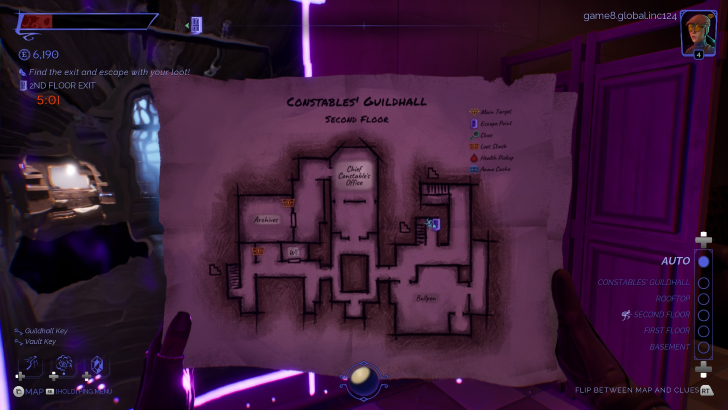
Of course, not every run in Thick as Thieves plays out the same way. You won’t always be stealing a magical tome or an important letter. Sometimes it’s three sets of gems or urns scattered across the map, forcing you to thoroughly explore each area within a brief 30 to 45-minute window just to track everything down. These randomized objectives genuinely help keep the stealth experience fresh and engaging, even when playing solo. A secret door that once opened through a hidden switch might require a completely different trigger the next time, and the guard carrying the key you need may not even be the same person anymore.
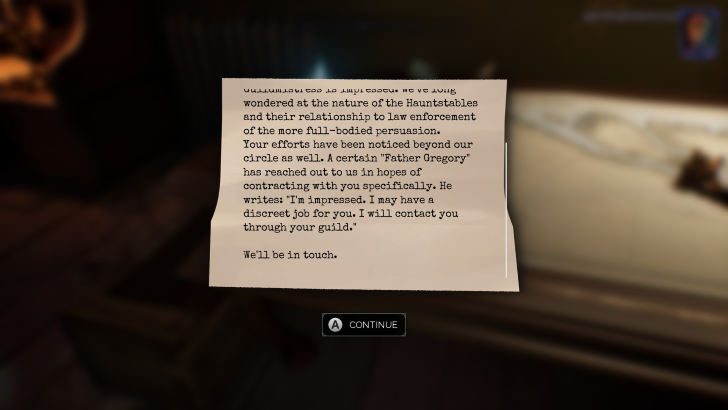
Alongside the shifting objectives, there are also other opportunities that reward players who pay close attention to the environment and take the time to read the notes scattered throughout the world. Many of these documents contain genuinely useful information, whether it’s the location of a hidden switch, an interactable statue that opens a secret door, or the combination to a safe. These details encourage players to explore rather than rush directly toward the objective, because the more map knowledge you have about the environment, the easier and more satisfying each heist becomes.

Higher difficulties tend to serve as a pinnacle challenge for players who already find the default settings easy. This is where the game begins to appeal more to the hardcore stealth crowd familiar with classic titles, where AI feels sharper and security systems become far more aggressive and reactive, allowing more to use their loadouts and plan meticulously before every run. Playing at this level with a friend is often a recipe for chaos, but also for moments of ensuing hilarity, depending on how you deal with it. Unfortunately for me, that’s one of the few main upsides to tackling higher difficulties, because the rewards don’t carry much weight beyond cosmetics. In the end, it mostly comes down to bragging rights rather than meaningful progression.
Something’s Missing With Its Endgame & Progression
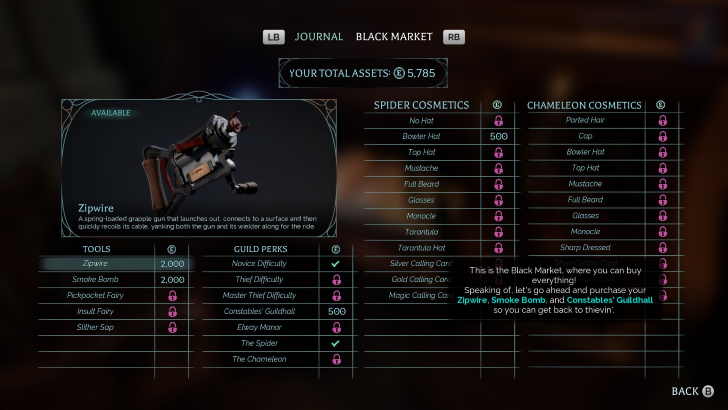
Thievery and clean escapes are Thick as Thieves’ strongest points, but there’s very little reward for doing everything right; as if something is missing. Once most of the core tools are unlocked, progression starts to feel shallow. Outside of cosmetics, there’s not much incentive to keep accumulating money beyond self-imposed challenges, such as higher difficulties where AI becomes smarter and guards gain longer sightlines. As a result, endgame progression is especially underwhelming, ultimately leaving you with a hideout full of stolen treasures and little meaningful way to use them.
This creates a noticeable issue with the game’s overall value proposition. Developer OtherSide Entertainment has not explicitly positioned Thick as Thieves as a live-service title, instead offering it as a premium experience priced at around five dollars, with the initial four-hour campaign framed as an "introductory" experience. There’s also no clear promise of a structured roadmap with additional content, cosmetics, or missions, only vague statements about future expansion.
That ambiguity becomes a concern, especially for a volatile market in the gaming industry where developers and publishers can just simply pull the plug and shut down everything, like a thief in the night. Without a defined plan for meaningful post-launch updates, the game risks leaving players with an experience that feels complete in mechanics but incomplete in long-term purpose.
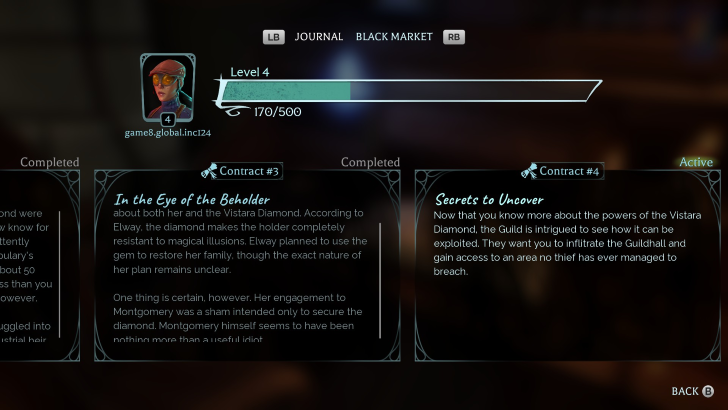
After playing through the game’s 16 contracts and experiencing nearly everything it has to offer, there’s a noticeable sense that something is missing, moments where it feels like there was untapped potential that could have been explored further. Remnants of its PvPvE roots are still visible, especially in how you drop all your loot after getting caught, only for guards to completely ignore the billion-dollar jewels lying on the floor while you casually return to pick them back up. Beyond that, the lack of endgame progression and hub customization makes me wonder if the original concept might have been more compelling as a competitive stealth experience rather than the more stripped-down campaign and co-op structure it currently has.
Still, turning the game into a replayable stealth experience focused on completing missions with a friend instead of constantly dealing with other players online is not necessarily a bad idea. The foundation for something special is clearly there, but it also feels like a game that could have benefited from much more time in development.
Is Thick As Thieves Worth It?
Not Worth a Grand Heist, But Worth a Try
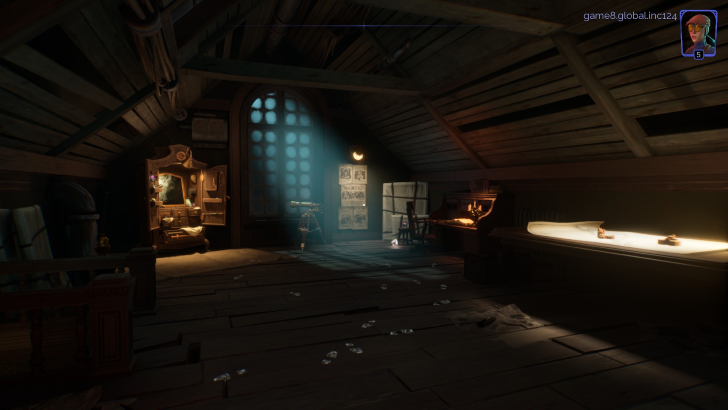
Thick as Thieves is a rough, uneven experience that struggles with its barebones campaign and lack of long-term progression, with clear signs of being kitbashed from its original PvPvE iteration slipping through the cracks. Still, its core stealth gameplay is undeniably strong, offering creative level design and plenty of room for experimentation for stealth fans. When everything clicks, it delivers the kind of emergent stealth moments that immersive sim fans like Thief and Deus Ex will appreciate.
Ultimately, Thick as Thieves feels caught between two conflicting identities: being a full-fledged single-player or co-op experience, or slowly expanding through piecemeal mission packs priced at around five dollars each. Without meaningful updates or stronger long-term progression, it risks losing players once the novelty of its heists begins to wear off. Outside of its excellent moment-to-moment gameplay, there simply is not enough content or reward structure to sustain interest for long, and for a game centered around treasures, that irony hits a little too close to home. In the end, it is worth trying for the price and the gameplay alone, but it does not quite pull off the clean getaway its older stealth inspirations are known for.
FAQ
How Many Players Are in Thick As Thieves’ Co-Op?
Thick as Thieves supports a maximum of 2 players per mission, allowing you to team up with a friend or a random stranger to plan and execute your heists together.
How Long is Thick as Thieves’ Campaign?
Thick as Thieves has a roughly 4-hour campaign, but after finishing it, players are left to replay missions at varying difficulties and experiment with different approaches.
Is Thick as Thieves Free?
No, Thick as Thieves is not free. It is a premium title priced at around 5 dollars.
Is Thick as Thieves a Live-Service Game?
No, the developers have stated that Thick as Thieves is not a live-service game. It follows a traditional premium model with an introductory campaign rather than a structured live-service roadmap.
What are the System Requirements to Play Thick As Thieves on Steam?
The System Requirements as listed on Steam are as follows:
| Specifications | Minimum | Recommended |
|---|---|---|
| OS | Windows 10/11 with the latest updates | |
| Processor | Intel(R) Core(TM) i5-4570 CPU @ 3.2GHz | Intel(R) Core(TM) i7-8700 CPU @ 3.2GHz |
| Memory | 12 GB RAM | 16 GB RAM |
| Graphics | NVIDIA GeForce GTX 1060 6GB+ (or equivalent) | NVIDIA GeForce GTX 2070 8GB+ (or equivalent) |
| Storage | 10GB | |
| Additional Specs | Direct X12 | SSD required |
Game8 Reviews