



Overview
What is The Third?
The Third is a first-person, survival horror and puzzle game developed and published by Manas Games. Players take control of Damian, an archaeologist tasked with finding his coworkers and rescuing them from an ancient pyramid in the middle of Egypt. As he goes deeper into the catacombs, he finds out more about the three forgotten Egyptian gods and must escape before the third god is awakened. Players must solve puzzles and navigate the pyramid in order to escape and prevent The Third from awakening.
The Third features:
⚫︎ Egyptian horror-inspired environments and enemies
⚫︎ A story uncovering the mysteries of Ancient Egypt
⚫︎ A dark, immersive pyramid to explore
⚫︎ Monsters and Jumpscares
⚫︎ Cryptic puzzle solving
⚫︎ More episodes on the way
| Digital Storefronts | ||
|---|---|---|
 Steam Steam |
||
| $5.99 | ||
The Third Review | A Frustrating Mess Best Kept in the Coffins
A Cursed Horror Only in Execution
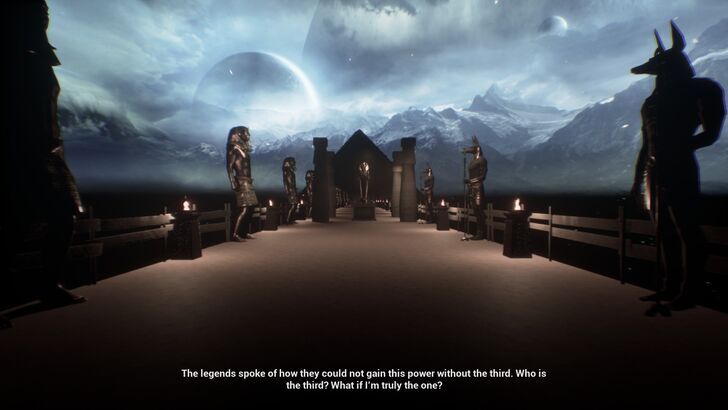
The aesthetics of Ancient Egypt and its mythology, encompassed by the century-old "Egyptomania" cultural phenomenon, are such a staple of classic Hollywood and literary horror that it borders on sanitized cliche. The main draw of Egypt-style, "pharaonic" horror, a “curse” that punishes explorers as an ancient Pharaoh rises from its tomb in a claustrophobic, labyrinthine pyramid, has been explored in everything from Boris Karloff’s magnetizing performance in 1932’s The Mummy to the more brutal, surreal, and violent runs of Marvel’s Moon Knight. For horror, the aesthetics of Egyptomania feels more antiquated than terrifying in the current day.
The Third, by choosing to set itself within this space, then, feels like opening a sarcophagus and inheriting an ancient curse. Through no fault of its own, The Third has to fight an uphill battle to try and carve its own niche in a vast desert of pre-existing imitators and more acclaimed predecessors. The game does have a fighting chance in this sense, since gaming hasn’t really exhausted the Egyptian pantheon and its aesthetics as much as they have, say, Greek mythology. The Third had a real chance to do something interesting with its promise to expand upon Egypt’s pantheon, but it ultimately fell short of any opportunity it had to stand out.
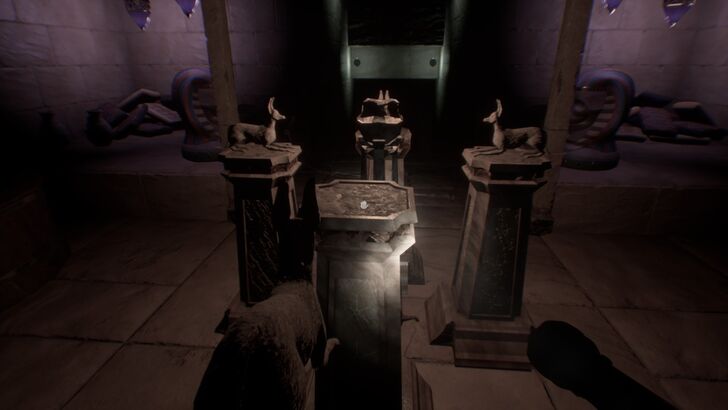
The Third mostly fails to keep the experience consistently engaging, fun, or even scary due to sparse, barebones gameplay and design issues that kept me wishing I was the one in the tombs. It plays exactly as it's advertised: a walking simulator inside an accurately claustrophobic pyramid, but fails to do anything interesting beyond that. Its story is decently written and contains twists that keep you thinking, but is ultimately generic and fails to be the expansive take on pharaonic horror it wants to be. It's a shame, because The Third could’ve been more than what it currently is, but the game expresses greater ambitions and a more coherent vision on its store page than in the actual product.
A Trek Through The Third’s Catacombs
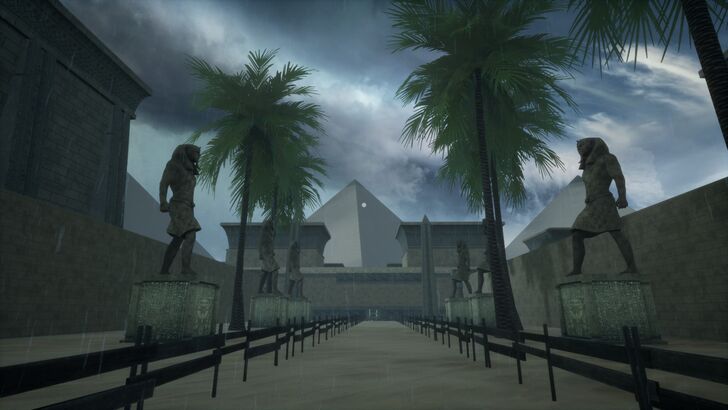
The Third largely takes place in what seems to be a nondescript Egyptian pyramid, where players take control of Damian, an archaeologist that enters the forbidden catacombs to find his two coworkers David and Claire.
As Damian ventures deeper into the pyramid, he receives information about three ancient gods that possess the bodies of people who dare enter into their tomb. As the three gods awaken, they regain their control over time and the seasons. Now, Damian must escape the pyramid, avoid all of the walking mummies patrolling the pyramids, and prevent the reawakening of the last god, simply named The Third.
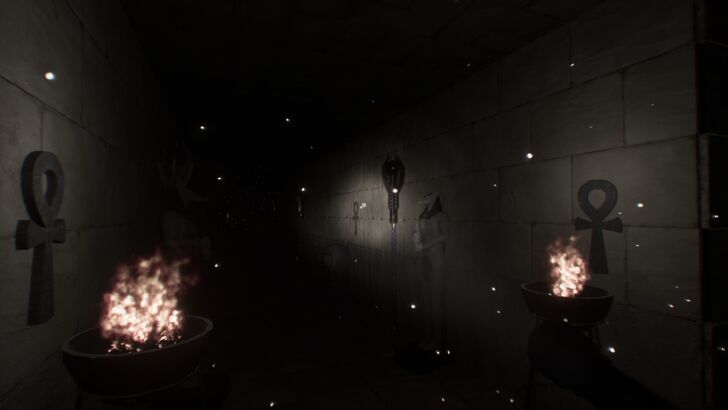
The Third’s story seems simple enough, if not entirely generic and derivative of the tropes of Egyptomania-style horror. It’s the strongest part of the game simply because it does draw from a tried-and-tested formula. Specifically, The Third’s brevity and reminiscence of classic horror films kept me playing despite the game’s greater flaws. It also ends on a note that promises something potentially more interesting for future installments, but, frankly, this feels like a backhanded compliment.
It's also the best part of the game purely by technicality. The Third’s story, while good, doesn’t do enough to elevate the overall experience by refusing to say anything meaningful or interesting about the mythos it works within. If the game had simply expanded more on who these "forgotten gods" of the Egyptian pantheon were, it would’ve gone a long way to making the story more memorable and interesting. It still feels like the part of the game that had the most thought put into it, but that’s not really saying much considering that the rest of the game feels as empty as a looted coffin.
As Bare Bones as the Skeletons that Chase You
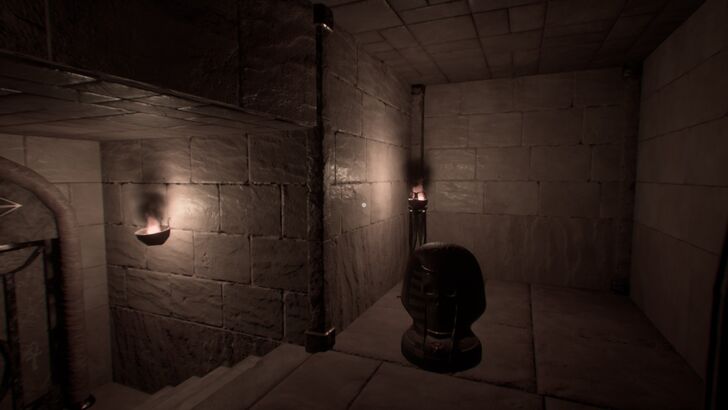
The Third’s gameplay is equally as simple as its story, being touted as a horror walking simulator. The Third sees players exploring the pyramid’s different areas and trying to advance to the next room by solving puzzles. These usually involve unlocking the door by finding a key or button hidden within the room. Along the way, players will have to collect important artifacts and avoid certain creatures, most notably skeletons and mummies, through jumpscares and scripted chase sequences with specific solutions.
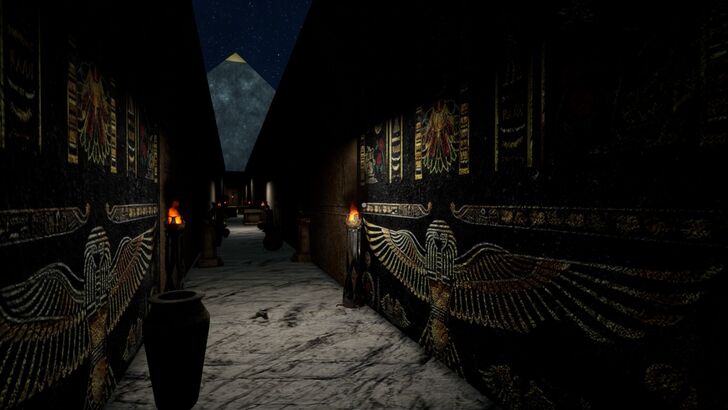
Puzzles don’t follow a specific pattern or logic, and I found that pixel-hunting through every corner and artifact of the pyramid’s darkly lit rooms is the most consistent way to find the solution for progressing through the game. It’s a gameplay loop that fails to create tension by itself and relies heavily on the narrative and aesthetics to be suspenseful. There are barely any
rewards or consequences to playing the game apart from simple progression, unless you consider being stuck in the same dark room with the same droning ambient sound a punishment (and honestly, it might just be).
This gameplay loop makes up the bulk of The Third’s hour-long run time, with a basic platforming section being introduced in the last 2 minutes of the game. All said, it’s a pretty bare bones, linear horror game that doesn’t give players anything to do apart from walking and clicking on nondescript items in the hopes that they’re interactive.
A Decent Narrative, Vaguely Taken from Centuries of Horror
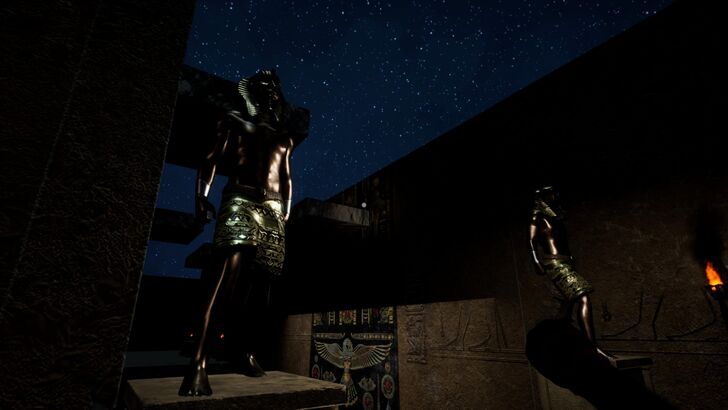
The Third’s story is relatively, but undoubtedly, the best part of the game. While generic, the story still works to justify the setting of an Ancient Egypt-inspired horror by giving the experience some much needed intrigue and mystery. It also contains a lot of lore and character tidbits that could potentially be interesting if fleshed out properly in a sequel, such as Damian’s hinted survivor’s guilt with the situation. As a formalist recreation of pharaonic horror, The Third successfully recreates the tropes of the genre while failing to expand upon them further.
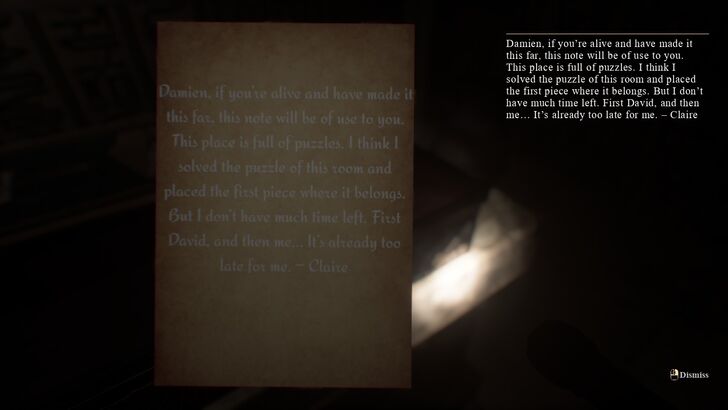
From the get-go, though, it’s not the strongest start to the episodic horror game narrative that it wants to be. The Third’s story and lore is told primarily through dense, text-based information dumps found throughout the game. This is a double-edged sword, as, on the one hand, these are the only compelling rewards players receive from diligently exploring the different rooms. On the other hand, they’re still few and far between, and the density of the text made things very hard to unpack.
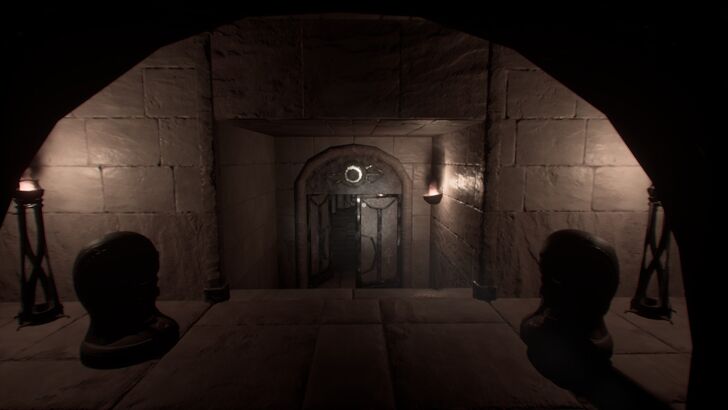
Thankfully, there are few well executed attempts at environmental storytelling at the tail end of the game, but I find them emblematic of a greater issue. The Third could benefit greatly from using its occasional, but excellent environmental storytelling style a lot more consistently throughout the game.
The last few minutes, in particular, are fantastically subtle and remain the most memorable and impressive part of the experience. There’s a lot of ludonarrative throughlines and moments in that last 5-10 minutes that genuinely surprised me and gave me a lot to think about, and it left me wishing the entire game was this engaging.
The ending stretch of the game has the player encounter the source of the recurring monster they’ve been seeing throughout the game and, as it disappears from view, you’re left believing that you’ve actually escaped the pyramid. This is a rug-pull moment, though, as your actual fate is left unclear and all you get as an explanation is a Steam achievement that states that you’ve “crossed over.”
While this is already an intriguing twist and a cool ludonarrative moment that forces you to rethink about the events of the entire game, the fact that it's told mostly through the shifting, surreal environment makes it even better. It’s a fantastic bit of storytelling that greatly elevates an already interesting twist and I wish it could've been implemented more evenly throughout the game.
Frustratingly Cryptic but Simple Puzzles
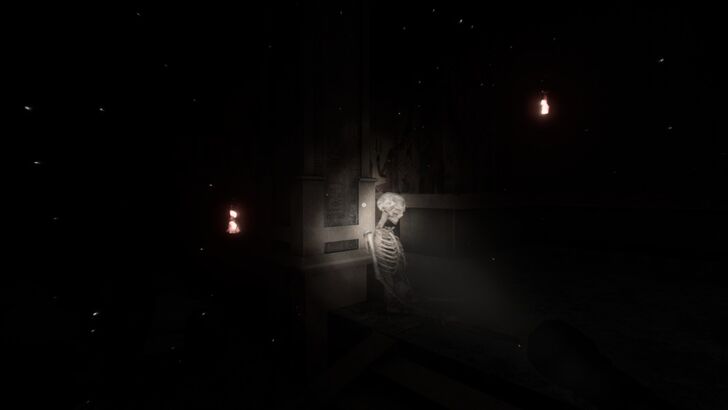
Core to The Third’s gameplay are its puzzles, which definitely feel the most like an artifact out of everything in the game. The Third’s puzzles and general gameplay loop remind me of old school horror games, where puzzles are cryptic and absolutely don’t hold your hand. I respect that The Third acknowledges the player’s intelligence and wants them to think outside the box, especially in a gaming landscape full of unsubtle, non-diegetic markers that point players towards progression. Unfortunately, the puzzles themselves aren’t particularly complex or rewarding.
Puzzles in The Third mainly consist of having to look for a button or artifact that unlocks the next room, or having to find a way to escape a room while a monster is trying to chase you. This makes up the bulk of puzzles in the game, and true to its lack of variety the solutions are all surprisingly simple and linear for a game that tries its hardest to obscure them from you.
The most challenging part of puzzle solving is braving through the game’s cluttered environments and monotonous atmosphere just to find the one, indistinct artifact you need out of the thousands in the room. It feels less like investigating an ancient tomb and more like trying to find a small trinket in a hoarder’s living room, and with the game’s withering tension and lack of meaningful rewards or consequences, puzzle-solving becomes incredibly tedious.
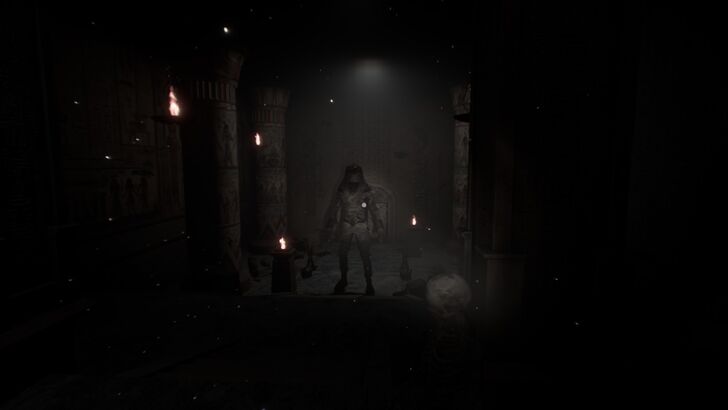
Puzzle-solving in The Third is, frankly, inconsequential and uninteresting since the game neither rewards or punishes players for engaging with its systems. All that really happens if you fail in The Third is that you’re either stuck in that specific room, or you’re killed offscreen and have to reload your save file.
Successful puzzle completion nets players access to the next room and the next similar puzzle, while limited exploration nets crucial lore and story moments that are few and far between. The Third could have expanded upon this gameplay loop by giving these otherwise cryptic puzzles any interesting, challenging, or rewarding factors to them; as it stands, though, they’re incredibly barebones and rob the game of any tension or urgency.
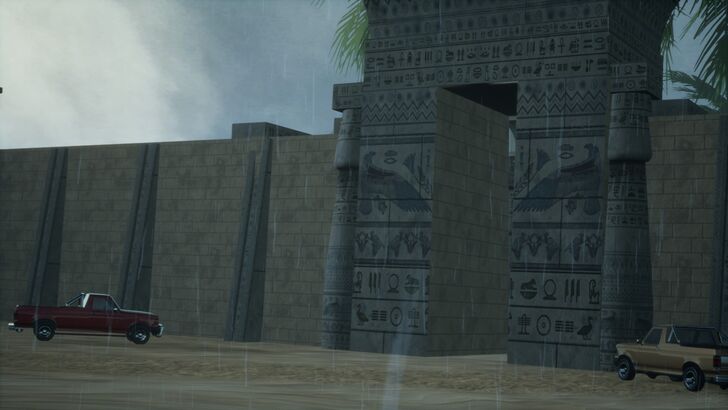
Pharaonic horror works, at least in my opinion, because the closed, claustrophobic space of a pyramid yields very real, gruesome consequences for the explorer and the world around them. The mystery of the pyramids, these towering and garish structures built before modern civilization, elicits such a fascination among the West’s horror auteurs because they symbolize a relationship with death and danger beyond our understanding.
Narrow, confined pyramid corridors with inescapable monsters, ancient curses, and lethal traps are a classic formula for tension and fear. The Third could’ve drawn from this incredibly long, rich history of horror to create a sense of tension that players could directly interact with, a pyramid that punishes reckless explorers and rewards sharp thinkers; unfortunately, none of that is present here.
Linearity and A Literal Lack of Vision
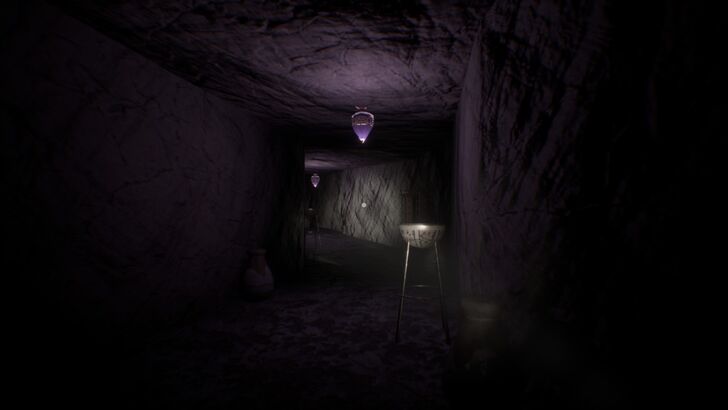
Something The Third does fail at, though, is its overall aesthetic vision. The game tries really hard, perhaps a little too hard, to convey the atmosphere of a haunted, abandoned pyramid. While it initially succeeds, its monotony turns the overall experience grating and nauseating thanks to a lack of distinct, memorable setpieces and an already boring gameplay loop that requires you to investigate these poorly rendered environments a little too closely.
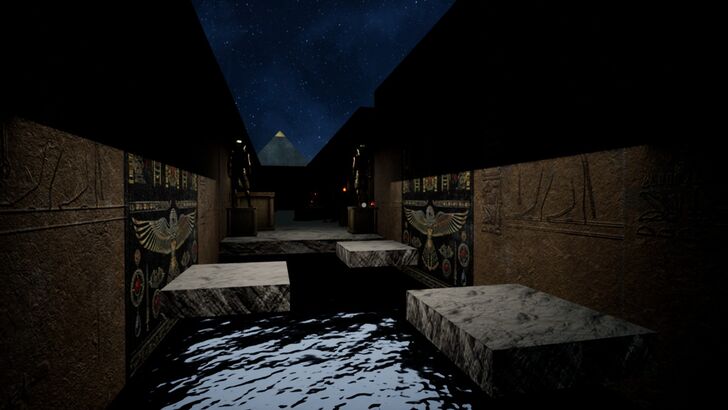
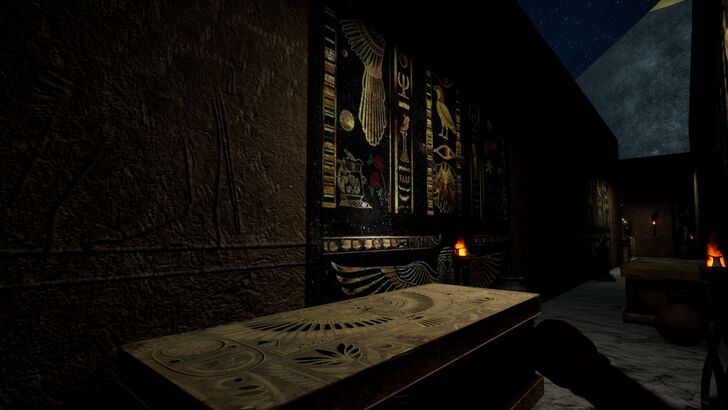
True to the rest of the game being exactly as advertised, The Third does recreate the tight, claustrophobic, and linear corridors of the real-life Pyramids well enough. The game is, characteristically, very dark and dimly lit, with a poorly rendered flashlight and maybe the occasional torch, lamp, or starry sky being your only way to check the room for clues. To its credit, the outside of the pyramid does look decent and memorable enough. The clue-checking and general interactivity, though, is what turns the game’s aesthetics from bland to downright
disorienting.
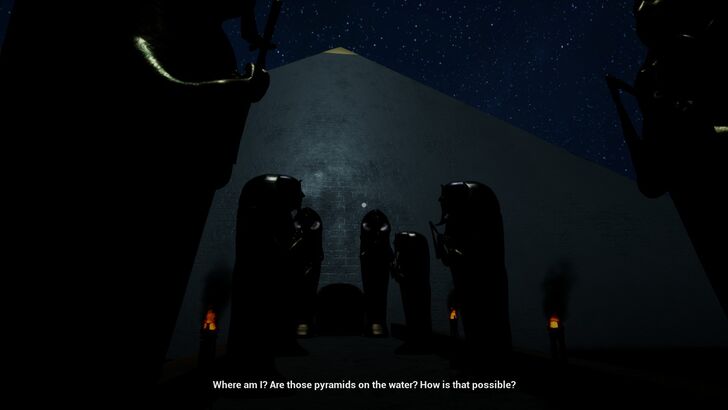
Fun fact: the pyramids, especially the ones that have been long documented and explored over centuries, have had their contents mostly looted and ransacked with a few notable exceptions. It makes it all the more confusing, then, given The Third’s consistently purist approach to Egyptian aesthetics, that the central pyramid is so cluttered with indistinct artifacts and tombs. This would be fine if these artifacts indicated anything interesting about The Third’s take on Egyptian aesthetics, or even if they were interactive in any way. They don’t, as the visual clutter of these areas not only obstruct clear progression points but actively make the game more tedious to experience.
The game doesn’t tell you what you’re able to interact with apart from a tiny crosshair that barely changes shape when you hover over something. For rooms filled with nondescript items that all look the same, this makes puzzle solving more monotonous than it needs to be. Being this scrupulous with environments and items that aren’t particularly interesting is frustrating, and its even worse when the game is lit the way it is. It’s neither fun nor engaging, and the dark lighting alongside the awful audio makes it feel like entering a sensory deprivation chamber.
Not Even Ancient Curses Sound This Awful
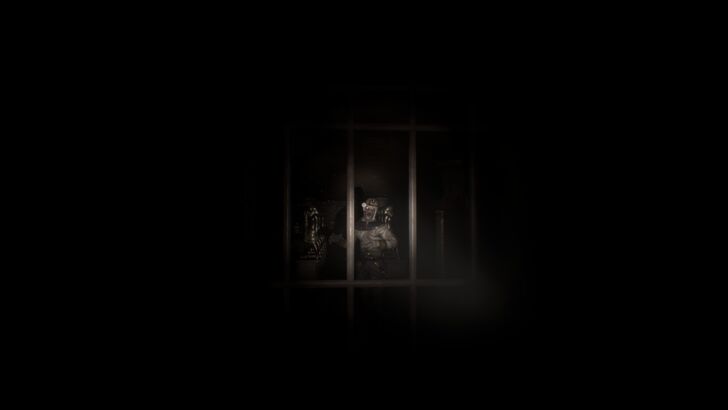
The Third’s sound design is, in the simplest terms, horrendous. Apart from the repeated footstep sounds and the many jumpscares, the game has exactly one sound: a recreation of a spacious chamber that attempts to make it sound like you’re inside a hollow, long forgotten corridor. It is, however, so loud and harsh on the ears that the ambient noise becomes this cacophonous, high frequency whirr. The sound sits in this purgatory between TV static on a blown out speaker and what you’d get if you flailed your arms on a theremin that's plugged into a cheap distortion pedal.
There isn’t any variety to the sound design either, as footsteps blend into the background and jumpscare screams and thuds are usually gone in a flash. Even when mummies and skeletons are around, they lack the visceral sound design that usually defines the horror of being chased by monsters. All there really is to accentuate The Third’s claustrophobic horror is that one sound, and in its droning monotony it never fades into the background. It gets so harsh and grating, in fact, that I was forced to take my headphones off and nurse a migraine in the middle of playing.
I listen to a lot of harsh, abrasive styles of music in my own time, and it’s not an aesthetic that’s immediately offensive to my senses. The fact that the sound design is reminiscent of this style at all though is such a massive misstep. The sound design betrays the game’s atmosphere and aesthetics altogether, making the entire experience a chore to go through. It ruins the immersion completely and sounds less like you’re trapped in an empty pyramid and more like you’re right next to a massive jet turbine.
What’s worse is that this clearly wasn’t the intention, as I can tell what they’re trying to do. They were clearly trying to make the sound reminiscent of empty, spooky caverns, but they’re done so poorly and lazily that I genuinely believe the game would be better off completely silent. Thankfully, the game does have an in-game volume slider, which helped me get through the rest of the experience migraine-free. The fact that my biggest praise for the sound design is that you can turn it off should speak volumes about how bad it is.
A Short, Mildly Scary Horror Experience
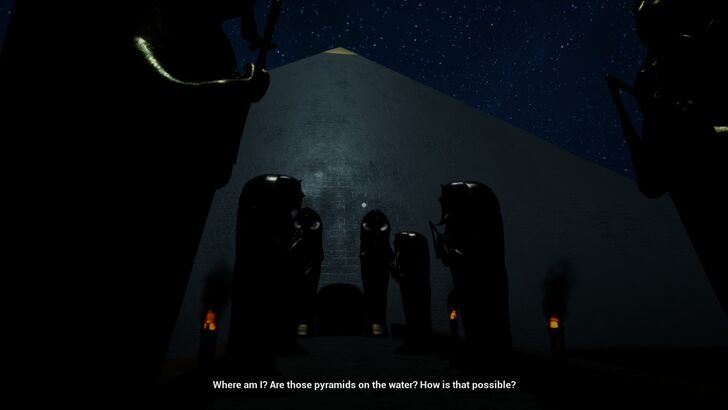
The horror of The Third is, unfortunately, brought down by an atmosphere that fails to remain engaging amidst the bland and trivial gameplay. It’s a shame, as confined, claustrophobic pyramid corridors are usually an easy way to elicit screams and moments of fear from players,
but the game’s weak atmosphere is coupled with monsters and enemies that aren’t particularly intimidating or even unique.
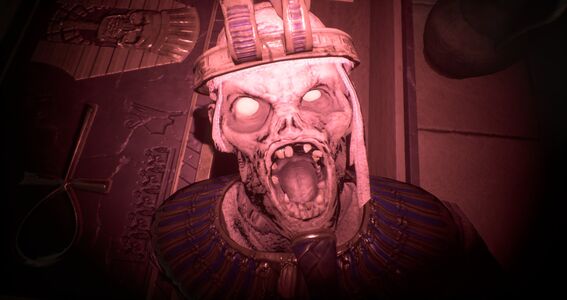
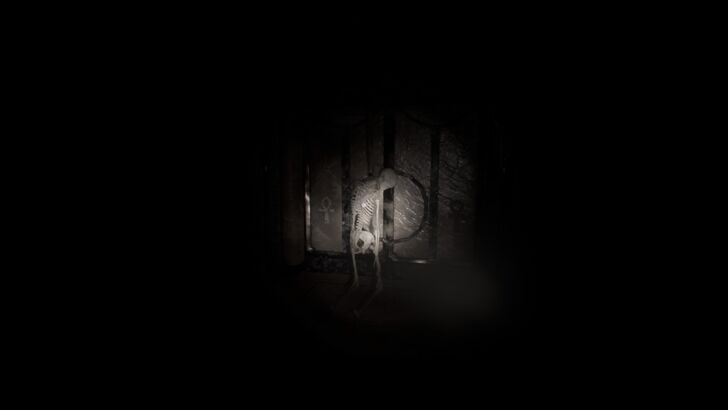
The Third has players being chased by standard Egyptian cursed creatures, such as skeletons and mummies. There are some jumpscares, but the lack of earned tension in the game makes them function more as startling diversions to laugh about a minute later than an active threat to fear. The Third’s jumpscares are yet another inconsequential part of the experience, adding nothing of value to either the narrative or the gameplay since the game implements them in the most predictable way. Yes, of course opening the glowing red box would have a ghoul jump at me, who could’ve guessed?
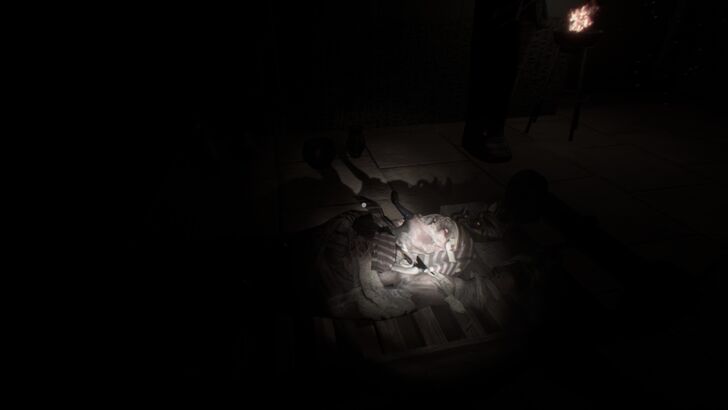
This isn’t helped by the way these monsters are designed and animated, or rather, the lack of animation at all. The monsters look very generic, and their animations are so janky and unpolished through jittery movement, inconsistent movement speeds, and this weird shaking when idle that they’re unintentionally hilarious.
They’ve become my personal highlight throughout the experience, and I eagerly awaited when I’d see that funny skeleton run across my screen every single time. I shouldn’t have to point out how much making your horror monsters funny adds to killing the game’s overall tension, but it really does.
I sound like a broken record at this point, but The Third could have done much more to maintain its horror atmosphere and style. With The Third’s relatively low commitment to the historical accuracy of Egyptian mythology, there’s actually a wonderful opportunity here to subvert the established designs of Egypt’s many gods and monsters.
At the very least, making the scary parts an actual point of lasting fear and tension or a punishment for failing gameplay objectives would’ve gone a long way. As it stands, though, the game’s monsters remain as generic and unmemorable as everything else, except for how the Pharaoh does that little dance when he forgets to chase you.
Is The Third Worth It?
No Gold or Treasure in This Sarcophagus
Playing The Third is much like trying to loot a pyramid in modern times. Yes, it’s exactly what it looks like on the surface, but you’re bound to be disappointed, if not outright harmed by the experience. The Third fails to weave a significant place for itself in the long, colorful papyrus tapestry of Egyptomania horror, especially one that promises a new take on the long-established Egyptian pantheon.
It's an unpolished, derivative, and bland mess, and not even a halfway decent story can make up for what it does poorly. It does deliver the bare minimum of being a walking-simulator horror game in a pyramid, but it's not a fulfilling, engaging, or even fun one. At its worst, it's a nauseating, mind-numbing experience that forgets that recreating the claustrophobia of the pyramids doesn’t make something inherently scary or thrilling. No amount of potential can erase the fact that this game is simply a frustrating, unengaging mess.
FAQ
What is The Third?
The Third is an indie horror game made by Manas Games. The objective of the game is to escape the pyramid while avoiding the monsters inside, solving puzzles, and preventing The Third from reawakening
How long does it take to beat The Third?
The Third is under an hour long in length, clocking in at around 50 minutes, but puzzle solving and thorough exploration will have the game run for over an hour.
Are there any common triggers in The Third, such as gore and blood?
The Third does not contain any gore or blood, but the game does contain jumpscares and the occasional skeleton and mummified figure.
Game8 Reviews