



| The Mound: Omen of Cthulhu | |||
|---|---|---|---|
| Release Date | Gameplay & Story | Pre-Order & DLC | Review |
The Mound: Omen of Cthulhu is a Lovecraft-inspired multiplayer, co-op survival horror title where players explore South American islands in search of The Mound. Read our review to see what it does right, what it doesn't, and our first impressions on the game.
Overview
What is The Mound: Omen of Cthulhu?
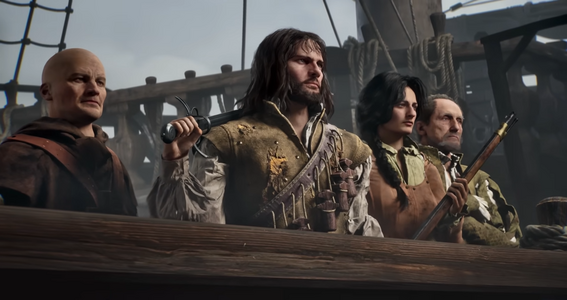
The Mound: Omen of Cthulhu is a survival horror co-op game developed by ACE Team and published by Nacon. The game is an extraction shooter based on an H.P. Lovecraft novella where up to four players explore the South American jungles to find "The Mound," an entrance to the hidden underground city of Tsath. Along the way, players will fight off monsters and hallucinations while collecting forbidden artifacts and logbooks that reveal more about the location of the hidden city.
The Mound: Omen of Cthulhu features:
⚫︎ A reimagining of an obscure H.P. Lovecraft story
⚫︎ Co-op horror gameplay for up to 4 players
⚫︎ Multiple levels across the South American jungles
⚫︎ First-person extraction shooter gameplay
⚫︎ Vast level design with a lot to discover
For more gameplay details, read everything we know about The Mound: Omen of Cthulhu’s gameplay and story.
| Digital Storefronts | ||
|---|---|---|
 Steam Steam |
 Playstation Playstation |
 Xbox Xbox |
| $29.99 | ||
The Mound: Omen of Cthulhu Review | Uniquely Mixed Bag of Cosmic Proportions
The Call of Survival Horror Co-Op
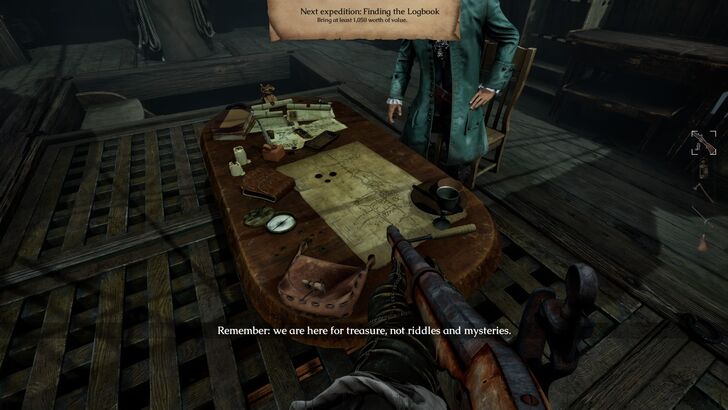
As a strange subversion of the horror genre’s usual focus on isolation and liminality, gaming’s more recent takes on the macabre has leaned more towards multiplayer, co-op experiences that trade in the seclusion for braving the horrors with your friends. The Mound: Omen of Cthulhu injects a direct line between the past and the present by using Lovecraftian horror as a basis for tense survival co-op, and the result is a game that adheres to its ambitions more than it needs to. Lovecraft’s signature horror style is present and accounted for in Omen of Cthulhu, but the resulting compromises make the experience inconsistent and uneven.
The Mound: Omen of Cthulhu’s cosmic horror take on the "survival horror co-op" genre remains highly distinct thanks to its unique premise and how that permeates into everything from the moment-to-moment gameplay to the story. A reimagining of H.P. Lovecraft’s 1940 novella "The Mound," Omen of Cthulhu instead places players in the colonial crux of that story, the Spanish conquests of the 1600s, and that historical conceit makes all the difference.
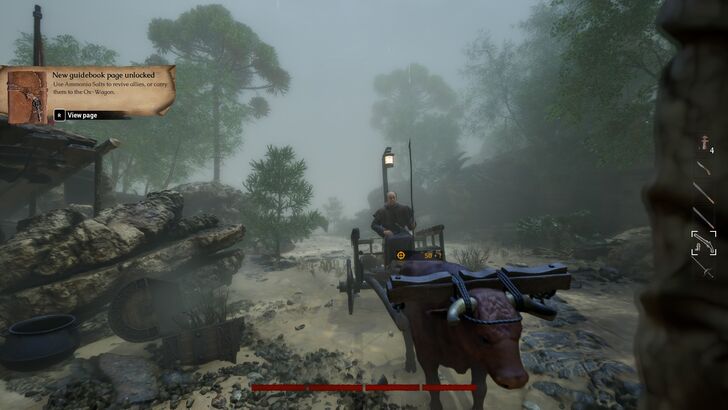
The game’s direct ties to Lovecraft and a specific historical moment ground its gameplay and narrative in a fascinating way, with its restrictions to both feeling deliberate when put in context. Your movement and combat as an explorer are fairly limited, while the story itself never reveals more than what you figure out from the end of fighting through another expedition. It can be quite frustrating, though, as the limited combat and movement makes exploration feel tedious and unforgiving for long periods of time. While the tension never lets up thanks to the unpredictable and unsettling horrors along your journey, the mechanical limitations are just as enduring.
It's a tense, viscerally uncomfortable experience no matter how many people you have on your squad, and for Lovecraftian horror that feels appropriate. In fighting for your grip on reality, especially as the jungle continues to wring your sanity dry, holding on to your friends and teammates for dear life is your ultimate last line of defense. It’ll take more than this, though, to fully escape from the primordial horrors of the world, and it is only in that push-and-pull between exploration, team synergy, and strategy that The Mound: Omen of Cthulhu excels. Elsewhere, it’s a horrifically mixed bag that can truly test your patience and sanity.
Guns, Glory, Gold, and Gore in the Valdivian Jungles
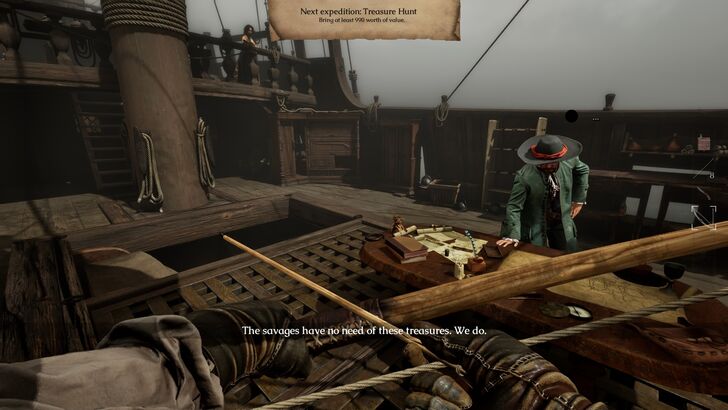
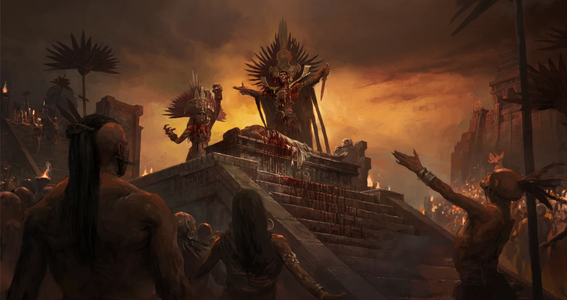
The Mound: Omen of Cthulhu pulls no punches when it comes to integrating its historical setting into the gameplay and the narrative. Taking place in 1650, the game sees players taking control of explorers under the Spanish Royal Fleet to pillage the Valdivian jungles of Chile and Argentina while looking for clues to the location of "The Mound." Much like in the Lovecraft novella, The Mound is a gateway into the underground realm of K'n-yan and the hidden city of Tsath.
Omen of Cthulhu’s narrative is heavily indebted not just to its reinterpretation of the titular novella but Lovecraft’s entire fascination with the European colonial histories of centuries past. It accurately recreates Lovecraft’s portrayal of the peripheries of the world, but subverts this to explore how colonial violence was both punished by, and indicative of, a primordial evil and chaos.
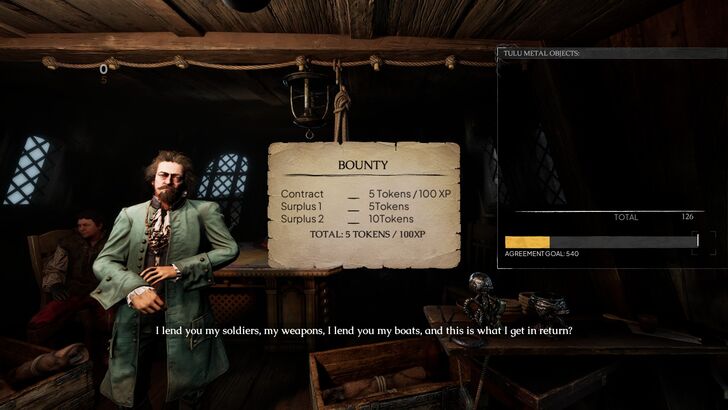
The Mound sees your player characters be commanded by Royal Fleet leaders who refer to the inhabitants of the jungles as "savages" and prides themselves in plundering their populations of their forbidden artifacts and treasures. The playable characters are no better, driven by varying levels of morally compromised motivations like atoning for past sins or simply wanting to earn wealth. Towards the end, when players fight through gritted teeth, broken weapons, and sanities barely held together to reach the city of Tsath and become ever closer to the presence of the primordial god Tulu, the journey somehow feels both exhaustive and yet as tense as ever.
It’s brilliant, then, that these motivations are ultimately inconsequential to your inevitable vulnerability to the harrowing cosmic forces of the universe. Playing as a specific character doesn’t change how you approach the islands, and regardless of the mission it feels like the world itself is fighting against your progress. It both makes every "victory" and piece of information feel earned, while also enforcing the dread that all are equally cursed under the weight of the universe’s cruel entropy.
By the end, though, it does feel a bit mismatched that the fleet does find the answers they’re looking for. If played correctly, the Galleon escapes from the city of Tsath relatively unscathed and decides that neither the Church nor the Crown decides their fate, leaving Tsath and the K’n-yans serving as beacons of hope for the crew.
On one hand, this is a moment of tonal whiplash that’s both jarring and a tad unearned given the oppressive atmosphere of the game and everything that’s been established about these characters. On the other hand, this more hopeful turn is certainly an interesting and optimistic subversion of Lovecraft’s obsession with chaos and entropy, while also taking away from the potency of his prejudices. It feels appropriate for a game where the entire point is braving the horrors with people you trust, and on that end the story works as a reinterpretation of the original novella.
Expeditioners and Conquistadors Can’t Jump
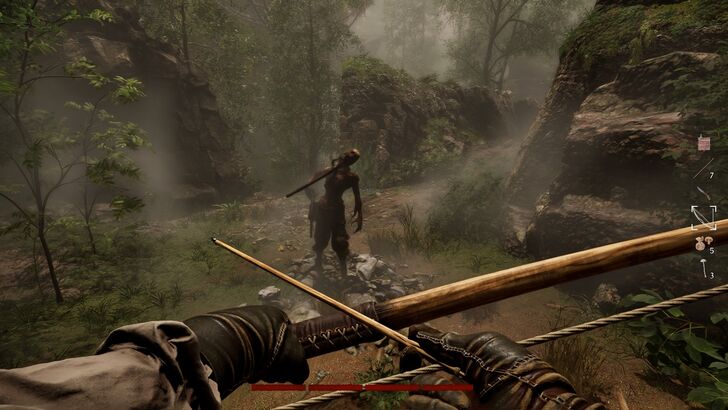
While expected, given its historical setting, The Mound: Omen of Cthulhu is strangely restrictive with how you’re allowed to navigate the islands. Players are limited to an austere inventory during expeditions, which includes treasures and artifacts collected, while even basic movement options like jumping are non-existent. Attacking, specifically shooting, is also restricted to specific ranges and weather conditions.
On one hand, this makes sense given the setting and theme of the game. You’re not fighting as agile, veteran warriors, you’re assuming the role of desperate, untrained priests and mercenaries facing off against forces completely unknown and incomprehensible. With that in mind, some of the restrictions even come off as charming. In particular, not being able to shoot your rifle while it's raining is a nice historical and scientific touch, and a microcosm of the game’s thesis of everything being under the control of uncontrollable forces.
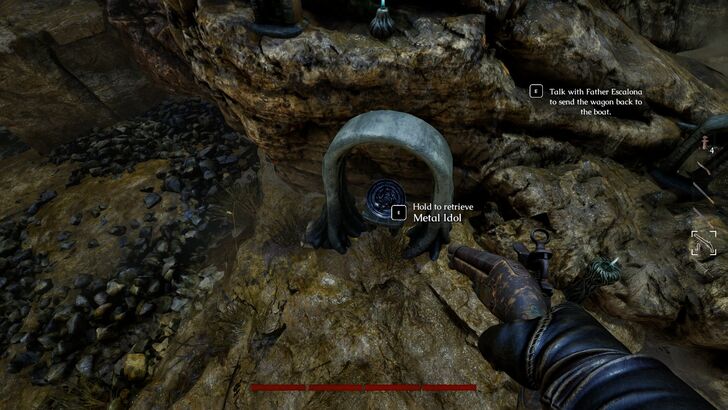
On the other hand, this doesn’t excuse how frustrating the game can feel to play mechanically. The context doesn’t erase how the restrictiveness hinders exploration and survivability, especially as level design remains sprawling with endless twists, turns, and dead ends throughout the way. It’s quite easy to get lost, be attacked by a sudden enemy or hallucination, and lose all your progress. Combat and meta progression especially takes a crucial hit in this regard, as it never quite feels like players are able to interact with enemies or progress through the campaign in a meaningful way.
Melee weapons feel ineffective against the Y’m-bhi and the other horrific entities across maps, with their frail durability, pitiful range, and low damage output, while guns are more effective as "delete buttons" for enemies once or twice per run given their low ammo counts. As an extraction shooter, the game doesn’t really give players much of a way to continuously upgrade their loadouts and kits in a substantial way, with upgrades being pitifully sparse regardless of how successful a run is.
Yes, The Mound is supposed to be hard, not just as a co-op experience but as an accurate reflection of the historical period that Lovecraft’s work was enamored with. It, ultimately, makes it all the more frustrating that braving all of these horrific experiences rarely ever feels rewarding or engaging outside of the core multiplayer loop.
A Horror Best Shared With Friends
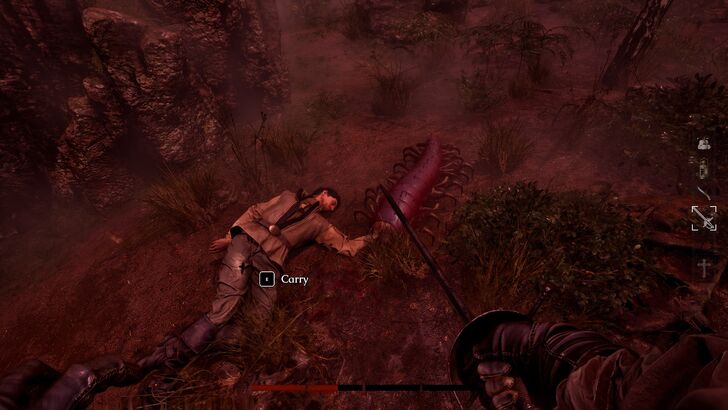
With the gameplay faults in mind, The Mound’s deliberate design as a multiplayer experience does work significantly to alleviate these frustrations. Working with teammates to plan out loadouts and routes, signal valuable treasure and upgrades, and, most importantly, manage the Sanity meter and prevent each other from being consumed by the jungle, is nothing short of captivating. The setting is fantastic in making solo expeditions feel harrowing in its isolation, while it becomes tantalizingly strategic and riveting as you play with other people.
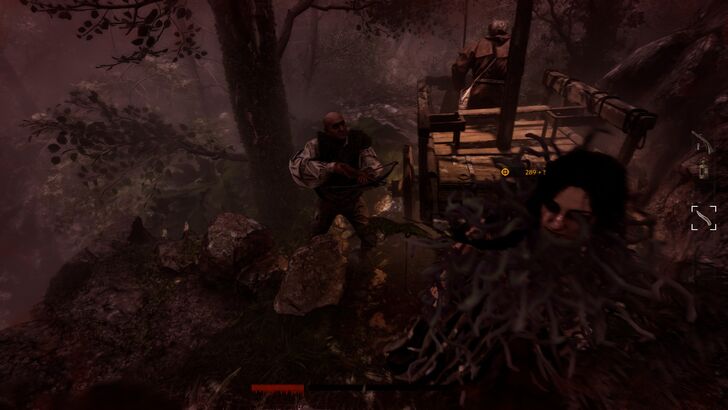
This is where some of the stronger aspects of the gameplay experience come into play, such as the Sanity meter. The crown jewel of The Mound and the thing that makes the game feel unique, the Sanity meter dictates that players must stick together throughout the expedition lest they succumb to reality-altering hallucinations. Player sanity isn’t actually something gauged on the screen, but rather something learned by players as they react to the mirages they spot throughout the journey.
This makes player engagement all the more crucial in surviving the Valdivian jungles. In my runs, I’ve had many moments where I’d start shooting at what I thought was a massive centipede creature, only to have killed my teammate by complete accident. There have also been moments where my teammates see rations and weapons, only for me to warn them that it's actually a massive poisonous pit that they’ve been running towards.
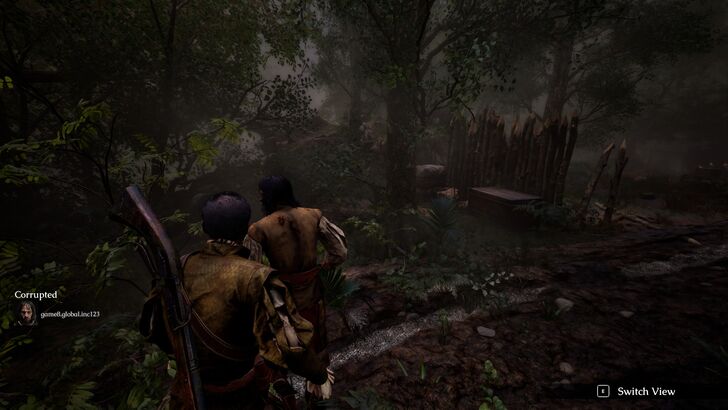
The sanity meter makes communication between players crucial, even more than inventory management or even combat does, since it forces players to confer upon each other what’s actually real. In line with the themes of the game, it incentivizes players to work together and rely on each other as the last line of defense against the primordial, cosmic chaos and horror of the universe, and it functions quite well.
This does, unfortunately, make solo runs in The Mound quite aggravating. If you opt to go through the jungles alone, you’ll be paired with an AI companion that rarely seems helpful, and the oppressive, reality-bending nature of the world comes in at full force. You’ll inevitably be lost and either succumb to a hallucination or be killed by a monster without thinking, and the game’s flaws become undeniable. Solo runs in The Mound are so uniquely frustrating that I preferred replaying through missions with others, no matter how hard they were, than progressing on my own.
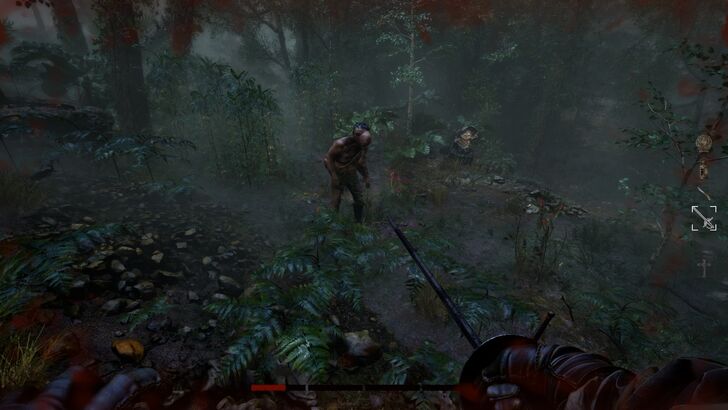
As a stark contrast, multiplayer still remains the highlight of the experience. In one of my prior runs, I played with a couple of people I didn’t really expect to run into. There was a language barrier between us, made worse by his crackly microphone and the effects of proximity chat. Despite this we banded together and tried to communicate and work together to the best of our abilities to clear each level, tried not to kill each other when we appeared as zombies, and gathered all the loot we could find.
It made exploration a blast, not only because we built a persevering connection but also because the setting itself was an incentive for us to stick together. It only made it more horrific and tragic, then, that I witnessed him die to a massive centipede that transformed his corpse into a writhing worm-infested, eldritch abomination.
Obviously, playing a game designed with multiplayer in mind will yield the best results when played as intended. This, unfortunately, doesn’t excuse the fact that playing the game solo is still an option, it’s just undoubtedly the worst one. It's a disparity so large that one would have to wonder what the point of playing Omen of Cthulhu by yourself would be in the first place.
Slithering Wildly As They Slip Away
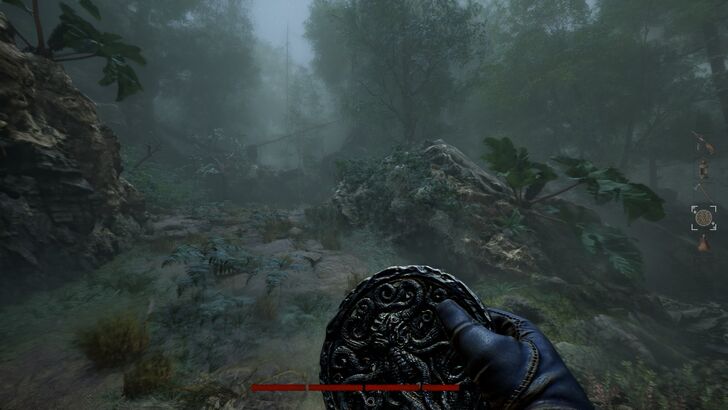
The world of Omen of Cthulhu is grotesque, visceral, but also somehow entirely phantasmagoric at the same time. Islands in the Valdivian jungles, dense and lush as they are, never quite feel real, with long and winding roads leading into incomprehensible traps and moss-covered dead ends. The visceral reality kicks in again once a monster starts to chase after you, but after enough hallucinations you’ll wonder if it was even there or if you wasted your gunpowder on nothing.
Omen of Cthulhu mediates this balance to great effect with its audio design, which remains tense and startling throughout the experience. The silence of the jungle is deafening, cut only by fast approaching monsters and hallucinations. Sometimes, you’ll hear screaming in the distance, and you won’t know if it’s a monster or a teammate until you look behind you. By that point, it might already be too late. It may not leave much of an impression after the fact, but it works well enough to convey the horrors being experienced with every expedition.
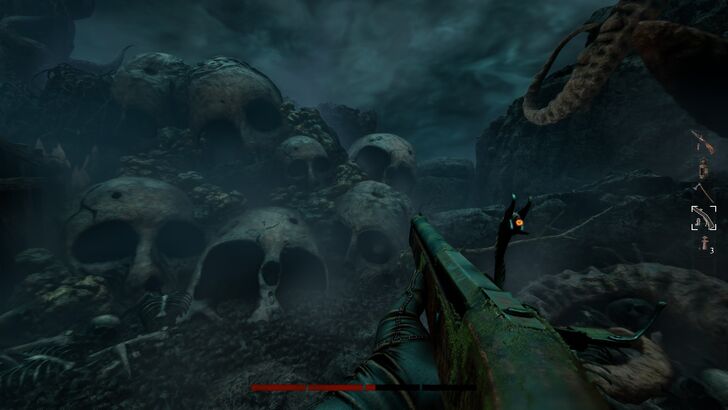
Both of the game’s aesthetic sides meld together beautifully into the hallucination portions, a consistently cacophonous experience that shocks and loosens your grip on reality quite effectively. When the game suddenly ripped me and my teammates away from each other in the humid jungles to a stark, distressingly dark forest with imposing, towering skulls, we were all left freaking out and terrified about what’s happening next.
That’s not to say that returning to reality is any better. The Mound’s monster designs are appropriately hideous and unsettling, maintaining Lovecraft’s fascination with unconventional anatomy and mutated bodies. While the Y’m-bhi, reanimated corpses that roam the islands, are scary enough on their own, some of the most terrifying creatures in the game consist of multiple limbs and appendages writhing almost independently of each other. This includes my teammate’s reanimated corpse from earlier, whose malformed body was just downright nauseating to look at.
Is The Mound: Omen of Cthulhu Worth It?
Yes, But Only for Dedicated Expeditioners
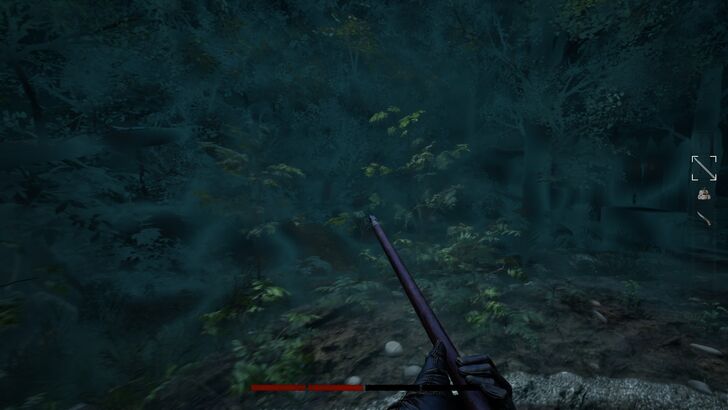
The Mound: Omen of Cthulhu mostly succeeds as a co-op horror experience by leaning into the cosmic dread of Lovecraft’s work, but it does this a little too much to be consistently compelling. It conveys a deeply unsettling and tantalizing atmosphere with its striking aesthetic direction, while its narrative shines as a fun, strangely hopeful reinterpretation of a famously nihilistic and disorderly novella. The game itself is quite harrowing in its difficulty and mechanical limitations, and even with its interesting ideas their execution is deeply inconsistent. It’s a good time for players wanting a unique take on the co-op horror genre, but it takes quite a bit of dedication and patience to get through its most towering hurdles.
FAQ
Does The Mound: Omen of Cthulhu Support Multiple Languages?
Yes, but it only does so for subtitles. The game audio and voice acting are in full English, while there are options for English, French, Italian, German, Spanish, Japanese, Polish, Brazilian Portuguese, Russian, Simplified Chinese, and Korean subtitles.
Do I Need to Read the Original H.P. Lovecraft Novella to Understand The Mound: Omen of Cthulhu?
No, you don’t need to read the original Lovecraft novella, though doing so would serve as further context for the game. Omen of Cthulhu is a reimagining of the original story that utilizes elements such as characters and settings, and while reading the novella would help you understand the game further everything is explained through text logs and lore books.
Game8 Reviews

You may also like...
 |
R.E.P.O Review [Early Access] | This Company's No Less Lethal |
 |
Silent Hill f Review | Horror in Full Bloom |
 |
REVEIL Review | Cirque Du So-Freaked Me Out |
 |
MOUTHWASHING Review | Disturbingly Good |