



| Directive 8020 | |||
|---|---|---|---|
| Release Date | Gameplay & Story | Preorder & DLC | Review |
Overview
What is Directive 8020?
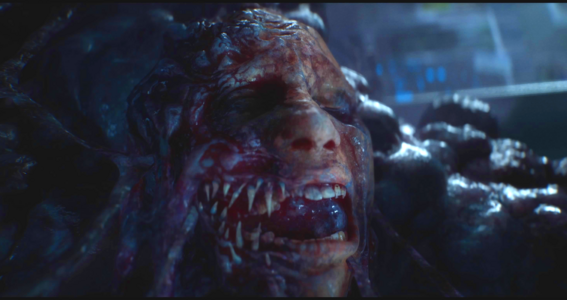
Directive 8020 is a third-person horror narrative game where the player is taken through the branching story path of the fate that has befallen the crew of the Cassiopeia. Set in orbit and on the surface of the exoplanet Tau Ceti f, Directive 8020 serves as the latest title in the famed Dark Pictures Anthology Series by Supermassive Games.
Promising mystery, horror, and extraterrestrial exploits featuring a body-changing alien, Directive 8020 carries the torch of Suppermassive’s butterfly-effect system, with multiple endings, many death scenes, and danger at every turn of the page.
Directive 8020 features:
⚫︎ Multiple endings with branching narrative paths
⚫︎ 44 possible death scenes
⚫︎ 5 playable characters
⚫︎ Collectible figurines, videos, images, and lore points
⚫︎ Full voice-acting with animated cutscenes
| Digital Storefronts | ||||||||
|---|---|---|---|---|---|---|---|---|
 Steam Steam |
 PS PS |
 Xbox Xbox |
||||||
| $49.99 | ||||||||
Directive 8020 Review: 80% Watching People Die, 20% Game
The Tragedy of the Cassiopeia
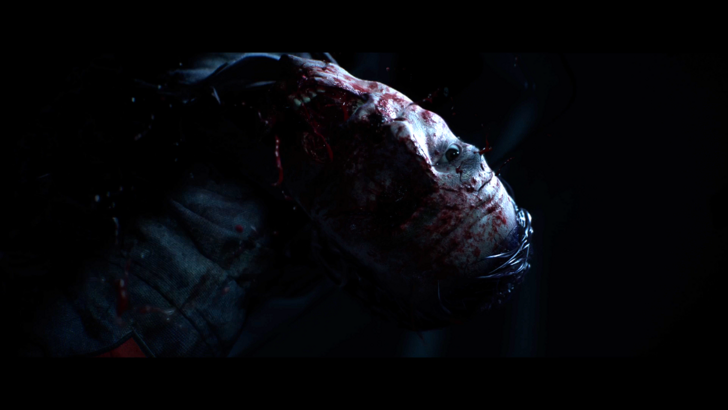
Death in deep space is pretty much guaranteed. No matter how far humanity has come from banging rocks together, we’re all one busted airlock, or in the Cassiopeia crew’s case, one hull breach, away from certain doom. That dread seeps into every inch of these ships, and in Directive 8020, it adds heavily to the horror.
As a Dark Pictures title, story and atmosphere are meant to come first, and to the game’s credit, they do. That also means gameplay takes a back seat, though even by this series’ standards, Directive 8020 feels lighter than its siblings in that regard while managing to outdo them in others.
Most of your time is spent sitting around, hearing stories, and watching people get torn apart aboard the crew’s tin can of a ship, the Cassiopeia. Unfortunately, sans the bit about getting torn apart, that includes you, too. Let’s jump right in.
Bringing Corinth’s Business Plans to Tau Ceti f
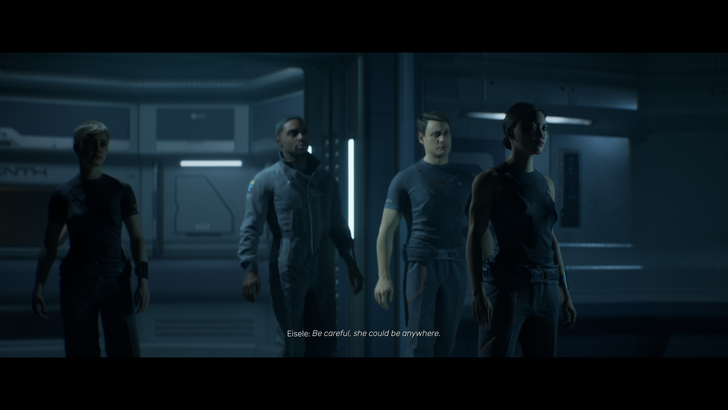
So what noble goal brings this intrepid crew to the far reaches of space and into orbit around Tau Ceti f? Money. Unoriginal, but understandable.
Backed by a corporation called Corinth, with its CEO aboard the ship as well, the Cassiopeia serves as the scouting vessel for Corinth’s colony ship, The Andromeda, which follows close behind. After four years in stasis, the crew wakes to find one technician dead, another missing, and an undeniable sense of dread hanging over the ship.
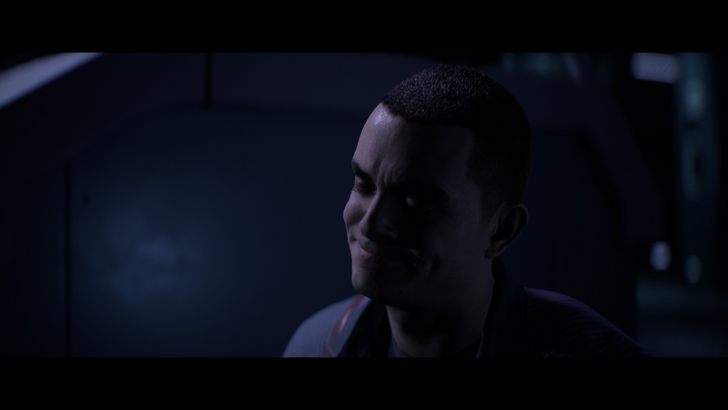
I won’t spoil more than that because most of the game’s value comes from its story, and even a full breakdown would only cover one of its many branching paths and endings. What I will say is that the setup is dark and creative, beginning with the hopeful idea of humanity expanding into the stars before utterly collapsing into chaos after a single hull breach.
It’s a space odyssey gone wrong in all the best ways, and no matter how things play out, someone’s going to die. On paper, that goes hard. In practice, it mostly does too, but a few things hold it back, and gameplay is one of them.
Choosing Your Own Adventure through Dark Pictures’ Staple Mechanic
This is a game. A Dark Pictures game, sure, but still a game, even if Directive 8020 barely feels like one at times. That much is already getting ahead of myself, though, so let’s start at the beginning.
Directive 8020’s main gameplay loop revolves around branching narrative paths and the choices tied to them. At key moments called “Turning Points,” players must make decisions, usually binary ones, to move the story forward through a primarily narrative experience.
Every choice carries some consequence, whether it’s a small shift in a character’s demeanor or a major decision with repercussions later on. It’s Supermassive’s familiar butterfly effect system, and it’s still one of the game’s strongest features here.
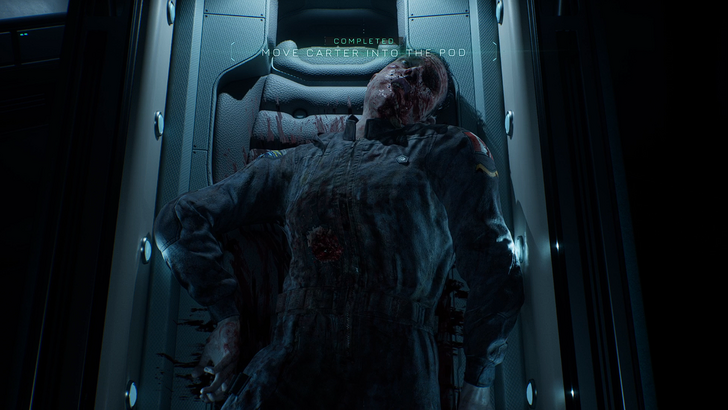
At first, many of the choices felt meaningless, which made for a weak first impression, but Directive 8020 simply takes its time with the payoff, and it handles that payoff well. I managed to kill multiple characters through what felt like completely sensible decisions, which is fitting for a story where death in deep space is practically guaranteed.
The game doesn’t punish you for being tactical or careful. Sometimes it’s only a question of what kills you or who dies first, but someone is dying no matter what. I appreciate that the story fully commits to being tragic and gruesome, with characters you actually grow attached to. Just be patient, because the consequences of your choices take time to surface, even if the payoff makes them worth it.
Player Input Matters Until it Doesn’t
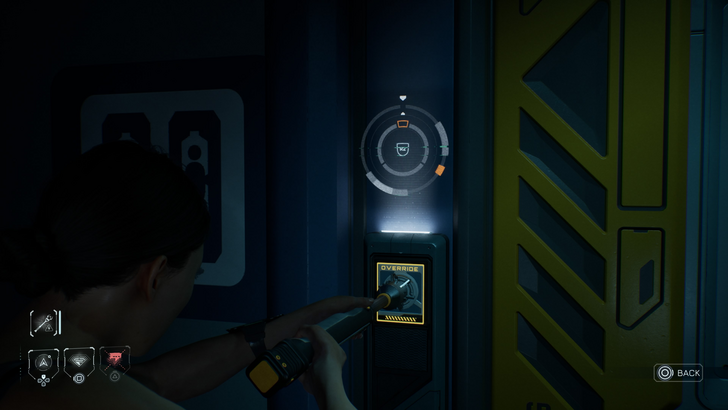
Now, that’s the player input that actually matters. What about everything else? I’m talking about the gameplay between major choices, the parts meant to give players something to do outside of binary decisions and cutscene QTEs. These include exploration, stealth sections, collectible hunting, and messaging the crew.
Most of these segments accomplish very little beyond moving you from one place to another and breaking up the endless cutscenes. If they’re supposed to act as palate cleansers between long story scenes and major decisions, they don’t really succeed at that either.
They rarely affect outcomes, they don’t engage the player in meaningful ways, and they mostly come off as tedious padding. Every Dark Pictures game does this to some extent, just with varying levels of success. In Directive 8020’s case, I would honestly rather just watch the story, make choices, and handle the QTEs.
Glitches Galore with Save Data Issues to Match
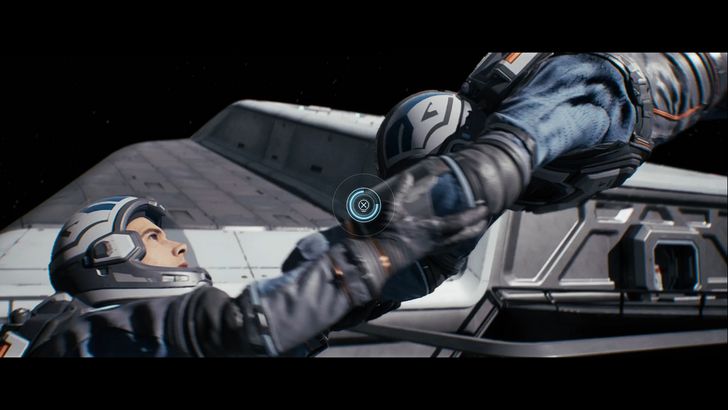
As if the pointless gameplay wasn’t enough, Directive 8020 is packed with glitches, both visual and systemic, to a degree that would make Bethesda blush. Within my first two episodes alone, I ran into legless characters, blocky hair textures, and the usual dithering issues. Since I played on PS5, I’m confident the console wasn’t the problem, which points directly at poor optimization.
Background effects sometimes phase in and out for no reason, and certain textures simply fail to load properly. None of it is game-breaking if you can ignore the hit to immersion, but the save file issues absolutely are.
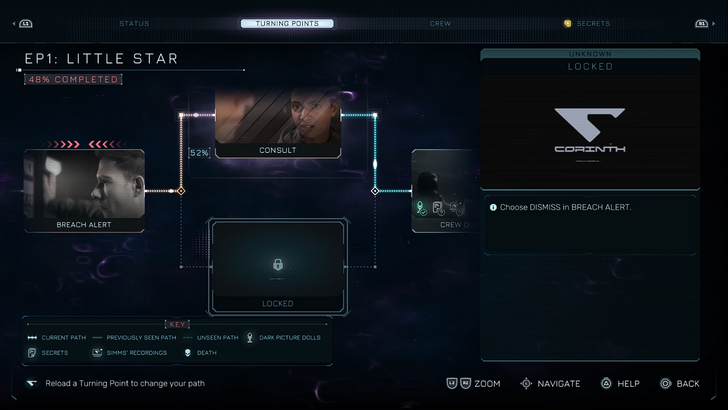
A few times, the autosave system simply stopped functioning out of nowhere. After troubleshooting to make sure the issue wasn’t on my end, the game still refused to save correctly and repeatedly threw up error screens instead.
This is easily the least optimized Dark Pictures title I’ve played, including entries from half a decade ago. It’s rough, and honestly, surprising that it made it through QA in this state. I had to reinstall the game twice just to troubleshoot the issue, which isn’t something I’d wish on my least favorite crewmate, even on the worst of days.
Weirdly Expositional Writing and Odd Line Deliveries
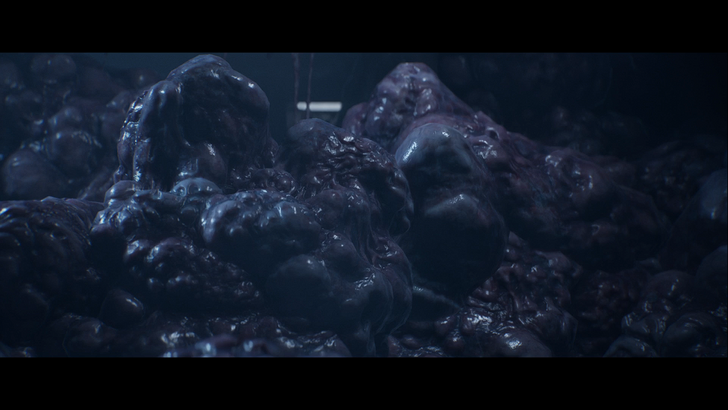
The problem train keeps rolling because now it’s time to talk about the writing. Overall, it’s decent. The branching paths never completely break logic, and the consequences of your choices usually avoid feeling too ridiculous. I liked how disabling the landing computer to jumpstart the engines caused someone to die early and completely shifted my route through the story. The alternative probably would have done something just as drastic.
The issue isn’t the continuity between the branching narratives. It’s the exposition needed to explain them. Exposition matters because it helps players understand the world, its history, and the relationships inside it. Good exposition can naturally deliver all of that without dragging the story down.
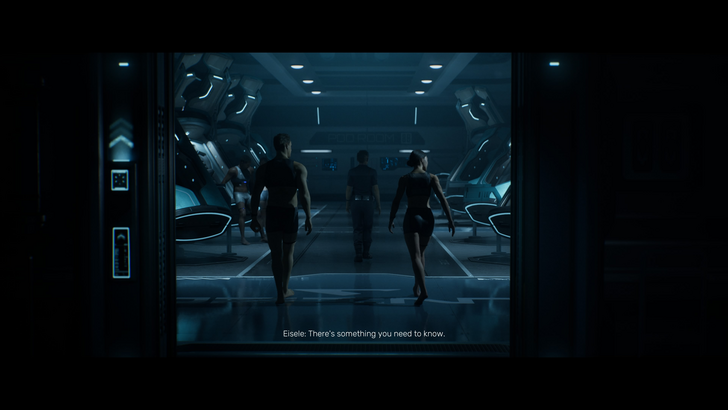
Directive 8020, unfortunately, leans far too hard on forced dialogue that spells everything out like the player is five years old. “Show, don’t tell” exists for a reason, but the game insists on doing both at the same time. The result is a story where too much is happening while too many characters explain it all out loud, creating something that honestly feels better suited to being read than played.
The line deliveries don’t help much either. The voice actors are talented and usually do a great job with the material, but all it takes is one awkward delivery to completely shatter immersion. Once it happened, it was impossible not to notice it every time that character spoke afterward.
Good Cast, Great Visuals, Amazing Horror
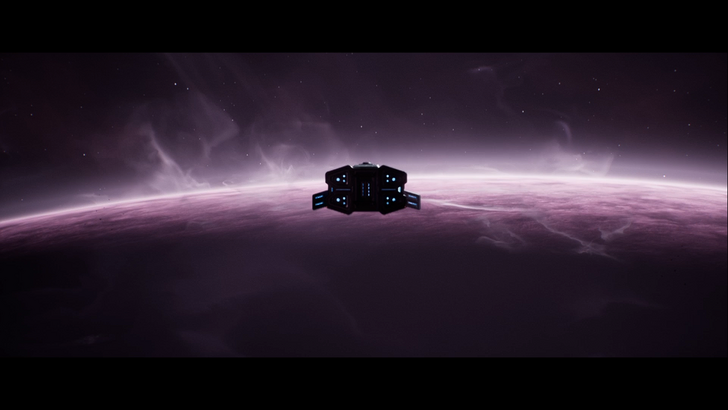
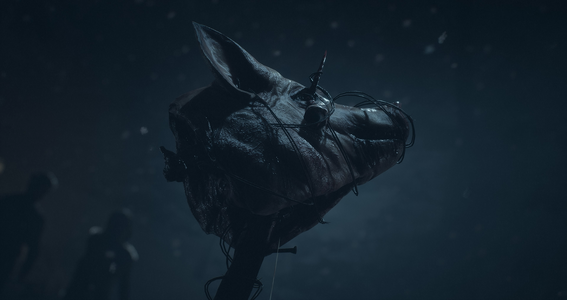
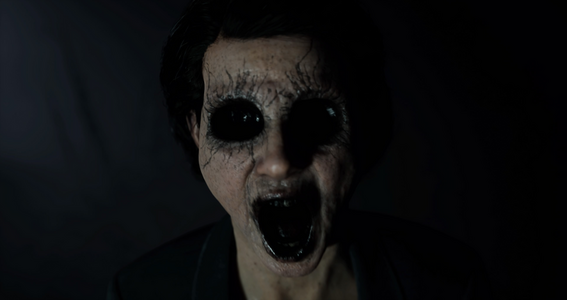
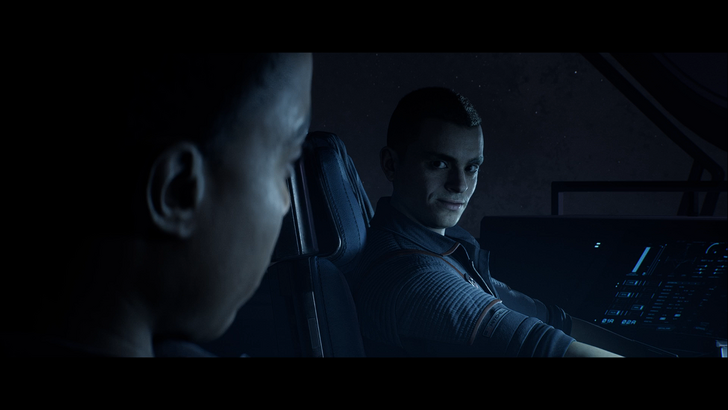
I can at least praise Directive 8020 for everything it didn’t fumble as badly as its dialogue, optimization, and gameplay. The art direction is spectacular, balancing hopeful sci-fi with darker horror elements while drenching everything in shadow and still keeping the technology grounded and believable. The designs for both the crew and the creatures trapped aboard the ship are especially strong, carrying a clear Alien-inspired style of space horror.
The cast also gets plenty of chances to show off their talent, aside from the occasional line delivery issue I mentioned earlier. They manage to come across as likable, awful, unstable, or downright hateful whenever the story needs them to, which is not easy to pull off through voice work alone.
As for the horror itself, I criticized the game early on for leaning too heavily on jumpscares, and I still stand by that. The game does eventually move past them, though, relying more on atmosphere and sound after the second episode or so. Thankfully, the horror only grows more effective and more tragic as the story goes on, and they lean on that less and less.
Not the Best of Dark Pictures
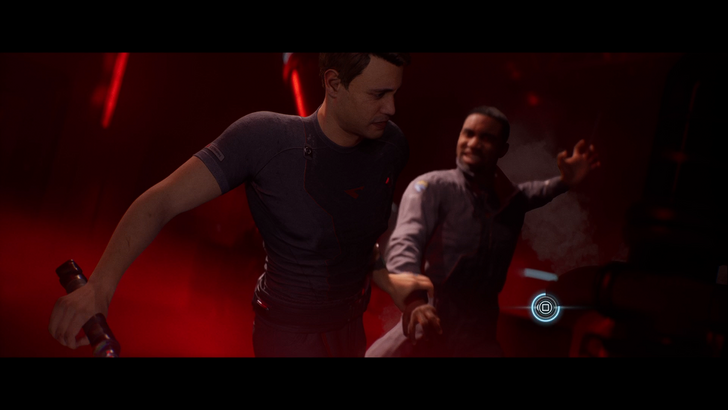
This game is all over the place, excellent in some areas and awful in others. It feels like it got thrown into a blender and came out wrong, which honestly fits the game’s premise pretty well. Directive 8020 is mostly about watching people die, doing menial tasks in between, and getting small bursts of actual gameplay through quick-time events, branching paths, and collectibles.
Is that inherently bad? Not really, because the game’s problems go beyond its gameplay structure. Even if this had been the intense, action-heavy sci-fi horror experience Alien fans might have wanted, the glitches and awkward dialogue would still drag it down.
Unfortunately, this is the narrative path where all those problems exist at once, which explains the less-than-stellar score. Death is guaranteed in deep space. Quality, apparently, is not.
Is Directive 8020 Worth It?
A Great Deal for the Right People
Because of Directive 8020’s rough optimization and uneven quality, this is only worth its $50 price tag for the right kind of player. For many, that’s too much for a game that might not even run properly on their system, despite saying it can. For others, it’s another chance to dive into Supermassive’s brand of dark storytelling. Either way, the game’s highs and lows are impossible to ignore, so be discerning and figure out whether you’re the right audience for it; I certainly was.
FAQ
How Many Playable Characters are in Directive 8020?
Directive 8020 features five main playable characters that make up the crew of the Cassiopeia.
The main playable cast includes: Brianna Young, Josef Cernan, Laura Eisele, Nolan Stafford, and Samantha Cooper.
How is Directive 8020 Connected to the Dark Pictures Anthology Universe?
Directive 8020 is connected to The Dark Pictures Anthology as the first installment of Season Two and the fifth mainline entry in the series overall, maintaining the shared universe and interactive horror formula the other series entries all share.
Game8 Reviews