



| The Adventures of Elliot: The Millennium Tales | |||
|---|---|---|---|
| Release Date | Gameplay & Story | Pre-Order & DLC | Review |
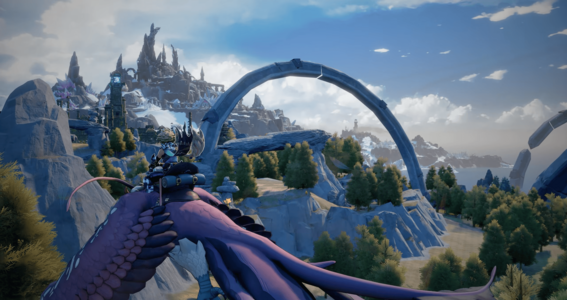
The Adventures of Elliot: The Millennium Tales tells the story of a young adventurer traveling through time to save his era. Learn more about what it did well, what it fell short, our review of the game, and more.

Overview
What is The Adventures of Elliot: The Millennium Tales?
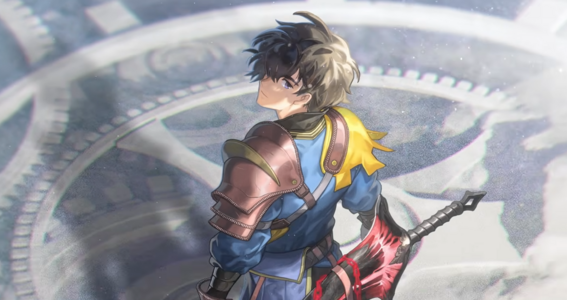
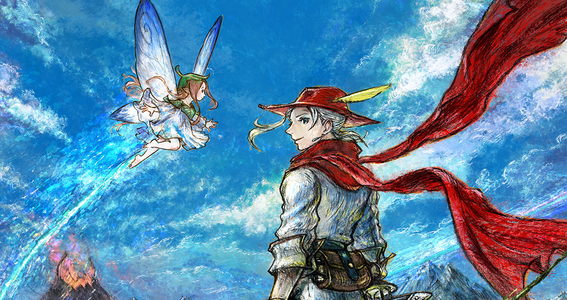
The Adventures of Elliot: The Millennium Tales takes place in Philabieldia, a continent overrun by monsters and beast tribes. Humanity's last sanctuary is the fortified Kingdom of Huther, protected by a magical safekeeping spell. When newly unearthed ruins appear just outside of Huther's walls, young adventurer Elliot and his fairy companion Faie set out on a quest.
The Adventures of Elliot: The Millennium Tales features:
⚫︎ Multiple endings
⚫︎ HD-2D graphics
⚫︎ Fully voiced main dialogue
⚫︎ Missable side quests
⚫︎ Perfect Guard mechanics
⚫︎ Item progression
| Digital Storefronts | |||||||
|---|---|---|---|---|---|---|---|
 Steam Steam |
 PlayStation PlayStation |
 Xbox Xbox |
 Switch 2 Switch 2 |
||||
| $59.99 | |||||||
The Adventures of Elliot: The Millennium Tales Review: Short, Straightforward, and Special
An Exquisite Artwork on a Small Canvas
What makes a memorable isometric or top-down action adventure game? Should it have deep gameplay mechanics? A captivating and complex story? Or some other profound criteria that would make it stand out from the rest? While most would readily point toward one or two conditions, the real answer isn’t as straightforward as that. Otherwise, The Legend of Zelda: Oracle of Seasons and Ages wouldn’t be as memorable as they were even until today.
A truly memorable adventure game requires cohesive design far more than standalone mechanical depth. Much like how the Oracle duology perfectly complemented one another, The Adventures of Elliot possesses narrative and gameplay components that work together in beautiful harmony. An ironic one though, to be sure, because their success stems from the fact that they rarely overstep their boundaries; they function as distinct, respectful halves of a greater whole.
You actually feel like you’re playing an action adventure game when you’re in control of the protagonist’s boots, with only the side comments from your partner grating your ears from time to time. Conversely, when the script takes over, the game completely submerges you in its moving narrative without demanding anything from you but your eyes and your comprehension. In a landscape where games constantly exhaust themselves trying to make story and gameplay blend seamlessly into one another, The Adventures of Elliot’s honest division of its parts feels like a breath of fresh air.
Honesty Is Its Policy
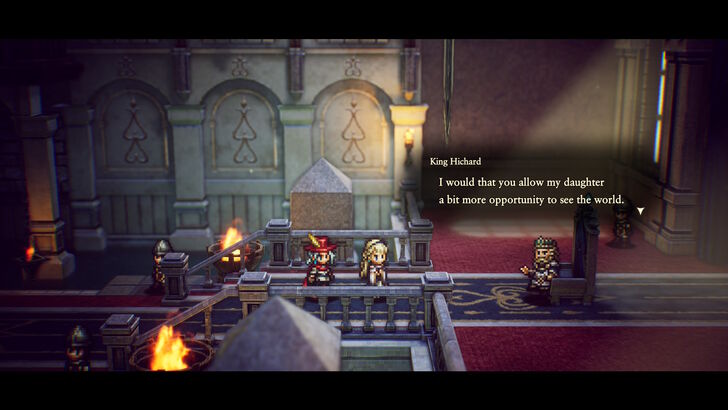
The Adventures of Elliot tells the story of, well, Elliot’s adventures through the world of—Philabieldia? Let’s call it Philadelphia—as he goes through different eras in order to protect his own, and a princess who was willing to sacrifice everything for the same goal. It’s a simple one with a healthy sprinkle of romance and suspense here and there, but mostly centers on an overarching mystery around how each era lived and died, how these traits could be used for the present, and how they all impact the world.
Its biggest strength is in its delivery, boasting incredible voice acting to really give life to all the emotions brought to the surface by its circumstances and writing. On top of that, the story itself is incredibly straightforward. You can essentially boil it down to one of those good old tale-of-a-hero plots that fairy tales, epics, and fantasy fictions have always leaned on since time immemorial. The payoff at the end is also very simple and only dictated by the dedication you put into uncovering the world’s mysteries, not from any complexities brought by the plot itself.
And honestly? There is nothing wrong with that. Not all stories require some rivetingly complex narrative or some jaw-dropping twist. Some of the most touching oneshots are built off of a very basic premise. Look at The Iron Giant, for example. Its story can basically be summed up into one sentence: a boy befriends a giant alien robot who sacrifices itself to defend the people. But the same cannot be said for its emotional core, which is endearingly deep and filled with many themes like the importance of choice and the matter of identity.
Similarly, Elliot’s journey is almost painfully simple in nature. Even the identity of the final boss is very predictable considering the foreshadowing done over the course of the story. But despite the predictability, the thematic cores of the story thrive because of the same heavy-handed foreshadowing that led to it. And knowing what’s coming your way, you begin to understand the game’s focus on family, love, sacrifice, and perhaps most importantly, responsibility.
The core gimmick of the game centers around time travel. Yet, despite such a broken-sounding mechanic, the game doesn’t allow you the option to actually change history. What happened will happen, even after your journey forces you to cross paths with the people of the past and help them solve their problems. Even if this was born from a mechanical design limitation, the theme fits perfectly and echoes a profound, bittersweet message: You are a hero of your time, not of others.
Characters as Transient as the Journey
Speaking of time, it doesn’t take much to finish a run of this game. Though mileage may vary, accessing all endings can cost you around eight to fifteen hours of your life. This short experience ultimately cost The Adventures of Elliot’s story one glaring price: character development.
Simply put, there’s just not enough to develop more than just the core cast. In fact, because this game had to introduce a lot of characters to bring some semblance of personality to each era, it ended up creating a story where only Elliot and a certain “side character” experienced growth.
Yes, a “side character.” I’m talking about Faie, the fairy sidekick who accompanies Elliot through 95% of the game, as well as
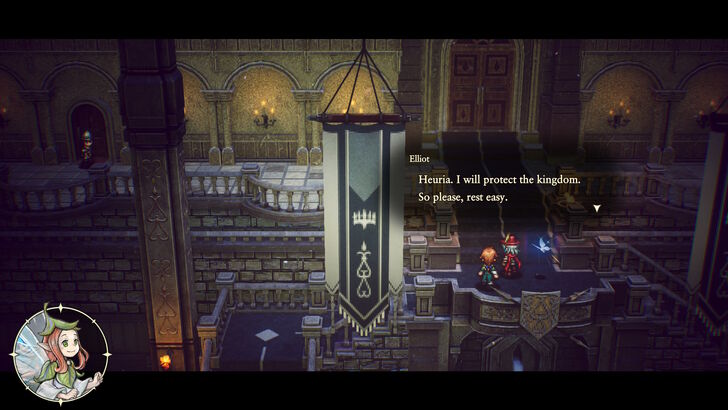
Princess Heuria, whose predicament gives our protagonist the impetus to spend half the game chasing leads. They're two of your closest partners! The latter was even your dedicated healer before the role was unceremoniously handed over to Faie!
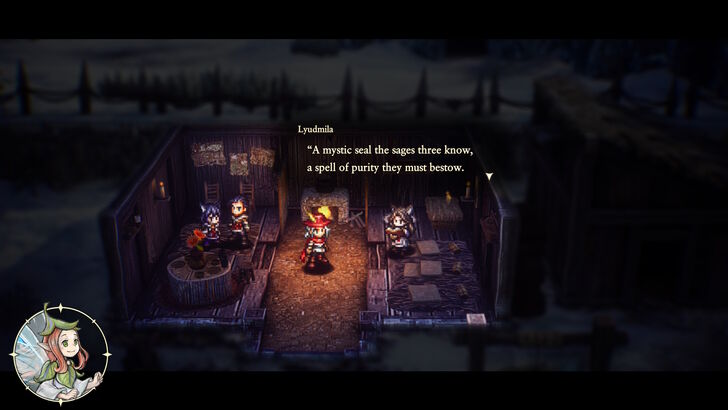
Besides the obviously disappointing missed opportunity to delve deeper into Faie’s past or Princess Heuria’s character, they are instead delegated as mere plot devices in the story. As for the others, it’s even worse. The heroic icon Heurich of the Age of Reconstruction, the upright and noble lord Ikarus of the Age of Magic, and even the idealistic Hirk of the Age of Budding, who may have even been the one to kickstart the following era, are all just a couple of paragraphs in this game’s story despite their significance in their respective timelines.
Thankfully enough, this is rather justified for the others considering the game’s themes if you think about it. At the end of the day, Elliot is just passing through their eras. He was never meant to forge deep, lasting bonds with ghosts of the past. The only exception is that “side character” I was talking about. You get to witness their entire life from childhood to the bitter end, through blind optimism, hope, and crushing grief. And they serve as a vital piece of the ultimate, deeply satisfying narrative puzzle.
The same, however, cannot be said for Faie and Princess Heuria. They are gaping holes in the narrative, with Faie’s extremely late development making her less of a character and more of a mechanic and backseat spectator, and Princess Heuria becoming that driving force behind Elliot that’s really hard to empathize with. This is the story’s ultimate Achilles Heel; the one chink its beautifully executed, tightly focused armor of a story.
The Walking Arsenal Simulator
If you’re familiar with The Legend of Zelda: Link to the Past, then you’re already halfway to being an expert in The Adventures of Elliot. Simply put, it’s a real-time action game where you can use different weapons to perform simple attacks onto enemies.
There are differences, of course, such as your being able to swap your primary weapon, and a lot of your weapons also function as utility items to get around with. For example, the hammer is not just a great blunt weapon to stun and knock enemies back with, but also allows you to nail down obstacles to the ground.
Every single weapon also comes with upgrades, and some of them can change how a weapon is fundamentally used. This means that custom builds are possible. On top of that, because you can swap equipment on the fly and the upgrades themselves are exclusive to every weapon and don’t overlap with others, your builds can actually span across nearly a dozen pieces of equipment simultaneously.
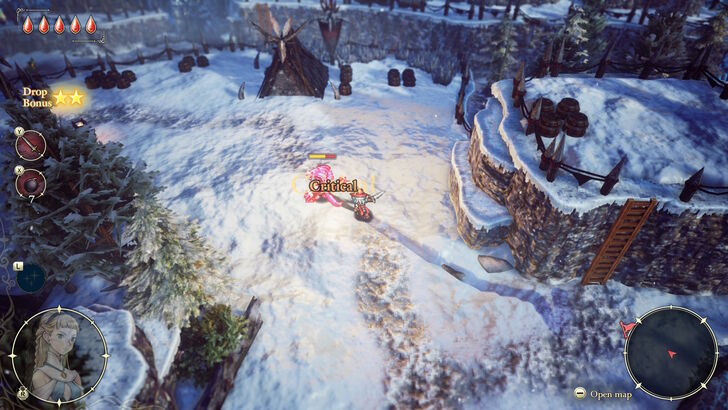
But while The Adventures of Elliot possesses surprisingly deep custom builds, it never lets those mechanics overshadow the overall cohesion. And for a game with such an accessible, straightforward control layout—where combat primarily boils down to pressing or holding primary and secondary attacks while occasionally shielding—the pacing remains remarkably frantic and challenging.
This gives The Adventures of Elliot a very modern RPG feel to it; a nice contrast to how its HD-2D visuals and controls might imply. By contrasting a simple control scheme with a high-velocity combat pace, the game ensures that tactical strategy becomes far more vital than your ability to mindlessly button-mash your sword into an enemy's face, at least against bosses. This is best exemplified by how many of them have invulnerability gimmicks that force you to actually plan a method of attack.
We Have Emergency Food at Home
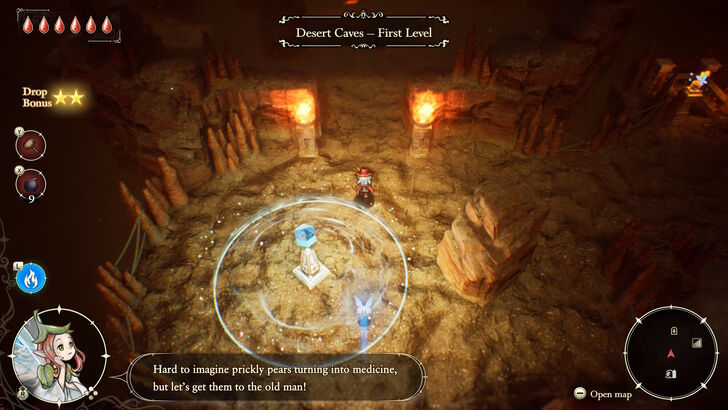
Enjoying the world of… Philadelphia might become difficult for the average human with similarly average patience, though, and not because the game’s too hard. It’s quite fair, actually. No, the reason is that for some reason the developers decided to include Paimon as your companion.
I’m kidding. What I mean is that you are burdened with a partner who persistently makes nearly useless side comments about almost everything you see, touch, or do. It’s overwhelmingly grating. Even when you turn down their chattiness
via the settings (yes, the developers are self-aware enough to include an option for this), they still talk way too often for anyone’s comfort.
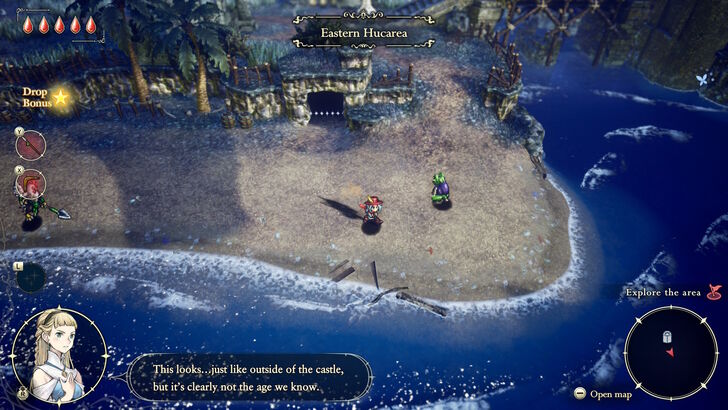
If only “turn down” can also be “turn off”...
Anyway, that’s not even the most frustrating part. That crown belongs to the agonizing fact that when these characters stop talking every five seconds, it’s actually incredibly easy to like them. It didn’t even take Princess Heuria two scenes to genuinely grow on me once her role as the annoying mosquito buzzing in your ear was passed off to Faie. And Faie herself is always quick to redeem her first impressions during long, emotionally resonant cutscenes—only to immediately remind you why you despise her five seconds after the game hands you the reins again.
Painting the Passage of Time
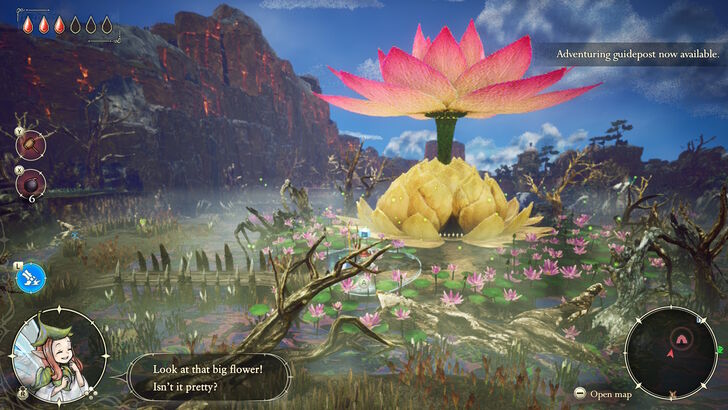
Lest we forget, let’s talk about the design of a certain stage. Specifically, the overworld. It is a fantasy landscape full of dangerous creatures, untamed wilds, harsh snowscapes, howling caverns, and icky swamps (ran out of adjectives there). It’s also the only overworld you’ll ever see, because Elliot never actually leaves the region; he only travels through multiple versions of it.
The unique eras are depicted not only through visual changes like the trees being more bare during the Age of Reconstruction or neater during the Age of Safekeeping (at least near the cities), but also through minute terrain and enemy placement differences. This is most obvious when you travel to plot-essential locations like the only settlement in the game, of course. But it’s also apparent in other locations like how enemies start to appear in a place that was once a well-kept graveyard, a research outpost in the past becoming rubble in the future, and even weapon placements.
While reusing the overworld layout is a natural choice for a game built around a time-travel gimmick, it’s refreshing to see how blatant and diverse the modifications are between each era. On a purely visual and narrative level, the game successfully forces the same map to retain a sense of history and mystery, ensuring that stepping across millennia always delivers a distinct, evocative flavor.
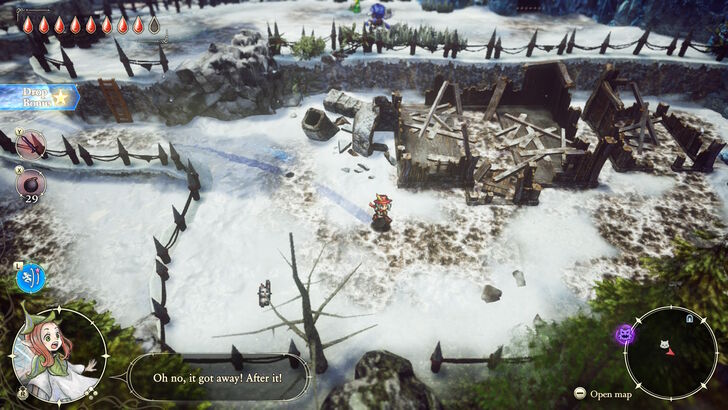
Unfortunately, gameplay-wise, it does nothing. That’s because there’s really not much creativity required to explore the world, despite the differences in terrain and technology between eras. Once you unlock one of Faie’s traversal abilities, the scope of what you can actually do with it in terms of getting around is entirely static. And you’ll have absolutely nothing else to look forward to to use that skill for the rest of your eight to fifteen hour run.
That means the exploration gets old, fast. And that is only exacerbated by the almost humorously predictable mobs. Like, you can actually just bait them into doing certain things. Though it does address the issue somewhat, increasing the amount of enemies you can encounter simultaneously, this is more of a brute force fix than them addressing the main issue.
While sure, these Faie’s skills have plenty of excellent uses in combat, such as allowing Elliot to instantly teleport within an enemy’s personal space while they’re busy casting fireballs and stuff. But in terms of how you interact with the dungeons and the overworld? The possibilities remain painfully narrow.
Is The Adventures of Elliot: The Millennium Tales Worth It?
It’s worth the price, not the effort
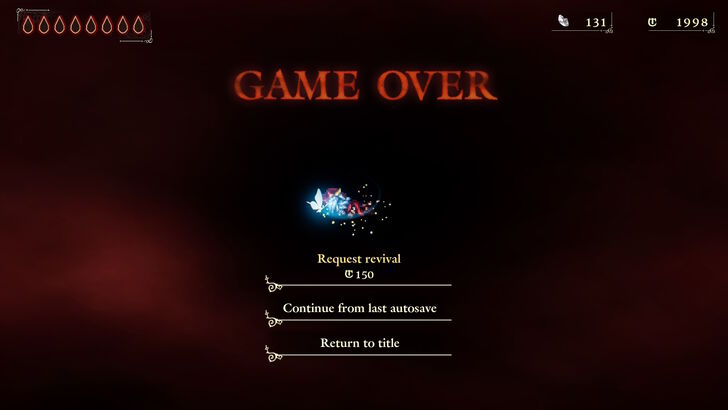
By the way, this game costs sixty bucks. That’s like two to four Doordash orders for lunch—way too much for a game that “only” offers up to fifteen hours of gameplay.
Fortunately, it’s not actually that grim. Plenty of incredible games offer that exact same runtime for the same premium price. It’s just that since this is an action-JRPG, you’d normally expect a massive, triple-digit time sink. On the bright side, the game does feature a healthy spread of extra content that can easily stretch your playtime to double the amount you’d spend just rushing an ending. There’s also a dense layer of worldbuilding hidden away in written lore, and multiple difficulty tiers to boost its replayability. And yes, there’s three endings, but considering that you can access them all within a single playthrough, it doesn’t matter as much as you’d think.
In all, this puts the game at a nice, if rather awkward spot. It justifies the price tag, yes, but not at a level where you should prioritize it over having a few good, filling meals. At the same time, though, it’s far too polished to be relegated to a wait for a massive sale
bargain bin. Just get it when you have enough money to comfortably spend, basically.
The Adventures of Elliot Related Guides
 Walkthrough Walkthrough |
 Map and Locations Map and Locations |
 Tips and Tricks Tips and Tricks |
 Side Quests Side Quests |
 Bosses Bosses |
 Builds Builds |
 Weapons Weapons |
 Equipment Equipment |
 Magicite Magicite |
 Shrines Shrines |
 Characters Characters |
 Items Items |
 News News |
 Review Review |
Game8 Reviews