



Everything We Know About Super Alloy Crush
Super Alloy Crush Plot
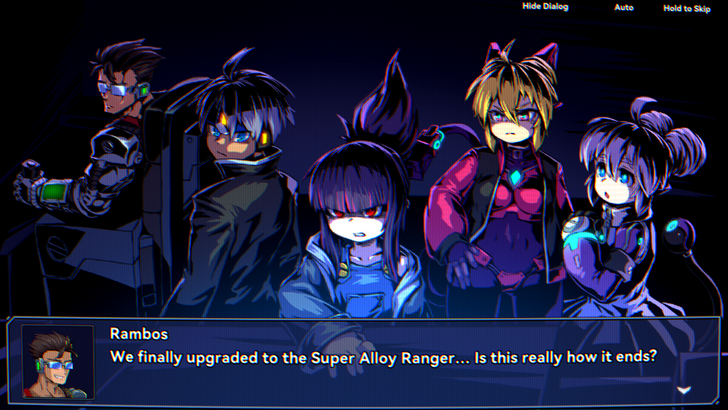
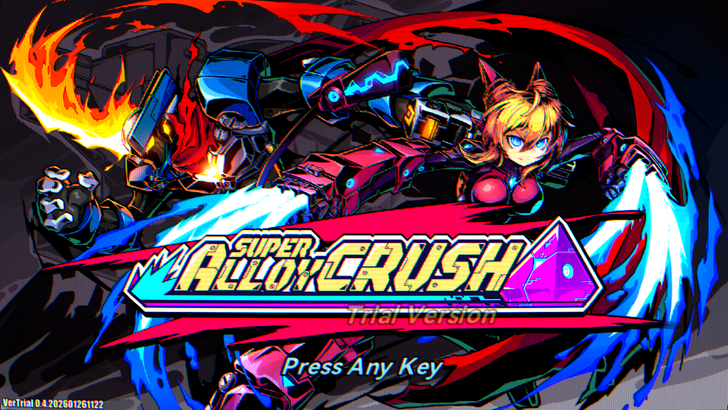
Set in the Super Alloy universe, Super Alloy Crush puts you in the shoes of Cosmic Hunters Muu (Unit-02) and Kelly, traveling aboard the spaceship Ranger. Together with their crew, they’re chasing a legendary prize: the cosmic treasure planet AE-38. It’s a journey that kicks off fast, with danger and mystery around every corner.
Super Alloy Crush Gameplay
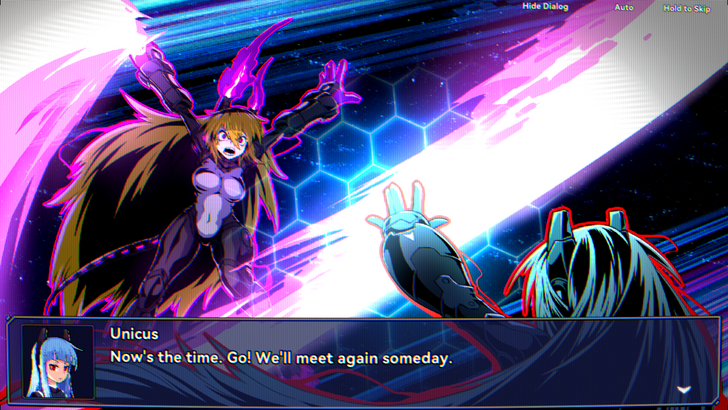
At its core, Super Alloy Crush is a 2D action brawler with a side-scrolling twist, spiced up with roguelike progression. You pick either Muu or Kelly and push through stages packed with enemies, hazards, and combat challenges—each run giving you the chance to upgrade, experiment, and refine your approach.
Super Alloy Crush Release Date
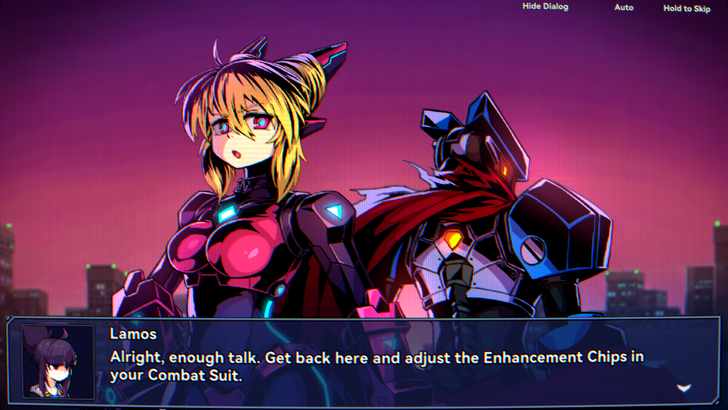
Super Alloy Crush will release in Early Access on April 8, 2026.
| Digital Storefronts | ||
|---|---|---|
 Steam Steam |
||
| $11.95 |
Super Alloy Crush Review (Early Access)
Solid Action But Needs More Balance
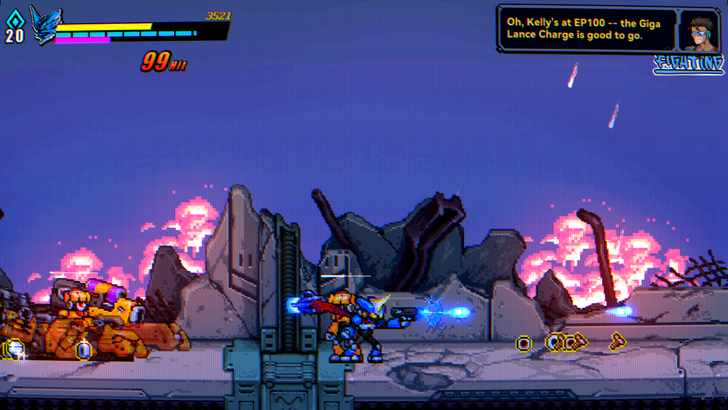
Super Alloy Crush is almost here for its early access release, and I just had to get my hands on the final build. I already tried the game’s demo back in January and even then, it already felt like the perfect little bite; the kind that leaves just enough of an impression to make you want more.
Now that we do have more, though, the question naturally shifts. Was that early promise just a really good first taste, or does the longer experience actually build on it in a meaningful way?
Crash Landing on AE-38
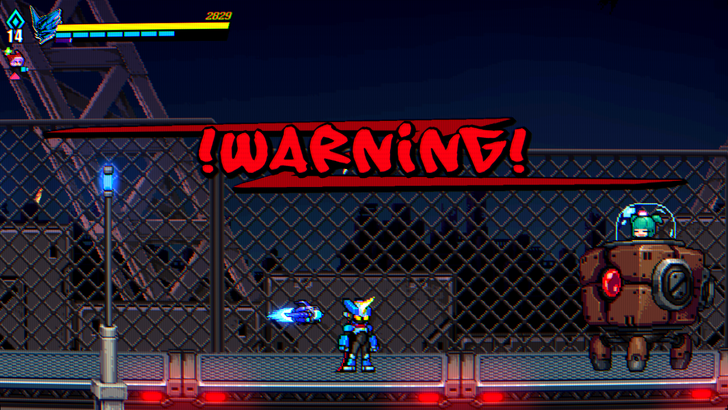
Super Alloy Crush kicks things off with the Cosmic Hunters en route to planet AE-38. After choosing between two playable characters (for now) Muu, the up-close brawler, and Kelly, the more precise ranger (more joining the roster down the line), things go sideways immediately.
The opening act starts with a Raider hunting the crew for reasons they themselves don’t even understand. They then end up crash-landing on a planet made entirely of steel—never a great sign—and from there, it becomes a fight for survival. The goal is straightforward: push through, take down the Queen, and get back on track toward their original destination.
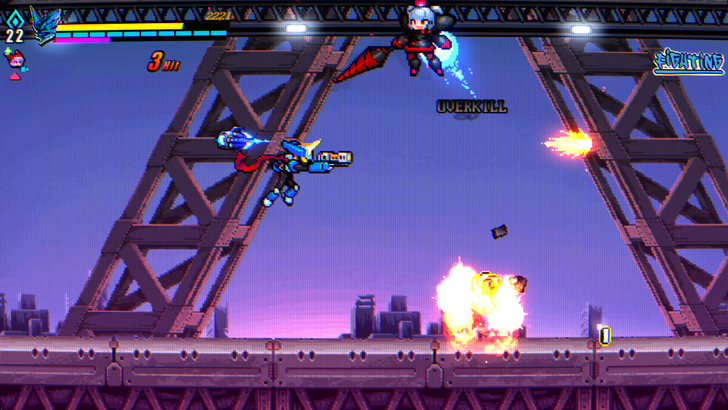
From the first mission, Super Alloy Crush settles quickly into its loop. You move from one stage to the next, each run feeding into the next decision you make. In between, you head back to the Hub, where you can upgrade both your characters and your support NaviShip (support ship), giving you that steady sense of progression that makes "just one more run" feel justified every single time. It means every run, I'm thinking about how to tweak my build and which upgrades to unlock before the next stage. It turns a simple grinding loop into something more intentional by constantly shaping the experience.
There’s also a Frenzy Mode (endless mode) if you just want to test how long you can last, but the Story Mode is clearly where the game wants your attention. The structure gives you a clear goal, but also enough room to grow stronger, experiment a bit, and feel like each run is actually building toward something.
Pick-Up-and-Play Loop Relies on Repetition
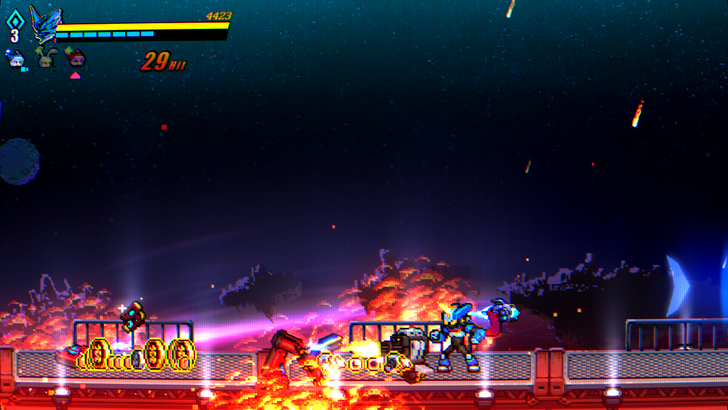
Now that I’ve had more time with Super Alloy Crush, I’m just going to say it outright: this isn’t the kind of game I felt compelled to finish in one sitting. It leans much more into that retro 2D brawler rhythm, where I’d jump in for a few runs, step away, then come back later for "just one more."
A big part of that comes down to how each level plays out. No matter how visually distinct they try to be, the core flow rarely changes: I run forward, shoot everything in sight, and clear out both constructs and enemies blocking my path. It’s straightforward, almost to a fault. By the end of each run, I’m pocketing coins, which I can then funnel into upgrades for whichever character I’m using.
That repetitiveness doesn’t just affect combat as it bleeds into the story pacing too. Narrative moments and cutscenes feel like brief pauses between the same loops rather than climactic beats, and sometimes I found myself zoning out on the story because the gameplay didn’t give those moments room to breathe. The progression system keeps me engaged mechanically, but emotionally, the story can feel like it’s waiting for me to catch up rather than driving me forward.
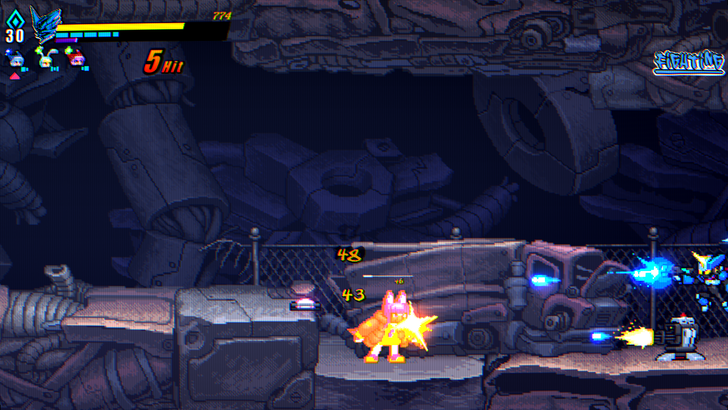
Yes, that loop is repetitive—I felt it pretty early on—but it’s not entirely without its hooks. What kept me from checking out too quickly was how the maps occasionally break that sameness. There are moments where I’d stumble into secret routes or hidden paths, and suddenly a familiar run would feel just a bit different.
That matters more than it sounds. Because when the core action doesn’t evolve much, those small deviations end up doing a lot of the heavy lifting in keeping the experience from feeling completely on autopilot.
Unlockables and NaviShip Build
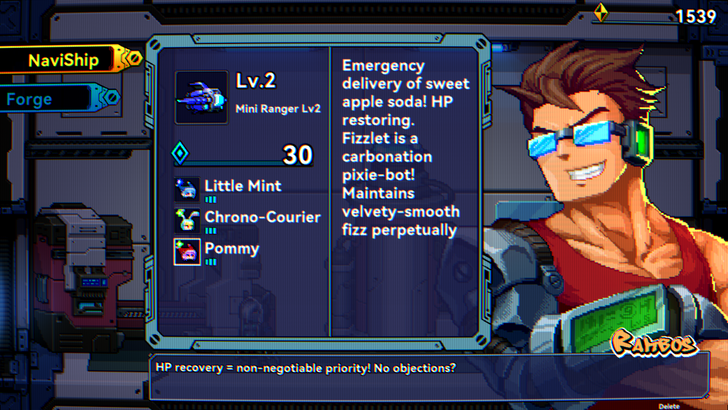
One thing I did appreciate is just how much there is to unlock. I’m not just talking about basic upgrades—there are collectibles to find like support characters that I can equip on my NaviShip, adding another layer to how I build out each run.
Because of that, I found myself paying more attention to the levels than I initially expected. Instead of just blasting through from point A to point B, I’d start checking corners, poking into side paths, and seeing if there was anything I might’ve missed. The upgrades and support characters I find make future runs easier or let me tackle challenges differently, so every detour has a purpose. As a result, the game encourages me to engage more deeply with its systems rather than treating each stage as a simple corridor to shoot through.
Building Your Circuit Turn Downtime Into Strategy
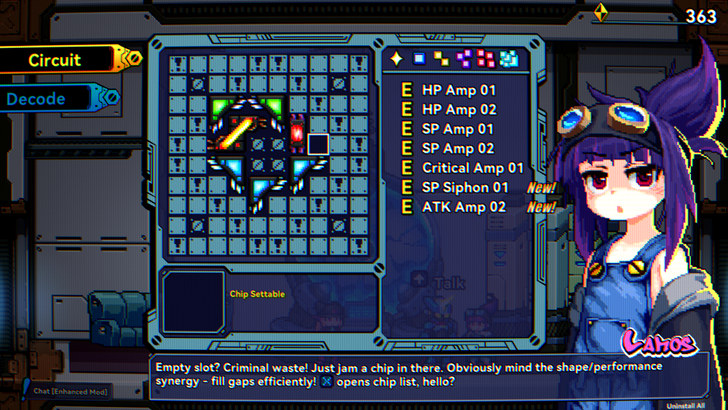
Upgrading in Super Alloy Crush isn’t just a matter of dumping currency into stats, it actually feels like a mini-game on its own. When I started unlocking passives, I was introduced to this circuit board-style grid where I had to slot in different items, almost like piecing together a puzzle. It’s not overly complicated, but it’s engaging enough that I’d spend a bit more time here than I expected.
On top of that, the game runs on three key resources: HP, SP, and EP. SP fuels your standard skills, while EP is reserved for your ultimates. These charge up by actively engaging in combat, like landing hits on enemies. And depending on how I set up my circuit board, I could tweak how quickly these resources build up.
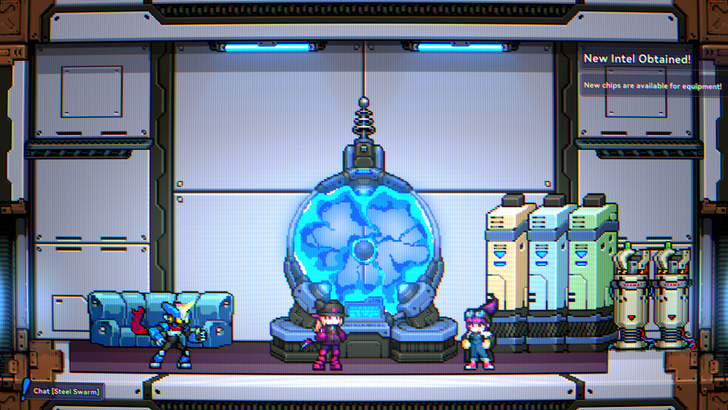
That added layer of control makes a noticeable difference. If I lean into the right setup, I can fire off skills more often, which in turn changes how aggressive or sustained my playstyle feels during runs. Because of that, the time I spend in the Hub doesn’t feel like downtime at all. It’s not just a breather between stages, it’s where I’m actively shaping how my next run is going to play out.
Slow Charges
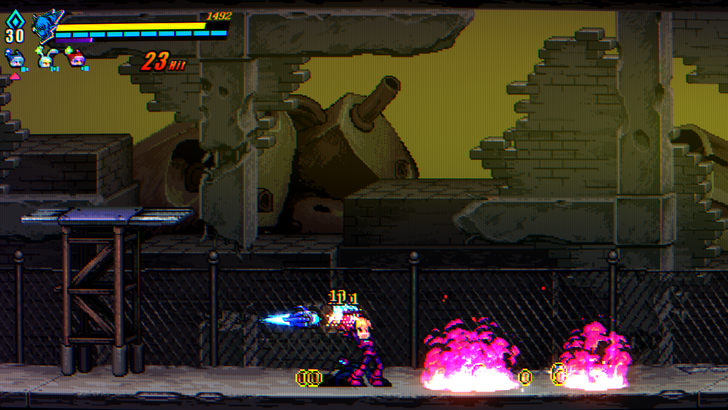
However, no matter how I tweaked my build, EP just took too long to ramp up. I went through multiple runs where I barely even got to use my ultimate, which seems like an infuriatingly missed opportunity, especially when the game clearly treats it as a key part of your toolkit.
That imbalance becomes more obvious during boss fights. Each boss comes with three health bars, and if I manage to take one down before the next phase fully kicks in, they enter a brief stunned state. But they also regenerate their EP during that window, which often leads to them firing off an ultimate almost immediately after recovering.
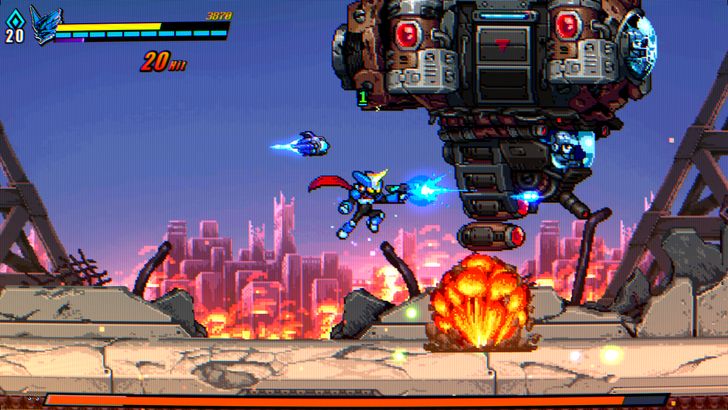
Meanwhile, on my end, not only does EP build slowly, it’s also tied to revives. So if I go down, I’m essentially back to zero, losing any momentum I had toward using an ultimate in the first place.
It started to feel less like a resource I could plan around and more like something I was constantly chasing but rarely getting to fully use. And as the game ramped up—especially in the later stages where enemies start swarming more aggressively—that gap becomes even more noticeable. Instead of feeling empowered by my build, I found myself wishing the system gave me just a bit more room to actually use what I’d been building toward.
Enemy Variety Keeps Things Fresh
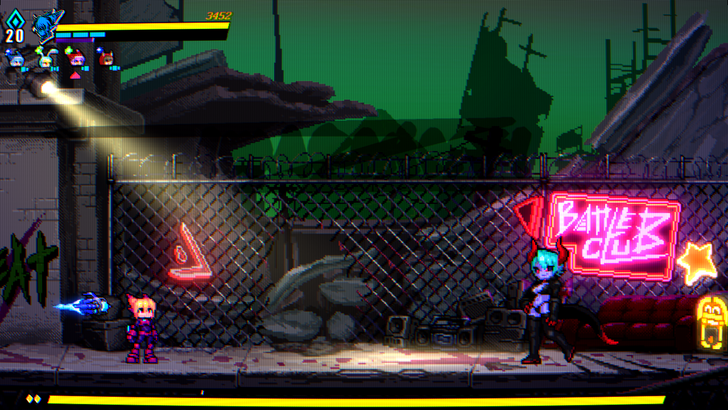
One thing I was a bit worried about coming out of the demo was enemy variety, but thankfully, that’s not really an issue here. As I moved through different locations, I started seeing new enemy types pop up, and some of them even evolve in a way, picking up new moves or behaviors. It gave me something to adjust to, learning patterns and figuring out how to deal with each group instead of just mindlessly shooting everything that moves.
But while the enemies do change, the difficulty itself doesn’t really evolve in the same way. If anything, it feels pretty flat throughout. Part of that might be because I’m also getting stronger so there’s this constant trade-off that keeps things from ever feeling like a real spike.
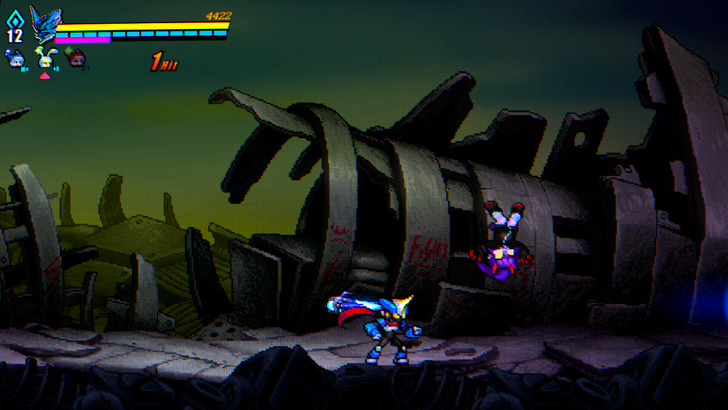
That’s not necessarily a bad thing. If you’re like me and just want something a bit more chill to pick-up-and-play from time to time, it works. But if you’re coming in expecting a more skill-driven challenge, you might find it lacking. The game doesn’t really push you to master its systems, it just throws more enemies at you.
And honestly, there were plenty of moments where I made it through not because I played well, but because I got lucky or just powered through with a bit of button mashing.
Muu Feels Like the Intended Playstyle
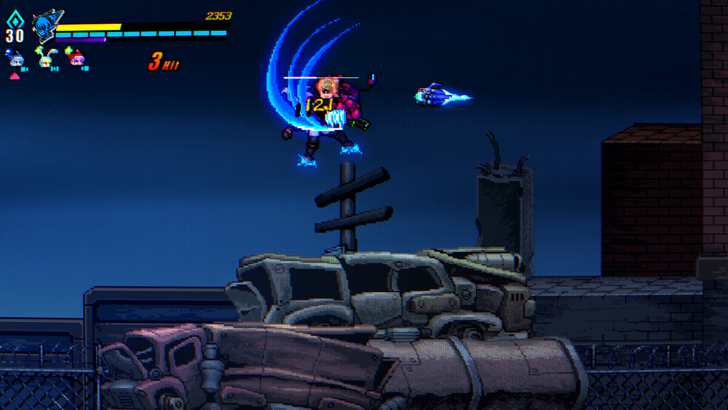
Speaking of luck, it honestly feels like Muu was designed with this game in mind a lot more than Kelly. I stuck with Kelly for most of my playtime, and I could immediately feel the difference when I switched to Muu. Using Kelly just felt more challenging in ways that didn’t always seem intentional.
A lot of the skills I unlocked or found during runs was for Muu’s playstyle. It made my progression feel slightly mismatched, like I was constantly adapting to tools that weren’t really built for how I wanted to play.
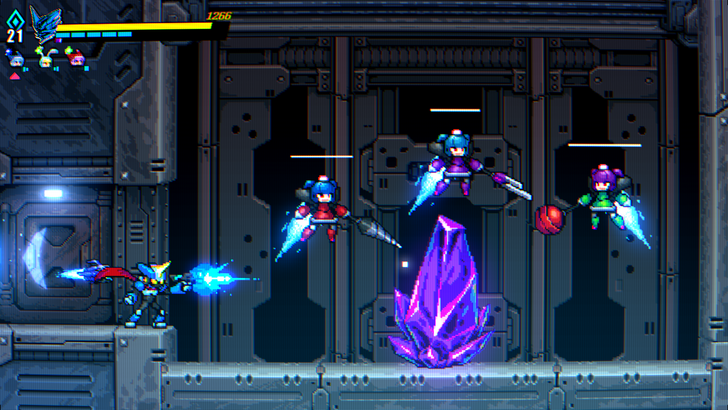
Then there’s how Kelly actually plays. Some of his attacks feel restrictive, like having to hold the attack button to charge, which often leaves me locked in place. There are moments where it works, especially when I’m lining up mid-air shots, but in more chaotic fights, that lack of mobility becomes a real issue.
Muu, on the other hand, doesn’t run into these problems as much. As a brawler, her kit just flows better with the game’s pace. I can stay mobile, react faster, and deal with swarms more comfortably without feeling like I’m fighting the controls. That imbalance stands out, it’s hard not to feel like Muu was the priority during development, with everything else built around her first.
Still a Work in Progress
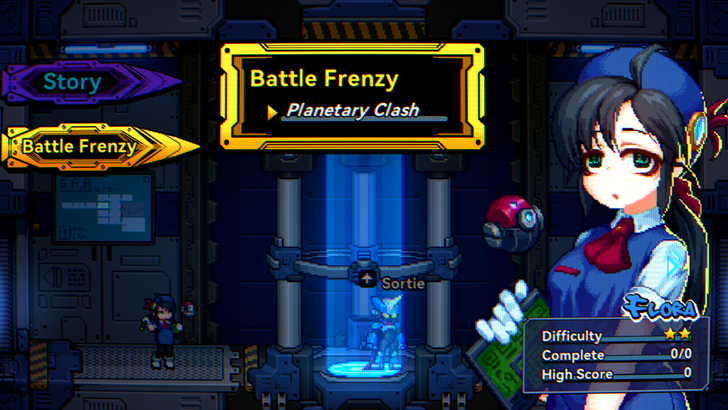
Frenzy Mode is pretty much the same as what I played in the demo, and just like before, the challenge mostly comes from sheer numbers. It’s less about mastering mechanics and more about how long I can survive once things start piling up. Enemies spawn in waves, and stages become progressively harder, keeping me on my toes as the run continues.
Between rounds, you get access to a shop where you can spend the resources you’ve accumulated. The items here range from straightforward upgrades—more health, higher damage, faster cooldowns—to more experimental choices, like items that trade extra HP for reduced attack power.
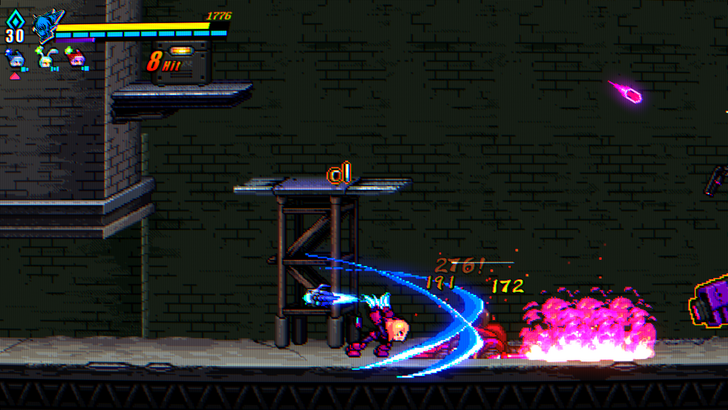
If that kind of escalating chaos sounds appealing, then there’s definitely something here for you. It leans into that "how long can you last?" mindset without overcomplicating things.
But personally, I came out of this wanting a bit more—especially for Kelly. He could really use further tuning to feel as viable and fluid as Muu. I’m also curious to see how future characters shake things up, because right now, the roster still feels a bit too limited to fully carry the experience.
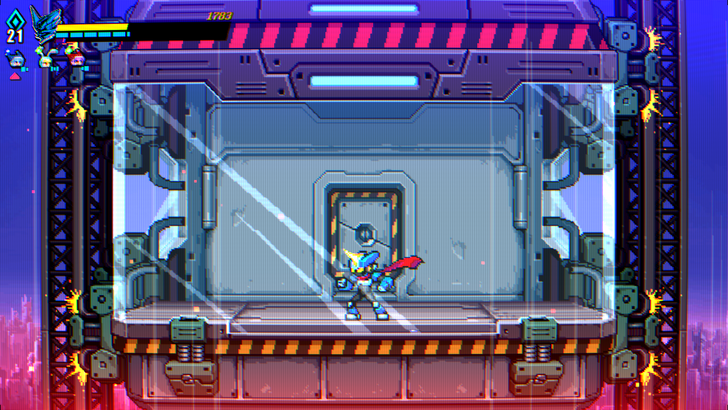
The story, too, could use more polish. I mentioned in the demo that it felt like more of a backdrop, but now that I’ve gone through Story Mode, it actually comes across as a bit jumbled—like there are ideas there, but they haven’t been fully pieced together yet.
As it stands, if you’re just looking for a casual 2D brawler to jump in and out of, Super Alloy Crush is still worth checking out. But if you’re after something deeper or more refined, it might be better to wait and see how it evolves through early access.
Game8 Reviews
You may also like...
 |
Super Alloy Crush Review [Demo] 2D Action Brawler |
 |
MIO: Memories in Orbit Review Action, Adventure, Platformer Metroidvania |
 |
Kotama and Academy Citadel Review Action, Platformer |
 |
Terminator 2D NO FATE Review Action, Arcade, Shooter |
 |
Moonlighter 2: The Endless Vault [Early Access] Roguelike, Action, Adventure, RPG, Strategy |
Super Alloy Crush Product Information
 |
|
| Title | SUPER ALLOY CRUSH |
|---|---|
| Release Date | Early Access TBA Demo January 22, 2026 |
| Developer | Alloy Mushroom |
| Publisher | Alloy Mushroom |
| Supported Platforms | PC (Steam) |
| Genre | 2D Action Brawler |
| Number of Players | 1-2 |
| ESRB Rating | N/A |
| Official Website | Super Alloy Crush Official Steam |