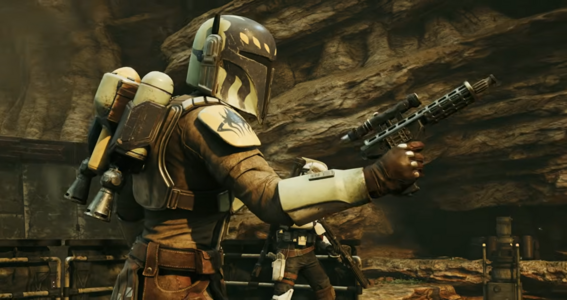




Star Wars Zero Company is a singleplayer turn-based tactical RPG developed by Bit Reactor and published by Electronic Arts. Read our first impressions on what the game does right, what it doesn’t, and our overall thoughts on the game.
Overview
What is Star Wars Zero Company?
Star Wars Zero Company is a singleplayer, tactical RPG developed by Bit Reactor and published by Electronic Arts. A top-down, turn-based strategy game in the style of X-COM, Zero Company follows Hawks and the titular mercenary group as they navigate the Star Wars universe in the midst of the Clone Wars. Along the way, players will be contracted to fight against The Infinite Coil, a cult-like organization that aims to infect the galaxy with the Shadow Plague.
Star Wars Zero Company features:
⚫︎ A fully original story set in between The Clone Wars and Revenge of the Sith
⚫︎ X-COM style tactical, turn-based RPG gameplay
⚫︎ Fully orchestrated soundtrack
⚫︎ Character customization across different Star Wars alien races
⚫︎ Multiple difficulty options, character classes, and recruitable characters
| Digital Storefronts | ||
|---|---|---|
 Steam Steam |
 Playstation Playstation |
 Xbox Xbox |
| $49.99 | ||
Star Wars Zero Company Review | The Galaxy’s Finest Tactical Strategy RPG
A Strategic Expansion to the Star Wars Universe
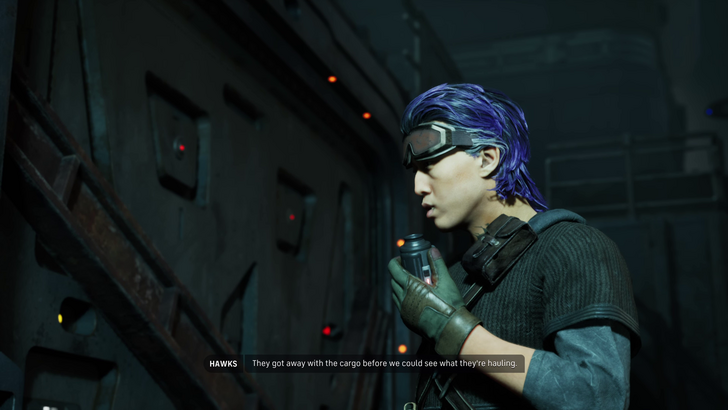
For the past decade or so, Star Wars has exhausted me. It seems that, since the meteoric rise and fall of the divisive Sequel trilogy, Star Wars media has been arriving in droves to try and keep the franchise present in the cultural conversation. Apart from a few notable exceptions, like the fantastic Andor and Respawn’s Jedi games, nothing’s really kept my interest.
Thankfully, Zero Company easily earns a place in that small pantheon that I never thought could expand. It is, by and large, one of the best pieces of Star Wars spinoff media made in a long time, praise it earns by being a fantastic game in its own right. In a rare move for the franchise, Zero Company actually dares to bring a fresh take to the Star Wars mythos through a well-executed tactical framework and a more grounded take on the series. It excels as a result.
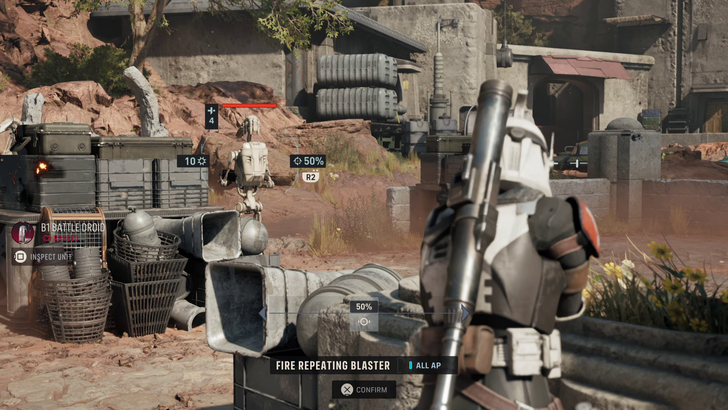
It is quite surprising, given the success of similar sci-fi tactical RPGs like XCOM and Phoenix Point, that Star Wars never dipped its toes into this genre before. It’s a match that’s one with the Force, though. The tactical RPG conventions lend Star Wars heightened stakes and a cerebral nature it rarely earns on its own, while the series’ cinematic worldbuilding and storytelling elevates the gameplay into something truly special.
It’s not a perfect game by any means, though. The gameplay loop remains mostly the same, and its difficulty spikes can feel inconsistent for newcomers while entirely trivial for veterans. Even worse, its lack of polish and dire performance issues can detract from the experience entirely.
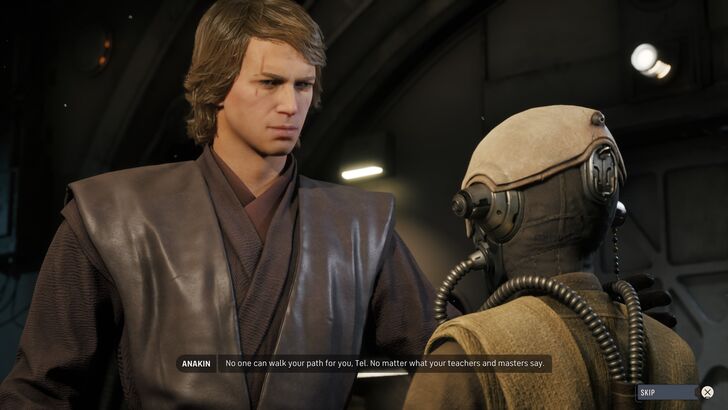
Still, it’s the Star Wars-based tactical RPG fans have wanted for years finally made real, and it's as good as the Force Ghosts promised. For a series named Star Wars, you rarely get to feel the strategic weight and abject vulnerability of that second word in the title. Zero Company is one of the rare times it feels truly earned.
Hawksy Stardust and The Spiders from Coil
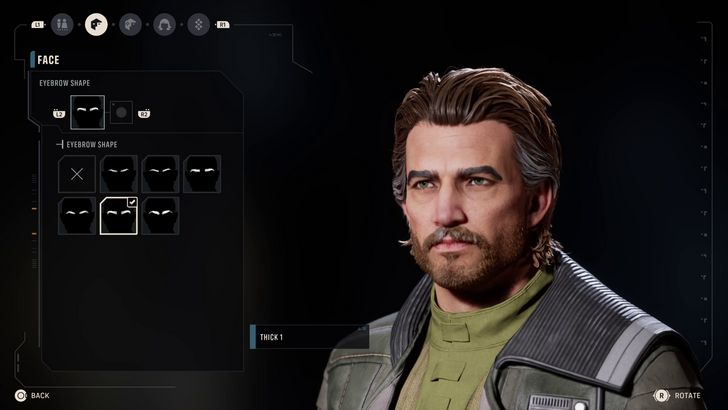
Star Wars Zero Company follows Hawks, a customizable character and former Grand Army Republic captain who left in the middle of the Clone Wars. In the aftermath, they formed Zero Company, a group of independent operators and mercenaries that help with conflict across the galaxy. While initially staying independent, owing a massive debt to the Hutts ultimately forced Hawks and his crew to side with the Republic in the fight against the Separatist-aligned Infinite Coil cult.
Zero Company effortlessly does what I believe the best Star Wars media should do: expand upon the lore while not remaining tethered to it. In my opinion, the best Star Wars stories use the universe’s incredible, dense worldbuilding as a springboard for original stories with their own identity and vision.
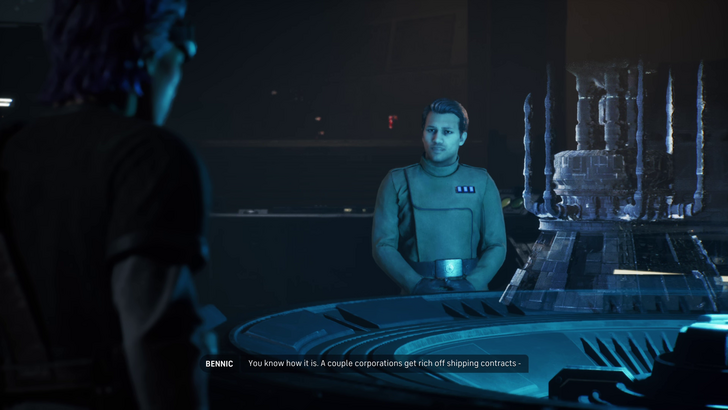
The game’s fun, colorful cast of characters, unique new villain, and incredibly sharp writing and storytelling all lend itself to one of the best Star Wars stories we’ve seen in a while. The Infinite Coil is such a strange, interesting cosmic-horror villain that’s never been seen in Star Wars to this degree; a paramilitary death cult that aims to infect the galaxy with an insect-borne plague that forces its victims into a galactic hivemind. They’re a brilliant villainous force, serving as the funhouse evil mirror to Hawks’ recruitment of stark personalities in Zero Company.
Where the Infinite Coil assumes and demands assimilation, Hawks encourages individuality and self actualization across all of his Operators. While the core premise is fantastic, it's in Zero Company’s focus on character writing and development that the narrative goes into hyperspeed. Getting to explore what makes each of your characters tick in their specialized storylines both actively enriches the narrative and Star Wars as a whole, but actively heightens the stakes on the battlefield.
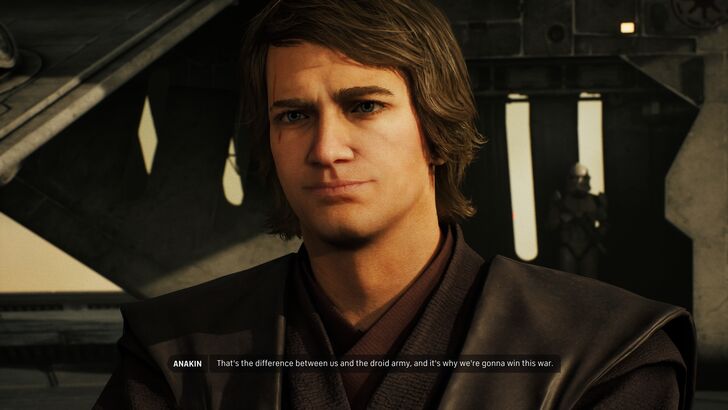
This all, somehow, remains compelling even as Zero Company’s story occasionally veers into Star Wars nostalgia. You get to meet characters from across the universe, from Chancellor Palpatine to the Clone Wars show’s Captain Rex to the Jedi games’ Second Sister. In a pivotal story moment, you even get to team up with Anakin Skywalker as you fight with him on Umbara.
What makes this integration of the greater Star Wars universe work is that it feels more than just cheap, nostalgic cameos. Every one of these Star Wars story beats are intentionally placed and help contextualize the story in the events of the galaxy. In Anakin’s case, the power disparity between him and the rest of your Operators is palpably wider than the Death Star’s chasms, and it uses gameplay to show you just how uphill your battle against the Coil really is.
Recruiting and Fighting With Lovable Space Oddities
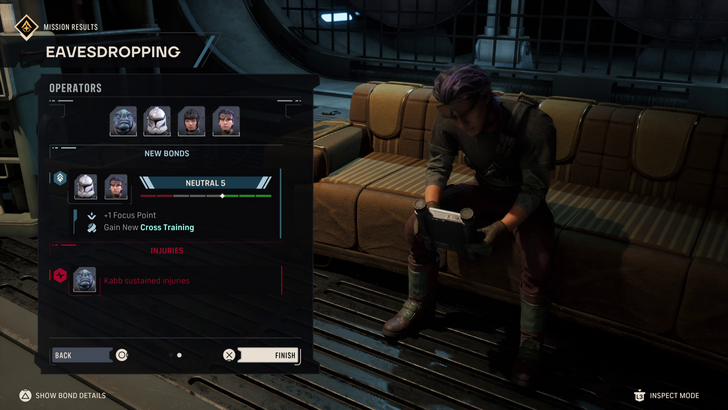
This story, ultimately, wouldn’t work if its characters were the least bit boring, much less unlikeable. Thankfully, everyone from your customizable protagonist Hawks, to your squad members in combat, to the crew left behind on The Den, are all wonderful and distinct. My favorite part of Zero Company, bar none, are the characters, and they make everything from the story to the gameplay that much better.
Hawks is a fantastic protagonist who toes the line between self-insert and a well-defined character quite well, maintaining a sarcastic, pragmatic, and empathetic personality that grows as the story progresses. As far as being a self-insert goes, the character customization in Zero Company is top notch. I’ve seen people customizing their Hawks to look like everyone from K-Pop idols to Revolver Ocelot to… Princess Diana, for some reason.
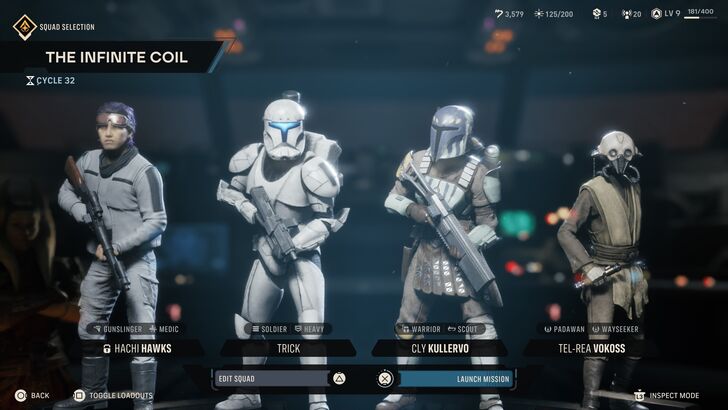
A leader is only as good as their team, and to that end Hawks’ Operators and non-combat teammates are sharply written and distinctly compelling. As the lifeblood of both the narrative and the gameplay, Zero Company’s roster of playable story characters are written incredibly well. Their narrative arcs provide them more depth, expand the Star Wars universe much more, and make their presence on the battlefield that much more important.
Whether its Kabb lamenting his shortcomings as a father or Jae wanting to free herself from her royal lineage while wanting to free Luunata from the Coil, these characters have all suffered in tragic but compelling ways. It makes their arrival to Zero Company that much more poignant; the crew becomes less of a ragtag mercenary group and more of a genuinely endearing found family processing their losses together.
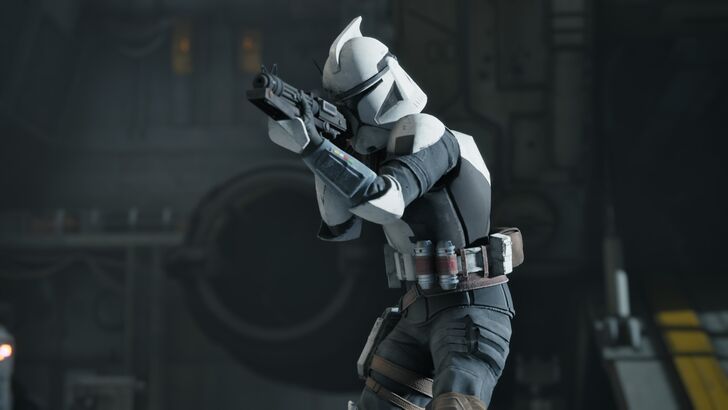
Perhaps my favorite of these, the former Clone Trooper turned mercenary and Sabacc expert Trick, has some absolutely killer lines and moments as he processes his existence as a Clone Trooper. It makes it all the more heartbreaking, then, when Palpatine executes Order 66 and he can’t help but turn on us and his friends.
These characters only grow further since their existence isn't entirely dedicated to Hawks alone. They interact with each other, forming Bonds that actually matter in the gameplay, while story cutscenes show actual animosity and friendship between them. Beyond the sci-fi sheen of the Star Wars universe, it's the characters that help Zero Company stand out on its own as a fantastic narrative.
Never Tell Me the Odds
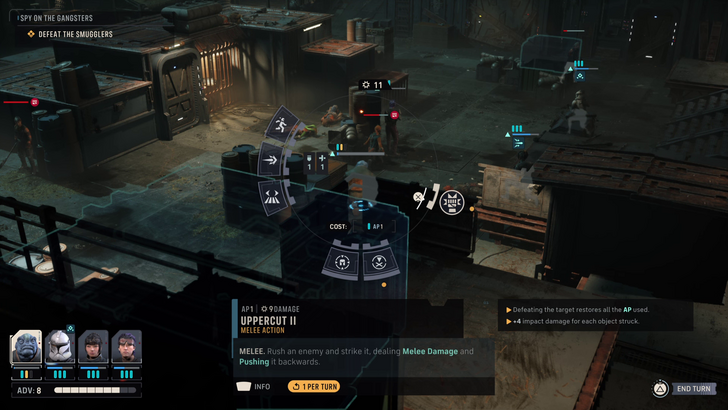
Star Wars Zero Company contains everything you’ve come to know and love from XCOM and similar games, serving as a great entry point into the genre. My relative unfamiliarity with this style of tactical, turn-based RPG was rendered a non-issue near immediately, with the game’s opening hours easily giving me more than enough information to learn how to maneuver the battlefield. In fact, what might come across as a bit of a pain point for veterans is just how much of XCOM’s DNA still makes up Zero Company’s foundation, barely doing enough to be a different take on the genre. Still, XCOM pioneered an entire genre for a reason, and if it ain’t broke, why fix it?
Even so, the game remained entirely challenging and expressive, even to a newcomer like me. The turn-based battles are tense and heavily punish you for not strategizing around positioning and adaptation, and the difference between survival and failure can sometimes boil down to moving Hawks to a different spot.
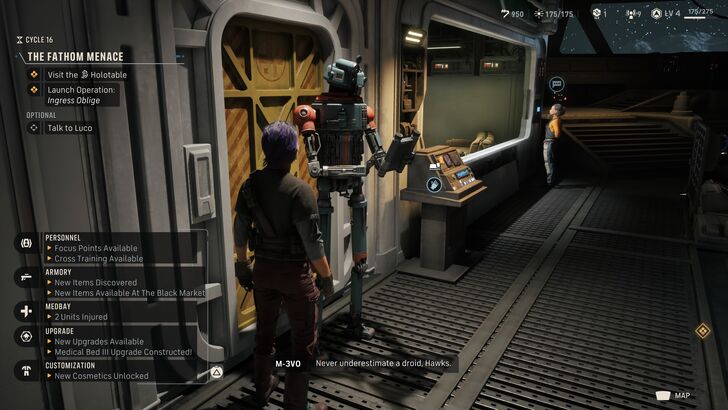
This is made better by the Permadeath feature, which permanently kills off an Operator after enough injuries. It’s a great narrative and gameplay tool that raises the stakes for both, and while I tried my absolute hardest to get through the game without getting anyone else killed (RIP to my boy Aurelio), there were a ton of close calls.
The new Advantage system, meanwhile, gives the tactical gameplay a different flow. Getting to access strong, sometimes game-breaking abilities (like Cly’s Electrowebs) by maximizing AP points and damage lets players approach combat as aggressively or defensively as necessary. Planning around the moment-to-moment actions, then, itself requires a ton of forethought and decision-making that rewards good risk assessment and preparation.
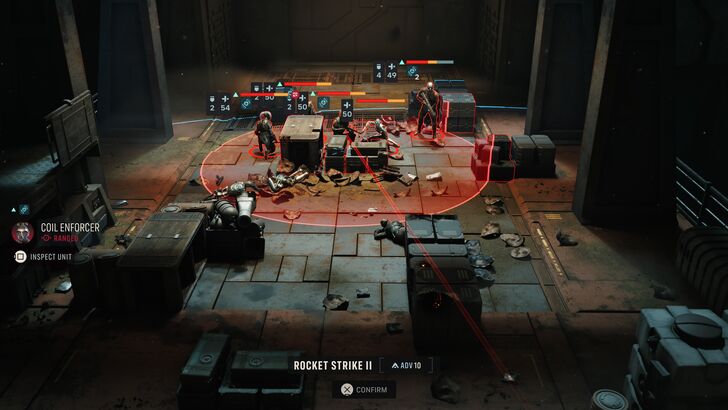
The game did, however, make me want to tear my hair out with a few seemingly insurmountable late-game encounters. The difficulty spike in this game comes out of nowhere and truly tests if you’ve been paying attention to the gameplay mechanics and character builds. If you haven’t, you’ll be stuck dying to the same encounters and reloading your saves until you finally get it right.
Thankfully, the game offers a lot of flexibility with character builds and team compositions across your team, which makes experimenting with different mechanics insanely fun. It gets even better as characters unlock secondary specializations, where finding out the synergy between character classes can feel incredibly rewarding. The game can be tough, but it at least gives players more than enough tools to overcome a challenge without pointing them to a solution.
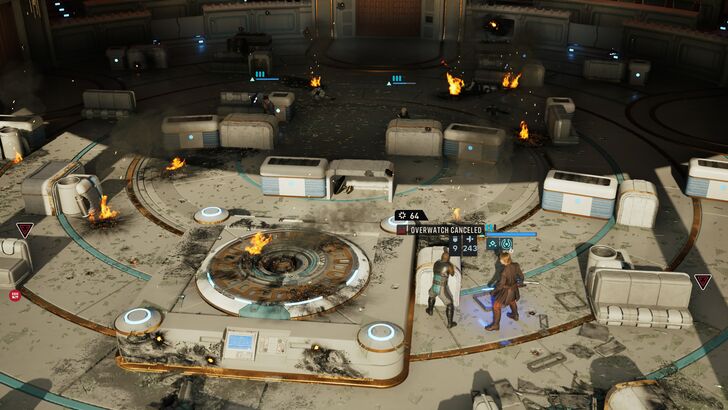
If nothing else, Zero Company introduced me to the genre with a rule that I learned while playing competitive Pokemon: if it’s not 100% accurate, it's 50% accurate. It can be frustrating in the classic way that the genre is, especially with the difficulty spikes, but when the odds are in your favor, it’s an absolute blast.
I Sense a Disturbance in The Force… and the Frame Rate
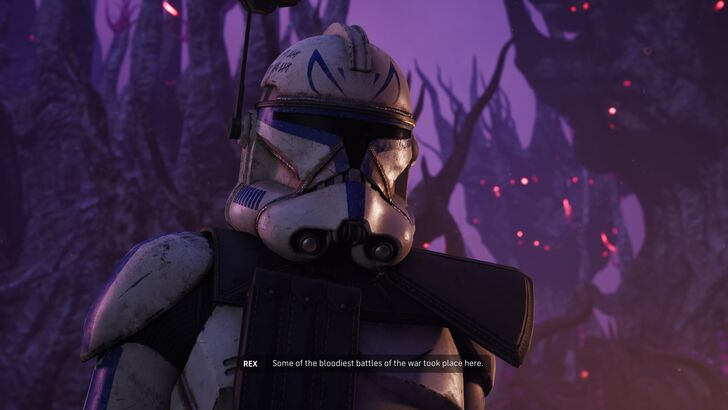
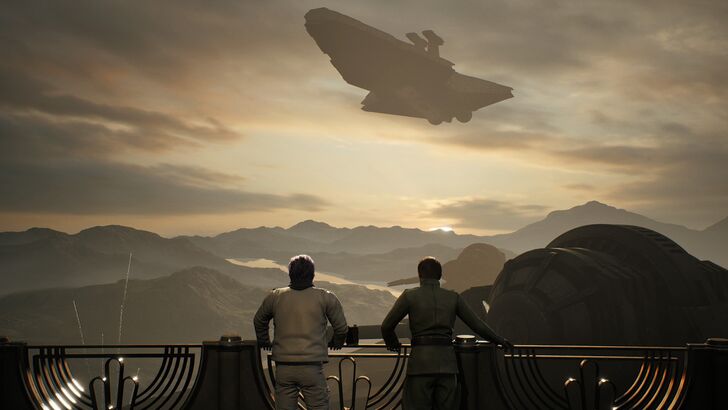
Star Wars games, at least the ones I love like the Jedi titles, bank on the series’ cinematic nature to sell the power fantasy through bombastic setpieces and high-level production. That’s still true for Zero Company, which remains visually gorgeous in its presentation. However, its performance issues bring the otherwise wonderful presentation down a couple notches.
What Zero Company does with the usual Star Wars visual language is trade in the 3rd person action for top-down tactical strategy. As a result, it brings in an entirely new, fresh take on that cinematic feeling. Combat in Zero Company feels deeply strategic and precise with the slower pace, with good-looking character models, great UI, and beautiful environments. Attack animations also feel deeply impactful, making combat that much more exciting.
However, the performance issues were simply too jarring to ignore. They range from graphical glitches, like character limbs shaking randomly to janky animations, to outright camera glitches that kept crucial actions out of sight. This was especially true for encounters with multiple enemies on the board, which dropped the frame rate down to a crawl even on the PlayStation 5 version’s Performance mode.
All this, admittedly, I could forgive as an unfortunate but glaring lack of polish on an otherwise fantastic game. What really frustrated me, however, was the game’s tendency to crash while saving on PlayStation 5, which happened to me more than once. I had tried to save after nearly 4-5 hours of progress in some of the game’s most brutal encounters, and the game just… died on me. I genuinely fell down to my knees like Darth Vader at the end of Revenge of the Sith.
Greatness Reverberates Across the Galaxy
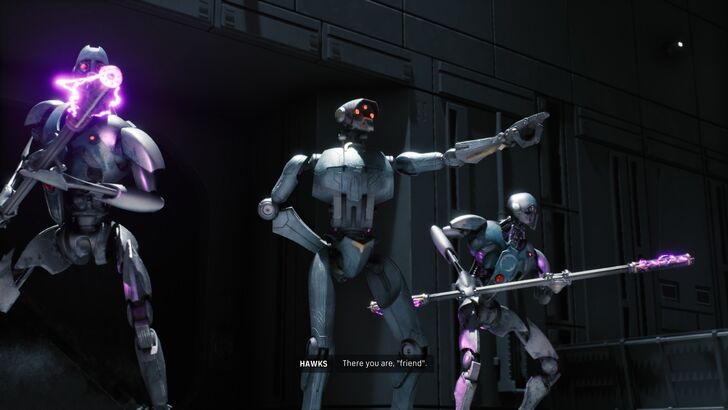
Thankfully, Zero Company’s sound design is virtually flawless and faces no compromises. Star Wars’ usual orchestral style is on full display here, grandiosity and beauty intact, with just enough subtle motifs and instrumentation to give it its own identity. There were moments where I just let the game idle in the background as The Den’s orchestral theme played, and it was magnificent.
The voice acting is also fantastic across the board, with everything from humorous, casual conversations to crucial story moments containing beautiful performances. It works perfectly with the sharply written dialogue, bringing these moments to life effortlessly. Hawks gave a speech towards the end of the game that was so moving in its writing and delivery that it had me standing in front of my screen in awe, ready to die for Zero Company.
Is Star Wars Zero Company Worth It?
A 100% Hit for Star Wars and Tactical RPG Fans, but Beware the Bugs
Star Wars Zero Company is undoubtedly one of the freshest, most unique takes on Star Wars we’ve had in a while, doubly standing as a fantastic tactical RPG on its own merits. It's an inviting but challenging experience for newcomers, while genre veterans will have enough brutal difficulty to grind their teeth on in the harder difficulties and encounters. Its narrative stands strong even for non-Star Wars fans, but the die-hards will appreciate just how much this game expands upon the universe in a smart and compelling way.
It’s ultimately ironic, however, that Zero Company’s biggest villains are bugs, since that remains true for the actual product. There is yet to be any rhyme, reason, or explanation as to what causes Zero Company’s performance issues to appear, and it's truly a Sabacc level gamble if it’ll affect you. Still, much like the journey you’ll undergo with Zero Company, overcoming the bugs reveals an RPG experience that’s truly special.
FAQ
Do I need to watch any Star Wars to understand Zero Company?
No, but some context surrounding Star Wars is recommended to fully understand the game's story. At most, a cursory knowledge of the movies and general timeline will help with understanding the narrative, but none of this is fully necessary to play the game.
<!--
Game8 Reviews