



| Star Savior | |||
|---|---|---|---|
| Release Date | Gameplay & Story | Pre-Register & Pre-Order | Review |
Overview
What is Star Savior?
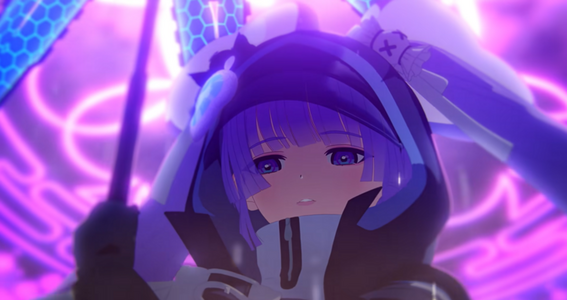
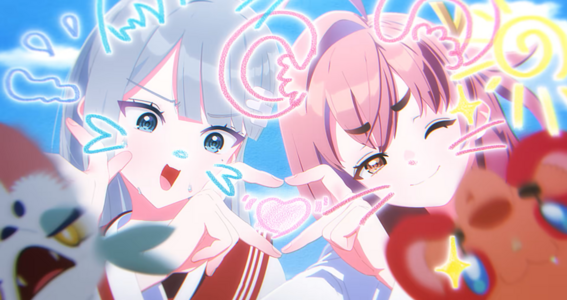
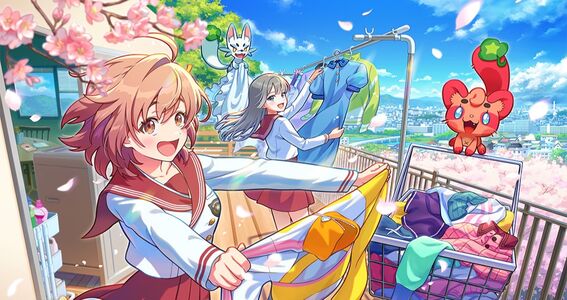
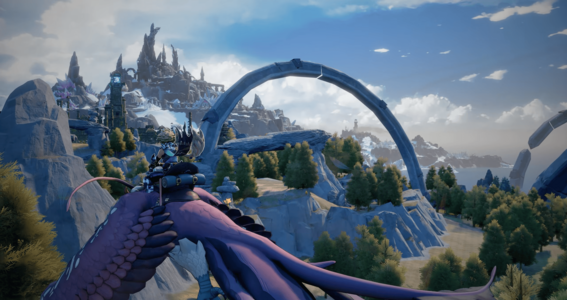
Star Savior (formerly known as Project Star) is a gacha-style mobile RPG developed by South Korean studio Studiobside, the same team behind Counter:Side. It is a character-driven game where players take on the role of a Captain, guiding and developing a cast of Saviors through a progression system. The core gameplay loop revolves around a growth system that features interactive and bonding mechanics.
Star Savior features:
⚫︎ Roguelike training mode
⚫︎ PvP and ranking systems
⚫︎ Meta-progression systems
⚫︎ Guild and community features
⚫︎ Character gacha
⚫︎ Time-based level accumulation
For more gameplay details, read everything we know about Star Savior’s gameplay and story.
| Digital Storefronts | |||||
|---|---|---|---|---|---|
 Steam Steam |
 iOS iOS |
 Android Android |
|||
| Free-to-Play | |||||
Star Savior Review: The Beauty That Wants More Than Time
Peak Patchwork for a Price
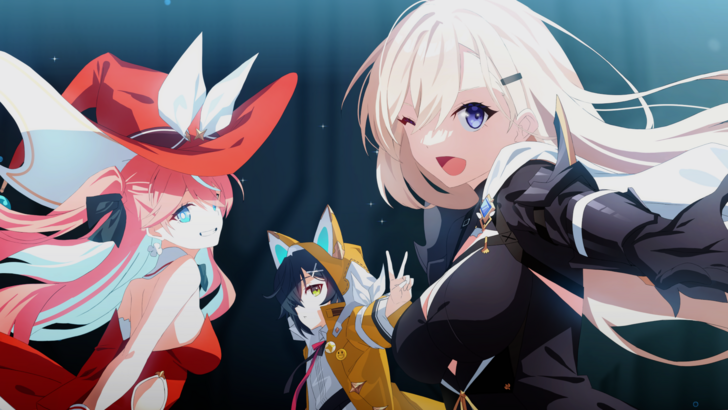
Counter:Side wasn’t exactly a niche mobile game when it was released. It had decent popularity, especially in Korea, for its extremely competitive linear tower defense PvP mode, and it also had a good following outside of it for its high quality audiovisuals and story. However, a mere few years after its launch in Korea and a year since it became available in Global, Studiobside, its developers, suddenly announced that they were working on another title.
Initially called Project Star, Star Savior weirdly doesn’t share many elements with its predecessor. This was a strange pivot considering that by this point, people were used to studios carrying something from their previous titles into newer ones. Instead, it’s a roguelike turn-based RPG that moved away from the developers’ amazing 2D character art and spritework and into the world of 3D models and animations.
However, it shares the former’s strong narrative despite using entirely different, more accessible themes. It also still has an amazing cast of characters, a well thought-out plot, and an emotionally-heavy story. Oh, and it still really wants to take your money.
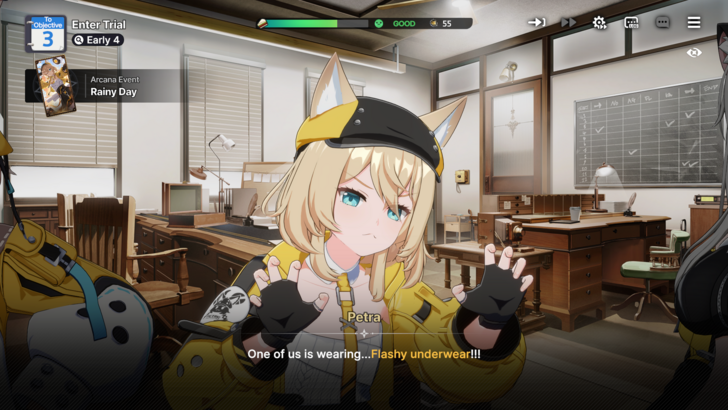
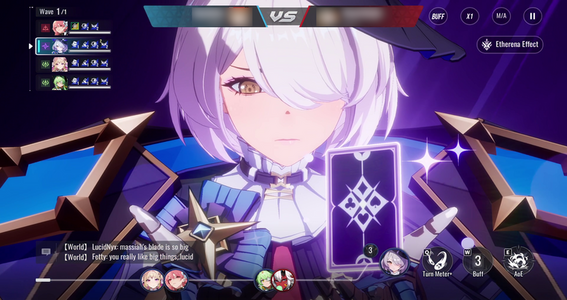
If I were to describe Star Savior to someone who plays mobile games often, it would be what you would get if you took Umamusume: Pretty Derby’s core gameplay, Honkai: Star Rail’s combat system, and Goddess of Victory: NIKKE’s progression systems, and stitched them together to form one cohesive whole.
The result itself is amazing, and is only elevated by the astonishingly good visuals that its developer, Studiobside, has come to be known for. But on the other hand, it also inherited some of the more unsavory aspects of each game, especially in how progression pressure is used to essentially throttle you into spending.
In other words, it’s a game that delivers the goods while eyeing your wallet the entire time.
A Journey of Loss
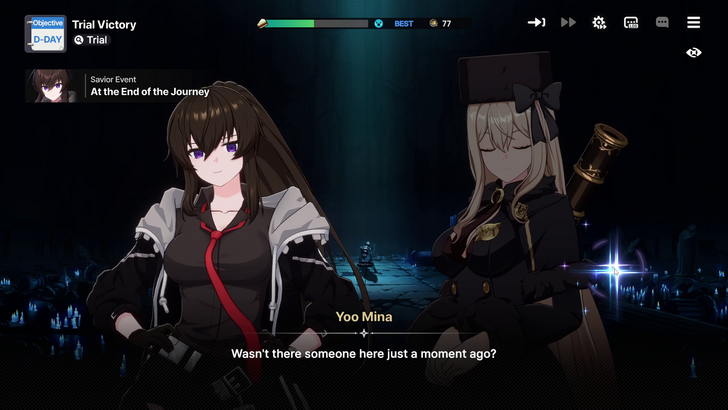
Star Savior is the story of the Journey; a year-long event of trials and tribulations where Saviors are chosen to inherit the power of the stars. You, as the Journey Captain, are tasked with guiding these prospective Saviors through these trials so they may ultimately save the world.
Up to that point, everything sounds standard. Predictable, even. However, unlike most mobile game stories, it decided to pull off something uncommon:
After each Journey, the Saviors you nurture and everyone around you will forget your existence. Then you, whose place in the world has been lost, are forcibly pulled back to the start of the Journey, ready to train that timeline’s Savior. Basically, Star Savior isn’t a true story of heroics or friendship. It’s more a tale of sacrifice, loss, and isolation that comes with its specific twist.
Colors Cast With Personalities
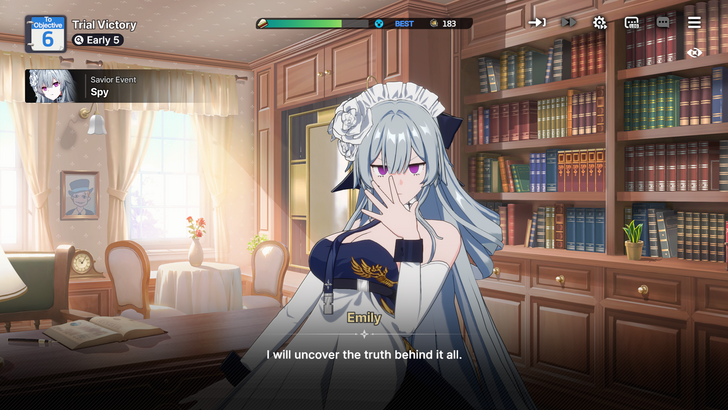
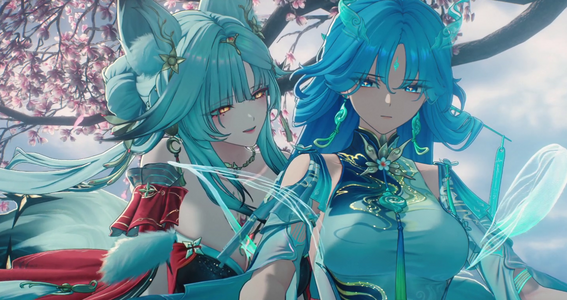
The strongest part about Star Savior’s writing is undoubtedly the characters it produced. They are a cast full of color that needs no descriptive profile in order to fully enjoy. And thanks to the game’s own systems, their personalities affect not only the experience playing through the Journey, but also how you can view the game’s combat.
Emily, arguably my favorite character thus far for example, is an eccentric maid who originated from a mercenary corp. But at the same time, she suffers from short term memory loss, chuunibyou syndrome, an obsession with battle, and a penchant for doing push-ups the moment she feels she made a mistake.
She even does the whole “I am the Dark Flame Master” pose. Truly a paragon of maid-like qualities.
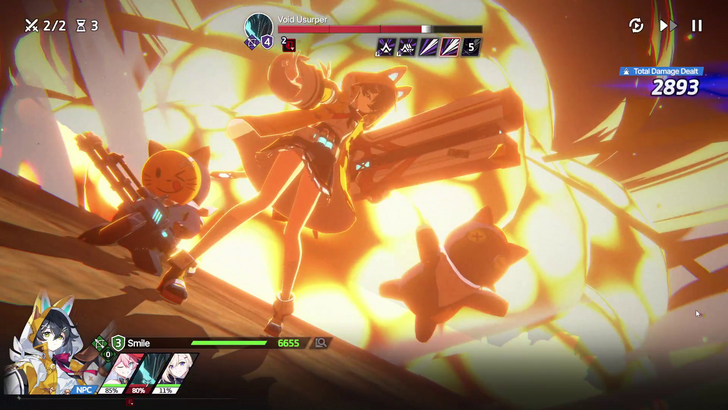
Anyway, since the game makes you interact with every character a lot during the course of the Journey, having a unique and quirky cast to train each time gives every run a fresh coat of paint. This is a multiplicative advantage to Star Savior’s replayability, since it also has your typical roguelike’s run diversity.
But most importantly, it’s able to reach deeper into the gameplay thanks to your own experience training them. Going back to Emily, for example: considering her utterly unserious personality, seeing her put up a barrier by spraying detergent on her allies feels more like her expressing herself than a simple depiction by the developers. It gives the game a kind of life that extends beyond where the Journey takes you.
Train the Savior of the Stars
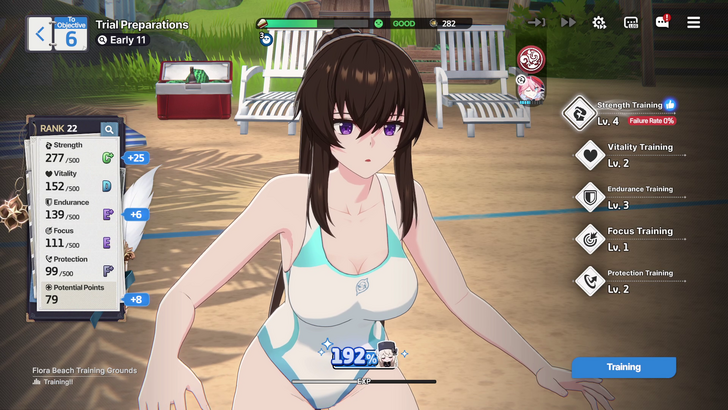
Similar to Umamusume, Star Savior’s core gameplay involves training your characters, or Saviors, through a roguelike training session. The five main stats you can train are Strength, Vitality, Endurance, Focus, and Protection. These, unless specified by a Savior’s abilities, affect your attack damage, HP, Defense, chance to inflict debuffs, and chance to resist them.
These stats are very simple to understand, and you’re more likely to know which and when to focus on something without much spoonfeeding. A good contrast comes from comparing it with Umamusume and its unintuitive Guts stat, which often necessitated online guides to have a very specific section covering it. Lacking an opportune moment, you can then consider if a different option, such as questing, would be better otherwise.
Quests reward you with money, and money is spent purchasing helpful items, or renting either a bed to recover your mood, or a quiet room to meditate and recover from ailments in. The latter two also allow you to recover Stamina, which you will consume whenever you train. It’s a loop that, bar extremely lucky circumstances, will allow you to spend an entire run without many instances of feeling like you’re being forced to a certain choice.
Lots of Progression Options
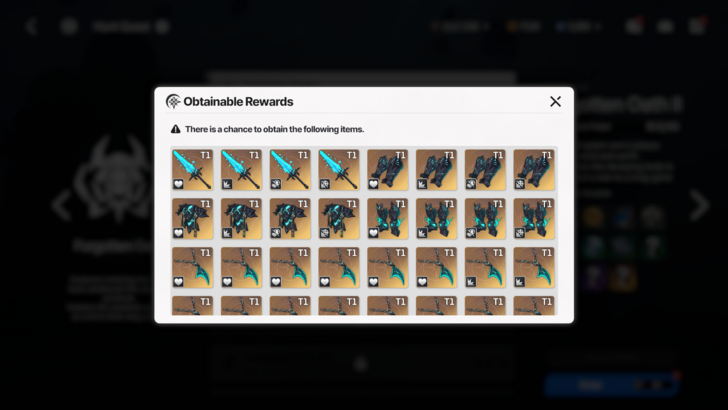
Once you encounter the eventual stat check enemies blocking you from advancing, though, Star Savior offers a ton of options to overcome them—almost suspiciously so, really. Aside from playing its roguelike mode for stats, you can also individually level them up, equip them with gear, increase their skill levels, and feed them duplicate copies, among other things.
Outside of that, there are also ways to upgrade entire classes and elements as a group. This means that maxing a Savior out in one field doesn’t mean you can’t push their numbers even higher.
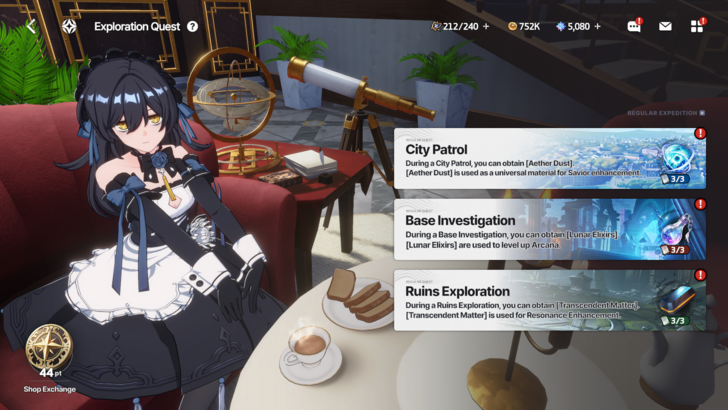
The implementation of its meta progression systems is strangely generous as well. They offer free runs, cleanly segregated stages, and even universal materials for certain investment avenues. You can even reset your Savior’s levels and invest them into someone else.
What this ultimately means is that none of your precious stamina is wasted, saving you precious gacha roll currency. Predictably, though, such dubious generosity comes with some caveats—
Many of them, actually.
Time-Gated Level Progression
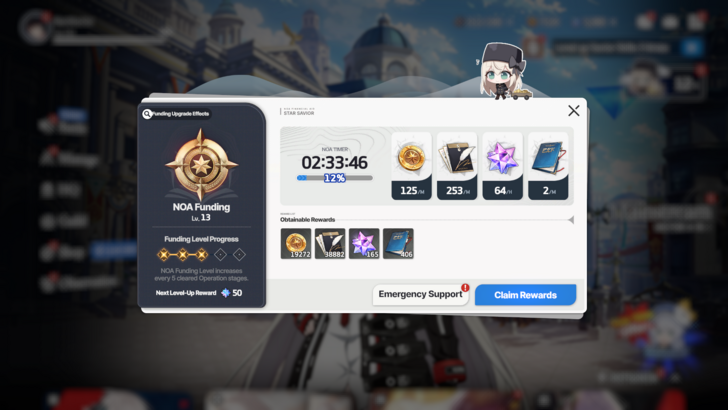
If there’s one thing wrong about the progression system right now, it’s how level-up materials are locked behind a time-based accumulation system. This is a very frustrating system due to the fact that it forces players to make logging into the game a daily necessity. It’s already bad enough that daily quests already force us into that habit just for that trickle of gacha currency.
Besides, a system like this is ill suited for roguelikes. The genre lives on the thrill of uncertainty and the satisfaction of succeeding high-risk rolls. Adding an incremental level progression system that can’t normally be brute forced is like the game telling you that you’re only as strong as the number of times you log in during the day.
Now, there’s a reason why I said that you can’t “normally” brute force leveling up. That’s because you can, technically. By paying money.
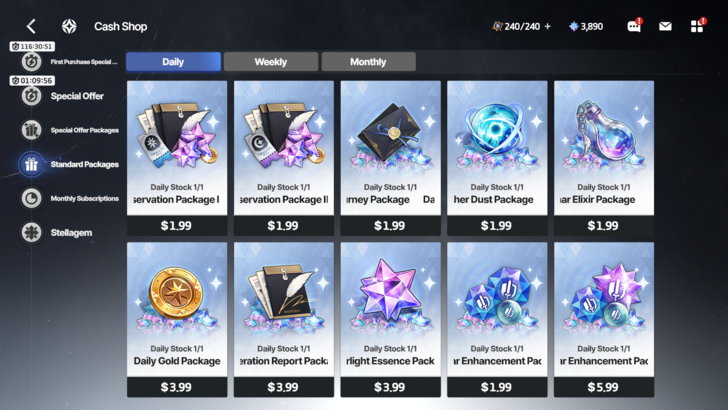
And when that option is available, it starts to become pay-to-win. And unfortunately, the fact that Star Savior also has a PvP mode means the gap between free-to-play enjoyers and spenders will be very noticeable, especially early on.
In fact, they're so blatant in asking for your financial support that you'll get immediately assaulted—violently—by a notification promoting their paid packages whenever you pass certain milestones. It's as if the entire Studiobside staff’s ability to pay rent rested on my decision to buy more materials.
Dupe-Based Level Caps
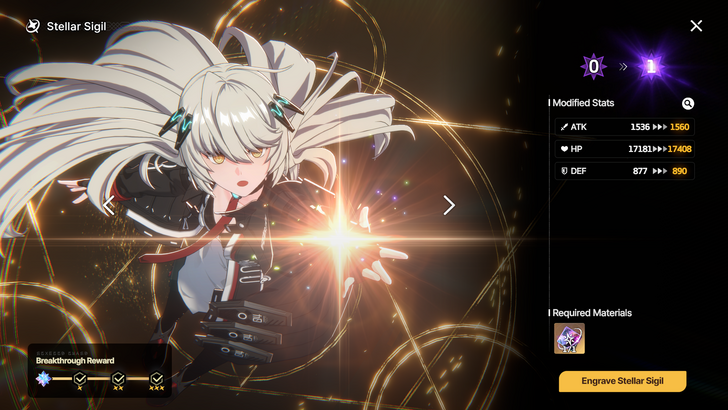
Moving onto the most important part of any gacha game; the gacha itself. Star Savior features a very high SSR rate at 4% per pull, including the 2% for the rate-up unit. This is the same as Goddess of Victory: NIKKE, and they also share the same Spark-based guarantee system at 200 pulls.
But while these rates are phenomenal for a gacha game nowadays, it’s entirely possible for you to keep pulling SSRs from the gacha, but never actually get the rate-up unit until you hit the exchange quota. And that’s a massive issue because of one important mechanic:
Its dupe-based level caps.
Serving as another indication of the game’s favor towards the spenders, every SSR Savior’s level is capped at 160 until you feed them dupes. Each dupe increases their cap by a further 20 starting from their second dupe, before finally reaching the soft limit of 200. The increased level provides higher stats by a not insignficant margin, and feeding them even more dupes raise them even more.
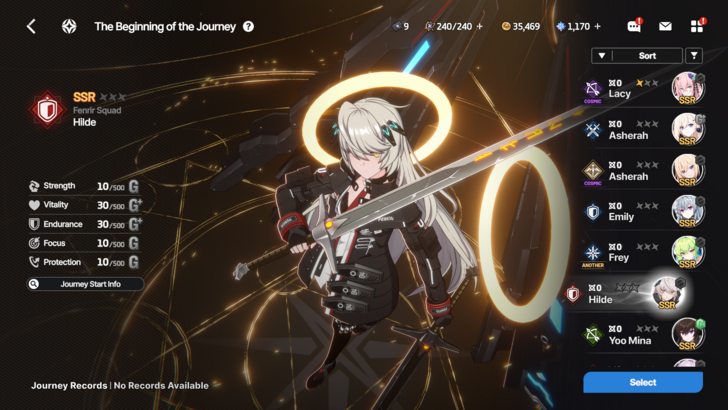
Now, to be fair, they do have a level sync option. This allows your four highest-level Saviors to serve as the baseline for the rest of your characters. However, it’s mostly only there to let you save up on materials because the main limitation remains: it is still absurdly difficult to get a lot of dupes for a single SSR unit. That, and level sync doesn't provide the same stat bonuses as dupe-feeding does.
For reference, this is also the same system that Goddess of Victory: NIKKE uses. But despite that game offering a lot of gacha credits daily, it doesn’t always work well. I know someone who spent almost an entire year behind the level 200 barrier because of bad luck, despite playing the game religiously. And if it can happen to one person, it can definitely happen to many more.
This has a very unfortunate interaction with its time-gated level progression. See, if you’re free-to-play, you’re basically stuck waiting for free pulls and materials to come in to make the necessary vertical investment and break through the level caps. And once you can’t, you’ll become stuck in a loop of doing the Daily Quest chores until you luck out.
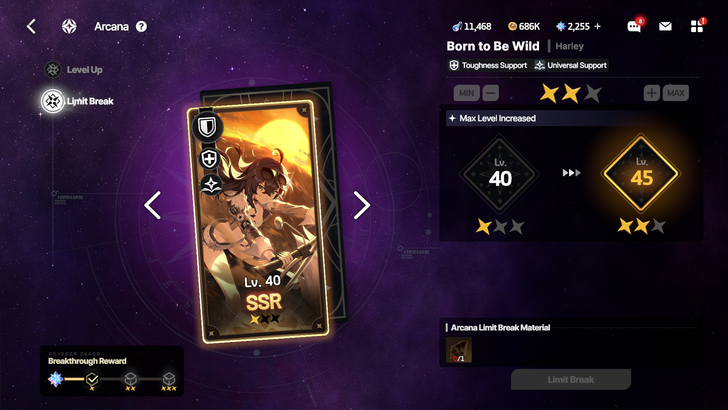
Worse still, you not only have to pull for characters in this game, but also for the training cards (Arcana) to boost your training efficiency. And as you can imagine, having better Arcana means you can max out, say, a damage-dealer’s offensive stat faster and then spend the rest of the turns improving their bulk or whatever else.
And just like the characters, these also have dupe-based level caps. Fortunately, though, obtaining them isn’t a strictly necessary endeavor to progress later on. But, they definitely do help, and definitely do add another investment layer to this already stacked system.
Is Star Savior Worth It?
Still a Solid Game
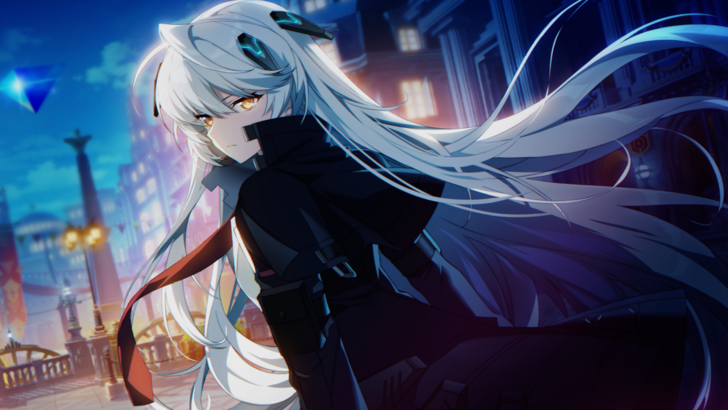
Regardless of all my complaints, Star Savior is still a very fun game to play. Though it's heavily carried by its audiovisuals and character designs, you can most certainly enjoy everything it has to offer without having to spend more than what you can afford.
Most importantly, the game itself is very fun to play. There’s tons of content to engage with, and the combat is a mechanical treat, especially when you try the PvP. It even has a Guild system where you can connect with other players, exponentially increasing the engagement you can get out of the game.
FAQ
How many dupes do you need to max out a character?
In total, you need four copies of an SSR unit to reach the level 200 soft cap.
Is Star Savior a sequel to Counter:Side?
No, Star Savior is a standalone game. However, it’s heavily implied that the two are somewhat connected through Counter:Side’s multi-dimensional and time-traveling themes.
Game8 Reviews