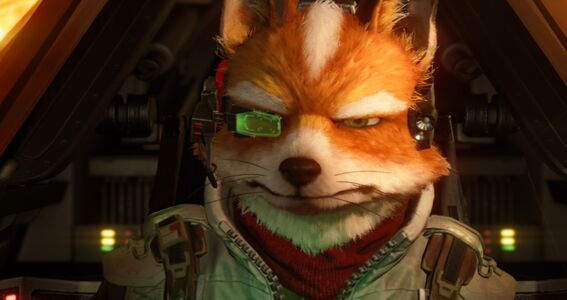




Star Fox (Switch 2) is Nintendo's fourth time retelling the exact same Lylat conflict since 1993. Read our review to see what it did well, what it didn't do well, and if it's worth buying.
Overview
What is Star Fox (Switch 2)?
Star Fox is the 2026 remake of the classic Star Fox 64, released on the Nintendo Switch 2 on June 25, 2026. Announced during a surprise Star Fox Direct on May 6th, Star Fox brings back Fox McCloud and his ragtag crew to save the Lylat System from destruction in a modern reimagining.
A revamped, cinematic take of the original, Star Fox (2026) will feature overhauled character designs, fresh takes on various stages, detailed cutscenes, fully voiced dialogue, and a new orchestral soundtrack.
Star Fox (Switch 2) features:
⚫︎ Complete Visual Overhaul and Realistic Art Style
⚫︎ Extended Story Cutscenes
⚫︎ Joy-Con 2 Mouse Mode Targeting
⚫︎ Two-Player Campaign Co-Op
⚫︎ 8-Player Objective-Based Multiplayer
⚫︎ Switch 2 Camera Integration and AR Filters
| Digital Storefronts | |||||
|---|---|---|---|---|---|
 Switch 2 Switch 2 |
|||||
| $49.99 |
Star Fox (Switch 2) Review: Exactly the Comeback Fox McCloud Deserves
Somehow, Andross Returned
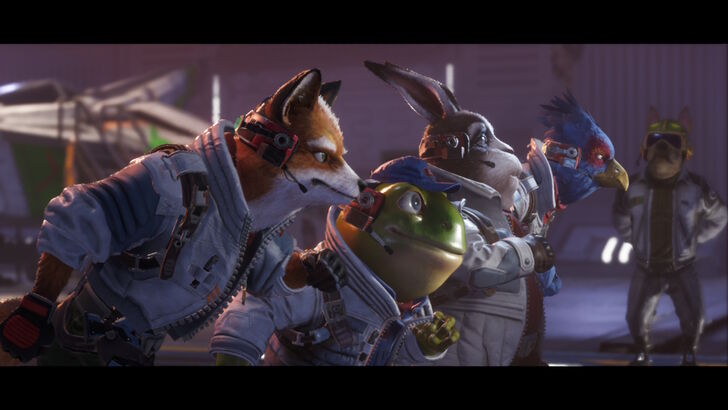
For an entire generation of players, and perhaps even Nintendo themselves, Fox McCloud and his crew had become relics behind the Big N’s cabinet of IPs. They became faces you chose on a Super Smash Bros. select screen, but they lacked the star power of Link or Samus Aran. It is honestly a miracle that the franchise hasn’t suffered the same fate as Kid Icarus, or worse, F-Zero. For a decade, the series sat in a hangar bay, waiting for a reason to fly again.
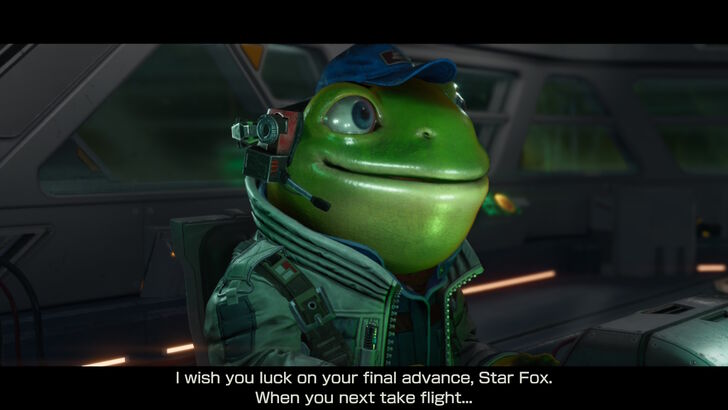
This new cinematic version of Star Fox on the Switch 2 attempts to change that. I was skeptical of this remake at first. This is the fourth time Nintendo has gone back to the well to retell the exact same Lylat Wars we’ve been to on the SNES, Nintendo 64, the 3DS, the Wii U. Once again, we climb into an Arwing to fight the same war against Andross. Your flight begins almost exactly where it did nearly thirty years ago. You launch from the flight deck, your Arwing dips into the skies of Corneria, and the valleys open up before you.
Credit where credit’s due, though, it avoids being a cheap nostalgia cash-in. Despite being told and retold and remade and reimagined a bunch of times, this old war feels entirely fresh thanks to its script treating its characters like the stars of their own space opera.
A Story so Simple This is the Fifth Time It’s Told
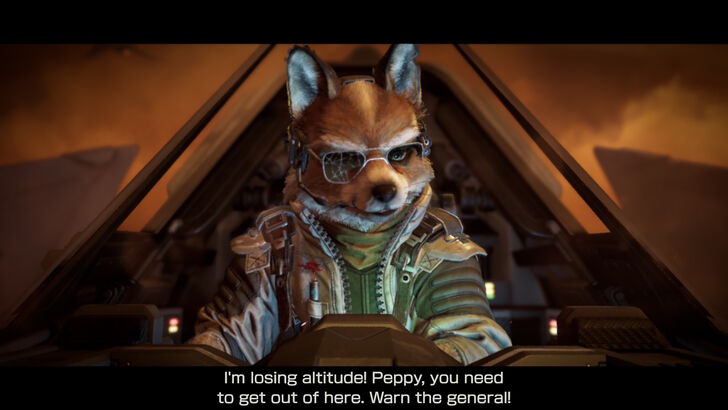
Not that Star Fox’s story is going to win any awards. Far from it, really. As impressive as the game’s cinematic presentation may be, this is still a space opera that is considerably lighter than most modern games. Star Fox on the Switch 2 is a retelling of the same story many of us first experienced on the Nintendo 64. The difference is that Nintendo and its partners have taken the time to flesh out some details that were once little more than brief exchanges over a radio channel or lines tucked away in a manual.
It still begins with the Lylat System, a cluster of planets thrown into war by the mad scientist Dr. Andross. Once a respected researcher on Corneria, Andross was exiled to the wastelands of Venom after conducting dangerous experiments. Years later, he returns with an enormous military force, launching an invasion that threatens the entire system. In response, General Pepper of the Cornerian Army turns to Star Fox, a mercenary flight team originally led by Fox McCloud's father, James.
Before the events of the game, James and veteran pilot Peppy Hare embarked on a mission to investigate Andross. Their teammate, Pigma Dengar, betrayed them during the operation, leaving only Peppy to escape and return home with the news that James had been lost. Years later, Fox inherits both his father's Arwing and his role as leader of Star Fox. Alongside Peppy, Falco Lombardi, and Slippy Toad, he accepts General Pepper's contract to push back Andross' forces and restore peace to the Lylat System.
Again, a simple space opera.
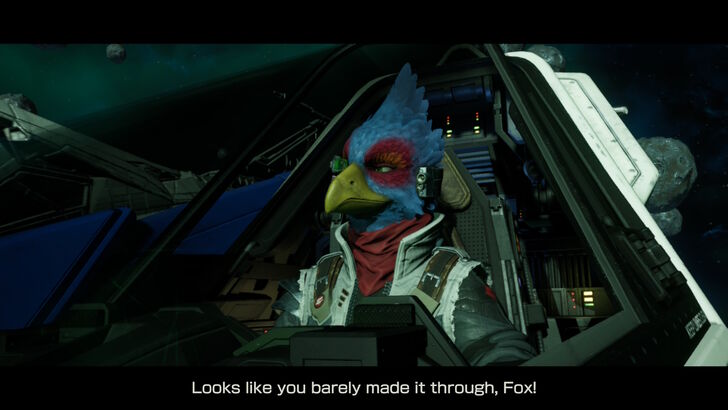
The campaign itself is not particularly long. One run through the story can be completed in less than an hour. Stages here are fairly short. On Normal difficulty, many encounters can be forgiving, with some bosses going down after only a handful of well-placed shots.
Expert mode, however, is a completely different story. There, survival depends on mastering the game's mechanics. You need to learn enemy attack patterns and barrel roll as though your life depends on it.
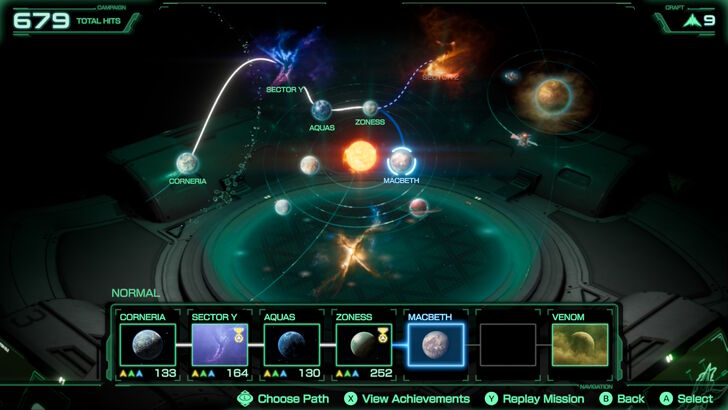
The reason I bring this up in a discussion about the story is because replayability has always been part of how Star Fox tells its narrative. Like Star Fox 64 before it, this remake features branching routes and alternate paths that ensure you’ll never see all sixteen stages in a single run. Different choices lead to different missions, different encounters, and even different story beats.
It’s very arcade-y by design and encourages players to return repeatedly to slowly piece together every corner of the campaign while chasing medals and higher hit scores.
We Get to Hear and See More of the Cast
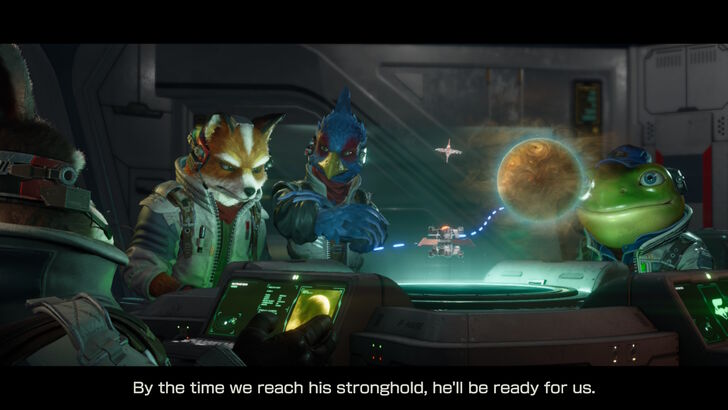
So what exactly is new here? Well, this is a far more cinematic retelling of the original adventure, one that finally visualizes many of the events and relationships that older games could only describe. The cutscenes here are impressive and deliver large-scale space battles that feel appropriately grand. Watching fleets clash in orbit while laser fire streaks across the screen does a lot to sell the idea that an entire star system is at war.
The prologue is perhaps the best example of this change. In the original game, James McCloud’s fate was largely treated as a Star Wars opening crawl. Here, we witness Pigma’s betrayal firsthand, see the consequences of James’ disappearance, and understand how it continues to affect Fox years later.
Fox’s story has always been about more than stopping the Saturday-morning cartoon antagonist Andross. Throughout the campaign, characters frequently compare him to James. Every time Peppy or General Pepper brings up his father, Fox's frustration becomes increasingly apparent. He respects James' legacy, but he also wants to be recognized as his own person.
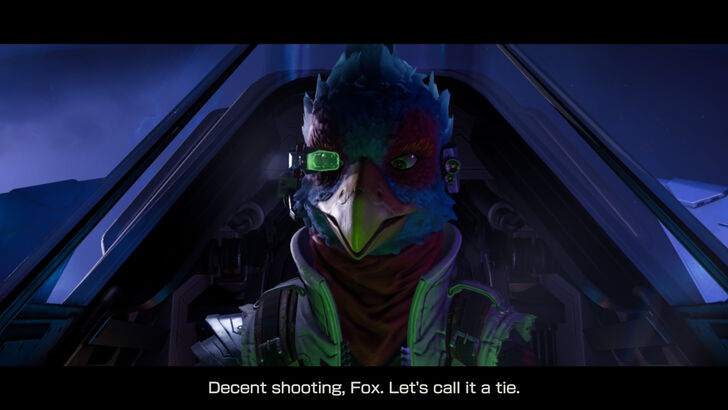
This is largely due to what I consider the remake’s biggest improvement: the expanded interactions between Fox, Falco, Slippy, and Peppy. Their personalities come through not only through the radio chatter during missions, but also through new cutscenes and the pre-level mission briefings, where their characteristics are made more apparent.
Fox is portrayed as capable and confident, but also somewhat immature, at least at the beginning. He often throws himself into danger for the sake of his teammates, sometimes recklessly so. Falco is still the squadron’s hotshot, arrogant, and eager to prove himself, but his loyalty to Fox is far more evident here. Slippy is still the team’s source of comic relief, whom you have to rescue plenty of times, though the script does a better job of emphasizing his engineering skills. Meanwhile, Peppy effectively becomes Fox’s father figure.
These scenes do a remarkable job of making Star Fox feel like an actual team. For perhaps the first time in the franchise, I actually wanted to see more of their stories outside of the remake. The new presentation adds a warmth that the series has often struggled to convey.
A Remake of a Remake of a Remake of a Remake…
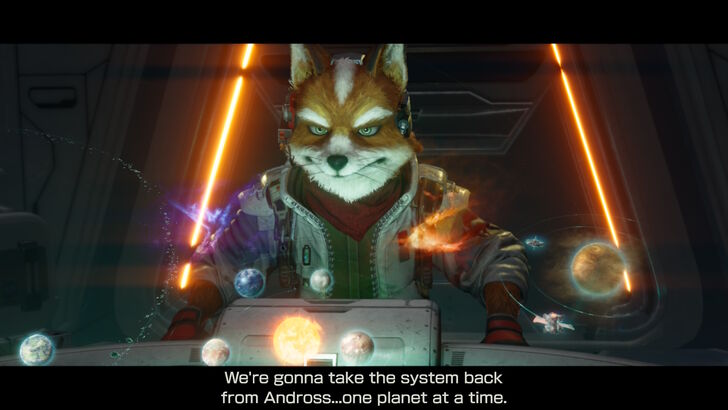
Which is why it’s almost a shame that this is still fundamentally the same story we’ve been revisiting since 1997. Not that there’s anything inherently wrong with that. If it isn’t broken, there’s little reason to fix it. Yet after seeing how much care has been put into these characters and this presentation, I couldn’t help but wish that the same effort had been devoted to an entirely new chapter in the Star Fox franchise.
The game hints at a much larger world beyond the conflict with Andross, but rarely explores it. Characters like Katt Monroe and Bill Grey make appearances, yet they remain largely on the sidelines. The broader politics of the Lylat System, the history of the war, and the worlds beyond Corneria and Venom are still left mostly unexplored. Players hoping for something closer to Star Wars or Mass Effect may find the story surprisingly lightweight. It succeeds as a character-focused adventure, but it never quite becomes the expansive space opera that its world often suggests it could be.
"Do a Barrel Roll"
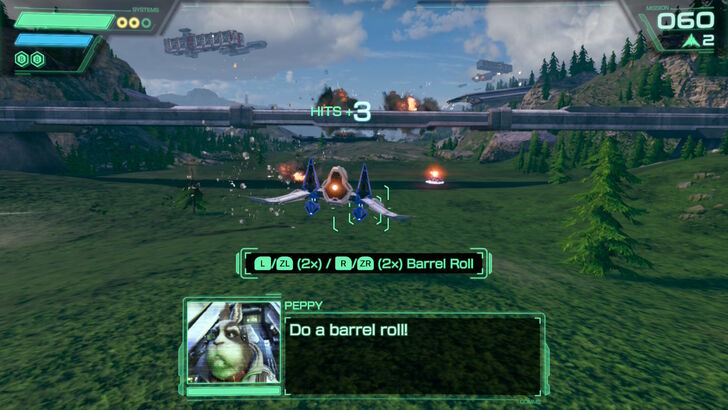
The reason Star Fox 64 keeps finding its way back into new hardware generations is because its gameplay has stood the test of time. Even now, in 2026, it is still insanely fun. Strip away the new cinematics and the visual overhaul, and what remains is one of the company’s better arcade experiences.
For most of the game, you’re seated inside Fox McCloud’s Arwing, piloting through a series of missions across the Lylat System. The majority of these stages are on rails, meaning the Arwing automatically flies forward while you focus mainly on shooting and dodging enemies.
My favorite sections, though, are when the game gives you the freedom to fly wherever you want inside a large arena during All-Range Mode. Here, you’re free to chase targets from any direction while managing your positioning in three-dimensional space. I adore these dogfights, especially whenever Star Wolf enters the picture. I won’t spoil the game here, but nothing quite raises the tension like entering a Star Wolf fight with half your wingmen already hanging by a thread after you’ve just survived a particularly brutal mission beforehand.
If you want an entirely new way to play Star Fox, you can try going about the levels in Mouse Mode, which lets you aim using the Joy-Con’s mouse functionality. I can appreciate what Nintendo was trying to accomplish here. The precision is undeniable. Lining up shots is easier, and experienced players will likely appreciate the increased accuracy.
Personally, though, I never warmed up to it. Holding the Joy-Con as a mouse felt awkward to me, personally. But more importantly, by default, it limits your field of view in a way that reminded me a little too much of Star Fox Zero’s second-screen aiming on the Wii U. It works, and it works well, but after experimenting with it for a while, I found myself returning to traditional controls and playing the game the same way I always did.
Not every mission follows the same structure, however. Alongside the Arwing, there are two other vehicles: the Landmaster tank and the Blue Marine submarine. Admittedly, both feel clunkier to control than the Arwing. The Blue Marine in particular lacks the speed and responsiveness that make flying so enjoyable. Yet despite my grievances, I actually wish the game utilized them more.
Like the original, you only spend a single mission piloting the Blue Marine and just two stages inside the Landmaster. Since those levels are fairly short, you never get much time to settle into either vehicle before the game moves on. That’s a shame because they provide a nice change of pace and help make the different planets feel distinct from one another.
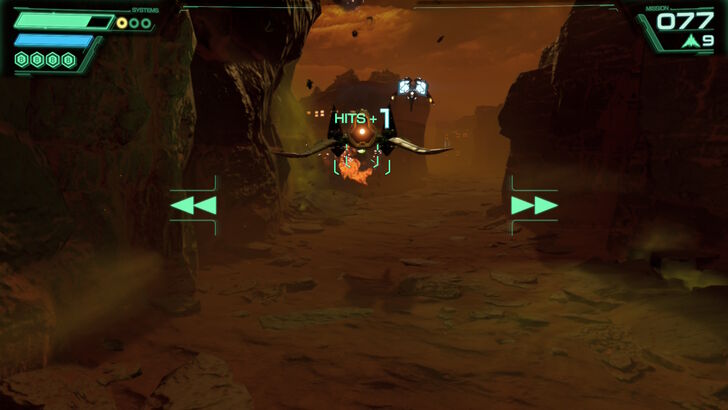
As much as I complain about the Landmaster's controls, one of my favorite stages in the game actually involves that vehicle. More specifically, it involves an alternate route that completely blindsided me. During one replay, I stumbled upon an objective that allowed me to bypass the stage's boss fight entirely.
The campaign encourages experimentation. Every replay reveals something new. Of course, that replayability comes with the downside of running through stages over and over and over again to complete objectives. Fortunately, the underlying gameplay remains enjoyable enough that I rarely minded revisiting old maps.
Challenge Mode is Fun, Multiplayer Battle Mode is Lacking
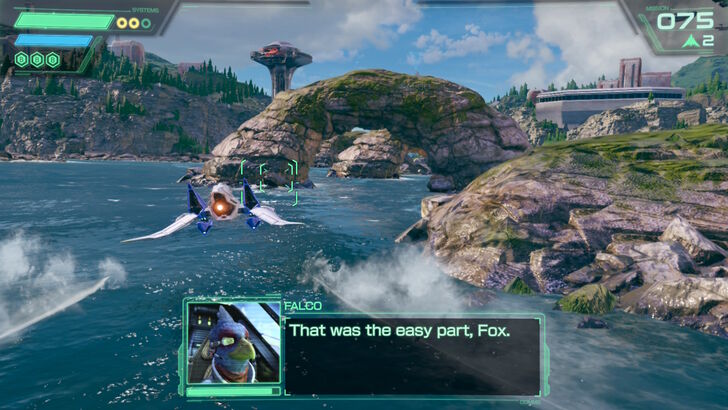
Speaking of, the new Challenge Mode allows you to jump directly into previously unlocked stages and tackle specific objectives to test your understanding of the game’s mechanics. Some of these challenges are straightforward. Others are very, very demanding. On Corneria, for example, one challenge tasks you with racing Falco through an obstacle course. Another mission in Sector X requires you to detonate a single bomb in such a way that it destroys ten proximity mines simultaneously.
These objectives often force you to approach levels from entirely different angles. They can be annoying, but then again, it wouldn’t exactly be called Challenge Mode if it let you off easy.
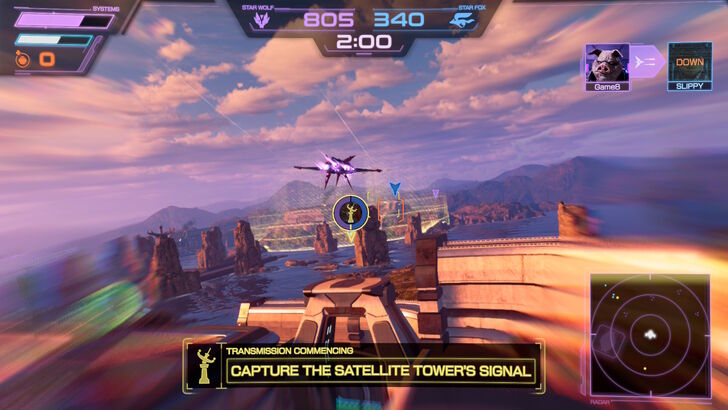
The biggest entirely new addition is the 4v4 Battle Mode, which may ultimately end up giving Star Fox far more longevity than the campaign itself.
Your objective here is to earn more points than the opposing team. Destroying enemy pilots grants points, but the real rewards come from completing map-specific objectives. One map revolves around capturing and holding a designated sector of space. Another sees meteor showers raining across a certain area, forcing teams to dive into the danger zones to collect points while shooting at one another. A third functions as a capture-the-flag variant, where teams steal cargo and deliver it back to base.
The mode does a good job of creating the feeling of a larger conflict. NPC enemy ships constantly enter the battlefield to attack both teams, and random power-ups scattered throughout the map introduce weapons that never appear in the campaign.
The problem is that there simply isn’t enough of it.
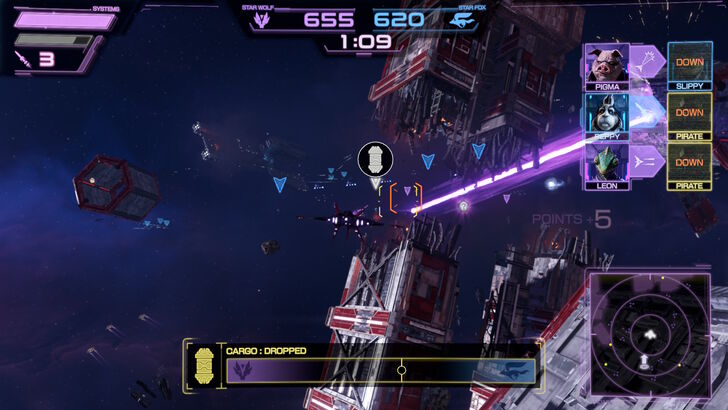
At launch, there are only three maps available, and each objective is tied to a specific map. You can't play the cargo objective on Fichina or take the zone-control mode to another environment. The lack of flexibility makes the mode feel more restrictive than it should. I wanted more. I found myself wishing there were more locations pulled from across the campaign. There are so many memorable planets in Star Fox that seem perfect for multiplayer battles, yet only a handful make the cut.
Is Star Fox (Switch 2) Worth It?
Yes, It’s Worth Paying for a 30-Year-Old War
Star Fox on the Switch 2 is at least priced more reasonably than many of Nintendo's other first-party releases. A physical copy will set you back around $60, while the digital version comes in at a slightly easier-to-swallow $50. Even then, I found myself wrestling with the question of just how much game there actually is here. The campaign remains as replayable as ever thanks to its branching routes and score-chasing design, but that's also largely the same appeal that kept people revisiting Star Fox 64 decades ago. Once you've seen every path and collected your medals, there isn't a whole lot left outside of Challenge Mode, which will likely become the main destination for completionists and achievement hunters.
That’s not to say that it’s not worth its price. It’s a very fun game with a great presentation. However, I sincerely hope Nintendo continues supporting it. There’s enough here to build something special. In a lot of ways, Battle Mode is already more interesting than Mario Kart’s own competitive offerings, and possibly, if given the chance, it could grow a dedicated community.
Even though it’s a retelling of a remake of an SNES game, I’m just happy to fly the skies again in an Arwing after years of watching Star Fox drift through Nintendo’s orbit without a clear destination. I hope this opens the floodgates for new Star Fox games in the years to come.
Star Fox (Switch 2) FAQ
How Long to Beat Star Fox (Switch 2)?
It takes less than an hour to complete a single run of Star Fox’s campaign on Normal difficulty, and players only need three runs to see all sixteen levels. However, this does not include earning all the medals, a task that can easily take five to eight hours.
On Expert difficulty, the tougher challenges mean completing the campaign takes significantly longer, and that still does not account for earning every medal.
Guides by Category
| List of Categories | |
|---|---|
 News News |
 Walkthrough Walkthrough |
 Bosses Bosses |
 Challenges Challenges |
 Tips and Tricks Tips and Tricks |
 Review Review |
Game8 Reviews