


Overview
What is Solarpunk?
Despite its name, Solarpunk blends both Solarpunk and Aeropunk aesthetics, allowing players to harness wind, rain, and sunlight to sustain their homesteads scattered across floating islands in the sky. From the limited gameplay revealed so far, Solarpunk centers around three core activities: farming, exploration, and base-building, all shaped by the eco-friendly practices inherent in the Solarpunk philosophy.
Solarpunk features:
⚫︎ Live in a Floating Island
⚫︎ Co-Op With Up to 4 Players
⚫︎ Customizable Airships
⚫︎ Renewable Energy systems
⚫︎ Cozy, Non-Violent Gameplay
⚫︎ Creative Building and Farming
| Digital Storefronts | |||||
|---|---|---|---|---|---|
 Steam Steam |
 Epic Epic |
||||
 Switch 2 Switch 2 |
 PlayStation PlayStation |
 Xbox Xbox |
|||
| $22.99 | |||||
Solarpunk Review: Who Knew Paradise Could Feel This Empty
The Idea is Clear. The Execution Less So.
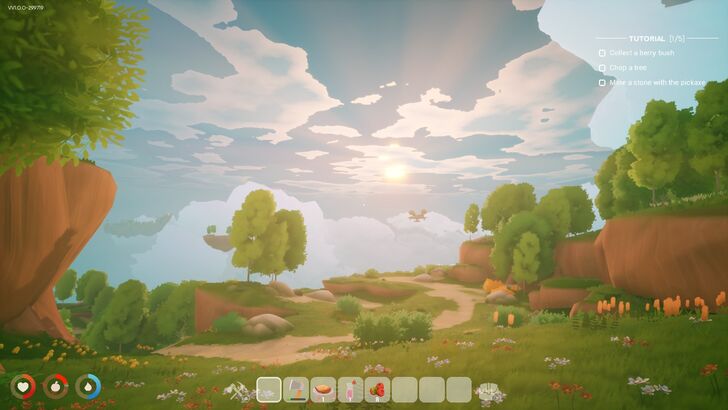
A friend of mine once told me that solarpunk is one of the least explored "punk" genres in media, especially when compared to cyberpunk or steampunk. They defined solarpunk to me as an imagined future where people live alongside nature rather than fighting against it, using technology to support sustainable communities. In other words, humans, nature, and technology cohabiting. They’re adamant that only a handful of games truly fit this definition. Even something like Stardew Valley didn’t quite count for them. You can spot bits and pieces of solarpunk ideas in a lot of games, but rarely do they make those ideas the main point.
Solarpunk (the game) should literally be about solarpunk, but it doesn't until far into the game. Fairly early on, the world will feel empty; it's you who is going to give its floating islands its meaning. The thing is, beyond that premise, much of what it offers isn’t anything new to anyone who has spent time with cozy games. A lot of its ideas have been done before, and sometimes done better.
It’s at least fun to an extent and can look beautiful for what it is. This is especially true if you are playing through it with a friend.
There’s No Story, But a Reason Would’ve Nice
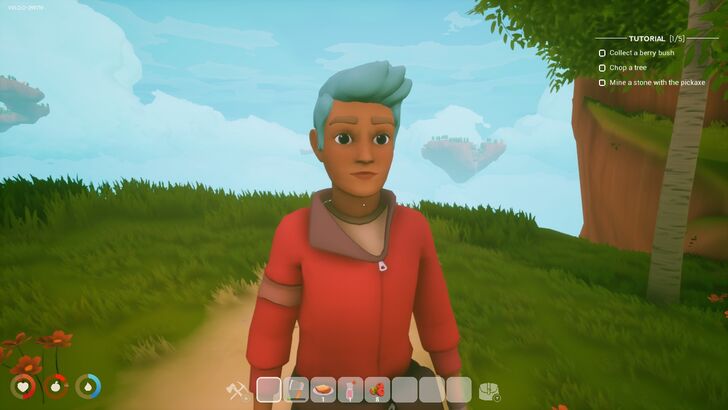
For this review, I was lucky enough to have a friend helping me out. Just a few weeks ago, he reviewed Outbound, and throughout our time with Solarpunk, he couldn't help but compare the two. The similarities are easy to see. Both are cozy open-world survival games built around crafting and slowly creating a home for yourself. The biggest difference is where they choose to place you. Outbound drops players into the countryside with nothing but a camper van and the open road ahead. Solarpunk, meanwhile, sends you high above the clouds, hopping between floating islands aboard an airship.
As the name suggests, Solarpunk embraces a vision of the future where nature and technology exist side by side. Wind turbines spin beside gardens. Solar panels power workshops. Water-driven systems keep machinery running. Automated tools help maintain farms and production lines. It's a world built around sustainability, and while the game doesn't spend much time explaining how society got here, it does a good job of making the setting feel believable through its environment alone.
The thing is, that's about as far as the story goes.
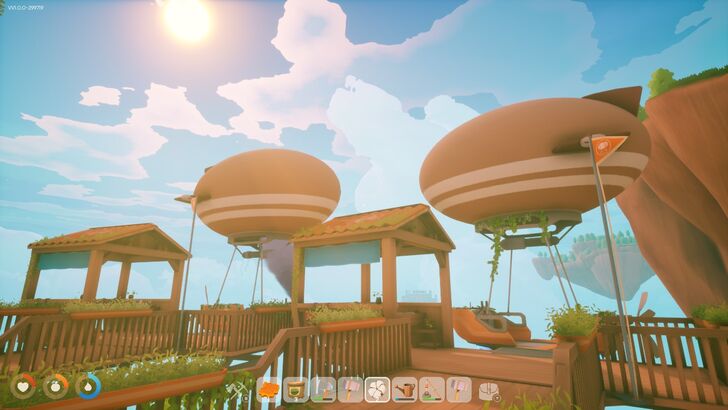
There isn’t really a narrative to follow here. Within minutes of creating a world, you wake up a custom avatar, and are essentially told to make the best of what you’ve been given.
That’ll definitely be enough for some players. If you’re playing with a friend, a partner, or family members, the stories you’ll remember will likely come from the things you build together. Progression revolves around expanding your settlement and unlocking new technologies to slowly turn a small patch of floating land into a thriving self-sustaining community. The satisfaction comes from looking back and seeing how far you've come.
It Sometimes Feels Empty
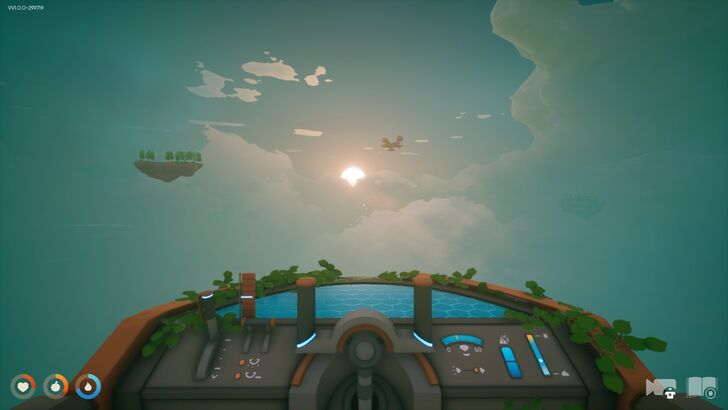
That freedom does come with a cost, though. Like many games in this genre, Solarpunk can feel aimless during its first couple of hours. Once the rather short tutorial ends, the game leaves you alone with very little direction. It explains only the basics and expects you to figure out the rest through exploration. Some players will definitely appreciate the lack of handholding. Others may find themselves wondering what exactly they’re supposed to do next.
I found myself bouncing between those two feelings. There were moments when discovering a new mechanic or finally completing a construction project felt rewarding because I arrived at that solution myself. Building an airship dock early on after gathering all the necessary materials, for instance, or finally crafting a path up a cliff provided that rush of dopamine that comes with a hard-earned sense of accomplishment. At the same time, there were stretches where the world felt so, so empty.
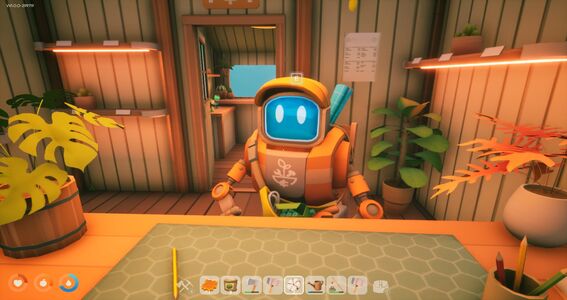
A lot of the floating islands look fascinating from a distance. Up close, though, many of them are simply resource nodes waiting to be harvested. You do see automatons here and there, but similarly, they’re just there to trade resources or sell you automated machinery. They don't have any real personality or stories to share, so they feel more like walking vending machines to me. Once you finish trading with them, they just go back to pacing around their small patches of land, leaving you alone with the quiet sounds of the wind.
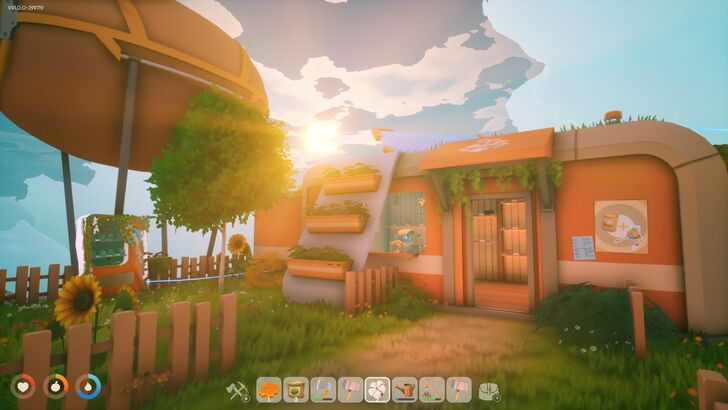
To be fair, that’s pretty standard for this kind of game. Solarpunk isn’t trying to tell a traditional story, and it never pretends otherwise.
Because of that, this definitely won't be a game for everyone. Much like Outbound, Solarpunk is built for a very specific audience, and that's okay. One person's perfect weekend game might be another person's idea of an empty experience. It really just comes down to what you want out of your time spent in a digital world.
The Winds of Freedom Feel Great
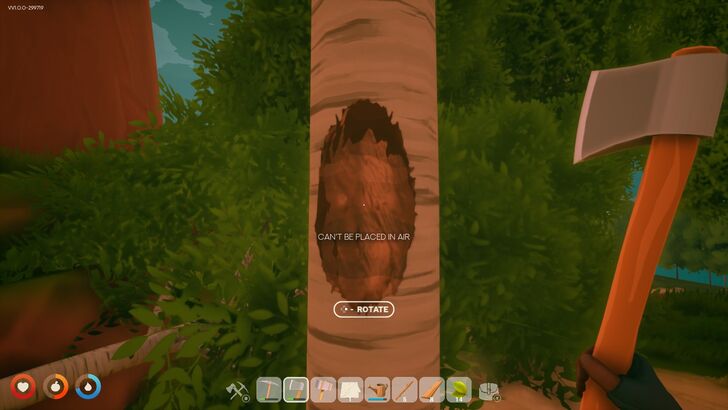
If you've played a survival crafting game before, you'll probably recognize Solarpunk's gameplay loop within minutes. You gather resources, build structures, unlock new crafting recipes, expand your base, and gradually work your way toward more advanced technology.
This means that, unlike Minecraft, no monsters are waiting to attack your settlement, nor are there looming threats to worry about at night. Your focus is entirely on creating and exploring to achieve self-sufficiency.
Whether that's a good thing or not will depend on what you're looking for.
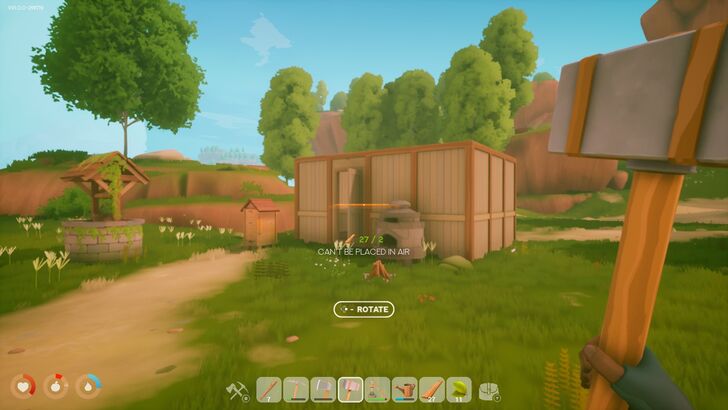
Most of my time with Solarpunk was spent gathering materials and slowly transforming our starting island into something that actually looked livable. Trees become lumber. Stone becomes building materials. Crops become food. Those resources then feed into an ever-growing chain of workstations, tools, and structures. It'll look rough early on, but that's usually how it goes with these kinds of games.
At first, you are doing everything by hand, but the magic happens when you start linking your tools together. You have to learn how to hook up cables from generators into batteries to store extra juice. This is crucial because the game has a dynamic weather system. If, say, a big thunderstorm rolls in, your solar panels completely stop working, but your wind turbines go into overdrive. If you have a clear sunny day, your turbines sit idle while your panels soak up the light.
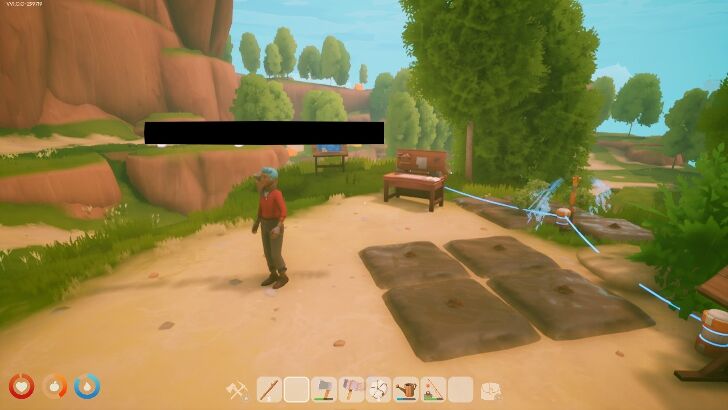
Once you have a steady electrical grid, you can finally dive into automation. For me, the game became infinitely more enjoyable when I could stop manually watering my crops and instead set up automated sprinkler systems. You can even hook up sensors that detect when it is raining so your sprinklers automatically shut off, which prevents you from wasting your stored battery power. Later on, you get access to machines that help you do the more mundane stuff like watering and harvesting crops.
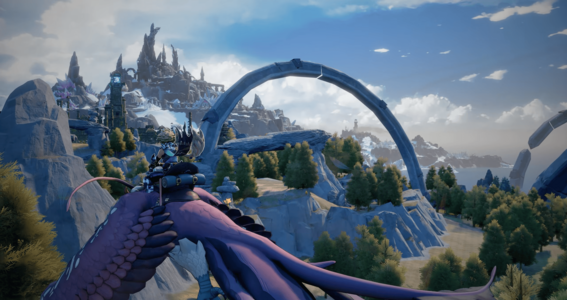
My favorite part, though, is definitely flying your airship. Building your first ship requires you to explore your home island to find specific parts, and finally taking off into the open sky feels great.
Actually Exploring Its Islands… Not so Much
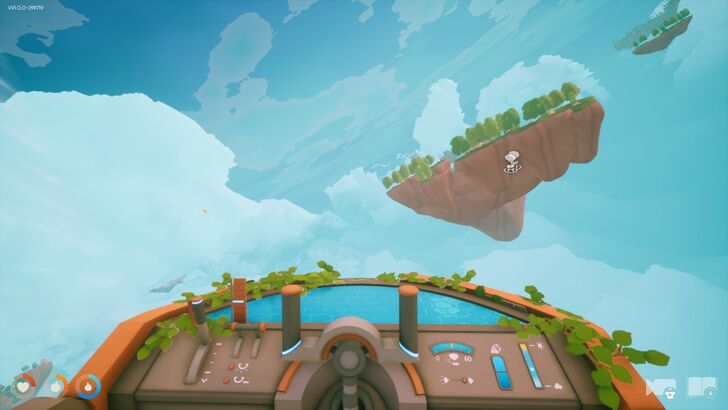
Despite how cool the automation and flying are, getting to that point requires grinding through some clunky and poorly paced mechanics. The biggest issue with the early-to-mid game is the sheer amount of downtime. Many high-tier items and building blueprints require you to wait a specific number of in-game days for crops to mature or for your smelting ovens to turn raw ore into metal bricks.
Because there are no threats, no combat, and no base raids to keep you on your toes, you will frequently find yourself with absolutely nothing to do. I spent a notable amount of time literally standing around doing nothing, just waiting for timers to tick down so I could build the next piece of my base.
The problem is that Solarpunk occasionally feels like it's holding back from exploring its ideas further. The automation systems are enjoyable, but players hoping for the kind of deep factory management found in games like Factorio or Satisfactory may find them relatively light. The systems work well within the cozy framework, but they never become especially complex.
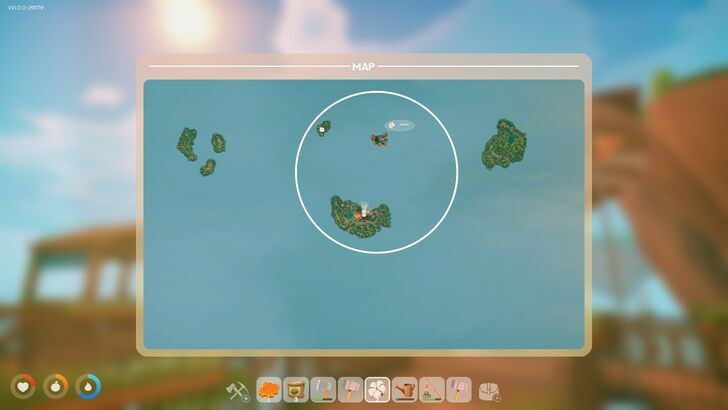
This is compounded by the fact that, ultimately, exploration starts losing some of its appeal the more you play. Many islands ultimately serve similar purposes. You'll find resources, materials, and occasionally useful locations for expansion, but discoveries become less common over time. Several islands look far more exciting from a distance than they do once you actually land on them. I kept hoping to stumble across something unexpected, only to find another location primarily designed to feed resources back into the crafting loop.
Cyberwave has been upfront about this, at least. Once you’ve unlocked the majority of its systems, you’ll start seeing most of what the game has to offer. The experience, then, becomes heavily dependent on your own creativity.
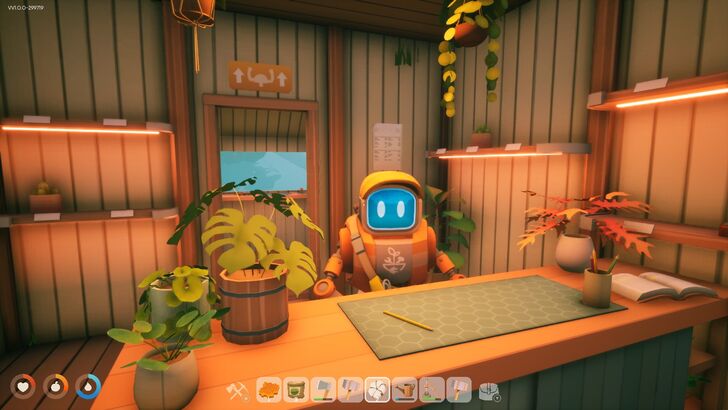
Co-op helps alleviate some of those issues. Building alongside friends naturally creates more opportunities for larger projects. Tasks that can feel repetitive alone become much more enjoyable when shared with other people.
However, it's frustrating that more than one player can't board an airship at the same time. This means you both have to make separate docks and airships, upgrading everything individually when you should be exploring together.
The Survival Mechanics Are Just Inconveniences
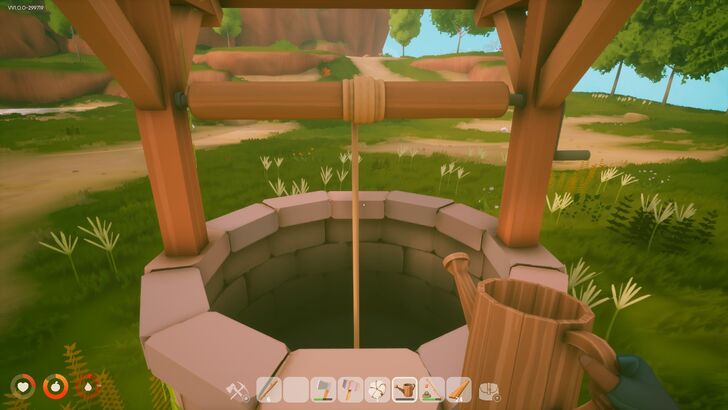
There are survival mechanics, though I use the word "survival" pretty loosely here. You have hunger and thirst meters. You’ll then need to gather food and make sure your character is reasonably taken care of. The thing is, these systems never feel particularly threatening. This is a cozy game first and foremost, and it's very clear that Cyberwave had no interest in turning basic needs into a source of stress. You're never constantly scrambling for resources, and maintaining your character's needs quickly becomes routine once you've established even a modest farm.
In fact, I found the penalties for neglecting those needs a little strange. Running out of food or water doesn't create the kind of consequences you'd expect from a traditional survival game. Death is mostly an inconvenience. If you die, you wake up back in your island without your items. However, you can just run back to where you died and get your stuff back. Recovering from a mistake takes very little effort.
If anything, the most annoying consequence of letting your hunger or thirst drop into the red is that you’re not allowed to sprint.
Is Solarpunk Worth It?
It’s Cozy, But It’s Not For Everyone
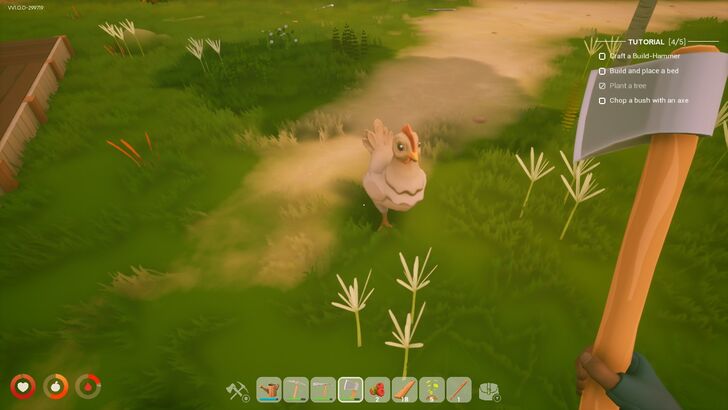
$23 is relatively inexpensive in today’s market. I enjoyed a fair bit of time in the game, especially flying around aimlessly in the sky. There is technically a lot to do here, but the game doesn’t always give you a strong reason to pursue those goals beyond personal satisfaction. Much of what you’ll spend your time doing can be repetitive and mundane. However, if you’re willing to meet the game on its own terms, there’s certainly appeal to slowly turning a small floating island into a thriving home in the sky.
Solarpunk is not for everyone. I love cozy games. I love crafting games. But even I found myself struggling to stay motivated once the novelty of its systems began to wear off. That’s not because the game is bad; it’s because Solarpunk asks players to create their own goals more often than it provides them.
I welcome it for what it's trying to achieve. It may not reach the heights it dreams of, but if you are willing to get lost among its floating islands to build your own eco-friendly paradise, this flawed little simulator might be exactly the retreat you’re looking for.
Solarpunk FAQ
How Long to Beat Solarpunk?
There are no set hours or actual story to "beat" in Solarpunk. However, developer Cyberwave mentioned that seeing everything the game has to offer can take up to 20 hours.
Game8 Reviews

Solarpunk Similar Games
 |
holoVillage: Our Cozy Days Review | Flourishes Where It Fits |
 |
Tiny Bookshop Review | No Stress, Cozy Business |
 |
Bao Bao's Cozy Laundromat Review | Gentle Spin on Idle Gaming |
 |
Luma Island Review | Cozier than Cozy |
 |
[Longvinter Review | A Cozy Escape... If You Have the Patience ](https://game8.co/articles/reviews/longvinter-review) |