


| Sea of Stars | ||
|---|---|---|
| Sea of Stars Review | Sea of Stars: Throes of the Watchmaker Review | Mobile Review |
Overview
What is Sea of Stars (Mobile)?
Sea of Stars is a turn-based role-playing game centered around Valere and Zale, two Solstice Warriors tasked with fighting against powerful creatures created by the immortal alchemist known as the Fleshmancer. Joined by their childhood friend Garl and several companions throughout their journey, players travel across islands, dungeons, towns, and ruins while uncovering the larger mystery behind the Dwellers and the world itself.
Sea of Stars (Mobile) features:
⚫︎ Turn Based Combat
⚫︎ Fantasy Adventure
⚫︎ Pixel Art
⚫︎ Fishing, Cooking, and Exploration
⚫︎ Mobile Support with Haptic Feedback
| Digital Storefronts | ||
|---|---|---|
 Google Play Google Play |
 App Store App Store |
|
| $9.99 | ||
Sea of Stars (Mobile) Review: Pocket Full of Sunshine
JRPG That Feels Right at Home on Mobile
I haven’t really sat down with a JRPG in a while, but there was definitely a point in my life where I was obsessed with digging through the genre looking for hidden gems that nobody else seemed to talk about. So while I may not be the biggest spokesperson for the household names of the genre, I’ll absolutely go to war defending the overlooked ones, like Eternal Eden (iykyk).
And honestly, that’s why I think JRPGs are such a difficult genre to evolve. People come to them for familiarity. The structure, the pacing, the turn-based combat, the long-form storytelling. These are things fans actively want to feel classic. But at the same time, sticking too hard to tradition can make newer entries feel dated fast, especially now when players are used to faster, smoother, more interactive experiences.
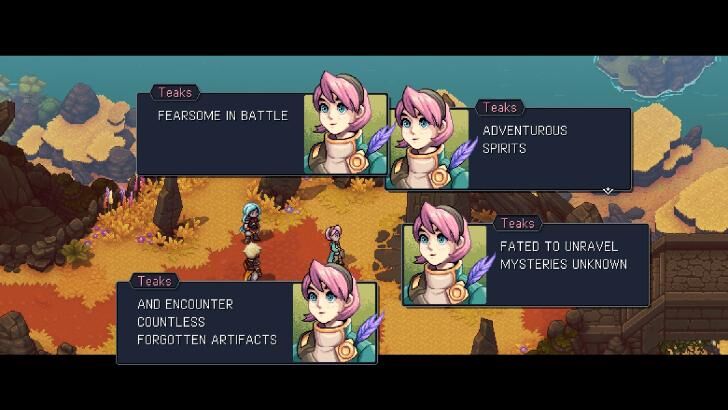
That’s what made Sea of Stars stand out so much when it released back in 2023. It understood exactly what people loved about old-school JRPGs, but also knew where to modernize them. Its turn-based combat felt more active and exploration felt less restrictive.
But I’m not really here to relive the game’s original launch. With the mobile release now here, the bigger question for me was simple: did it actually port well? And surprisingly, yeah. Yeah, it really did. So while I am still going to talk about the game itself, this review is mostly about how and why Sea of Stars works so well on mobile.
Garl is The Heart of the Adventure
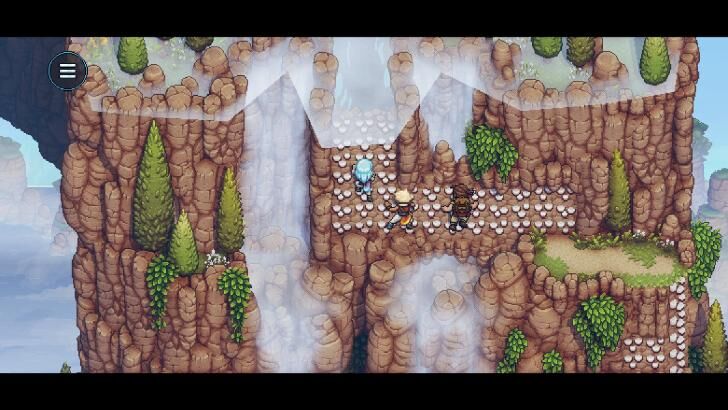
Sea of Stars starts with three childhood friends who just want to go on an adventure together. Simple setup, classic JRPG energy. But naturally, things spiral into something much bigger.
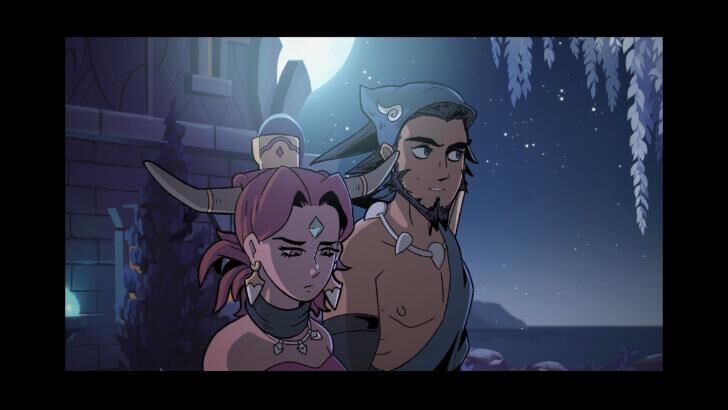
Valere and Zale are Solstice Warriors, children gifted by the Great Eagle to Mooncradle, to train against the Dwellers, monstrous creations left behind by the immortal alchemist known as the Fleshmancer. And honestly, the more you think about it, the more unsettling the premise actually is. These kids are basically chosen at birth, separated from normal life, and molded into weapons for a war they barely understand. The game doesn’t fully dwell on the darker implications of that setup, but it’s definitely there lingering in the background.
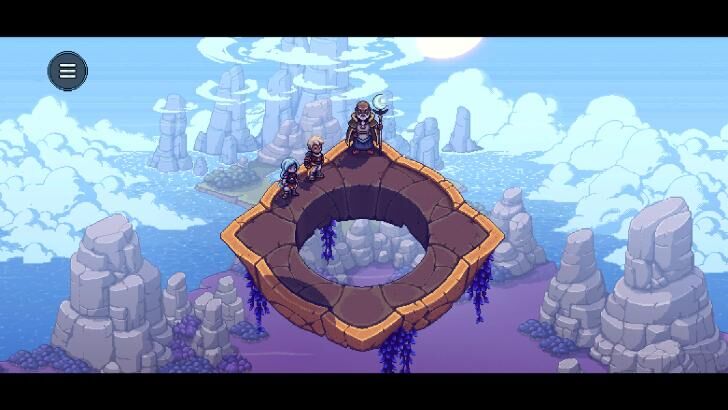
Things really begin when the incredibly impatient duo gets convinced by their best friend Garl to open the Forbidden Cavern early, a place meant to test future Solstice Warriors. The whole thing goes horribly wrong, Garl loses an eye, and Valere and Zale are whisked away to Zenith Academy where they spend the next ten years training and weaving while Garl is left behind.
Once their training is complete, the two are finally sent out for their first real mission toward Wraith Island, where they reunite with Garl and begin their journey to stop the remaining Dwellers. And from the moment the group comes back together, it becomes very obvious that Garl is more important than he initially seems. Not necessarily in terms of power, but emotionally, narratively, and honestly even for the player.
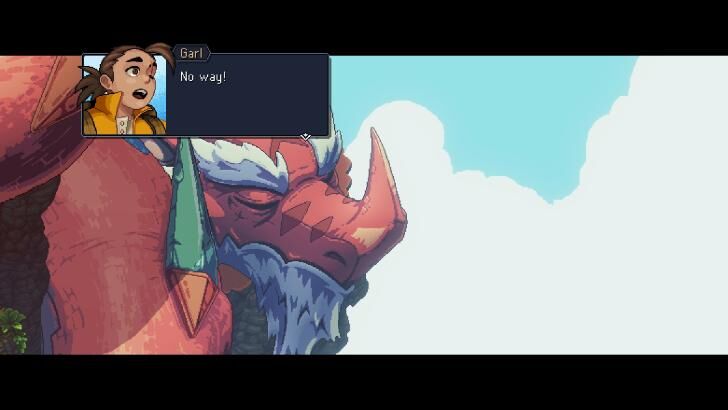
Because as much as I like Valere and Zale conceptually, the game takes a while to make them compelling as protagonists. For the first major stretch of the adventure, Garl is the one carrying the party dynamic on his back. He’s the emotional center, the optimist, the one constantly pushing the group forward. I ended up getting way more attached to the warrior cook with a shield than the supposed chosen heroes.
And it doesn’t exactly help that several side characters also arrive with stronger personalities almost immediately. That said, the story still hooked me because the group itself is genuinely enjoyable to travel with. Even when the protagonists feel like they’re just echoing the sentiments of those around them, the chemistry between the cast keeps the journey engaging.
Combat Keeps You Actively Paying Attention
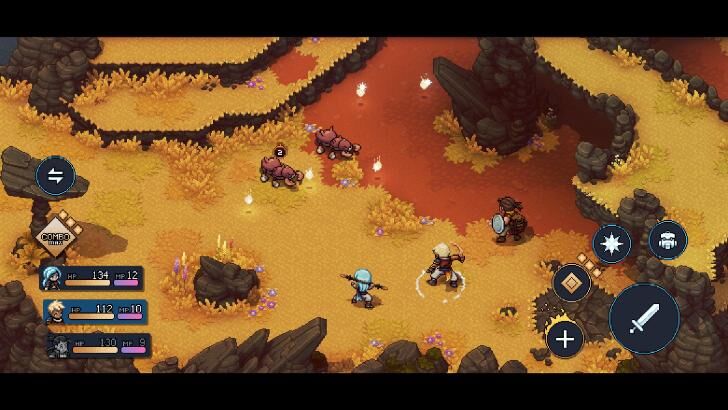
Gameplaywise, Sea of Stars is still very much a traditional JRPG at heart. If you’ve played enough of the genre, then you already know the formula. You get a mission, but to reach that mission you first need to solve another problem, which leads you through a path full of enemies, and somewhere along the way you inevitably find yourself running back and forth fighting the same mobs repeatedly just to squeeze out a few extra levels.
The difference is that Sea of Stars feels far less punishing about it compared to a lot of older JRPGs I grew up with. You’re not constantly pressured into overleveling just to survive basic encounters. More often than not, if you’re paying attention and playing smart, you can comfortably get through fights without needing to spend hours grinding beforehand.
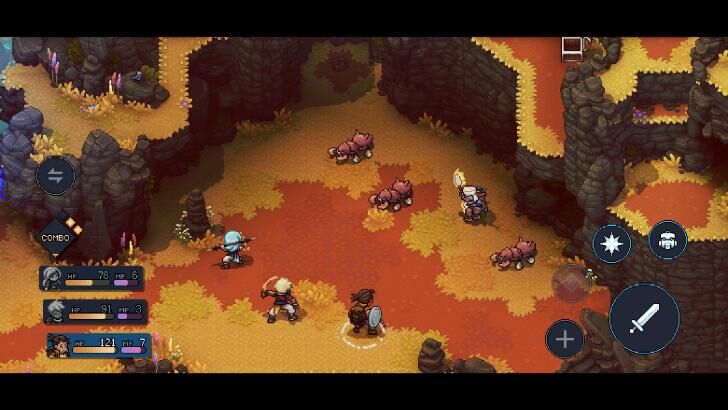
A huge part of that comes from the combat system itself. Anyone acting like recent RPGs invented real-time interaction inside turn-based combat honestly needs to look here first, because this game was already doing that in a really satisfying way. Attacks aren’t just "pick command and watch animation." There’s active timing involved. Pressing the button at the right moment during attacks boosts your damage, while timing your inputs during enemy attacks lets you partially block incoming damage. Every encounter keeps you engaged because you’re constantly participating instead of just waiting for turns to cycle, that even basic fights stay interactive.
Then there’s the orb drops, or according to the game "magic without magic." Normal attacks generate little energy orbs that can be absorbed to empower future attacks with solar or lunar energy depending on the character. So instead of endlessly chugging mana potions or hoarding MP like older RPGs trained us to do, you can now imbue normal attacks with magical energy.
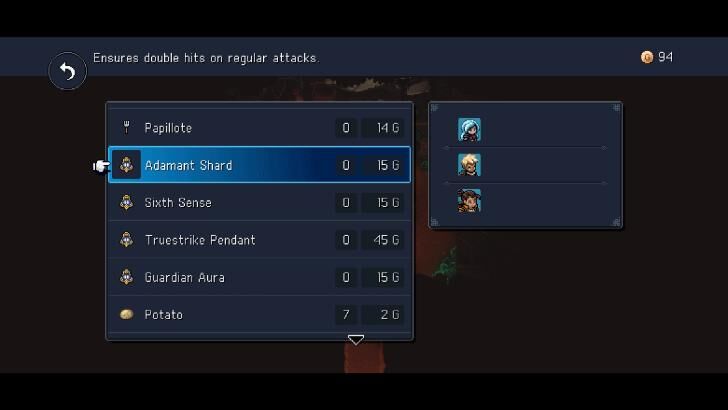
On top of that, relics let you customize the experience even further. Some make combat easier and others tweak mechanics entirely. That balance is what makes the combat work so well, especially on mobile. Yes, there’s still grinding. You will still fight repeated encounters. (That’s just part of the genre). But because battles move quickly and constantly ask for your input, fights rarely drag to the point where they become exhausting. Because you’re not spending five straight minutes half-asleep mashing through random encounters.
Mobile Port That Understands Touchscreens
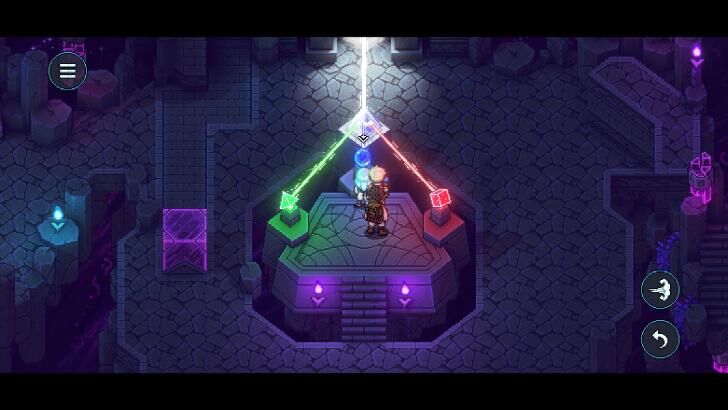
Now the important part: how does all of this actually feel on mobile? For context, I played Sea of Stars on an Android device with 6GB RAM running an Exynos 1580 chipset. Definitely not a dedicated gaming phone, but decent enough for most modern releases. So if your device falls somewhere significantly below that range, your experience may vary a bit. But if you’re running something stronger, you’re probably getting an even smoother experience than I did.
And honestly? The optimization here is kind of ridiculous. The game ran beautifully the entire time I played. No noticeable lag spikes, no weird visual hiccups, no crashes, no game-breaking bugs. I had one session where I basically played continuously from full battery down to around 10%, which ended up being roughly eight hours, and the game remained consistently stable the whole way through. And for JRPGs that are designed for long sessions, consistency in performance matters.
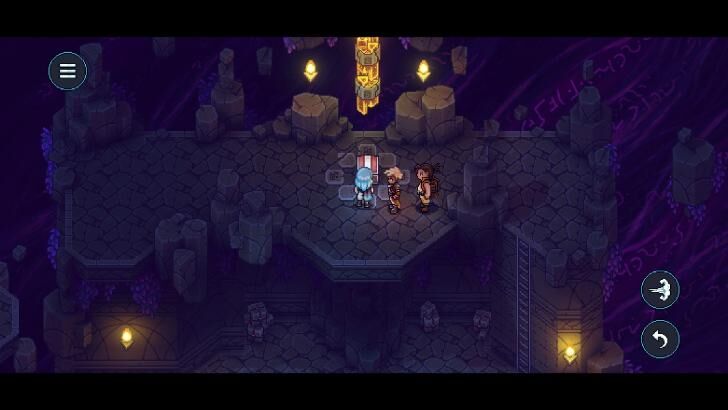
Controls took a little adjustment at first, mostly because I just don’t naturally associate JRPGs with touchscreens. The UI is minimal. Movement works through an invisible joystick that only appears when you touch the left side of the screen, while interactions and combat timing inputs happen through taps on the right side.
And admittedly, the lack of visible buttons felt strange during my first hour or so. My brain kept looking for a traditional layout that just wasn’t there. But it eventually clicked. The controls start feeling less like missing buttons and more like the game simply trusting your screen space. Nothing clutters the visuals, your fingers naturally settle into place, and because timing attacks only require taps instead of complicated gestures, combat remains engaging even during longer sessions.
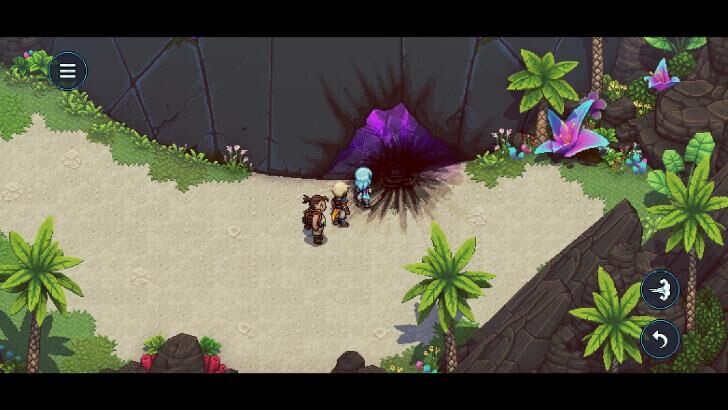
The haptic feedback also ended up doing way more heavy lifting than I expected. Every successful timed hit and defensive block gives off these tiny vibrations that subtly reinforce the rhythm of combat. It genuinely helps make attacks feel more tactile and satisfying, especially since the game revolves so heavily around timing inputs correctly.
I’ll also admit that I eventually turned on the relic that extends the timing window for critical hits and adds clearer visual indicators for successful inputs. And honestly? I don’t regret it at all. Sure, it technically makes combat easier, but it also makes fights feel more fluid and fun on a touchscreen. Instead of stressing over precise timing every few seconds, I could focus more on the actual flow of battle.
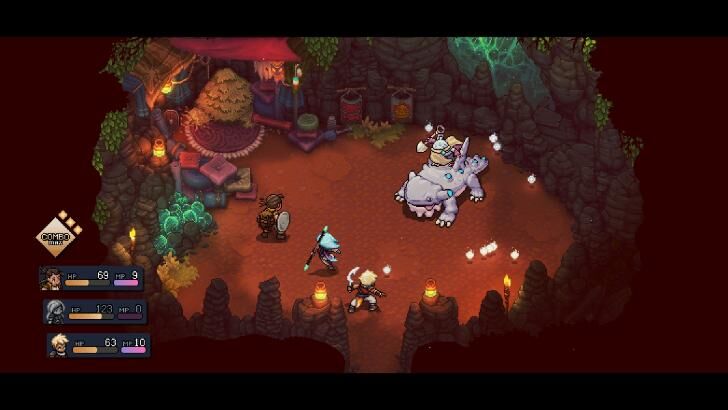
There was one boss fight around the Wind Tunnel Mines where everything suddenly came together perfectly. The haptics, the timing mechanics, the touchscreen controls, the visual cues, the pacing of the fight itself. I completely stopped thinking about the fact that I was playing a traditionally console or PC style JRPG on a phone. It just worked and it never felt compromised, that’s probably the biggest compliment I can give this port.
Rewarding Exploration
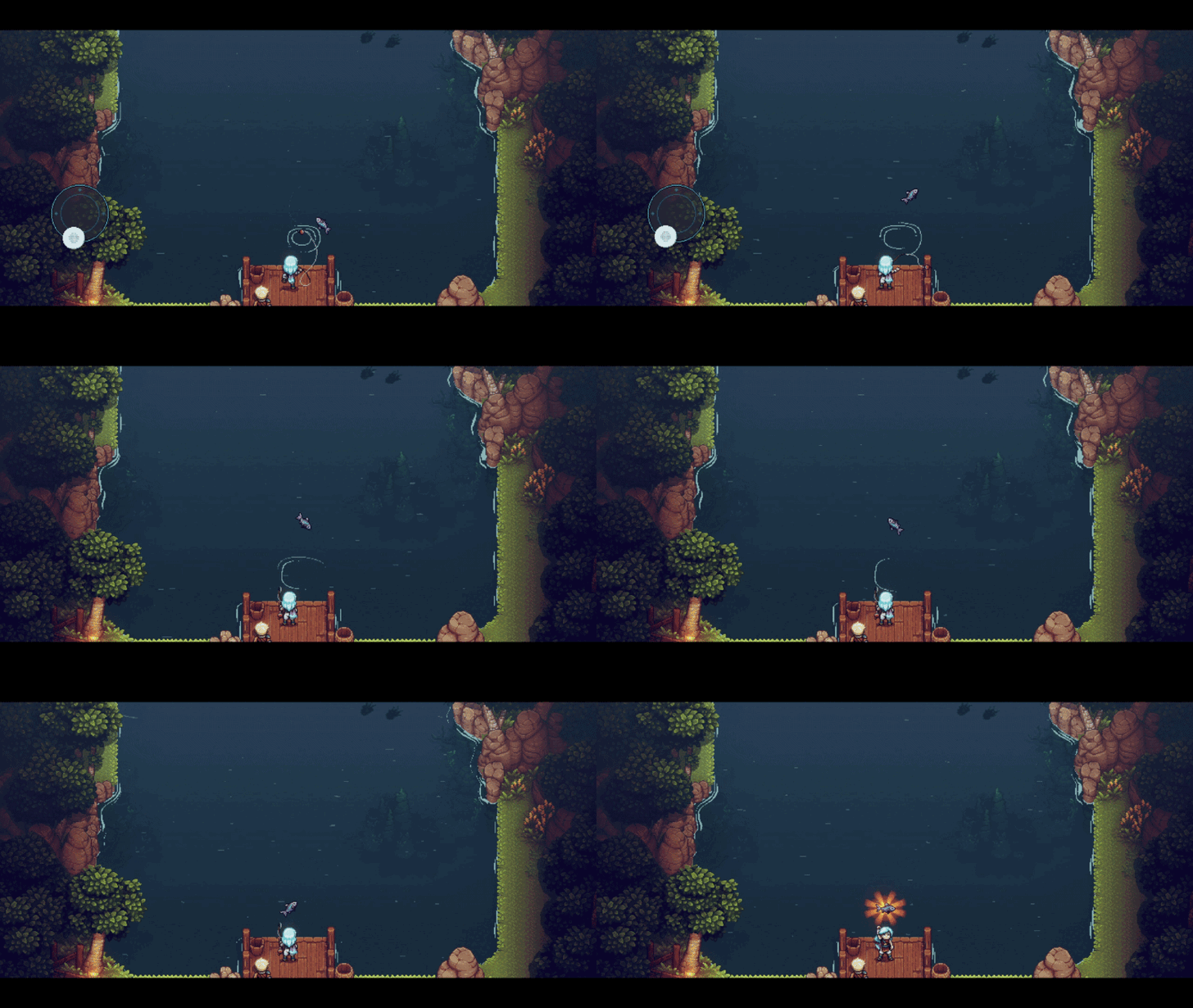
The touchscreen controls also ended up improving smaller activities in ways I didn’t expect. Fishing, for example, feels surprisingly natural on mobile because dragging, reeling, and adjusting movement through touch controls just feels more intuitive than using buttons.
Outside of that though, the overall experience remains largely identical to the original release, especially when it comes to exploration. And honestly, exploration is probably one of the game’s strongest qualities.
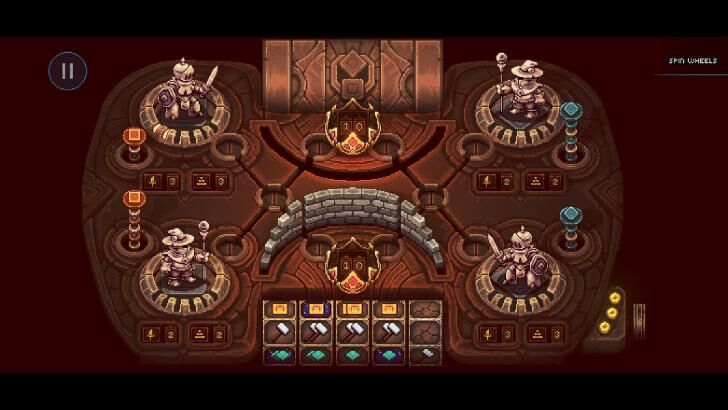
Sea of Stars constantly rewards you for exploring and paying attention to your surroundings. Maps twist around themselves, hide paths, tuck away tiny ledges, and casually place treasure chests hidden behind a curtain of waterfalls. It captures that old-school JRPG feeling where wandering off the intended route actually matters because there’s a decent chance you’ll discover something worthwhile. And because of that, I ended up scanning almost every corner of every area instead of just sprinting toward the game’s objectives.
That said, I do think the game leans a little too hard into ability-gated backtracking at times. You’ll regularly encounter treasure chests or side paths you can’t access yet because you haven’t unlocked a traversal ability. Maybe you still can’t move certain objects, maybe you haven’t gained the wind interaction yet, things like that. And if you’re like me who physically cannot leave unfinished loot behind without it haunting you later, then congratulations, the game absolutely has you trapped.
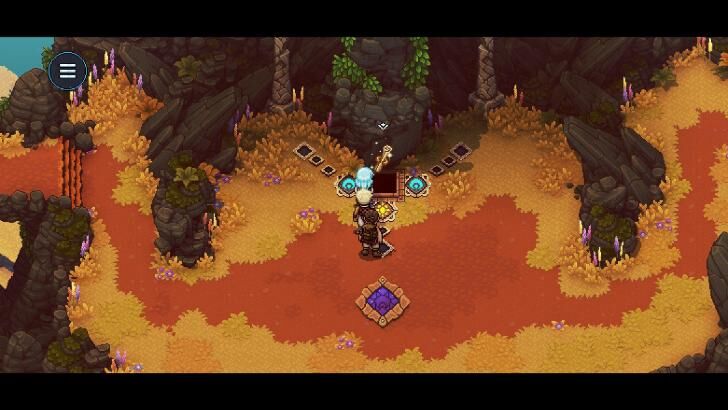
I spent a genuinely embarrassing amount of time backtracking in Sleeper Island just to make sure I didn’t miss a single chest. The problem is that, for me personally, backtracking works best when it feels tied to narrative progression or emotional revisitation. Returning to an old location because the story gives it new meaning? Great. Returning because a chest from six hours ago is still sitting behind a tiny obstacle you couldn’t cross before? Slightly less exciting.
But weirdly enough, I also think that frustration says something positive about the game.
Because the only reason I bothered going back at all is because exploration consistently felt rewarding enough that I wanted to. The world constantly encourages curiosity, and more importantly, it respects that curiosity with actual discoveries instead of wasting your time. So even when the backtracking occasionally became tedious, it still came from a place of me being invested in the world rather than simply checking off map markers out of obligation.
Is Sea of Stars (Mobile) Worth It?
Yes, It’s a Well Made Port
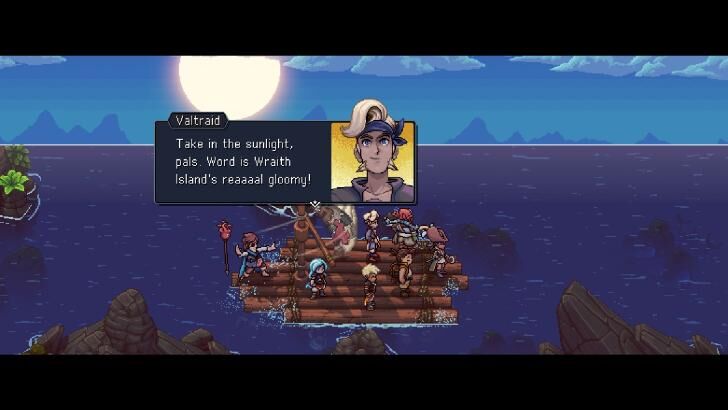
Sea of Stars already had the foundation of a great RPG long before this mobile version existed. Strong combat, rewarding exploration, gorgeous pixel art, and a sense of adventure that constantly pushes you forward. But what genuinely surprised me here is just how little of that identity was lost in the transition to mobile. Because this doesn’t feel like a stripped-down version trying its best to imitate the "real" experience somewhere else. It is the real experience. And honestly, this might be one of the best mobile ports out there.
For $9.99, you’re getting the full game at a fraction of what most people originally paid for it, and more importantly, it never feels like you’re settling for less. Performance is excellent, controls adapt far better than expected, and the game’s structure naturally complements portable play without sacrificing the long-form adventure that makes JRPGs satisfying in the first place.
This is easy to recommend whether you’ve already played the game before or are completely new to it. If you already loved Sea of Stars, this basically becomes a pocket-sized version you can slowly chip away at anywhere. And if you’ve been curious about trying it for the first time, the mobile release honestly is the more affordable way to experience it without losing what made people fall in love with it in the first place.
Sea of Stars (Mobile) FAQ
Is There a DLC for Sea of Stars?
Yes, Sea of Stars has a DLC expansion called Throes of the Watchmaker, but it is not included in the mobile version at launch.
What is the System Requirement for Sea of Stars Mobile?
| System | Minimum |
|---|---|
| OS | Android 10 / iOS 15 |
| Memory | 2 GB RAM / A12 Chip |
Game8 Reviews

You may also like...
 |
Digimon Story: Time Stranger Review RPG, Adventure, Anime |
 |
Ariana and the Elder Codex Review Action, RPG |
 |
Nice Day for Fishing Review Adventure, RPG, Simulation |
 |
Cat Quest 3 Review Action, Adventure, Fighting |
 |
Creature Keeper Review Adventure, Action, RPG |