



Overview
What is Schrödinger's Call?
Developed by Acrobatic Chirimenjako and published by Shueisha Games, Schrödinger’s Call is an indie visual novel released for PC (Steam) and the Nintendo Switch on May 27, 2026. The story follows Mary, a girl who has to take calls from strangers to save their souls 21 nanoseconds before the moon crashes into Earth. It won the Grand Prize at the Shueisha Game Creators CAMP GAME BBQ Vol. 1 in 2021.
Schrödinger's Call features:
⚫︎ Unfinished phone calls
⚫︎ Limbo before an apocalypse
⚫︎ Surrealist sketchbook art
⚫︎ One route with minimal branching paths
⚫︎ Singleplayer
⚫︎ Grief, loneliness, and family
⚫︎ Accepting death
⚫︎ Human connection
| Digital Storefronts | |||||
|---|---|---|---|---|---|
 Steam Steam |
 Switch Switch |
||||
| $17.99 | |||||
Schrödinger's Call Review: A Visual Novel Worth Answering
Schrödinger's Cat, But in Phone Calls
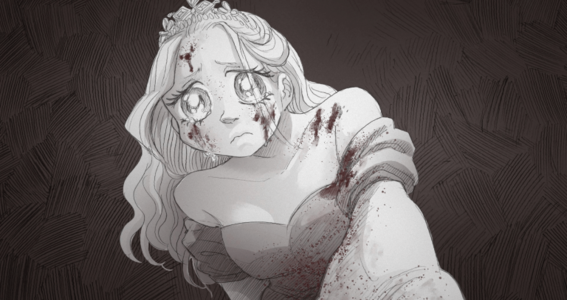
Heading into Schrödinger's Call, I was bracing myself for the hard-hitting emotional beats of Spiritfarer dressed in the visuals of Omori pencil sketches. The visual novel’s promotional art is nothing short of a head-turner that immediately pulls you into its store page. And when you get there, you’re faced with a familiar premise: ferrying souls with unfinished business into the afterlife, but this time in the form of phone calls. Seeing as Omori and Spiritfarer are two of my favorite games, it wasn’t difficult at all for this indie visual novel to grab my attention.
When we’re talking about indie visual novels, if it’s not romance or slice-of-life, you’re usually left with the other end of the spectrum marked by horror, mystery, and existentialism. (Meanwhile, you have games like Doki Doki Literature Club that somehow fuse the two.)
If mind-boggling philosophies that leave you staring blankly into the distance as the credits roll are what you’re looking for, the genre becomes a treasure trove of these things. And here you have Schrödinger's Call, carving out a narrative that transcends others and distinguishes itself from being a mere mash-up of Spiritfarer and Omori.
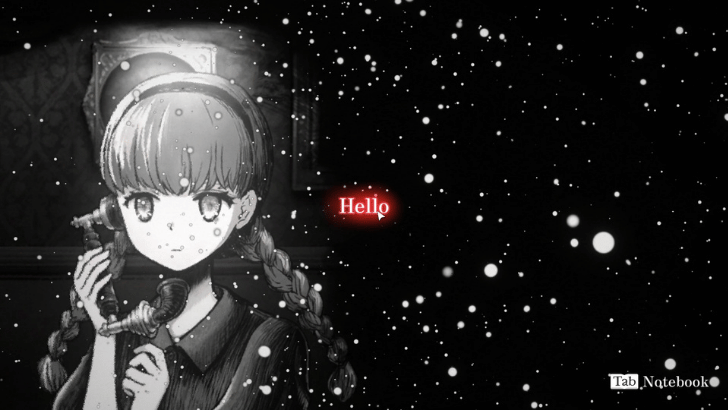
It doesn’t have Spiritfarer’s hustle of routine or Omori’s RPG elements. Instead, you simply talk and empathize with strangers in phone calls, diving deeper into the protagonist’s past with each conversation, until the ugly truth finally rears its head. It’s safe to say that, as a visual novel, Schrödinger's Call’s biggest strength lies in its storytelling—the interplay of traversing forms of grief and self-worth when the world is about to end.
The name itself presents an all-too-familiar thought experiment that could also be found in Umineko When They Cry. Essentially, Schrödinger's Cat tackles uncertainty: inside a box, a cat is considered both alive and dead until someone opens it to check. In Schrödinger's Call, the other voice on the line remains forever lost in their grief until Mary says the magic word, "Hello," and speaks their name into existence.
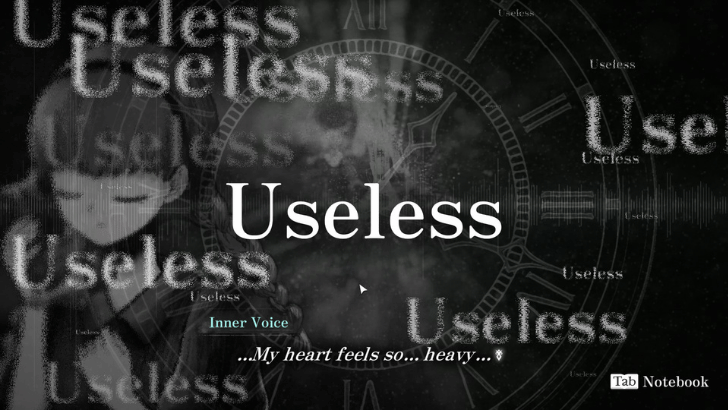
The game’s genetic fabric is very much reminiscent of a Japanese visual novel, with the hallmarks of profound Japanese writing on themes you’d encounter in psychological manga… and, of course, a lot of reading.
Its text-centric gameplay, which diversifies into a surrealist presentation in pivotal moments, reads more like a linear, yet interactive story with minimal branching paths. It doesn’t have save-and-load screens for you to backtrack either, so it succeeds in pulling you deeper into the events without the friction of overthinking and rechecking your choices. You’re in it to sit back, not relax, and witness the story spiral into despair from the first phone call to the last.
Ringing Between Connection and Collapse
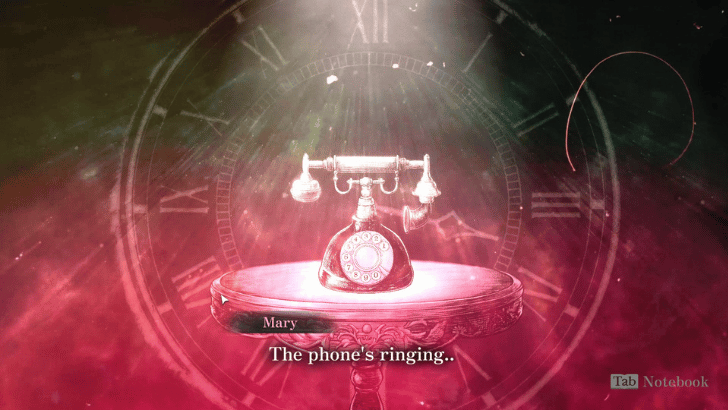
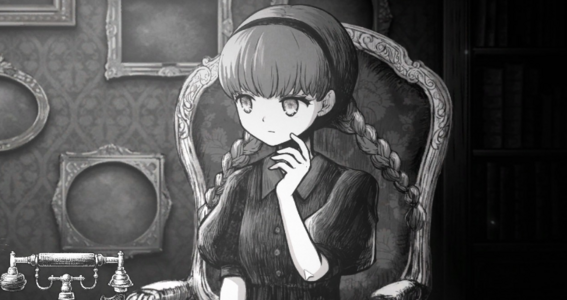
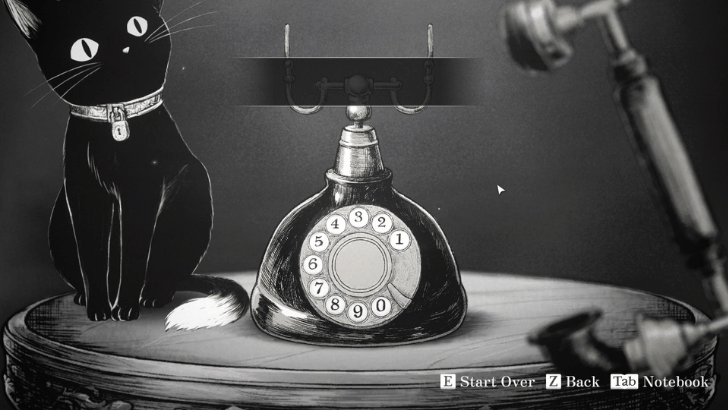
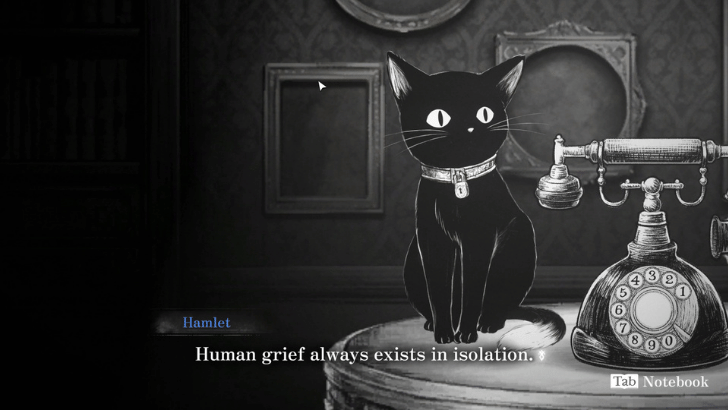
Schrödinger's Call centers on a (presumably) teenage girl named Mary, who wakes up in a dark room with no recollection of her past. A black cat, Hamlet, informs her that the moon is currently 21 nanoseconds away from crashing into Earth, and it’s up to her as the world’s last Confidant to pick up phone calls from lost souls and help them accept their death. Mary's strong convictions, which the player can choose, tie her to these people—and only she can save them.
You’re probably thinking, "How is she supposed to accommodate billions of people on Earth on the brink of death?" Lucky for us, there are only a couple of characters (and a main cast of four) we have to save on the phone, scattered across four episodes that are around one to two hours long each, depending on your reading speed. The loop is simple: you pick up the phone, answer some of the souls’ burning questions to see if you share their grief, single out a caller, and investigate what happened in their final call before they were abruptly cut off by the moon falling.
With a chapter-by-chapter format that focuses on unraveling a mystery for each character, a visual novel—or any game, for that matter—runs the risk of redundancy. In that case, much like reading a book that doesn’t have that much going on, I’d either get too bored that I’d intentionally drop the game altogether or forget I was even playing it.
However, Schrödinger's Call sidesteps this trap by adding variety to the character arcs, which escalate in tension and introduce unexpected twists, deepening Mary’s journey as a Confidant and building toward a crisis that upends the entire narrative. It does a great job of keeping you hooked while also making you reach for tissues. The angst and pain continually feed you to finish the game.
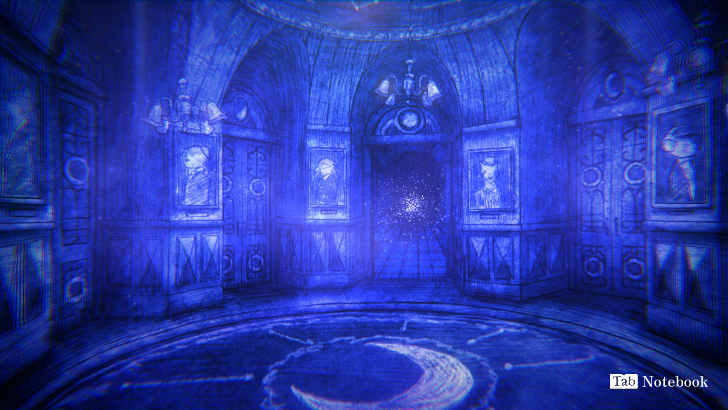
No worries, though, as I won’t go into detail about what went down; the game is best enjoyed when you mostly have no idea what’s coming for you. It’s chock-full of plot twists, sure to send you on an emotional roller coaster ride. And then, at the end of it all, the realization comes crashing down on you like the moon.
Your thoughts linger on the characters you’ve just said goodbye to and the weight of sustaining connection in the real world’s digitally tethered age. The final moments fit together perfectly, sending your mind spiraling back through each episode and tempting you to replay the game, eager to spot every sign you’ve overlooked.
Dial Down the Flashbacks
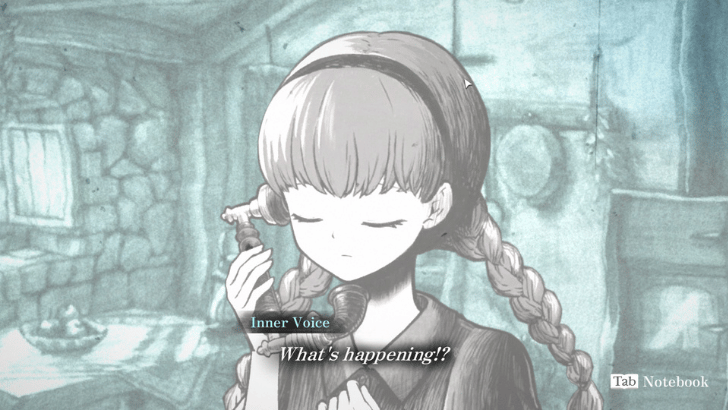
The pacing for each call in Schrödinger's, well, Call, is as normal as a visual novel scene would get—slower than other video games, though it compensates for it with a large enough text in the dialogue that you can just speed-read through it if you want. But as much as I’m in awe of the narrative, I do have to point out the use of flashbacks that borders on excessive.
The flashbacks come organically when you first encounter them because there’s a point to providing information, as seen in titles like Tsukihime and Higurashi When They Cry. But as the same events are rehashed more than once (or twice), they’re prolonging an episode more than it needed to be, as if constantly spoonfeeding the player with information they already knew. I could see the developer’s vision in using them as literary devices to emphasize key scenes or revelations, but a lot of them fall flat as fluff or filler.
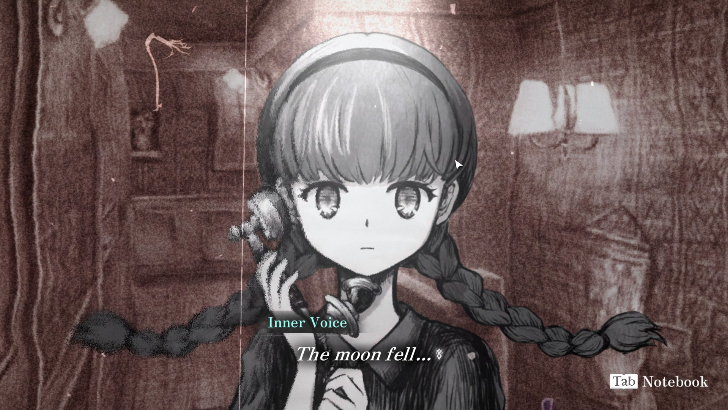
A certain point in the past is brought up again for an "Aha!" moment that connects it with the current event, and a character’s estrangement with a loved one comes to light. For instance, a woman named Lucy has a son who despises her for abandoning him, only to reveal that everything is not what it seems.
However, bombarding the player with the same flashback every time a new revelation surfaces in the phone calls quickly dulls its effect. Each repetition chips away at the surprise. Instead, the story could've built anticipation and let the flashback land with real force at just the right moment.
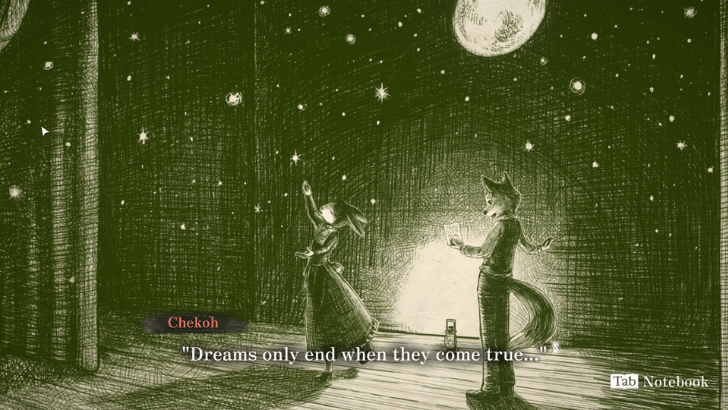
Flashbacks are fine when used sparingly. With them, you can draw out the emotional resonance of a scene or plot twist. But pulling no punches with the thought-provoking themes and beats only lands effectively when you also give the player—the active audience in a story's meaning-making—room to piece the pieces together on their own, not treat them like a child way younger than Mary, incapable of deciphering the subtleties.
There were times when I was turning Schrödinger's Call into a clicker game with how fast I was clicking my mouse away or spamming the spacebar just to speed through the flashbacks (because there's no skip button). I’d be like, "Yes, I get that already. Just please get me to the good part." And there are a lot of good parts. You just have to bear with the very-much-not-needed memory recall appearing more than once.
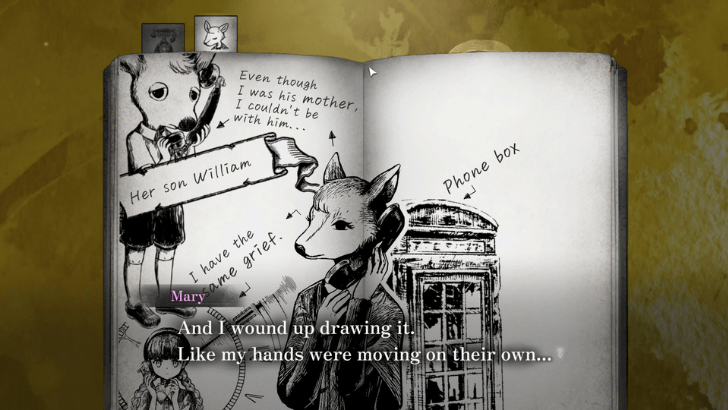
Besides, there’s not much need for flashbacks outside their function in creating impact, given that Mary already has a journal she can look at if she needs to revisit notes—pertinent information that becomes dialogue prompts for her to ask characters about and investigate further. Interactivity mechanics such as these offer another avenue for a visual novel to enrich a narrative without simply relying on flashbacks and, say, the worn-and-torn time loops as tools for plot and gameplay. Schrödinger's Call even achieves the same thematic weight without resorting to using time loops as a clutch for shifting perspectives and organic discovery.
The note-taking, by itself, expands a character’s circumstances while also broadening the player’s "agency" beyond the usual one-to-three options shown on-screen. Dialogue then becomes a nuanced interaction. With all that in mind, Mary’s journal alone recaptures the story’s main points that repeated flashbacks feel unnecessary and intrusive.
Do Choices Really Matter?
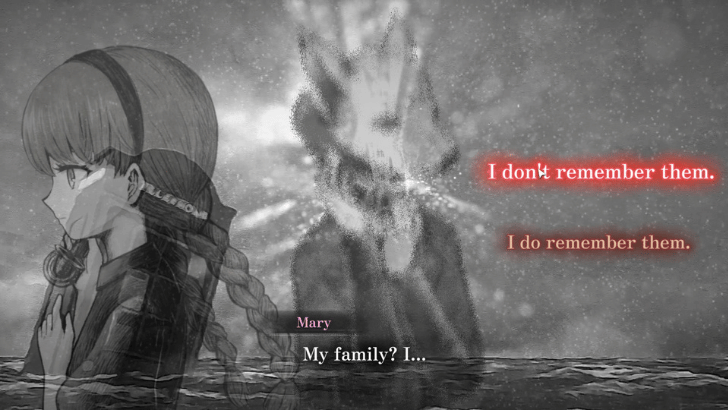
Speaking of choices, it’s worth noting their limited impact on consequences in the game, though that seems an intentional decision by the developers in opting for a single ending. As I’ve mentioned earlier, this isn’t an adventure game where the definitive outcome rests on your current actions. There’s the illusion of choice that only ever leads you back to where the story is primarily meant to go.
I spent the first episode or two experimenting with "bad" decisions and saying the wrong things, but it only lightly switched up the conversation’s flow by a few lines and exhausted the choices until all that’s left is the right one. Your "wrongdoings" are treated as Mary simply not knowing anything at first, because the only mistakes that matter here are the regretful decisions made by the characters in the past.
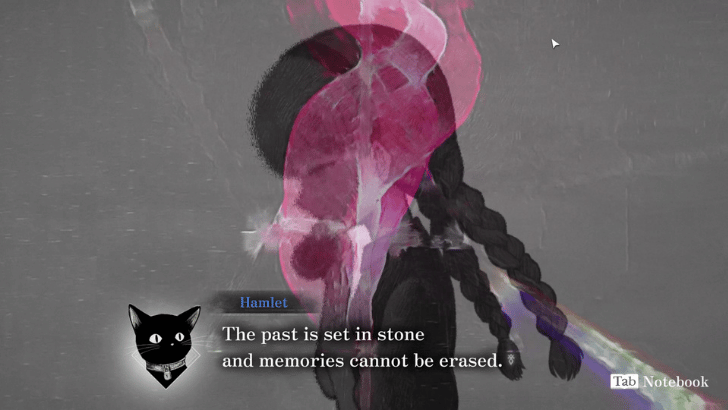
However, rather than limiting the game's potential, this kind of focus actually adds nuance to Mary’s character. Although it doesn’t wholly stray from the main path, each response reveals Mary’s personality and disposition through her reactions, however subtle.
Did she immediately understand the current situation and its implications? Is she being sarcastic, or simply clueless? The nuances of her character progression provide players with a distinct yet cohesive sense of who she is, without giving her personality whiplash. Still, compared to visual novels that openly embrace linearity, this game can mislead players early on by making it seem like their choices have a definitive effect, even though these don’t actually change the outcome.
Nonetheless, the absence of story-altering choices draws players into a tighter, more unified narrative experience. There’s no way around death coming for the characters. The game benefits from its own degree of interactivity; the intentional storytelling magnifies the consequences of what the cast did before the moon fell, and now they must come to terms with their bittersweet memories so they may move on to the next life.
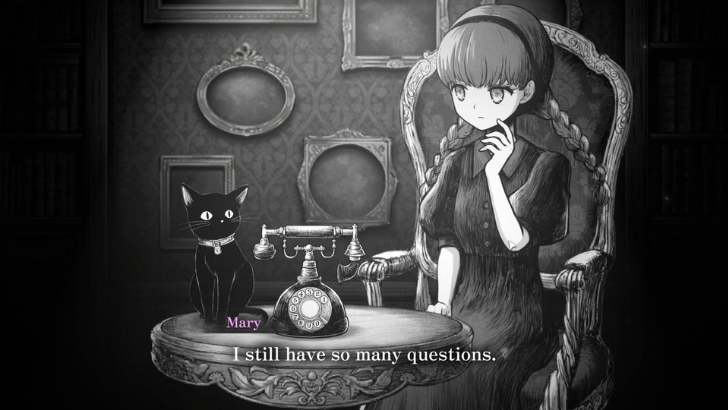
With that in mind, it makes sense that Schrödinger's Call doesn’t have a save-and-load screen either, unlike many in the genre. There’s no room for experimenting with choices here. The automatic save points, which pop up when you're in the main calling room with Hamlet, are only truly useful when you finish a call and have to exit the game.
Still, rewinding to a save point over and over again isn’t necessarily what makes a visual novel tick. You can have a title with convoluted routes that don’t add any meaningful value. Even without exploring all the what-ifs through varied endings, Schrödinger's Call succeeds in conveying profound themes through a cinematic experience uniquely captured by its format—dealing with self-worth forged by human connections and estrangement, even in the face of death.
Besides, the first run always hits different. And all the better when you don’t have to waste time meandering through dead ends.
The Lines Ring True
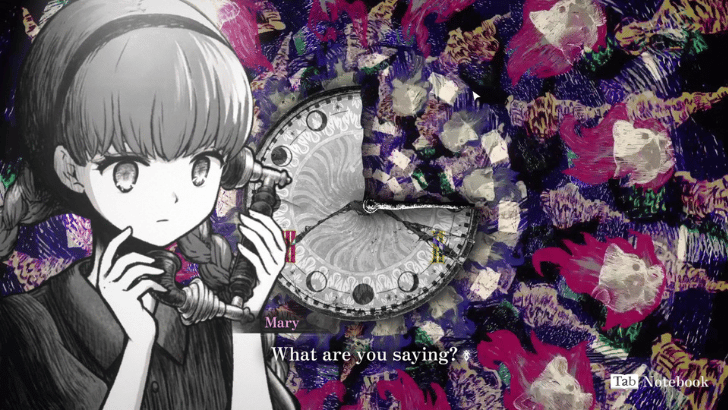
Schrödinger’s Call shines through its masterful, cinematic fusion of visuals, music, and substantial content, elevating the melancholic visual novel experience into something truly memorable. These elements intertwine as narrative devices.
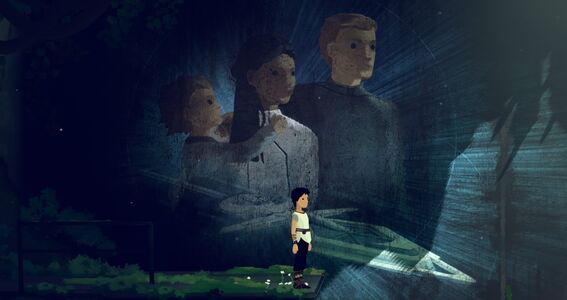
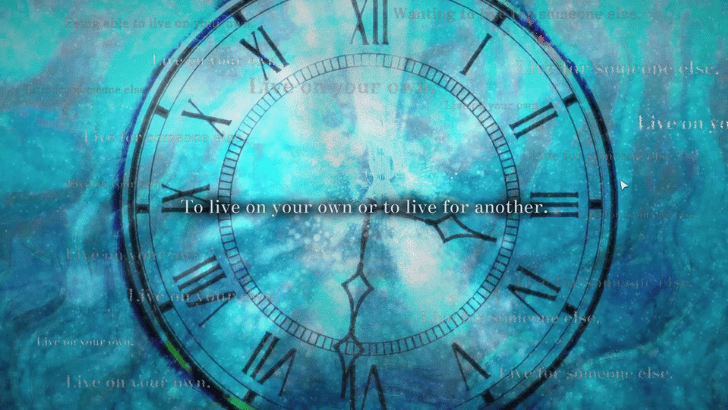
Firstly, the art style alone leaves an impression on your mind that no other game does (again, aside from Omori). There’s a certain wistfulness in combining pencil sketches (with an anime aesthetic) with European picture books into surrealist transformations. From stark monochrome to dreamlike bursts of color and pattern, the game crafts an emotional language that draws players into a liminal space—half memory, half imagination—reflecting the characters’ own state of being both alive and dead.
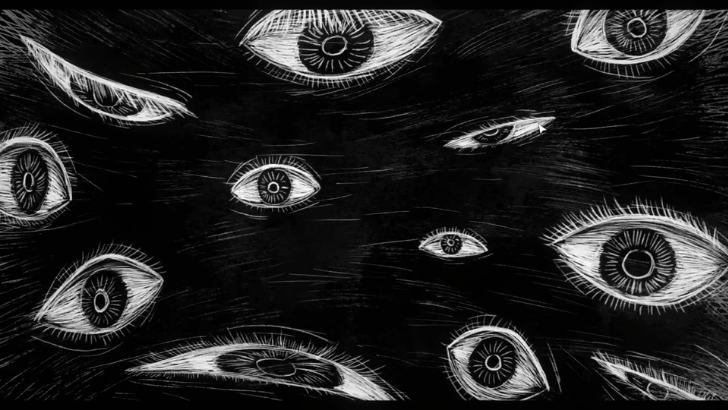
In essence, Mary is just communicating with everyone, except Hamlet, by phone. They’re canonically in their own dark rooms while in limbo. But as they relive each memory and peel back layer after layer of what transpired, the visuals plunge the player into the intense feelings weighing on their hearts—anger, regret, frustration, guilt, confusion, and more.
Accompanying the unresolved painful memories is a soundtrack that masterfully mirrors each character’s disposition and shifting mood. Dissonant, atonal melodies heighten anxiety, while calm synths pull players into limbo alongside the cast. As I played, I found that the duality reinforces an audio design in Schrödinger’s Call that is inseparable from its emotional weight. You could even feel rushed to make choices because of the music, even if there’s genuinely no real-time urgency in the game.
There’s a degree of voice acting as well; I could faintly make out some Japanese words and intonations whenever the characters speak. They’re mostly incoherent mumbling, though the ambiguity fits the limbo setting where characters hover between clinging onto memory and moving on. You can still feel the warmth, withdrawal, and pain in their voices—akin to the typing sound in Undertale that breathes acoustic life into the written dialogue.
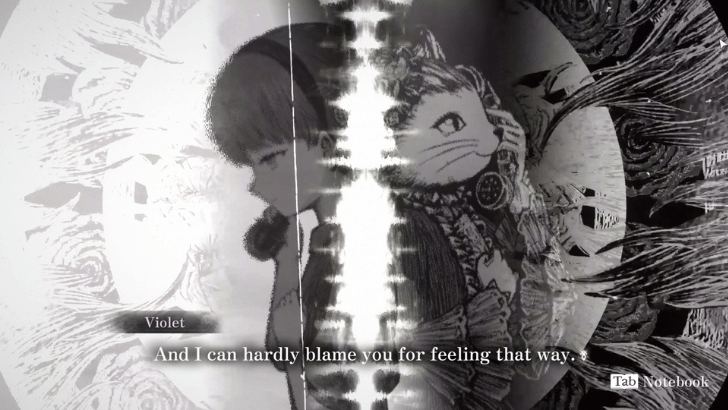
Throughout the game, Schrödinger’s Call wallops players with heartbreak that deepens as the story unfolds, growing more tragic the closer you draw to its end. I was actually surprised by the amount of content it has for a single run (or maybe I had just gotten used to indie visual novels that have a playtime of under five hours). Still, with only one route to follow, the game more than justifies its length.
Last but not least, it’s this focus on a flawed yet deeply human cast that anchors Schrödinger’s Call from episode to episode and pictures the bittersweetness of a soon-to-be-apocalyptic world. You spend the entire game helping them regain their memories and unravel the grief and loneliness weighing on their hearts, even when there’s a nagging awareness at the back of your head—what’s the point, when death inevitably comes for them all?
Is Schrödinger's Call Worth It?
Pick Up the Phone, Right Now
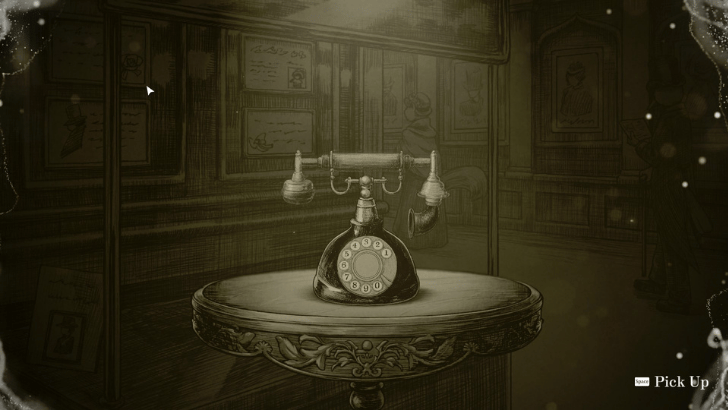
Priced at $17.99 and running for eight to ten hours of playtime, Schrödinger’s Call stands out among visual novels due to its brilliant, unique take on helping souls move on to the afterlife. While there’s already a handful in the genre that hinge on Schrödinger's Cat as a concept, this game is not something you wouldn’t want to miss; it's a narrative that stirs the heart, mind, and soul.
Do note, however, that this doesn’t have branching choices or any other gameplay progression you could actively contribute to or alter. If you’re the type who likes exploring the impact of player choices, this may not be your cup of tea—unless you’re willing to compromise for that narrative satiety, which I assure you that you’ll find in this game.
But if you prefer a game that goes straight to the point and without dead ends in routes you never intended to search—or you're just dipping your toes into visual novels, ready for a rollercoaster of tears and soul-searching in the midst of human connections—Schrödinger’s Call rings with a playthrough you'll want to answer.
FAQ
How many routes and endings does Schrödinger's Call have?
There’s only one definitive ending in Schrödinger's Call.
Is there a demo for Schrödinger's Call?
Schrödinger's Call has a free demo on Steam, which was released on February 10, 2026. It covers the entire first episode of the game.
What are the System Requirements to Play Schrödinger's Call on Steam?
The System Requirements, as listed on Steam, are as follows:
| Specifications | Minimum | |
|---|---|---|
| OS | Intel Core i3-6100 | AMD FX-8350 | |
| Memory | 8GB RAM | |
| Graphics | NVIDIA Geforce GTX 750 Ti / AMD Radeon R7 360 / Intel® HD Graphics 530 | |
| DirectX | Version 11 | |
| Storage | 5 GB available space | |
| VR Support | 未対応 | |
Game8 Reviews