



| Saros | |||
|---|---|---|---|
| Release Date | Gameplay & Story | Pre-Order & DLC | Review |
Overview
What is Saros?
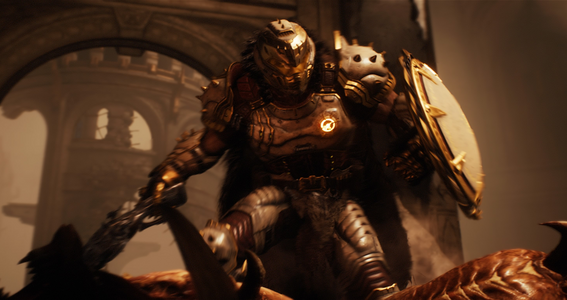
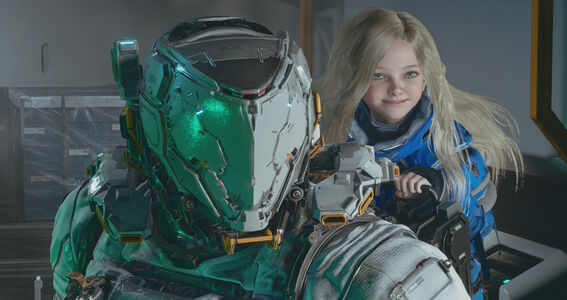
Saros is a third-person action RPG shooter set in the faraway alien planet of Carcosa. Taking the role of corporate officer Arjun Devraj, Saros tasks players with the immediate investigation and retrieval of lost company assets from previous Echelon missions; only the planet’s flora and fauna aren’t keen on letting this trespasser by without a fight.
Made by Housemarque, creators of the 2021 hit Returnal, Saros brings forth a brighter, flamewreathed side of cosmic horror alongside familiar bullet-hell mechanics and a revamped metagame progression system.
Saros features:
⚫︎ 3D third-person shooting action across multiple biomes
⚫︎ 3D bullet-hell mechanics with dedicated metagame
⚫︎ Fully customizable run parameters on a point-buy system
⚫︎ Auto-hit aiming system with shield and parry mechanics
⚫︎ Full voice-acting with animated cutscenes
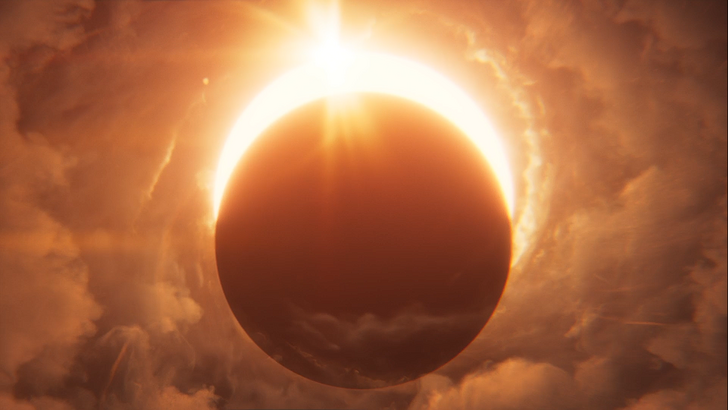
⚫︎ Gamechanging "Eclipse" mechanic
| Digital Storefronts | |||||
|---|---|---|---|---|---|
 PS PS |
|||||
| $69.99 |
Saros Review: Eclipses All In Its Wake
Cosmic Horror as You’ve Never Seen Before
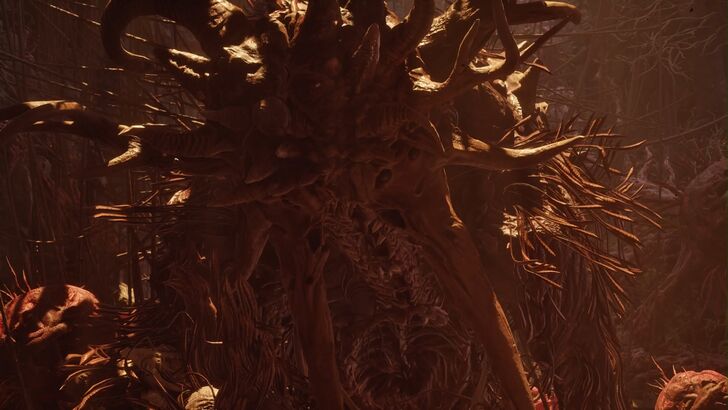
Few horrors in this universe are as daunting and insurmountably dreadful as cosmic horror. With it comes the weight of infinity and our enduring irrelevance within it, but also with it comes the impetus to appreciate what we can achieve with so little time. It is…a well-defined genre of horror across most media, evoking tentacles, fishmen, and eyes where there shouldn’t be eyes consistently across many depictions. Saros is a game that dared to be different; to be eldritch among the eldritch.
It is an anomaly within its own ilk, defining cosmic horror under its own terms, while also tailoring a deep and heartfelt experience within the mountain of madness it calls a story. Combine that with a core gameplay loop that beckons to every shooter/roguelite fan’s innermost desires, a metagame progression system stronger than the Dunwich Horror, and the means to craft your own cosmic horror experience, and you’ve got something that eclipses all in its wake.
I was fortunate enough to be among the few Sony Interactive Entertainment Inc. deemed worthy to try this game early with a review copy; I didn't realize I was getting a front row seat to a cosmic fright of a lifetime.
The Shadows Lengthen in Lost Carcosa
We begin this breakdown of Saros with its strongest facets: worldbuilding and story. Saros is a game, but it is also an exercise of creativity in its purest form. It is art, transforming and challenging the status quo of its own medium, and nothing represents that better than the complete audacity of its worldbuilding, which can only be described as cosmic horror in broad daylight.
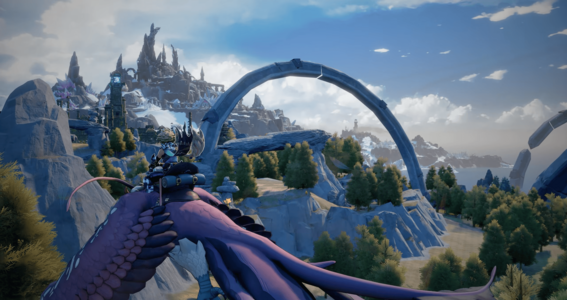
Saros is set in the alien planet of Carcosa. Though sharing a name with the city mentioned in Cassilda’s Song from Robert W. Chambers’ The King in Yellow, Saros’s Carcosa is a different beast altogether. Lacking the yellow sky and black stars you’d expect, Saros has the ruins of a once great civilization strewn about its face and snaking underneath its surface. Though par for the course for anything even remotely RPG-related, Housemarque is a tour de force for alien planet design, because after making Returnal unmistakable in its own right, they really hit it out of the atmosphere again with Saros.
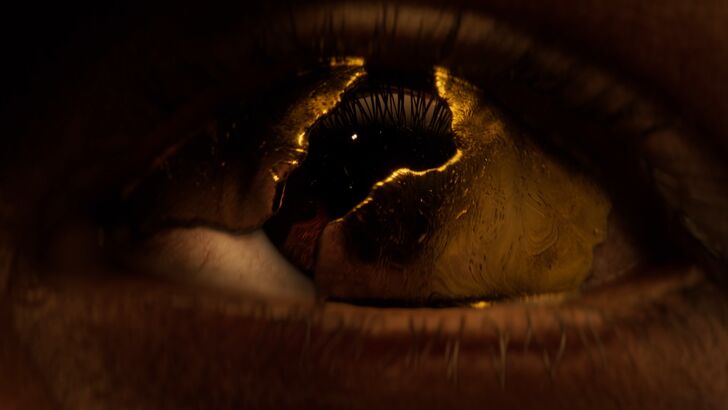
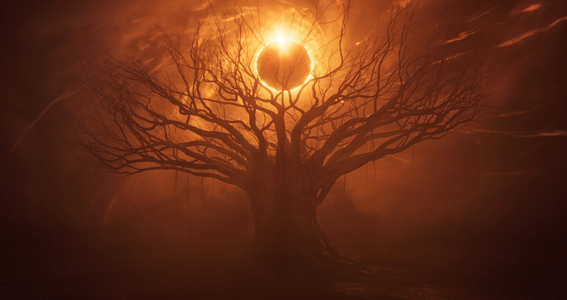
Saros’s worldbuilding is tight, deeply mysterious, and as alien to us as it is to the characters within it. The scale of its architecture is maddeningly large, scaling city-wide chasms in mere minutes while also hosting great potential for level design. The emphasis on gold, light, fire, and the eclipse is particularly subversive, as that isn’t the usual imagery associated with cosmic horror.
Moreover, the game’s story doesn’t aim to emphasize humanity’s hopelessness and irrelevance in the grand scheme of this planet’s machinations, as is often the case for this genre. Instead, it highlights the slow decay of relationships, denial, and guilt—all very human, very personal emotions spread across planet-sized canvas.
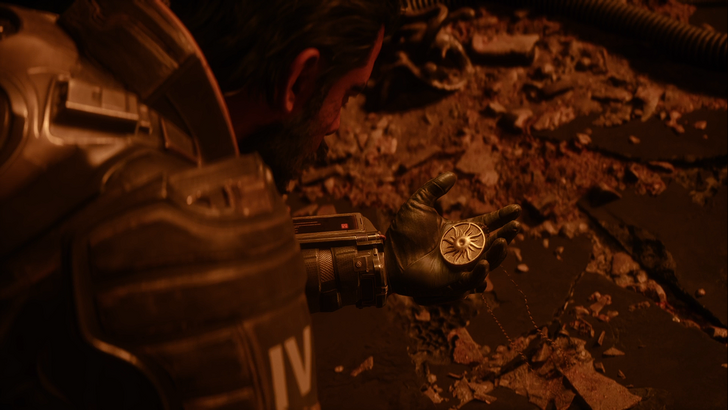
This is without a doubt the newest cosmic horror that has looked in ages, both visually and thematically. Housemarque managed to make something new and familiar at once and conveyed it expertly through Saros’s many facets. Top marks for this approach, coming from a fan of the literary genre.
Coming from a fan of the game genre of third-person shooting, I’d give it a slightly less irredescent outlook that by no means tanks the game’s overall quality.
Returnal’s Gameplay Returns, Stronger Than Ever
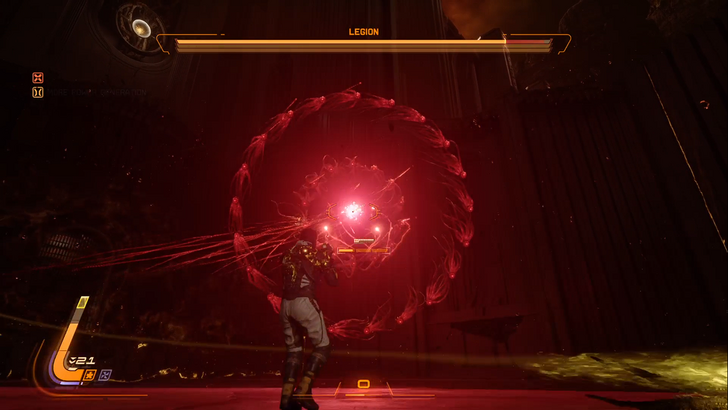
Housemarque isn’t a one-trick pony, even if Saros is pretty much just Returnal on roids. Saros’s core gameplay revolves around the player using various weapons, shields, and eldritch skills to lay waste to all planetary natives and defense systems in their way as they try to investigate what happened to the previous Echelon missions.
Playing as Officer Arjun Devraj from the Soltari Corporation, players are yet again put in the unfortunate boots of an offworld explorer stuck in a mysterious time loop, only this time, dying means you can come back stronger. Where Returnal relied heavily on a milestone-based progression system and a whole lot more skill investment from its players, Saros is a true roguelike in that it has a robust metagame system, which I will expand on later.
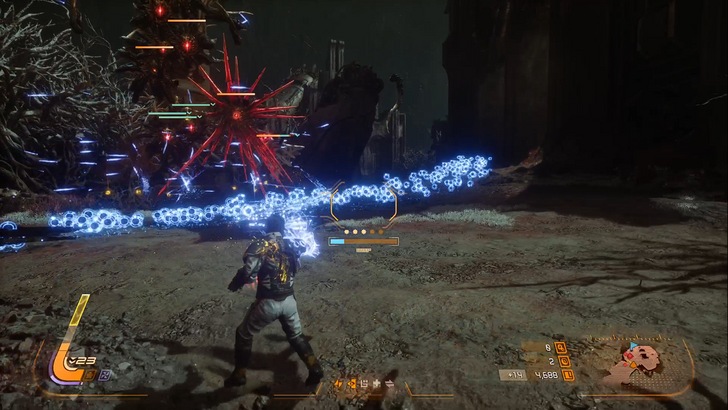
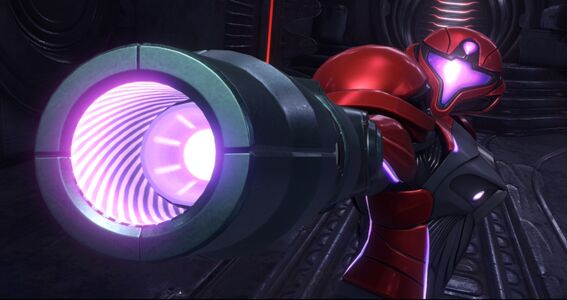
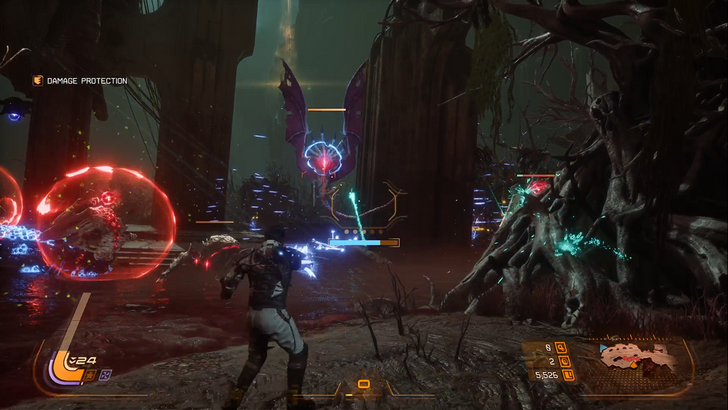
Going over the core gameplay, Saros is a third-person action shooter with over-the-shoulder gunplay, randomized loot and levels, and platforming sections. What sets it apart are its Auto-hit and Shield mechanics, which let players focus on survival without losing strategic depth.
Auto-hit provides strong aim assist for ranged weapons, turning attacks into a matter of timing your shots. This fits the pace of Saros, which is faster, larger in scale, and far denser with bullets than Returnal.
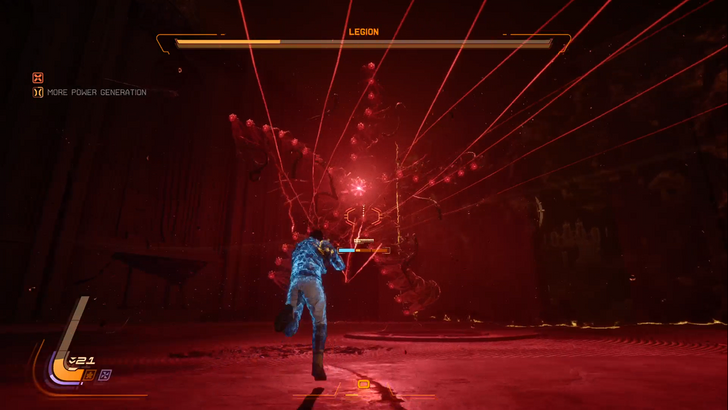
As enemies evolve, so does the player’s toolkit. Auto-hit works alongside the Power and Shield systems, handling offense and defense. The shield blocks most projectiles or parries them later on, letting players push through bullet waves for a limited time.
Power adds extra firepower through a resource system that ties directly into the shield. Absorbed enemy bullets are converted into Power, creating a tight loop between defense and offense.
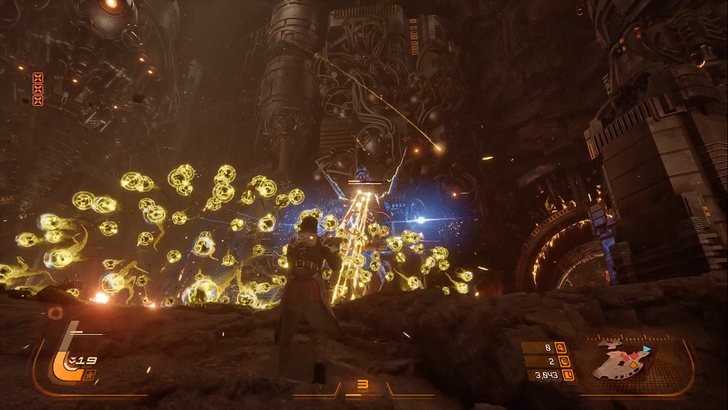
Adrenaline and Corruption also return in spirit. Adrenaline boosts stats for clean play up to a cap, similar to DMC, while Corruption trades a debuff for a strong buff, much like Returnal’s Parasites.
Together, these mechanics create a loop of shooting, defending, powering up, and collecting more randomized loot to improve player performance in any of those steps. In short, straight crack for any roguelite or shooter fans out there.
There’s no denying how fun this loop is mid-run, but between runs is what determines how far you get in the next. It’s a good thing that Saros has a metagame to match its core.
No Such Thing as A Skill Issue Here
Skill issue is simply a non-factor in Saros, and I mean that as a compliment. It’s not that the game lacks challenge of any kind—believe me, it’s plenty difficult on a base level—but it does hand you the means to tailor any run into whatever difficulty you wish using Carcosan Modifiers.
Whether you’re looking for a walk in the park or a story-accurate Carcosan experience, you have the perfect point-buy system to turn Saros into exactly that. More damage from you or your opponents, more Corruption, fewer resources, it’s all there.
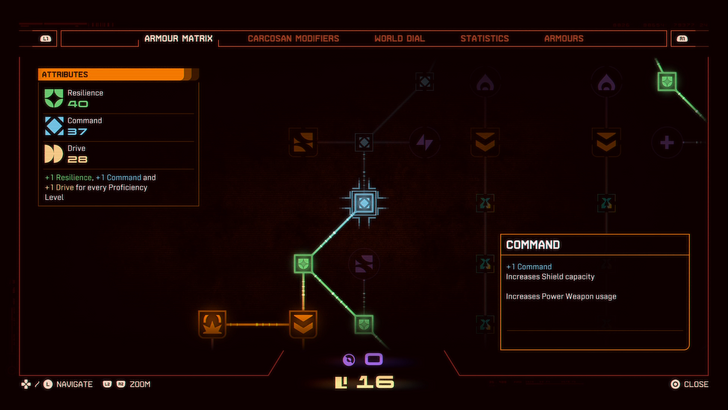
This leaves Saros as a very customizable experience as much as it is a fun one. Also contributing to this is Saros’s robust metagame progression system, which is decidedly currency-driven. Using what Lucenite you find in a run, you can upgrade your gear, stats, and unlock new passives in a generous skill tree format with multiple branches.
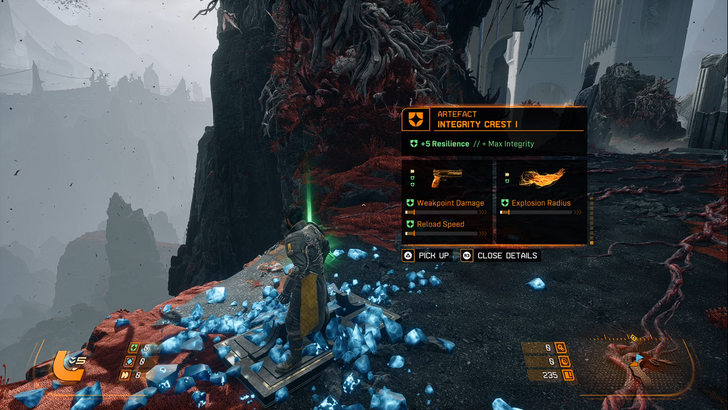
There’s no refunding of Lucenite, but the game is very generous with how much it gives you, so every run feels fruitful and worth the effort. Good thing too, because this game’s runs can last upwards of an hour.
What’s great about this system is that it’s generous, but also cannot be cheesed by resource farming, as each branch is capped by a boss fight requirement that won’t let you upgrade past it while that boss stands. This means that there’s still some skill required of you, but given that the Carcosan modifiers still exist, that much is yours to determine.
Love, Loss, and Pain in Yellow
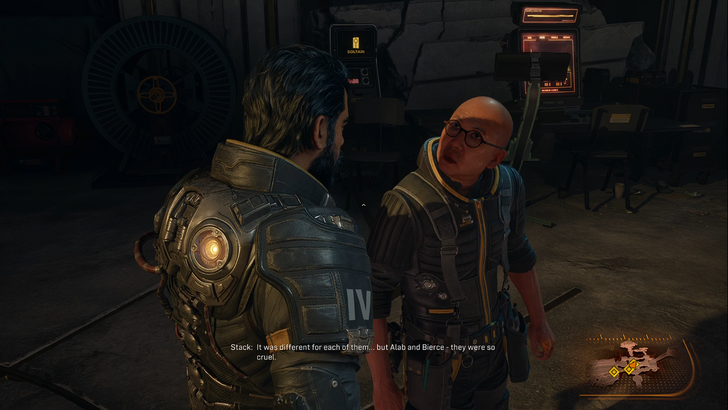
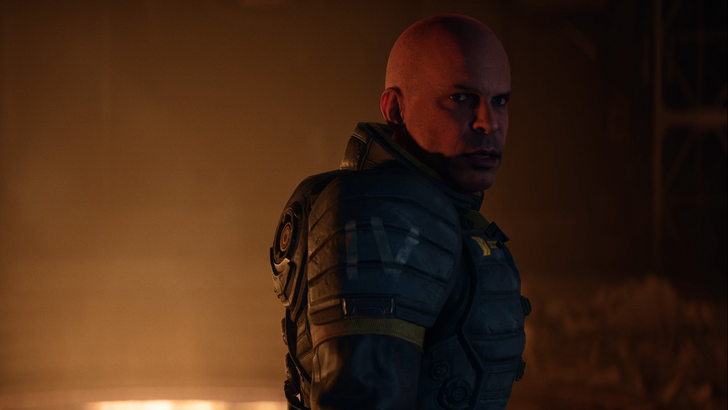
Moving on to Saros’ writing and voice acting accolades now, it has some of the realest depictions of slow, deteriorating madness I’ve seen in a game. Through multiple runs, the rest of the Echelon IV crew, and even Arjun himself, descend into different brands of mania.
The dialogue devolves from fearing for their lives to praising some disembodied force in the eclipse, and it tingles me with horror in the best ways. Impeccable writing is best supplemented by great performances, and Saros manages with its great voice cast.
Arjun’s voice, in particular, is just the right amount of desperate and disingenuous to make him compelling, while the rest of the crew can put fear in the heart of anyone with their depictions of their incubating madness. Overall, great cinema in addition to great gameplay. What’s not to love?
Minor Visual Abominations, Moderate Accessibility Issues
Sad as it is to say, no game is perfect, and as much as I want for Saros to be the exception, it simply has a few problems that are worth noting. First off, visual glitches. It’s nothing like Ubisoft’s poor excuse for rendering quality, but sometimes the flowing trails of enemies do glitch out when shot all to hell. It happens rarely enough to not be too big an issue, and to be honest, it isn’t easy to make out anyway in the visual noise of Saros’s world design.
Next up, accessibility issues. Though the game can be as easy or hard as you want, removing new player accessibility issues, Saros is also very bright, flashy, and pretty much sensory overload as a game.
As a 3D bullet-hell, you can expect the screen to be full of glowing orbs at any given point, plus bullets and particles of your own, environmental effects, enemy designs, and dynamic lighting to boot. If you are someone prone to seizures or sensory overload, this game is simply a hospital trip waiting to happen.
There’s also a particular note about the game’s haptic feedback on PlayStation 5, with the rumbles being near-constant and jarring. This can be turned down, thank god, but if you didn’t know that, you might get turned away by the constant shaking.
The Greatness Heralded in Gold
And so, the shadows lengthen no longer as our review of Saros comes to a close. Like the Color Out of Space, this game’s true majesty is difficult to put into words, so I managed what I could to describe it.
It’s a lot, in concept, practice, and theme. It’s a new look at a time-tested genre, telling a tale as old as time, and using a refined gameplay loop from a predecessor. Some look at this and may think that it tried too hard to be like Returnal, but I believe that it fully realized what Returnal was trying to do.
Not only is it better now, with more systems in place to customize the experience, a smoother system to traverse the bigger world it’s in, and a greater emphasis on a transformative experience, it is also more successful in evoking the emotions cosmic horror wants its readers to feel.
This was an arrival heralded by Returnal so many years ago, and now, even that gem of a game is eclipsed in Saros’s wake.
Is Saros Worth It?
Expensive, But So Worth It
Saros comes in at a staggering $69.99 for the base edition, but those 70 bucks are likely to be the best you’ve ever spent. Near-infinite replayability past an already generous campaign mode, plus the infrastructure and metagame complexity to support it, is a monster of a reason for this game’s value, and that’s not even all it has to offer.
But this game. If you can’t, watch someone else play it. It’s the kind of madness you’d want others to experience no matter what, so I suggest you find a way to do so.
FAQ
Is Saros A Sequel of Returnal?
No. Although similar in themes, execution, and mechanics, Saros is not a direct or spin-off sequel of Returnal, although its developers do consider it a spiritual successor to the 2021 roguelite hit.
How to Unlock the Parry in Saros?
To unlock the Parry ability, players must reach the game’s fifth biome, The Blighted Marsh, and talk to Soltari Executive Alab. Players will receive the mission prompt to clear the path ahead, and, upon returning, will unlock the suit upgrade necessary for the game’s parry feature.
Game8 Reviews