



Overview
What is Rune Dice?
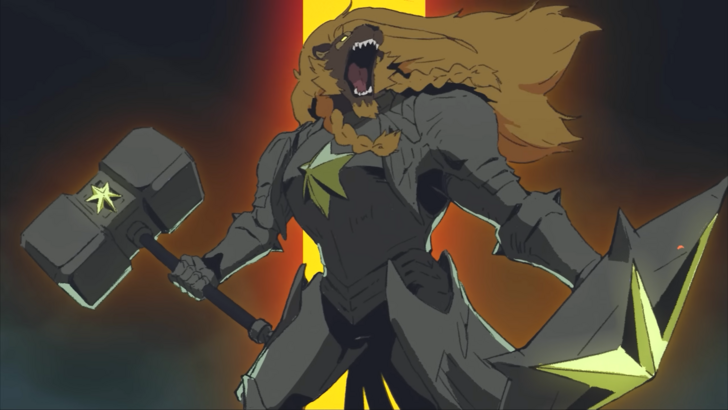
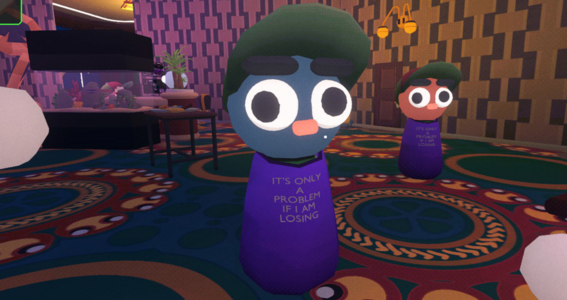
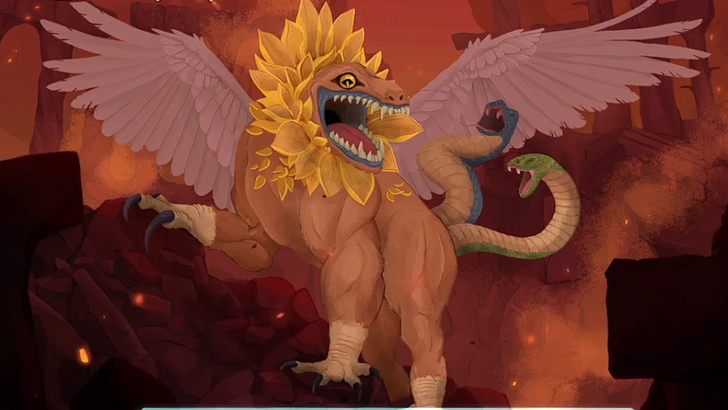
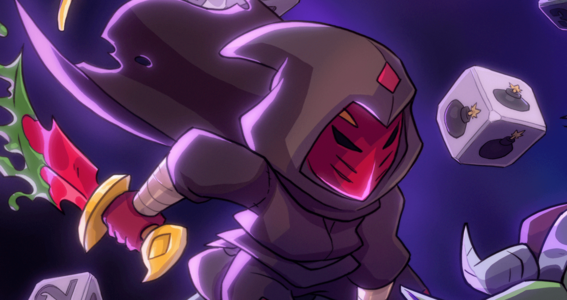
Rune Dice is an action roguelite completely built around its physics-based, dice-merging gameplay. Using dice figures, board movement, and powerful runic power-ups, Rune Dice challenges players to reach the highest value possible with their dice to unleash havoc on their enemies across multiple playable classes, with several subclasses each.
Rune Dice features:
⚫︎ 8 playable classes with level-up mechanics
⚫︎ Multiple subclass options per class
⚫︎ 3 major biomes, with multiple bosses each
⚫︎ Hard mode difficulty toggle
⚫︎ Dedicated almanac for all dice, enemies, and classes
⚫︎ Pixel art visuals with chiptune music
| Digital Storefronts | |||||||||
|---|---|---|---|---|---|---|---|---|---|
 Steam Steam |
 PS PS |
 Xbox Xbox |
 Switch Switch |
 Switch 2 Switch 2 |
|||||
| $14.99 | |||||||||
Rune Dice Review: Rolled High One Way, Low Another
Somehow Finding New Things to Do With Dice
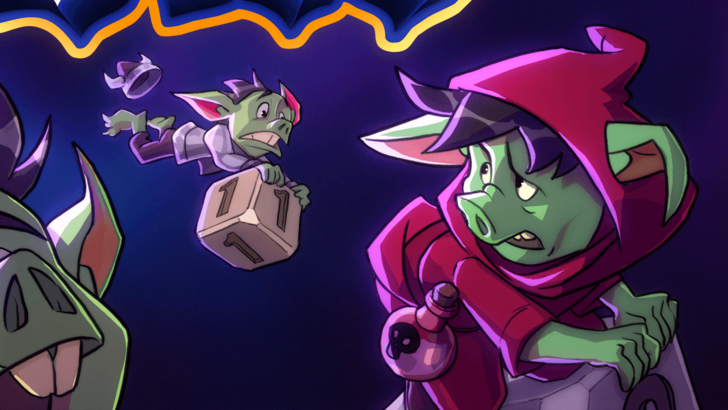
Roguelite deckbuilders can fall under one of many categories. It could be a literal, turn-based deckbuilder with cards, like how Slay the Spire and its sequel do it, or it could just be a deckbuilder in spirit, with players iterating on their "deck" with every fight. Rune Dice is decidedly the latter, and you might not be surprised to find that it’s a deckbuilder despite being mostly about dice.
I invite you to a rollercoaster of expectations with this game, as it bores, then impresses, then bores again in that order. It’s hardly the first of its kind to use dice for the figures on its "cards"., nor will it be the last, but it uses this idea so uniquely that you can’t help but admire it.
Then, you realize it’s a gimmick at best, and that the game lacks the soul of a deckbuilder that could support this distinct approach to dice, decks, and cards. High rolls to go with the low rolls; what does that leave us with? Not yahtzee, that’s for sure.
Killing Monsters by Merging Dice
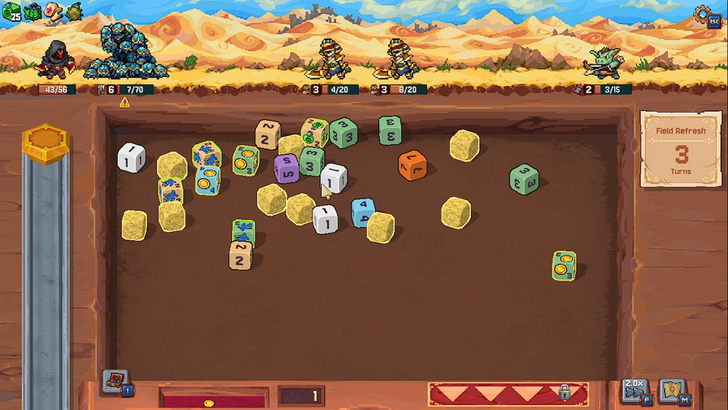
So, how does this game manage to find something new to do with dice? Well, it does that by cheating a little. The dice aren’t dice in the traditional sense as much as they are cubes with one number on them. They don’t really roll for random numbers that you can influence and modify before locking them into cards, as you would for games like Dicey Dungeons or Dice Legends.
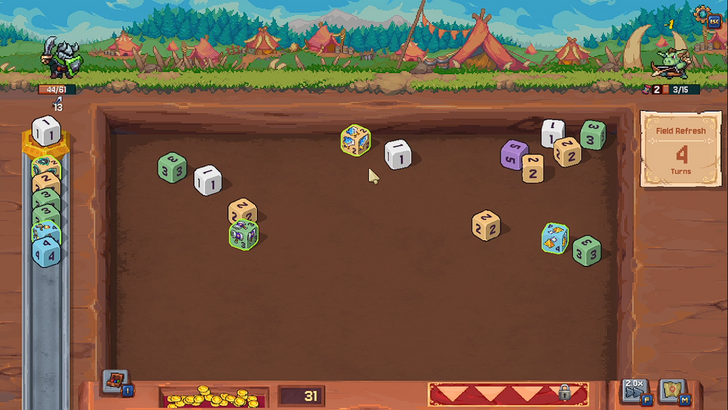
No, Rune Dice has you throwing them at each other like marbles and merging their singular faces into a higher-numbered dice. This dice then jumps into the nearest dice of its value, and so on, creating a potential chain of merges and hops that ends with all the dice merged in the process laying the smackdown on your enemies as damage or effects.
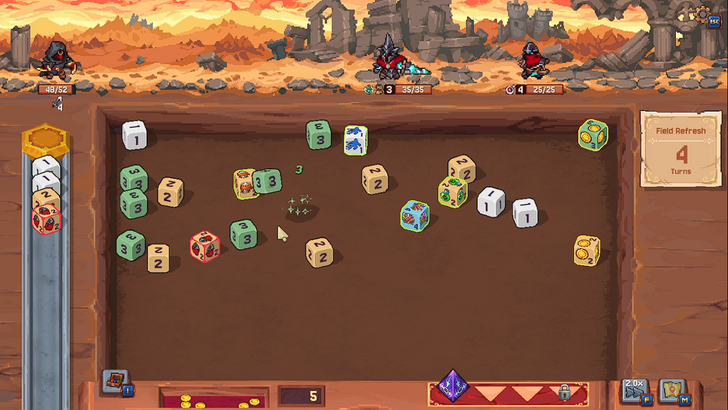
Now, does this mean that the game could’ve used anything, because the dice aren’t really dice? Sure, maybe, but they won’t lose points for that. It’s basically a Nuclear Fission: The Game in that regard, and I appreciate it for its uniqueness.
Now, basic numbers don’t really help that much. What really makes the game more interesting are the other things that work on this basic principle, which include special dice, artifacts, and consumables called Runes.
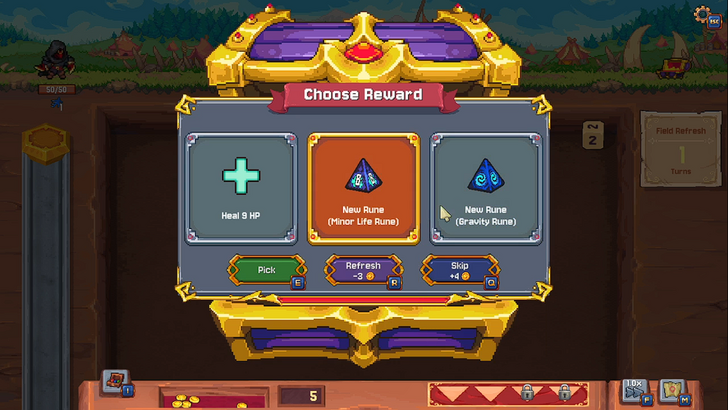
Special Dice and Runes can do anything from healing the player to influencing the current board state, as this is, in essence, a physics game, where bouncing dice and proximity matter more than actual strategy.
That’s where the game’s philosophy starts to break down a little, because though the game leans into its RNG roots and gives you the tools to sway the random whims of bouncing cubes to your favor, that’s not an endeavor that most get right from the get-go, and Rune Dice is decidedly in that corner.
Lacks the Deckbuilder Tools to Get Past the First Hour
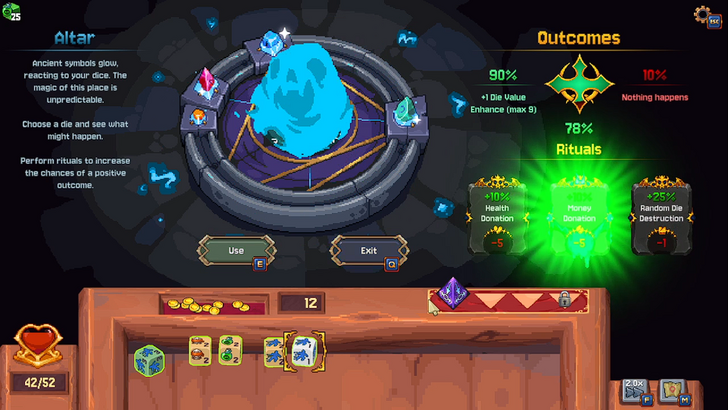
Rune Dice is fun and unique in its gameplay and has the variety to potentially keep you entertained for hours; keyword there being "potentially". See, the game has eight classes, three subclasses for each, plenty of relics, special dice types, Runes, Biomes, and Bosses to experience, but none of that’s going to be your cup of tea if this game lacked the soul of a deckbuilder from the start.
What do I mean by that? I mean that once the novelty of fissioning your dice at each other wears off, you find that despite not having actual dice in this game, you’re at the mercy of RNG once more, and could lose despite your best efforts and most cracked builds.
The game lacks the tools necessary to allow the strategic use of your resources to sway the chaos into your favor. It has some tools; I want that made clear. I just don’t have enough of them.
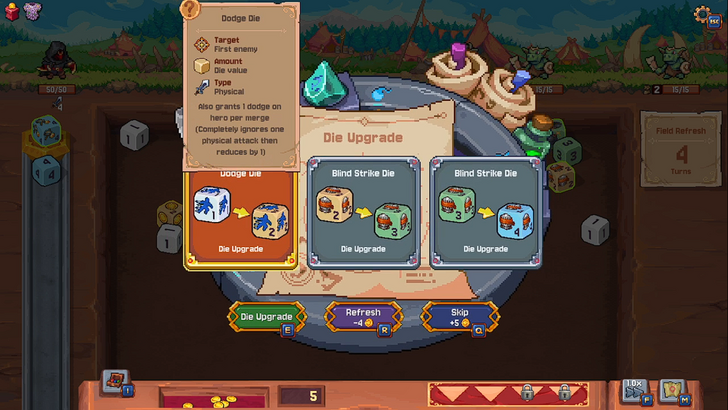
Most deckbuilders, depending on their type and the nuances of their core gameplay systems, have a means to: a) Thin out your deck to make draws and planning more consistent, b) modify your values and effects meaningfully and consistently to better adhere to your strategy, and c) anticipate possible win and lose conditions to round out the deck’s weaknesses.
Rune Dice has a little bit of each, but nowhere enough to make this an actual strategic endeavor worth trying. Deck removal and draw consistency? Nope! How about some randomized chances for special dice to replace your thrown dice and a means to add, but not remove, dice to your deck? Modifying dice values meaningfully and consistently? Nope! How about we give you a random selection of dice per combat, with only their values changing, and again, their effectiveness being solely reliant on whether they touch another of their kind or not?
Defined win and lose conditions that round out deck weaknesses, such that it’s satisfyingly impregnible as a reward for your careful deckbuilding? Nope! How about you just lose to a non-boss mob anyway because your dice decided not to land where it should?
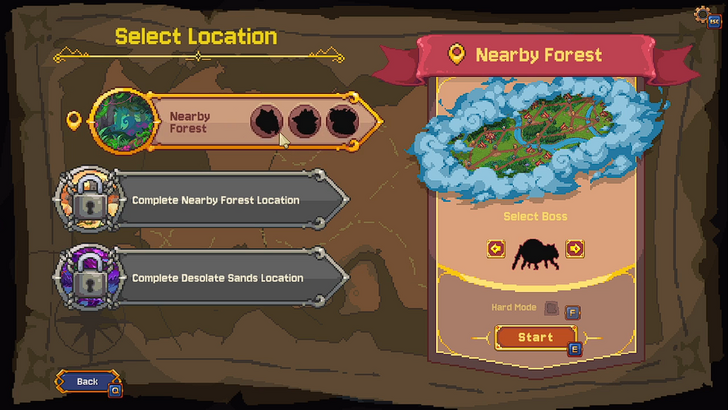
The problem with Rune Dice is that you’re always on the back foot, with no way forward except hoping and praying these paltry offerings for deckbuilding you get are enough to get you to the end. The concerning part is that this game has shown that it can, with the dice modification altars and the synergistic relics, but they’re never enough to ever form a proper strategy.
Is this a skill issue? Perhaps, but I’m a veteran of this genre that’s always found a way to eke out victories from the dumbest builds, and I have from this game. What I’m saying is that the journey to victory is rougher than most, and not in a satisfying way. With a few undeserved losses under your belt, you’re likely to lose your drive to keep strategizing, too.
At the end of the day, you’re just rolling dice and seeing what happens, and that does not a good deckbuilder make.
At Least the Metagame is Generous, and the Class Selection is Vast
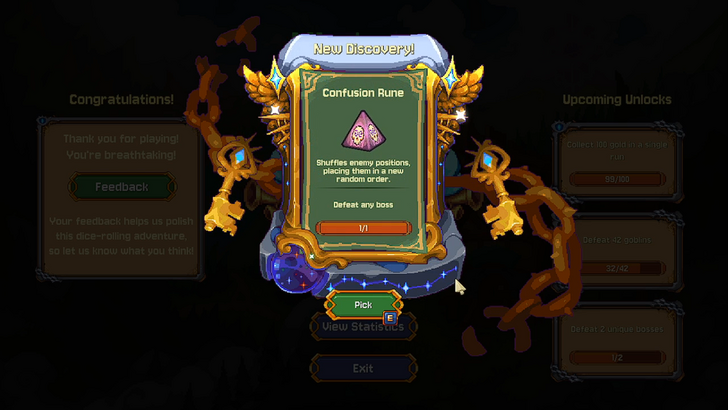
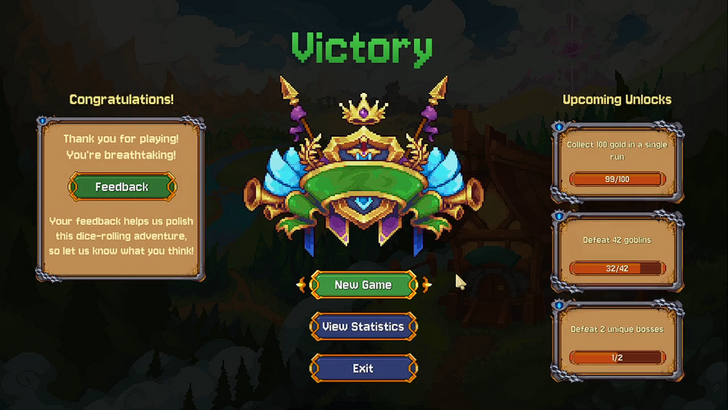
I touched on this earlier, but yes, Rune Dice does, at least, have some mechanics working well for it; you just need to deal with the frustrating RNG first. Operating on an achievement-based unlock system for its metagame, Rune Dice unlocks entire new classes, subclasses, Runes, and Relics for completing specific conditions over the course of multiple games.
The biggest unlocks are easily the classes, of which there are eight. My honest opinion on the class design overall is that, despite having a respectable roster size of eight, the classes don’t really differ from each other that much, and I believe it’s because of the game’s core mechanics.
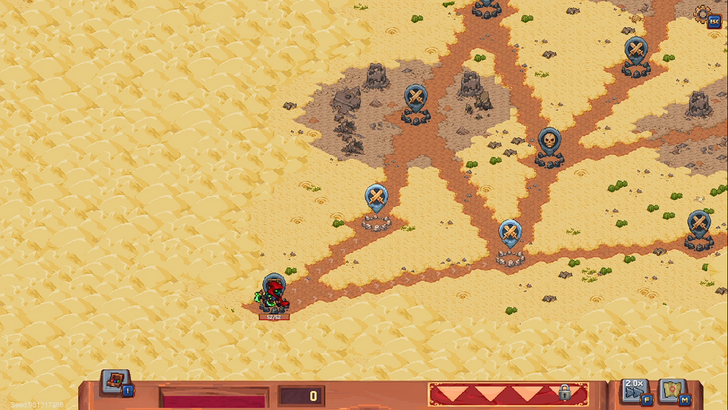
Rogue is all about not getting hit and hitting hard multiple times, Mage does area damage, Warrior tanks hits and stacks armor. It’s all just different flavors of dealing and preventing damage that doesn’t stimulate the strategy around it all. The game feels small despite objectively having the variety to satisfy.
At least the metagame itself is generous, unlocking two to three new things every run, so it’s never too much of a slog, at least gameplay-wise. If we’re talking the overall experience, there’s a mixed bag of sound and artscapes that prevent this from being among the better deckbuilder picks.
Music Annoys Where the Pixel Art Impresses
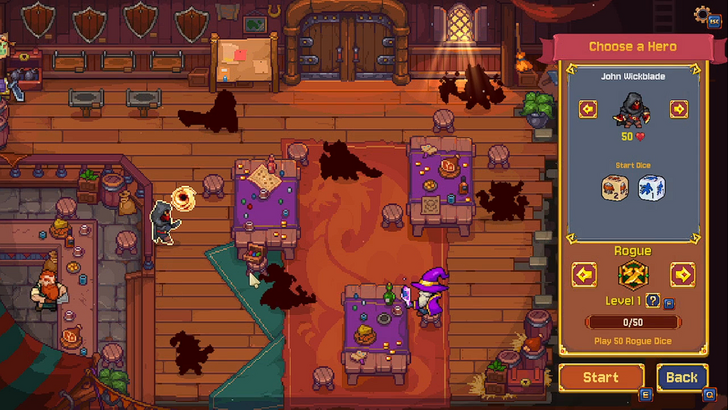
Now, moving on to the Rune Dice’s presentation, it’s a high roll followed by a low roll, just like everything else about this game. The pixel art is pretty darn great. Not anywhere near the level of truly breathtaking pieces of art like Moonlighter, Hyperlight Drifter, and Skul: The Hero Slayer, mind, but great nonetheless.
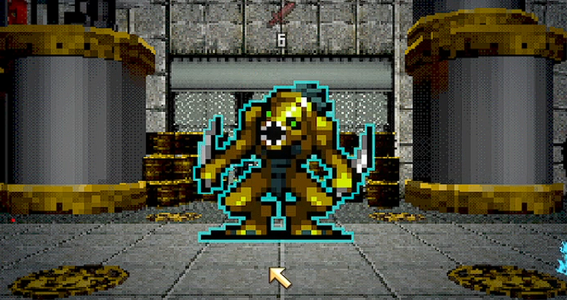
The sprites look great despite their lower resolution, and the 3D dice themselves are efficient in their conveying of values and mechanics, while looking quite fun to watch whenever a good turn has you throwing tens of them every which way.
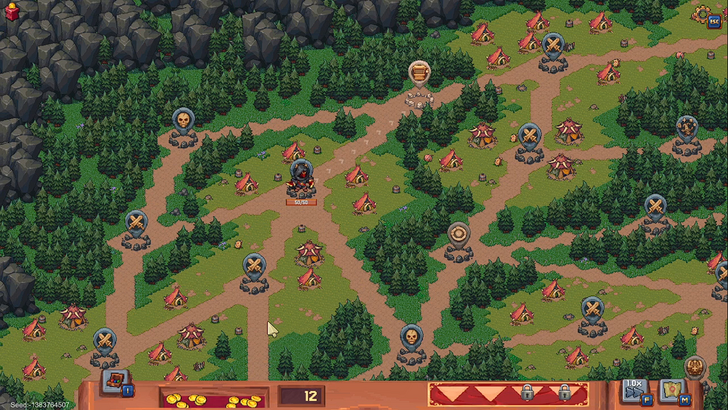
The music, though, is something else, and I mean that literally. Not to hate on it entirely, but Rune Dice’s music is a muted run in the making. It’s repetitive, bordering on grating, and not as varied as its mechanics and visuals.
The game at least has the SFX soundscape to remain somewhat acceptable, but I was not happy to keep playing with the sound on after the first hour. If the dwindling fun from repeatedly losing runs without a hope in sight won’t make you quit, this definitely will, or at least it’d make you turn it down.
Unique, If Nothing Else
The last die clatters out of the cup, bouncing end-over-end as its many faces catch the look of a hopeful reviewer. The cube rolls and wobbles, finding purchase on the table, displaying a number that would otherwise be considered good fortune, but in this case, only spells out the game’s ultimate fate: 1.
Rune Dice is unique, but not much else. It’s novel and charming for all of a couple of hours, tedious and a chore for the rest, at least for me. Never once did I feel the hooks of a deckbuilder’s seduction sink into my brain, when it so often does even for mere demos on Steam.
The game had not captured the soul of a deckbuilder, just the facade and inadequate bones of one. Had it the gameplay chops to match its visuals, or understanding of the genre on par with its subversion, this game would’ve been something worth rolling the dice for. Unfortunately, it’s one high roll followed by snake eyes all around.
Is Rune Dice Worth It?
Cheap Enough to Try
Rune Dice isn’t so awful that you’d never want to buy it, nor is it so expensive that you’d never think to, even if it were a better game. Coming in at a meager $14.99, you won’t lose much for trying this game out, and you’re likely to enjoy those first couple of hours very much. You won’t get much after that, but what did you expect for something that costs as much as a lunch?
FAQ
What are the Playable Classes in Rune Dice?
Rune Dice features eight main playable classes that can be selected before starting a run.
The main playable classes are: Rogue, Mage, Warrior, Bard, Archer, Druid, Paladin, and Necromancer.
How Do I Unlock Subclasses in Rune Dice?
Rune Dice allows players to unlock subclasses for each of the eight playable classes, each with its own unique identity and strategic focus. All subclasses can be unlocked by playing certain dice or achieving specific conditions, usually related to the subclass’s specialization, once unlocked.
Game8 Reviews