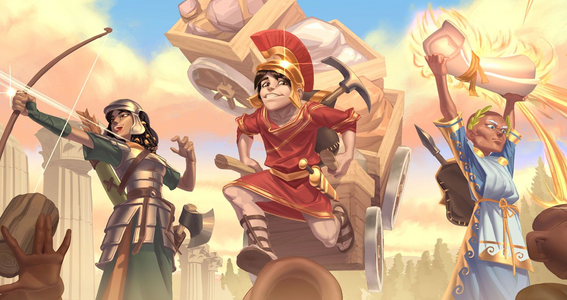




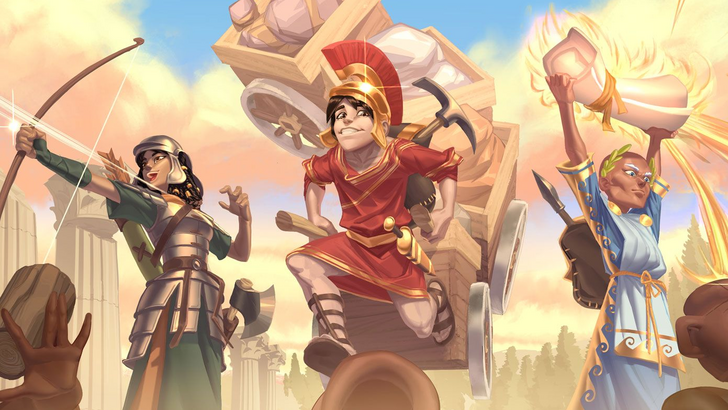
Romestead is a pixel-art, multiplayer survival crafting RPG set in the ashes of a fallen Roman empire. Read our review to see what it did well, what it didn’t do well, and if it’s worth your money.
Everything We Know About Romestead
Romestead Story
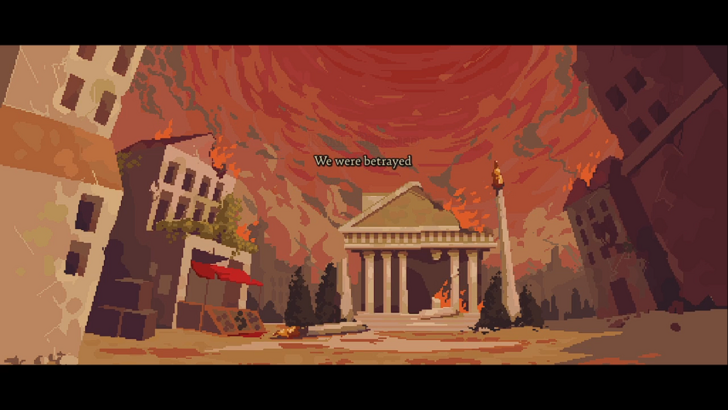
Romestead is set in the aftermath of a fallen Roman Empire. Tasked with the recollection of its gods and the reestablishment of its former glory, players must scour the land for resources, artifacts, offerings, and former Roman citizens to consolidate what remains of the empire. Whether through careful urban planning or peaceful agrarian development, Rome will be whole once more.
Romestead Gameplay
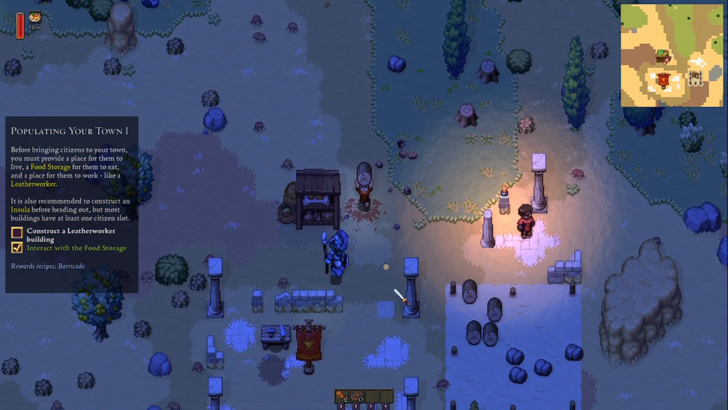
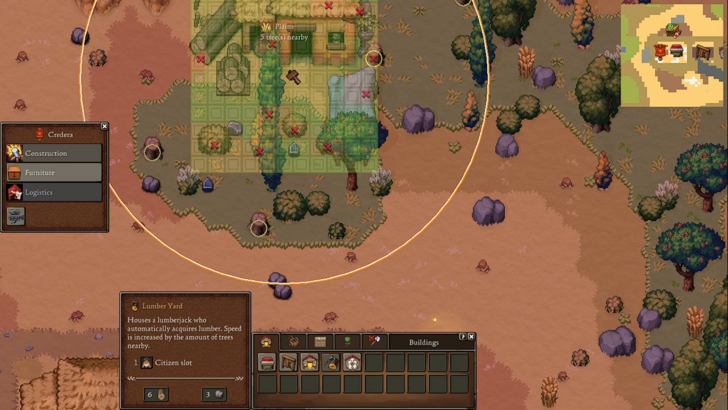
Romestead combines the strategic bones of a city-builder game, and combines it with the day-to-day exploration and crafting of pixel-art RPGs like Stardew Valley and Fields of Mistria. Consisting of a day and night cycle spread across a randomly seeded map, players must take the barebones resources of a fallen Rome and somehow turn it into a civilization.
Featuring multiple starting classes, a LAN and online multiplayer mode for up to 8 players, and completely randomized starts, each attempt to reattain Rome’s eternal glory will surely be a unique one.
Romestead Release Date and Time
Entered Early Access on May 26, 2026
Romestead was released on Steam Early Access on May 26, 2026. An official full release date has note yet been confirmed by the game’s developers, but we’ll update this article with that information as soon as it is available.
| Digital Storefronts | |||||
|---|---|---|---|---|---|
 Steam Steam |
|||||
| $13.99 |
Romestead Review [First Impressions]: Manifesting Rome as Early as Now
Taking Part in Rebuilding the Empire
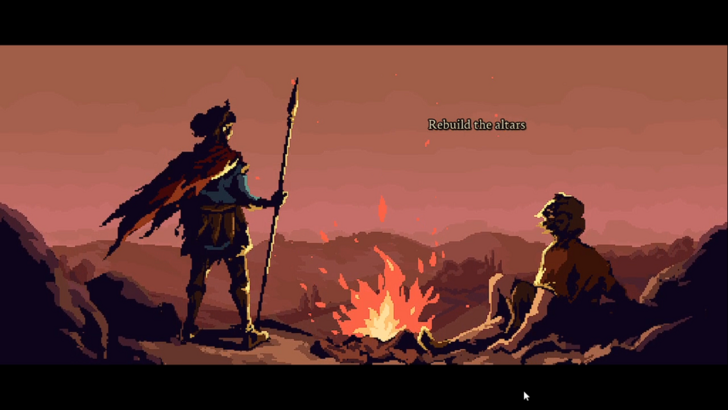
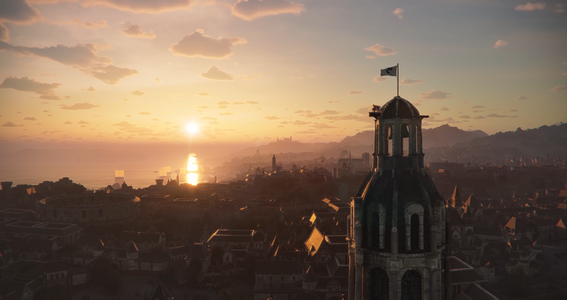
I’ve always wondered what it would have been like to build an empire from scratch. Rather specific, I know, but that’s the niche of the modern Roman Empire zeitgeist people are partaking in nowadays; the curiosity for the logistical and architectural bones upon which one of history’s most well-known empires was built.
It was quite the undertaking, I imagine, one that certainly didn’t take a day to do—but what if it did? Well, that’s Romestead. An eyeroll-worthy pun to start may not be promising to some, but having taken its early access release for a spin, I couldn’t imagine a more appropriate title for a game about the rebirth of Rome.
For something unfinished, there are a lot of fun things already at play here, and like the edifice to a finished forum, some polishing may be what it’ll need to get there.
From Striking Flint to Building Frescoes
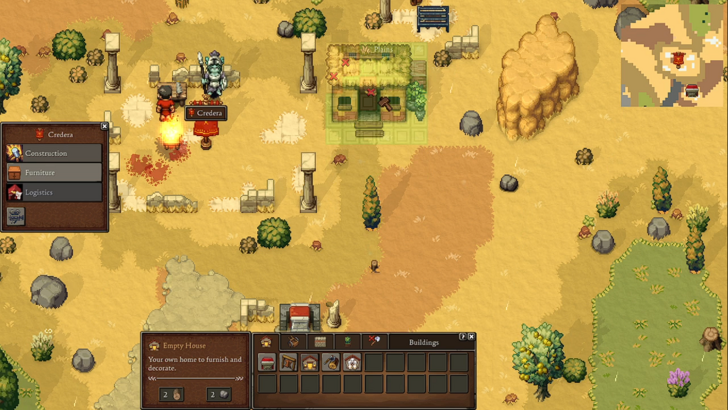
So, let’s begin by going over Romestead’s general gameplay flow. Romestead is an action-adventure RPG built on the bones of a traditional city-builder. Striking the perfect balance between the repetitive day-to-day of a traditional pixel-art RPG title like Stardew Valley, and the grid and proximity-based planning of last year’s Rome-themed entry, Pax Romana, Romestead’s got zoning and resource farming in equal measure.
Built on a randomly seeded world, Romestead’s core loop revolves around three pillars: Construction, Combat, and Development. Let’s begin with the first pillar: Construction. Romans were amazing urban engineers for their time, and as a former Roman yourself, you’ve got free rein on the logistics, planning, and resource acquisition of your building projects from start to finish.
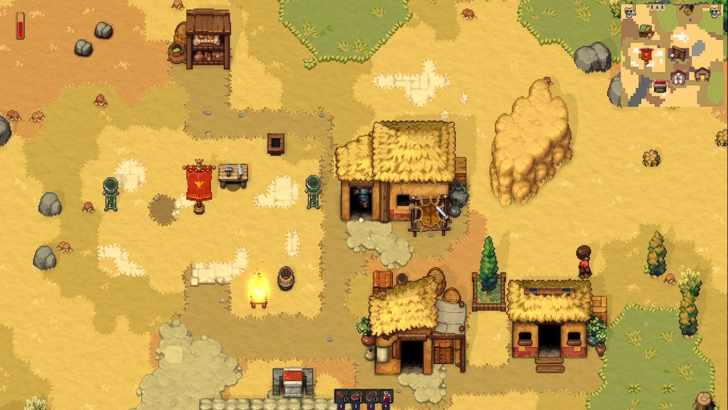
In this game, there are no pre-made houses, farm plots, or villages (past their prime or otherwise) for you to fix. Everything here is built from scratch, and you begin by handcrafting your tools, Minecraft-style. This is where the game’s first unique aspect comes into play, as the moment you try to build your first crafting table, you realize that easy inventory crafting can only get you so far. See, Romestead uses an uncommon, stat-based resource collection system instead of a tool-based one.
Tools, as we know them, only exist to improve your collection stats for specific resources like wood and stone. What you actually use to get the resources can vary wildly, as these stats will apply to those, whatever they end up being. Swords, spears, fists, or heck, even magic spells; all of those can gather resources differently, with the only difference being their areas of effect and speed.
It’s an elegant way to queue up the start of the game, which is notably much more contained than its mid-to-late game, which is when you start to scale things up. That’s getting ahead of things, though. Once resources are gathered, you can set things up for construction, and then you get to the fun part. You build it yourself!
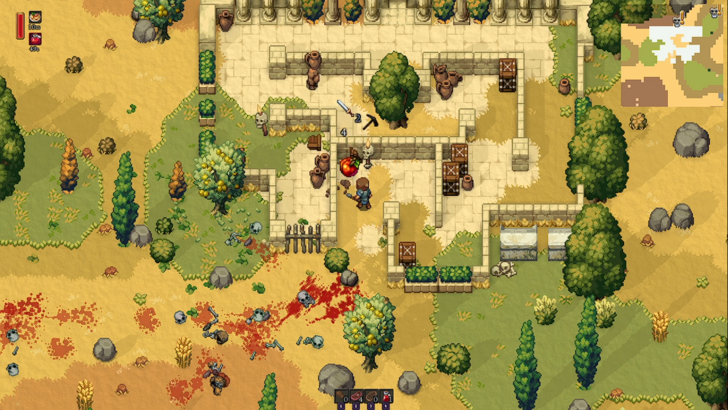
Yep, you get to build every building yourself after planning where it goes, and I don’t mean in a "click to place it here" way, I mean in a "finishing a mini-game for every hex" kind of way. I will admit, it gets tiring fast, but it’s great to get your hands dirty for these kinds of things, and you do get upgrades for your citizens to take care of it eventually.
Insofar as this first pillar is concerned, the tone of the game is set. This is a brick-and-mortar game where you do everything yourself in the most literal sense at first, then pass things off to your people to do other things, so you can do it all over again at a larger scale.
I’m a huge fan of this concept, and I look forward to the full release’s complete capacity to explore that idea. Speaking of the other stuff you can do, though, it's time we get to the game’s combat.
Solid Third-Person Top-Down Combat
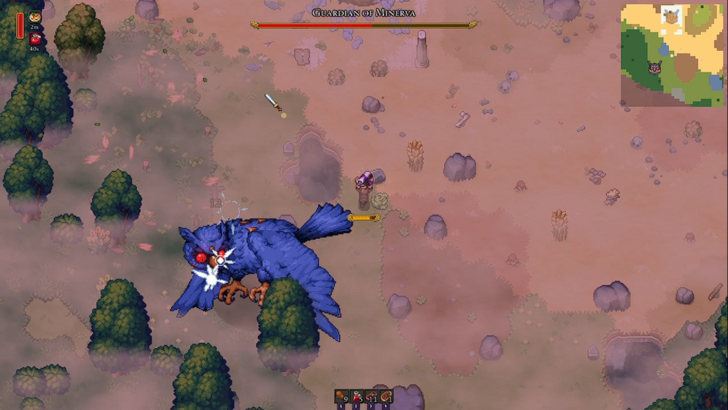
Now, the game’s combat pillar is actually quite fleshed out, too. It’s directional and simplified, with very one-note stats governing how weapons work. There’s a generous sprinkle of different weapon types like spears, swords, and even magic, but what really makes this game stand out is its combination of combat and construction.
Sure, you can use traditional weaponry to clear out dungeons, get resources, and fight hordes of enemies during nighttime. You can also just throw your construction materials at them, or better yet, build defensive buildings to lay them low without lifting a finger.
True to the bastion of engineering, Rome was in the day, you could build its ballistae and onagers to show the roving enemy troupes what for. Of course, you can’t do that in the various dungeons around the world while out and about, but you can still throw rocks and logs at them for fun.
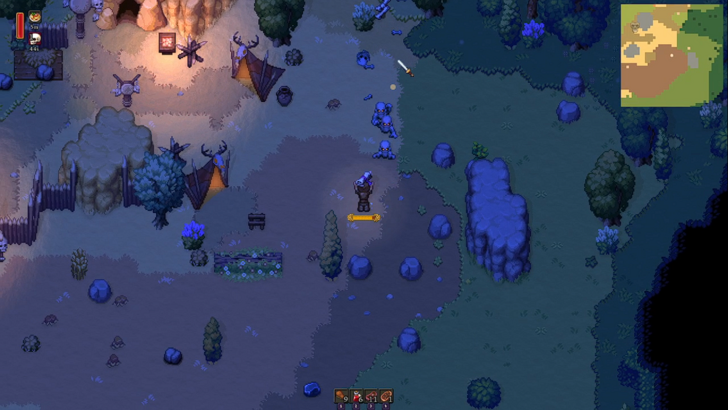
This isn’t even a one-off thing, since you need to throw building materials into building sites before you can start the minigame to build it, so you’ll get plenty of practice before chucking stone chunks at enemies becomes a survival tactic.
This presents a clean synergy between these two gameplay mechanics, such that you always feel like you’re doing something worthwhile, be it building walls and turrets with logs and stones, or clearing paths to greater gear using the same building materials.
Unfortunately, this will get you to the mid-game at best if it’s all you do. It’s time we discussed the final pillar: Development.
Definitely More Fun with Friends
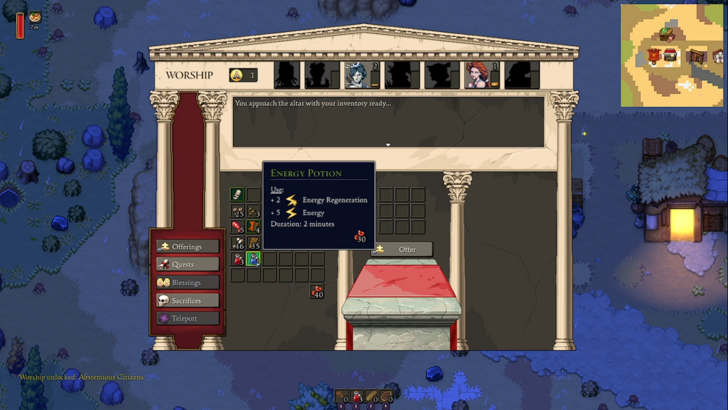
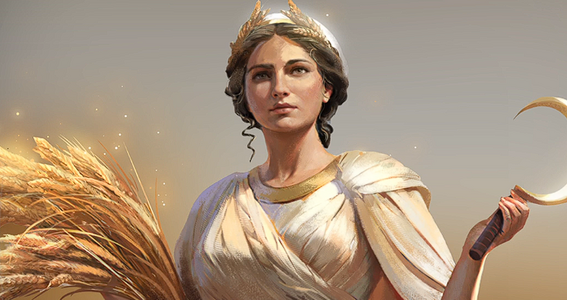
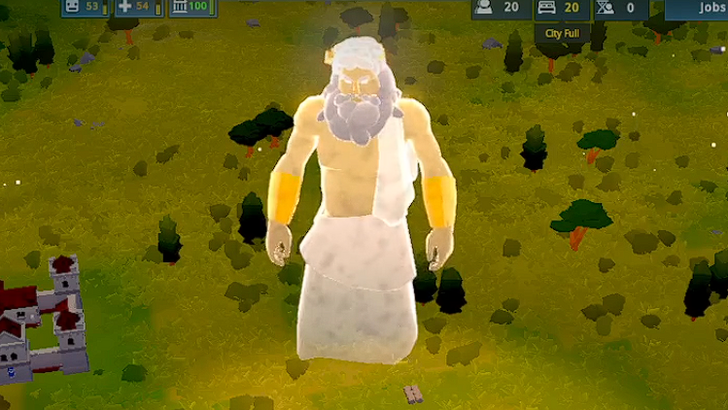
Development in this game means one thing: Gods. Your tech tree is limited by your devotion to the scattered Roman pantheon, and it’s up to you and your offerings to unlock their boons and reset their dominion over Rome. You need an Altar for this, and building one isn’t so hard; maintaining one is, though, and you’ll be doing much of that throughout the game.
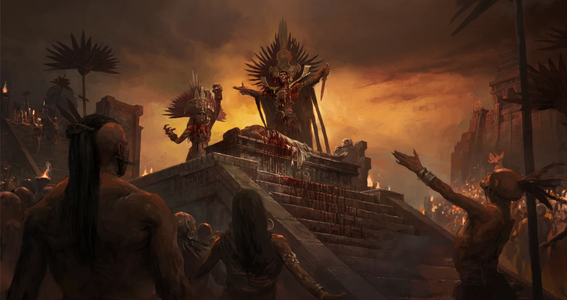
Depending on what you choose to sacrifice to the gods, which could be anything and ANYONE, by the way, you can level up your worship of them and gain new buildings and passive improvements when you reach certain thresholds. Think of it as Satisfactory’s Awesome Sink, where production excess can be used to further your production if you just dump it to the gods in exchange for goodies.
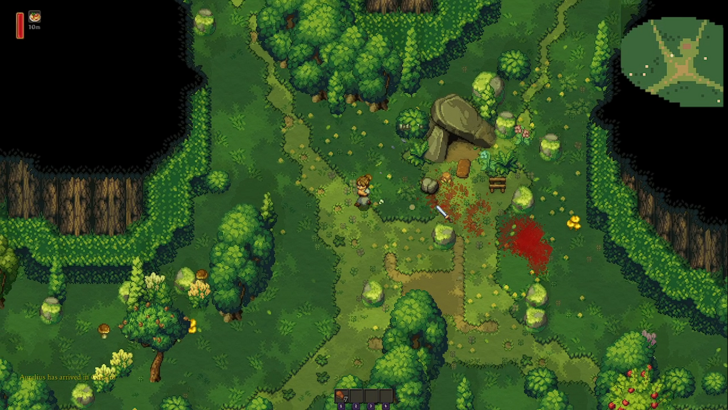
In that vein, this is an aspect of the game that lends itself to multiplayer, though it does exist in single-player as well. With a progression system dependent on a currency of sacrifice, and an upgrade system dependent on individual presence, more hands are equal to more means to gain, and more means to give.
This game IS more fun with friends because you spend less time gathering and less time giving up what you just gathered. Less time building things brick-by-brick, too, which does get tedious eventually. This isn’t a damning quality, of course, because the same can be said about Stardew Valley to some extent, but it’s something to consider if tediousness is a criterion by which you judge games.
Minor Tears in Rome’s Tapestry
It’s the final stretch for Romestead’s early access rundown, and we’re gonna have to end it on an imperfect note because I already went through all the good stuff. Let’s keep things simple. The game has some rough patches still.
Not in the core gameplay, of course. That’s great as it is and can only go up from here. Not in the visuals or audio either, because those are all impressive in their own right, even if not completely revolutionary.
The rough patches are found in the game’s implementation, because some bugs remain that threaten to gunk up the cogs of an otherwise well-oiled machine. This mostly has to do with the game’s physics, specifically with its registering of entities within building sites and overlaying commands.
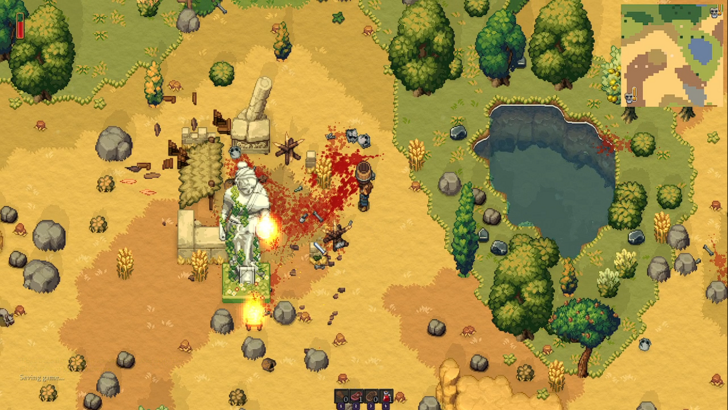
Specifically, some bugs can be seen when building items, where the thrown materials that are clearly in their building area are just not registered. For a game that’s rather stingy with materials in the early game, this is a problem.
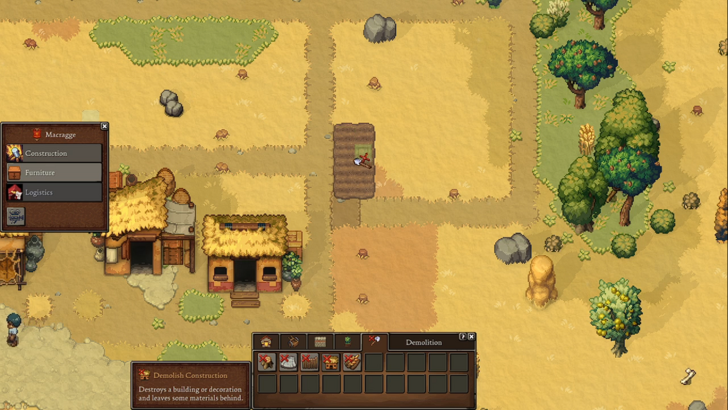
Farmlands pose an issue too, specifically when being demolished, as their assets don’t despawn and remain in the foreground, making it hard to build on them after the fact. Again, for a game about urban planning, this is a problem.
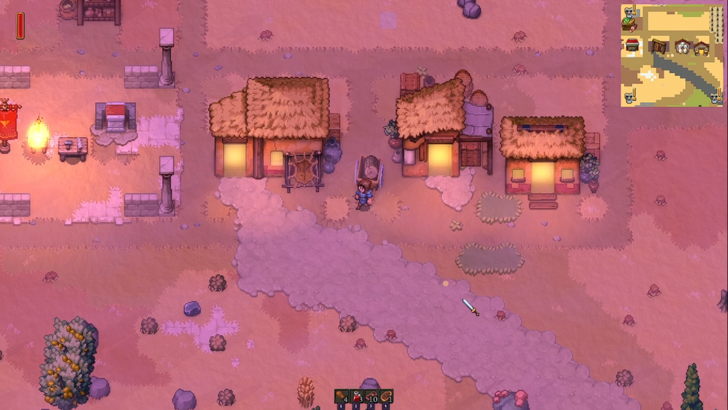
All in all, Romestead is something of an unfinished city, as you’d expect from an early access title. It has a long way to go from the true glory of Rome, but it’s promising already, despite having bits of foundation sticking out still.
Manifesting Rome isn’t an easy ask for any game, much more a genre fusion like this. Safe to say, though Romestead’s got this in the bag.
Game8 Reviews