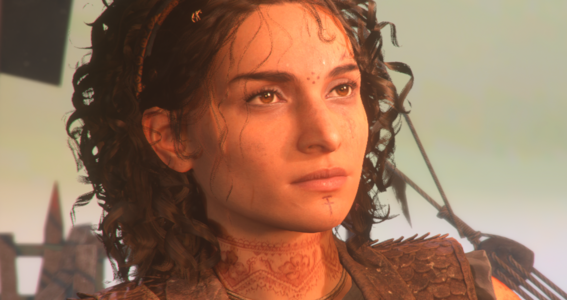




| Resonance: A Plague Tale Legacy | |
|---|---|
| Release Date | Review |
Resonance: A Plague Tale Legacy is a single-player narrative adventure focused on exploration and character driven storytelling. Read our review to see what it did well, what it didn't do well, and if it's worth buying.
Overview
What is Resonance: A Plague Tale Legacy?
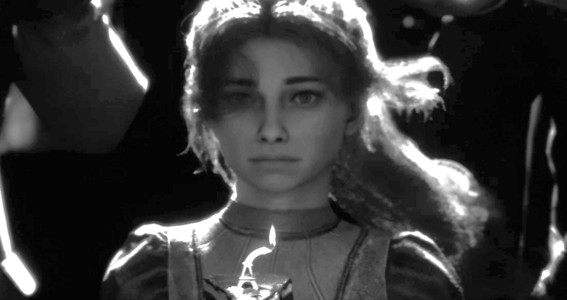
Resonance: A Plague Tale Legacy is a narrative-driven action-adventure game and a prequel to the A Plague Tale series. Players take on the role of Sophia, a young plunderer whose life becomes intertwined with that of an ancient hero named Theseus, after a past experiment gives her a mysterious connection to the island where Theseus once was.
Resonance: A Plague Tale Legacy features:
⚫︎ Prequel to A Plague Tale
⚫︎ Mystery Driven Narrative
⚫︎ Environmental Puzzles
⚫︎ Light Based Mechanics
| Digital Storefronts | |||||||
|---|---|---|---|---|---|---|---|
 Steam Steam |
 PS PS |
 Xbox Xbox |
 Epic Games Epic Games |
||||
| $59.99 | |||||||
Resonance: A Plague Tale Legacy Review: Beautifully Tragic Adventure That Would Be Even Better If It Focused On One Protagonist
Legacy Built on Doomed Sibling Trope
The Plague Tale franchise is known for its deeply emotional storytelling. From its very beginning, the series has built its identity on stories that hurt in all the right ways. At its heart, A Plague Tale was always an intimate story of family, grief, sacrifice, and the lengths someone can go to for the people they love. And at the center of it all was Amicia de Rune, one of the most compelling protagonists in modern games.
Resonance: A Plague Tale Legacy is another entry in the franchise that proves just how powerfully developer Asobo Studio can place its characters at the heart of its stories. While its tale does not resonate as strongly as the emotional highs of Innocence and Requiem, and its experience is not without its flaws, it remains a worthy addition to the franchise.
Plunderer Drawn Toward an Ancient Hero
Set before the events of the previous games, Resonance: A Plague Tale Legacy takes the franchise back in time to follow Sophia, and the beginning of a journey that gradually intertwines her life with that of an ancient hero.
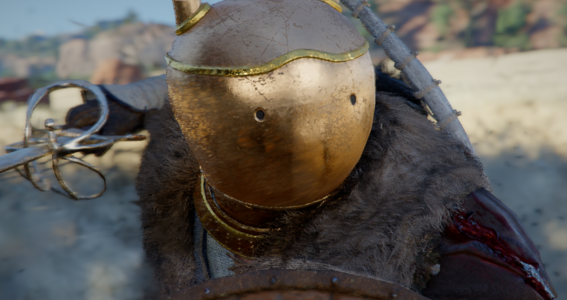
Sophia's journey is rooted in a dark part of her past, as she was once experimented on by a group of nuns. This convent appears to have connections to the Order, the secretive group from the previous Plague Tale games that seeks to understand—and ultimately control—the disease. The experiments leave Sophia with an unusual connection to an ancient hero, whom I'll simply refer to as Theseus for the sake of keeping this review spoiler-free.
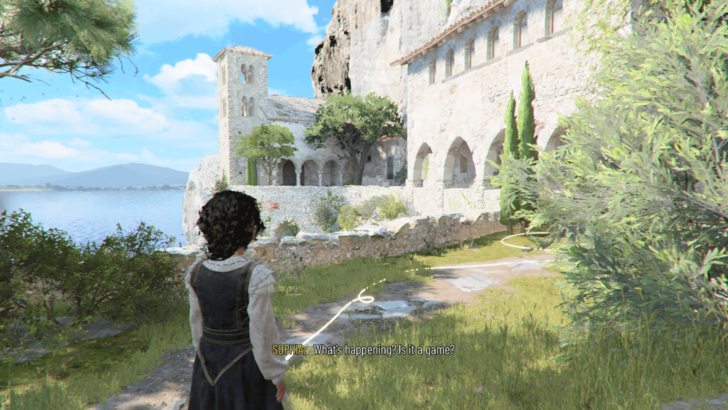
Through this connection, Sophia begins experiencing visions of an ancient past and an island that seems to be calling out to her. But her journey toward it does not begin by choice. When her family becomes caught in a massacre, Sophia is forced to flee. Together with Leni, her partner-in-crime and confidant, she eventually embarks on a journey that sees her retracing the same trials once faced by Theseus.
Two Stories That Could Have Been Great on Their Own
The doomed familial relationships are present here once again, of course, and the parallel between Sophia and Theseus is one of the story's more interesting aspects. On Sophia's side, there is the nuance of loving your family while simultaneously being disappointed by their shortcomings. There is love, but there is also betrayal, resentment, and the difficult realization that being family does not necessarily mean that you can understand, forgive, or even agree with one another.
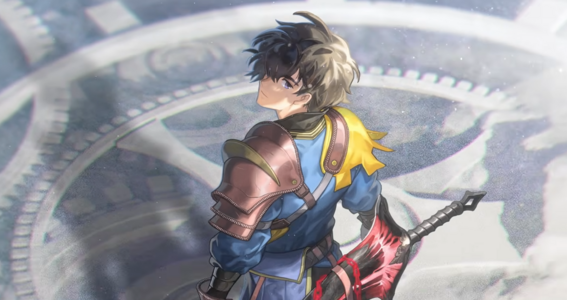
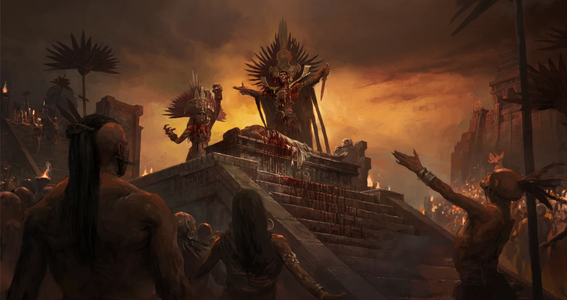
Theseus' side, meanwhile, carries the mystery of what happened to the island we’re exploring now, all those years ago. The more I followed their journey, the more the pieces began coming together, eventually leading to the kind of emotional payoff that made the previous Plague Tale games so memorable. I won't spoil where any of this goes, but the game clearly understands that these stories are at their strongest when the personal stakes are allowed to sit alongside the larger mysteries.
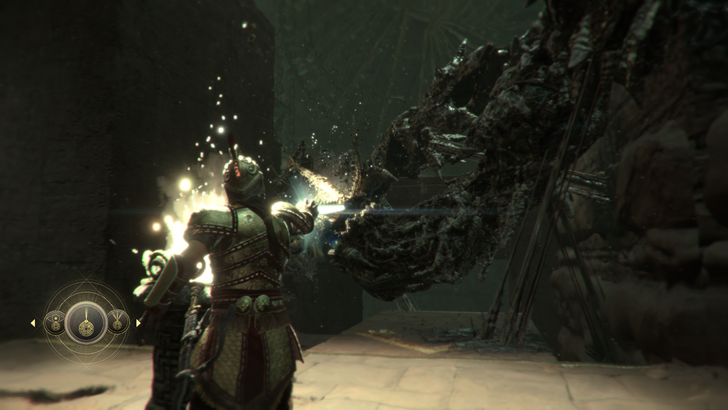
All of these emotional journeys take place against the threat of a creature capable of killing people on sight. It is not the rat plague from the previous games, but it serves a similar purpose. There is always something terrifying lurking in the background, turning what would already be difficult personal journeys into a fight for survival.
However, no matter how emotionally resonant the themes of Resonance are, it doesn’t land the same way previous Plague Tale games do. If you're coming into Resonance without having played the previous Plague Tale games, Sophia's story in particular lands weaker than it should. There is so much room to explore PTSD, the complicated side of inheritance, the pain of betrayal, and the process of reckoning with the fact that family is still family, even when they disappoint you.
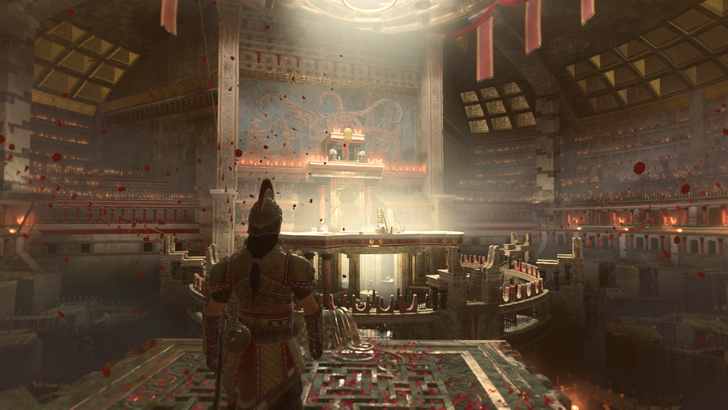
Theseus' story, meanwhile, explores a different kind of burden. It is about carrying the wrongdoings of the people who came before you, even if you have no control over them. There is also the struggle of knowing what the right thing to do is, even when doing it comes with a cost. Theseus' journey is ultimately about having to make difficult choices and accepting that doing what is right does not always mean doing what is easy. And while these themes parallel Sophia's story in interesting ways, they carry their own weight and emotional conflict.
Even though the essence of Sophia and Theseus’ story are parallel, the game almost feels like it is forcing two narrative lines together, when both have enough potential to shine on their own. I understand why the connection between Sophia and Theseus exists. It gives us a deeper look on Sophia. How she has an understanding of what it means to be a carrier and to be connected to a plague, while also tying her story to the larger history of this world.
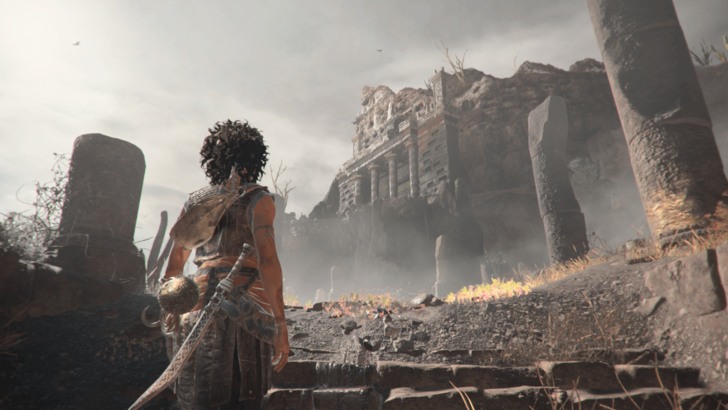
But at the same time, I kept thinking about how much more emotionally impactful the game could have been if it had committed more fully to either Sophia's journey or Theseus' story. In trying to combine the two, Resonance dilutes the emotional weight of what it is trying to say.
Separately, I genuinely think either story could have carried its own game. I wouldn't have minded following Theseus' journey from beginning to end, nor would I have wanted less of Sophia's story if the game had simply allowed her to be the sole focus.
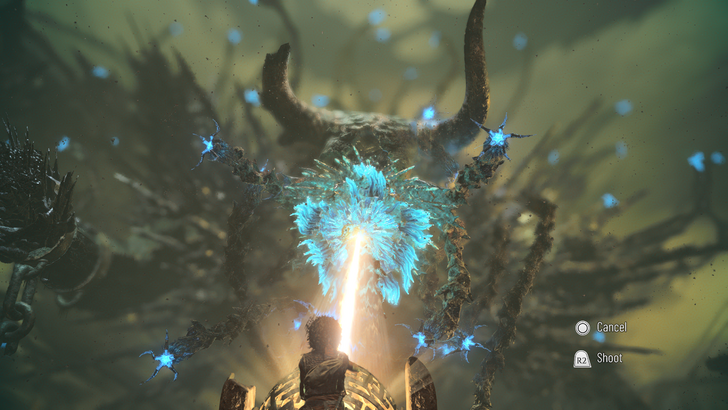
Still, don't get me wrong, the intertwined stories are good. Resonance does a great job pacing its revelations, especially because we are unraveling the mystery surrounding Theseus through Sophia's eyes. We only get bits and pieces of the truth at a time, with each discovery giving us just enough to understand what happened before leaving us with another question to answer. It keeps the mystery moving alongside Sophia's own journey, eventually building toward the point where we finally understand the full picture.
Even when I felt the two narratives competing for attention, there were moments where the connection between them worked exactly as intended. The story still left me emotional, even if I couldn't shake the feeling that either of these journeys should have been given more room to shine.
Retracing Theseus' Trials Through Sophia's Eyes
Resonance has a total of fourteen chapters and can take around 15 to 20 hours to complete, depending on how much you're doing beyond simply following the narrative. The main goal throughout the game is straightforward. As Sophia, players have to go through the same trials Theseus experienced years ago. The bigger mystery, however, is figuring out what is waiting for Sofia at the end of them.
The gameplay loop itself revolves around three things: solving puzzles, combat, and stealth. All these three lead back to one central mechanic: light. Whether I'm using the orb or what the game calls the "e;key," light becomes the main tool I rely on to navigate the trials.
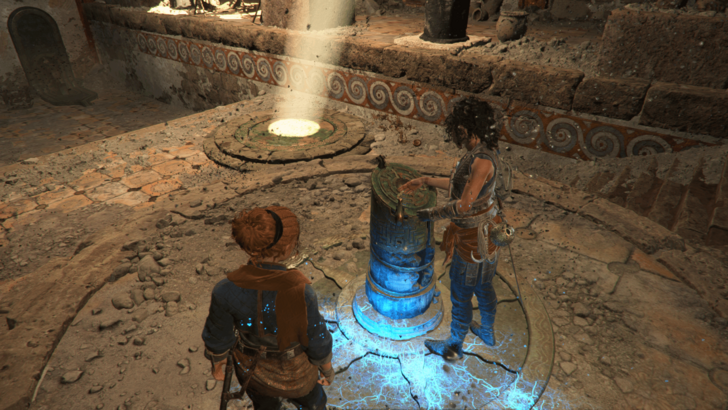
The key also evolves as I progress through Theseus' trials, and this is where the gameplay gradually changes alongside Sophia's journey. As the key gains new capabilities, the puzzles and combat encounters are able to make use of them in different ways. It gives the trials a natural sense of progression because I'm learning to use more mechanics as the game asks more from me.
Answer to The Puzzles Are in The Environment
Between the main core loop, puzzles are easily one of my favorite parts of Resonance, especially because I'm encouraged to actually pay attention to Sophia's surroundings and understand how the environment itself can be used to find the solution. The puzzles are surprisingly intuitive when you're paying attention. Resonance does a good job of teaching me to actually look at the world around Sophia rather than blindly searching for something I can interact with.
A big part of this is Sophia’s notebook. At first, it acts as a collection of hints left behind by the plunderers who came before Sophia, almost like I'm reading through their journal as they document their journey through the trials. But eventually, their tracks come to an end, and there is no longer anyone ahead of me to leave the answers behind. From there, Sophia starts writing down the clues herself. It creates this nice little feeling that I'm not just following someone else's path anymore, but continuing the journal that was started by the plunderers before her.
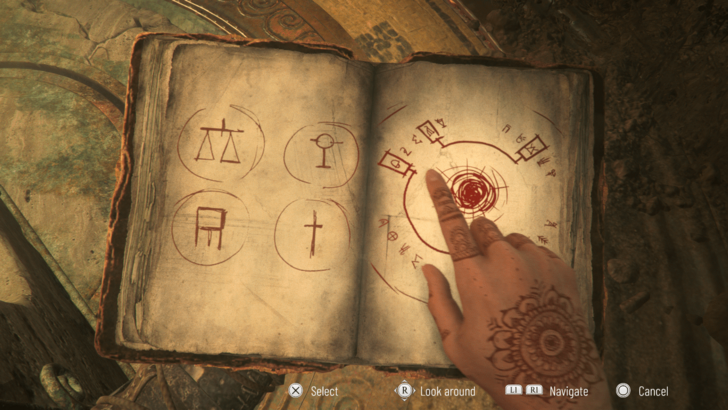
There are also moments when Leni is with Sophia where I can ask what she thinks about the situation. These conversations work as a natural way of giving hints without making me feel like the game is solving the puzzle for me. If I'm stuck, I can get another perspective, but I still have to put the pieces together myself.
It also helps that the puzzles don't stay the same throughout the entire journey. As the key evolves, so does what I can do with it, giving the game more ways to challenge me as I progress through the trials. The environments change alongside this as well, becoming increasingly different as I descend deeper into the trials. Because both the tools and the spaces I'm using them in continue to evolve, the puzzles manage to stay varied without feeling like they're throwing completely arbitrary mechanics at me.
Combat Turns Survival Into a Dance
On the other hand, combat in Resonance is fairly simple and straightforward. But I like that it doesn't stay completely static throughout the game. There are six skills to unlock, and rather than completely changing how Sophia fights, they just add a bit of pizzazz to her attacks and give the combat a little more depth as I progress.
Movement is pretty basic, with normal attacks, critical attacks, ranged attacks, dodging, blocking, and parrying. On paper, it sounds simple, and it is, but the way these actions flow into one another makes combat feel more like a dance than a straightforward exchange of hits. I'm watching what the enemy is doing, deciding when to dodge or block, and looking for the right moment to strike back rather than simply mashing attacks until the enemy falls over.
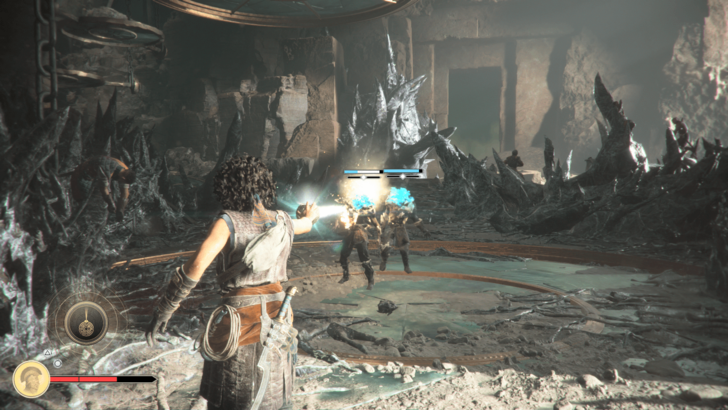
I also appreciate that combat gets a chance to shine early on. Stealth is reserved for the latter part of the game, so the earlier sections give combat more room to establish itself.
Eventually, however, I'm no longer just fighting humans. This is where the power of light becomes important again, forcing me to think about how I approach encounters rather than relying solely on Sophia's attacks. There are areas where the amount of available light is limited, making positioning just as important as knowing when to attack. Where I stand, where the light is, and how I move around the environment can determine whether I have the advantage or end up in trouble.
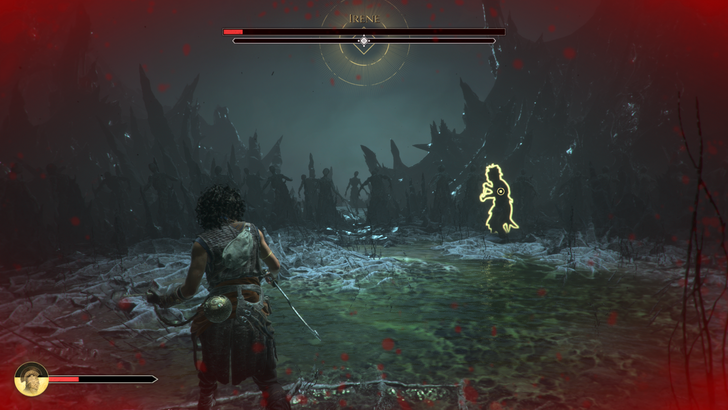
And this is what I think Resonance does particularly well with its combat. Like its puzzles, it doesn't encourage me to simply brute-force my way through every problem. I'm constantly looking at my surroundings and thinking about how I can use them to my advantage. The combat may be simple at its core, but the way it asks me to combine Sophia's abilities with the environment gives it enough variety to remain engaging throughout the journey.
Stealth During Chase Sequences?
Stealth becomes more prominent around the middle to end game, when we’re closer to where the creature is, and it begins tracking Sophia. And while there are sequences where hiding is the only option, there will also be a lot of chase sequences which also rely on sleatlhing—and that's largely because Sophia runs so slowly.
Whenever the creature starts chasing me, I can't simply rely on running away. Sophia is just not fast enough to make these sequences a straightforward sprint to the finish. The creature will eventually catch up, forcing me to repeat that section.
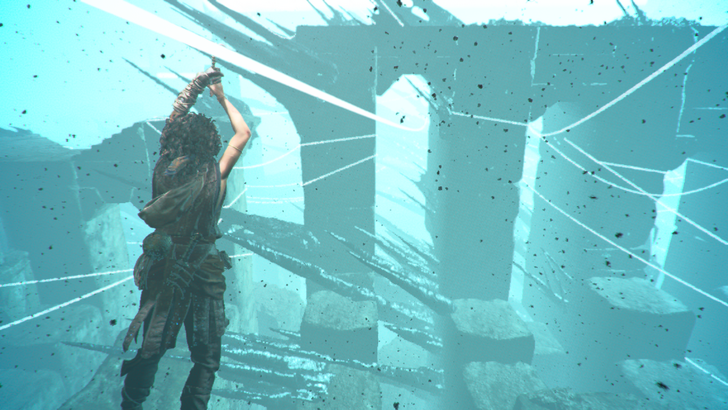
At first, it felt a little dishonest. The game gives me these seemingly fast-paced moments where something is actively hunting me, only for me to realize that I actually need to slow down and stealth my way through them. But the more I thought about it, the more I realized that this was kind of genius. Instead of letting me brute-force my way out by simply running faster than the creature, Resonance makes me outsmart it. I have to understand how it moves, find opportunities to hide, and use the environment to create enough cover to continue.
However, out of all the stealthing sections, my favorite has to be the one where I'm sneaking through the corpses. Towards the middle of the game, corpses made by the creature come alive if you move past them quickly. Their movements are eerily reminiscent of the nurses from Silent Hill, with their bodies twitching and jerking in unnatural motions. It makes navigating around them particularly unsettling and I have to carefully watch for an opening.
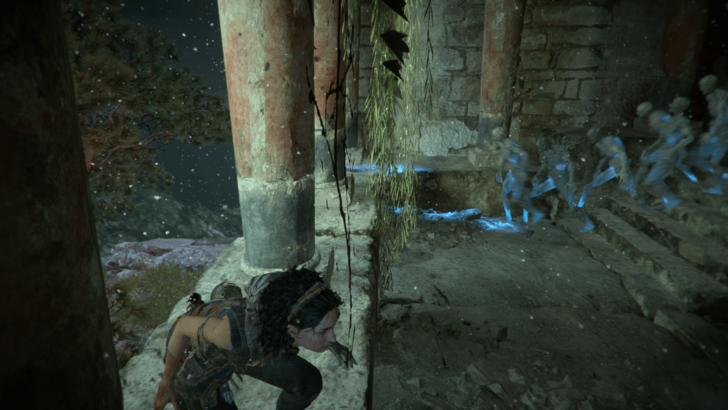
So while Sophia's painfully slow running speed is still something I wish were better, it inadvertently makes these encounters more interesting. What is initially a limitation becomes another reason for me to think about my surroundings, especially when the thing chasing me is something I absolutely cannot afford to fight head-on.
Is Resonance: A Plague Tale Legacy Worth It?
Yes, It’s a Strong New Chapter
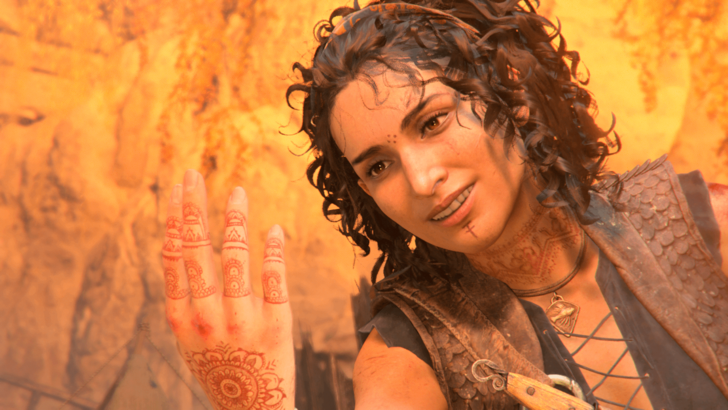
Overall, Resonance: A Plague Tale Legacy is a strong entry in the Plague Tale franchise. For $59.99, Asobo Studio delivers a worthwhile experience that takes what made the previous games so compelling while introducing its own gameplay ideas.
It may not reach the same emotional heights as Innocence or Requiem, particularly with how its two storylines sometimes compete for attention, but there is still plenty here to make the journey worthwhile. The puzzles are consistently engaging, combat evolves alongside the trials, and the stealth sections give the latter half of the game a different kind of tension.
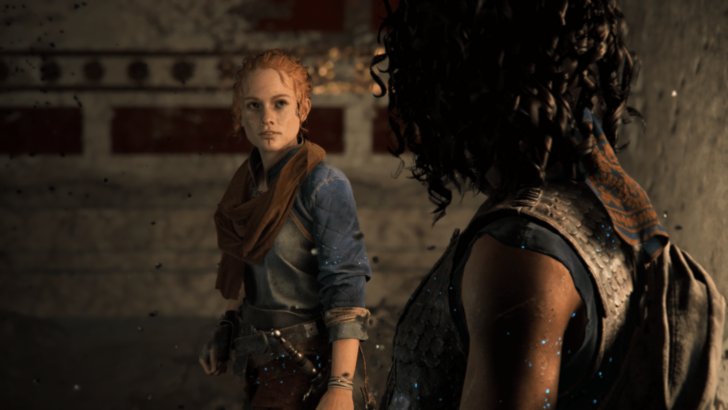
More importantly, Resonance proves that there is still something worth investing in within the Plague Tale universe. It understands that the series' greatest strength has never simply been its plague or its survival mechanics, but the characters forced to live through them. And while this chapter may not leave the same emotional scar as the stories that came before, it is still a journey worth taking.
Resonance: A Plague Tale Legacy FAQ
Do I Need to Play A Plague Tale: Innocence and Requiem Before Playing Resonance?
Since Resonance is a prequel, it is not necessary to play the first two games first. However, playing the previous games is recommended if you want to better understand and emotionally connect with Sophia.
Game8 Reviews