



| PRAGMATA | |||
|---|---|---|---|
| Release Date | Gameplay & Story | Pre-Order & DLC | Demo Review |
| Review | |||
Overview
What is PRAGMATA?
Pragmata is an upcoming action-adventure game developed and published by Capcom. Originally announced in 2020, the game has experienced multiple delays, with its release now scheduled for April 17, 2026 for PC (Steam), PlayStation 5, Xbox Series X|S, and Nintendo Switch 2. Despite these setbacks, Pragmata has maintained a high level of anticipation among gamers, as it consistently ranks among the most wanted titles in Weekly Famitsu reader polls.
In the near future, a catastrophic event renders Earth uninhabitable. Hugh, an astronaut, and an android girl named Diana, who appears to possess advanced technological abilities, now have to explore the dark stretch of the moon, defeat the AI of the lunar station, and return to Earth while learning more about their existence.
PRAGMATA features:
⚫︎ Sci-Fi Setting
⚫︎ Action Adventure Third Person Shooter
⚫︎ Mega Man/Metroidvania-esque Gameplay Loop
⚫︎ Unique Combat Mechanics
⚫︎ Multiple Builds and Playstyles
⚫︎ Post-Game Content
For more gameplay details, read everything we know about PRAGMATA’s gameplay and story.
| Digital Storefronts | |||
|---|---|---|---|
 Steam Steam |
 PS PS |
 Xbox Xbox |
 Switch 2 Switch 2 |
| $59.99 | |||
PRAGMATA Review: Shot For the Moon and Landed
More Than Half a Decade of Waiting
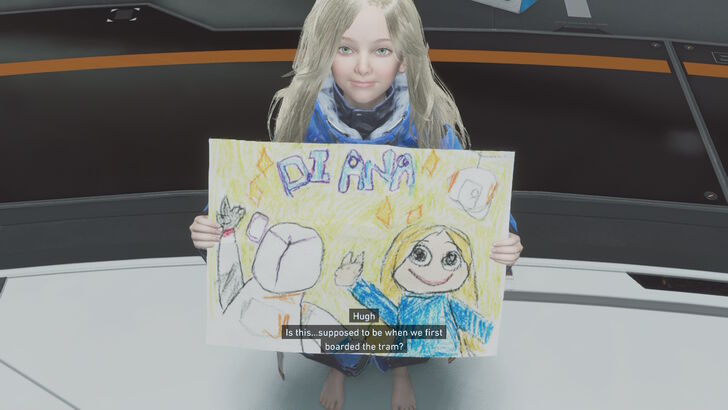
A sad reality of AAA game development nowadays is the way games are announced. Back in 2020, Capcom announced a weird sci-fi shooter set on the moon with a unique protagonist duo. The same game got delayed a bunch of times, even spawning a meme of itself back in 2022 when they apologized for the delay. Then, after getting delayed one more time, it went radio silent.
That is, until last year, when Capcom re-revealed it again to the world, with the same sci-fi theme, title, and everything.
If it wasn’t obvious enough, the game I’m talking about is PRAGMATA. As a Capcom fan who was very much hyped for this game, I was hurt. And I wasn’t particularly sure if they could deliver on a game that’s already been in development hell for a noticeably long time.
After all, how could they build on a strong IP this soon, right after Resident Evil Requiem? I definitely felt that this game might just be an afterthought, using the main character as bait.
But Capcom did it again. I was proven wrong. After completing nearly everything it has to offer, PRAGMATA exceeded my expectations to the moon and back. And it all begins with an amazing story centered around two relatable characters.
Captivating Narrative Supported By Great Characters
The story of PRAGMATA follows Hugh Williams, a systems auditor, who is sent to investigate the lunar research station Cradle after it goes dark. There, he meets an android designated D-I-0336-7, whom he dubs Diana to simplify things. Together, they work to get to the bottom of the mysterious disappearances of all the workers in the station, as well as to discover the reason why the station’s autonomous A.I., IDUS, has suddenly gone hostile.
Truth be told, the premise is about as basic as you can get. You have an unlikely duo that has to work together to get out of a seemingly abandoned research facility full of deadly robots. Throughout the game, they build a bond, and everything culminates in a “you and me against the world” kind of thing.
Even when it’s largely predictable, the pacing is well laid out. It always felt like the narrative was building up to something, and it was supported by a great balance of emotional and lighthearted scenes that never feel out of place or just serve to push the plot. However, it’s thanks to Hugh and Diana’s dynamic relationship that it becomes as captivating as it is.
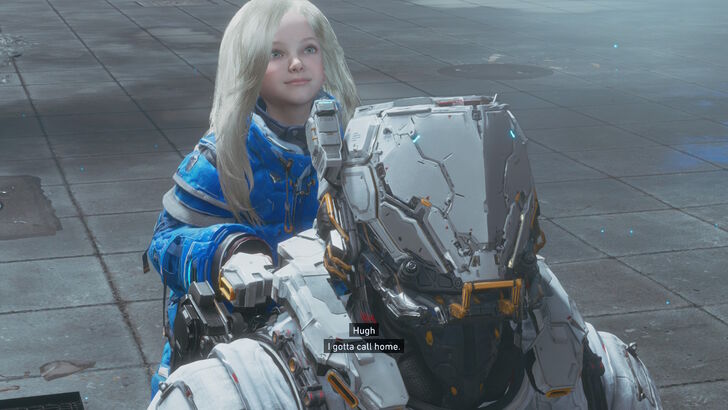
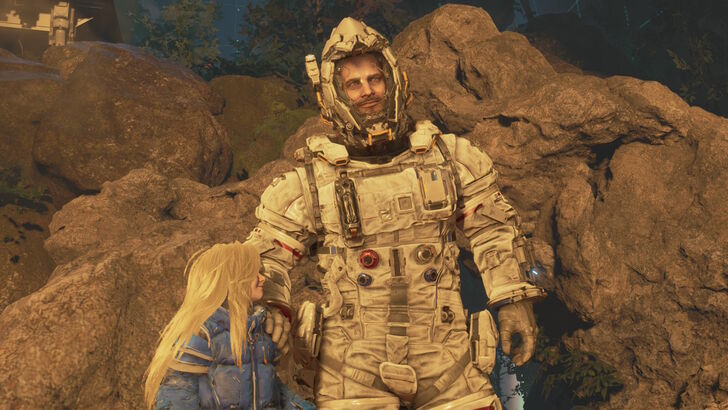
Hugh is the not-so-average Joe who takes on a job that goes horribly wrong and is in over his head. In a way, he’s sort of like Uncharted’s Nathan Drake—witty, sarcastic at all the right times, and has a heart of gold. Even in terms of writing, they’re quite similar in the sense that, despite being dealt a bad hand, they’re willing to push through and persevere for their loved ones.
On the other hand, Diana is what I would describe as a ball of sunshine. She’s energetic, adorable (extremely so), and always ready to help Hugh with anything that needs hacking. Also, her isolation in the research station makes her immensely curious about anything and everything related to the Earth. There’s even a scene of her that is the exact representation of “curiosity killed the cat,” or at least nearly.
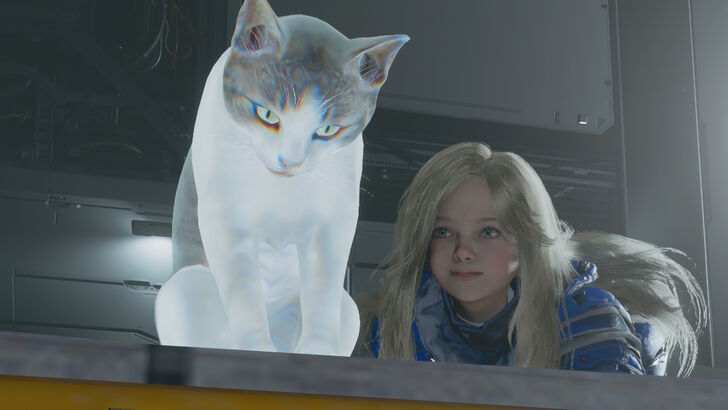
But it’s this immense curiosity that captivates, as well as Hugh’s appropriate responses. One of the reasons that I described Hugh as “not-so-average” is that he’s actually very knowledgeable about many different things. This blends perfectly with Diana’s childlike wonder and natural interest in everything. They would have random moments where Diana would ask Hugh a question, and Hugh, in turn, would respond in a way that kids like her would understand.
It’s the perfect setup to create a believable father-daughter dynamic, one that you could see blossom as you progress through the game’s many different sectors.
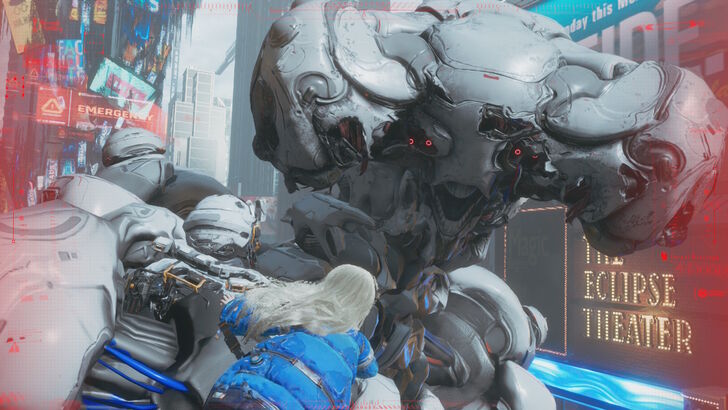
Yet, even as great as it is, it also creates a problem. The problem being the game’s main villain is a little too late to the party. It’s good that they didn’t overstay their welcome, but it would’ve been a little better if they had at least stayed for the celebration.
Not necessarily saying that the whole narrative wasn’t resolved well, it just so happens that the antagonist felt more like an afterthought during the whole thing. This is also apparent during the game’s climax, as not only did it feel like it went by too fast, but the villain just didn’t make that much of an impact.
All things considered, the narrative remains compelling in many respects, one that takes advantage of its charismatic protagonists and closes everything out without overextending itself to pad its length.
Gameplay Loop Feels Familiar
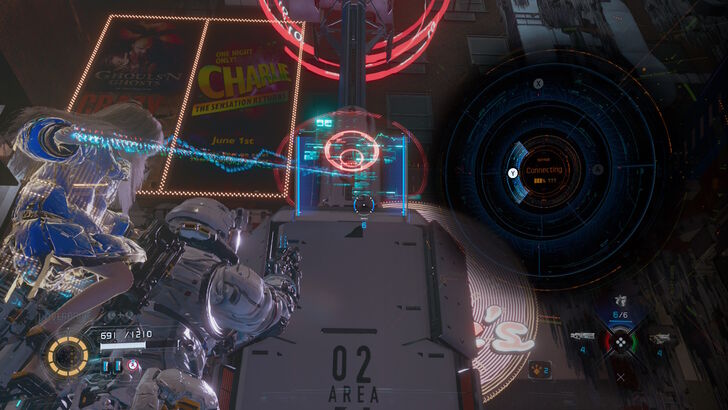
In more ways than one, the gameplay loop feels familiar, in a good way. I say this because it honestly feels like a gigantic Mega Man game. You have a central hub called the Shelter, where you can interact with Diana, upgrade your gear, and even change cosmetics. Then, in the Mission Prep area, you fix your loadout of weapons and mods, and you choose a sector to explore.
Sectors are sequential mission areas with checkpoints between them if you want to return to the Shelter. At the end of every sector, there’s always a boss fight, which warranted the Mega Man comparisons. Additionally, each sector has an exploration rate tied to discoverable items and treasure, which all add up to 100%.
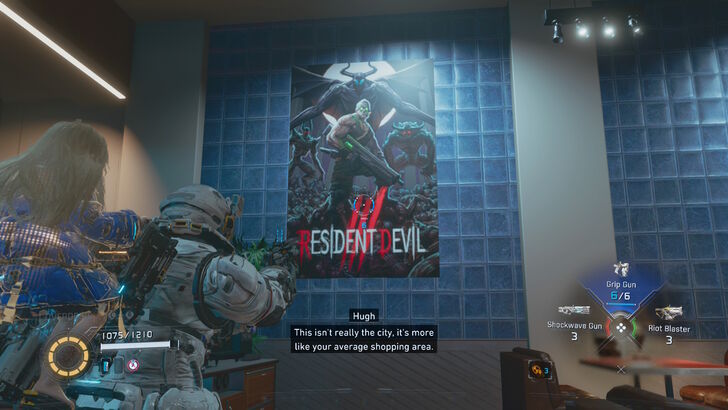
Exploration actually feels rewarding, especially since you’ll want to take advantage of getting all of the upgrade materials you can get so that you can strengthen your gear. In my experience, I didn’t go out of my way to explore the sectors to the fullest until I was near the end of the game. While I could’ve looked for these things sooner, you could explore as much as 80% just by going down the beaten path and checking the occasional corner here and there.
As a big fan of the Blue Bomber, it certainly made me feel right at home. And that’s just the exploration aspect, since the combat is as responsible for keeping me hooked as well.
Satisfying Combat at All Levels
If I were to summarize PRAGMATA’s combat in one word, it would be exhilarating. For context, combat alternates between these two mechanics, with one supporting the other. Hacking lets you “open” an enemy’s weak points, so that you can actually deal damage when you’re shooting them with a variety of weapons. It’s actually rather slow for an action game, and despite that, the alternating mechanics are engaging enough to really push it further.
The whole concept is simple to understand and easy to execute, which then leads us to what makes combat satisfying: the enemy variety. At first, you’re only fighting humanoid robots or Walkers, which are very easy to fight against since they move in a predictable pattern and only have one or two attacks. Then, it starts ramping up, and quite quickly, I might add.
You have enemies that have timed lock-on attacks, homing missiles that you have to hack to return them to the sender, that plant stasis mines that restrict your movement, and more. All of a sudden, you’re now faced with three to four different enemies, each with its own attack patterns, different hacking structures, different weak points, and more, all in one fight.
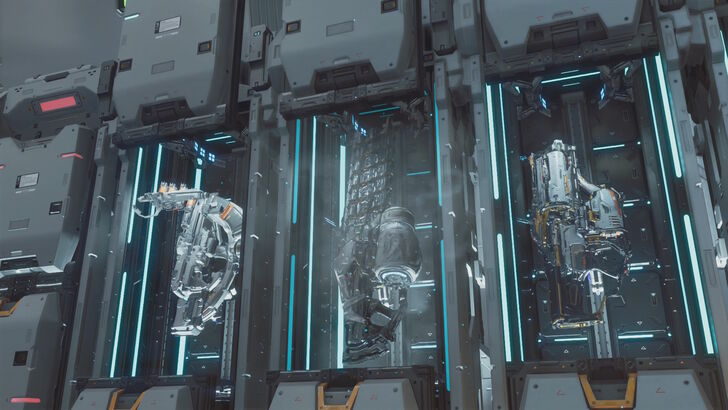
I haven’t even factored in the different weapons that you get to use, since that also plays a part in combat. Just like Resident Evil, you’ll gain access to a number of different weapons that have their specialized functionalities. With the exception of your primary weapon, these weapons have limited ammunition, so you’ll need to think about when you want to use them when you’re out exploring an area.
They’re not exactly limited in quantity to the point where there will be times that you don’t have any other weapon on you, but you will need to at least familiarize yourself with most of the weapons. Long engagements, especially boss fights, will have you run out of ammo midway, which means that you’ll need to know how to use the others since you don’t have any other options.
The weapon management, combined with all of the enemy variety, creates a combat loop that I didn’t know I needed. It may sound overwhelming, but it strikes the perfect middle ground of difficulty, variety, and execution. Every fight felt like I was solving multiple puzzles, dodging out of harm’s way, and dealing as much damage all at the same time. To be completely honest, I wasn’t expecting it to be so gripping, given how heavy it all feels.
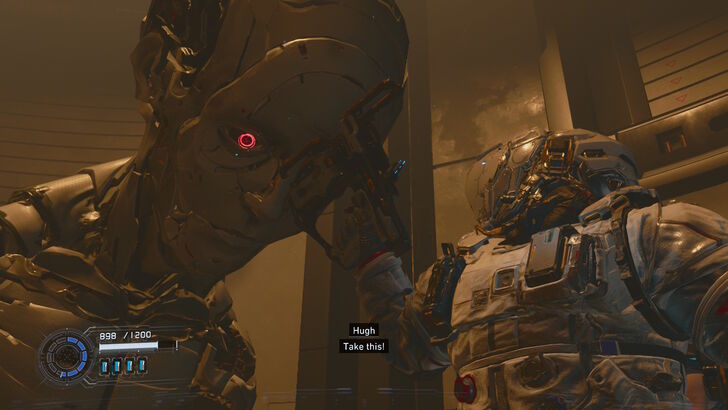
It all reaches critical mass when you start getting even more weapons, more enemy types, and even more mechanics. The game manages to find a way to make the heavy chaos enjoyable, and it’s thrilling when you start dissecting every fight as big puzzles with the weapons, tools, and hacks that you have.
The moment-to-moment gameplay encourages you to interact with the game’s many combat elements, but they never feel like they’re made to annoy you and always feel like they have a purpose behind them. On top of that, the enjoyment of combat also led to another highlight of its gameplay loop: the build customization.
Build Customization Adds More Depth to Combat

Remember when I said that combat was alternating hacking and shooting? While that’s the core of the game’s combat, you can tailor your build in a way that specializes in one or the other. During exploration, you’ll come across equippable mods that give you passive bonuses that work like passive attribute bonuses.
These can be as simple as giving you more health or adding more time during hacks. Some of them even boost your damage straight up, at the cost of your health. While there were others that had additional boosts to attack and defense after a hack.
It adds even more spice to the already addictive combat loop, especially since you can get lost in trying out builds that lean more into hacking than shooting and vice-versa. I thoroughly enjoyed the experimentation and variety it offered in combat, especially since it literally changes the way you play the game. It became one of the biggest reasons why I enjoyed the combat so much.
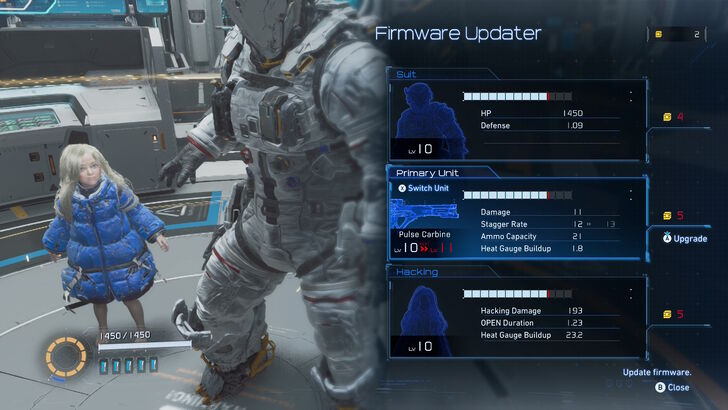
That said, there were a couple of issues with the variety of builds, particularly with how they feel and their overall strength. It’s not until halfway through that you actually get mods that change the way you play, so early on, the mods feel like they’re just there to give you additional stats. Additionally, certain mods that encourage a specialized build aren’t available early on, so you don’t get to enjoy that playstyle until you get 2-3 mods that lean into those.
Regardless, the build customization adds a lot more depth to the combat, one that actually matches the game’s progression. It only really starts to matter when you start getting swarmed by multiple enemies of varying types, where, in turn, you’d want to push with a build that’s comfortable or a build that effectively deals with these situations.
Some Quality of Life Issues
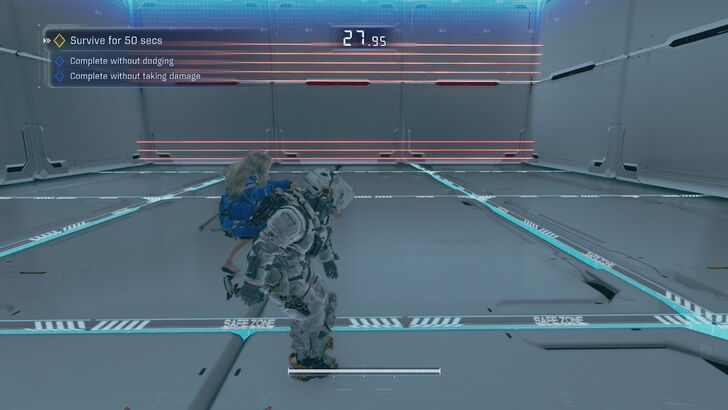
As much as I enjoyed combat, it wasn’t completely perfect. For instance, movement can feel heavy and clunky. This is thematically correct, as Hugh does wear a bulky suit, but it feels rough and awkward when you need to execute more precise movements during the game’s platforming segments and other optional side challenges.
Dying is also a bit of a chore, since it doesn’t actually take you to the nearest or last checkpoint. Instead, it takes you back to the Shelter, which you’ll then need to go to the mission prep area, then load back into the checkpoint. While I never really found the game difficult enough to die that often, this can be a big problem that effectively stalls your progress, whether you died right before the next checkpoint or in a boss fight.

Two separate things that affect exploration are the map itself and the fact that you can’t fast travel out to go back to the Shelter. These two are connected because they’re mostly going to be the main inconveniences that you feel when you’re backtracking for missing upgrades and loot in a particular sector. While they’re not necessarily huge game-breaking issues, they do affect the overall experience, especially since you want that 100% exploration rate in each sector as I do.
As Beautiful as the Moon
Now let’s move on to the overall presentation of the game, which is easily summarized as the RE Engine striking gold once again. The character and weapon designs are thematic, while the visual effects are straight-up eye candy. But what was really emphasized was the stage designs.
These were thoughtfully connected to the themes of missing home, as evidenced by the many resemblances of Earth’s things and places.
There are different stages that make you forget you’re actually on the moon. In one stage, you’re exploring a representation of Times Square in New York, where you’re going inside a shopping center, climbing scaffolding on the side, and even passing through restaurants. And in the next, you’re exploring a laboratory with man-made forests with trees to climb on and caves to explore. It would’ve been easy to just stick to a research station with industrialized facilities, but Capcom really went all in with its different sectors.
This carries over to the game’s sound design, which is equally impressive. The music matches the atmosphere perfectly and never overpowers any scene or encounter. The voice acting has been stellar across all the characters. You can feel Hugh and Diana’s emotions during their dialogue, and I would even highlight the exceptional delivery of both Cabin and IDUS, even when they’re both just autonomous AIs.
And finally, the sound effects are also remarkable, as weapons sound as punchy as you might expect, and the enemy sound effects even add a nuance to combat since you’re given audio cues for when enemies are about to hit you.
Performs Admirably on the Switch 2
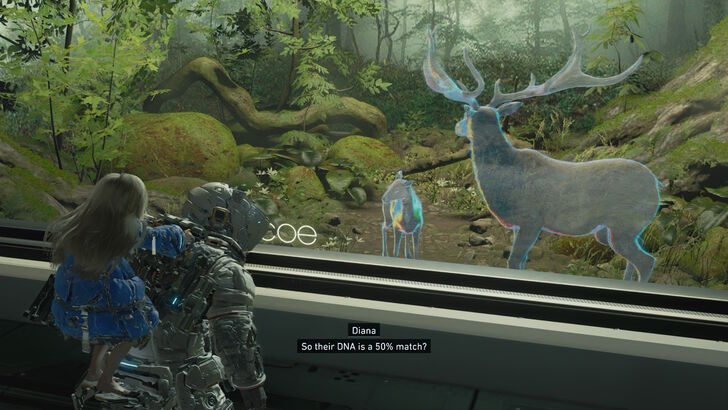
I will also note that the Switch 2 port is exceptional and makes full use of its hardware. Like Resident Evil 9, it obviously makes sacrifices in the form of lower graphical quality, but the great overall performance on both handheld and docked modes is completely worth it.
Of course, it was never expected to run at a smooth 60 FPS at all times, but it’s surprisingly stable given how many things there are on screen. There were frame drops, sure, but it never got to the point where it felt unplayable during combat segments or boss fights. I don’t even think it went below 30 FPS, which is a triumph to say the least.
Even with the lower graphical quality, the Switch 2 version still looks amazing. It honestly looks like it was only the textures that really took the hit, as everything else still looked up to par. If I weren’t playing on the Joy-Con controllers, I probably would’ve forgotten that I was playing on a Switch 2 version of the game.
Is PRAGMATA Worth It?
Yes, Definitely Worth the Wait and Hype!
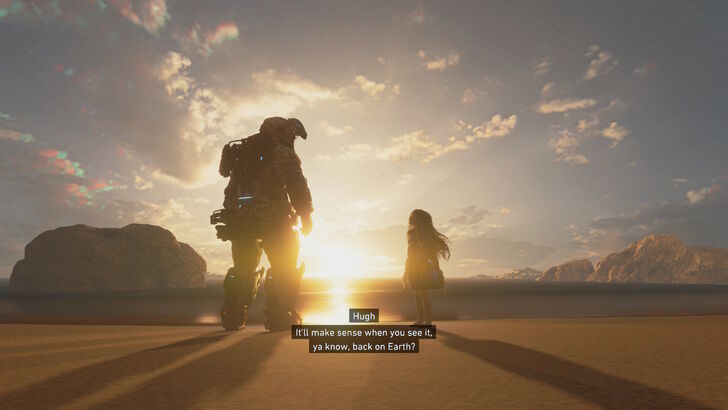
PRAGMATA certainly is a game that was worth the wait, and it definitely deserves all the hype it got since its re-announcement last year. The engaging push and pull with the hacking and shooting combat loop, the rewarding exploration, the beautiful presentation, and not to mention the compelling narrative led by a likable protagonist duo, it’s a game that you won’t want to miss.
I honestly think it’s an easy recommendation for anyone, especially those who enjoy narrative adventures that focus on character relationships, or even those who enjoy shooters with unique mechanics that allow for depth and customization. If you’re the type to look for those, then you’ll surely enjoy your time in PRAGMATA.
It’s one of the best games I’ve played this year, one that was able to balance engaging combat mechanics with a narrative that I enjoyed from start to finish. I wouldn’t be surprised to see it earn some nominations for Game of the Year for gameplay and narrative reasons. And, most of all, Diana is just one of the most adorable characters I’ve seen in a game, one that I would do anything for her protection.
FAQ
Does PRAGMATA Carry Over Your Demo Save File?
No.
Is PRAGMATA Connected to Any Existing Capcom IP?
No. It is a completely new IP.
Other Game8 Reviews