



| Poppy Playtime | |||||
|---|---|---|---|---|---|
| Release Date | Gameplay & Story | Pre-Order & DLC | |||
| Chapter 1 Review | Chapter 2 Review | Chapter 3 Review | |||
| Chapter 4 Review | Chapter 5 Review | ||||
Poppy Playtime Chapter 5 is a first-person puzzle horror game that continues the series’ descent into the deepest parts of the abandoned Playtime Co. factory. Read our review to see what it did well, what it didn't do well, and if it's worth buying.
Overview
What is Poppy Playtime (Chapter 5)?
Poppy Playtime Chapter 5 is a first-person horror adventure game that blends puzzle-solving, exploration, stealth, and cinematic chase sequences. Continuing immediately after the previous chapter, the story follows the player as they descend further into Playtime Co.’s hidden laboratory systems after becoming separated from their allies. Along the way, players encounter new experimental creatures, uncover more information about the Prototype’s growing control over the factory, and navigate dangerous areas ranging from abandoned testing facilities to recycling plants and underground research sectors.
Poppy Playtime (Chapter 5) features:
⚫︎ First-Person Puzzle Horror
⚫︎ New Enemy Types and Experimental Toys
⚫︎ Expanded Environments
⚫︎ GrabPack-based Puzzles
⚫︎ Environmental Storytelling Through Flashbacks, VHS tapes, Documents, and Character Encounters
For more gameplay details, read everything we know about Poppy Playtime .
| Digital Storefronts | ||||||||||||||
|---|---|---|---|---|---|---|---|---|---|---|---|---|---|---|
 Steam Steam |
 Epic Games Epic Games |
 Playstation Playstation |
||||||||||||
| $19.99 | ||||||||||||||
Poppy Playtime (Chapter 5) Review: Strongest Chapter So Far
Back to Escaping Huggy
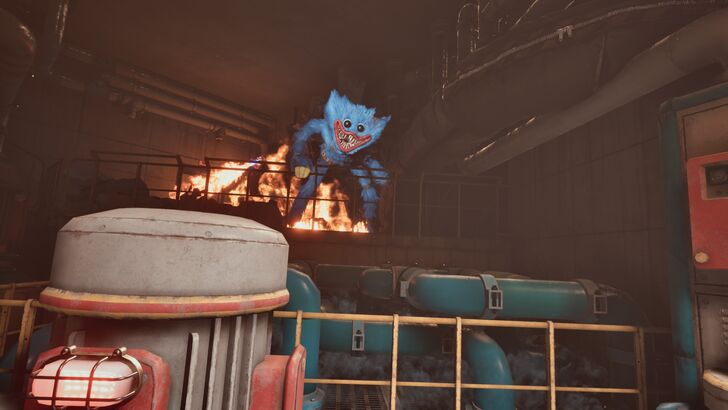
There’s a very specific kind of thrill that mascot horror games tap into. It’s not always pure terror, nor is it the kind of horror that leaves you sleepless afterward. Instead, it’s the adrenaline of being chased through impossibly long hallways, the panic of hearing something massive stomping somewhere behind you, and the constant feeling that you are one mistake away from facing danger.
Ever since games like Slender: The Eight Pages exploded across the internet in the early 2010s, the genre has carved out its own space in horror, with franchises like Five Nights at Freddy's and Poppy Playtime leading the charge through a mix of tension, spectacle, and unsettling worlds that are meant to cater to children.
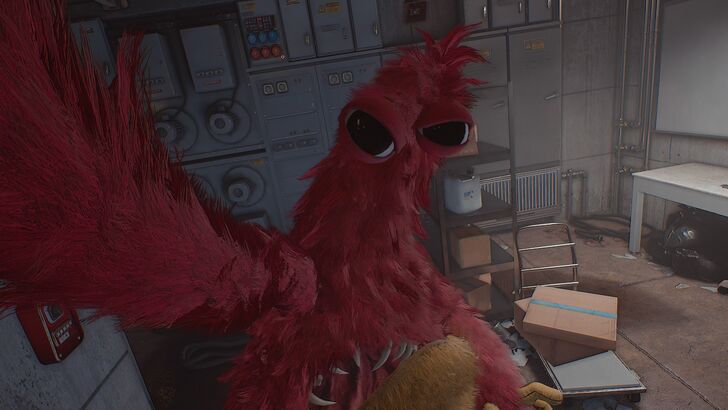
So what separates the best mascot horror games from the countless imitators that followed? The scares alone can only carry a game so far. What keeps players invested is the mystery behind everything: the hidden experiments, fragmented tapes, abandoned facilities, and the creeping realization that every new chapter is only exposing another layer of something far uglier underneath.
Both Five Nights at Freddy’s and Poppy Playtime understand that perfectly, turning what could’ve been simple "run away from the monster" experiences into sprawling stories players genuinely want to untangle.
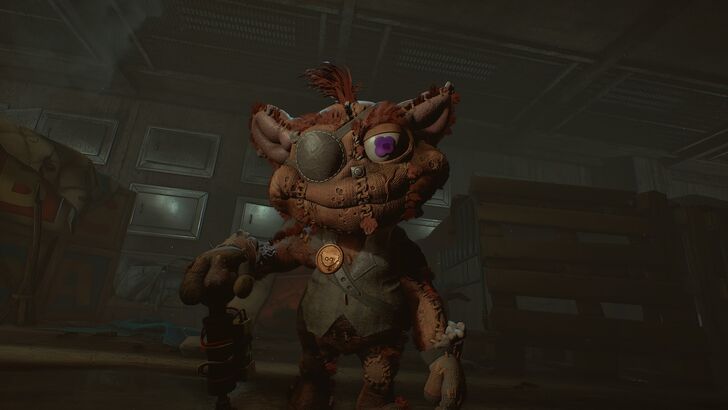
That’s exactly why Poppy Playtime Chapter 5 also feels different from the chapters before it. Rather than simply teasing another mystery or dangling more cryptic clues in front of the player, this chapter finally feels willing to confront the larger narrative head-on. It delivers some of the franchise’s biggest reveals yet, tying together long-running questions while still leaving just enough uncertainty to make you wonder what Playtime Co.’s horrors will bring next.
Descending Further Into Playtime Co.’s Horrors
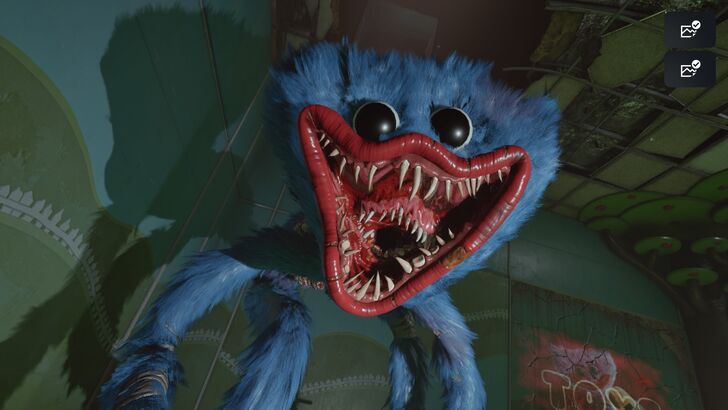
If you’ve somehow managed to avoid every screenshot, theory video, reaction clip, and internet meme involving a towering blue creature with impossibly long limbs and a disturbingly cheerful smile, then all you really need to know is that Poppy Playtime follows an ex-employee returning to the abandoned Playtime Co. factory years after every worker inside mysteriously vanished overnight. Ironically, the only reason our protagonist survived was because they happened to call in sick on the very day everything went wrong.
After receiving a cryptic letter and VHS tape claiming the missing employees are still somewhere inside the factory, we step back into the halls of Playtime Co., eventually crossing paths with Huggy Wuggy, the franchise’s iconic blue mascot, and Poppy herself, a living doll who insists she wants to save everyone trapped within the facility. Whether she’s genuinely trustworthy or simply manipulating us for her own goals, however, is something the series followers continue to debate over.
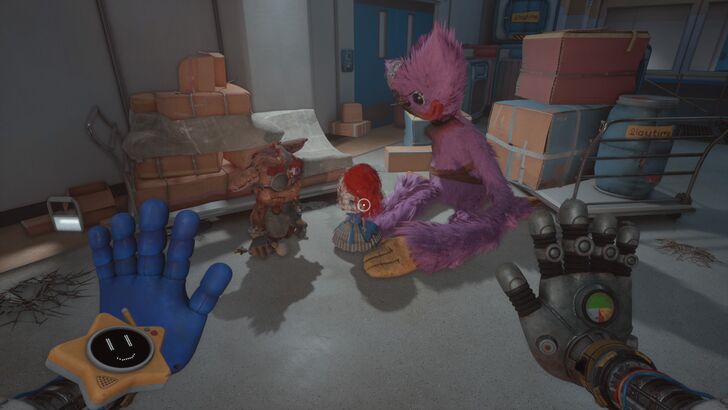
Across the previous chapters, the story constantly places us in the middle of increasingly horrifying situations as we rescue Poppy, get dragged deeper into the factory, and encounter new monstrous mascots that initially appear to be the central threat of each chapter. But as the series progresses, it becomes increasingly clear that these creatures are only pieces of something much larger. Looming behind nearly every tragedy inside Playtime Co. is the existence of The Prototype, a mysterious entity first teased back in Chapter 2 whose influence has quietly shaped nearly every event in the franchise.
Following the events of Chapter 4, where we once again find ourselves falling into an even deeper section of the factory both literally and metaphorically, the chapter immediately throws players into chaos with another intense chase involving Huggy himself.
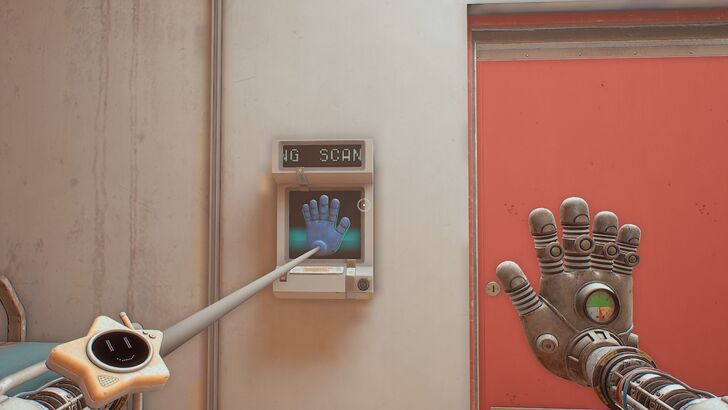
From there, the story becomes a desperate push toward rescuing Poppy, escaping the facility, and uncovering the horrifying truths buried underneath Playtime Co.’s experiments. Along the way, the game finally starts peeling back the layers surrounding the origins of the monsters, the true scale of the company’s cruelty, and the terrifying reality behind The Prototype’s growing influence.
There are still unanswered questions, and the game absolutely leaves room for future chapters to expand on its lore, but for the first time in the series, it genuinely feels like we’re staring directly at the heart of Playtime Co.’s nightmare instead of merely dancing around its edges. That changes the entire experience because every revelation now carries far more weight knowing the story is finally beginning to confront the questions players have been asking.
Gameplay Loop of Pressure and Puzzles
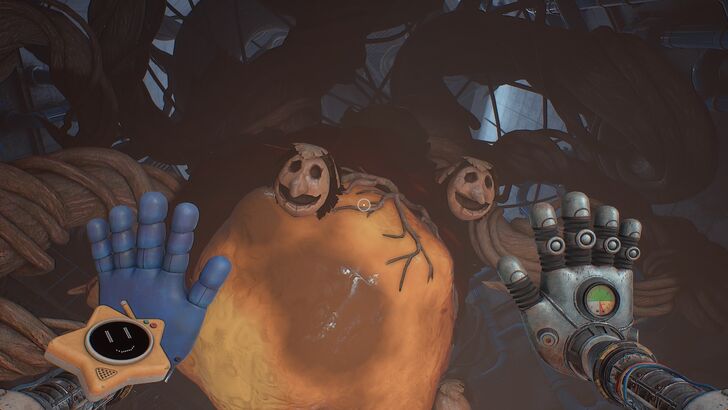
At its core, Poppy Playtime Chapter 5 doesn’t really try to reinvent what you’re doing moment-to-moment. You’re solving puzzles, slipping into hiding spots, and sprinting for your life when creatures inevitably start chasing you. That’s the loop: complete a task, feel a brief sense of control, then immediately brace yourself for the chase that tests whether you actually understood the space you’re in or not.
A big part of that loop this time is the gradual unlocking and use of the GrabPack hands. The franchise has always relied on these tools as extensions of player interaction, but Chapter 5 pushes that further by restructuring how they function. Instead of the earlier color-based system—blue, red, green, violet, each tied to more straightforward interactions—we now deal with more specialized mechanical functions that feel less like gimmicks and more like systems you have to mentally map as you play.
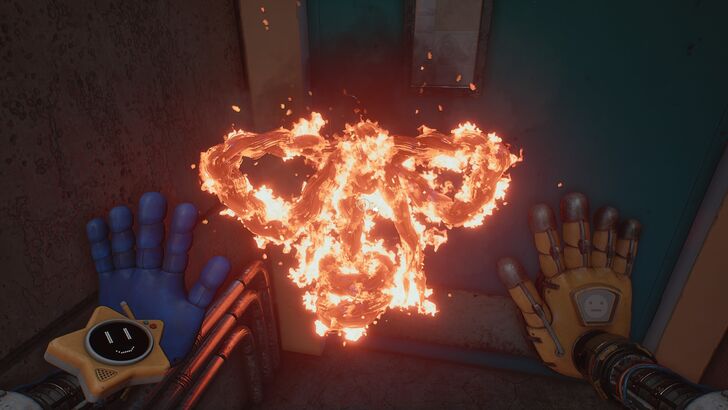
The conductive hand, for example, is a way of routing energy, transferring heat, cold, or power through the environment in a way that forces you to think strategically, because you can only store those energies for a limited amount of time. The pressurized hand shifts interaction into force-based problem solving, where pressure and impact matter more than simple object manipulation. Meanwhile, the EMU cuffs act like environmental anchors, letting you magnetically traverse or reposition yourself in ways that fundamentally change how you read traversal puzzles and chase sequences.
It might sound like these are just more tools, but it reshapes the rhythm of how you engage with every room. Instead of relying on one or two familiar interactions, you’re constantly reassessing which tool applies to which situation, sometimes under pressure, which makes hesitation all the more dangerous.
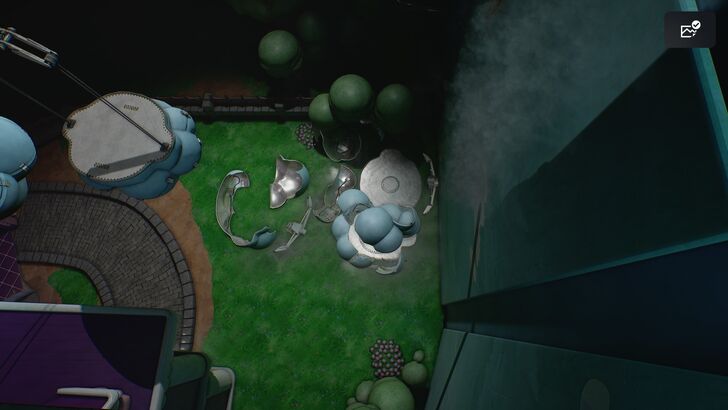
It isn’t about making puzzles harder for the sake of it, it’s about layering decision-making on top of fear. Every mechanic feeds into the tension, because every moment spent thinking is a moment you’re aware the game could switch into chase mode at any second. That balance between control and vulnerability is exactly what keeps the experience engaging instead of repetitive.
Puzzles That Refuse to Let You Feel Safe While You’re Thinking
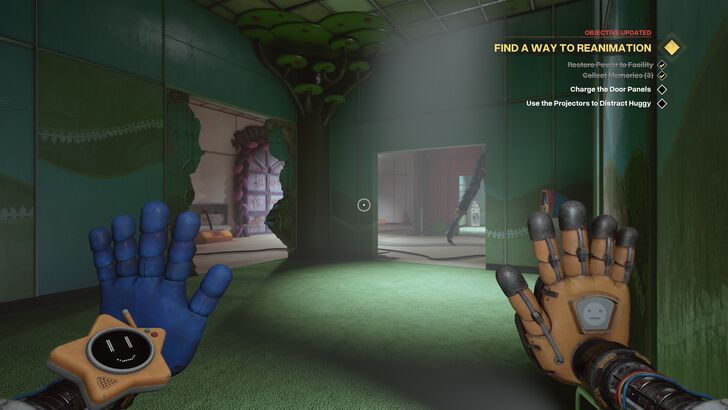
Which brings me to my next point. The puzzles in Poppy Playtime Chapter 5 exist on a spectrum. On one end, you still get straightforward logic-based challenges—environmental tasks where you’re maneuvering a path, locating items, and figuring out how systems connect. But on the other end, the game starts layering in something far more stressful: the constant awareness that you are not alone while solving them.
In these moments, the puzzle design stops being purely about problem-solving and becomes about situational awareness. You’re not just trying to figure out what goes where, you’re also tracking where the threat is, how close it might be, and whether you can afford to keep staring at a wall. That dual focus fundamentally changes how you approach every objective.
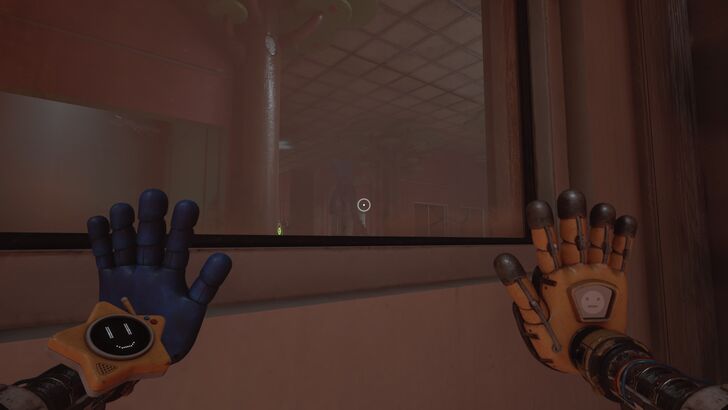
There’s one sequence in particular that really emphasizes this. In one area, I had to unlock a sealed door by locating and transporting several batteries scattered across a room. Under normal circumstances, it would’ve been a fairly methodical search-and-return puzzle. But the presence of Huggy completely changes that equation. He isn’t just nearby in a scripted sense, you’re actively aware that at any moment, your route could be cut off because he’s standing right where you need to go.
So instead of calmly mapping the area, I had to mentally piece together the environment like a survival route. Which ledges were safe enough to climb? Which vents actually looped back toward the objective? Which paths gave me enough distance to make a run for it if things went wrong? Every decision had to account for both progress and escape. It works so well because
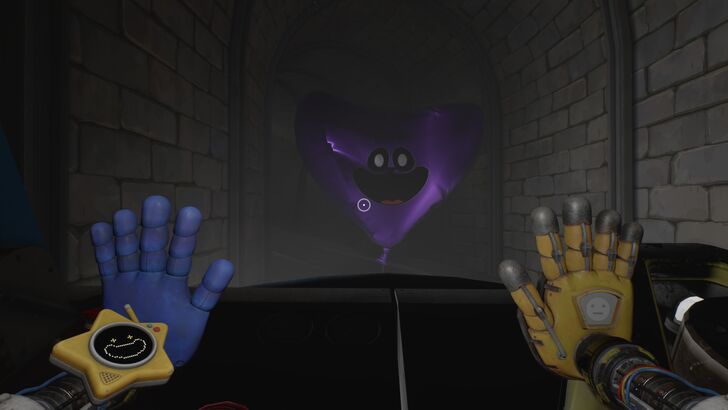
The real turning point came when the game introduced a timed distraction, briefly pulling Huggy’s attention away just long enough to create an opening. I wasn’t just solving a puzzle anymore, I was executing it under pressure, dragging oversized batteries through tight corridors while constantly checking whether I still had a safe path back.
It turns problem-solving into adrenaline management. It works so well because it turns exploration into active survival planning, where understanding the space isn’t just helpful, it’s the difference between staying alive or getting caught. It doesn’t feel like you "solved" something. It feels like you survived it.
Chase Sequences That Force You to Think While You Run
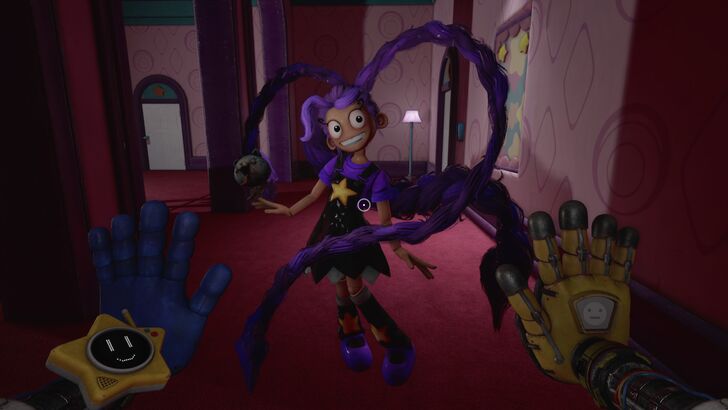
On top of the puzzles that force you to be aware of your surroundings, the chase sequences in Poppy Playtime Chapter 5 don’t just test your reflexes, they actively drag your problem-solving brain into the middle of the panic. You’re not simply sprinting down corridors or blindly dodging obstacles. Instead, escape sequences are now layered with interaction requirements that force you to think about which GrabPack function is needed in real time, while something is actively trying to catch you.
That’s where the situational awareness really gets pushed to its limit. You’re tracking movement, reading the environment, and reacting to danger, but at the same time you’re also identifying which tool applies to which obstacle. A blocked path isn’t just something you run around, it might require a conductive transfer, a pressurized interaction, or a timed use of the EMU cuffs to reposition yourself across gaps or hazards. The game deliberately refuses to separate thinking from running, which means hesitation doesn’t just slow you down, it can immediately end your run.
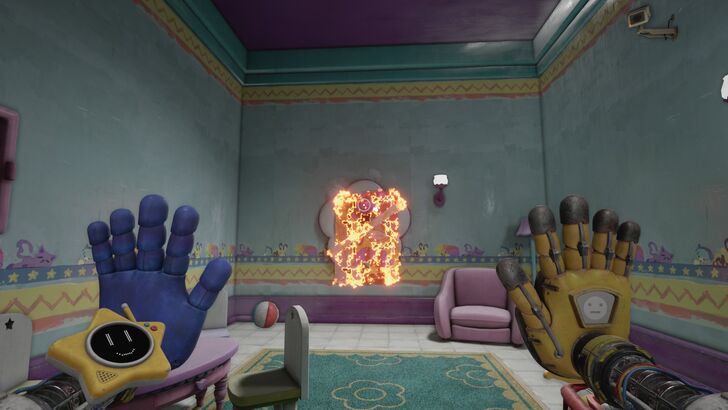
It transforms chase sequences from pure reaction tests into layered decision-making under pressure. You’re not just being chased, you’re being forced to interpret the environment while being chased, which makes every second feel heavier and more deliberate. This isn’t just survival horror where you run to escape danger. This is survival horror where running is the puzzle.
Between the Chases
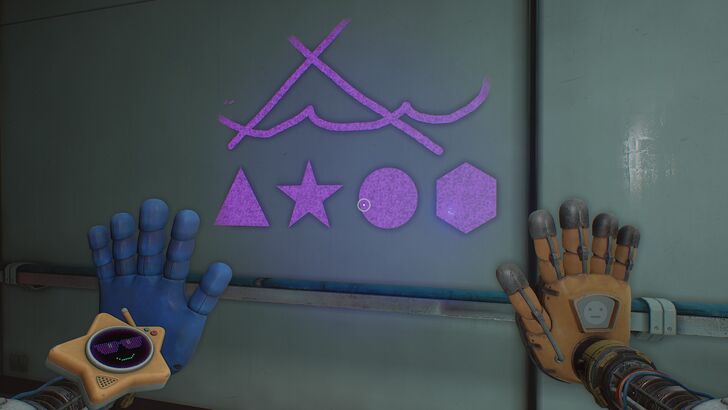
While it’s true that Poppy Playtime Chapter 5 constantly keeps you on edge with the expectation of another chase sequence around every corner, a large portion of the chapter is actually built around slower, more deliberate exploration. And this is where the game’s tone shifts in a way that’s easy to overlook if you only remember it for its high-intensity moments.
Outside of the panic-driven sections, you’re often left alone with the environment itself. The factory stops feeling like a set of obstacles and starts feeling like a space that is actively telling a story without directly interrupting you. While a few are handed to you through exposition via flashbacks, a lot of it is also left to the players to piece together through exploration. Recordings and notes left behind in rooms that don’t serve a purpose, clips from old infomercials, and collectible fragments all contribute to a sense that understanding what happened here is something you have to actively earn, not passively receive. In a way, the game forces you into the role of investigator just as much as survivor.
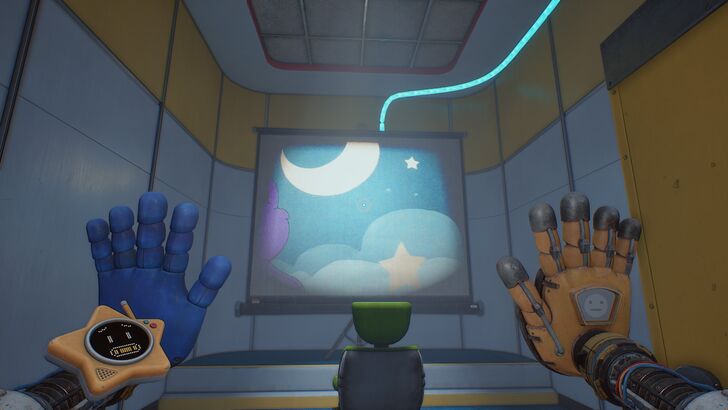
That said, not every exploration segment lands with the same impact. Some areas can feel like they exist mainly to stretch progression or slow the pace down between major encounters, and a few moments lean closer to filler-style puzzles than meaningful discoveries. However, even these quieter sections still serve a structural purpose, giving the game space to breathe and preventing the intensity from becoming overwhelming or exhausting over extended play sessions.
The exploration sections ground you just enough to make the chases more impactful, while the chases prevent exploration from ever feeling completely boring. It’s a push-and-pull rhythm that defines the entire experience, one that makes you feel like you’re always either discovering something important or about to be interrupted while doing so.
Horror is Mechanical
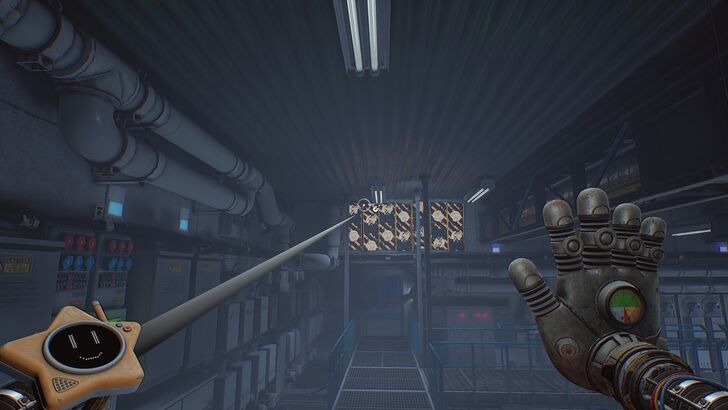
But of course, like many entries in the mascot horror space, Poppy Playtime Chapter 5 still relies heavily on cheap scare design to carry a lot of its tension. And unless you specifically struggle with the idea of being chased, a good portion of the horror here doesn’t really land as genuine fear, but rather, adrenaline rush disguised as terror. Additionally, because so many sequences are built around trial-and-error repetition, the tension starts to shift away from being scary and more toward being frustrating.
This is even more obvious in moments where audio and environmental feedback don’t fully support what the game is asking of you. Take, for example, the sequence where Huggy is actively hunting you while you’re searching for batteries to open a door. His footsteps don’t consistently help you pinpoint his exact position, which becomes a real problem when you’re hiding in areas with no visual indicators of what’s happening on the other side of a wall or corridor.
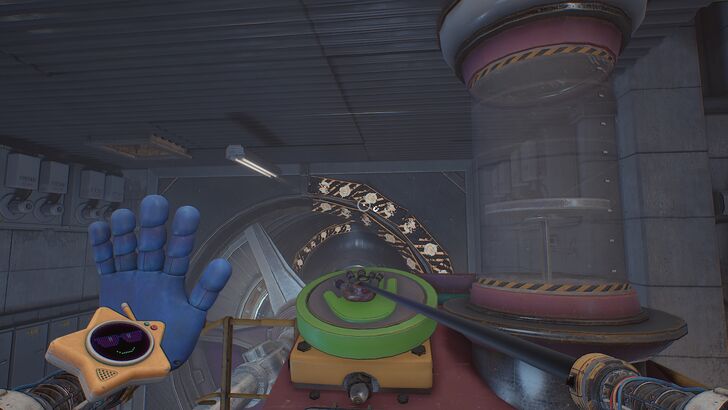
In those moments, you’re not reacting to fear—you’re guessing. And that’s where the design starts to fall apart slightly. What is clearly intended to create paranoia and force you into hiding ends up clashing with the game’s demand for environmental awareness. Instead of feeling tense because you’re carefully tracking a nearby threat, you sometimes feel uncertain because the feedback needed to make informed decisions just isn’t clear enough.
Ultimately, whether this works or not depends on what kind of horror experience you’re looking for. If you enjoy tension that comes from uncertainty and trial-and-error survival, this will definitely land for you. But if you prefer horror that builds fear through pacing and deliberate escalation, then this design can feel less like being hunted, and more like fighting the design and information itself.
Solid Console Port
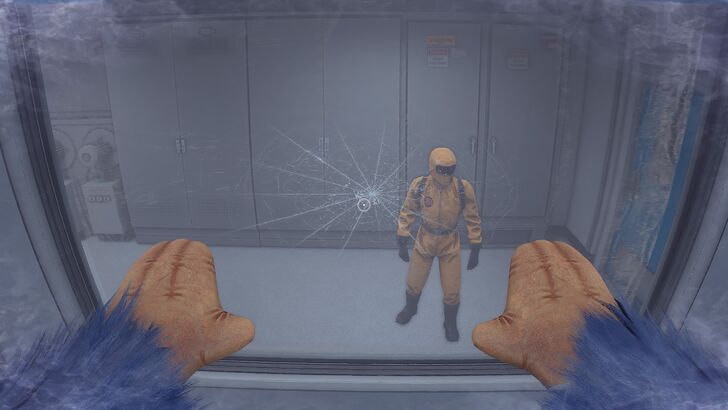
And of course, since this is a port of Poppy Playtime Chapter 5, it’s worth talking about how well the experience actually translates to console. Visually, the game looks great. The environments still carry that grim, abandoned-toy-factory aesthetic the series is known for, and the lighting does a lot of heavy lifting in selling both atmosphere and tension. Nothing feels like it was significantly changed just to make the transition work.
Performance-wise, it’s also stable. Movement is responsive, chase sequences don’t noticeably stutter, and the overall pacing of gameplay isn’t disrupted by technical issues in a way that breaks immersion. More importantly, the controls translate cleanly. The GrabPack mechanics—switching between tools with a quick press of directional buttons—feel intuitive on a controller. So while the core experience of Poppy Playtime Chapter 5 has its design quirks and occasional frustrations, the console version itself doesn’t get in the way of that experience.
Is Poppy Playtime (Chapter 5) Worth It?
Definite Yes For Fans of The Franchise
Priced at $19.99 with a roughly 6-hour runtime if you move through it efficiently—longer if, like me, you end up getting caught in certain segments and repeating sections more than you’d like—Poppy Playtime Chapter 5 lands in that familiar middle ground of modern episodic horror: not overly expensive per entry, but clearly designed as part of a larger investment.
On its own, the chapter offers a decent amount of content for the price. But the real consideration isn’t just Chapter 5, it’s the expectation that you’re playing the entire Poppy Playtime. At around $65 for the full series, it stops being a simple "try this chapter" kind of purchase and becomes a commitment to the entire narrative arc.
For players who are already invested in the lore and have been following the series from the beginning, that price feels justified as you’re paying to experience a continuous mystery that builds on itself, and Chapter 5 in particular leans heavily on that accumulated payoff. But for newcomers or more casual horror players, that total cost can feel harder to justify. While each chapter does offer its own contained experience, the real draw is the overarching story, and without that investment in context, the full price can feel like a barrier rather than an invitation. In that sense, it becomes less about content quantity and more about whether you’re willing to buy into the franchise’s long-form storytelling structure.
Ultimately,Chapter 5 is a solid entry in its own right, but its value is inseparable from the larger package it sits in. For fans, it’s an easy recommendation. For everyone else, it depends on whether you’re willing to commit not just to a game, but to an ongoing narrative ecosystem.
Poppy Playtime (Chapter 5) FAQ
Who Are The New Enemies in Poppy Playtime Chapter 5?
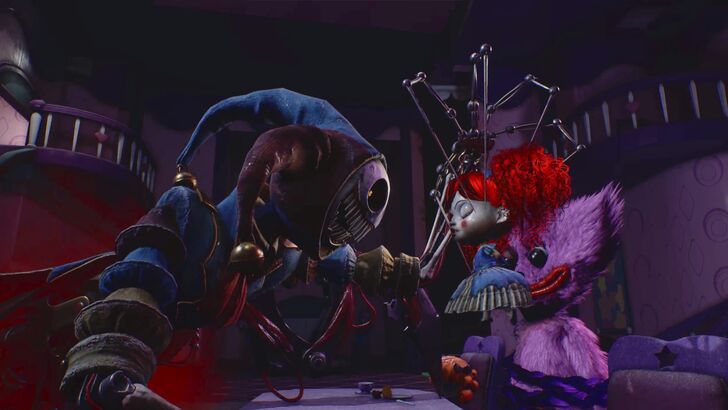
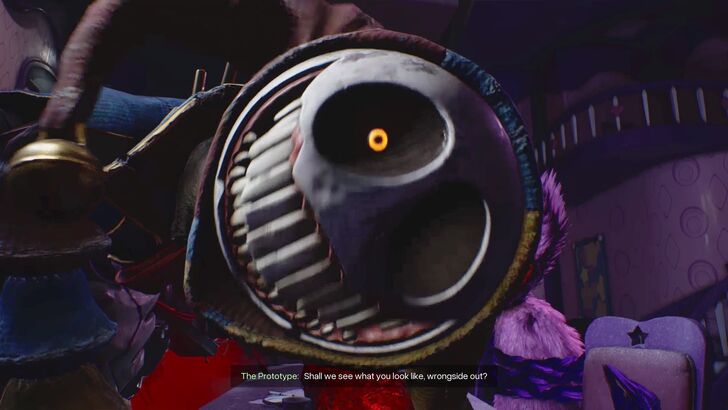
The new mascots in Poppy Playtime Chapter 5 are the Outimals (like Rag Bags and Gutter Plushies), Lily Lovebraids (one of the main antagonists), and the expanded introduction of and interaction with The Prototype.
Game8 Reviews