



Pokémon Sword and Shield are creature-collector RPGs that house one of Pokémon’s best mechanics: Dynamaxing. Read our review to see what it did well, what it didn't do well, and if it's worth buying.
Overview
What is Pokémon Sword & Shield?
Pokémon Sword and Shield are RPGs developed by Game Freak and published by Nintendo and The Pokémon Company for the Nintendo Switch in 2019. It drops players straight into Galar, a Britain-inspired region obsessed with stadium battles, where they work their way up the Gym ladder to knock the Champion Leon off his pedestal. Mechanics stick to the classic loop of catching wild creatures and battling them, though Galar shakes things up with open-world Wild Areas and Dynamaxing, which turns Pokémon into enormous powerhouses.
Game Freak eventually expanded the game with two DLCs: The Isle of Armor and The Crown Tundra. Both added more open-world areas and brought back over 200 classic Pokémon left out of the base game.
Pokémon Sword & Shield features:
⚫︎ Introduction of Open World Areas
⚫︎ Dynamax and Gigantamax Mechanics
⚫︎ Classic Pokémon Gameplay Loop
⚫︎ Galarian Forms and Branching Evolutions
⚫︎ Streamlined Quality-of-Life Upgrades
| Digital Storefronts | |||||
|---|---|---|---|---|---|
 Pokémon Sword Pokémon Sword |
Pokémon Shield |
||||
| $59.99 | |||||
Pokémon Sword & Shield Review: Good Enough to Be Remembered for More Than Its Flaws
The Expectations Were Bigger Than the Game

Perhaps unfortunately for them, few Pokémon games have carried expectations quite like Pokémon Sword and Shield. As the first mainline entries built for a home console, they came with a promise of taking one of gaming’s most nostalgic adventures onto a much bigger scale. Because of that, every trailer and every reveal was picked apart. Some were excited for the game. Others were far less hopeful. By the time the games arrived, Galar had expectations that reached far beyond the adventure itself.
The debates around Pokémon Sword and Pokémon Shield never really went away. Mention Galar today, and it's usually only a matter of time before someone brings up what the games should have done differently. That reputation is deserved in some ways, though it also has a habit of overshadowing everything else.
Regardless of what it should or should not have been, spend enough time in Galar, and the debates matter less and less. The classic rhythm of Pokémon’s formula takes hold. One more route turns into another. One more Gym Badge doesn't feel like enough. Hours disappear before you think to even put the Switch down. The expectations may have shaped its reputation, but they never stopped it from being a genuinely enjoyable Pokémon adventure.
Galar’s Biggest Mystery is Still a Mystery Seven Years Later
For all the criticism Pokémon Sword and Shield has received over the years, I don't think its story is one of the biggest offenders. Every mainline Pokémon game has always been built around the same idea. You're a young Trainer setting out across a new region, challenging Gym Leaders, building a team, and eventually taking on the Pokémon League. That journey has always been the heart of the series. Sword and Shield doesn't try to reinvent that structure, nor does it chase the kind of sprawling narrative found in modern RPGs. It knows what kind of game it wants to be, and that is one of approachability.
That means the story mostly stays in the background for much of the adventure. You travel from town to town, meet new Pokémon, earn Gym Badges, and slowly work your way toward the Champion Cup. The Gym Challenge itself receives more attention than in previous games, with packed stadiums, roaring crowds, and a sports-like atmosphere that gives battles a sense of scale not seen before in the series. It does a good job making your climb through the League feel like a regional event.
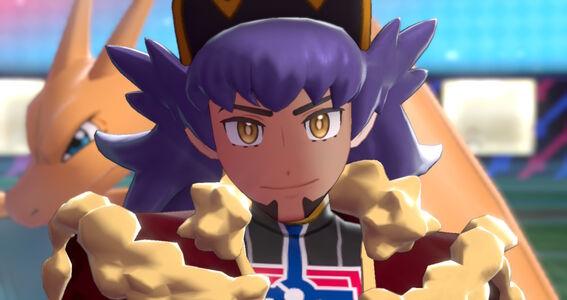
The downside is that Pokémon's habit of keeping the interesting parts off-screen is alive and well here. Strange Dynamax incidents begin appearing across Galar, but every time something important happens, Leon steps in before you can. He tells you he'll handle the problem and encourages you to stay focused on collecting Gym Badges.
Then you move on to the next route, only to hear afterward that another crisis has already been resolved. It happens again and again until it almost becomes a running joke. The game keeps hinting that something unusual is unfolding across the region, yet it rarely lets you witness those events yourself. Leon ends up feeling like the one dealing with the real crisis, while you're left following the Gym Challenge until the story finally remembers that you’re the protagonist of the game.
That simplicity in the story works well enough for a Pokémon game, though I never found it especially engaging. The mystery surrounding the Legendary Pokémon sits in the background for most of the adventure, teased through bits of dialogue and pieces of history. However, the actual answers don’t arrive until the closing hours, and by that point, I had already guessed most of where the story was headed because it is very predictable.
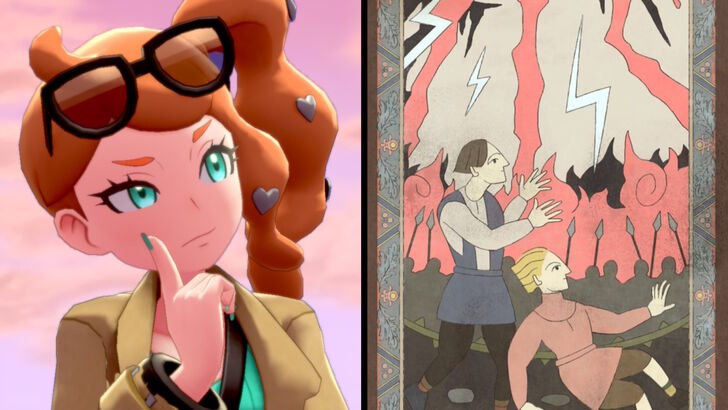
The bigger disappointment, at least for me, is how little time the game spends exploring Galar's history. The Darkest Day is repeatedly described as one of the region's defining events. Eternatus, Zacian, and Zamazenta all play important roles in that history. Those ideas should have made Galar feel ancient and mysterious.
However, much of that lore arrives in a rush near the end after Professor Sonia pieces everything together. Not even the post-game story helped my understanding or enthusiasm for Galar’s lore, as it expands the history only by a fraction.
Good Rivals Offset by Forgettable Villains
Thankfully, the cast is good. Sword and Shield splits the traditional rival role across three different characters, each filling an archetype that fans of the series would recognize at a glance.
Hop is the energetic childhood friend who constantly pushes himself to improve, much like Hau from Pokémon Sun and Moon or Barry from Pokémon Diamond and Pearl. Bede fills the role of the arrogant rival who carries shades of Silver from Pokémon Gold and Silver. Marnie rounds out the trio as the punk-inspired challenger whose design mirrors yet rejects Sun and Moon’s Gladion’s thesis.
None of them break new ground, but they each have enough going on that I looked forward to their appearances. Despite others’ opinions, I like Hop. Living in Leon's shadow weighs on him throughout the adventure, and every defeat chips away at his confidence. He starts questioning whether he's good enough, changes his team in search of answers, and spends much of the journey trying to figure out what kind of Trainer he actually wants to become. It gives him a very human arc.
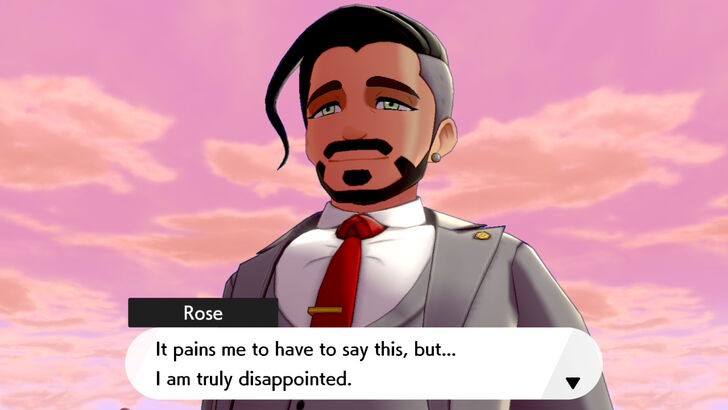
Bede, meanwhile, begins as little more than an arrogant Trainer obsessed with proving himself worthy of Chairman Rose’s approval. His attitude makes him easy to dislike early on, which only makes his later development more satisfying. I won’t spoil where his story goes, but he eventually grows beyond that single-minded obsession.
Neither Hop nor Bede reaches the emotional highs of the series' best characters, though both receive enough attention that their stories become natural companions to your own journey across Galar.
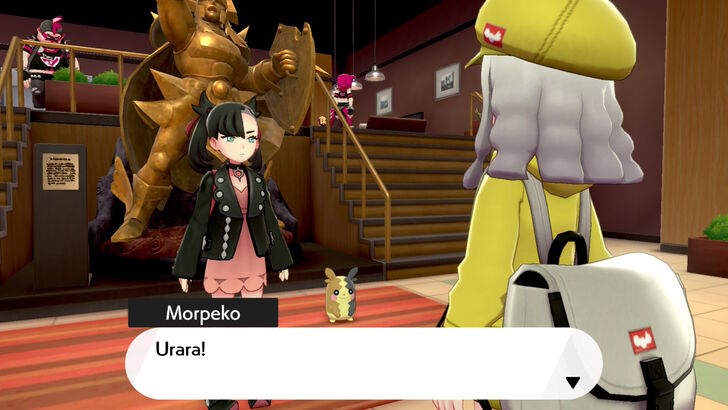
Marnie, however, receives less development than the other two. In fact, she speaks less than Hop and Bede, but she remains likable throughout, especially since all she really wants is to see her hometown of Spikemuth prosper.
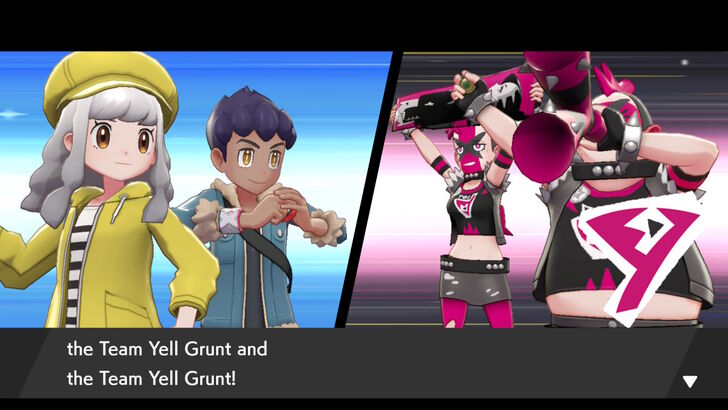
The one group that never really worked for me was Team Yell. Pokémon has always had room for goofy villain teams, but Team Yell barely qualifies as villains at all. They’re simply Marnie’s biggest fans, causing trouble because they want their hometown representative to succeed in the Gym Challenge.
That idea is funny the first time you see it. After the fifth or sixth roadblock, the joke wears thin. They never feel threatening, their motivations stay intentionally harmless, and most of your encounters with them exist simply to delay your progress to the next destination.
Sure, the concept itself is novel. Team Yell reflects Galar’s obsession with spectator sports. The problem is the game rarely digs into those ideas beyond the surface. Compared to Generation 7’s Team Skull—or even most of the series’ other villainous teams—their role in the story is disappointingly trivial.
Freedom in Galar Comes With Limits
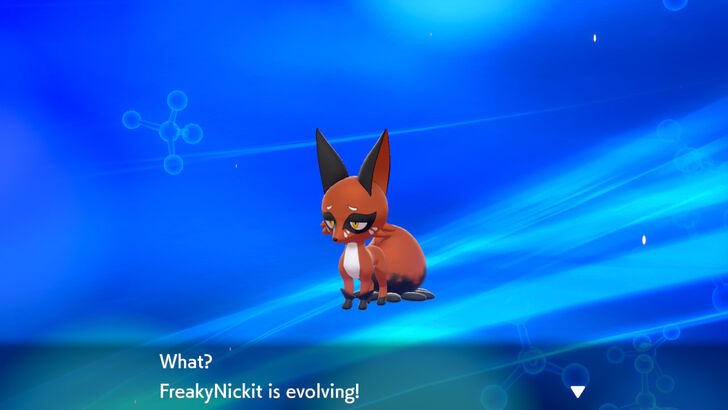
Gen 8’s biggest contribution comes from cutting away many of the little inconveniences that we’ve grown accustomed to in Pokémon games. For instance, wild Pokémon now roam the overworld, with just some of the rarer encounters hiding in tall grass. It sounds like a small change given what we have now with the Legends games and Scarlet and Violet, but back then, it was revolutionary.
If I spotted a Pokémon that caught my attention, I could walk up to it, battle it, and throw a Poké Ball. I no longer had to spend several minutes running in circles hoping the encounter I wanted would finally appear. I caught far more Pokémon because of it, and I experimented with my party far more often. Some of my favorite team members only joined because I happened to see them wandering nearby.
Small quality-of-life improvements support all of this. Accessing Pokémon Boxes from almost anywhere made it easy to rotate party members whenever I wanted. The Move Reminder no longer asks for Heart Scales, so trying new movesets became effortless. None of these changes would sell a new Pokémon game on their own. Together, though, they remove dozens of little interruptions that used to break the adventure's rhythm. To put it simply, I noticed them because I stopped thinking about them.
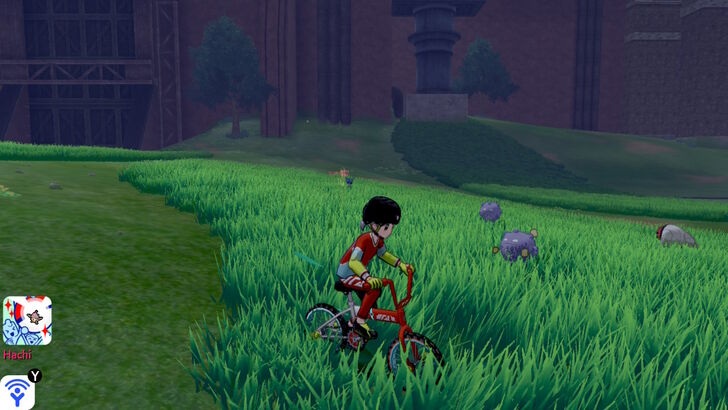
Its biggest innovation, though, comes from the Wild Area. I’ve played every mainline Pokémon game, so I was used to routes that nudged me from one town to the next with little room to wander. Sword and Shield opened the gates, and suddenly Pokémon were roaming the field, trainers scattered across the landscape, and a camera that let me look around. It’s not an actual open world similar to Scarlet and Violet’s Paldea, but it was the first time the series gave me the freedom to simply exist in its lands.
That sense of wonder never came from having dozens of things to do. The Wild Area is still a place to catch Pokémon, battle Trainers, gather items, and later take on Max Raid Battles. Yet I spent far more time there than I expected because it let me set my own pace. I'd head there planning to continue the story, then an hour would disappear while I chased a rare spawn, checked how the weather had changed, or rebuilt my team after finding another Pokémon I wanted to use.
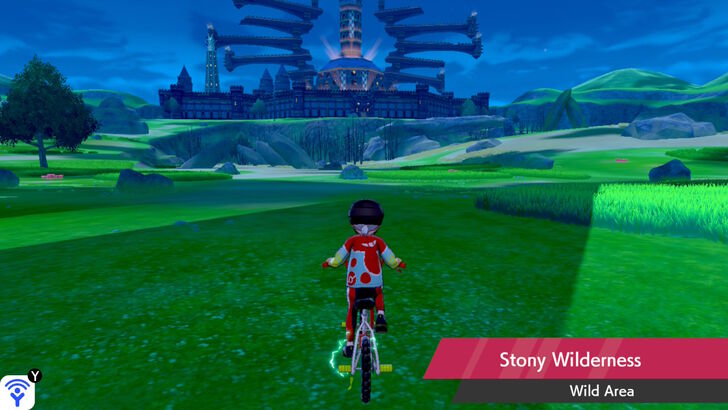
This doesn’t change the fact, though, that the Wild Area is really just a glorified sandbox with plenty of empty space. I don’t have any qualms with how its trees or water look; I understand the limitations Game Freak had to work around in developing the title. However, after enough visits, much of its landscape starts looking the same. There aren’t many landmarks that stay with you. Exploring eventually becomes a routine of checking weather conditions and searching for specific Pokémon. I still enjoyed spending time there because it felt like Game Freak was finally willing to loosen the reins.
That is until you leave.
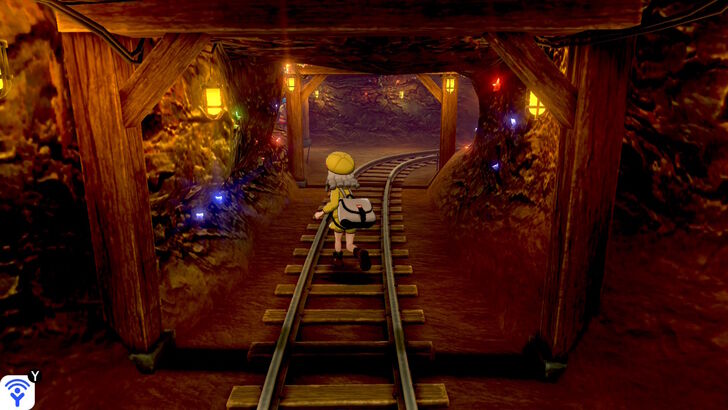
Almost every route in Galar is a hallway with the occasional dead-end item pickup. Galar Mine, for example, doesn’t evoke the same feeling of getting lost in its depths as Mt. Moon or Rusturf Tunnel. It’s almost just a straight line. Its side paths are also straight lines that end after a couple of steps. I rarely had to think about where I was going because there was usually only one direction to take.
Older Pokémon games could be linear too, though many of them still found room for optional caves, puzzles, hidden paths, or places worth revisiting. Galar rarely offers that kind of discovery outside the Wild Area.
Dynamax Transforms Gym Battles Into Spectacles
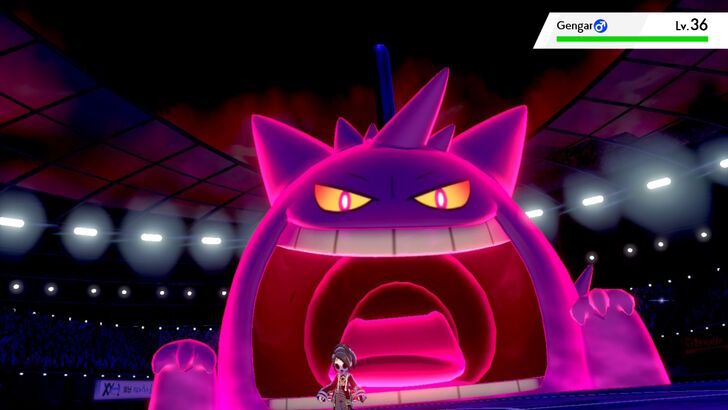
Galar may struggle to make its routes memorable, but it has no trouble making big events out of its Gyms. Their structure hasn't changed much. Complete a short challenge, battle the Gym Leader, collect a Badge, and move on. It’s the presentation that changes everything.
If you’ve played a Pokémon game before, you’ve already learned most of what Sword and Shield expects from you. Battles still revolve around type matchups and building a balanced team. Dynamax is the biggest addition this time around. One Pokémon grows to an enormous size for three turns, gains stronger Max Moves, and turns the closing moments of a battle into a spectacle.
The more I used Dynamax, the more I appreciated how little it asked of me. I never felt like I had to build my team around the mechanic just to get the most out of it. I simply used whichever Pokémon made the most sense in that moment. I still remember watching Milo throw his Poké Ball into the sky for the first time. The stadium erupted, the music grew more intense, and a battle that had been fairly routine suddenly became a showdown. Even after going through the whole gauntlet, those moments never got old. These are much better experiences than just having you beat another boss inside a building.
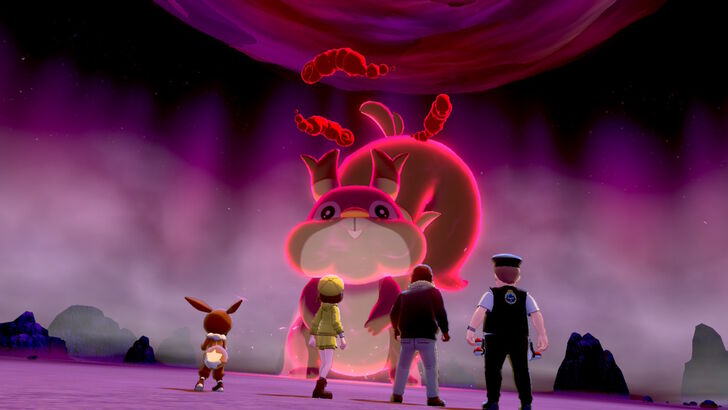
That feeling carried over to Max Raid Battles. Four Trainers join forces to bring down a Dynamax or Gigantamax Pokémon before getting the chance to catch it. They're really easy to lose yourself in. I'd finish one raid, collect my rewards, notice another pillar of light in the distance, and immediately head over to see what was waiting there.
The cracks only really start to show after enough hours. Tougher raids have a habit of dragging once Shields come into play, which mitigate incoming damage. Worse still, the AI partners can make some baffling decisions that leave you wondering whether they’re helping at all.
I never stopped enjoying Raid Battles because of how cool they are, though I definitely became more aware of their repetition the longer I played.
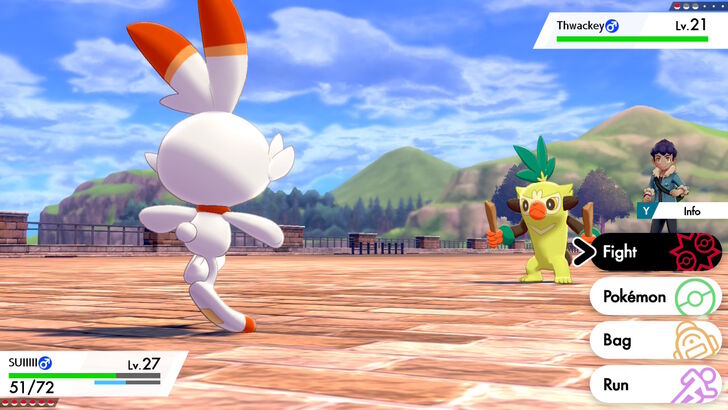
The spectacle of this new mechanic does a lot of heavy lifting because the battles themselves rarely do. Sword and Shield gives out experience so generously that I stayed comfortably ahead of the level curve throughout most of the adventure. The permanent Exp. Share and EXP Candies are the biggest reasons why. I rarely had to stop and grind, and I can't say I miss that part of older Pokémon games.
The problem is that the game doesn't always account for how much stronger those systems naturally make your team. I wasn't trying to overlevel either. Simply catching Pokémon and battling the trainers placed in my path was enough to keep me ahead of most challenges. In one playthrough, I avoided every wild encounter outside of trainer battles, yet my unevolved Scorbunny still ended up stronger than some Gym Leaders' ace Pokémon.
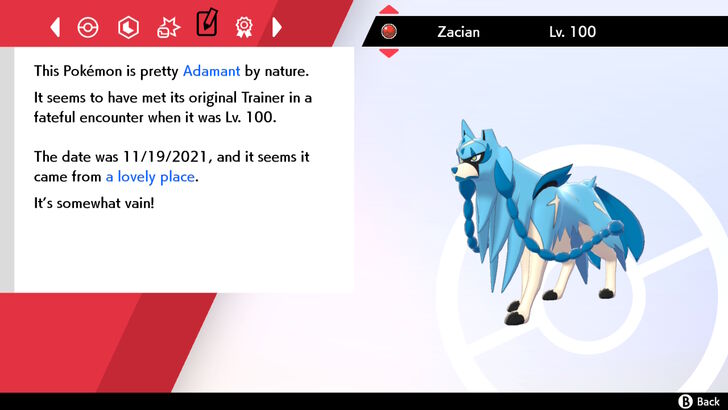
I do, however, understand that this is a Pokémon game that wants as many people as possible to experience the journey from beginning to end. I still remember dumping a pile of EXP Candies into a newly caught Pokémon for the first time. It almost felt wrong. Years of playing this series had conditioned me to expect hours of grinding before a new teammate could catch up. Here, it only took a few minutes before they were ready to join my party. It made me want to experiment with team compositions more often because levelling them up never became a huge commitment.
That accessibility extends throughout the rest of the game. Building a new team, changing a Pokémon's moves, or preparing a new addition for battle all feel far less intimidating than they used to. I don't spend much time playing competitively, though I appreciated how approachable these systems became. I even know a preschooler who can barely read or write yet managed to make it through almost the entire game with very little help. That experience says a lot about what Sword and Shield was trying to achieve. Longtime players may find some of its conveniences a little too generous, but they also make Pokémon easier to enjoy for people who might have never finished one before.
Is Pokémon Sword & Shield Worth It?
Yes, It’s Still a Good Game Despite Its Faults
Seven years after its release, Pokémon Sword and Shield still sells for $60, and that probably won't surprise anyone familiar with Nintendo. Pokémon games rarely see discounts, especially the mainline entries. Even so, I think the price is still fair. A typical playthrough lasts around 20 to 30 hours, and that’s before you decide whether you want to spend more time catching Pokémon or putting together another team. I certainly did, and I never felt like I was forcing myself to squeeze more value out of the game than what I paid for.
The bigger question is whether you should factor the Expansion Pass into that purchase. The Isle of Armor and The Crown Tundra add a lot to the experience, even if they don't do much to strengthen the story. Galar feels much more complete with both expansions installed, especially once you've finished the main adventure. The catch is that buying everything brings the total close to $90. That's a steep price for a seven-year-old game. I don't think the DLC is necessary to enjoy Pokémon Sword and Shield, though skipping it means missing out on some of its strongest content.
With or without the DLCs, you’ll still find plenty of fun here. Seven years later, Pokémon Sword and Shield remains a game that is easy to pick up and spend a few hours with. It may not be the definitive Pokémon experience many fans hoped for, but it is still a journey through Galar that is worth having.
Pokémon Sword and Shield Related Guides
 Pokedex Pokedex |
 Story Walkthrough Story Walkthrough |
 Wild Area Wild Area |
 New Features New Features |
 Gym Leader Battles Gym Leader Battles |
 List of Moves List of Moves |
 Version Exclusives Version Exclusives |
 Message Board Message Board |
 Training Your Pokemon Training Your Pokemon |
 List of Items List of Items |
 Beginner Tips & Guides Beginner Tips & Guides |
 List of Maps List of Maps |
Pokémon Sword & Shield FAQ
Which Starter should You Choose in Pokémon Sword and Shield?
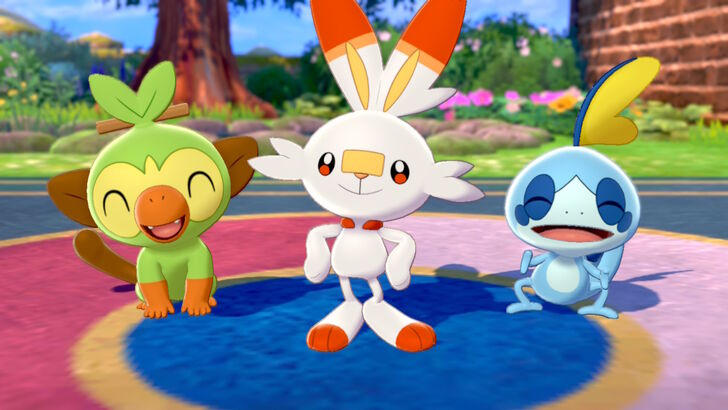
Choosing your starter all comes down to preference. However, if you want to maximize your early-game advantage, Sobble is the top pick because it learns Water Pulse early on to easily clear battles. To handle its weakness against Milo’s Grass-type Gym, catch a Flying-type like Rookidee to balance your team. You can also trade with other players online later to easily collect the starters you missed.
For more tips and tricks on Pokémon Sword and Shield, check out our guides below!
Game8 Reviews