



| Pokémon Champions | ||||
|---|---|---|---|---|
| Release Date | Gameplay & Story | Pre-Register & Pre-Order | Review | |
| Mobile Review | ||||
Pokemon Champions, the dedicated Pokemon battle simulator, now comes to mobile platforms! Read our review to see what it does right, what it does wrong, and our overall thoughts on the game.
Overview
What is Pokémon Champions?
Pokemon Champions is a battle-simulator game by The Pokemon Works and GameFreak which focuses on the competitive battling side of the series. The game sees players recruit Pokemon from a specific ruleset, build teams with them, and fight with them in battles against equally skilled players.
Pokémon Champions features:
⚫︎ Multiplayer Pokemon Battling, Taken from the Games
⚫︎ Ranked ladder
⚫︎ Random Pokemon Catching
⚫︎ Streamlined Pokemon Training
⚫︎ Private Pokemon Matches
For more gameplay details, read everything we know about Pokémon Champions’s gameplay and story.
| Digital Storefronts | |||||||
|---|---|---|---|---|---|---|---|
 Switch Switch |
 Switch 2 Switch 2 |
 App Store App Store |
 Google Play Google Play |
||||
| Free-to-Play | |||||||
Pokémon Champions Review [Mobile] | Time to Be the Very Best, No Excuses
An Experience Rarer Than a Shiny Pokemon
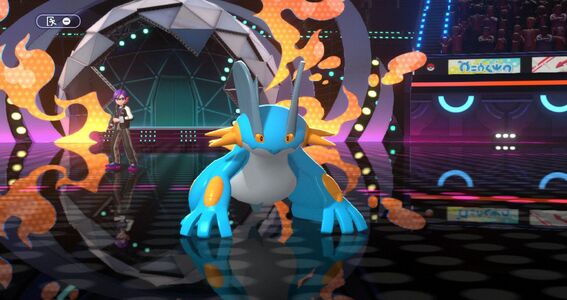
Back when I was in college and law school, I couldn't get enough of competitive Pokemon. I've been a diehard fan of the Pokemon series since I was a kid, but there's something about the competitive side of Pokemon that remains uniquely tantalizing and exhilarating. Whether it was secretly planning Kingambit EV spreads in the middle of CrimLaw class or playing Pokemon Showdown's Random Battle mode in packed trains, competitive Pokemon always kept me thinking more intentionally about the game's surprisingly in-depth core mechanics.
Pokemon Champions is a concerted effort by Nintendo and The Pokemon Company to further lower the barrier to entry for competitive Pokemon, and I for one have been hooked since it came out. Champions distills Pokemon’s multiplayer battle system into its purest form, doing away with the complicated, cryptic processes of Pokemon training and acquisition (for the most part). It shines just as bright on mobile platforms, leaving both veterans and newcomers no excuses not to become the very best, like no one ever was.
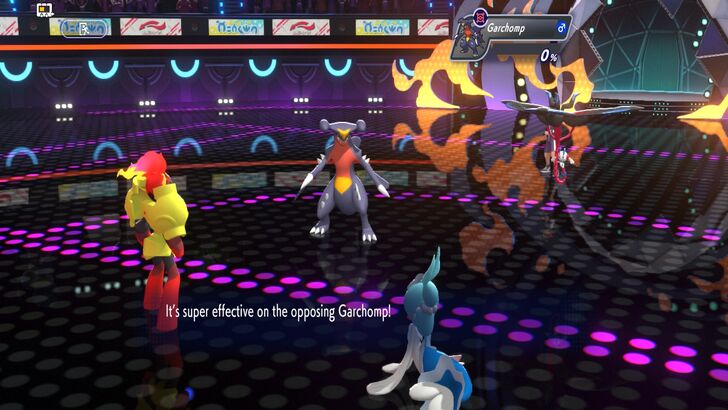
This version of the game is especially notable in that prospective Pokemon champions don’t even need a console to dive deep into everything Pokemon’s legendary battle system has to offer. Champions streamlines the competitive Pokemon grind - which, trust me, can take up more time than it needs - through massive quality-of-life changes, which greatly benefits both newcomers and long-time nerds like myself. Competitive Pokemon has never been this accessible before, and this new port only makes the series’ hidden depth all the more visible in its all its glorious, nerdy complexity.
It has performance-side problems and probably won’t convert fans who prefer Pokemon’s softer, more casual side (to those fans, I get it, I’ve been trying to buy Pokopia for months!). For anyone interested in really understanding what makes their favorite Pokemon games click, though, there’s nothing like it.
Accessible to All, Optimized For Power
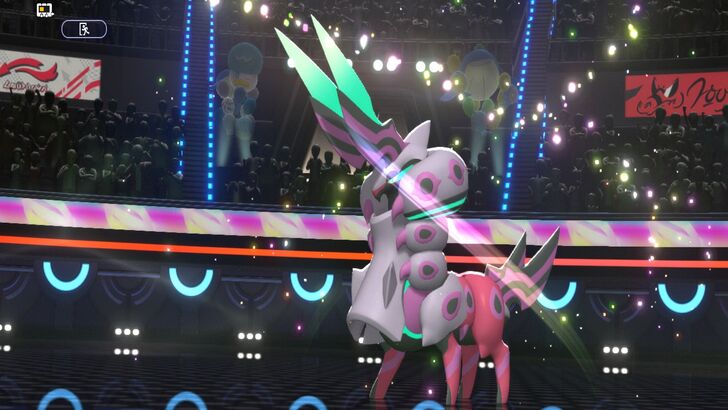
As a mobile game, one major variable the mobile port of Pokemon Champions has to consider is the various kinds of hardware that the game could be played on. Unlike its dedicated Switch 1 and 2 ports, which tailor to those consoles’ specific set of technical specs, Champions needs to run on a wide selection of Android and iOS phones in order to maintain its focus on accessibility. Thankfully, Champions does run on older hardware, but reaching the game’s 60FPS goal requires more modern models to be feasible.
For context, I primarily played Champions’ mobile port on an old 2021 Samsung Galaxy A32, my personal daily driver and a budget phone, even on release. I don’t really play games on it, apart from barely interactive games like Pokemon TCG Pocket or retro ports like Sonic the Hedgehog 2 and Crazy Taxi. The most demanding thing this phone gets to do, performance-wise, is render Pokemon GO’s maps and Super Monkey Ball’s levels. With that baseline, Champions performed exactly as I expected it to: adequately.
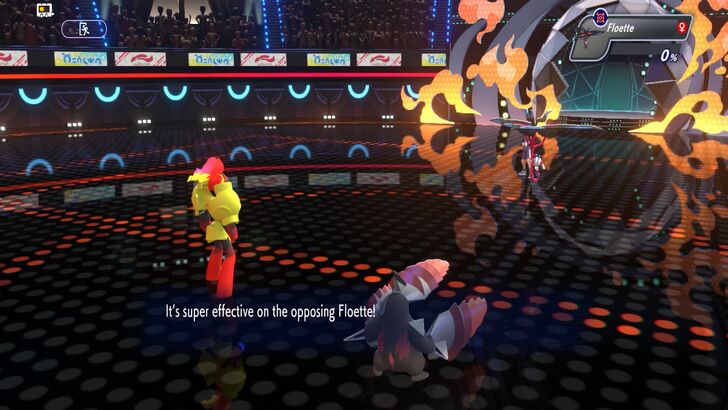
I averaged around 40FPS in static menus like the home menu, Pokemon training rooms, and Pokemon recruitment hubs, while actual battles would hover around 35-25 FPS depending on the particle effects and animations used. I’d describe it as being closer to the Switch 1 version, which is what I primarily played on anyway. The fact that it was actually playable, let alone enjoyable, on my legacy hardware was honestly impressive enough.
This drop in performance won’t hurt the overall gameplay experience in 99.99% of instances, as the game relies heavily on menus and timed, strategic decision making. This isn’t Devil May Cry: Peak of Combat, after all, which, as a side tangent, ran terribly on this phone. The only scenario this game would absolutely require up-to-date hardware is during high level competition, when every second and menu press matters, but for most phones made after 2023 this game should run much more smoothly anyway.
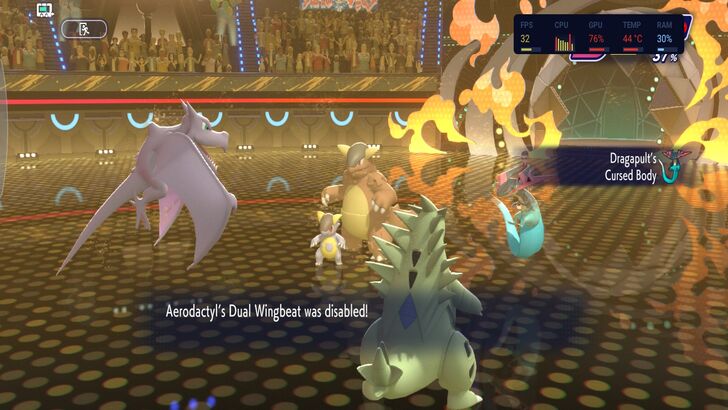
One of Champions’ most notable compromises, however, is its use of battery power and how that affects system temperatures. During my experience with the game, my battery drained from 80% to 15% in just under 4 hours, while Samsung’s proprietary battery and temperature readers showed an average temperature of 44°C - which makes the experience physically uncomfortable over long periods of time.
To be fair, this is also a problem with the Switch 1 version when undocked, and this varies greatly with battery health and device power. It does, ultimately, showcase just how Champions relies on powerful, or at least modern, hardware to truly feel like a seamless experience. Take it from me, though; it might not be that hard to find a phone that runs Champions better than mine did.
Breaking Out of Nintendo’s Ecosystem - With Mixed Results
The late, great Satoru Iwata once noted in 2011 that Nintendo would never make mobile games. 15 years, the commercial failure of the Wii U, and the Switch’s subsequent success later, Nintendo has at least branched out to mobile with spinoff games like Super Mario Run, Fire Emblem Heroes, and, most famously, Pokemon GO. For the most part, these mobile spinoffs have actually been successful ways to lower the barrier to entry for prospective Nintendo fans who can’t shell out $400 on a game console.
Pokemon Champions, much like GO, Unite, Cafe Remix and TCG Pocket before it, is now an effort to try and bring the multiplayer battling system of the series to as many people as possible. There’s a unique problem with Champions that the rest of its fellow spinoffs don’t have to worry about, however, and it's where a lot of the game’s best and worst features lie.
To put it simply, competitive Pokemon has always been highly inaccessible both as a financial and time-based investment. The former is where Champions’ mobile port is most volatile, as, in the past, even players within Nintendo’s ecosystem would have required multiple Pokemon games, Nintendo consoles, specific interconnective apps, and even paid subscriptions just to procure competitively relevant Pokemon.
For example, take Scarlet and Violet’s prior competitive format, which utilized rare Legendary Pokemon as core parts of teambuilding. To access Calyrex Shadow Rider and Ice Rider, two of the most dominant Pokemon in the format, players would need to own Pokemon Sword or Shield as well as the 30$ Crown Tundra DLC expansion.
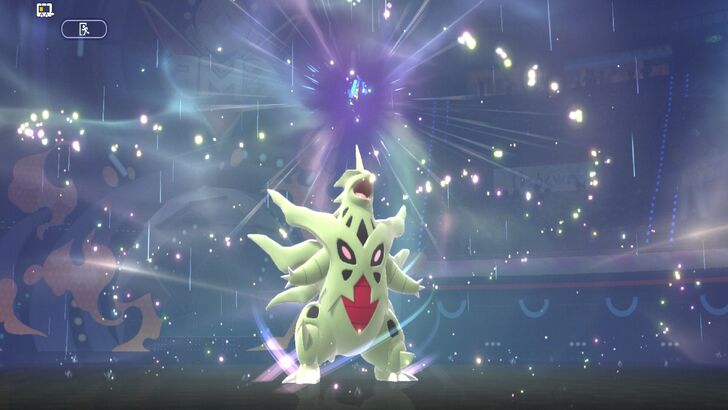
This is made only more contentious by the fact that Champions isn’t just a mere spinoff, but rather a fully fledged platform for official Pokemon Video Game competition. For players who are starting from scratch, without a Pikachu to their name in Pokemon Home, it is imperative that Champions makes securing Pokemon easier than ever before.
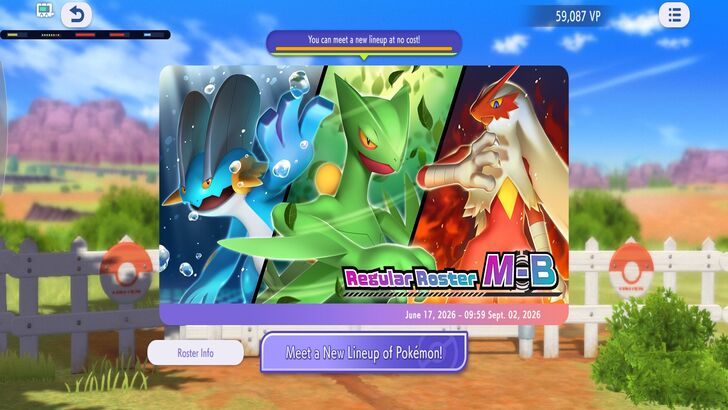
Pokemon Champions’ version of obtaining new Pokemon is, put simply, a mixed bag, with some notable improvements made in the mobile port. Players are given a team of Pokemon to start with, and winning more battles in the game’s Ranked ladders grants players with in-game currency that, among other things, lets you pick out a new Pokemon from a randomized selection.
On the one hand, Champions is incredibly generous with its free-to-play progression, at least compared to the aforementioned system on consoles. Completing free, in-game missions and simply playing the game more will grant players the in-game currency necessary to recruit and train a solid team of Pokemon in no time. Even better, free events and gifts can even grant players free, competitively viable Pokemon out of the box. To paraphrase Johto Elite 4 member Karen, truly skilled players don’t need strong Pokemon to win, and at best it's a way to expand a player’s usual Pokemon selection by forcing creativity.
Conversely, the random nature of what you can get from the recruitment hub makes it both a time and money sink, with rerolls being gated behind daily resets and missions. Important "held items," like Mega Stones, the healing Leftovers and the damage-boosting Life Orb are also locked behind the in-game currency, gatekeeping a crucial part of Pokemon strategy and experimentation. Furthermore, paid battle passes and microtransaction bundles ensures that the stench of exploitative monetization doesn’t quite go away, even when they’re entirely optional.
The accessibility of Pokemon Champions, especially as it comes to mobile, remains a mixed bag that succeeds slightly more than it fails. The tradeoff for the massive timesink and financial investment required by the past now comes with more present monetization, though it's worth noting that this is still an upgrade for the most part. Champions’ mobile port brings even more accessibility by introducing regional pricing, meaning that Trainers don’t need to burn their wallets nearly as much to buy the battlepass.
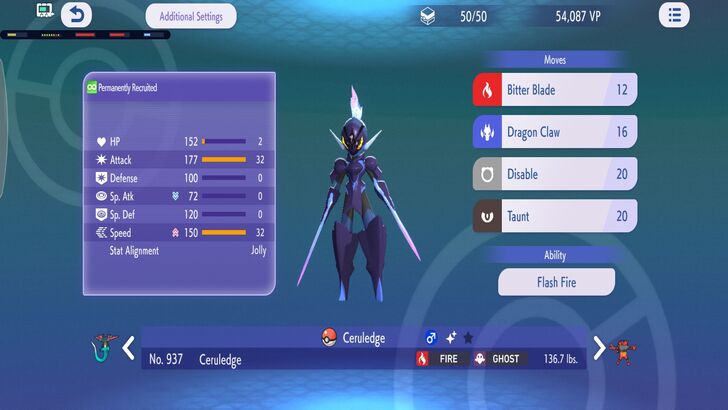
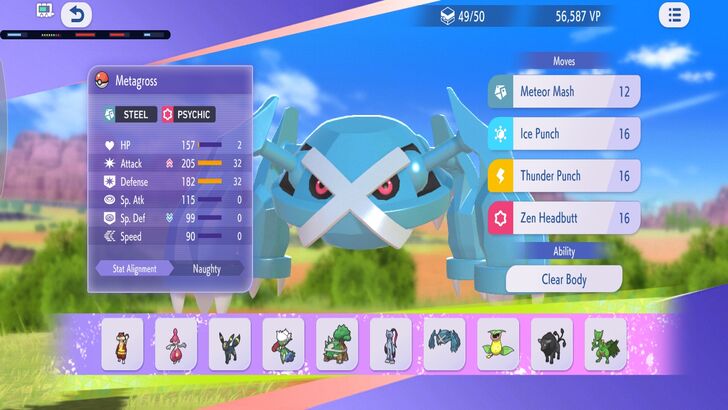
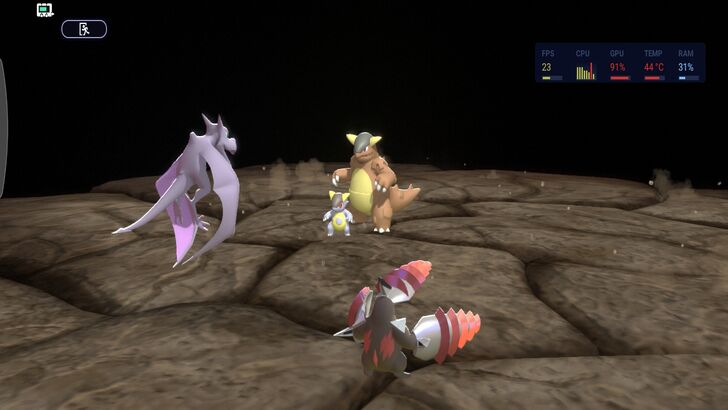
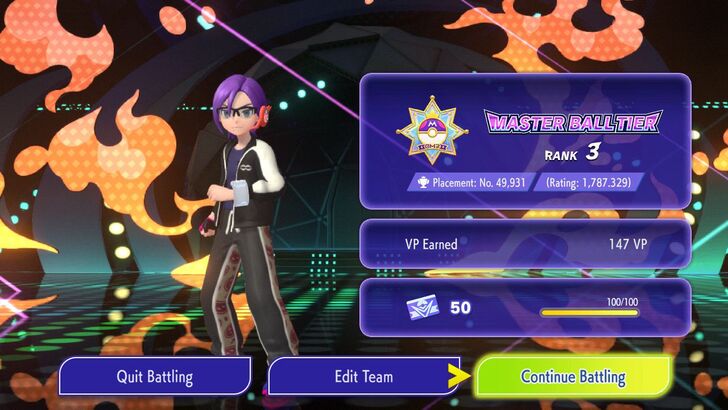
The sand team present in the screenshots of the review, with Tyranitar, Excadrill, and Aerodactyl, was one I built, trained, and optimized primarily with the in-game currency I had collected over time. I’ve never spent a cent on Champions, but I was able to build a viable, balanced team with creative meta oddballs like Armarouge that took me all the way to Master Ball Rank 3 during the height of Regulation M-A. It doesn’t hurt that some of the Pokemon in the team, like Tyranitar and Primarina, are both powerful threats in their own right while also being personal favorites. Given the random nature of the game, though, I can’t guarantee that everyone can be so lucky.
There’s Nothing Like Competitive Pokemon
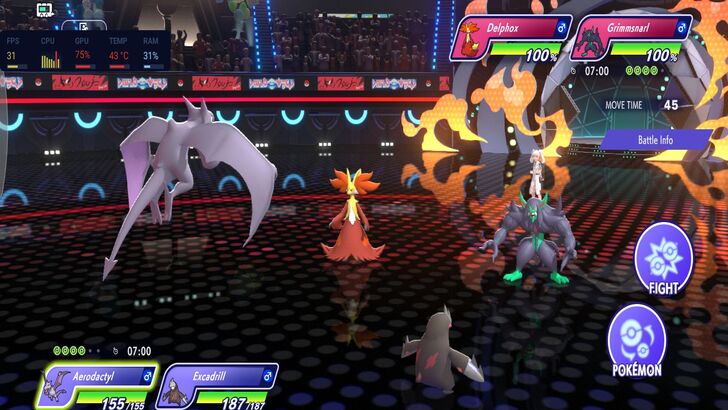
Gameplay-wise, Pokemon Champions is near-perfect on a mobile phone. Losing the accurate, tactile feeling of button presses doesn’t harm the experience at all, as Pokemon’s menu-based gameplay loop feels right at home on a touch screen. Selecting moves with finger taps is responsive, while the core multiplayer experience is present in all its complex, mind-meltingly math-intensive glory.
Referring back to Champions’ strides towards competitive accessibility, it is worth noting that while some elements of the game can become timesinks, its quality-of-life changes ultimately decimate the most daunting part of the experience: Pokemon Training. Now, instead of the endless grind of building a competitive team, building movesets, stat spreads, and even choosing natures are all easier than ever and explained well by Champions’ extensive tutorials.
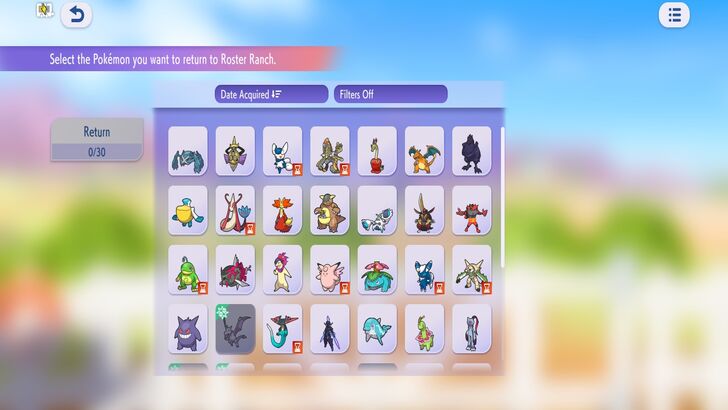
That being said, I do have minor gripes that reflect less on Champions as a product and more on my personal preferences as a sweaty-casual Pokemon player. I can imagine, for instance, that playing the game on a phone might not render crucial information nearly as clearly as a large screen TV for the Switch 2 or even Switch 1 version. I also have some minor gripes with the new changes, most notably the equalization of IVs and the strange balancing of moves and absurd abilities they’re giving the new Mega Pokemon. If all of that sounded like gibberish to you, though, then it won’t be a problem…yet.
Competitive Pokemon itself, unfortunately, is an acquired taste. Players who love the mainline games for their worlds, stories, and Pokemon designs might look at the battling and think "who cares?" and honestly, I can’t blame them. It is, ultimately, the beauty of this franchise that everyone has something they connect to, everyone has a special connection to Pokemon that's uniquely theirs. This game might not change their minds, and that's perfectly okay, but I’d argue that the changes it implements make it worthy of a try anyway.
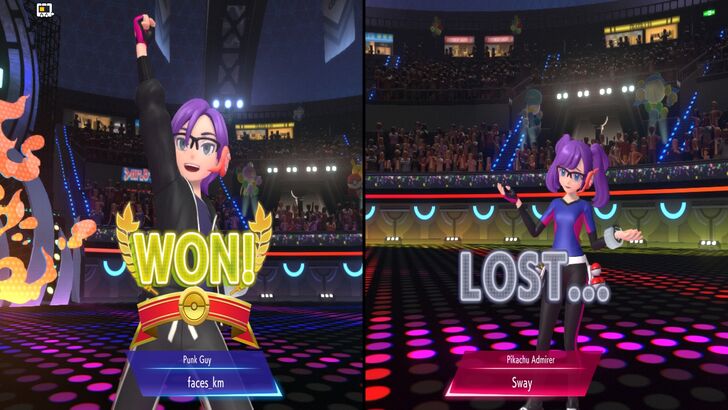
The power fantasy of Pokemon, to me, was always the fact that you’re the person in control of your fate, and if these fantastical, powerful creatures would not only obey you but form real, loving bonds with you, then you’re basically unstoppable. Competitive Pokemon takes this fantasy and turns it sideways, supplanting that feeling of being unstoppable with the notion that your skills, preparation, and understanding of both the creatures and the players are what make you truly and utterly victorious. That endlessly addictive sense of control feels deeply earned as you beat an equally skilled trainer through cold, calculated precision, unrelenting aggression, or even dumb luck, and that only amplified my love for the series. Playing VGC, in my opinion, feels the closest anyone can get to becoming an actual Pokemon Master.
Personally, I’m someone so bad at math that I thought a legal career was a foolproof way to escape it. Despite this, my deep love of Pokemon and a lifetime of being a hypercompetitive perfectionist made me brave Pokemon VGC's probability-heavy, statistically complex world, and it remains one of my favorite gaming experiences ever. The fact that it connects me to a wonderful community - and even helped me admit I was getting better at math - is just a bonus. Having Pokemon Champions on something as accessible as a mobile phone, then, is a stroke of genius and a massive victory that lets just about anyone discover Pokemon’s hidden magic.
Is Pokémon Champions Worth It?
Answer The Call, It's Time to Be A Champion
As a free to play title, Pokemon Champions offers a singular, highly concentrated experience that it excels at, while not even attempting to increase that scope elsewhere. The core gameplay’s increasingly in-depth and complex systems won’t sway players who want a more casual or even diverse adventure. Furthermore, impatient players who don’t have the stomach for monetization practices might find Champions’ emphasis on in-game currency a little frustrating. For the players who want more from Pokemon, though, especially those that want to play around with a beloved series’ core mechanics and teambuilding, there simply isn’t anything better as far as official, mobile releases go.

Recommended Guides
 Best Pokemon Tier List
 Doubles Tier List
 Mega Tier List
 Best Items Tier List
 Pokemon HOME Transfer Guide
 Best Starter Pokemon to Choose First
 Reroll Guide: Best Pokemon to Reroll
 List of Changes from Previous Games
 Ranked Battles Guide
 List of All Mega Stones
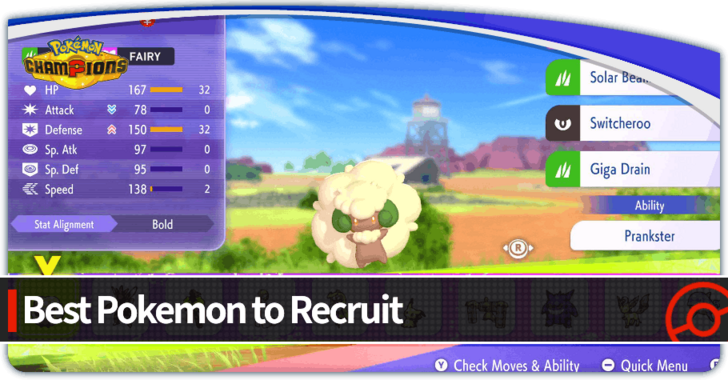 Best Pokemon to Recruit
 List of Pokemon Titles
 List of All Achievements
 Usage Stats and Battle Data
 Best Utility Moves
 Next Season and Regulation Release Date
Game8 Reviews