




Overview
What is Piggy: Intercity?
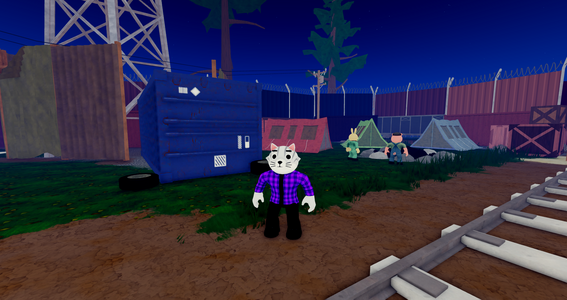
Piggy: Intercity is an open-world survival horror game where players must navigate through the outbreak of The Infected on the continent Evalia. This is the third game in the Piggy franchise, and marks a pivot away from classic corridor-style horror into a full open world RPG, with base-building and exploration as a key part of the gameplay. Along the way, certain factions and crucial decisions will force players into picking sides and affecting the fate of the world.
Piggy: Intercity features:
⚫︎ A full open world to explore
⚫︎ Survival horror gameplay
⚫︎ Base building and resource management
⚫︎ A complicated group of factions
⚫︎ Post-apocalyptic settings
⚫︎ Complex morality system
⚫︎ Multiple questlines and a branching storyline
Piggy: Intercity Review | An Ambitious Apocalypse
Opening a World Up to Infection
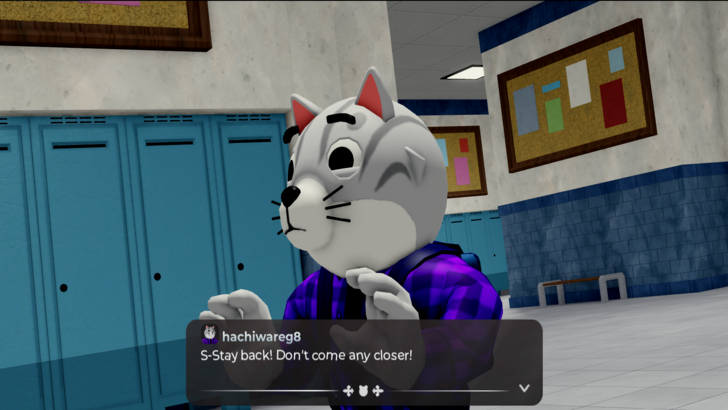
There’s nothing fans fear more for a long-running gaming franchise, regardless of popularity or scope, than the idea of turning open world. The boundless nature of an open world setting requires some justification, whether mechanically or narratively, since it risks destroying the pace of the game as well as betraying what made the series beloved in the first place. Despite all odds, though, including its difficult and delayed development cycle, Piggy: Intercity at least accomplishes that transition wonderfully.
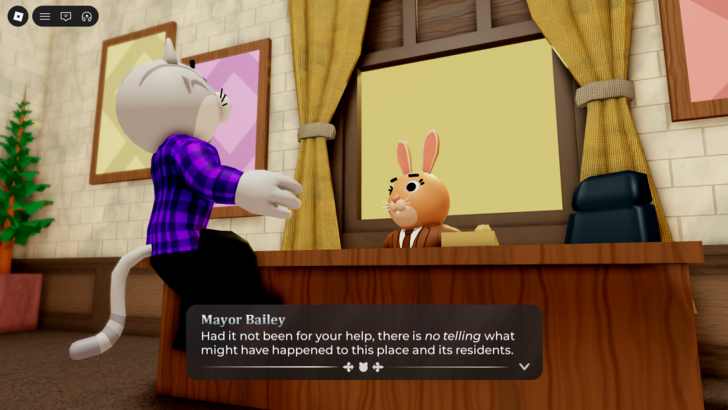
Piggy: Intercity marks a distinct, brave shift for the series, going from the confined corridors and claustrophobic horror of its predecessors to being an open-world, decision-driven RPG adventure. You’ll have to brave Evalia as it becomes overrun by The Infected by building settlements to keep communities safe, while also fighting these threats off as they attack and harm you. Along the way, players must make crucial decisions and side with diametrically opposed political factions that will eventually change the fate of the world.
What Piggy: Intercity does to ultimately justify its transition into the open world is match its massive new scope with equally grand ways to impact how that world is shaped. Dialogue choices, morality systems, specific questlines, and faction alignment all shape how the narrative plays out, while settlement building literally lets players make their own mark on the world.
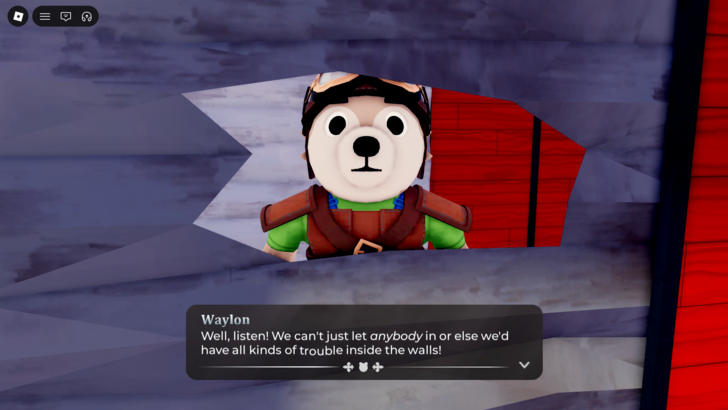
It’s a coherent vision, taken from a formula and from predecessors that have made it work, and the ambition on display results in a mostly enjoyable package with some notable flaws. In particular, the transition hurts the game’s horror atmosphere with unthreatening enemies, predictable jumpscares, and bland combat greatly reducing overall tension. Nonetheless, Piggy: Intercity works well as an expansion of the series, both mechanically and narratively.
Fans of the series are bound to enjoy finding the game’s multiple branching narrative points to dissect as much lore as possible. Meanwhile, players who want an introduction to the Fallout-style open-world apocalypse might find a more accessible, but still relatively in-depth and morally contingent experience here. Elsewhere, however, it's an acquired taste, and its many flaws leave the game quite one-sided in favor of its RPG mechanics.
Evalia, A Furry Apocalypse
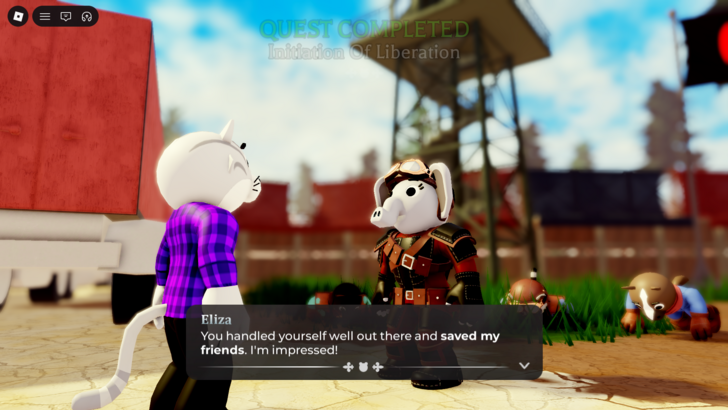
Perhaps one of Piggy: Intercity’s strongest additions to the series is its navigation of post-apocalyptic societies and the politics that form around them. It's a classic exploration of how people form and build communities from disaster, and weaving in mature themes like generational trauma and forced maturity makes it an interesting experience that elevates the overarching Piggy lore.
While Intercity's grand ambitions lend this narrative a lot of compelling moments, its execution can also fall flat in crucial areas, namely in its depth, brisk length (only being an hour long for the main campaign), and in having players feel the reclamation of agency from unending chaos.
The campaign’s length is, in my opinion, the hardest aspect to excuse, as the game could’ve easily expanded its completion time and weaved in the massive postgame more intelligently so it could deliver upon the ideological tensions it heavily emphasized throughout the game.
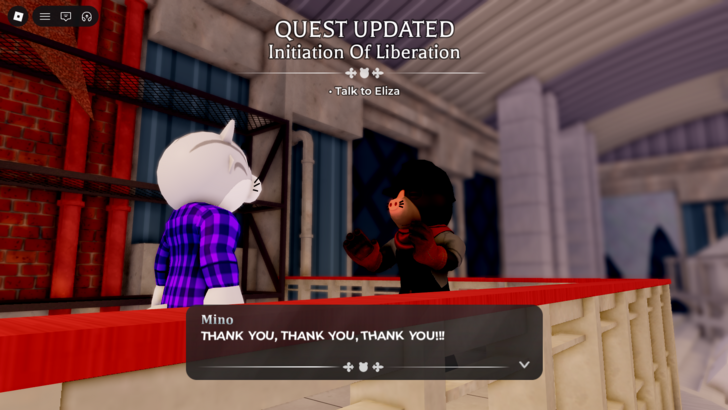
On its own, Piggy: Intercity’s story and worldbuilding serves as a solid exploration of all of the themes it wants to convey. Your player character is directly connected to the political tensions throughout the game, which serve as the catalyst for the bulk of your quests throughout the game. In particular, having the player character be related to the leader of the rebellious "Liberator" faction gives them a deeper connection to the story, and its utilized well as they explore the different sides of this torn world.
With this context in mind, the factions of Piggy: Intercity become some of the more interesting and contentious aspects of worldbuilding. It’s an exercise in extremes, frankly, as they’re somehow the most fascinating part of the story but also aren’t utilized or outlined in a compelling way.
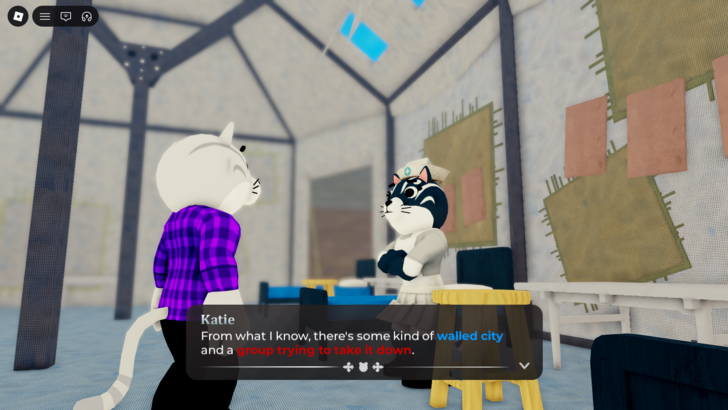
There’s the aforementioned "Liberators," who are a rebellious group dedicated to protecting the marginalized, the "Capitol," a strictly authoritarian government that has an iron grip on the walled city of Citadela and the "Valkyrie," the Capitol’s enforcers. Conceptually, this is a really fascinating dichotomy and, to the game’s credit, the game uses it to great dramatic effect a lot of the time.
However, the game doesn’t really give these factions the nuance or the distinction that makes choosing between them as difficult as the game thinks it could be. The Capitol feels cartoonishly evil in its blatantly tyrannical control of the city, while the Liberators are unequivocally good in their magnanimous goals of protecting those in the wayside. You’re essentially expected to navigate nuance in a world where it doesn’t exist, which feels like such a missed opportunity.
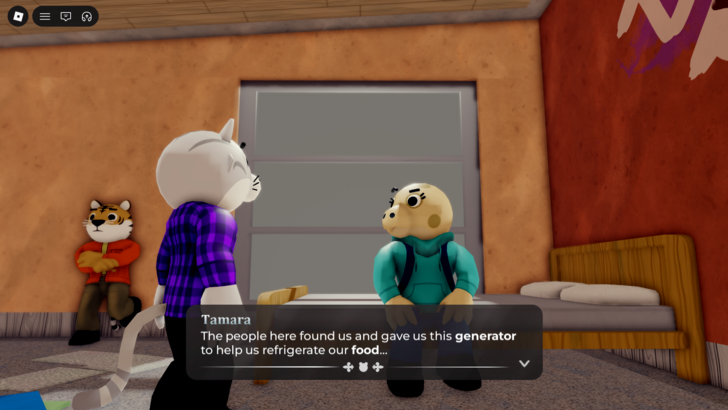
A good example of this is in one of the introductory quests, where I had to take back a generator from a group of settlers in a rundown home, and instead of taking it back for the Liberators, I let them have it to keep them with power and heat during the night. Yes, this lets me carve my own specific niche within the world, but I find it unsatisfying that the responsibility of navigating this morality is always on you and not the massive factions you’re supposed to have influence over.
This all comes to a head in Piggy: Intercity’s finale which, while satisfying as a “good-beats-evil” conclusion, hurts from the lack of nuance in the game’s worldbuilding. I was deeply disappointed that the finale, at least in my playthrough, seemed to forego the greater systemic injustice of the world for a more localized conclusion where the player only helps to overthrow a symptom of the overall rot.
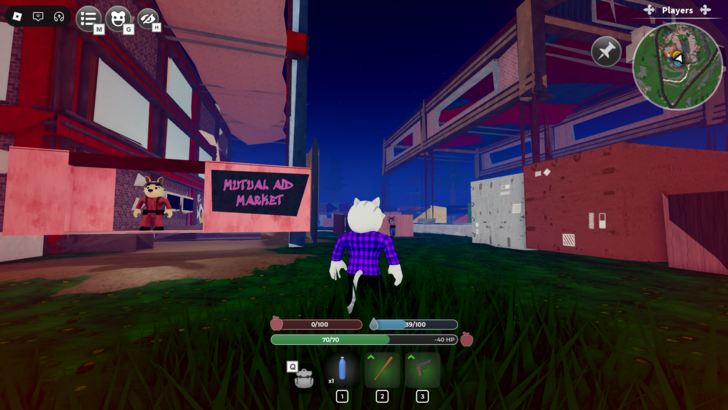
It reminded me a lot of Fallout 4 (a comparison that’ll come up more than once in this review) the most, with its politically complicated world born out of chaos and biological horrors. However, Intercity’s story and its lack of a grand ending influenced by the minutiae of the world and your choices felt more like Stephen King’s The Stand, a similarly excellent story in its own right, but one that also falls flat at the finish line.
Like the aforementioned post-apocalyptic opus, Piggy: Intercity has a similar potential for a more interesting exploration of ideological friction, but instead chooses to simplify that nuance into a localized “good vs. evil” ending that leaves you wanting more.
All Your Base Are Belong to Us
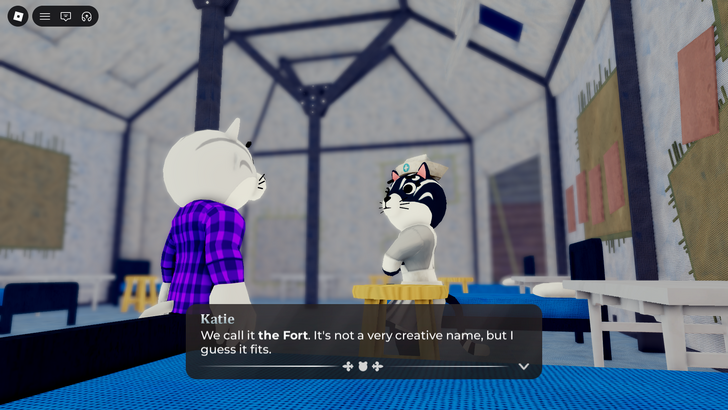
The main gameplay loop in Piggy: Intercity, which incentivizes exploration and leads the way to combat and quests, is the settlement building and base management. Players choose vacant plots of land throughout the world to build their base on and subsequently build shelter, crafting workshops, dedicated storage depots for food and water, and even decorative furniture, all while securing the area with walls and boundaries.
If the narrative’s many shifting choices and emphasis on freedom is how Intercity expands the Piggy franchise in terms of thematic depth, this is the core of how Piggy expands itself through its gameplay. Even as someone who isn’t really keen on settlement building (I ignored this part of Fallout 4, for example), I found this to be a compelling way to get players to be creative with their layouts while also making questlines and exploration all the more important.
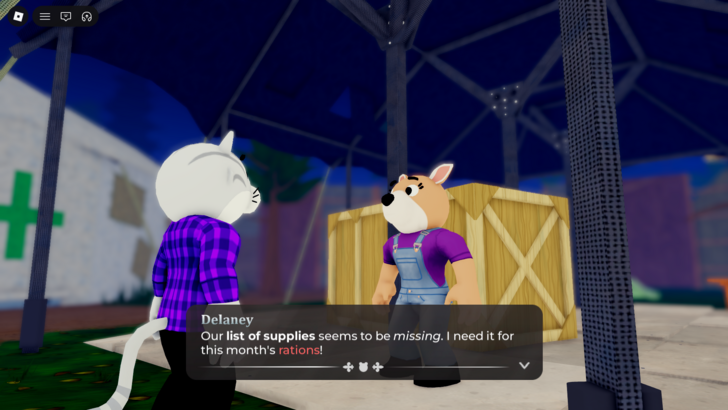
For instance, certain questlines which are helpful in unlocking more options for your base have led to some charming interactions with certain NPCs, while also leading to interesting parts of the world. A good example is the "In Short Supply" quest, where the fun dynamic between Gene and Delaney, two survivors who task you with retrieving a supply list, not only rewarded you well but also served as a fun moment of levity.
Furthermore, base-building rewards exploration since players need to gather raw materials to craft crucial items for the community, which you do end up learning to care about and allocate properly through different jobs you can give your denizens. This is where the base-building falters, though, as the loop of doing this is mostly repetitive and hampered by Intercity’s lackluster traversal and combat.
Passable Tension Infected By Poor Combat
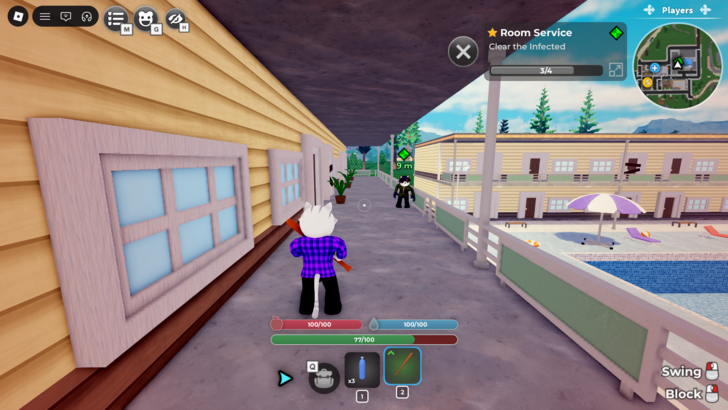
Despite not being a closed, claustrophobic experience like its predecessor, Piggy: Intercity at least attempts to maintain that same tense, foreboding atmosphere in the main world. To its credit, some aspects of the game succeed at this. At its core, though, several critical missteps make the game a lot less scary or even intense than it wants to be.
The inventory system and stamina management is a genuinely fun way to force players to be more mindful of their actions and resources. Meanwhile base-building and subsequent Infected attacks only grow your attachment to your base, while also forcing players to focus on a specific threat and juggle multiple variables at once, such as important resources, weapons, and structures.
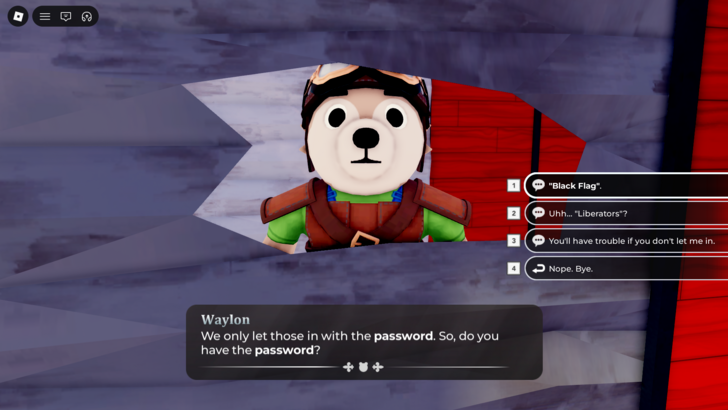
Where the game falters in this regard, though, is the exploration and combat. Combat is a lot simpler to dissect in its failings, as there’s practically no variety or depth to it at all. My time spent playing this game, at least in its main campaign and subsequent combat scenarios, has been walking towards enemies, mashing left click on them with a melee weapon or a gun that hits like a wet pool noodle, then walking towards the next.
Melee movesets have no variety, guns mostly use classic video game gun tropes (pistols hit weak, shotguns are strong up close, RPGs explode), and at a certain point it becomes tedious. I don’t expect this game to have the mechanical complexity of an action-game, or the brutal spectacle of an action-horror game. I do, however, wish that the depth and expansiveness that Intercity brings to Piggy also applied to its combat mechanics. It would’ve been an easy way to inject some much needed tension into the world, while also making the game actively more fun and engaging.
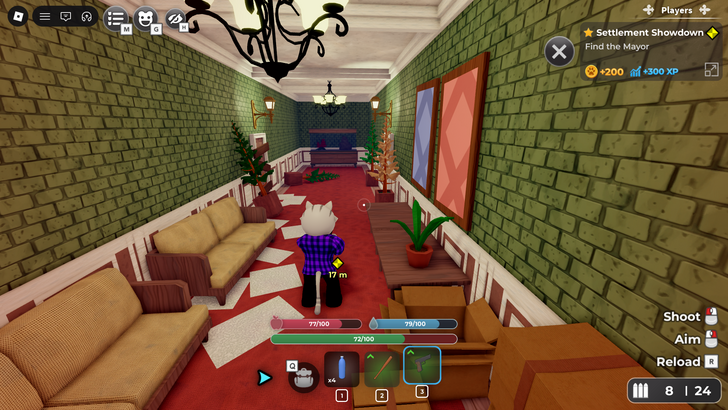
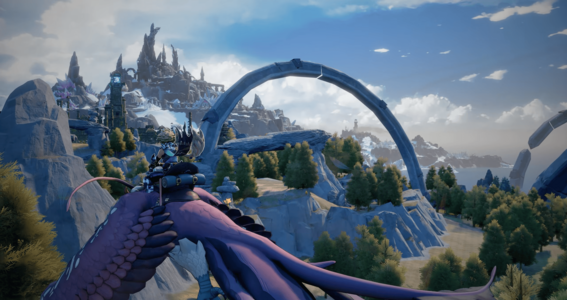
Traversal, meanwhile, is less of a missed opportunity and more of a boring trek throughout indistinct environments. While there are vehicles present in the game, they’re such a rare commodity and require such a rare resource that it’s better to save them for emergencies and just spend your time on foot. Even then, the fast travel system makes that redundant if you’re travelling back to a common area like your base or one of the many safe zones.
That being said, it’s completely understandable that it would feel like a boring, vast trek. Given the post apocalyptic setting, it only makes sense that vehicles are a specialized resource. This doesn’t excuse the fact that walking through post-apocalyptic Evalia feels like a slog just to get to the next objective, and some variety in movement or even in the actual world would go a long way in helping to minimize the tedium.
Is Piggy: Intercity Worth It?
A Decent First Step Into Action RPGs
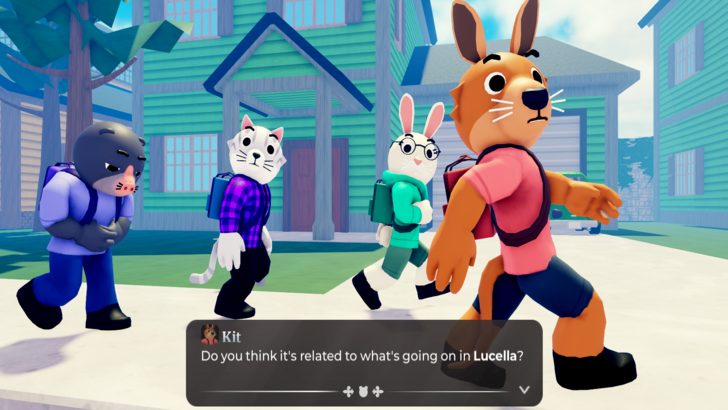
Piggy: Intercity is definitely an ambitious take on a horror franchise that, until recently, seemed trapped in the same corridors that defined it. It's a game that tries to expand upon the fascinating lore of its predecessors in every direction, and while there are some critical missteps it's generally a good, fun time that achieves this. Those flaws are critical for a reason though, as it's entirely likely that players who enjoy more action-oriented gameplay might find this game too shallow for their liking. Given its emphasis on narrative and gameplay freedom, vast open world, and incentive for multiple playthroughs, though, this is a solid and uncomplicated introduction to choice-driven, open world RPGs that rewards players for investing their time into fortifying their bases and saving Evalia from a doomed fate.
Game8 Reviews




















Ples guys I want a map and see all the red chest in game + quizes help guide