


| Orbitals | |||
|---|---|---|---|
| Release Date | Gameplay & Story | Pre-Order & DLC | Review |
Orbitals is an intergalactic co-op adventure that takes inspiration from ‘90s retro anime. Read our review to see what it did well, what it didn't do well, and if it's worth buying.
Overview
What is Orbitals?
Orbitals is an intergalactic co-op adventure that blends 1990s retro anime aesthetics with modern 3D gameplay. Developed by the Tokyo-based studio Shapefarm and published by Kepler Interactive, the game follows the journey of Maki and Omura, two inexperienced but determined explorers on a mission to save their crumbling space station from a supernatural cosmic storm.
The experience is built from the ground up for two-player cooperation, requiring players to coordinate closely to pilot spaceships through asteroid fields, solve environmental puzzles, and navigate uncharted sectors of the galaxy.
Orbitals features:
⚫︎ Co-Op Only Gameplay
⚫︎ Retro 1980s/90s Anime Aesthetics
⚫︎ Accessible Through Friend Pass
⚫︎ Co-Op Ship Piloting
⚫︎ Varied Environment and Gadgets
| Digital Storefronts | |||||
|---|---|---|---|---|---|
 eShop eShop |
|||||
| $39.99 |
Orbitals Review: It Has More Ideas Than Hours to Explore Them
Grab Your Friends, Grab Your Loved Ones!
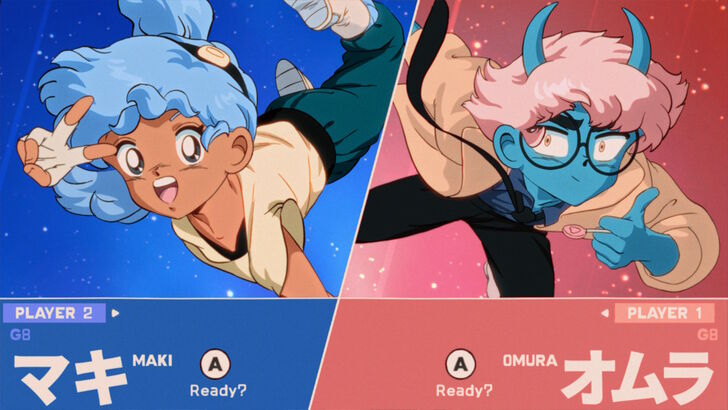
As soon as Orbitals started, I knew my friend and I were in for a good time. It’s a co-op puzzle adventure in the same vein as Split Fiction and It Takes Two, with two players blasting off to space to solve puzzles and explore the remains of an old space colony. Our jaws dropped at how good everything looked, down to the cel-shaded capybaras that roam around outer space for some reason. We spent most of our time figuring things out together and laughing whenever one of us inevitably messed something up.
That’s probably what I’ll remember most about Orbitals: How easy it was for my friend and me to have fun with it. There was always something to poke at or figure out, and even the times when we got completely stuck became part of the fun. I just wish we had more time with it.
Orbitals, unfortunately, is a very short adventure. This, however, doesn’t diminish the fact that it is a fun game to play with a friend or even a loved one.
The Universe Is Better When It Leaves Things Unexplained
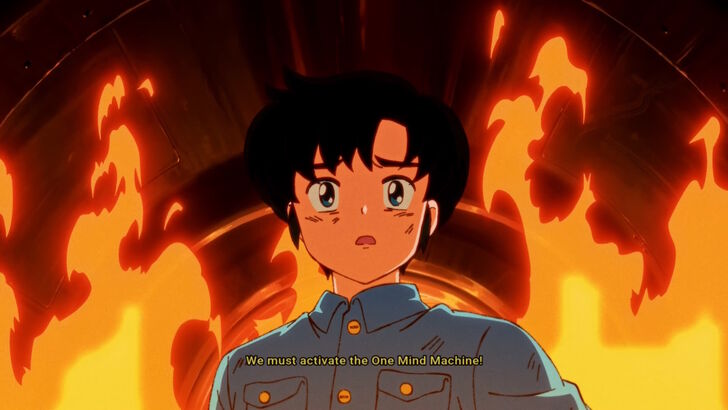
Fifteen years before Orbitals begins, a catastrophic storm tears through Maki and Omura's colony. As the adults scramble to save them, the two are placed inside the One Mind, or I.M. Their consciousnesses are preserved and used to print new bodies à la Mickey 17. Except, well, their new bodies just sort of poof into existence afterward.
Fifteen years later, Maki and Omura have grown up in the aging settlement that remains, and another storm is threatening their home. Togen sends the two out to find three Cassettes that could help keep the colony alive.
And that’s basically the story for most of Orbitals. The two travel from one corner of space to another in search of parts they need while learning more about the universe they live in. The One Mind Machine and the circumstances surrounding Maki and Omura eventually become much more important, especially toward the end. That’s when Orbitals starts asking questions about identity, survival, and what it means to remain yourself. I liked where the story went, all in all.
What I didn’t like, though, was that it didn’t give itself more time to get there.
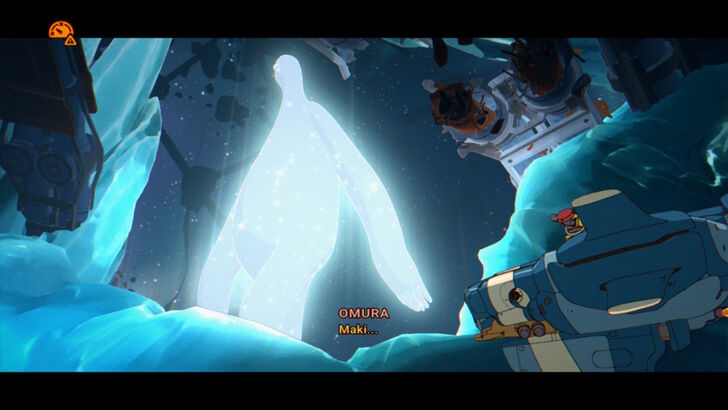
I think it’s a good thing that Orbitals leaves much of its universe unexplained. You’ll come across strange yet retro technology that looks like it belongs in an old anime, along with alien creatures that seem to exist simply because they can. The game doesn’t stop to give you a lesson every time something big shows up. It makes the universe more interesting that way.
Maki and Omura don’t know what half of this stuff is either, so my friend and I got to discover it with them. It reminded me of watching a Ghibli film and seeing some strange little creature wandering around in the background without anyone explaining what it is. You just accept that it lives here. Orbitals has that same sense of curiosity about its world.
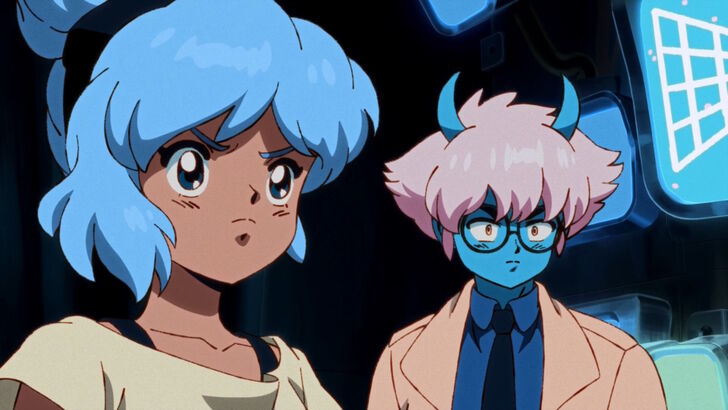
The duo is a big reason this works. The two have known each other for most of their lives, and you can feel that in the way they interact. Maki is more impulsive while Omura is more level-headed, so their conversations have a nice rhythm to them. They feel comfortable around each other in a way that made their friendship easy to buy into.
Some parts of their ship can be interacted with between missions, too, and these little moments gave me a better sense of who they are when they aren’t busy trying to scavenge ship wrecks. They make Maki and Omura feel like people who exist outside the plot.
I wanted more of that from the rest of the cast. Togen is important to Maki and Omura from the very beginning. Aside from him saving their lives, the duo looks up to him as an authority figure to be respected. Kinakoko has a similar importance in their lives, especially for Maki. Jaga and his child give you a glimpse of the people living outside the colony. I liked seeing these characters whenever they showed up, but I kept wishing Orbitals would slow down and let me spend more time with them. The colony itself feels like it should matter to the story. Maki and Omura are risking their lives to save these people, so I wanted to know more about the people they were actually saving beyond perhaps tiny interactions.
The Story Gets Interesting a Little Too Late

We finished the story in about 10 hours, and that was with us messing around and getting stuck on puzzles for way longer than we should have. The time flew by because we were having such a good time playing together. By the time we reached the end, I was surprised that we were already there.
That may be because of how quickly the story wraps everything up. Orbitals starts asking some pretty big ideas near the end, but we don’t get much time to sit with them before the finale starts. I liked what the game was trying to say. It has some interesting moral questions at its center. I just wish it had given those ideas more setup.
We still felt something when we got there, though. My friend and I had spent the whole game with the duo, so their story mattered to us. We just wanted more from it. Give these ideas more buildup. Let me understand these characters a little better. Give me a reason to sit with the choices they’re making. I think Orbitals could have had us bawling if they've done these.
The Whole Game Looks and Sounds Like an Old Anime
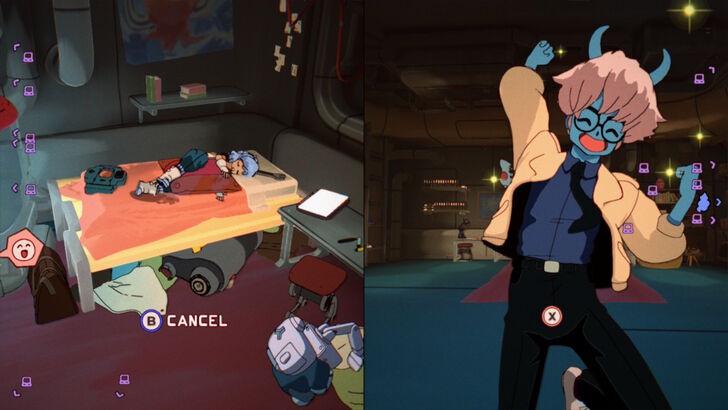
Fortunately, for how short it is, Orbitals looks glorious. It has such a distinct look that it’s easy to forget that it’s a game sometimes. The visual style is probably the first thing that sells that idea. The animation has a slightly choppy rhythm that suits the hand-drawn look, and the backgrounds have that painted quality you’d expect from an older sci-fi production. Even the 3D sections have enough of that same visual language that the game rarely breaks its own illusion. It’s a very particular kind of sci-fi, too. The machinery looks old and chunky. The spaceships are humongous. Everything has a little bit of that cassette-futurism weirdness that makes Orbitals so easy to recognize.
A lot of that comes down to how the characters move. Maki and Omura are incredibly expressive, and their faces can get downright goofy during some of their interactions. I liked that. Their personalities come through in the animation as much as they do in the writing, and the same attention carries over to the creatures you encounter. Some of them are wonderfully strange little things. You can tell a lot of thought went into making the world look specific to this game and nothing else.
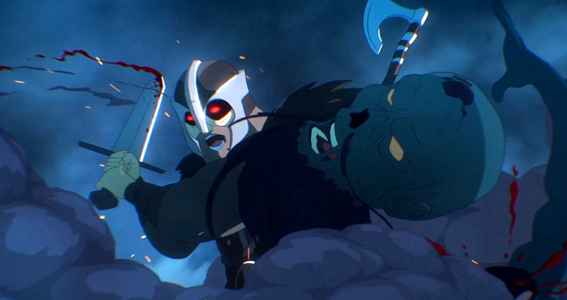
The animated cutscenes are probably the best example of that attention to detail. Studio Massket handled the animation, and I really liked how much these scenes commit to being actual anime sequences. The animation gets more elaborate when the scene calls for it, and the camera can pull back for these big shots that would be hard to pull off during gameplay. Some of the sequences almost feel like they were taken out of an episode of a space anime like Macross or Gundam and dropped into the game.
The music might be even more specific. The opening theme sounds like it was made for an old space anime, and Mami Ayukawa’s vocals sell that. She even sang for Mobile Suit Zeta Gundam, which makes her presence here feel almost too perfect.
The soundtrack keeps that same energy once the game gets going. Plenty of the tracks have that city pop sound, too. Some songs have that big adventurous quality you’d expect from a space opera, while others settle into something a little more subdued when the game needs it.
Gadgets Make for Some Creative Puzzles
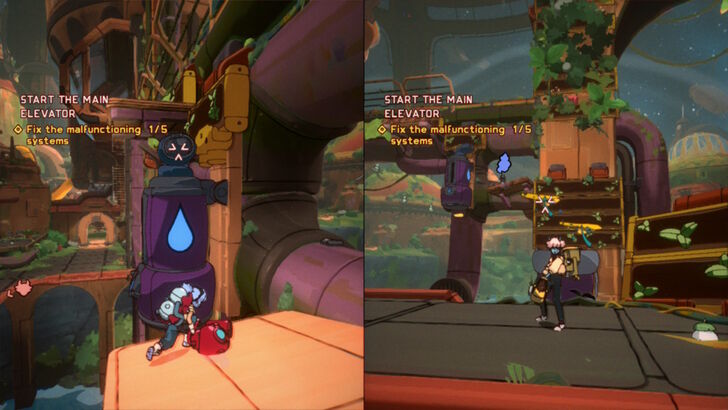
Like other co-op puzzle adventures before it, Orbitals is made for two players, so a lot of the fun comes from working together (or not at all) to figure out, say, how to go from one platform to the next. Maki and Omura can use any of the gadgets needed to progress levels, and most, if not all, puzzles ask you to use them together in some way. One player might need to pull something across a gap with the Scrap Hook while the other uses the Liquid Launcher to interact with it. Sometimes the solution is obvious. Other times, my friend and I would stare at each other for a hot minute before one of us finally went, "Wait, what if we…?" Those moments, I adore.
The game does a good job teaching you what each gadget can do without making you memorize a bunch of complicated systems. The Scrap Hook can grab objects from a distance, the Liquid Launcher can interact with certain parts of the environment, and other tools introduce their own little rules. Once you understand them, Orbitals starts finding new ways to combine them. One of my favorite examples comes late in the game, when you use the Scrap Hook to grab plants and throw them into flower beds. Your partner can then use the Liquid Launcher to grow them into platforms. It is a clever use of two mechanics that you already understand, and I remember thinking that I wanted to see what else the game could do with the idea.
That is where I think Orbitals leaves some potential on the table. It keeps coming up with creative ways to use the gadgets, but it often abandons those ideas almost as soon as it introduces them. The aforementioned mechanic only appears in that one area. I noticed the same thing with several of its other mechanics, which is a shame, as Orbitals has plenty of good puzzle ideas.
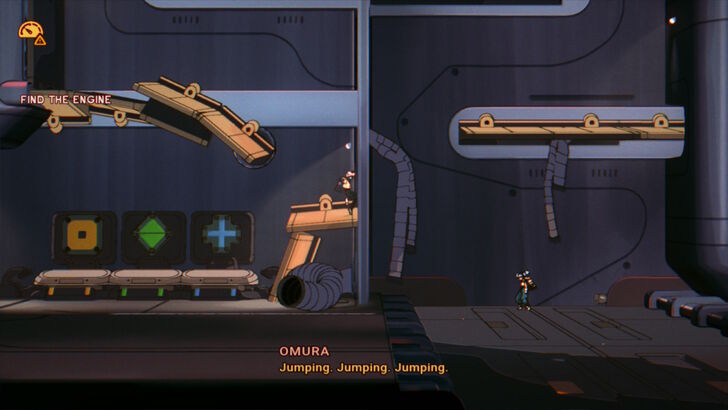
The platforming follows the same general philosophy. Maki and Omura move intuitively, and jumping around the environment becomes part of some of the puzzles. It never asks you to perform anything particularly demanding. Compared to something like Split Fiction, which has sections that can test your timing and coordination, Orbitals keeps its platforming pretty simple.
The same is true to therest of the game, especially its checkpoints. Orbitals is very generous about letting you try things again, and I appreciate that. I've always had a soft spot for co-op games that let people of different skill levels sit down together and actually finish the thing. You don't need to be particularly good at platforming. You don't need to know how to optimize every gadget. If you mess something up, you can usually try again without losing much progress.
Someone who plays games regularly might find Orbitals too easy, especially if they enjoy pushing themselves against harder challenges. That doesn't really bother me. The whole point of playing something like this with another person is to have a good time.
Once The Game’s Done, There’s Not Much Left
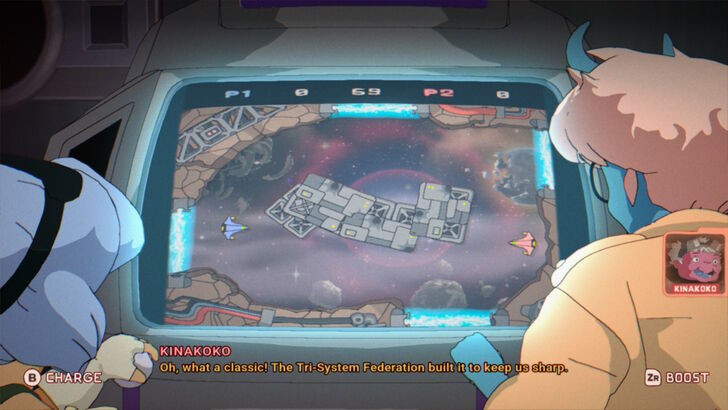
I, however, am of the opinion that the game has little to it after finishing the story. Sure, there is Training and Recreation, which adds plenty of short minigames in your ship. There’s whack-a-mole, laser tag, and even a mini-rhythm game. I had fun with them the first couple of times, especially since they're easy to pick up when you only want to play for a few minutes. After that, though, I didn't find much reason to return to them. They're nice little extras that work in short bursts, but I wouldn't call them substantial additions to the game.
The campaign itself didn't offer much reason to replay it either. My friend and I never found a level that we wanted to revisit after finishing the game. That isn't to say we didn't enjoy them. We did. The problem is that, aside from the narrative, most of our enjoyment came from experiencing each level for the first time and figuring out its puzzles as we went along. Once we knew how everything worked, the levels didn't have quite enough going on for another run.
That's where I noticed the difference with Split Fiction. My little brother and I went back to certain sections of that game simply because we wanted to experience them again. I could maybe see my friend and I doing the same with two or three levels in Orbitals someday, but that's about it. We never had that same urge to go back to a particular section as soon as we finished it.
Is Orbitals Worth It?
Yes, But Know What You’re Getting Into

Yes, I think Orbitals is worth buying. You can see the sheer amount of effort that went into its visuals and audio design from the moment you start playing, and that alone makes it easy for me to recommend it to the right person. It is a lot of fun with the right company.
For the price of $40, however, I’d want you to know exactly what you’re getting into before buying it. If you want a simple co-op game to play with a partner, sibling, friend, or parent, especially someone who isn’t used to games, Orbitals is an easy recommendation. It is probably one of the better games I can think of for someone who is completely new to gaming. Just keep in mind that the campaign lasts around 10 hours, and even less if you play through it without stopping to smell the roses like we did. You can replay the campaign or revisit individual episodes if you really enjoyed your time with them. Beyond that, though, I don't think Orbitals has much reason to keep you coming back.
It's fun, but much like the classic sci-fi space operas that it emulates, it has more ideas than it knows what to do with. Maybe that's part of what makes Orbitals so endearing to me. It is a little messy, a little strange, and very much its own thing.
Orbitals FAQ
How Long to Beat Orbitals?
Orbitals takes around 6–10 hours to complete, depending on how quickly you and your co-op partner work through its puzzles and how much time you spend exploring.
Game8 Reviews