



| OPUS: Prism Peak | |||
|---|---|---|---|
| Release Date | Gameplay & Story | Pre-Order & DLC | Review |
Overview
What is OPUS: Prism Peak?
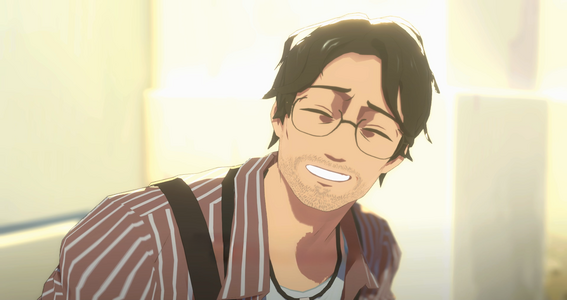
OPUS: Prism Peak is the latest entry in SIGONO’s OPUS series, a narrative-driven adventure title that follows the story of weary photojournalist Eugene as he maneuvers through a fantastical, dream-like realm. Exhausted and down on his luck as he makes his way back home to the countryside, he finds himself spirited away into a world known as the Dusklands, a mystical, mountainous region. There, he meets a young girl who has lost her memories, who later on gives herself the name Ren.
Together with Ren, the unlikely duo travel across the Dusklands in search of the Seer, who may be able to help with their problems—recover Ren’s missing memories and help Eugene find a way back to his world.
For more gameplay details, read everything we know about OPUS: Prism Peak’s gameplay and story.
OPUS: Prism Peak features:
⚫︎ A Deep, Heartfelt Tale of Love, Soul, and Self-Discovery
⚫︎ Gorgeous Visual Style
⚫︎ Photography-Based Gameplay
⚫︎ Intricate Lore
⚫︎ A Unique Lettering System
⚫︎ Elaborate Environmental Puzzles To Solve
| Digital Storefronts | |
|---|---|
 Steam Steam |
|
| Wishlist Only | |
 Switch Switch |
 Switch 2 Switch 2 |
| Coming Soon | |
OPUS: Prism Peak Review: Captured Tenfold
That One Dreamy Anime Photo Game
OPUS: Prism Peak was a game first revealed back in 2024, and I remember it mainly catching my eye for its photography gameplay (non-scary Fatal Frame, anyone?) and its dreamy, anime-style Studio Ghibli-esque vibes. I’m easily drawn in by anything remotely pretty or beautiful, and this game was definitely on my list because of it.
A couple of delays later, and it has finally launched on Steam, with a Switch port to follow a few days after. I’m fresh off the boat from a spirit-exorcising high, and I was pretty excited to finally not scream my head off for once when I lift up the virtual camera. Whimsical, good vibes.
I went into the game expecting a bright, heartfelt tale of love—I did get some of that, sure, but underneath all of that was a deep tale that hit way too close to home: an adult lost in the haze of a crumbling, rejection-filled life and finding how to put himself back together. From one heartfelt tale to another, here is OPUS: Prism Peak. Get ready with those tissues, because we’re in for a ride.
To The Peak of the Dusklands
OPUS: Prism Peak (from henceforth simply referred to as Prism Peak) is primarily set in the Dusklands, a mysterious realm inhabited by animal spirits. After a particularly bad accident on the highway as he made his way back home for his grandfather’s funeral, protagonist Eugene Chen finds himself stranded in an alternate realm, a mystical mountainous region with no clear way to go home. He encounters a young girl suffering from a bad case of amnesia, who eventually names herself Ren.
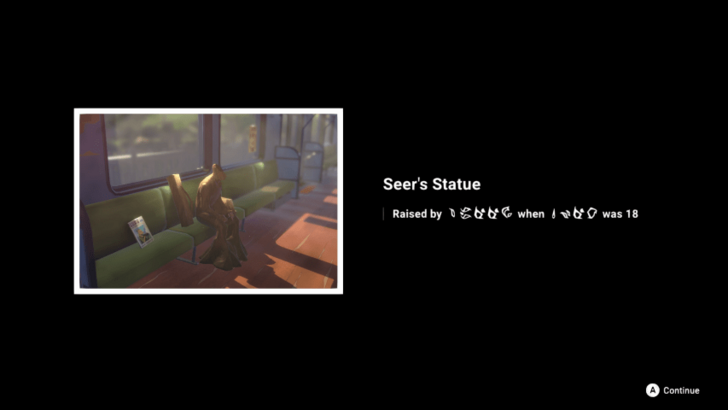
Together, they journey across the land to the peak in search of the Seer, a mysterious being who supposedly knows how to restore Ren’s memories and get Eugene back home while also being wary of a blighted phenomenon known as the Shade that’s seeking to trap them. Along the way, they meet several animal spirits who have their own histories with the enigmatic Seer.
Armed with the help of a mysteriously familiar camera, the unlikely pair discover more about the world they’re in, the spirits around them, and more about who and what they really are.
Photos For Memories and More
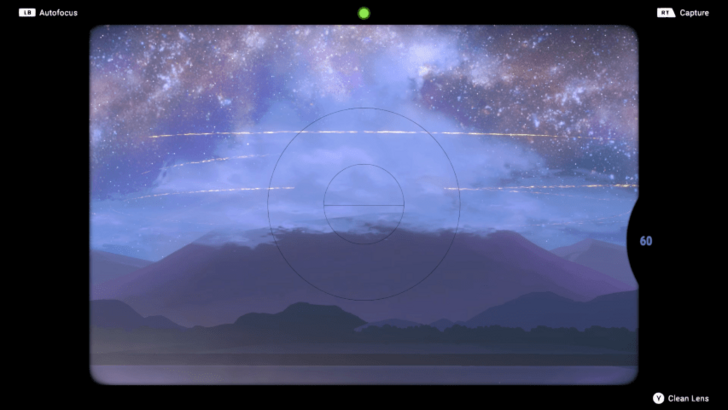
OPUS: Prism Peak’s gameplay focuses on exploration, its story revealing itself through environmental story-telling and puzzles scattered around the game. You move through different locations across the Dusklands, meeting different spirits and learning more about its strange world.
And of course, true to Eugene’s backstory as a photojournalist, most of the gameplay revolves around taking pictures with his trusty Prisma Camera. Anything and everything can be photographed—some are key to the story, others are bits of lore to further understand the Dusklands, and the rest are just for you to take pretty pictures of.
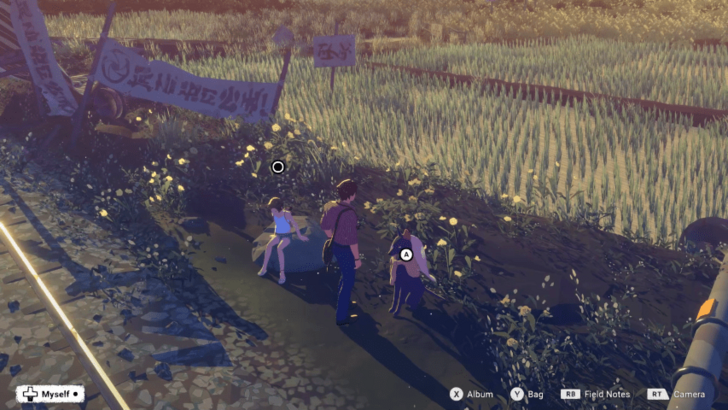
The game progresses through character interactions and puzzle-solving, with the game segmented into several chapters. A central point in progression is to successfully help out the animal spirits you meet along the way. Many of them will be slowly fading from existence, lost in their own haze and memory loss.
They will enlist the help of Eugene and his camera to recover themselves, as well as to revitalize bits and pieces of their memories through riddles, which are answered through taking pictures of the right subject and offering it up to the mystic Sacred Firebowl. In return, they offer vital clues in the duo’s search for the Seer.
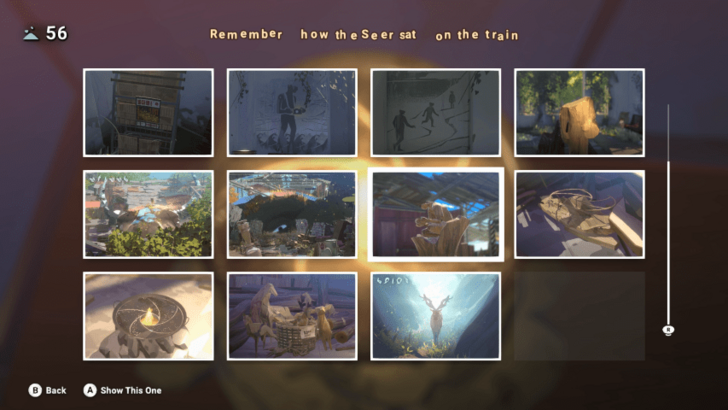
However, they’re not just there for you to interact with once and to move on with your life—you would need to be observant of the game’s surroundings to completely piece together a character’s side story and to learn more about Eugene in the process too.
Once you move to another area on Eugene and Ren’s journey, there’s no going back to previous locations, and anything you may have missed to capture with your lens is gone forever (well, until your next playthrough). It’s easy to miss a lot of the things if you’re not familiar with the game, but once you get the hang of it, it’s a piece of cake.
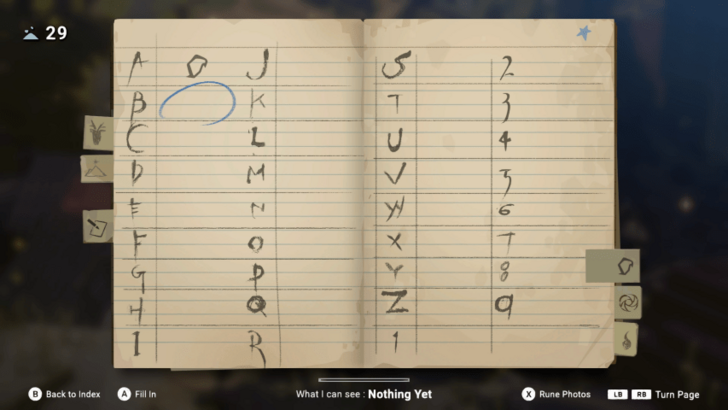
You will also have a blank notebook called the Field Notes, which are gradually filled out as you advance through the story. Completing it also requires both careful examination of the environment and thorough interactions with the spirits, slowly coming together for the truth to be revealed. It’s a big puzzle that is gradually solved as the game nears its conclusion, with its puzzle pieces scattered all across the map.
I’m a fan of ciphers and code-related puzzles, and thus one of my favorite puzzles in the game is piecing together the fire rune alphabet. However, the notebook has several things for you to solve, such as the mural story, the spirits’ backstories, and more as well.
In all honesty, it’s overwhelming in the first playthrough—so much of the unknown to deal with, mechanics and gameplay vaguely taught before you’re left to your own devices, the confusing flow of the story, and the dreaded feeling of missing an important memory. But I’d like to think that’s also how the story was supposed to be experienced. We step directly into Eugene’s shoes, as lost and disoriented as he is, and slowly make our way through the haze of clouded memories and confront the pains of the past. It’s all poetic, really.
A Deep, Heartfelt Story
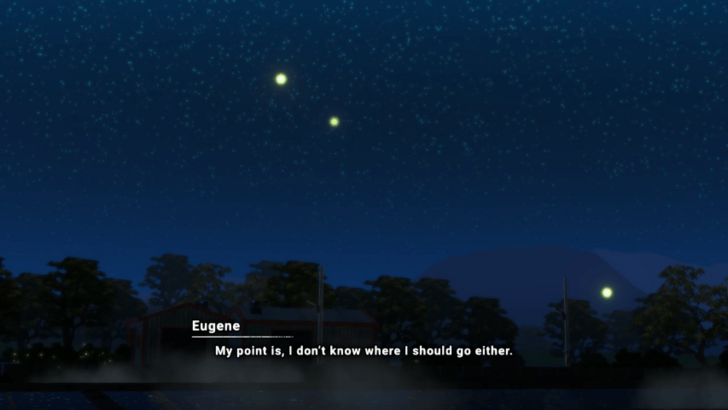
It’s nothing new to the OPUS series, a series known for its emotionally charged tales. Prism Peak continues its signature legacy of narratives that will make your eyes at least tear up. Love, loss, and self-acceptance are its chosen themes, woven together in a beautifully made and wholly relatable piece.
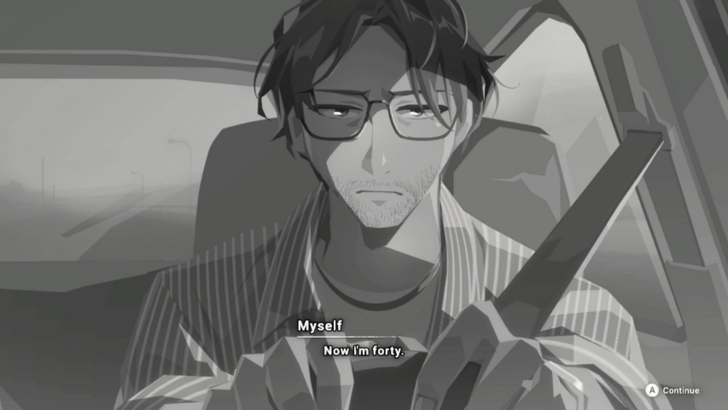
Let’s start with our protagonist, whose backstory is introduced within the first five minutes of the game. Eugene is a jaded 40-year-old man whose struggles throughout his life turned him into the despondent adult clearly at the end of his rope. Every choice, every decision was all for naught, his hopes and dreams being shattered.
He lost his dream job, his photo café business shut down, he’s divorced from his wife, and he’s pretty estranged from his dysfunctional family. His grandfather, his role model and the one who he could turn to when things got awry, is gone too. All these failures culminated in a deep self-loathing, a constant, aching reminder that anything he touches goes wrong.
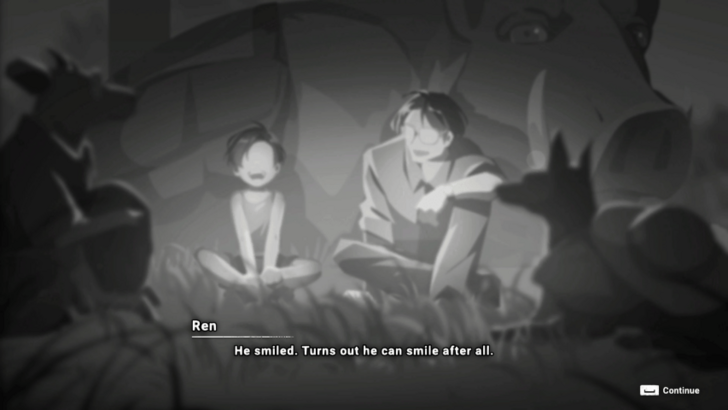
However, there appears to be a light at the end of the tunnel (quite literally too, which is pretty significant; he starts the prologue in a tunnel)—his journey through the mystical Dusklands with Ren proves to be an enlightening one. We get to see fragments of Eugene’s life, from his childhood to his present.
These snippets of his life, although not told chronologically, are appropriate to the flow of the game’s storytelling; each new location and newly met spirit sparks a new revelation within our worn-out protagonist, slowly and eventually leading to him feeling something bigger, something new. From there, we mold together his hardships and memories, recreating a better picture of what Eugene really is and his backstory beyond the weary middle-aged man.
I’m avoiding placing any huge spoilers here, not just because spoiling people without consent is an underhanded move but also because the nitty-gritty parts of its narrative are something that should be experienced with no prior knowledge. It’s better to dive right into it without expecting anything, and you’ll come to appreciate it so much more. It’s inherently relatable, especially to many players across the globe who may find themselves in the same predicament, in one way or another. They’ve definitely found their audience in me—my eyes and nose hurt from the sudden tears.
Gorgeous Audiovisuals
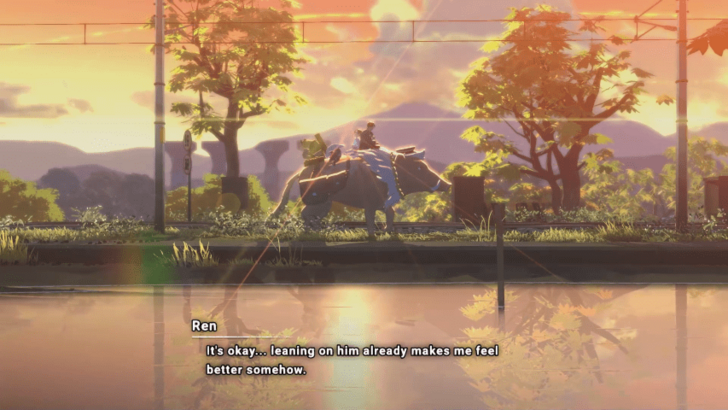
The narrative is deep and touching, and rounding it all together to really sell that immersive experience is its stunning audiovisual presentation. Emotionally, visually, and musically striking? Definitely a treat.
Firstly, the lineless visual style—no harsh lines, soft muted colors—makes everything look softer, more pleasing to the eyes, and somehow like a painting. The character models, and especially the environmental details, capture that dreamy, fantasy essence of an alternate spirit realm so well.
Every location is distinct from the others, unique in its own way. The dreary urban bleakness of the Nameless City contrasts well with the verdant lushness of Spiritwood and the mountain. New Spiritwood, which presents itself as a blend of both areas, in particular, is my favorite, with its bright pink cherry blossoms flowing in the air and the eerie charm of an abandoned but obviously previously well-lived village.
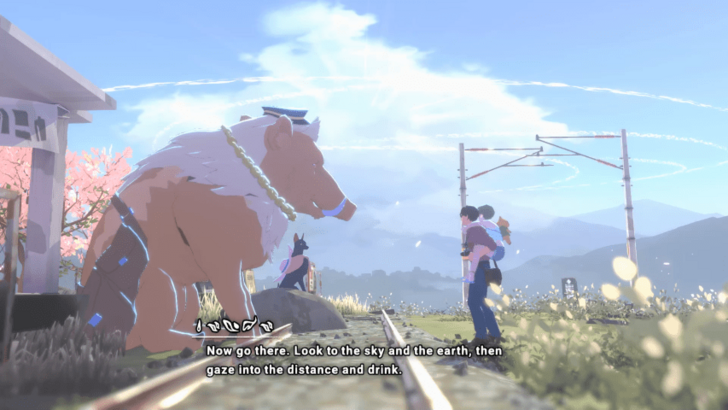
Wrapping that all up is the audio, both in the soundtrack and the fully voiced character cast. Music is calm and pretty meditative throughout, a common atmosphere the game carries throughout. There are a few more adrenaline-pumping scenes here and there, with their own exciting tracks (or terrifying, depending on how you see it).
But the star of the show is the fully featured voice acting. Perhaps because it’s a pretty small cast, each and every character, when given a voice to own, feels real, fleshed out, and shines in various ways. The emotional delivery, especially during particularly charged scenes, really nails all of that in. I can’t count how many times I had to pause or felt my chest tighten just a bit. When scenes are well-performed, even if it’s just a voice without much animation, they can be incredibly moving. Luckily, there are a lot of them here in Prism Peak, with four languages to choose from too.
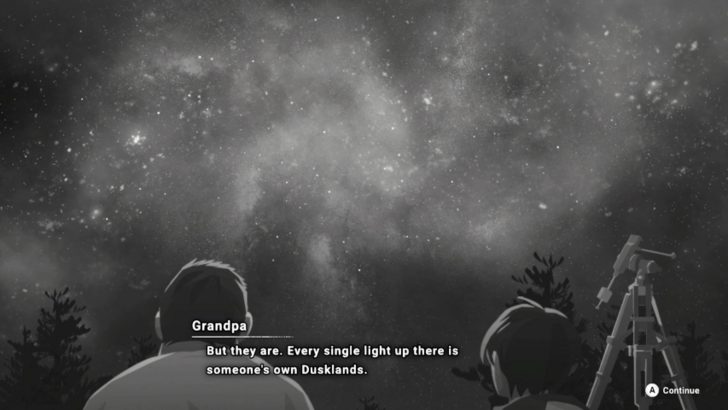
Unfortunately, despite that praise, it’s got its own weaknesses here and there, such as the presence of a few unpolished interactions and animations.
There are a few scenes, like, for instance, in one of the deeper conversations with the elderly goat spirit, where the animation was janky and quite jarring. The goat’s expressions had no transition to them whatsoever, and it felt like I was watching some odd slideshow. Its contrast was striking, especially since the scene that followed soon after was of Eugene and Ren having a heart-to-heart talk, which was much better animated.
Could Benefit From A Few QoL Improvements
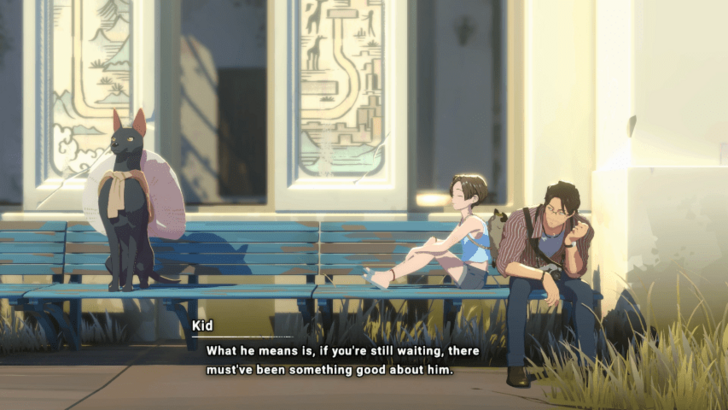
While it’s definitely a work of art, the focus on making it visually and emotionally (yes) stunning made them sacrifice a bit of the actual gameplay itself.
For starters, Eugene’s only 40 years old, but why does he move like he’s actually 80? Thematically, it fits. It’s got slow-paced storytelling as we go through the motions of Eugene’s twist-filled life—I get it. But when there are a number of gameplay sections, especially later on, that require you to move to and fro like fetch quests in RPGs…it becomes a bit of a chore. Just a bit, but a chore nonetheless. He doesn’t have the option to sprint either.
These restrictions on movement also affect camera mode. Bringing the camera up makes you stay rooted to the spot you’re on, and to adjust the frame, you’d need to lower the camera, move to the desired spot, then bring the camera up again. It’s a tedious process to go through if you just wanted to inch a little bit to the left to capture that large mural on the wall. It’s a function easily mappable to the D-Pad while in finder mode without stepping on any other needed controls.
Is OPUS: Prism Peak Worth It?
Worth All The Emotions and Tissues
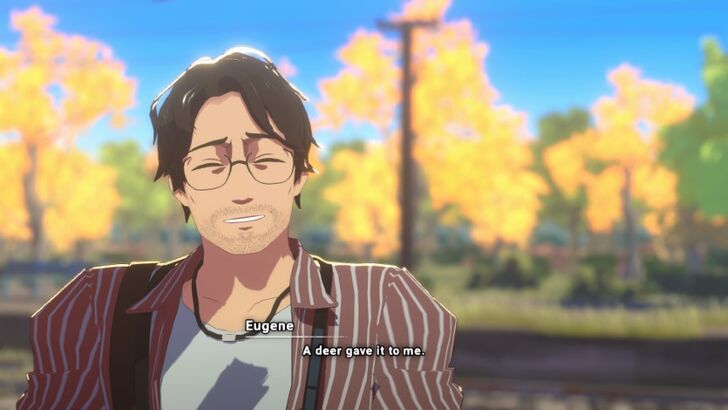
OPUS: Prism Peak is a wonderful narrative-adventure title that is simply art made into a video game. A treat for the eyes, the ears, and the heart, it’s well-worth the emotional damage (lovingly) the plot causes. It’s slow-paced, it’s relaxing, maybe even boring to some, but underneath all that is a deep, reflective adventure that provides a meaningful experience.
The exploration in a charming spirit world and the focus on photography gameplay is inherently fun, as are the environmental puzzles to solve. Its weaknesses are mostly minor, but if you can look past those little janks, it has got a lot more to offer.
With a clearer mind and a better understanding of the game, I’m off to climb to Nevergone Peak once again—the game’s world just pulls you in like that, and I’m sure other players would agree too.
| Digital Storefronts | |
|---|---|
| Steam |
|
| Wishlist Only | |
| Switch |
Switch 2 |
| Coming Soon | |
FAQ
Who are OPUS: Prism Peak’s main characters?
The protagonist is 40-year-old photojournalist Eugene Chen, accompanied by a mysterious amnesiac girl named Ren.
Game8 Reviews