



| Monster Hunter Stories 3: Twisted Reflection | |||
|---|---|---|---|
| Release Date | Gameplay & Story | Pre-Order & DLC | Review |
Overview
What is Monster Hunter Stories 3: Twisted Reflection?
Monster Hunter Stories 3: Twisted Reflection lets players take the role of a Rider who lives alongside monsters. A disaster is unfolding in the world, bringing nations to the brink of war while the Crystal Encroachment spreads across the land, encasing even living beings in crystals and destroying everything it touches. Now, the heirs of those kingdoms must uncover the truth about a monster born with a symbol of misfortune.
Monster Hunter Stories 3: Twisted Reflection features:
⚫︎ Semi-open world exploration
⚫︎ Turn-based gameplay alongside monster and hunter pairs
⚫︎ Various collectible monsters to raise
⚫︎ Environmental conservation themes
⚫︎ Monsters that help with exploration
⚫︎ Armor and weapon crafting and decorating
For more gameplay details, read everything we know about Monster Hunter Stories 3: Twisted Reflection’s gameplay and story.
| Digital Storefronts | |||||||
|---|---|---|---|---|---|---|---|
 Steam Steam |
 Switch 2 Switch 2 |
 PS PS |
 Xbox Xbox |
||||
| $69.99 | |||||||
Monster Hunter Stories 3: Twisted Reflection Review: High Quality for an Even Higher Price
Monster Hunter for the Creature Collectors

If you’ve ever played any Monster Hunter game, I doubt the thought “wouldn’t it be fun if I could ride these beasts into battle?” hadn’t crossed your mind. After all, the monster designs of the Monster Hunter series was one of its biggest draws, besides the gritty action combat gameplay.
That is (probably) the question the entire Monster Hunter Stories spinoff series tries to answer. Here, instead of being a hunter out to skin everything within a five-mile radius for pretty armor and weapons, you instead play as a character who partners up with them instead… to skin everything else within a five mile radius for pretty armor and weapons…

Monster Hunter Stories 3: Twisted Reflection is the third installment of this series. And just like its predecessors, it’s set within the broader Monster Hunter franchise where monsters are not just quarry, but also partners you bond with. It is incredibly faithful in this to the point where its core mechanics are virtually indistinguishable from its prequels.
However, it does bring a few changes to the equation; changes that not only reframe the entire setting of the game, but also the experience playing it—for better or worse.
More Like Monster Conservationist Stories
Ever wondered how, regardless of the number of monsters you hunt in any Monster Hunter mainline game, there always seem to be a never-ending supply of them on the map? The answer might not be Monster Hunter Stories 3’s setting, but it’s a funny headcanon to consider nonetheless.
Monster Hunter Stories 3: Twisted Reflection puts you in the greaves of the only son/daughter of the king of Azuria. He (or she), due to their upbringing, is a stout defender of the ecosystem that brings vitality to their nation; a system that puts to use the many monsters that roam the countryside as partners of the people to defend their territory and provide much-needed labor for the fields.
As the founder of the Rangers—basically the Monster Hunter equivalent of conservationists—your main task is to maintain said ecosystem. However, due to their especially close ties with their powerful monster partners, they are also dragged to the conflict involving their neighbors, as well as the calamity that serves as the main cause of all the tension.

It’s a fairly standard setup, as you’re basically depicted as a protector of nature who takes up arms to do so. However, at the same time, it’s also new for the series, as the previous two were essentially your even more cliche “hero story.”
Fortunately, it’s pulled off rather well—story-wise, at least. There’s a lot of intrigue and conflict due to thematic clashes between politics (you ARE a prince/princess, after all) and culture. It keeps developments interesting, if not sometimes annoying to witness. Spoilers aside, it’s not uncommon to see events that would either glue you to your seat, or make you want to pull your hair out, that’s for sure.
The Strongest Themes are Irrelevant

On the other hand, Monster Hunter Stories 3 seems to have an issue trying to hold onto the plot. Because while, yes, there’s a lot of intrigue and conflict within individual chapters, those same chapters are messily thrown around with only the overarching conflict tying them all together.
The biggest shame that came about this, for example, is how the biggest conflict of the first act, the war between Eleanor and the protagonist's nations, becomes almost entirely irrelevant just after the gang sets out to explore the world. It’s almost like the characters here are paid by the hour and simply refuse to do more work besides the bare minimum if the scenario isn’t focused on them.
Worse is, because every player is aware of what the overarching conflict is, the intermediate chapters end up feeling like filler due to how scattered their objectives are. My best analogy of it is an anime where the hero party is off to defeat the Demon Lord, only to stop by a random village just to rescue some chickens—something like that.
In a way, you can definitely trim a significant chunk of the campaign and put the effort somewhere else without affecting the results. Like, maybe an endgame?
Gotta Release ‘Em All

Unlike other monster-collecting games out there where you’re simply trying to be “the very best, like no one ever was,” Monster Hunter Stories 3’s setting influences its gameplay in a different direction. That is, instead of simply unlocking and collecting the best monsters you can use, you are encouraged to act more like a caretaker of the environment. This includes getting rid of invasive species from the area, rescuing endangered monsters and reintroducing them to the ecosystem, and studying your work’s effects on the environment’s biodiversity.
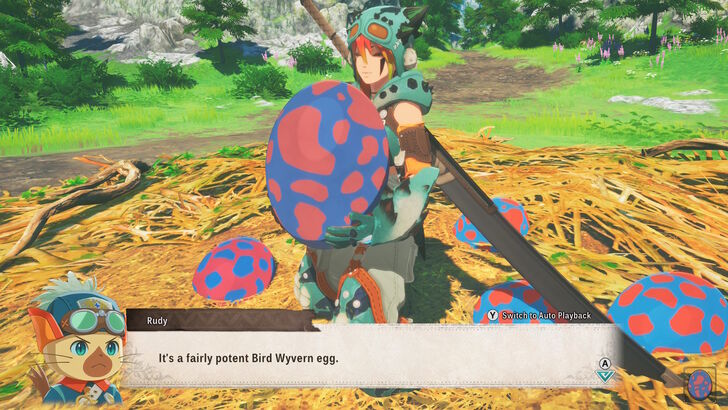
This is pushed to you through a number of ways. For example, the series' classic activity of stealing eggs from nests not only provides you with new monsters to raise, but also a decent chunk of EXP to level up with. Your work also serves as its progression system beyond plot-based progression. That’s because the main method of unlocking stronger or new variants of monsters involves a lot of looking for specific monster eggs to release back into the wild.

However, while this system is interesting conceptually, practically, it makes progression feel like doing chores.
See, this is an entirely separate layer of grinding beyond committing mass genocide on the local wildlife for straightforward EXP gain. Now, you also have to go into dens to look for eggs you normally wouldn’t pay attention to just so you can increase an area’s biodiversity and trigger monster unlocks or local species mutations. And unlike the previous games, a lot of the suspense around stealing eggs is gone because monsters apparently can’t see or hear you unless you’re waving a red flag in front of their face when they’re inside a nest.
At the very least, the game actually expects you to act the part of your character during gameplay and not just during important missions. And that matters, because this does have a heavy impact on combat.
Rock, Paper, Scissors, Rock, Paper, Scissors…

Just like its predecessors, Monster Hunter Stories 3’s combat system revolves around a turn-based rock-paper-scissors mechanic; Power attacks force its way through Technique, Technique counters hastily-thrown Speed attacks, and Speed attacks land faster than Power.
This mechanic becomes relevant when an enemy and ally exchange attacks. In such cases, a Head to Head event triggers, and the character with the disadvantageous attack gets their move completely nullified.
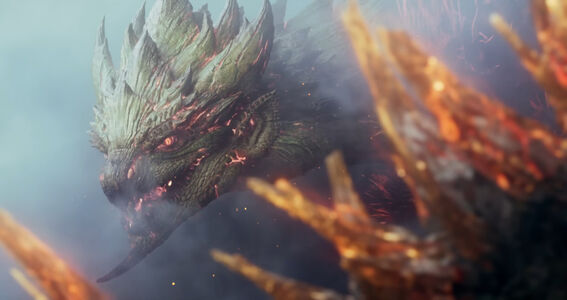
Now, at the beginning, your partner monsters tend to be limited in what kind of attacks they can perform. Your partner rathalos, for example, can only really do Power type attacks for a while. The same limitation mostly applies to every other monster you collect. However, as you increase the biodiversity of your area, you will start encountering monsters with different attack types either unlocked by default or at later levels.

This is insanely helpful because of how much this game discourages repeated partner monster swapping. See, bond levels, which allow you to ride your monster in battle and are increased as you fight alongside them, isn’t a shared gauge. In order to max it out as quickly as possible and perform powerful rider skills, not swapping at all is highly recommended.
But considering enemies can switch their attack types, fielding monsters that can only do one thing is typically a recipe for a bad time.
And as you would expect, taking longer to beat enemies will also eat into your time doing conservation chores. It’s a negative feedback loop that’ll only keep inflating if you don’t address it sooner rather than later.

Thankfully, actually “doing your job” is rather fun. There’s a strange satisfaction that comes from successfully stealing eggs right under angry mothers’ and sleeping monsters’ noses, especially if you end up getting a strong hatchling. The developers even added a short cutscene that shows the monsters you release slowly walking away as if they were in a romantic drama anime to add flavor to the experience.
It really treats the release of monsters you hatched into the world differently from the unceremonious ones that most creature collector games do. Immersion is important! Unfortunately, there’s just not enough of it to go around.
Very Little Content
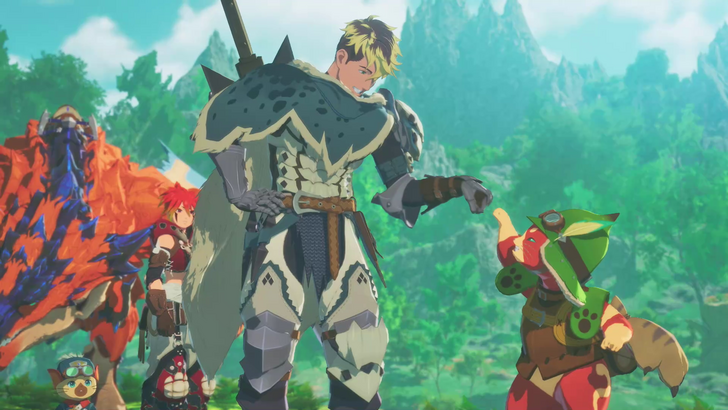
While the core gameplay itself doesn’t have any glaring problems, the same can’t be said for how much you can apply it to. That is, there’s just not enough game besides the grind of collecting monsters, watching cutscenes, and going from point A to B.
One glaring flaw, for example, is its lack of endgame. That is, when you finish the main campaign, the only thing you can really do is what you’ve already been doing for the past few dozen hours. At that point, you might as well consider the entire game finished beyond doing a 100% completion run. Have fun stretching those hours.
But is it replayable? Sorta. There’s still a good amount of flexibility with party creation that you can do challenge runs with new characters. You also have multiple save files to play around with. However, not having the ability to remove your starting Rathalos from the party severely hurts your ability to do mono-element or species-specific playthroughs.
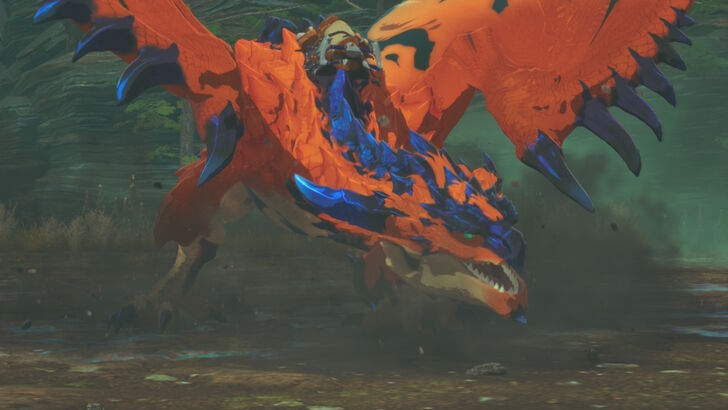
I mean, even Pokemon Yellow allowed you to stash your Pikachu.
Beyond that, a number of features were also cut. Flying, for example, is gone, and though it still exists as a field action, it’s more like gliding than anything else. There’s also no online play like PvP. It feels like a game released prematurely due to a lack of budget or time. For what it is, though, it’s perfectly fine as an expensive singleplayer title.
But if it eventually releases endgame content as paid DLC, that’ll sink this game’s value proposition even harder.
Is Monster Hunter Stories 3: Twisted Reflection Worth It?
Wait for a Sale
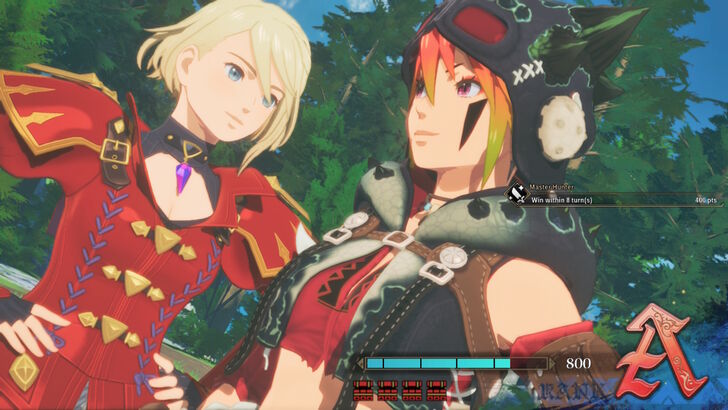
Despite the lack of an endgame, Monster Hunter Stories 3 is a perfectly fine title to play as a campaign-only experience. Sure, it’s expensive—but if you wait for a sale, it’s less so.
It still has the spinoff series’ signature combat; a gritty experience of trying to predict moves and responding to urgent situations. It also keeps the fun monster-collecting gameplay that made them so memorable in the first place. Just don’t expect to keep getting entertained after completing it.
FAQ
Is Monster Hunter Stories 3 a sequel to the previous release?
No, Monster Hunter Stories 3 features a standalone plot. But there are a lot of throwback references to characters and events.
Can you choose what monster to start with?
No. You’re still stuck with a Rathalos at the start.
Game8 Reviews