




| Mixtape | |||
|---|---|---|---|
| Release Date | Gameplay & Story | Pre-Order & DLC | Review |
Overview
What is Mixtape?
Mixtape is a narrative adventure game that follows the tale of three main characters, a group of friends who are en route to their final adventure before their ascent into adulthood. Through one of the characters' special abilities, players will be able to experience these characters' memories from their youth, shown through dreamlike segments and reenactments of their special memories that shaped them into the person they are now.
This game launched on PC, PlayStation 5, Xbox Series X|S, and Nintendo Switch 2 on May 7, 2026.
Mixtape features:
⚫︎ Full of Soundtracks from Legendary Artists
⚫︎ Stop-Motion Visual Aesthetic
⚫︎ Genre-Bending Gameplay Vignettes
⚫︎ Influenced by 90s Coming-of-Age Cult Classics
⚫︎ Interactive Cinematography
| Digital Storefronts | |||||
|---|---|---|---|---|---|
 Steam Steam |
 Epic Games Epic Games |
||||
 PS PS |
 Xbox Xbox |
 Switch 2 Switch 2 |
|||
| $19.99 | |||||
Mixtape Review: It Will Make You Feel Infinite
The Edge of Seventeen
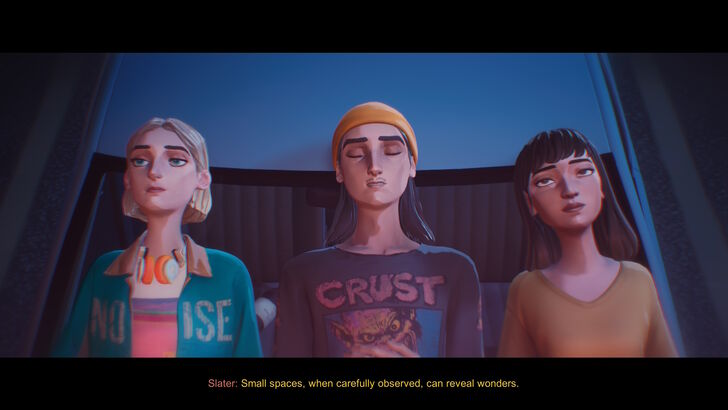
Memory, especially as we grow older, is often fickle. It skips the boring bits to focus on the songs that played during our loudest mistakes. Beethoven & Dinosaur, the same developer behind 2021’s Artful Escape, knows this well. Their latest work, Mixtape, is like a scuffled cassette found in the glovebox of a teenage dream. It captures the jagged energy of being seventeen, when a guitar riff feels like a life-altering epiphany, and every firework is a personal affront to the coming of adulthood.
I found myself drifting through these vignettes with a heavy chest and a constant smile on my face. I felt joy in the smallness of it all. It is nice to play a game that respects the awkwardness of a first kiss or a the joy midnight joyride as much as the pain of teenage betrayal. I finished the rather short journey feeling older, yet somehow lighter, and I am happy to have shared that final night with these characters.
Lady Bird Flies to the Big City
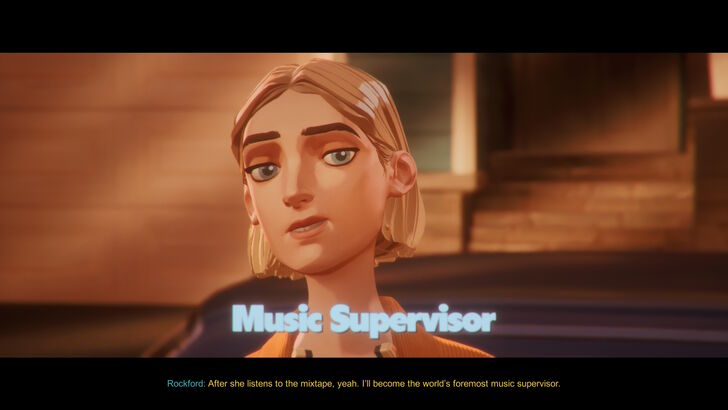
It is the 90s in the small town tucked away in the American South, and Stacey Rockford is on the verge of leaving it for New York to chase a career as a music supervisor. It is a big dream for a girl from a town the local kids call the "Big Suck." On her final day, she meets up with her two best friends, Van Slater and Cassandra "Cass" Morino. They spend their last hours together skating through the streets and preparing for a college beach party.
The entire day is framed by music that Stacey, as an aspiring music supervisor, has curated herself. The game happens as a series of vignettes tied to specific tracks, and the story unfolds in a series of vignettes captured by the songs that Stacey was listening to at that time.
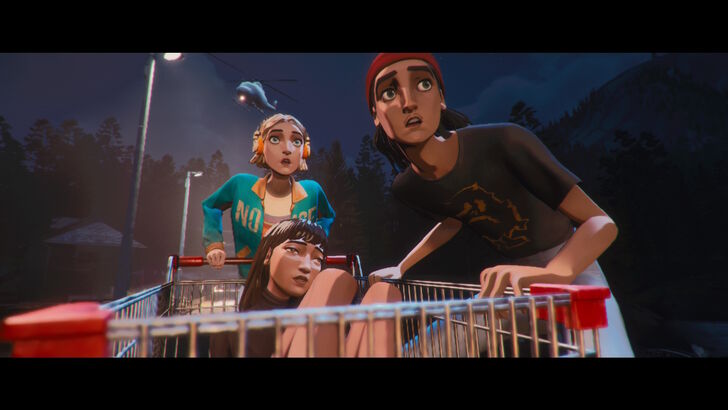
The story, then, is very intimate. The stakes revolve around the terrifying realization that childhood is ending, and that the bond between these friends may never again exist in the same form. The game constantly jumps between the present and fragmented memories of their teenage years together. We see first kisses, reckless skateboarding on highways, drunken escapades. We see them on rooftops, talking about a peer. a beer bottle in hand.
These sequences often look like music videos or dreamlike recollections that distort reality to show how we romanticize our own youth. The game understands that when we look back, we mostly remember how we felt rather than how things exactly happened.
Real Teenagers Have Flaws
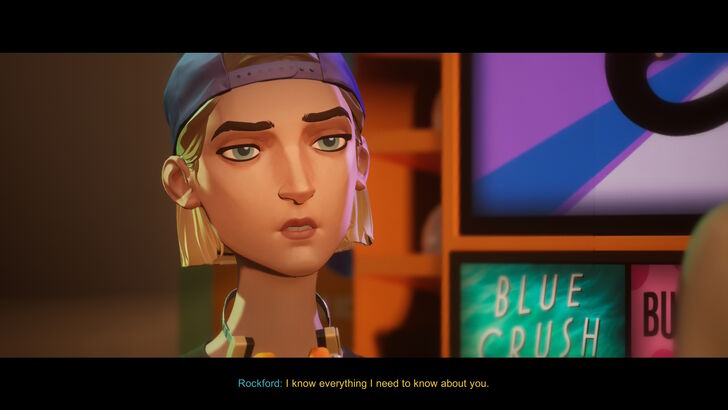
As a young-adult protagonist in a coming-of-age story, Stacey is the linchpin for everything that happens. Her love for music is encyclopedia-esque, and her curation shapes the storytelling itself, with songs acting as emotional anchors for each scene. Through her want of keeping track with the songs on her mixtape, the game repeatedly suggests that she is trying to preserve her friendships the same way someone preserves a mixtape: arranged and impossible to recreate once time has passed.
In many ways, Stacey fits the mold of the quirky, delinquent protagonist. She can be pretentious. She can be selfish. But, then again, she’s a teenager. Most people are a bit insufferable when they are seventeen and are convinced that they are the first person to "understand" how the world works.
The other two leads are given similarly grounded arcs. Cass is living under the weight of a suffocating home life. Her father is a strict police officer, and his presence looms over her even when he isn’t on screen. Much of her characterization revolves around wanting to escape but lacking the certainty that Stacey possesses. Cass doesn’t know what she wants because her parents have curated her life for her. This lack of control is what fueled her rebellious streak with Stacey and Slater in the first place.
Slater is the third point in this triangle. He has talent, evidenced by the music he creates, but he is almost entirely directionless. He doesn’t want anyone to hear what he makes in fear of being judged.
The trio’s chemistry is written with a lot of realism. They joke constantly and mock each other, dodge vulnerable conversations, and say plenty of inside jokes. The game’s strongest beats emerge not from the melodrama of a young adult narrative, but from the realization that these beautiful moments of bliss are fleeting.
Romanticized and Familiar Now and Then

Mixtape isn’t revolutionary. It is a coming-of-age story through and through, which means it relies on familiar tropes and predictable emotional beats. The game openly nods to classic young-adult films like Ferris Bueller’s Day Off and The Perks of Being a Wallflower. It follows the genre very closely, sometimes to a fault.
However, even when the plot feels like something we have seen a dozen times before, the way it uses the mixtape format to frame its scenes is remarkably creative. It has such an earnest heart beating beneath the surface that I found it easy to be moved by the simple plot. It doesn’t need to reinvent the genre when it rolls with this much sincerity.
It treats the teenage experience with so much respect that I found myself feeling nostalgic for things I never even experienced as a teen. Events that might sound trivial are presented with gravity because that's how monumental those moments feel at that age. Even the funny scenes do this well. There is a flashback to an intentionally awkward makeout session—Stacey’s first kiss—that captures the embarrassing vulnerability of adolescence.
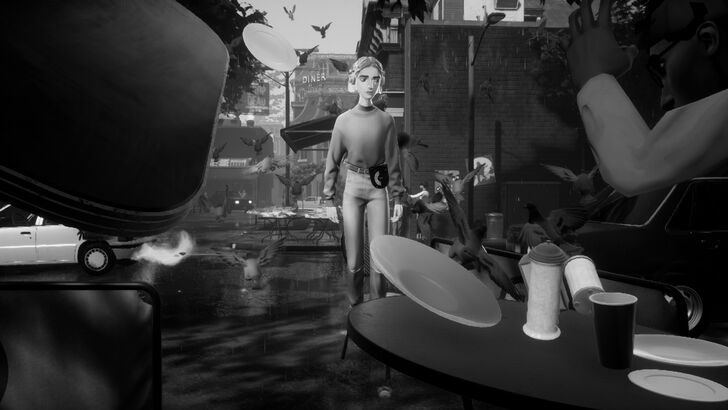
Without spoiling much, my favorite vignette involves a peer named Jenny Goodspeed. The scene is in black and white to show the exact moment a rather small betrayal ignited a long-standing hatred in Stacey. The memory is short and has very little dialogue, but the emotional impact is huge for Stacey. In the gameplay sequence that follows, you have to drag Stacey back to bed. Her body floats, almost lifeless, as items get pushed around in her wake.
Pump Up the Volume!
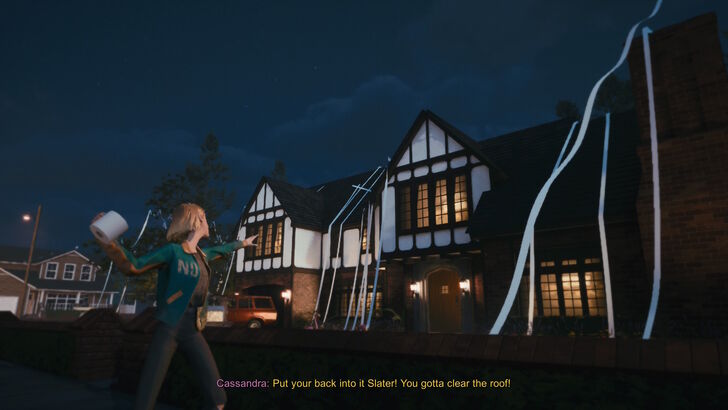
The game achieves these emotional beats because its gameplay is inseparable from its storytelling. Similar to other narrative games like What Remains of Edith Finch, the vignettes present simple sequences that keep you tethered to the characters. Almost every playable segments function as an interactive metaphor for how the characters feel at that exact moment. One minute you are photographing an abandoned amusement park after hours, and the next you are skating down the highway, raising your middle-finger to make random objects explode with your anger.
The mechanics are never complex, and these interactions rarely last long enough to become gameplay systems of their own. They appear, make their point, and disappear—much like the fleeting memories the game is built around.
Of course, this means you will not find anything resembling a challenge here. There are no puzzles to solve and no ways to lose. At one point, I even tried to see if the game would let me fail by having Stacey run into traffic, but the game simply rewound time a few seconds before the mistake happened. The experience is a straight arrow. Although this lack of difficulty might not appeal to everyone, like many great narrative adventures or walking simulators, Mixtape minimizes challenge so that nothing stands between the player and the feeling of the scene.
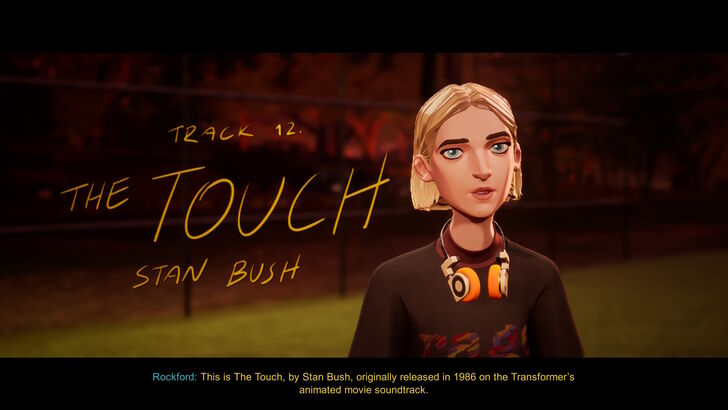
Each of these segments is paired with a licensed song that defines its tone. The soundtrack pulls from alternative rock, post-punk, and indie artists that capture the texture of the late 1980s and 1990s. Bands like Devo, Joy Division, The Cure, and The Smashing Pumpkins are definitely leaving earworms. You’ll hear the sounds of Lush, Siouxsie and the Banshees, Iggy Pop, Silverchair, and Roxy Music. Many of these were artists I had never given a proper listen to before, but feel essentially connected to the plot itself here.
Rebellious tracks underscore the moments of reckless teenage confidence, and the slow songs frame the uncertainty and beauty of youth. The music is so good and so central to the meaning of each scene that I went to Spotify to download the entire tracklist immediately after finishing the game.
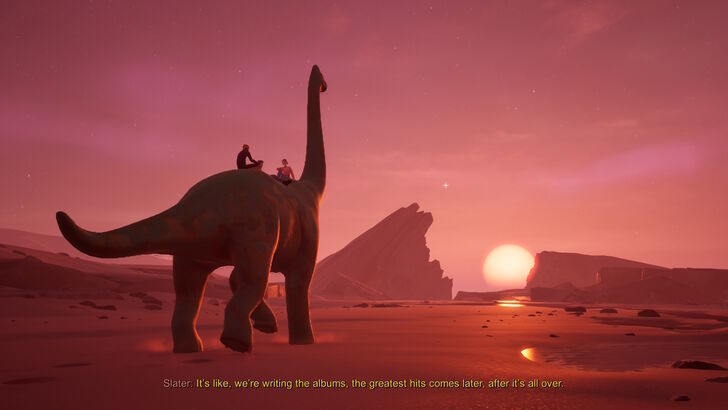
You wouldn’t want to be pulled away regardless, because the game is a visual buffet. The art style uses stylized character animation that’s reminiscent of stop-motion or the Spider-Verse films. It aggressively combines realism with the surreal. At times, the presentation even looks like a late-night TV broadcast from decades ago, full of grain.
Is Mixtape Worth It?
Yes! I Want It to Stand By Me a Little Longer
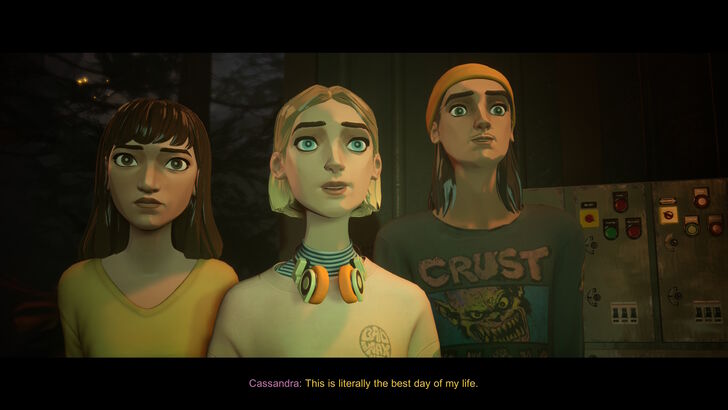
Mixtape is nostalgic and moving and lingers in the mind even as I’m writing this review, and possibly even after; I suspect I’ll be revisiting its 28-track soundtrack on my daily commutes for weeks to come. The game costs $20, which feels like a fair price for a journey this personal, though the length is admittedly short. I finished the entire thing in about six or seven hours. By the end of it, I found myself stalling, not wanting to let go of the characters or the Big Suck. I didn’t want the music to stop because I wasn’t ready for the night to end.
A lot of things in life, though, are brief, and the best moments usually leave us before we are ready to say goodbye. Much like the songs on Stacey’s mixtape, these memories have a beginning and an end, and trying to stretch them out would only ruin the fun. I left the game feeling a bit heavy, but mostly I felt lucky to have heard the music at all.
Mixtape FAQ
What are Mixtape Game’s Soundtrack?
Stacey’s mixtape is a curated collection of 28 80s and 90s music:
⚫︎ Atmosphere by Joy Division
⚫︎ Plainsong by The Cure
⚫︎ That’s Good by DEVO
⚫︎ Just Like Honey by The Jesus and Mary Chain
⚫︎ Monochrome by Lush
⚫︎ Freak by Silverchair
⚫︎ Love by The Smashing Pumpkins
⚫︎ Candy by Iggy Pop
⚫︎ Spellbound by Siouxsie and the Banshees
⚫︎ More Than This by Roxy Music
⚫︎ Sensitive to Light by Rainbow
⚫︎ Roads by Portishead
⚫︎ Galaxy in Turiya by Alice Coltrane
⚫︎ The Touch by Stan Bush
⚫︎ Dare by Stan Bush
⚫︎ Witchi Tai To by Harpers Bizarre
⚫︎ Have You Seen Her? by The Chi-Lites
⚫︎ Most of All by B.J. Thomas
⚫︎ Remember When by Mitch Murder
⚫︎ State of the Heart by Mondo Rock
⚫︎ Yesterday’s Hero by John Paul Young
⚫︎ Love My Way by The Psychedelic Furs
⚫︎ I Wanna Be Adored by The Stone Roses
⚫︎ Today by The Smashing Pumpkins
⚫︎ Lullaby by The Cure
⚫︎ Ladykillers by Lush
⚫︎ Girl U Want by DEVO
⚫︎ Cities in Dust by Siouxsie and the Banshees
Game8 Reviews










Nice game