



Meccha Chameleon is a 24-player party game about players painting themselves to blend into the game's many environments. Read our review to see what it did well, what it didn't do well, and if it's worth buying.
Overview
What is MECCHA CHAMELEON?
Meccha Chameleon is a 24-player party game built around the familiar hide-and-seek format seen in titles like the popular Prop Hunt from Garry’s Mod, but it adds a unique twist by letting players paint themselves and blend into the game's many environments.
Players are divided into two roles: Hiders and Seekers. Hiders are everyone else in the lobby, relying on creativity to stay hidden. Seekers, on the other hand, are tasked with tracking down the Hiders and shooting them once they’ve been found.
The game features both public and private servers, along with extensive modding support that allows players to create their own maps.
MECCHA CHAMELEON features:
⚫︎ Unique Painting-Based Hide-and-Seek Gameplay
⚫︎ 24 Players
⚫︎ Public and Private Lobbies
⚫︎ Unlimited Community-Made Mods
⚫︎ Affordable Price Point
| Digital Storefronts | ||
|---|---|---|
 Steam Steam |
||
| $5.99 | ||
MECCHA CHAMELEON Review: A Stroke of Genius & Creativity in Party Game Form
The Next Viral Party Game
For the past ten years or so, the gaming industry has had no shortage of party games to play. While the world was in survival mode during the pandemic, many found comfort in online party games through their own Discord channels, discovering new ways to connect with their friends with games like Among Us, Jackbox Party Packs, and even competitive shooters like VALORANT.
It was also during 2020 when party games became much more popular, especially among indie creators that sprinkle in unique gimmicks into existing party game mechanics like hide-and-seek, as well as emerging entries in social deduction genres like Among Us, where so-called master manipulators are born (or discovered). Thus, the word “friendslop” was born, a joke term the internet coined to describe Steam games that are fun to play with friends on a boring Friday night. Now, more party games like R.E.P.O. and PEAK have cultivated their own groups of friends reveling in the collective screams, laughter, and sighs of every success and failure. Then there’s this new game from Japanese studio LEMORION: a game called MECCHA CHAMELEON, which, surprisingly, was developed in just 2 months!
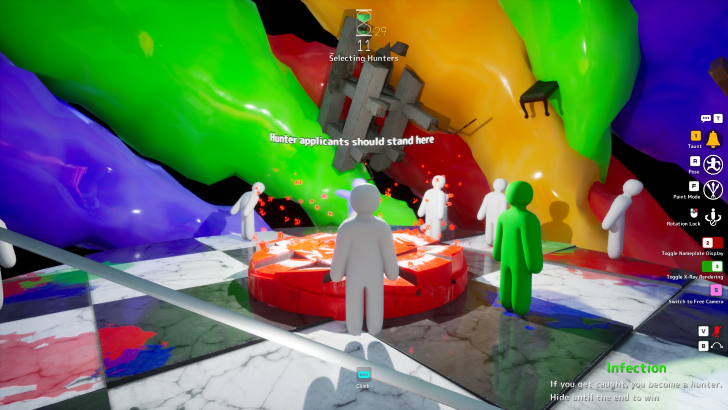
Right now, Meccha Chameleon is the new flavor-of-the-month party game for gamers, and as of writing, it has sold over 3 million copies since launch, steadily climbing toward Aggro Crab’s PEAK, which has sold 10 million copies in its lifetime. Remarkably, Meccha Chameleon reached this milestone in just a week after release, and there seems to be no sign of it slowing down, thanks to its inventive hide-and-seek mechanics and its seemingly endless stream of community-made content.
Paint the Town Red
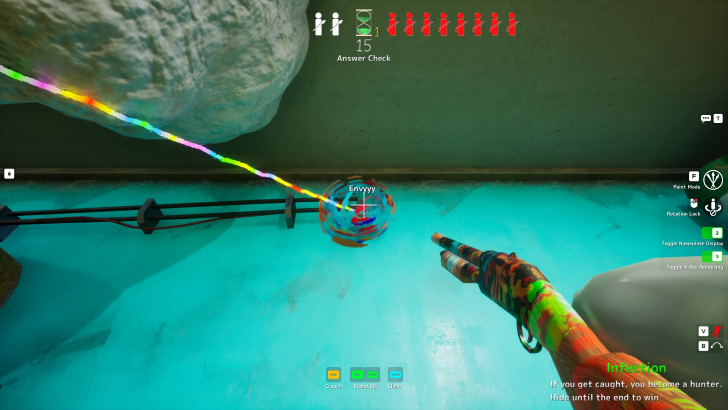
Let’s get straight to the point: Meccha Chameleon is a party game built around the existing hide-and-seek gameplay mechanic seen in the popular Garry’s Mod mode Prop Hunt. It’s more of a reinvention than a copycat, as developer LEMORION completely remixes the genre by using the art of camouflage as its core gimmick.
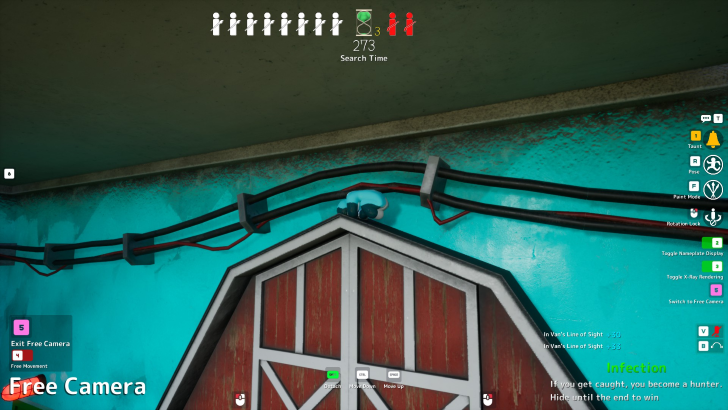
The game wastes no time putting you into multiple servers packed with players waiting for a good time. Once you’re in, you’re left to your own devices as you’re split between the game’s two types of players: The Hider and the Seeker. The Hiders are players who use Meccha Chameleon’s spray-painting gameplay to their full extent, coating themselves with the correct colors around them to achieve near-camouflage, like that one scene in the first Hunger Games where Peeta Mellark hid himself from enemies using his talent as a painter and baker.
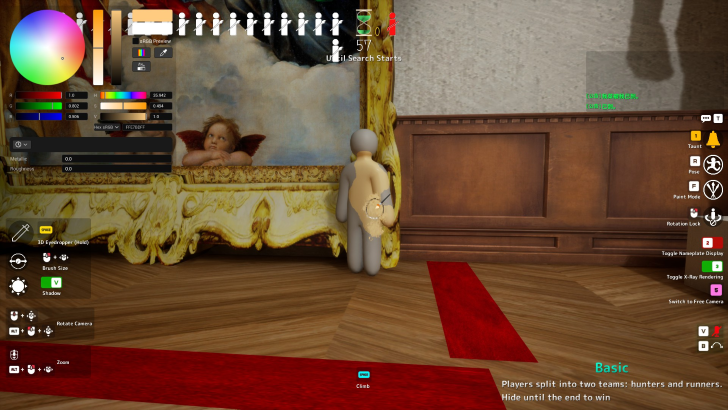
Being a Hider is not really a difficult job, and it’s where most of the game’s fun comes in. The sheer hilarity of coating yourself in the exact color of a nearby wall or floor, while hunters completely miss your silhouette sticking out like a sore thumb, makes for some genuinely funny moments, especially when playing with friends over Discord. There are multiple ways to blend into the game’s environment, and it’s all up to you how creatively you position yourself away from the prying eyes of these bloodthirsty Seekers.
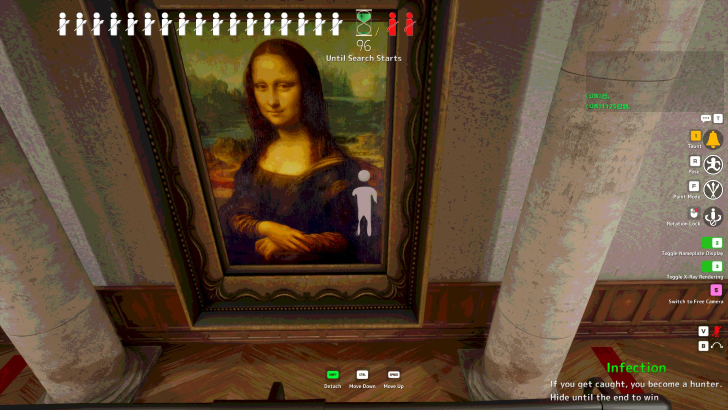
There was one instance where I perched myself on top of a nearby column in an Art Museum level, coating myself in gray with a hint of white to blend in perfectly. Seeing the Hunters completely miss me, even as they could likely hear my breath, had me laughing hysterically. It wasn’t until the game’s final minute that I was found by accident, and that alone was enough satisfaction. The pure joy I felt was like a devil pulling off his greatest trick: convincing them that I didn’t exist.
It’s in these moments that Meccha Chameleon finds its strength, as it leaves the strategy to the players, and watching snap decisions turn into smart plays delivers a real rush of dopamine.
Wolves in Sheep’s Clothing
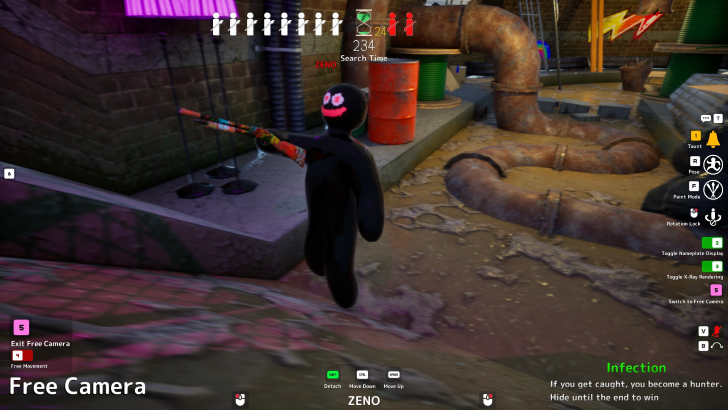
As mentioned, there’s also another side to Meccha Chameleon’s gameplay: becoming the Seeker. This is the role tasked with finding the game’s elusive Hiders. Each lobby has a designated number of Hiders and Seekers, but at most, it really depends on which role players want to be. The main goal of these Seekers is to locate Hiders across space and time, searching for traces of odd geometry poking out from corners by checking every nook and cranny across the game’s selection of maps.
Players can choose between Meccha Chameleon’s three modes: a standard mode where players are evenly split between Hiders and Seekers; an Infection mode where Hiders become Infected once found, effectively joining the hunt for the remaining players still blending into the environment; and finally a Double Mode where everyone hides at first, then the becomes a Seeker, until everyone becomes one. Victory conditions are simple in each mode, and the ultimate goal has always been success in playing both Hiders and Seekers.
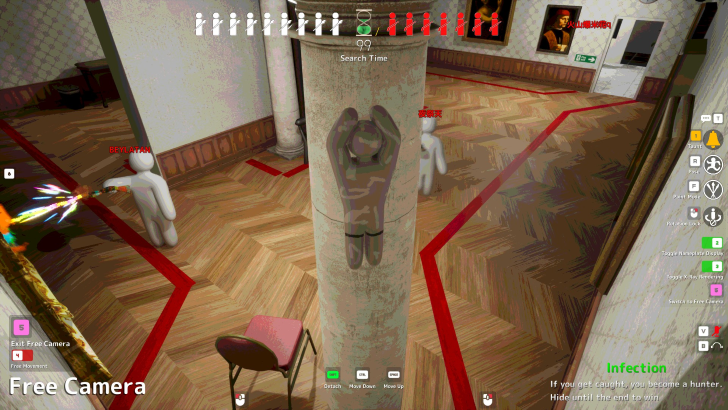
Now, this is where I find the game incredibly frustrating, as being the Seeker isn’t nearly as fun as being a Hider that casually spray-paints myself into the environment. Having to rummage through multiple Unreal Engine assets feels tedious in the long run, especially against players who are pretty good at hiding in plain sight. Of course, this isn’t unique to Meccha Chameleon, as it applies to most hide-and-seek games, where one player ends up doing all the work while everyone else gets to hide and taunt them for the funsies. Even the classic game of hide and seek we played as kids proved that no one really wanted to be the Seeker.
But this is also where Meccha Chameleon’s party-game identity comes in. Playing alone, with no friends to laugh with, makes being a Seeker feel like a chore. There’s little satisfaction in eliminating random players in a lobby, aside from watching them comically flop to the floor as their disguises fall apart. But before I get carried away, the real fun happens when playing with friends, as you get to hysterically chase them to the ends of the map, all while being taunted by your best friend, who you suspect is just a few feet away. And once you finally catch him, it all clicks, and you’ve effectively reached checkmate.
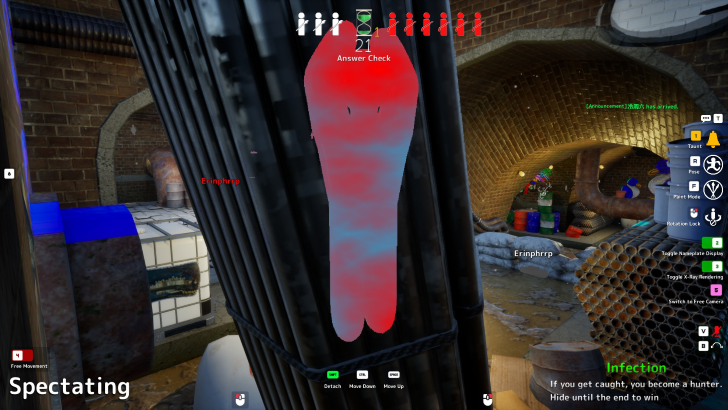
It’s always highly encouraged to play Meccha Chameleon with a group of friends, especially on an active Discord server where everyone knows each other, as the real fun comes from the small talk and endless banter while you relentlessly hunt down that one sneaky player who’s been playing Prop Hunt for years. Otherwise, if no friends are around, you’ll have to adjust your expectations and simply enjoy being the Seeker for what it is— or just bide your time and let everyone else do the work, whichever comes first.
Fresh Coats of Paint
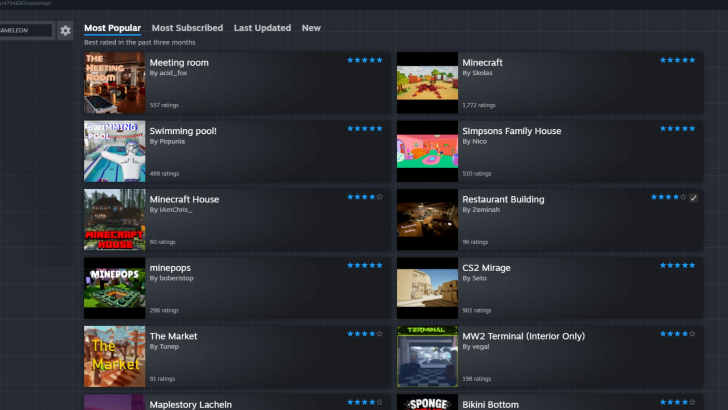
When the hide-and-seek formula starts to feel routine, Meccha Chameleon offers plenty of ways to break up the monotony through community-made content. Its extensive modding support has opened the floodgates for players to create maps on a whim, giving everyone more things to look forward to once LEMORION’s official maps start to feel a little stale and predictable.
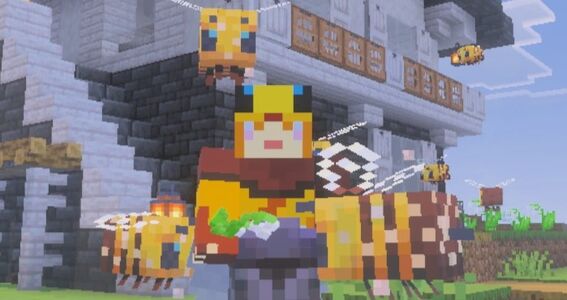
So far, I’ve only played a handful of community-made maps, including what appears to be a Backrooms-inspired level featuring its signature non-Euclidean spaces, with cars and furniture seemingly warped into the environment. Others, like a Minecraft-inspired world with all its voxel-based charm, are also available to play. Original maps are also available as well, including a massive art museum filled with iconic paintings like the Mona Lisa, alongside a farmer’s market filled with cleverly placed veggies and an industrial complex packed with objects that make blending in all the more convincing.
This is where Meccha Chameleon really benefits from word of mouth, as players can create thriving maps and communities centered around their own fandoms, giving more people a reason to jump in and mess around with its hide-and-seek gameplay. Of course, this only works as well as the playerbase supporting it, but with Meccha Chameleon already surpassing three million sales, the result is a growing pool of creative players with more levels waiting to be crafted.
Is MECCHA CHAMELEON Worth It?
Never a Dull Moment for Hide-and-Seek
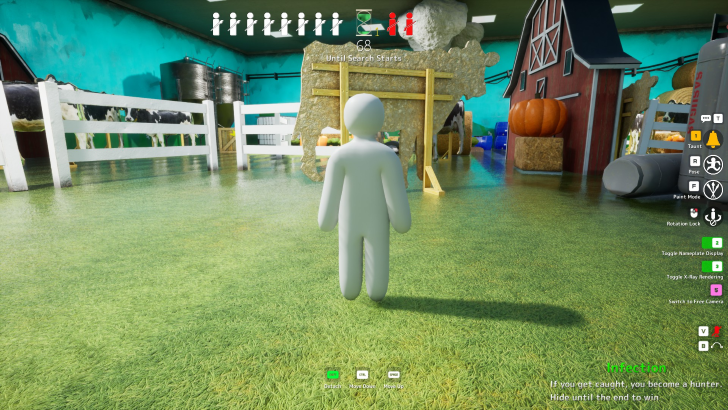
Meccha Chameleon turns a familiar hide-and-seek formula into a surprisingly addictive party game thanks to its clever paint-and-blend mechanics, endless community-made maps, and affordable six-dollar price tag. As a result, it’s easy to see why millions have jumped on the craze. A few bugs and the occasional chaotic public lobby can get in the way, but grab a couple of friends, and this viral sensation becomes one of the funniest and most replayable experiences on Steam.
There’s no need to overanalyze or find any nuances behind Meccha Chameleon’s familiar hide-and-seek gameplay. It all comes down to one simple truth: Meccha Chameleon is just plain fun, and that’s all it needs to be.
FAQ
Is Meccha Chameleon a Free-to-Play Game?
No, Meccha Chameleon is not a free-to-play game, but it is available for purchase at $5.99.
How Many Players Can Meccha Chameleon Fit in a Single Lobby?
Meccha Chameleon can support up to 24 players in a single lobby, but hosts can tweak this depending on their preference.
Game8 Reviews