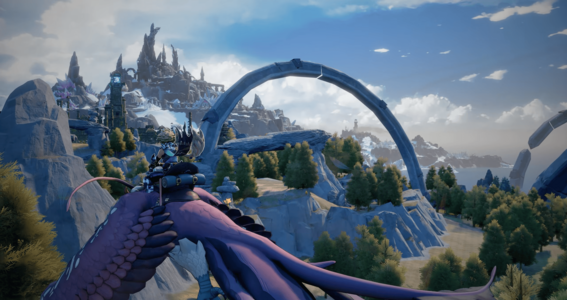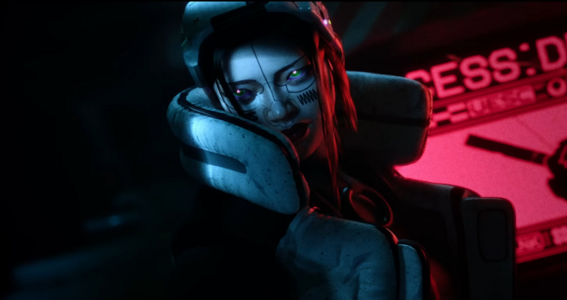




| Marathon | |||
|---|---|---|---|
| Release Date | Gameplay & Story | Pre-Order & DLC | Review |
Marathon Review Overview
What is Marathon?
Marathon is a multiplayer PvPvE extraction shooter developed and published by Bungie.
Players assume the role of "Shells", each equipped with unique abilities that allow them to scavenge and extract valuable resources on the derelict planet Tau Ceti IV, once humanity’s stronghold.
Announced in May 2023, it serves as a revival of Bungie's classic Marathon franchise from the 1990s and will see players take control of Runners. The game is set to release this March 5, 2026 for PlayStation 5, Xbox Series X/S, and Steam*, featuring cross-play and cross-save support across these platforms.
Marathon features:
⚫︎ PvPvE Extraction Shooter
⚫︎ 3 Man Squads
⚫︎ Crossplay and Cross-saves
⚫︎ Stylized Graphics
⚫︎ 7 Different Playable Classes
⚫︎ Build and Gear Variety
⚫︎ Contracts and Quests to Fulfill
⚫︎ Microtransactions
For more gameplay details, read everything we know about Marathon’s gameplay and story.
| Digital Storefronts | |||||
|---|---|---|---|---|---|
 Steam Steam |
 PS PS |
 Xbox Xbox |
|||
| $39.99 | |||||
Marathon Review: It Wants You To Run Forever
Playing The Long Game

For the longest time, I never really appreciated the extraction shooter genre. The thought of losing everything you’re going with was something that I feared. After all, as a serial hoarder of items in different RPGs, bringing all of the items that I “potentially” needed was a habit that I never really broke. So for years, I’ve been wondering what really makes it good, or at least, appealing, especially since I’ve heard the frustration from friends who play games in that genre.
Funnily enough, it wasn’t until playing Arena Breakout: Infinite for a year that it all clicked.
The thrill of losing everything was certainly one of the things that drew me in. Not because you were able to rebuild from scratch, but because you could potentially make others lose everything they had. It was a merciless genre, sure, one that really drove the “survivor of the fittest” mentality. But when I started treating the game as one where you can eventually get back what you lost, similar to a roguelike or even a Soulslike, I started to have fun.
So when I heard about Bungie creating a brand-new extraction shooter, I was already excited. Announced all the way back in 2023, Marathon was something I wanted to try out, especially since I was already a fan of their older games and franchises and was now getting into other games in the genre. And let me tell you, the game actually did catch me off guard.
Knowing Bungie, I expected satisfying shooting mechanics and even a PvE aspect that’s more engaging than most in the genre, and they delivered on all of those fronts. But what I didn’t expect was an extremely interesting sci-fi setting with actual worldbuilding and storytelling.
Unique and Intriguing Setting
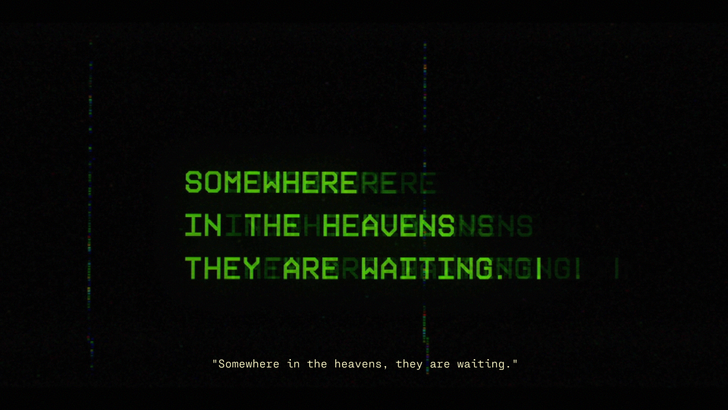
In the year 2472, the UESC Marathon colony ship was launched into the Tau Ceti system on a 300-year voyage with the ultimate goal of creating a new home for humanity. 300 years later, they were nowhere to be heard. A century later, a distress call was received from the same ship, reading: “Somewhere in the heavens, they are waiting.”
The colony on Tau Ceti IV has long been abandoned and desolate, yet questions about its fate remain. What happened to the colony? Where did colonists go? And more importantly, what secrets did the colony hold before its supposed eradication?
Wow, I’ll be completely honest with you, I was immediately impressed with the setting. As a fan of other science fiction media, this was completely right up my alley. Raiding a lost colony on a foreign planet in a synthetic body where I’m only connected digitally? Count me in. And even more to that, what really impressed me was that they weren’t afraid to explore more of the world itself.
Worldbuilding is Limitless
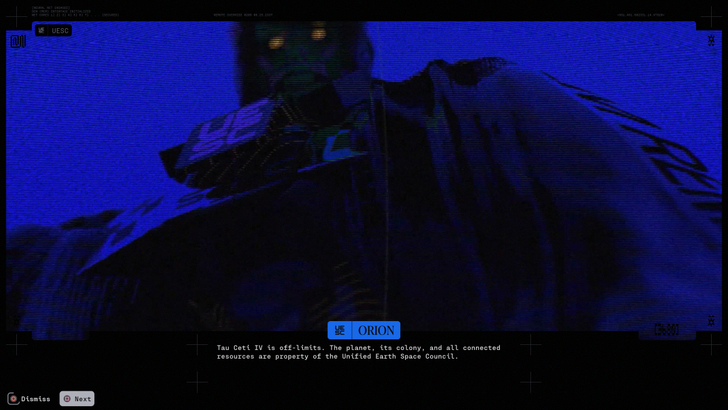
Let’s start with some context. Marathon is actually a pretty old video game franchise; its trilogy started in 1994 and was released for Mac OS. Developed by Bungie, the game was originally a boomer shooter with heavy science-fiction themes. I won’t go into any details of the original trilogy since it’s a story worth experiencing for yourself (they’re free on Steam!), but I do have to establish that the recently released Marathon picks up where the series left off.
In this iteration, you play as a Runner, a mercenary for hire who digitized their consciousness to load them onto temporary bodies called Shells. You work for the different factions that are currently paying top-dollar to do their dirty work, whether it be to uncover the colony’s fate, or discover the secrets left behind by its people, or even just to spread anarchy across the planet. These organizations are the ones that actually provide the game’s worldbuilding and story. After every contract done for that group, you get to talk to one of the faction’s representative agents.
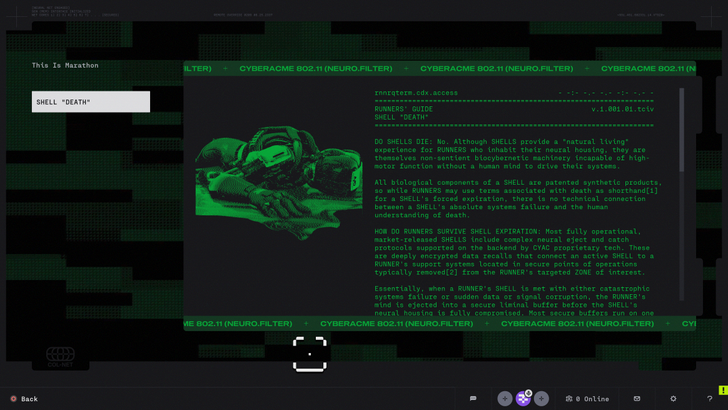
Moreover, there are collectible salvage and items that add more context to the colonists' story through voice and text logs. These are scattered throughout the world and offer a small piece of the puzzle towards learning the fate of Tau Ceti IV. Of course, it’s not the most straightforward way to do it, as players can literally skip over them in favor of usable loot, but it’s still a valid way of gradually easing you into the lore.
This is one of Marathon’s strong points, as the game combines environmental worldbuilding, codex entries, and dialogue to broaden the world and create actual player-driven storytelling. Bungie definitely went all out on how expansive the world is, as you piece together the story of how the colonists disappeared and what other terrors await humanity.
But that’s not all it's good at. While the story is interesting on its own, one of the main factors that enhances the enjoyment of the lore is the futuristic sci-fi visuals.
Eye-Catching Visuals
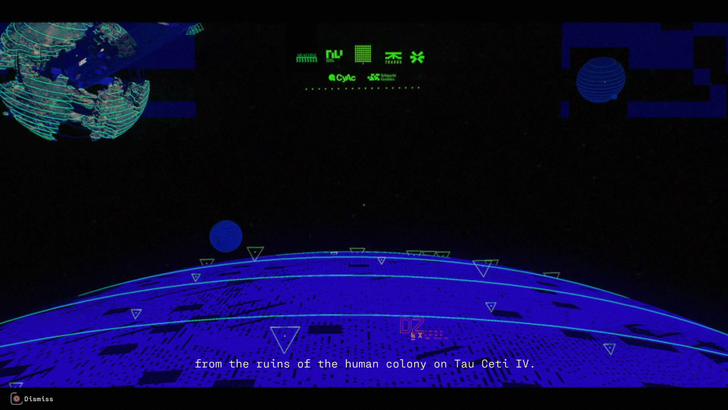
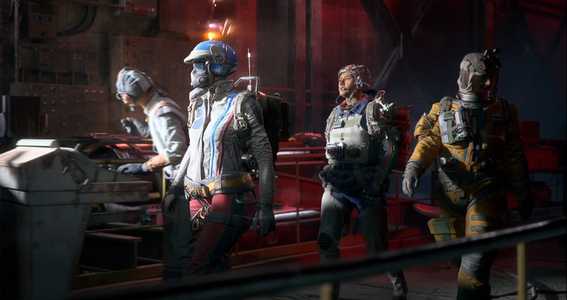
The game’s visuals are already a point of contention, and they’re not going to be everyone’s cup of tea. But for me, however, I enjoy the game’s graphics. The whole aesthetic seems like a Y2K biopunk futuristic theme, but with a whole lot of color and flashing imagery. Even the character designs themselves are evident, as the different Shells in the game are very distinct and well-designed.
It carries over to the game’s environments and map visuals, as each has a very distinct look compared to the others. For instance, Perimeter features rocky terrain that provides tall cover and can serve as vantage points when using certain Shells. Meanwhile, Dire Marsh features much more open areas, with swampy terrain and forests, making gunfights a bit trickier outside its points of interest.
It’s also worth noting that, thanks to its wild, trippy imagery and zany music, the game has a dark, melancholic atmosphere that permeates throughout, adding to its eerie vibe when navigating menus or even in-game. This adds a sense of paranoia when you’re in-game and makes every run feel a little bit riskier, even if it’s just all mental.
Actually Satisfying Gameplay Loop
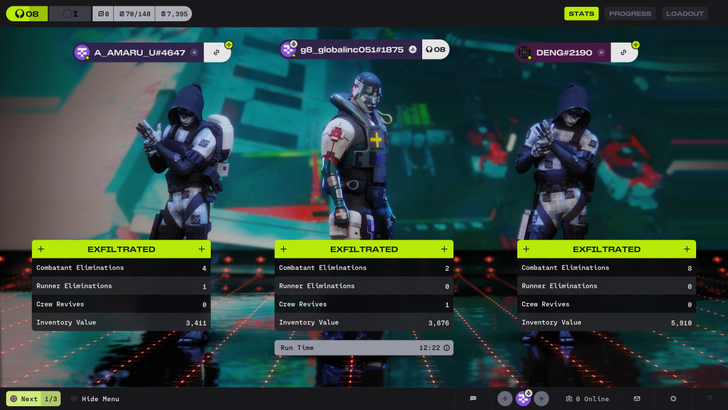
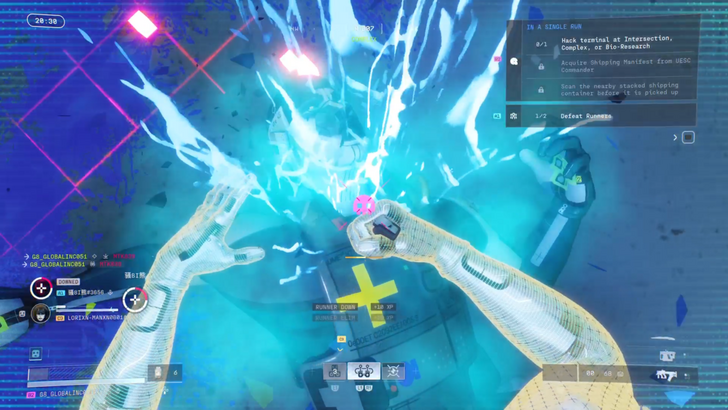
Visuals and setting aside, the actual meat of the game also provides tons of satisfaction. Contrary to its name, the gameplay loop consists of roughly 15-20 minute sessions of looting, shooting, and questing. The game does a good job of making each run feel like you’re actually building towards something, as the aforementioned Contracts that you take usually involve doing something in that map.
It’s not just mindlessly going into the zone and killing everything on sight; there are actually things you need to do to progress your quests and gain more reputation for these factions. For instance, the introduction to MIDA’s line of contracts has you defeating a number of UESC enemies as well as breaking some glass.
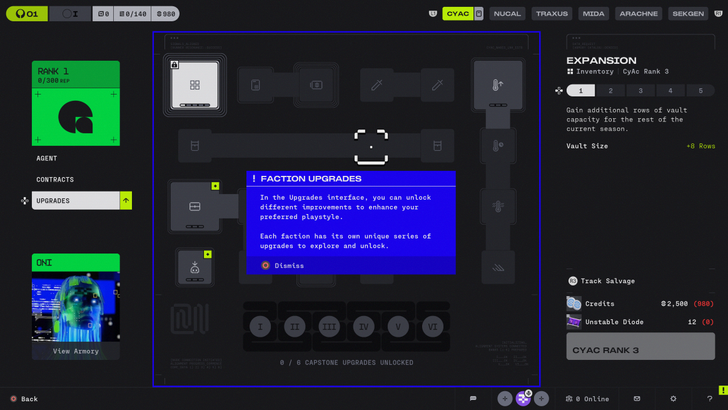
Completing these contracts rewards you with XP to level up your reputation with that faction, as well as additional dialogue and codex entries to give you more context about the situation or add more questions to the full story. Additionally, you are also rewarded with consumables and gear to help you on your next run, and unlock upgrades that provide you with more power via the Faction skill tree.
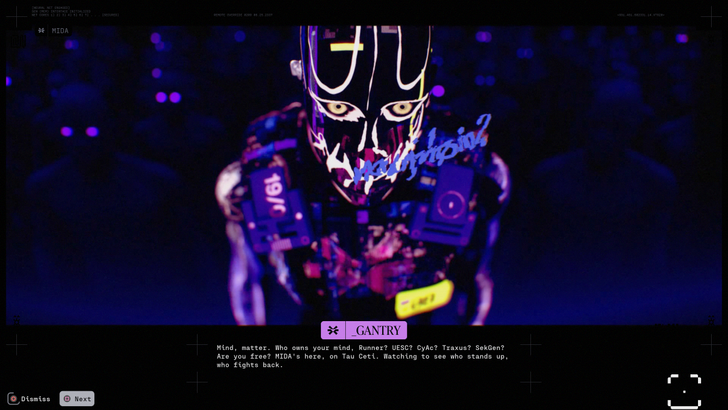
A great example of this is ranking up the NuCaloric Agricultural faction, which grants you access to more medical supplies in the game’s marketplace and even allows you to purchase the coveted Self-Revive consumable to come back from being downed. Another is leveling up and upgrading the CyberAcme skill tree, as they have upgrades that actually give you bonuses to your overall stamina and even debuff resistance.
The feedback loop of objectives and rewards actually feels rewarding, as opposed to other extraction shooters, where they feel tacked on or are just there to give you more equipment for the most part.
Well-Designed Extraction-Hero-Shooter Mechanics
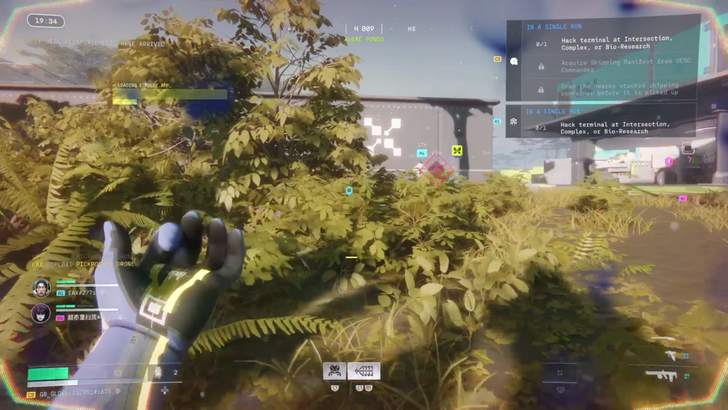
In accordance with the game’s overall gameplay loop and gunplay, its elements as an extraction-hero-shooter are also remarkable. There are a total of 7 playable Shells, and each of them has unique abilities that affect the battlefield in various ways. Some have more offensive capabilities, such as Destroyer and Vandal, while others have more supportive capabilities, such as Triage and Recon.
For example, Assassin is a Shell that provides invisibility when inside smoke. While his abilities do grant him free smoke bombs for use, the value of bringing smoke grenades while using him or having him as a teammate. Not only does it function as a way to deny vision, but also as a way to trigger his passive trait without using any of his skills with cooldowns.
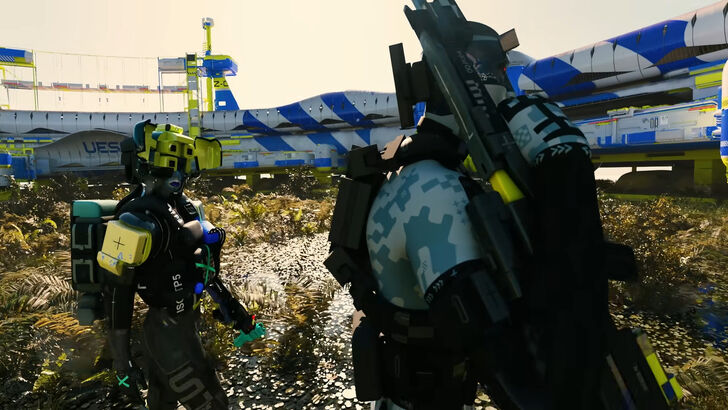
Additionally, the different Shells offer distinct, surprising build varieties, each with exclusive equippable Cores that directly buff their abilities and passive traits. Take Triage’s Ounce of Prevention Core, which adds debuff protection for anyone to whom he attaches a med-drone.
The way it blends with the gameplay is something to behold, as the Shells never feel unfair to fight against, even when they have strong abilities on their own. Even if the Assassin does have cloaking properties via smokes and his Tactical ability, he doesn’t have access to the Thief’s movement and utility abilities. Even the combat-oriented Shells still feel fair to fight against, as the game does reward the better shooter in a gunfight.
Extremely Enjoyable Gunfights
Bungie has always had a reputation for having great gunfeel and gunplay. And it’s no different this time around.
One of the prominent things about the game is its low time-to-kill, where damage across the board is relatively high. The low time-to-kill allows for comebacks on 1v2s and even 1v3s, but also has lower room for error on the lone player. While this can be changed in future balance patches, the way it feels right now is actually great, and I feel that Bungie hit it right on the mark when it comes to balancing each gun.
There are a total of 28 weapons across 8 categories. Additionally, these weapons span 5 ammo types and feature a variety of unique traits and functionalities that actually require mastery.
For example, the V22 Volt Thrower may be a submachine gun that locks onto enemies, but its ease of use is offset by the fact that it never hits headshots. In contrast, an Outland sniper rifle deals serious damage and can potentially take down enemies with a single headshot. However, it’s hard to find ammunition for it and does need you to aim for the head for maximum reward.
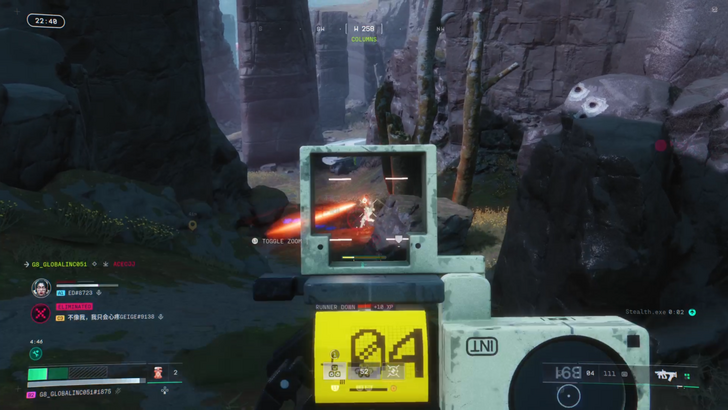
As for the overall feel, most of the guns that I’ve been able to use feel great. This can be attributed mostly to the combination of visual and sound effects that each gun has, as even the pistols feel great to fire, just as much as a light machine gun.
Also, the movement feels much better once you get used to the game’s stamina system, or Heat. It limits the number of movement actions, making movement more deliberate to do, as Overheating or exhausting your stamina will render you unable to sprint, slide, and even climb. This makes gunfights feel more tactical, where you only really have a few chances to make your move, or you’re going to be a sitting duck on the battlefield.
PvE Leads to PvP
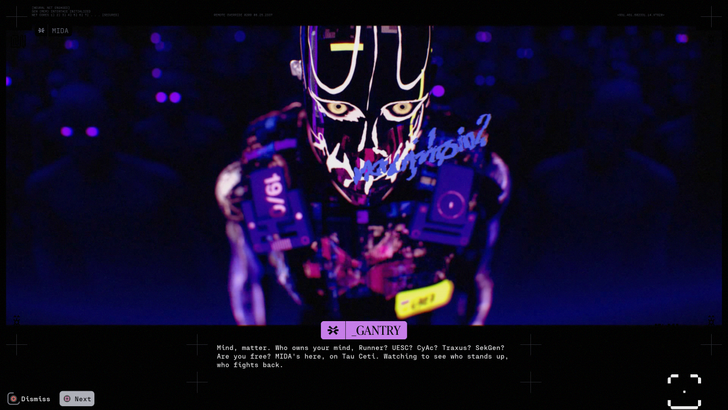
But the best part of its gameplay design is how PvE leads to PvP. Marathon sets itself apart from the rest by striking a great balance between these two polar opposites, one that actually improves on the other rather than diminishing it.
As explained earlier, players take Contracts to progress their Faction Ranking and earn rewards and more purchasable items in the in-game marketplace. These contracts can be your primary objective for each run, where you do a couple of quests, then proceed to extract when you and your whole squad are done. Of course, there are also contracts that ask you to directly fight against other players, but these are few and far between.
Instead, the quests are designed to push you into hotspots and inevitably push you to fight other players, which then leads to the whole gameplay loop. It’s a deliberate design, one that really integrates and shows off how extraction shooters can be brutal, especially when your quest involves you interacting with certain things in places like Algae Ponds in Dire Marsh or anywhere in Outpost, really.
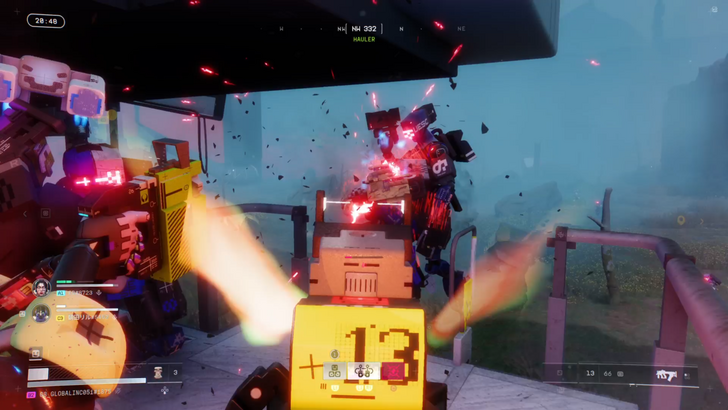
Speaking of the PvE, it’s also worth mentioning that the enemy AI doesn’t joke around. The UESC Guards and Commanders are actually a threat, and you might want to think twice before challenging a Commando. In my case, I foolishly shot first against a Commander with Purple armor, only to run out of bullets and end up losing all of my hard-earned loot in that run.
Still Unwelcoming to Newcomers
You know that saying, walk before you can run? Marathon expects you to do the latter almost immediately.
Despite everything great about its story, visuals, and gameplay, it still doesn’t change the fact that Marathon is a brutal game by design. Extraction shooters were never the most welcoming genre in this new trend of battle-royale style hybrid shooters, but games like Arena Breakout: Infinite and ARC Raiders have tried ways to slowly teach new players the ropes of how the genre works.
In Marathon’s case, the tutorial doesn’t teach you any of the essentials. In fact, what they teach you is just the bare minimum. The tutorial teaches you how to heal, shoot, and even crouch walk your way out of trouble, but it doesn’t go beyond that.
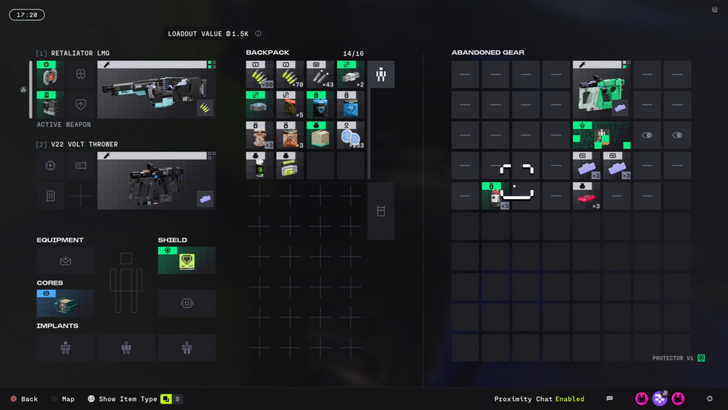
You’re left in the dark about how to get upgrades in the Faction skill trees, what items you should collect and prioritize bringing home, and even how to change throwable equipment on the fly. Hell, they don’t even teach you how to actually earn credits outside of completing contracts.
We could argue that this decision was intentional, but I honestly think Bungie dropped the ball in introducing the game and the genre to new audiences. Maybe a few more tutorial quests and forced encounters to at least teach newcomers about the ins and outs of the gameplay, as well as the genre basics.
Unintuitive UI and Inventory Management
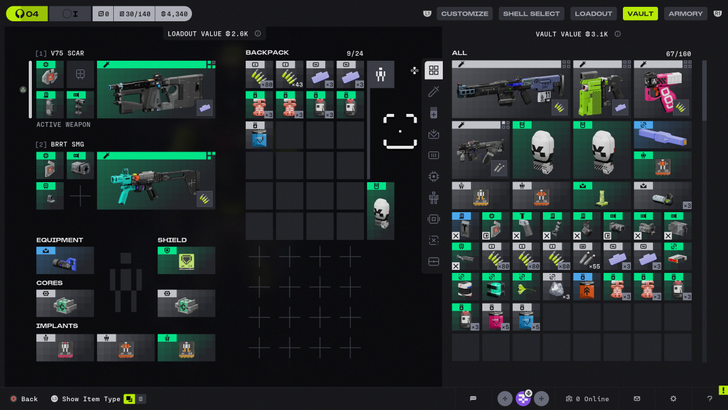
Alongside the issue regarding the game’s varied visuals is its overall UI and UX. There’s a lot going on with how it looks and functions, especially when certain menu items aren't as clear as they should be. This is especially the case with the menus, specifically on labeling, navigation, and more. While I would say that it gets better with time, it could be more user-friendly to begin with.
And this extends to the game’s inventory management, which can be a huge burden. This is more of a quality-of-life issue with gear and item swapping, as it requires an extra step compared to other extraction shooters. Take, for example, swapping two attachments from two different guns. You can’t just drag and drop the attachment onto your preferred gun; you have to first remove the attachment you want from the other gun, then left-click the attachment while your gun is equipped.
I get that this may be a balancing issue to avoid hot-swapping attachments on similar guns, but the way it’s handled is very unintuitive. Even now, I’m still pretty slow on switching attachments, and this happens often when you run in Outpost when there are attachments that are of a higher rarity available.
Losing Doesn’t Feel as Bad
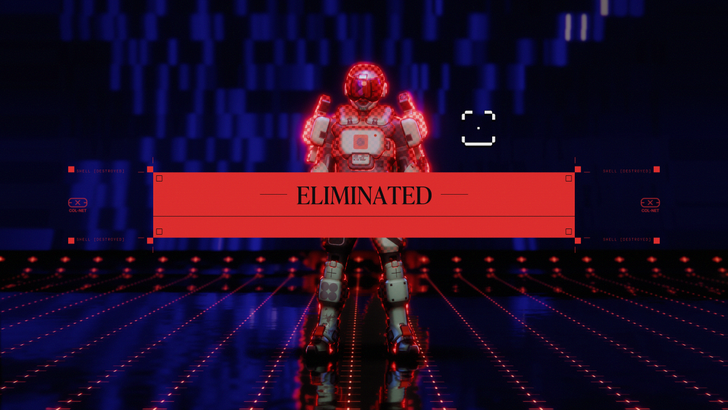
That said, even with the masochistic design, losing a run just doesn’t feel as bad as other extraction shooters. Trust me, as a player with chronic “gear fear,” Marathon offers a free kit that’s easy enough to build off of, especially since you actually have a gun that’s usually pretty good to use as a starting point.
An example of this is MIDA’s Free Sponsored Kit, which includes a pretty good submachine gun, the Bully SMG, and an adequate amount of ammunition for a decent firefight. You also get a few consumables to work with, which allows you to at least extend encounters by a fair amount instead of being outright useless right off the bat.
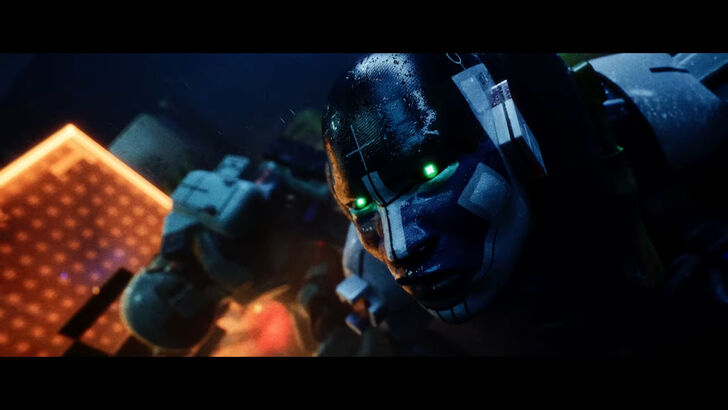
To be more specific, when it comes to gearing, all guns actually start at a similar tier or rarity, meaning it’s actually only the attachments that turn a gun to a higher tier. You will definitely feel a difference in performance when a weapon has better attachments, but the base damage will always remain the same.
And if you’ve been doing your contracts and upgrading your faction trees, you’re able to purchase gear in the in-game marketplace or Armory. They even have free offers in the Armory if you have particular upgrades leveled, and it can be one of the easiest ways to recover from a failed run.
This perpetuates into a loop that’s satisfying on all levels, since the highs are there when you win encounters with other Runners and loot their valuables to increase your Vault value, and the lows aren’t so bad that you can’t get back from them. It’s a loop that’s not only good in one aspect, but also understands how each element affects the others.
Bungie is Committed to the Endgame
With the release of Cryo Archives, it’s obvious that Bungie is fully committed to its endgame. I won’t be going into detail about everything that Cryo Archives has to offer, but I can summarize it in one word: brutal. Not only are you fighting against a horde of UESC bots and commanders, but you’re also fighting against other players with the same goal of getting high-tier loot as well.
The map layout isn’t typical as well. There are a lot of tight corridors, vents, and other shortcuts that you need to be familiar with so that you can efficiently move around. And if that wasn’t enough, getting out isn’t very easy either. Instead of the normal process of calling an exfil and waiting 10 seconds after it activates, it immediately activates the exfil station, but it takes 3 minutes to get out.
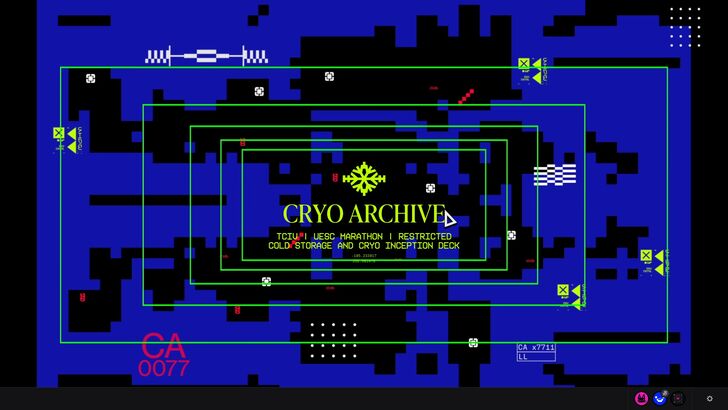
Many, myself included, were skeptical that the map was weekend-only, but its overall design makes it an experience you’re meant to build toward. You use the weekdays to gear up, complete quests, and save up your keys for the vaults in Cryo Archives. Then you use the weekends to challenge Cryo Archives and hope to exfiltrate with even more loot.
It’s a very masochistic design, one that really shines a light on the PvP experience because you’ll always end up fighting against other players who want to do the same thing. Yet the game’s systems and mechanics have proven they’re worth investing in and coming back to; I found myself running it back even when I was already running out of credits.
Is Marathon Worth It?
Worth The Price, But Will Test Your Patience
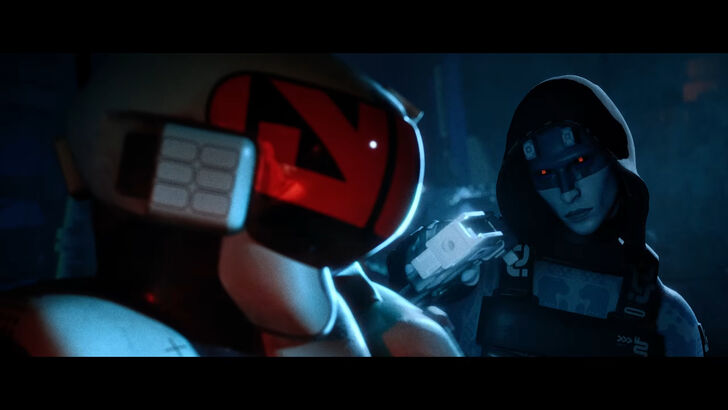
I’ll give it to you straight: Marathon is an extremely fun game. But it’s not for everyone. Even if I say that it’s the best extraction shooter out right now, the experience can just be frustrating, especially since it doesn’t do a great job of teaching you how to walk before you can run. This game will test you; everything that makes it shine is geared towards player interaction, further reinforcing the game’s merciless nature.
But if you can get past that, you can find what I would consider the perfect extraction shooter. One that polishes all of its aspects through fantastic visuals, an extremely satisfying gameplay loop, intense atmosphere, and even its surprisingly deep lore. If you’re remotely interested in the genre, I would highly recommend trying it out, especially if you can organize a group to actually play with you.
Marathon FAQ
Does Marathon Have Crossplay?
Yes. It also lets you link your saves across platforms, adding convenience for those with the game on multiple systems.
Game8 Reviews