



LumenTale: Memories of Trey is a new creature collector RPG where players catch and battle alongside Animon in the vibrant world of Talea. Learn more about our score, our review, and whether the game is worth buying or not.

Overview
What is LumenTale: Memories of Trey?
LumenTale: Memories of Trey is a creature collector RPG that features a monster catalog of over 140 indexed species. You begin the story as Trey, a mysterious character with memory loss, and get caught up in an adventure that unravels why legendary Animon are reemerging.
LumenTale Memories of Trey features:
⚫︎ Selection of over 140 distinct monsters
⚫︎ 4v4 battles
⚫︎ Online multiplayer trade and battles (including ranked)
⚫︎ Unique evolution processes
⚫︎ Adjustable difficulty levels
⚫︎ Challenging boss battles
⚫︎ Crafting and materials
| Digital Storefronts | |
|---|---|
 Steam Steam |
 Switch Switch |
| $24.99 | |
LumenTale: Memories of Trey Review: When a Variant is Better Than Evolution
A Confidently Refined Creature Collector
You could count on one hand the number of bold strides there have been within the creature collector game genre in the past 15 years. Two standouts that broke the mold are Pokemon Black and White, launching with no returning Pokemon in the base game, and Palworld, colliding the world of creature collecting with survival-crafting mechanics. Nowadays, there’s been a noticeable inclination towards more streamlined games for mass appeal.
With this, long-time players naturally would start gravitating towards creature collectors that feel new or at least present a different flavor, which is why we’ve seen the recent success of the return-to-form of the Digimon franchise with Time Stranger and more moderate hits from indies like Temtem and Cassette Beasts.

Enter LumenTale: Memories of Trey. This indie contender preserves all the familiar and beloved traits of a genre, boasting a sprawling list of colorful species, a rich map full of distinct habitats, and traditional trainer battles. However, it takes the classic blueprint further by enriching its core gameplay with two distinct features.
First, it has created a rather unique combat system by introducing a 4v4 team battle mode with mechanics that reward team synergy. Second, it makes exploration actually engaging to participate in by rewarding it with rare encounters and crucial materials to level up your skills. Sure, all of these are familiar elements to any creature collector fan, but the ultimate sum of its parts is a far more confident and refined take on the genre.
New World, New Rules
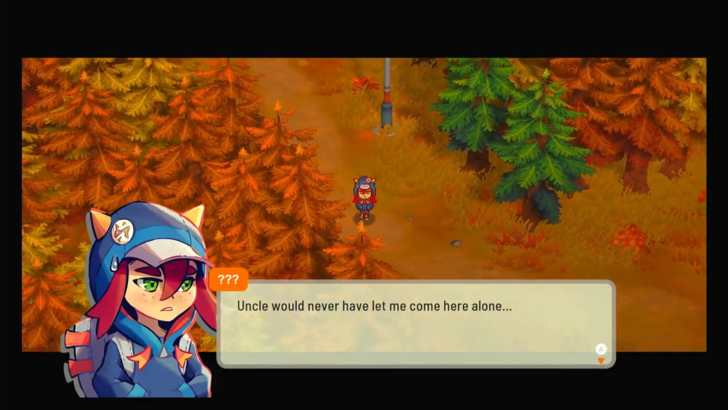
LumenTale drops you into a new world where you have to learn everything from the basics, both narratively and gameplay-wise. You take on the role of Trey, a character with a mysterious past who has to relearn all the basic concepts of the world because he wakes up with memory loss at the start of the game (because, of course he does). Immediately after, he is thrust into the peninsular region of Talea under the guidance of Animon researcher Kapan. He pushes you to take his nephew, Ales, out on your travels to help uncover the mystery behind why legendary Animmon are starting to reemerge and cause havoc on the land.
After deciding to investigate either the northern technological region Logos or the southern ancient tradition region Mythos first, you then set off throughout the various areas situated between the larger points of interest like towns, cities, and natural landmarks. Each of these areas is home to wild Animon that you can either defeat for EXP gains for your team or capture once they’re low in health.
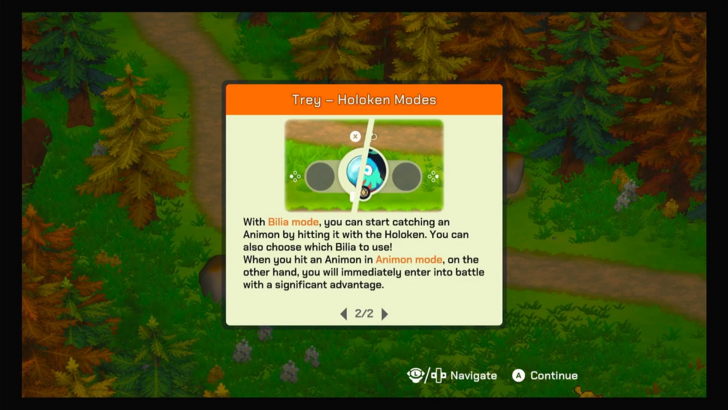
To catch Animon, you also have a device called a Holoken, which you can also use as an infinite throwable to break objects. The Holoken has two distinct modes, one where you equip a Bilia and another where you equip an Animon. When equipped with a Bilia, you can use this to catch Animon by hitting the correct button during a triggered quick time event. However, the QTE window is punishingly short, and failing it permanently consumes the Bilia. This makes the proposition a high-risk one that ultimately incentivizes players to engage in standard battles instead of risking valuable items on a moody reaction check.
However, I preferred to equip the Holoken with an Animon instead. Doing so allows you to deal damage to wild Animon from a distance. Upon contact, if you deal enough damage, you defeat the wild Animon and gain its EXP instantly. If you can’t deal enough damage, you trigger the battle with the wild Animon, but it starts at a significant HP loss. This significantly reduces the friction of grinding by allowing you to soften or completely bypass wild encounters.
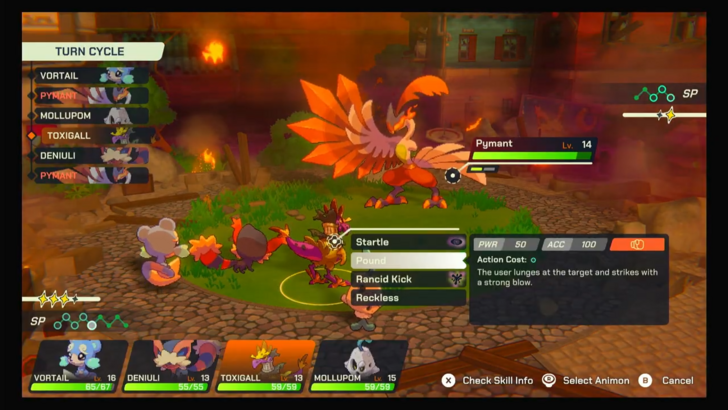
Aside from wild Animon, each area also contains factions of trainers called Lumen Squads. The Lumen Squads consist of skilled trainers that are just jonesing for practice battles. Within the area, they typically control a point of interest that houses merchants and other goods vendors, but you’re unable to access them until you beat the Lumen Squad boss of the area. This makes for a rigid, but highly rewarding progression loop that transforms standard trainer battles from optional roadside spectacles into near-mandatory locks that dictate progression and resource accessibility.
When it comes to the fundamentals and the rules of this new world, the game does stretch out its teaching moments well beyond the prologue and deep within into the first act of the game—a design choice that prioritizes narrative immersion at the direct expense of mechanical clarity. For example, important combat features like Attributes remain unexplained even after six hours and through multiple boss fights, despite the necessary icons being visually available right at the start and letting the AI opponents freely exploit them.
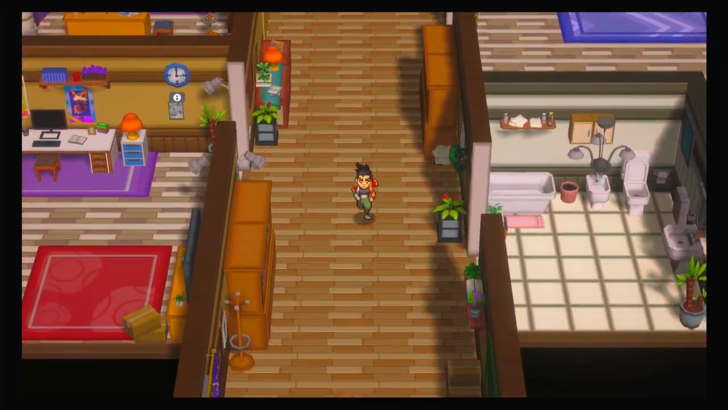
While this can be attributed to narratively justifying the blind spot as a reflection of the protagonist’s amnesia, the mechanical asymmetry and resulting experience forces an unfair learning curve where you need to endure a severe disadvantage before finally unlocking the tutorial for it via a narrative milestone.
Still, there’s a lot of gameplay aspects you pick up by yourself just by noticing peculiarities in the Animon that you’ve collected. For instance, earlier on in the game, I randomly captured an Animon called Flowende that was a Grass-type and Chakra-type, but every other Flowende I had fought before and after that was simply a Grass monotype. Upon scanning more of these Flowende a little bit later and reading through its stats, I discovered the feature of Hidden Types, which basically indicated that all Animon are monotypes except that some randomly have a chance of being encountered with a secondary typing.
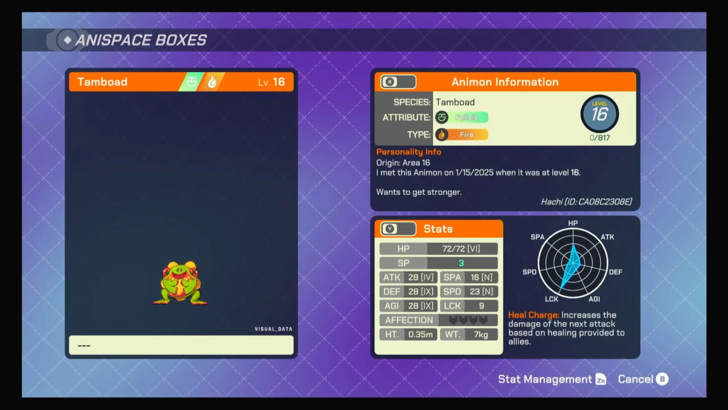
While the game delays its onboarding for core mechanics, leaving this feature textless showcases a highly confident refinement of genre templates that rewards emergent discovery. The minimal or infrequent tutorials emphasize the game’s trust in the player to go out and discover its creatures–and not just by literally encountering them and scanning their data but also by observing and recognizing patterns in the opponents you face.
On top of that gameplay design, the feature inclusion itself instantly unlocks a whole plethora of combinations players can run to form more unique teams even if it’s technically using the same monsters, be it for the story or for online battles. This depth is further multiplied by distinct Northern and Southern variants, which the first few trainers will field against you without warning, constantly forcing real-time tactical adaptation.
Rewarding Combat Mechanics Learning Curve
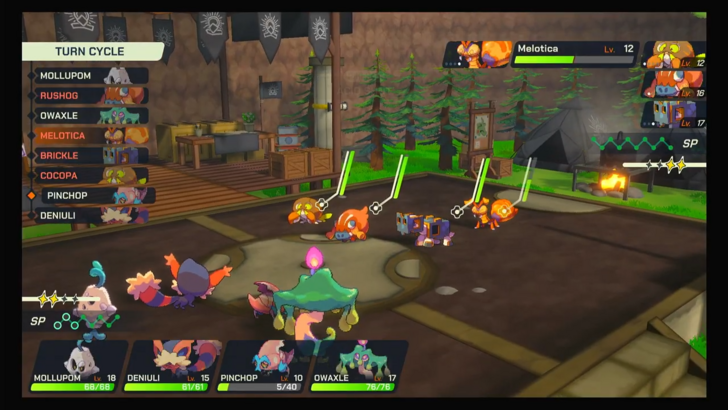
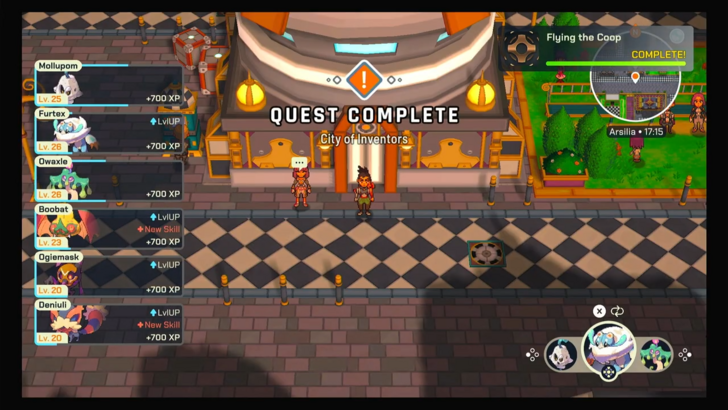
While the typing differences are mostly a “huh, that’s interesting…” implementation, the more engaging core feature is by far the 4v4 team battle gameplay. In LumenTale, you carry a party of six Animon and you have the option to set your starting lineup to anywhere between one and four Animon, but most of the time, you’ll be encountering groups of three or four opposing Animon whether it be in the wild or when you’re up against other trainers (in this game, called “Lumen”).
While group battles are nothing new in the monster battling space, there are two twists in LumenTale that make the battles more exciting to strategize around. One is that Skill Points (SP), which is basically your energy spent to cast moves, is shared between your whole team, so you truly have to strategize around who casts moves and how strong they should be within a given turn. Second, charging your TP gauge by landing super-effective attacks unlocks an extra turn for you via the TP Action bonus. This may seem small, but it does affect your strategy down to the team composition level as you’d want to avoid your enemies farming extra actions off of your Animons with bad defensive typings and making them snowball.
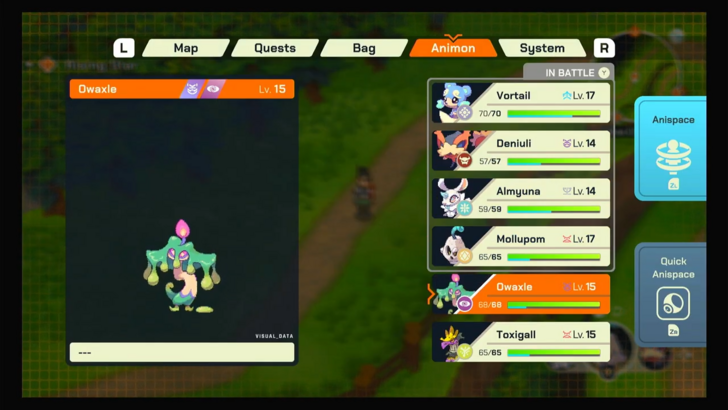
It’s these mechanics on top of the usual considerations like speed and physical or special attacks that give the combat a distinct tactical depth once you master the push-and-pull mechanics of the different resource pools. This is extremely evident even in the early battles you face where the opponent runs a team that consists of Animon that have different types from one another. It makes you adapt to the opposing team’s type and relative speeds to form battle plans in real time, confidently pushing for strategy over auto-pilot button mashing; a welcome challenge that brings high-level genre depth straight into the main campaign.
Monster Tamer in an RPG World
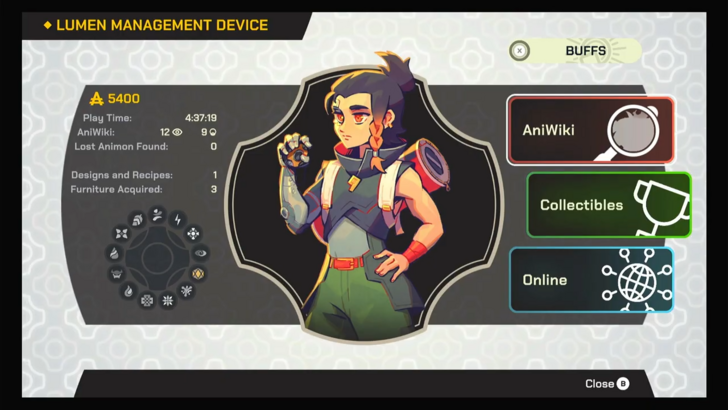
On top of the spin on combat mechanics, what’s interesting about LumenTale is how it interweaves standard RPG elements into what initially seemed like an unassuming creature collector. Right out the gate, you get a personality quiz a la Dragon Quest 3, but then the prologue alone hits you with a couple seemingly consequential choice screens; one of which being whether you want to first explore the northern technological region or the southern rural region first.
The region choice alone would vastly differentiate one playthrough from another, as each region would change the Animon that form your team from the early-to-mid-game. It’s a welcome integration of player autonomy in a monster tamer RPG, on top of the personalization you already get by being able to choose your starter and curate your own team. By tying early-game progression so heavily to player choice, the game provides an almost brutalist approach to replayability—a somehow charming feature considering how similarly it approaches the lack of tutorials in the early parts of a playthrough.
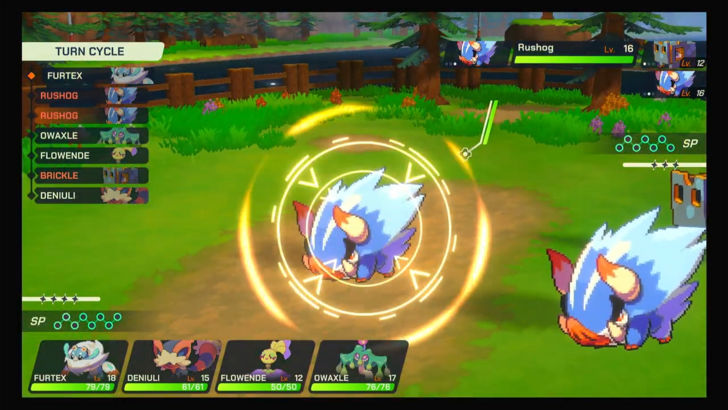
LumenTale also lets you play around with other typical RPG mechanics such as stat scaling for your Animon, crafting recipes and home base decoration, and also a welcome surprise in the form of leveling up your Animon’s moves by spending materials. These all enrich the gameplay experience further as they’re in line with LumenTale’s philosophy of confidence in the player to fully explore areas. Personalizing your playthrough with every feature LumenTale provides to the players constitutes a series of mini-victories, ensuring your journey will end up vastly different from that of another player’s save.
Captured by the World
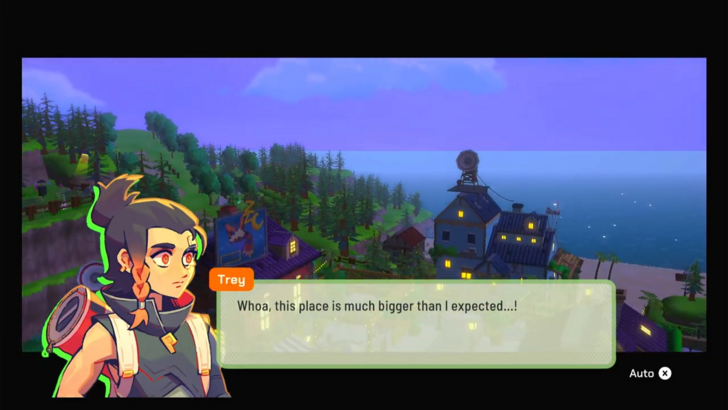
In regard to the world of Talea, it’s difficult not to be arrested by the visuals of the environments. The game is built with a style similar to HD-2D, where you can move your 2D sprite around this 3D world with dynamic camera angles. This style evokes the nostalgia we all feel from playing older Pokémon titles, Digimon World, or even Dragon Quest and Final Fantasy games.
On the surface, the nostalgic feeling evoked helps LumenTale feel at home with all those familiar titles, but this welcoming facade functionally serves to mask its punishing learning curves. By wrapping its demanding mechanics and dense, untutored overworld areas in a vibrant, relaxing aesthetic, it uses visual comfort to cushion the blow of its harsher, friction-heavy gameplay design choices.
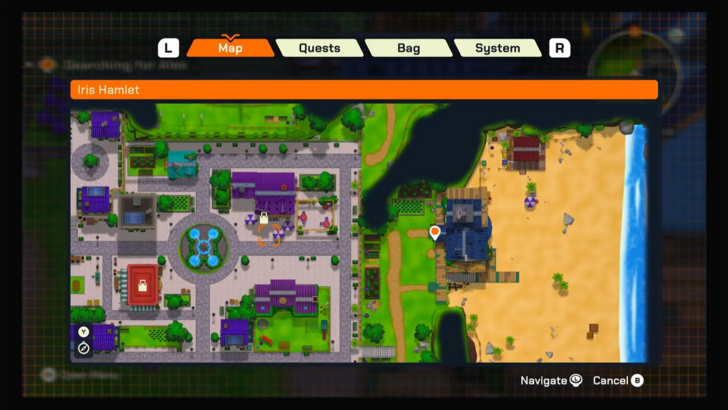
LumenTale also feels very modern, with a leaning towards actually seeing individual wild monsters run around their respective habitats. It helps you make a beeline towards certain Animon or items you are after in the area without triggering unwanted encounters, directly encouraging exploration due to the elimination of prominent obstacles.
The audio design, composed of the cozy soundtrack and the interactive sound effects like walking on different surfaces and triggering battles, also makes the world feel more tangible and atmospheric. I do wish it had more variety in the music and sound effects it offered, but it wasn’t that big of a deal during gameplay. It makes for a more immersive experience, as the accompanying audio mirrors the events in the game quite well throughout.
Seen This Story Before
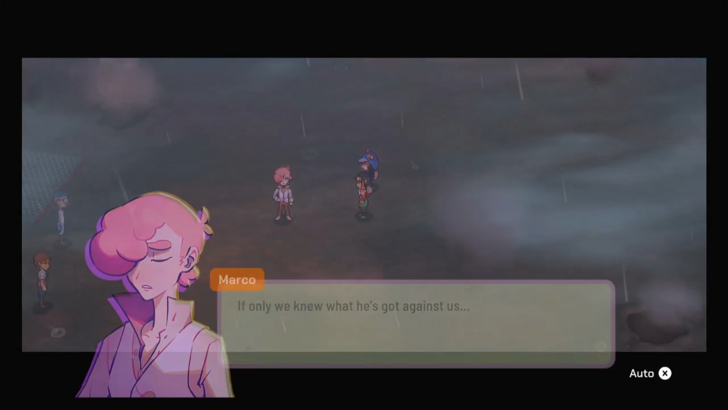
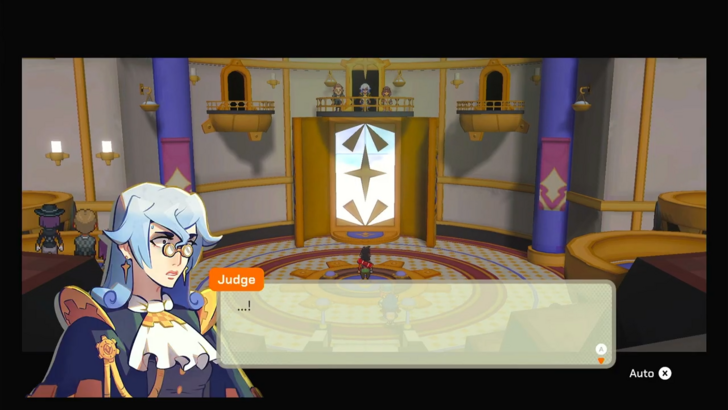
If there’s any unremarkable or forgettable aspect of LumenTale, it would have to be the main story. Don’t get me wrong, it’s not like it’s a bad narrative in terms of its writing and characters, but more like it could’ve been so much better.
First off, Trey’s amnesia makes the overall plot predictable since you can see twists coming from a mile away. Second, the characters are colorful and somewhat interesting, but they’re not compelling enough to push the story further. Lastly, the writing feels like something we’ve seen before, and while that’s not necessarily a bad thing, it could’ve made for a more compelling experience through its conflict, worldbuilding, and climactic moments.
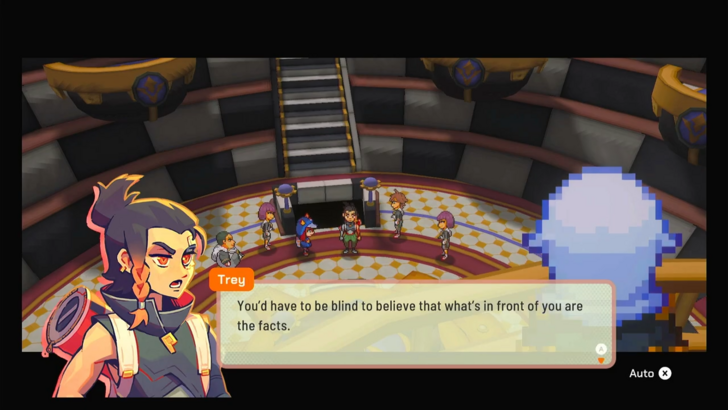
Ultimately, the story doesn’t stand out; it functions strictly as basic context to justify progression, leaving the excellent gameplay loops to carry the heavy lifting of the overall experience.
Is LumenTale: Memories of Trey Worth It?
A Must For Creature Collection and Turn-Based Combat Enthusiasts
For the price of $24.99, LumenTale: Memories of Trey is a big steal for creature-collector gamers. You get a large amount of replayability through the game’s distinct combat mechanics, rich selection of monsters, and inclusion of impactful choices. You could probably play this game a handful of times before it even starts feeling rote or familiar. LumenTale has a fresh spin on a proven formula that doesn’t move the genre forward on its own, but hopefully sparks a series that does over time.
FAQ
What Are The System Requirements for LumenTale: Memories of Trey?
| System | Minimum | Recommended |
|---|---|---|
| OS | Windows 10 | Windows 11 |
| Processor | Intel Core i5-6600K / AMD Ryzen 5 1300X | Intel Core i7-8600K / AMD Ryzen 5 3600X |
| Memory | 4 GB RAM | 8 GB RAM |
| Graphics | NVIDIA GeForce GTX 1650 / AMD Radeon RX 470 | NVIDIA GeForce 2080 / AMD Radeon RX 6650 XT |
| Storage | 2 GB | |
LumenTale: Memories of Trey Related Guides
| LumenTale:Memories of Trey Walkthrough & Guides Wiki | |
|---|---|
 LumenTale:Memories of Trey LumenTale:Memories of Trey |
|
| LumenTale: Memories of Trey Wiki Content | |
 AniWiki: All Animon AniWiki: All Animon |
 Main Quests Main Quests |
 Tips and Tricks Tips and Tricks |
 Choices Choices |
 News and Game Info News and Game Info |
 Review Review |
Recommended Guides
| Best Starter | Best Team Comp |
| Best and Recommended Settings | Is There Character Creation? |
Game8 Reviews