



| Little Nightmares 3 | |||
|---|---|---|---|
| Release Date | Gameplay & Story | Pre-Order & DLC | Review |
Little Nightmares 3: Secrets of the Spiral - The Backstage is a narrative-driven puzzle-platformer DLC set within the unsettling world of the Little Nightmares franchise. Read our review to see what it did well, what it didn't do well, and if it's worth buying.
Overview
What is Little Nightmares 3 - The Backstage DLC?
Little Nightmares 3: Secrets of the Spiral - The Backstage blends stealth, environmental puzzle-solving, and atmospheric exploration, as it follows Low and the newly introduced character, Dime, as they descend deeper into the hidden layers of The Carnevale in an attempt to rescue Alone from the Puppeteer.
Little Nightmares 3 - The Backstage DLC features:
⚫︎ Expands the Little Nightmares 3 Lore
⚫︎ Introduces Lightbulb Mechanic
⚫︎ Set Within the Depths of The Carnevale
⚫︎ Maintains Strong Atmospheric Horror Tone
⚫︎ Sets Up The Narrative for the Next Chapter of the DLC
For more gameplay details, read everything we know about Little Nightmares 3 - The Backstage DLC's gameplay and story.
| Digital Storefronts | ||||||
|---|---|---|---|---|---|---|
 Steam Steam |
 PlayStation PlayStation |
 Xbox Xbox |
||||
 Switch Switch |
Switch 2 |
|||||
| $7.99 | ||||||
Little Nightmares 3 - The Backstage DLC Review: A Better Nightmare Than The Base Game
Dime Steals the Spotlight
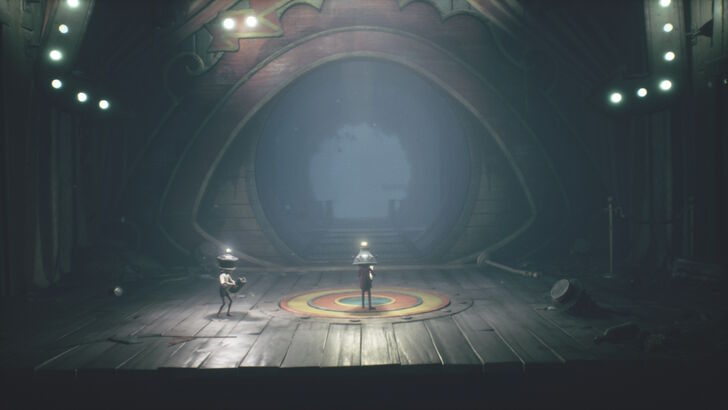
Little Nightmares 3's long-awaited expansion story has finally arrived, and it doesn't take long for its newest protagonist, Dime, to steal the spotlight. Armed with a lightbulb that serves as both a tool and a puzzle-solving mechanic, she brings a fresh dynamic to the familiar formula. It's not a revolutionary addition, but it constantly finds small ways to reshape how you approach the environment, making exploration and puzzle-solving feel just different enough to stand out.
That is exactly why The Backstage left me with mixed feelings. For an expansion that players have been anticipating since Secrets of the Spiral became available to buy last year, The Backstage is surprisingly brief. Depending on how quickly you solve its puzzles, you're looking at roughly one to a few hours of gameplay. The problem isn't necessarily the length itself; it's how effectively the DLC gets you invested before abruptly drawing the curtain closed. Just as I was becoming attached to Dime, curious about her role in the Spiral and eager to see where her story would go next, the mirror is already shattered.
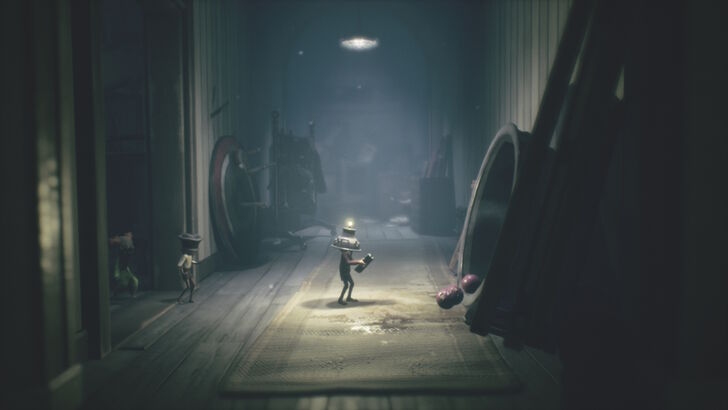
In many ways, The Backstage feels less like a complete chapter and more like a prologue. It does an excellent job introducing a compelling new protagonist, establishing intriguing mysteries, and teasing what's to come, but it doesn’t really capitalize on those ideas. That's particularly frustrating because several of the issues I had with the base game—particularly how the puzzles plateau after a while—is finally made better here.
And now comes the hardest part: waiting. With the next chapter scheduled for later this year, The Backstage ultimately feels like an appetizer that arrives just in time to make you hungry for the main course. This review focuses exclusively on the first chapter of the DLC. I will avoid talking about the base game itself so as to not give any spoilers, so if you'd like to read our full thoughts on Little Nightmares 3, you can check out our review of the base game as well.
Beneath the Carnevale's Bright Lights
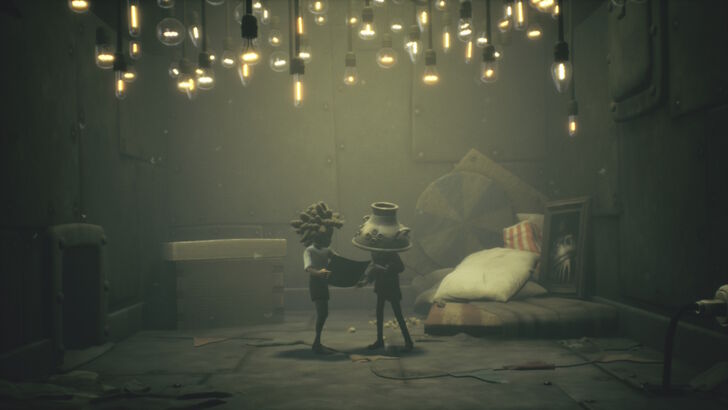
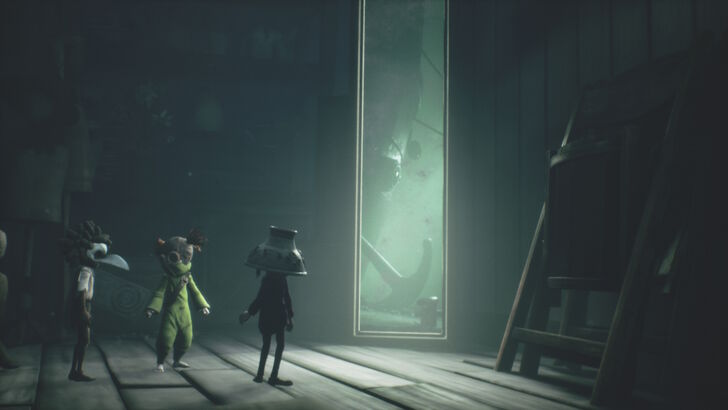
The Backstage takes players back to The Carnevale, the third chapter of the base game, but this isn't the same spectacle-filled attraction we've already explored. Instead, we're pulled behind the curtains and into its darker, more hidden corners, where the Puppeteer lurks. After becoming separated from Alone, Low finds himself navigating this unfamiliar side of the Carnevale alone until he is found by Dime, the DLC's new protagonist. Together, the pair set out to rescue Alone from the Puppeteer's grasp, giving the expansion a much more focused objective from the very beginning.
What immediately stood out to me was how different this version of the Carnevale feels. The base game's interpretation balanced its unsettling atmosphere with moments of visual flair and wonder. Even at its darkest, there were flashes of color and spectacle that reinforced the twisted carnival theme. The Backstage, on the other hand, spends most of its time wrapped in greys, shadows, and cramped environments. It's noticeably less vibrant, but surprisingly, that works in its favor. Rather than trying to outdo the original chapter, it leans into the feeling that you're somewhere you were never meant to see. The setting feels more oppressive and intimate, constantly reminding you that you're moving inside the Puppeteer's domain.
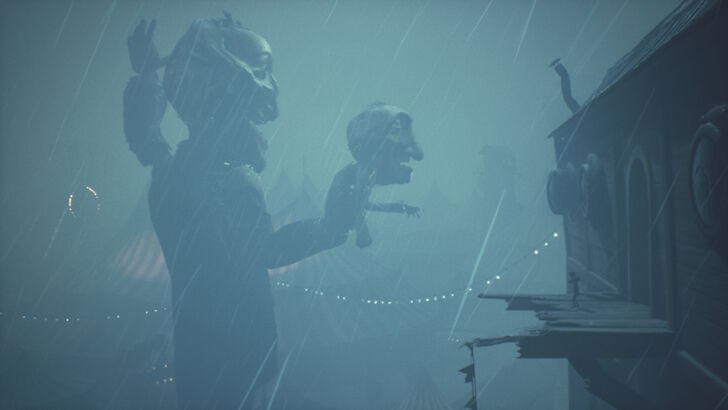
For players hoping for major revelations about the wider Little Nightmares universe, however, this first chapter may leave them wanting more. While it's enjoyable to see familiar characters and locations woven back into the story, very little here significantly expands the series’ lore. Most of the narrative serves to establish Dime's role in the story and reconnect players with the events of the base game. The one truly substantial development arrives near the end, and even then, it functions less as a revelation and more as a cliffhanger designed to propel you into Chapter 2.
That's ultimately where I landed on The Backstage's story. It's effective, but intentionally incomplete. It introduces a likable new protagonist, gives players a fresh perspective on a familiar location, and plants enough questions to keep curiosity high. At the same time, it feels very aware that its primary purpose is to set the stage for what comes next. By the time the chapter ends, I wasn't walking away satisfied by the answers it provided, I was thinking about the questions it deliberately left behind. It’s both exciting and frustrating, how this DLC makes you eager to see where Dime's story leads next.
Dime's Lightbulb Makes Every Encounter More Interactive
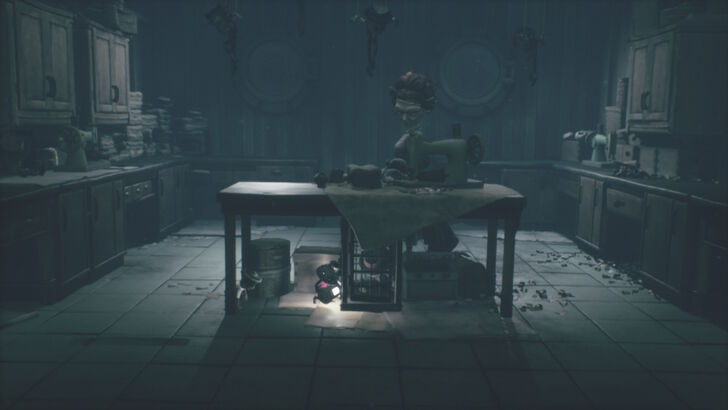
The Backstage's platforming and puzzle-solving loop is, in my opinion, a noticeable step up from what the base game offered. Little Nightmares 3 already retained the series' signature mix of exploration, environmental puzzles, and stealth, but Dime's lightbulb introduces just enough new functionality to make this short adventure feel fresh. In fact, after spending time with her mechanics, I couldn't help but wonder why this wasn’t part of the base game.
The expansion still revolves around the familiar rhythm of navigating hazards, solving environmental puzzles, and avoiding threats, but Dime's lightbulb constantly finds ways to influence those situations. The gameplay loop feels more active and engaging. Instead of simply reacting to danger, you're given additional tools that let you interact with it, creating encounters that demand a little more thought than simply hiding and waiting for an opening.
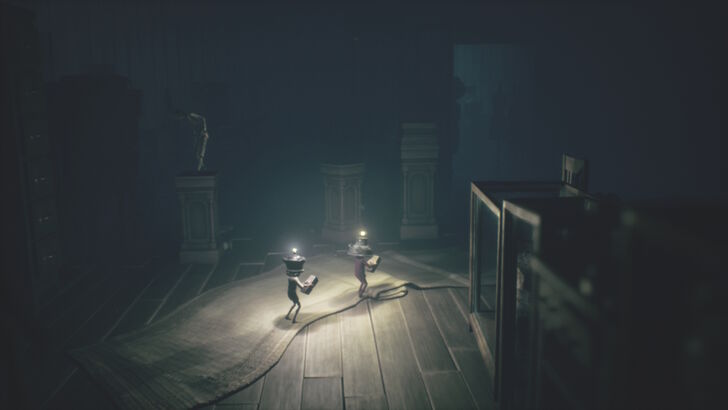
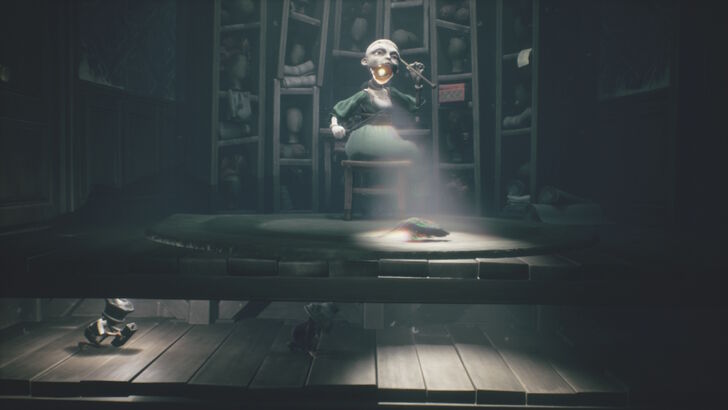
This is especially evident whenever both Shadow Children and the Puppeteer appear. Being able to disintegrate them with the lightbulb is a welcome return, but the real highlight is how the mechanic evolves when dealing with the Puppeteer. As the chapter's primary antagonist, she naturally creates some of the DLC's most tense moments, yet Dime's ability to briefly stun her adds an entirely new layer to encounters. It's a surprisingly novel idea for the series. For once, getting spotted doesn't always feel like an immediate death sentence. A well-timed use of the lightbulb can create a small window to escape, recover, and continue the stealth.
That single change does a lot for the overall pacing. The tension remains intact because you're still vulnerable, but the added room for error makes stealth sequences feel less rigid and more dynamic. Instead of memorizing a perfect route and hoping not to make a mistake, you're given a limited means of responding when things go wrong. It creates some of the most interactive stealth encounters the series has seen so far.
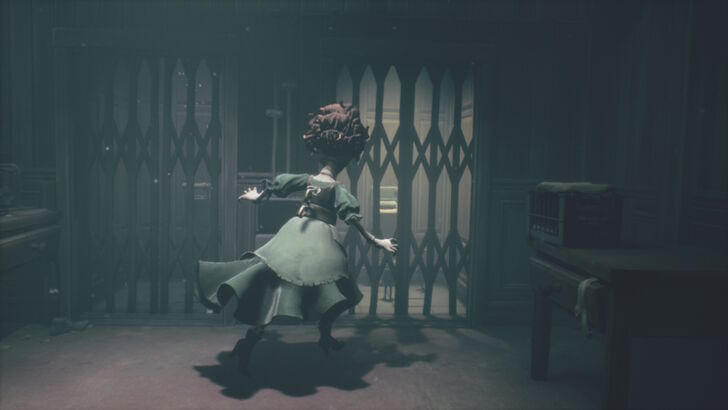
More than anything, The Backstage feels like proof of concept for mechanics that deserve a larger role going forward. Dime's lightbulb doesn't fundamentally reinvent Little Nightmares, but it pushes the formula in a direction that feels more engaging and player-driven.
Puzzles That Reward Observation Instead of Trial and Error
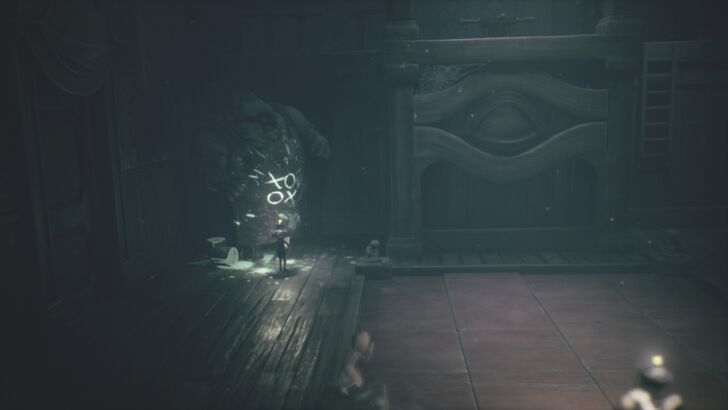
Beyond the new stealth mechanics, I was also pleasantly surprised by the quality of the puzzles themselves. Rather than relying on a single idea repeatedly, The Backstage steadily builds complexity throughout its runtime. Early challenges might simply ask you to understand the timing of a button press or coordinate movement between characters, but later puzzles become far more reliant on observation and deduction.
One of my favorite examples involved piecing together environmental clues to determine which platforms in a grid needed to be activated. It's the kind of puzzle that asks whether you're actually reading the environment around you. It makes solving these challenges feel earned. When the solution finally clicks, it's because you connected the clues yourself rather than stumbling into the answer through experimentation.
Dime's lightbulb once again plays a major role here, as you can use it to highlight clues. This mechanic then starts influencing both exploration and puzzle-solving in meaningful ways.
Teases a Chase That Never Comes
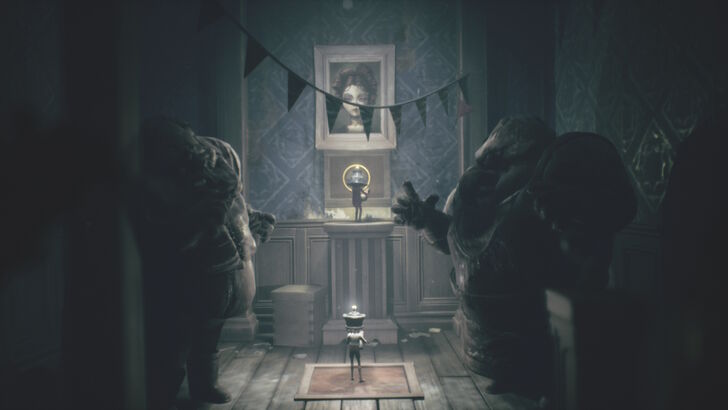
Despite the introduction of new mechanics and the steady improvement in puzzle design, I found myself waiting for something that never actually arrived: a proper chase sequence. And to be clear, Little Nightmares doesn't need to rely on chase sequences to define itself. But The Backstage constantly frames its environments in a way that makes you expect one anyway.
There are long, narrow corridors, tight camera angles, and deliberate pacing that all feel like they're building toward that classic moment of panic-driven escape. At multiple points, I caught myself bracing for it, especially in one section where I had to retrieve the final piece of a key. The item was placed right at the end of a long hallway, and everything about the setup told me I was about to trigger a chase on the way back. I remember slowly picking it up, already mentally preparing to run, my tension building with every step I took in reverse.
But nothing happened.
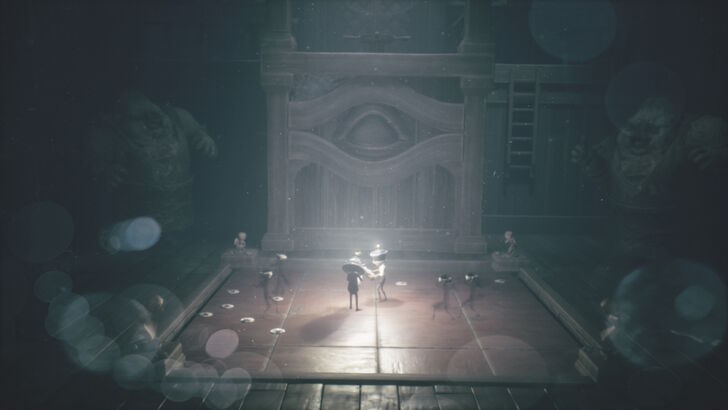
Instead of a high-intensity pursuit, I was met with Shadow Children waiting on my way back. It wasn't necessarily a bad encounter, but it completely subverted the expectation the level had spent so much time creating. That moment stuck with me because it felt like the game was intentionally leaning into a kind of tension it never fully committed to paying off.
When a level is constructed in a way that so clearly signals an imminent chase, choosing not to follow through can feel less like subversion and more like omission. It creates anticipation that never gets resolved, and that disconnect weakens what could have been one of the DLC's most memorable sequences.
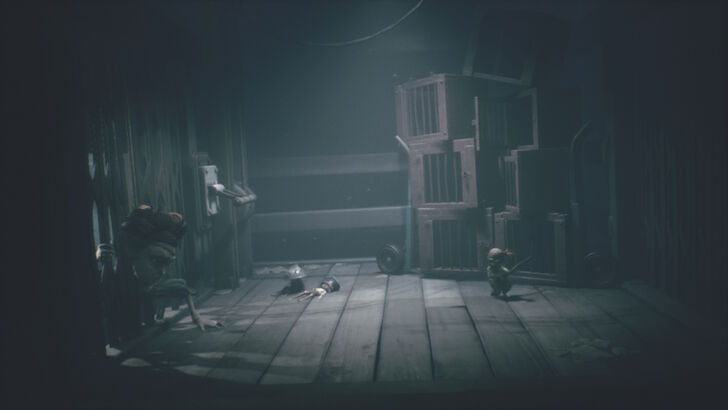
Ultimately, The Backstage continues to show confidence in its atmosphere and pacing, but this particular choice left me feeling like it held back at the exact moment it should have pushed forward.
Another Missed Opportunity to Add Couch Co-Op
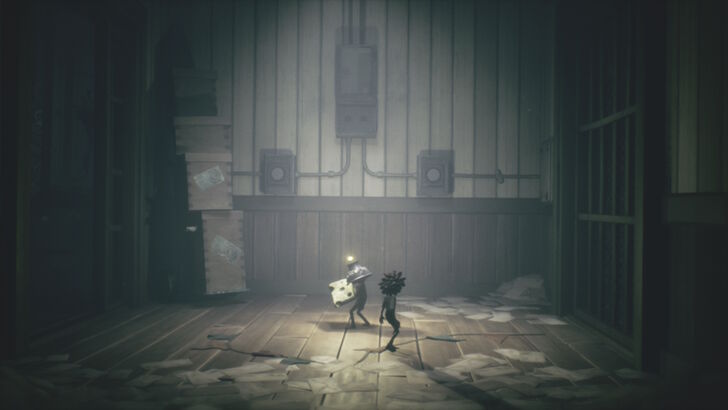
On top of its mechanical and pacing changes, I couldn't help but feel like The Backstage was also the perfect moment to add couch co-op. There are several puzzles in this chapter that rely heavily on synchronization; moments where timing, coordination, and shared awareness are clearly important to progression. And because of that, I kept thinking about how much more engaging these sections could have been if they were designed with couch co-op interaction in mind.
This would have changed the entire rhythm of the experience. Instead of personally juggling timing and environmental awareness alone, you could have shared that responsibility, turning moments of precision into moments of coordination. It would have made success feel more communal and failure more chaotic in the best possible way, which fits perfectly within the series' identity of fragile cooperation under pressure.
Is Little Nightmares 3 - The Backstage DLC Worth It?
Give Your Dime to Dime
Ultimately, yes, The Backstage is short, but that still feels consistent with the structure Little Nightmares has always followed, where individual stages often only run for an hour or two anyway. What matters more here is what that time is used for. Rather than trying to tell a complete story, this DLC focuses on setting the stage for Dime as a protagonist, and in that regard, it succeeds. There’s a clear sense of potential in how her mechanics, presence, and role in the narrative are introduced, even if we’re only seeing the very beginning of her journey.
Compared to the base game, I do see this as a step forward. The mechanical ideas are more confident, the puzzles are more engaging, and the stealth systems feel more flexible. The real disappointment doesn’t come from what’s here, it comes from knowing that Chapter 2 is still months away, leaving this experience feeling like a promising setup with no immediate payoff. It’s less about dissatisfaction with content and more about frustration with timing.
For long-time fans of the franchise who may have felt underwhelmed by how Little Nightmares 3 ultimately landed, The Backstage offers something more focused and more experimental at the same time. It doesn’t try to fix everything, but it does refine enough elements to feel like a meaningful addition. For its price point, it gives players a short but interesting expansion of The Spiral’s lore and a closer look at a character who feels genuinely worth following.
That said, recommendation depends heavily on patience. If you're invested in the world and eager to see where Dime's story leads, this DLC is an easy pickup. But if you're the type of player who struggles with waiting, it might be better to hold off until the full Secrets of the Spiral expansion is out, when the story can be experienced in full without the interruption of long gaps between chapters.
Little Nightmares 3 - The Backstage DLC FAQ
How Does Little Nightmares 3: The Backstage Perform on Switch 2?
Performance on Switch 2 is generally stable at a consistent 30 FPS during gameplay, keeping movement and stealth sections smooth enough to preserve tension. However, cutscenes can noticeably dip, with animations occasionally slowing down.
Game8 Reviews

You may also like...
 |
REANIMAL Review | More Ruthless Than Any Little Nightmares Adventure, Horror, Platformer, Puzzle |
 |
Bendy: Lone Wolf Review | More of the Same Ink Roguelike, Action, Horror, Survival |
 |
Silksong Review | Hornet’s Ascension is Painfully Beautiful Action, Metroidvania |
 |
No, I'm Not A Human Review | Nightmare You Won’t Want to Wake Up From Horror, Simulation |
 |
The Midnight Walk Review | Nightmare Before Christmas: The Videogame Horror, Adventure |