



| Lay of the Land | |||
|---|---|---|---|
| Release Date | Gameplay & Story | Pre-Order & DLC | Review |
Overview
What is Lay of the Land?
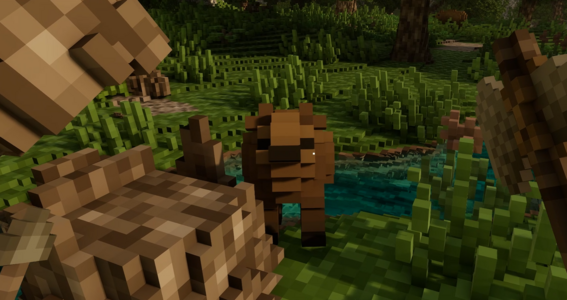
Lay of the Land is a sandbox adventure game where players explore a rich voxel fantasy world where physics-based mechanics rule. Fight both skeletal and animal enemies, loot abandoned castles and mines, and create masterful homesteads with the game’s detail-oriented building system. Almost anything goes in Lay of the Land, with freedom at the fingertips.
For more gameplay details, read everything we know about Lay of the Land’s gameplay and story.
Lay of the Land features:
⚫︎ Gorgeous, Voxel-Based Visual Style
⚫︎ Detailed Building System
⚫︎ A Wholly Sandbox Experience From The Ground Up
⚫︎ A Vast World To Explore
| Digital Storefronts | ||
|---|---|---|
 Steam Steam |
||
| $19.99 |
Lay of the Land Review: Stunning, But Empty
Almost Unlimited Freedom At A Price
Sandbox games are inherently fun—from the name itself, it already gives the idea of freedom, of making anything and everything you can in the digital sphere. I’m a casual on-and-off Minecraft player, sometimes sinking in hours upon hours trying to get that perfect build or farm, or just exploring the great beyond to fill up my maps.
Lay of the Land looked like a game just right up my alley just from its visuals. Pixel art styles have always been a favorite of mine, and seeing the game’s trailer drew me to it like a moth to a flame. It’s been a long time since I’ve dived into Minecraft—and apparently, the first thing I do is try out a game that reminds me of it instead.
So here we are today, and Lay of the Land has managed to deliver a pretty decent experience that kept me entertained for several hours, despite a feeling of emptiness. It’s definitely what I was expecting it to be, but I had fun, nevertheless.
Your Fantasy World, Your Way—Kind Of
When you step into Lay of the Land, you’re immediately plopped into the middle of an altar-looking place in the middle of nowhere, with nothing but the clothes on your back and an empty inventory. And from that point on…you’re left to your own devices. There’s no concrete story or some prophecy about you being the world’s chosen hero or something of that sort—you’re just an adventurous individual off on a journey to explore.
In my exploration, there doesn’t seem to be any form of solid lore either—why there are dozens of these abandoned castles and observatory-looking areas but only inhabited by skeletons or why the world is in this state is left to the imagination, and perhaps that is one of the things that is captivating about sandbox games—almost anything goes, the transformative aspect of it all woven into its gameplay. It’s not an RPG; it’s not exactly a hero’s adventure.
There’s quite a long-winded tutorial, but it’s not exactly directly locking you into anything. From the moment you spawn into your world in the Lay of the Land, freedom is all yours. Explore, build, loot, fight—in almost any way you want. As with most sandbox games, the seed is different with every world, allowing for a bit of variety in the worlds you start in. You can spawn beside an abandoned smithy or near a nightmare of a stronghold with a dozen skeletal enemies here and there.
Exploration, Looting, and Crafting Is The Name Of The Game
Most of Lay of the Land’s gameplay is about you…getting to know the lay of the land. Quite literally. Most of the game is tailored to exploration—whether it be finding the next cave to mine from, the next abandoned mansion or house to loot from, or taking down bosses in combat. Exploration is a big thing in the game. You will be moving around a lot, which is kind of frustrating due to the player character’s sluggish movement speed, but it’s a minor thing.
While exploring, you would be looting and collecting different items and blocks. Almost anything and everything in the game is collectable—leaves and grass on the ground (in different types, I might add), wood from trees, plant fiber from the riverside, or a whole ton of dirt from the ground if you wanted to dig a hole that deep. No actual limitations except for the durability of your tools, that is.
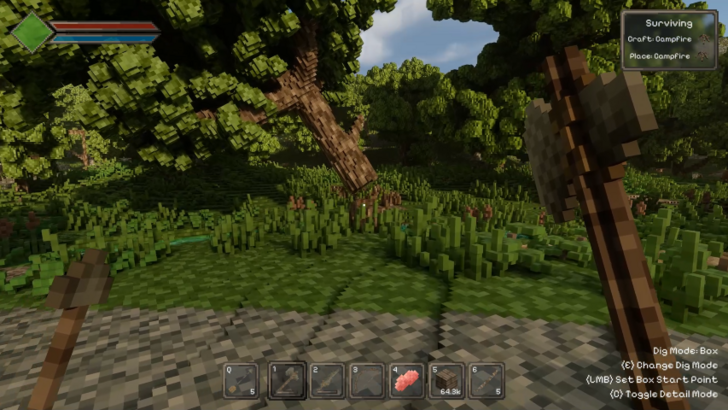
On that note as well, gravity is everything in this game, considering it’s a sandbox. Falling trees hurt you as much as they hurt skeletons and angry boar enemies—keep this in mind as you cut down trees upon trees to fuel your itch to build and to craft. It makes for some hilarious and damaging scenarios, whether you’re the victim or not.
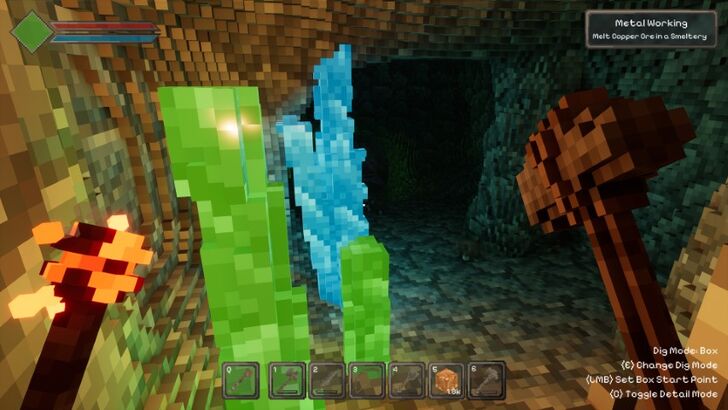
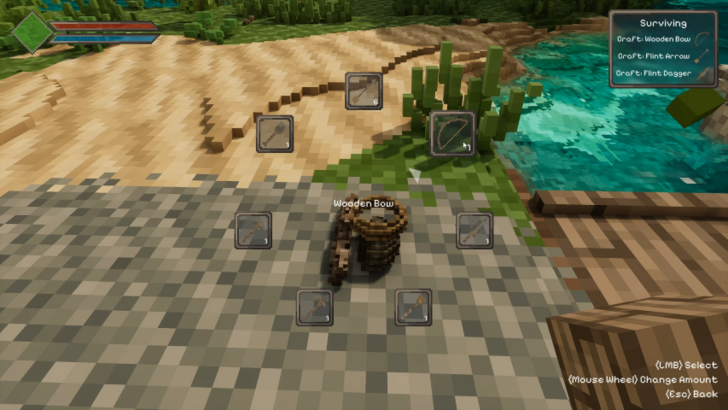
What do you do then with the resources you have acquired? One of the first things you are able to do even from the get-go is to craft items. Instead of using crafting tables like in other games (Minecraft’s crafting grid haunts me always), Lay of the Land’s crafting system is a bit simpler in comparison.
You just drop all the components on the ground, press R for crafting, and choose from the craftable options in a circle menu, using the scroll wheel to add or decrease the output. It kind of beats memorizing placements and the number of specified items, and there’s this satisfaction of seeing it play out in real time. It’s got a charm to it, even if it does get a bit tedious in the long run.
So what else can you make with all your resources? Well, you can also build your own buildings—sculptures, houses, castles—anything you set your mind to.
No-Holds-Barred Building Mechanics
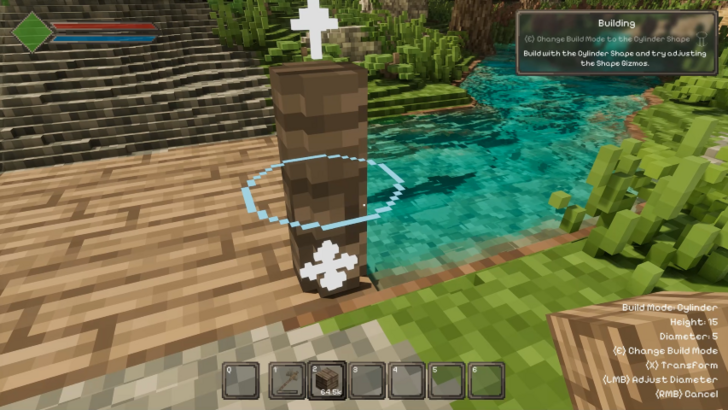
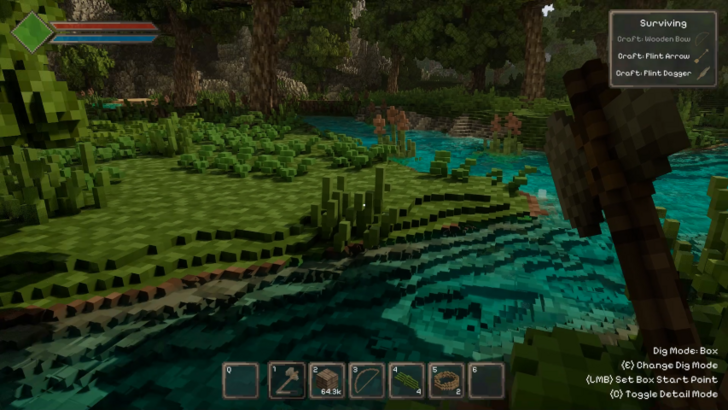
The more feature-rich aspect of Lay of the Land’s gameplay is the impossibly free building mechanics. Depending on your playstyle, this can either be an immense blessing or just something you won’t utilize as much. The level of control and customization in this game is quite insane, allowing you to get into the most minute of details with its (aptly named) Detail Mode. If it’s a shape that can be done with a square pixel, it’s most definitely doable in-game.
You don’t have to build from scratch either—the game provides several pre-fabricated shapes, customizable with specific height and width parameters to really nail the look you were going for. Putting them together and seeing what comes together is part of the fun, mixing and matching shapes to create towering buildings of wood, stone, clay, or any other resource you have in plentiful supply.
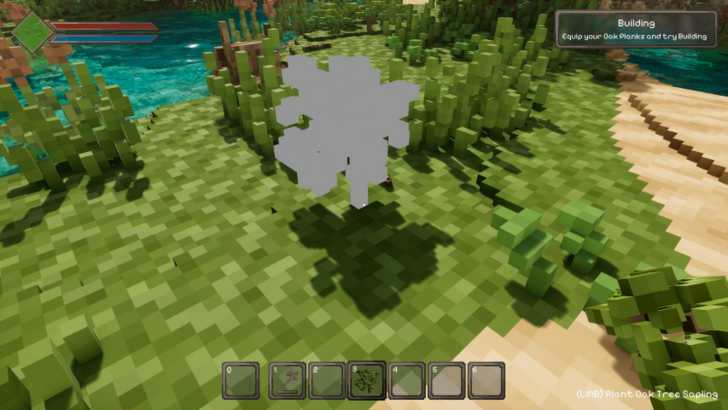
While having such freedom of creativity in the building sphere, it’s got its weaknesses too. Simply put, it’s quite overwhelming to the normal player. Minecraft building is less tedious than it is here for sure, and if you’re already a player who doesn’t really get into the creative side of sandboxes (without help, that is), then the building function will quickly become the least used part of your playthrough—which is a bummer in itself, because it’s evidently the feature that’s most polished out of all its gameplay mechanics.
You can get away with the most basic of buildings like those starter houses in Minecraft. There’s not much incentive to build other than making an already pretty game even nicer to look at with new buildings and what not. You can also definitely just take an abandoned building for yourself to add to your cluster of bases, with dozens of them scattered across the map.
Basic, Decent Combat
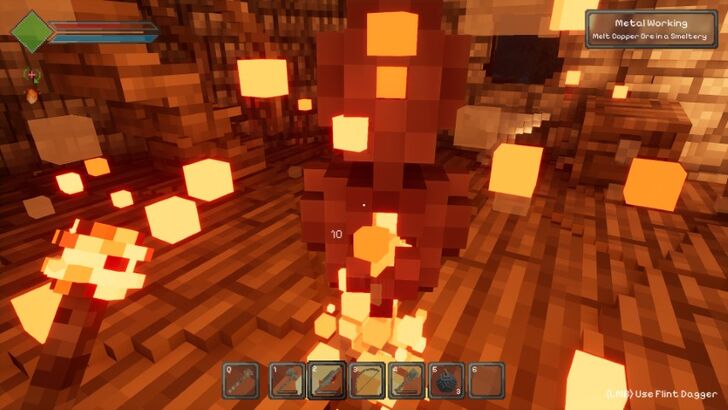
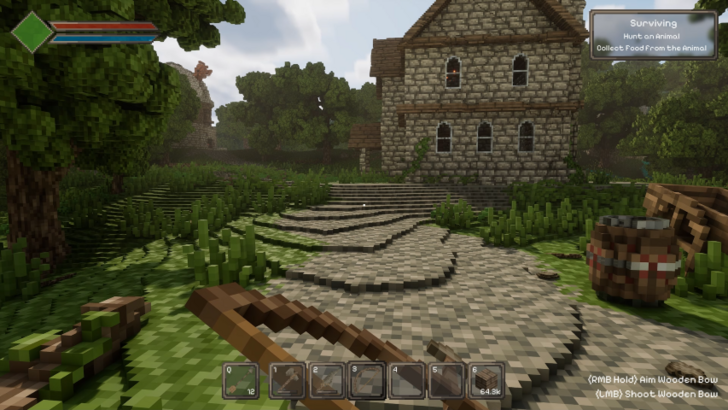
Not entirely a bad point, but the combat’s pretty basic as it is. It’s decent and serviceable for a game like this. Melee combat feels pretty hard-hitting, but it’s just you mashing the left mouse button with a bit of moving backwards to lessen the hits. Ranged combat, on the other hand, feels a bit more fulfilling, whether it be using bows and arrows or through magic wands.
As a sandbox, there’s no leveling up or EXP to acquire—getting stronger is directly tied to the quality of your armor and weapons. It makes sense: take down enemies, acquire resources from exploring, craft and smelt better equipment, rinse and repeat. It’s an easy-to-follow loop that employs the basics of adventure games, easily understood by any player.
Gorgeous Visuals—If You Could Distinguish Them
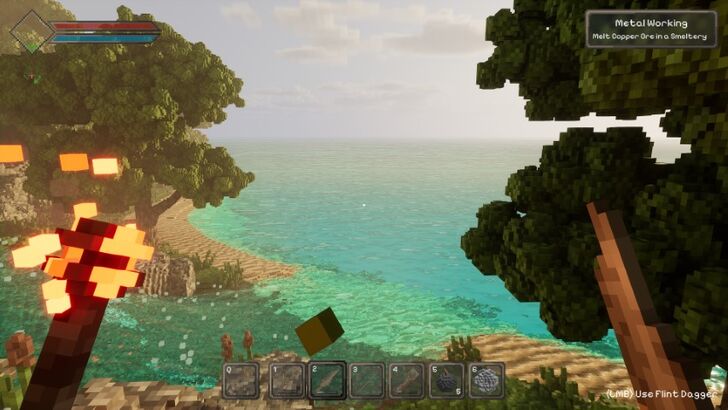
At the surface, it's undeniable that Lay of the Land looks absolutely stunning. The voxel visual style, and everything blends together nicely to create breathtaking scenery. From the terrain to the different biomes to the strong weather effects and just the overall view of things, each part of the world is beautiful in its own way. You can pretty much spend a whole in-game day just looking around, strolling through with the sounds of nature in the background.
However, sometimes, these voxel blocks blend too well. Unlike other sandbox games where items have their own unique visuals, which helps with identification, Lay of the Land could be a bit lacking in this department. Blocks on the overworld look similar to each other before they are harvested, which is a bit frustrating when you’re trying to get a certain material. For instance, I was tasked with acquiring some clay from the riverside, yet it looked so similar to the dirt that it took me a bit longer to realize that the quest notification was not filling up.
This also extends to buildings sometimes, where floors and furniture just kind of blend into each other from being made of the same material.
Large Map, Empty World
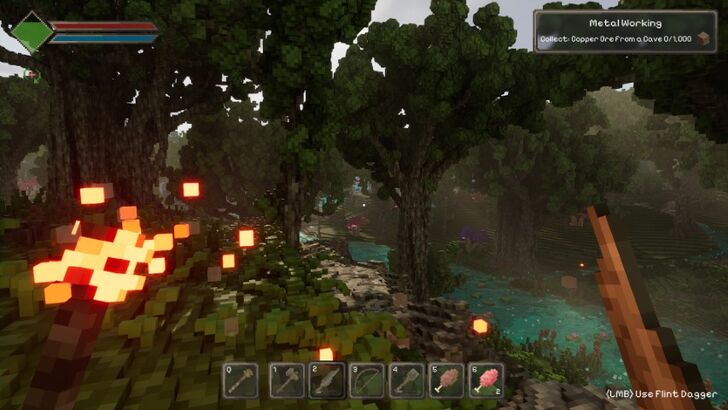
The map is fairly large for what it is. Of course, it’s not as immense as games like Minecraft, but there’s a decently sized stretch of land for your freedom of exploration. Tons of scenery and sights to behold, several resources to collect and craft and build with—however, no matter how distracted you get with the view, you’ll always end up realizing that such a big and beautiful world is not as engaging without other people in it.
While I’m not clamoring for multiplayer functionality, a few select NPCs would be a good addition to keep things going. Perhaps a trader, or an adventurer quest giver, maybe someone related to in-game not-Steam achievements—just anyone, really. The land is large, ready for the taking, but the feeling of loneliness is apparent everywhere you go.
Is Lay of the Land Worth It?
Could Use A Few More Updates, But Worth It For A Weekend
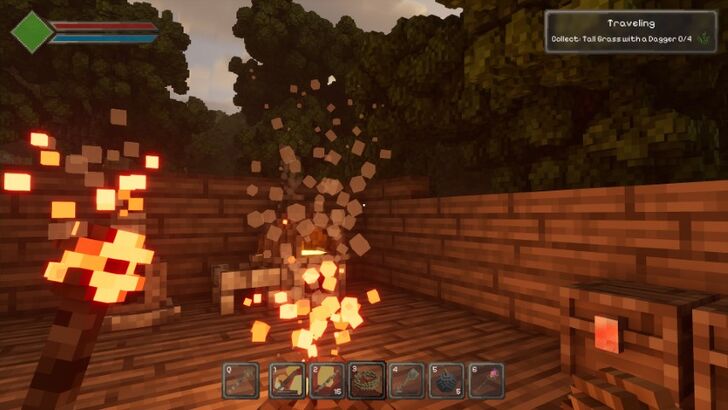
Lay of the Land has its basics down—basic combat, a decent crafting system, complex but customizable building mechanics, stunning visuals, immersive ASMR-like audio, the works. However, it’s still pretty bare as it is, and it feels like an Early Access game at the time of writing. With a satisfactory amount of content, especially for the creative ones, but not enough to call it a full game.
Of course, this is all keeping in mind that this entire game was created by a solo developer, which is a big feat in itself. The game constantly gets updates, and that’s a good sign—it makes me look forward to what’s coming next for the title. I’ll let it cook just a bit more, but I’ll be subscribed to what the Lay of the Land can become in the future.
If you’re looking for a quick 10-20 hour sandbox adventure to sink a weekend into, this might just be the perfect game for you. Otherwise, perhaps wait for a few more patches and content additions before delving into its voxel world.
| Digital Storefronts | ||
|---|---|---|
| Steam |
||
| $19.99 |
FAQ
Is Lay of the Land multiplayer?
Currently, Lay of the Land is strictly a singleplayer sandbox adventure game.
Game8 Reviews