



Grow a Garden 2 is a sequel to the highly popular Roblox farming game Grow a Garden. Read on to find out what it does right, what it does wrong, and our overall thoughts on the game.
Overview
What is Grow a Garden 2?
Grow a Garden 2 is a sequel to Grow a Garden, a popular farming simulator on Roblox. The game sees players planting their own gardens in social, multiplayer hubs, while selling their produce for more money. Along the way, players can obtain pets, join guilds, and protect their garden from thieves.
Grow a Garden 2 features:
⚫︎ A robust, in-game economy built around planting and selling produce
⚫︎ Pets that provide passive gameplay boosts
⚫︎ The ability to join Guilds to earn rare rewards
⚫︎ Protecting your garden through combat
⚫︎ Weather events that mutate plants and drop rare seeds
Grow a Garden 2 Review | The Roots Spread Wide and Thin
Planting the Seeds for a Formulaic Roblox Hit
Internet-based farming games are a time-honored tradition at this point. Ever since Farmville blew up in 2009 and basically pioneered the social farming simulator experience, these types of games have retained their popularity due to their simplicity. Plant seeds, build a farm, do this with friends as you wait for your mouse-assisted labor to literally bear fruit (or vegetable, or weird game-only plant that’s worth a million dollars). It’s incredibly accessible and easy to understand, and for a lot of casual gamers this is the peak of their experience with the medium.
Grow A Garden took this formula to its most logical extreme, implementing the classic farm-waiting gameplay loop, stripping it down to its bare essentials, and introducing it into the highly accessible, deeply social, and immensely lucrative world of Roblox. In turn, the original game has become one of the most popular games of its time, even helping Roblox topple Fortnite in monthly users for a while. Grow a Garden 2, then, feels just as much of an attempt to recapture that magic as it is a way to deepen the experience, but in both cases it stumbles just as much as it succeeds.
Grow a Garden 2 is, for all intents and purposes, just more Grow a Garden. It’s the same, tried-and-true formula of planting seeds, selling their fruits, and using the profits to expand your plot and plant more seeds. It hits all the right dopamine receptors, while new mechanics like guilds, crop-stealing, and pets only give players more options to express themselves and personalize their own garden with friends. All cynicism aside, it’s a gameplay loop that works and has such a little barrier to entry that you can basically get a good garden going in an hour of playing.
An attempt to grow this series’ fundamental gameplay loop into something bigger, or at least more involved, is respectable, but ultimately falls flat. Nothing about the new additions elevates what’s essentially the same repetitive, shallow gameplay experience, and at their worst they serve as padding to distract from the farming. Ironically, for a game centered around growing fruits and vegetables, Grow a Garden 2 is like one of those limited-time bags of junk food: a satisfying, comforting burst of flavor that builds upon something that’s fundamentally bereft of substance.
Meet the New Garden…
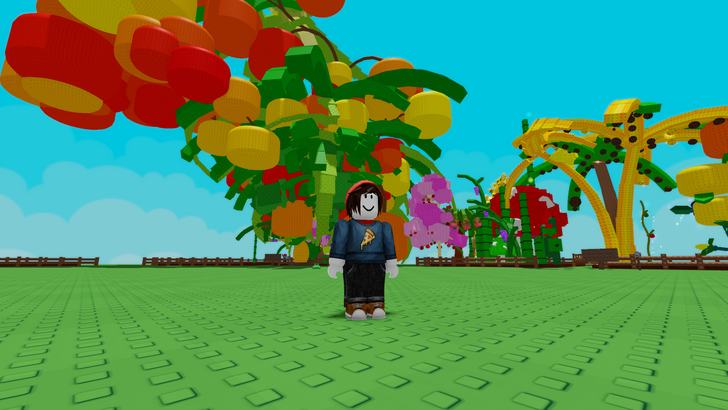
Grow a Garden 2, being so similar to its predecessor, plays exactly as you would expect it to. It’s Grow a Garden with more stuff in it, some of it quite new and interesting, but nothing that ultimately transforms the core experience. My problem with this is that Grow A Garden was barely ever a game in the interactive, immersive sense.
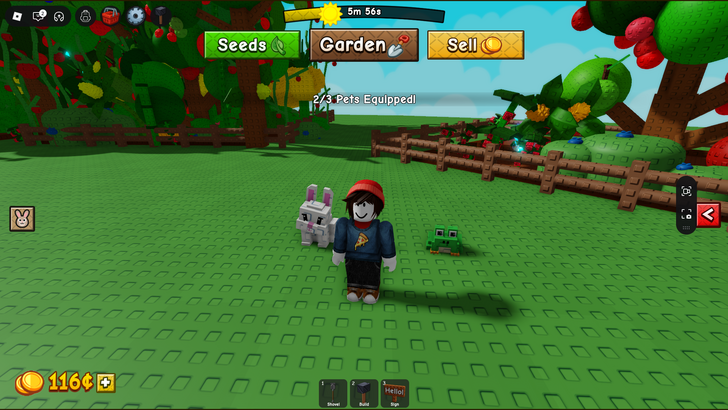
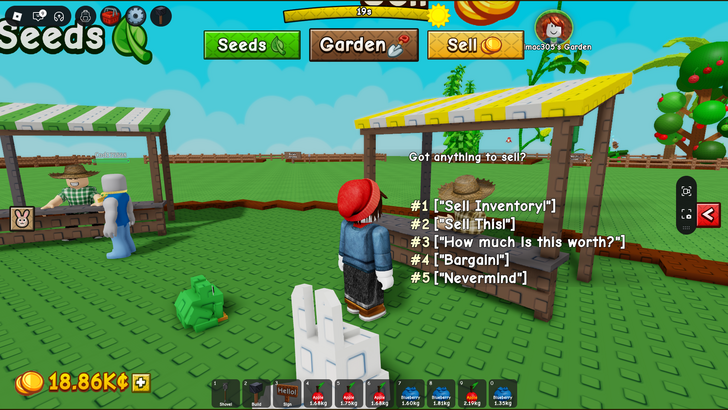
Grow a Garden 2 sees players dropping into a social map of up to 50 players, with their own plot of land to grow crops and cultivate as their own. This map also hosts other players’ gardens, as well as a central hub where you can sell produce and buy seeds of differing rarity and value alongside props to decorate and protect the garden. The game doesn’t really introduce new mechanics so much as it reintroduces them in more accessible ways, which makes Grow a Garden 2 feel less like a true, blue sequel and just an expansion with one notable new addition.
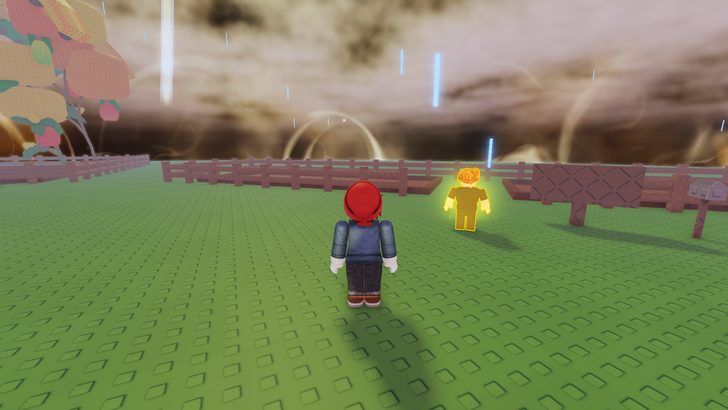
For instance, heavily reworked in the sequel is the ability to buy pets that roam around the map and offer boosts to harvesting and crop growth. It also adds new weather events throughout the map, such as Rainbow, which increases the likelihood of more lucrative Rainbow-colored fruits to appear, and Gold Moon, which drops Golden Seeds that grant players a Midas touch for all their crops.
Along the way, players will be able to steal fellow farmers’ crops during the night time, which incentivizes players to either build around their most valuable crops or just stay in the vicinity to protect their land. All of these are features that have been present, even in the first Grow a Garden, but they’ve been streamlined to be more integrated into the moment-to-moment gameplay.
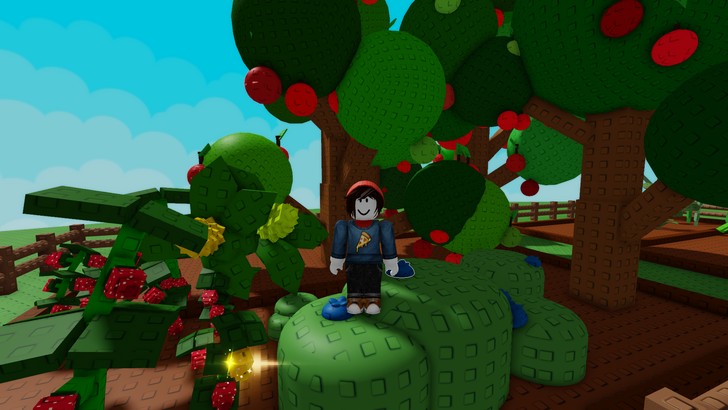
In fact, this might be what Grow a Garden 2 pushes into the hardest in trying to be a sequel to a smash hit game: leaning into what made it work. The core gameplay system is present and accounted for, with new crops being added to the roster for more garden expression and more money to earn. Grow a Garden 2’s best new addition, the Guild System, is a natural evolution of the game’s emphasis on social interaction as it incentivizes players to form their own groups. This, in turn, grants players with exclusive, extremely rare rewards and an ability to protect themselves and their fellow guild members from nighttime thieves.
There’s nothing inherently wrong with this gameplay loop, for the record, and I’ll be the first to say that there’s a clear and understandable reason why it works. It's undeniable that this style shines in its simplicity, both within the greater scope of its genre and especially in the context of Grow a Garden 2 itself.
This game simply wouldn’t have millions of concurrent users if it wasn’t as barebones and low maintenance as it was. It doesn’t hurt that, with enough creativity and luck (or money, if you have the Robux to spare), you can turn your garden into a garishly colorful, towering spectacle for the whole lobby to enjoy.
Even I personally found something to enjoy with this structure, whether it was finding really rare seeds or adopting cute bunny rabbits and owls as my pets. I just struggle to find anything to appreciate beyond this initial excitement, especially as the sequel reintroduces features that augment the core experience.
…Same as the Old Garden
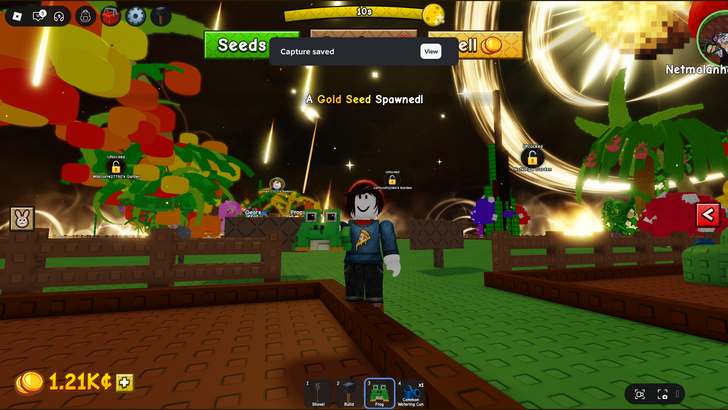
Grow a Garden 2 does very little to add onto the main gameplay loop, the crux of which is simple and repetitive. Growing crops, selling them, and expanding the base yet again to grow more crops is a fun loop, for sure, but once you dig beneath the surface and discover the game’s shallow nature, the experience starts to wither.
The satisfaction that I, or, I imagine, anyone derives from Grow a Garden seems to come from clever psychological tricks rather than an actual reward from intentional engagement with its systems. In particular, Grow a Garden 2 relies heavily on its established, simple feedback loop to hook players in while scaling the perceived intensity of the numbers and rewards players obtain to keep them fully engaged. The plants, pets, and land you earn will grow, but the fundamental experience stays the same.
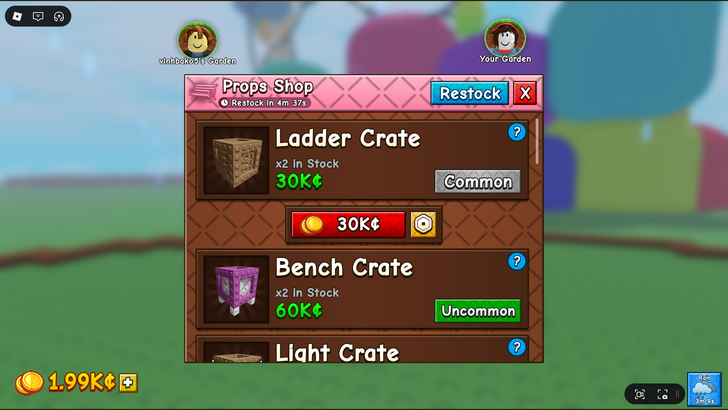
This is made even worse by the fact that Grow a Garden 2 predicates so much of its progression on waiting, or monetization if you can afford it. Grow a Garden 2’s "new" features do attempt to alleviate this monotony by introducing more active parts to the gameplay, such as protecting your crops or incentivizing players to participate in events, but they simply aren’t enough.
The end goal of all of these new additions all fundamentally relates back to the core goal of making more money and planting more crops. The fact that ignoring these factors doesn't impose significant penalties on players makes taking the path of least resistance all the easier.
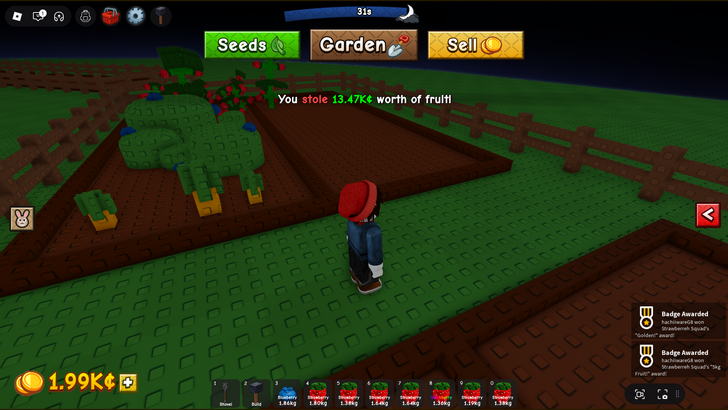
Never once in my time with the game did I catch someone stealing my crops and think "Man, I need to get over there pronto!" because the urgency is completely robbed by the game’s fundamental passivity. I could’ve always just planted and bought more crops, and then stayed in the vicinity of my garden during the nighttime while I did something more productive with my time.
One could argue that the passivity is the point, and that, without it, Grow a Garden ceases to be what made it such a popular title. This, for the most part, is absolutely correct. However, it is undeniable that building something on shaky or, more aptly, shallow foundations will inevitably show cracks. As a sequel, this game seems to be designed with this in mind, hence the emphasis on more active gameplay factors. Grow a Garden 2 succeeds at what it does, but what it does requires much more to be a consistently engaging experience.
Walking in a Lego Wonderland
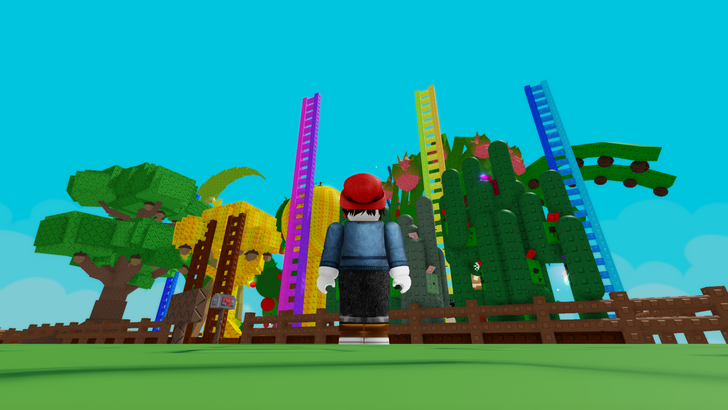
As a continuation or expansion of what made Grow a Garden work so well, the sequel practically looks like a fully upgraded version of the original. Colors are more vibrant, the UI is more useful, and it still retains the blocky, Minecraft/Lego/Roblox hybrid style that gives the game its classic nostalgic charm. This is only made better by the different weather events, which fill the skies with so many colors and particle effects that you’ll have to pay attention, even to just watch everything unfold.
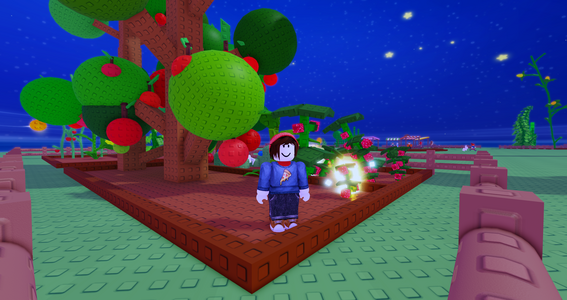
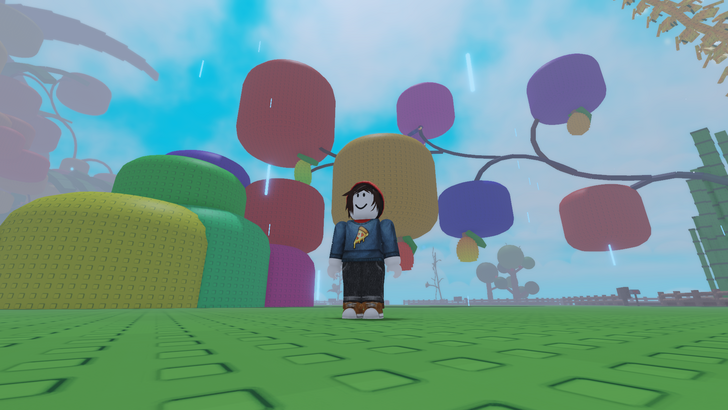
One of the ways this manifests wonderfully is with the ways that gardens grow, which can turn into ridiculous, over-the-top gardens with absurdly colorful plants and trees towering over the server. While I was proud of my personal garden, with its bountiful strawberry and blueberry plants and its giant bean stalks and apple trees, I couldn’t help but gaze endlessly at the gaudy, gargantuan gardens the other players have cultivated. I didn’t think it was possible to grow a bean stalk so big that it reached the skybox, but it is and I kinda want one for myself now.
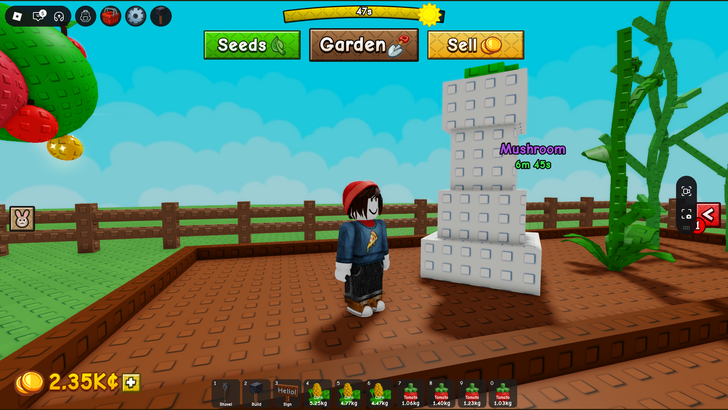
The music in Grow a Garden 2 isn’t nearly as distinctive and fully realized since, much like its predecessor, the game uses well-known classical pieces as the background music for reaping and sowing. Edvard Grieg’s Morning and Mozart’s Rondo Alla Turca serve as the score for the morning, while Debussy’s Clair de Lune plays during the night time. On the one hand, it's a solid curation of classics that serves as a good way to sell the calming, peaceful atmosphere of the game. On the other hand, it does make Grow a Garden 2’s sonic identity quite generic, as it's incredibly likely that you’ve heard these songs before in other, better contexts.
In this sense, perhaps the strongest part of the Grow a Garden 2 experience is the garden decoration itself. There is a lot of fun to be had with maximizing your garden space with giant, color-coordinated fields, especially if they yield great reward. It's a shame that the gameplay loop to get there is incredibly tedious, and the aggressive monetization locks otherwise useful features behind a non-negotiable paywall. Nonetheless, it is a genuine point of enjoyment.
More Expensive Than Actual Lego Sets
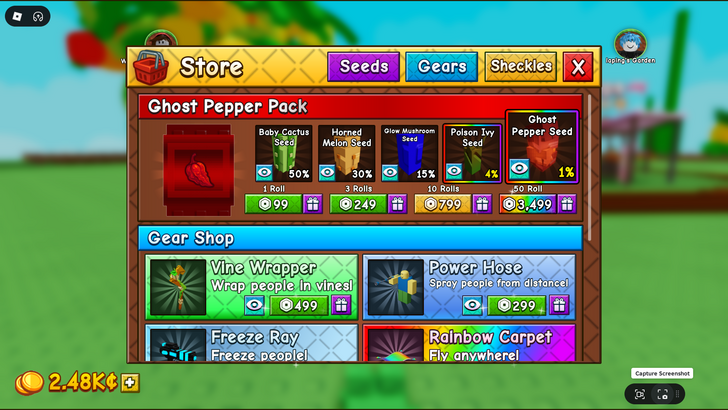
A genuine flaw that Grow a Garden 2 still hasn’t addressed from the original game is its brutal, aggressive monetization, something so polarizing that even the playerbase has voiced their concerns over it. Yes, as a games platform and storefront, Roblox does incentivize game creators to insert microtransactions wherever it can. In most cases, though, at least with Roblox’s more popular titles, this translates to cosmetic skins or special weapons that aren’t exactly necessary to progress in the game.
Take, for instance, the recently released Piggy: Intercity. The game is, similarly, a long-awaited sequel to a beloved Roblox franchise that places a large emphasis on base decoration and protection. However, it's never necessary to purchase anything from its in-game store to enjoy the totality of what it has to offer. What’s more, the game offers several hours of solid gameplay and replayability on its own.
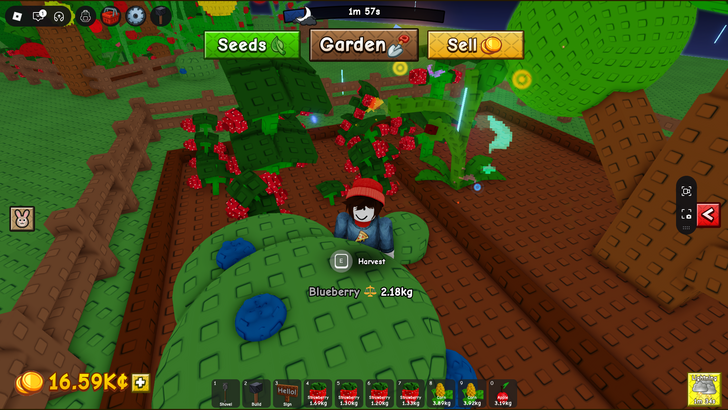
By comparison, Grow a Garden 2 falters greatly. With progression being tied to real-world time progression, letting players spend virtual currency that must be bought with real world money just to expedite the waiting feels, frankly, insidious. This is a classic trope in all freemium games, sure, but Grow a Garden 2 doesn’t even give players ways to obtain the in-game currency through their own efforts.
Some would argue that Grow a Garden 2 isn’t exactly pay-to-win, as it is entirely possible to earn everything in the game through natural gameplay and grinding. This is, once again, mostly true for now. However, the tedium that comes with waiting for progress alongside the allure of high-value in-game seeds and pets is itself another trick that at least heavily incentivizes purchasing micro-transactions. The peak of the Grow a Garden 2 - awesome pets, high-value and colorful seeds that blossom into beautiful, lucrative crops, useful tools- is locked behind either microtransactions or monotonous, minimally rewarding grinding and waiting for random drops, and in both cases the player loses.
Is Grow a Garden 2 Worth It?
An Acquired Taste That Could Grow in Any Direction
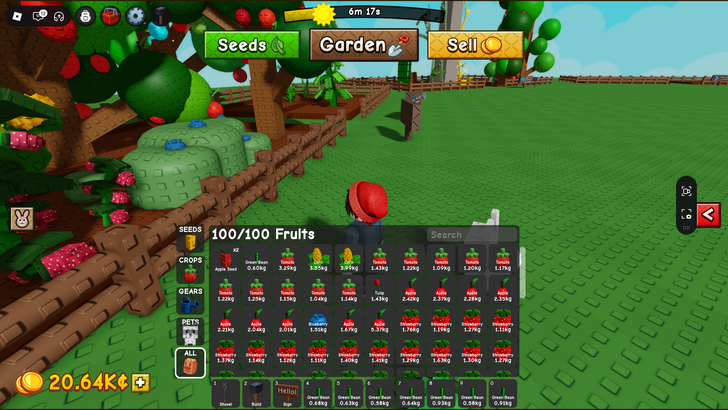
Grow a Garden 2 is a redundant experience that mostly fails to build upon a winning formula in a meaningful way, even when that foundation didn't have much going on anyway. It does one thing extremely well, but that one thing can be so tedious that unless you’re specifically looking for a low-stakes, passive gameplay experience, you’re bound to get bored sooner or later. If you're more of a casual gamer who prefers to just feel the dopamine rush of seeing numbers go up and plants grow to absurd heights with minimal effort, then this satisfies that to the nines. Furthermore, updates to Grow a Garden 2 could shift the game in any direction, and with the first major update adding guilds and base defense it's clear that there’s at least an attempt to make the game more actively engaging. Regardless, unless you specifically want the Grow a Garden experience in all its striking, glittery mundanity, it may be best to save your valuable time and Robux elsewhere.
Game8 Reviews