


Overview
What is GRIME 2?
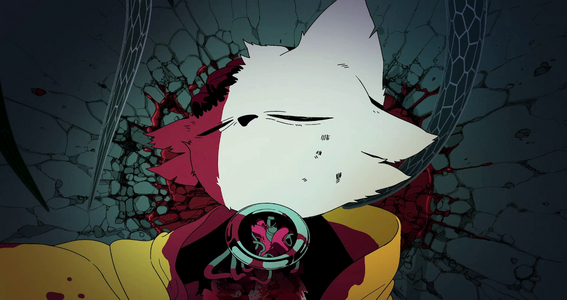
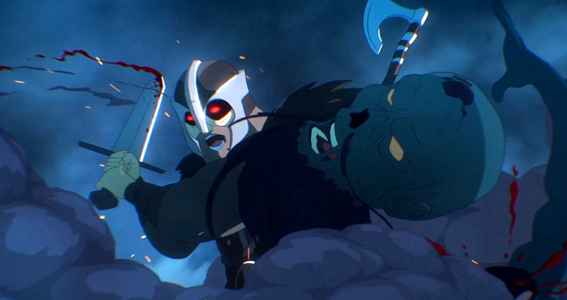
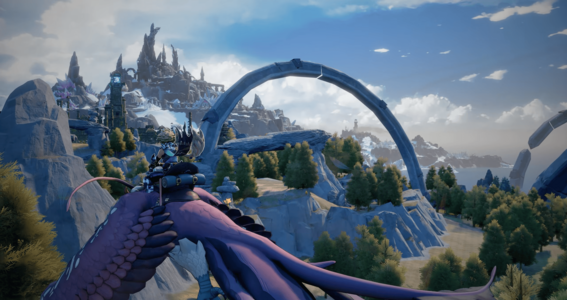
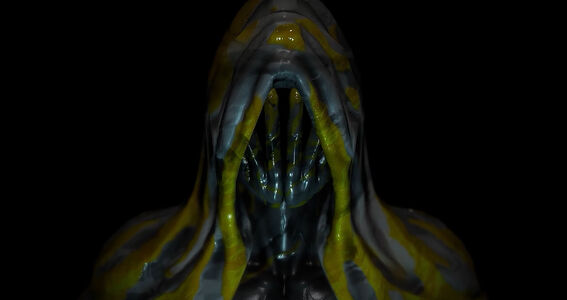
GRIME 2 is the sequel to the acclaimed Metroidvania released back in 2021. Players take control of the Formless, an art mimic with a unique ability to absorb creatures and summon molds in their shape. Explore a world filled with different characters and cultures as you overcome bosses and enemies in your journey to explore a new, mysterious land in the series’ universe. Play your own way with a variety of different weapons, abilities, and mold summons while utilizing environmental combat and various defensive mechanics to uncover the secrets of its world.
GRIME 2 features:
⚫︎ Side Scrolling Metroidvania
⚫︎ Numerous Combat Mechanics
⚫︎ Steal Enemy Forms
⚫︎ Unique Aesthetic
⚫︎ Over 30+ Weapons, 60+ Armors, and 12 Abilities
| Digital Storefronts | ||
|---|---|---|
 Steam Steam |
 Playstation Playstation |
 Xbox Xbox |
| $27.99 | ||
GRIME 2 Review: Weirder, Grimier, and Better Than Before
You Can’t Rush Art
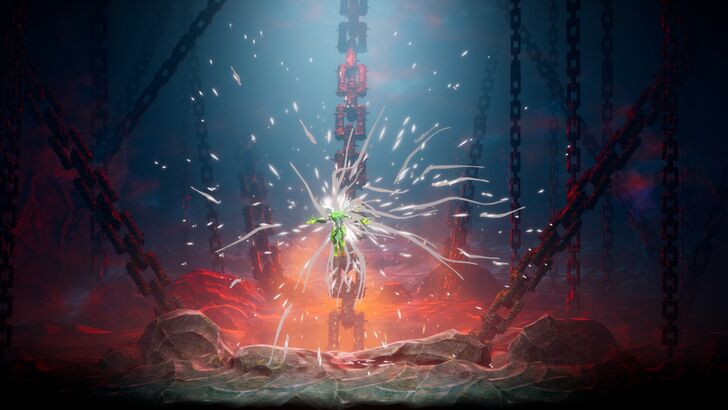
In my recent escapades playing through more Metroidvanias, GRIME was one of those games that really grinds my gears. It was right up my alley since it was a fusion of genres that I primarily gravitate toward—Soulslikes and Metroidvanias. No matter how prepared I was to take on the game, nothing could have prepared me for just how different it was. The setting, visuals, and even the combat were so unique that it felt as if I were playing with forces beyond my ken.
That was about a year ago, and now the sequel is finally here.
I’ll be completely honest, this almost flew under my radar of games to play, and I’m glad to say that I had the chance to experience the long-awaited follow-up early. And just like the first game, I was not prepared for what it would throw at me. It is, without a doubt, a direct improvement in all aspects, and even weirder and dirtier (in terms of grotesque visuals) than ever before.
Bigger Canvas, Brighter Colors
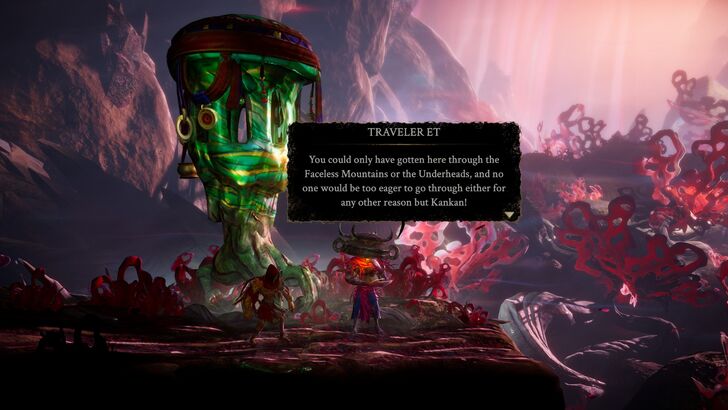
As with most sequels, one thing to watch out for is how to expand your scope without going too far. GRIME 2 succeeds in pushing that; while the world is obviously bigger, it still retains the same charm as its predecessor. The narrative and theme this time revolve around artistry in its many forms and the creative process, as evidenced by motifs of hands, colors, and even existential philosophy.
It’s still as mysterious and cryptic as before, where it doesn’t hold your hand in explaining who you are, what you are, what you’re doing, and most importantly, what you’re made to do. Just like the player-controlled Art Mimic, you’re there to satiate your curiosity. It’s a great parallel to draw, highlighting how players perceive the world, especially since you’re tackling the unknown.
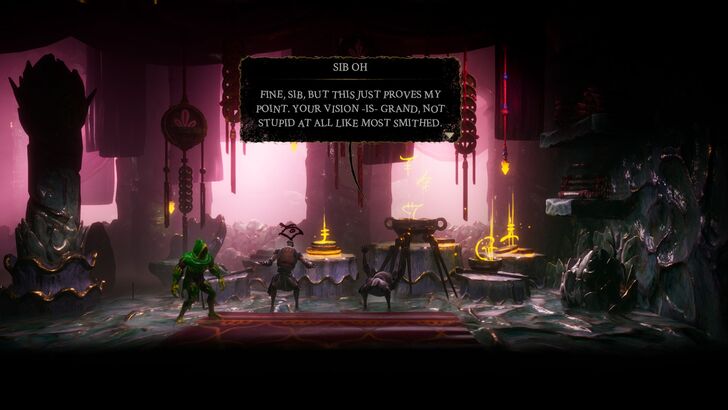
This is also the case with the many NPCs that you encounter throughout the game, as they ooze with personality and really make dialogue interesting to grasp. My favorites are the two brothers, Sib Di and Sib Oh, since they’re more animated than anyone else in the game with how they talk and how they move.
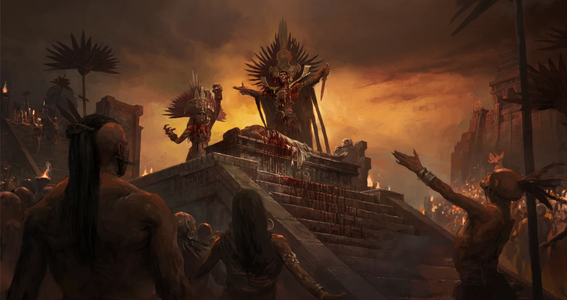
Aesthetically, the game looks grotesque, but in a good way. It isn’t your typical body horror that relies on gore for its look. It’s more of a combination and mishmash of different creations that you’d expect from artists who are discarding their unwanted sketches or creations. Take, for instance, the Half-mades, as they’re literally put together lumps of dirt and clay that stand up as an awkward humanoid.
The stage design is also worth noting since some areas are straight-up gorgeous. Seeing Marah’s Orchard for the first time, I was definitely in awe of the design, considering that the first two areas you explore look more barren and cavernous. I do wish there were a lot more areas like Marah’s Orchard, just to give the game more vibrancy, unless it was intentional to make it dark and damp.
Deliberate By Design
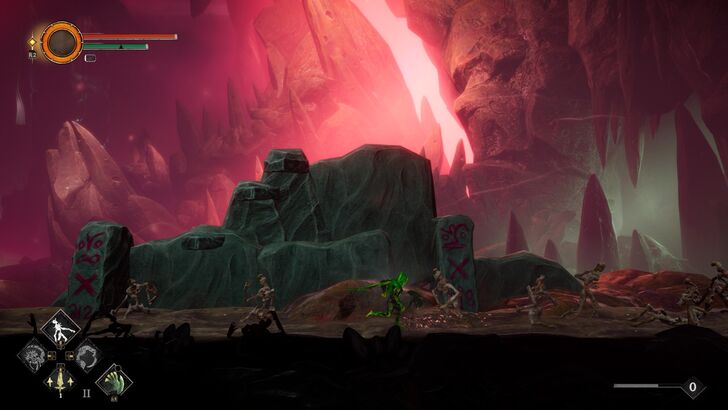
One of the few things that I had to adjust to at first was the combat. This is a slower game than most Metroidvanias, and after getting used to the quicker-paced combat in titles like Nine Sols, Hollow Knight: Silksong, and the like, it felt shackling. It wasn’t after fighting the third main boss, Faceless Bishop Darsh, that things started to click and open up; by then, I understood that this isn’t your typical combat design.
First, there are a ton of weapons in the game. Axes, daggers, clubs, spears, swords, and throwing knives—these were just some of the examples that I rotated around during my playthrough. Each of them had unique movesets, including a different normal attack and special attack that would be the primary ways of dealing damage.
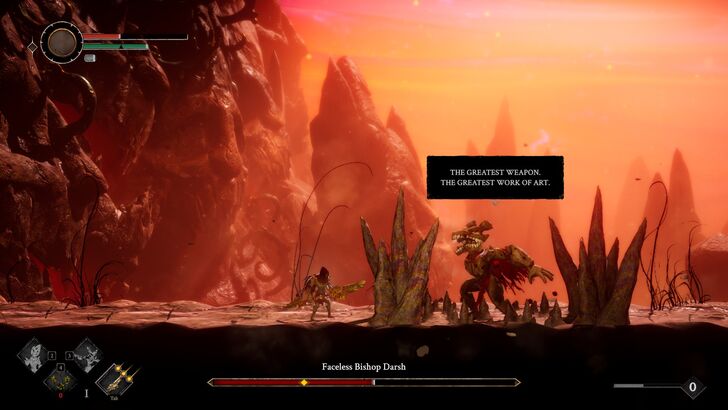
The second aspect of combat are Molds, which come in two forms: Items and Enemy Forms. The former functions like how you would expect, replenishing consumables that you can use to buff yourself, damage the enemy, or even place interactable objects on the ground. The latter, on the other hand, are special abilities that mimic an enemy’s attack. Contrary to Item Molds, these attacks use the Paint resource, which limits you from using them repeatedly and can only be earned by attacking the enemy.
Lastly, there’s Force, a different resource tied to actions with a unique threshold that’s not quite like Stamina. It functions as a way to strengthen your attacks and other defensive abilities, like Parries and Dashes, without totally limiting your movement. Performing actions over that threshold would give enhanced versions of your abilities, specifically attacks dealing more damage, dashes refund the cost of the spent Force, and parries become much more effective.
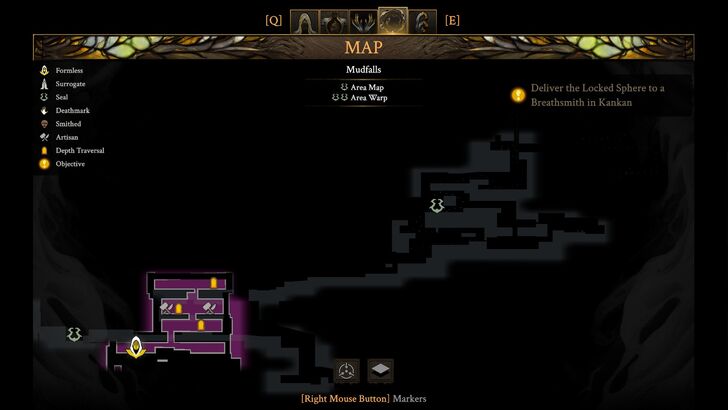
Tying all this together, while discovering the different weapons opened up a different way to approach the game. Instead of attacking on every opening, I was biding my time to maximize my output using the Force resource. Instead of just attacking and dodging, I was using Molds to supplement my assault and to defend myself.
Not to mention that defensive interactions in this game aren’t just limited to your standard parries and dashes, there are different counters like the Grasp counter, which literally uses your “grappling hook” as a means to stun the opponent. It felt like a different game entirely, one I appreciated more when I delved more into its systems and experimented with more Molds and weapons.
There were some moments that were frustrating, as certain enemies had attacks that had wildly varied attack patterns and speeds, which became progressively harder as you continued through the game. Luckily, death in this game isn’t that big of a deal, since you absolutely lose nothing when you die, and even have a handy tracker on your map to see where you’ve been before you did.
Progression Could’ve Been Better
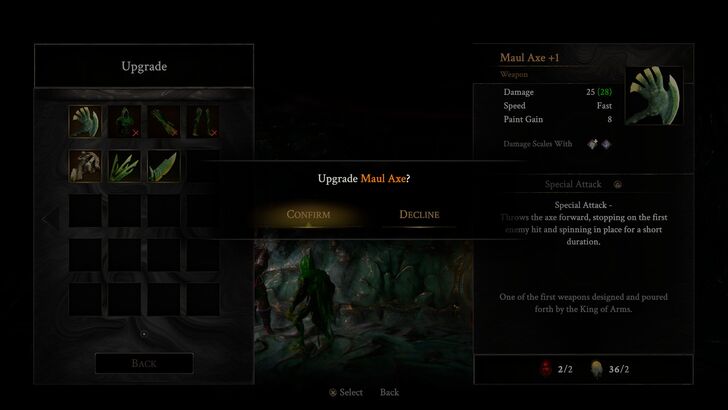
Aside from the combat, though, progression could’ve been much better. In the case of GRIME 2, it’s for both build creation and exploration.
For starters, leveling in the game is tied to stat allocations, but it’s purely just for Weapons and Molds. It might’ve been intended to keep it simple to make the weapons more experiment-friendly, but it would make the game much more engaging if there were more factors to consider outside of just making the damage numbers bigger. It could’ve had a greater impact if it had bigger effects on more Traits.
Traits are different passive bonuses that enhance particular playstyles and are leveled up using a resource called Pigments earned from optional bosses. These bonuses are actually a bigger part of combat than I initially thought, but they mostly just scale from the amount of points that you put in them and work separately from the game’s standard level-up system.
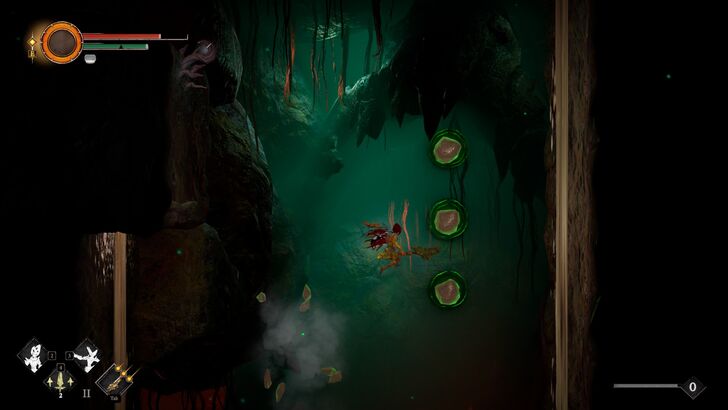
Which then brings up the main issue: The systems feel disjointed from one another. Yes, there are certain traits that do scale off stats, but these are few and far between. Again, this may be intentional so that Traits are a completely different system to worry about aside from your weapon scaling and Molds, but it does feel like both mechanics don’t support each other in terms of how you strengthen yourself.
This carries over to the platforming, which doesn’t feel all too great. The design of platforming challenges in the game is decent overall, but it takes some getting used to. Don’t get me wrong, it’s not like it’s horrible, but I feel like it holds itself back with environmental hazards that feel like they have incorrect hitboxes. There’s also the matter of rewards being pretty lackluster for certain platforming challenges, and there were a couple of moments where I thought, “I did all that, for this?”
Exploration is Pretty Good
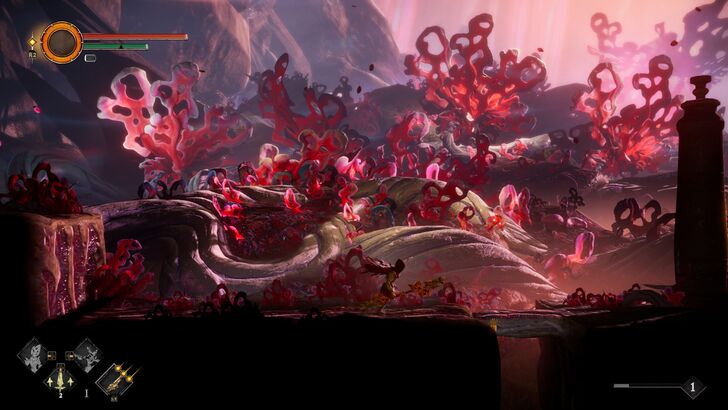
Even with the lackluster platforming, exploration still felt pretty good. It has the textbook things that you want in a Metroidvania—rewarding exploration, having a sizable map to cover, and story progression to create things to come back to.
There are secret corridors and hidden rooms that you need to keep your eyes open for, which does add a lot to the experience in navigating the many areas the game has to offer. It’s also important to know that, while the areas are fairly linear in layout, they feel much more complex and labyrinthine to navigate.
It was actually one of the things that I did enjoy the most in the game, as backtracking and navigating the different areas to find more items and optional bosses became my primary focus instead of completing the story.
Is GRIME 2 Worth It?
Worth Dirtying Your Hands For
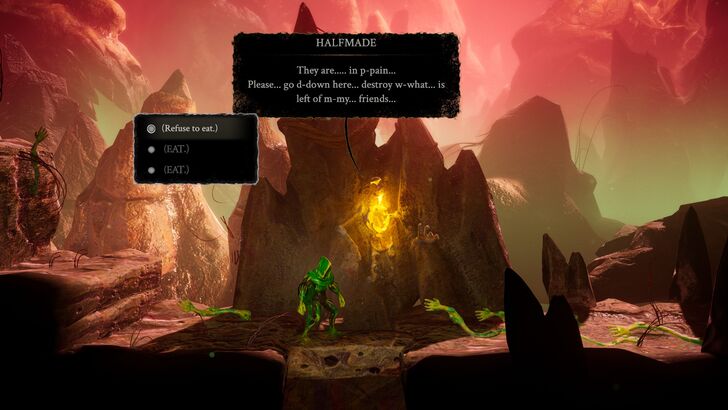
GRIME 2 is quite literally everything you’d ask for from a sequel, one that enhances the core experience that made the first game shine, while keeping the same identity that made it successful to begin with. It may not be a game that hooks you in immediately, but it does slowly win you over with its aesthetic, combat systems, and exploration, which are some of the most important aspects of a Metroidvania.
There may be certain things that feel disjointed and lackluster, such as the progression systems tied to combat and leveling, as well as the platforming, but it’s not horrible to the point where it would be a complete deal breaker.
It’s a game that’s easy to recommend for those who are looking for games that are adjacent to the Soulslike and Metroidvania genre, as the overall experience certainly feels close to what you’d expect from that kind of fusion.
FAQ
What are the System Requirements to Play GRIME 2 on Steam?
The System Requirements, as listed on Steam, are as follows:
| Specifications | Minimum | Recommended |
|---|---|---|
| OS | Windows 10 64-bit | |
| Processor | Intel Core i5-6600K / AMD Ryzen 3 1200 | Intel Core i5-8400 / AMD Ryzen 5 1600X |
| Memory | 8GB RAM | |
| Graphics | Nvidia GeForce GT 1030 / AMD Radeon RX 550 | Nvidia GeForce GTX 1050 / AMD Radeon R9 720X |
| Storage | 20GB | |
| Additional Specs | Direct X11 | SSD recommended |
Game8 Reviews