



Overview
What is Dread Neighbor?
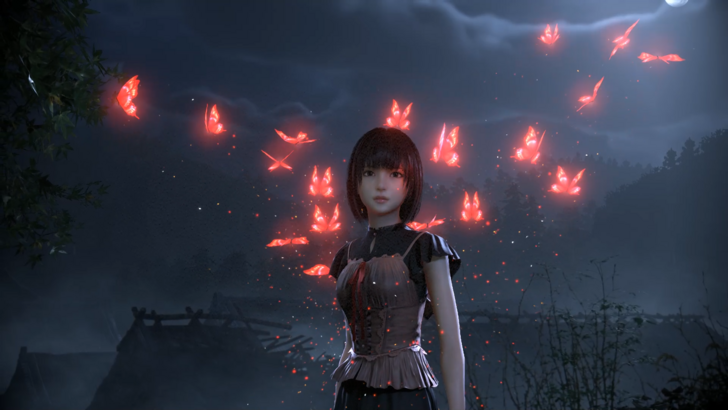
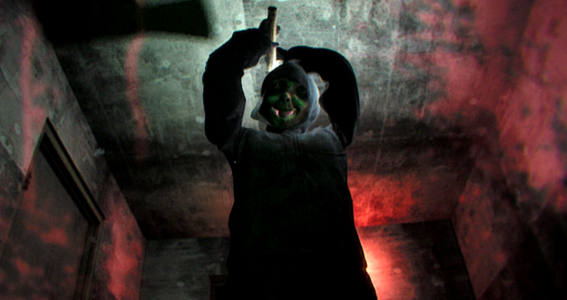
Dread Neighbor is a first-person horror game developed by Ghostcase and published by Erabit, both of which previously worked on Dread Flats. In Dread Neighbor, players are taken into a run-down apartment complex, taking control of multiple characters as they try to survive the watchful eyes of a demented serial killer. The game launched for PC via Steam on May 7, 2026.
Gameplay mostly revolves around linear exploration with light environmental interaction, such as picking up keys or inspecting objects. What sets this game apart from the developer’s previous title is its use of multiple playable characters, each detailing their encounters with the game’s eponymous neighbor.
Dread Neighbor features:
⚫︎ Atmospheric First-Person Horror
⚫︎ Multiple Character Perspectives
⚫︎ 2-Hour Playtime
⚫︎ Effective Jumpscares Early On
⚫︎ Multiple Endings
| Digital Storefronts | ||
|---|---|---|
 Steam Steam |
||
| $5.00 | ||
Dread Neighbor Review: Dreadfully Terrifying, Dreadfully Okay
Trades Subtle Terror for Slasher Horror
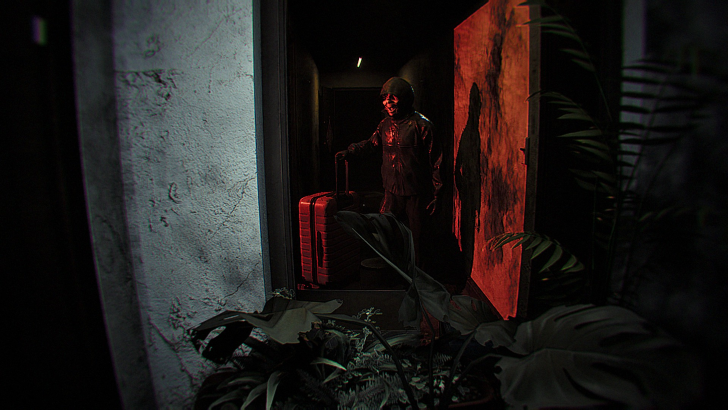
Chinese horror games have slowly etched themselves among gaming’s highest echelons of praise. From political psychological horror titles like Detention to the oriental-style thrills of Paper Dolls, the rising appeal of Chinese-made horror games has grown over the past few years, crafting themselves a name in the gaming space. Among the newer players in the genre is Dread Neighbor by Ghostcase, a follow-up to 2025’s scariest horror games, according to gamers, Dread Flats.
10 months after the release of Dread Flats, Dread Neighbor is a successor to Ghostcase’s first-person horror formula. It places players in a full-on slasher horror experience with a hint of psychological dread, stepping away from Dread Flats’s budding ghost-hunting premise and trading it for a violent slasher clearly inspired by films like The Texas Chain Saw Massacre and Friday the 13th. The game leans more heavily into grounded tension, as players try to survive a rampaging serial killer inside a dilapidated apartment building.
It’s hard not to talk about Dread Neighbor without comparing it to Ghostcase’s previous game, Dread Flats. Both games share the same first-person horror formula, building moments of ominous fear through highly effective jumpscares. While Dread Flats left a strong impression on players thanks to its bite-sized horror story about a creepy grandma, it still managed to stand out for its focused tension and pacing. With Dread Neighbor as a supposed sequel, does Ghostcase elevate the scares even further? Let’s find out.
The Residents Are Evil
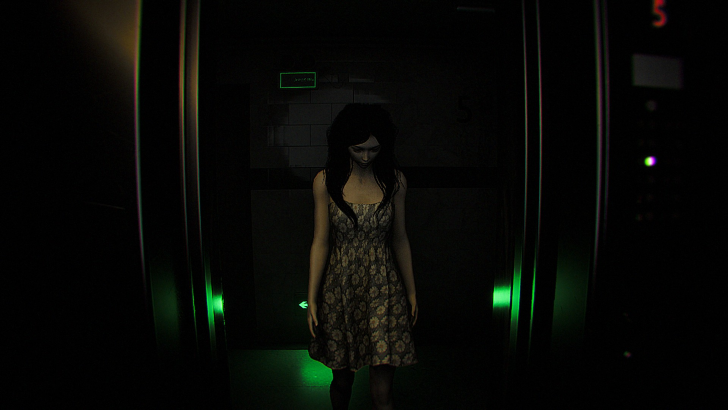
Taking place mostly inside a run-down apartment complex, Dread Neighbor immediately puts you in the shoes of hapless victims hunted by a sadistic killer. It usually begins with each character noticing strange occurrences around them. Was it a random knock on the door with no one there or an elevator moving without anyone inside? It’s a horror game, and you can already tell where it’s headed with a major jumpscare as its crescendo.
What sets Dread Neighbor apart from Dread Flats’ singular protagonist is its use of five characters, multiplying the horror fivefold instead of sticking to one individual. By adding more characters into the mix, the game heightens its sense of dread, putting you into the shoes of strangers like those essential first few minutes of a slasher movie leading to the killer’s first blood. By shifting between different characters, it creates a larger threat told through multiple perspectives, reinforcing the idea that Dread Neighbor’s sinister antagonist is a force to be reckoned with.
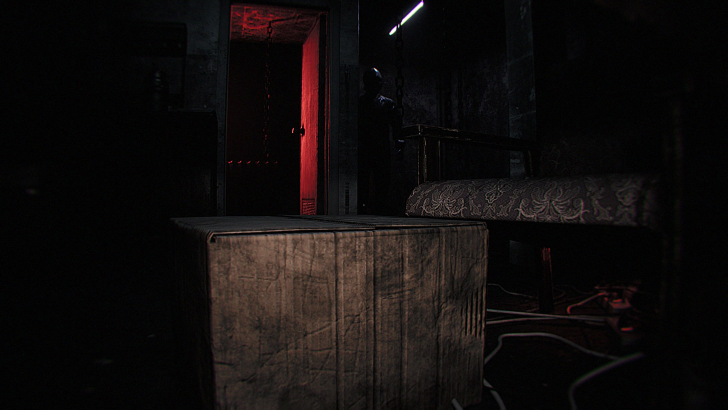
The game’s five characters each come from different walks of life, from a budding fashion designer working overtime to a lowly fisherman casting his line in the wee hours of the night. These perspectives highlight the killer’s methods in hunting its prey, giving players a constant sense of fear and hopelessness around every corner, much like its apt "Dread" in the title. These characters are not survival horror experts like those seen in games such as Resident Evil. They are ordinary people caught in a twisted cat-and-mouse game with a serial killer.
Dread Neighbor does a great job of establishing the game’s tone within just the first few minutes, constantly reminding you that you are not Leon Kennedy.
Built for Scares, Not for Exploration
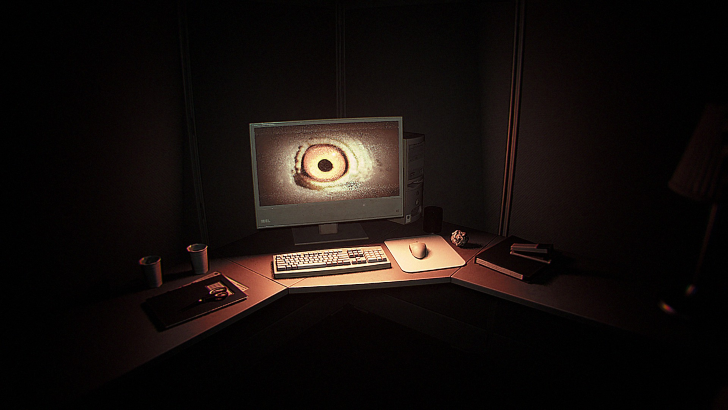
Dread Neighbor’s gameplay mostly involves moving around and interacting with objects until the story progresses. It’s all fairly linear, with no other option but to keep moving forward and interacting with objects until something happens. While this gets the job done of escalating the inevitable jumpscare around the corner, it also dilutes the sense of horror by funneling players from one scare to the next purely for shock value.
What developer Ghostcase did here is a cheap tactic, and coming from its previous game, Dread Flats, which used a similar style, I was hoping to see something more unpredictable that would genuinely knock me out of my seat. But alas, what we have in Dread Neighbor is another retread of Dread Flats’ gameplay loop, from forcing me to head to the nearest breaker to turn the lights back on to checking what is lurking under the bed.
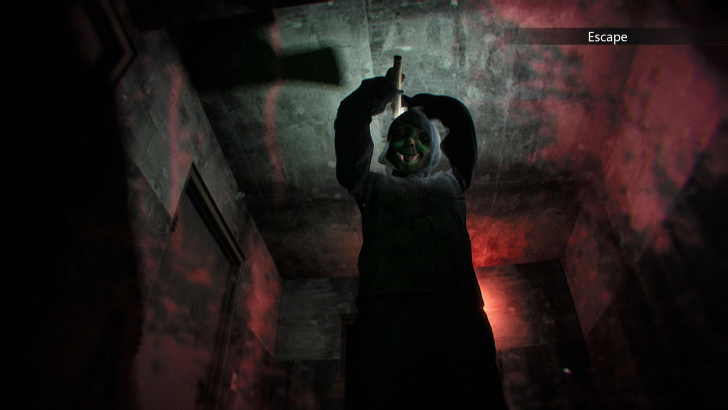
The horror mechanics start to feel stale over time, turning later chapters monotonous. As a result, it strips away any sense of curiosity I have as a player by immediately handing me what I want. It is like revealing the shark in Jaws within the first five minutes of the movie. This leaves little room for reflection, offering barely any moment to breathe before the next jumpscare is just a few interactions away. I would much rather have a healthier balance between scares and the freedom to soak in the environment without constantly worrying about the killer knocking on my door.
One aspect that I felt contributed to Dread Neighbor’s lack of exploration is its lack of puzzles. In games like Silent Hill f, there is almost always a major puzzle waiting after every significant horror encounter. Whether it is a traditional locked-door puzzle that requires multiple keycards or something as simple as finding a wrench to break open a chain, these moments give players time to stop and think while encouraging them to explore every nook and cranny for hidden secrets.
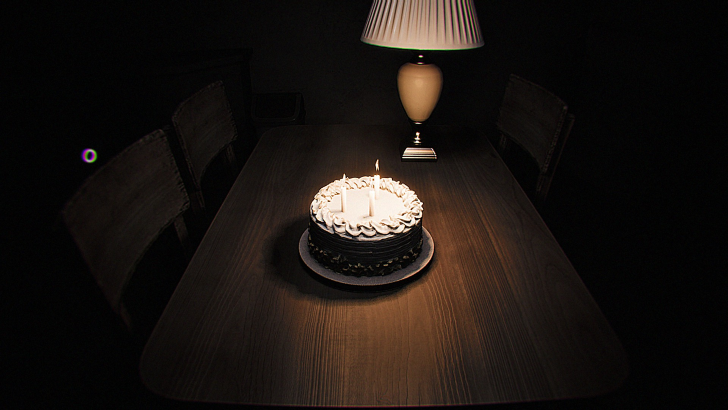
For a game that is mostly confined to the same apartment building, the lack of freedom to explore its other floors and rooms feels underwhelming. There is little incentive to take in the environment or rummage around more freely, which in turn reduces the motivation to search for cryptic notes or additional lore hidden throughout each area.
The game’s short two-hour runtime could have benefited from more varied and inventive puzzles and levels in its later stages, considering it had five major characters dealing with their own problems. Just when things start to get interesting, the game falls back on ideas that already feel familiar from most horror games, like turning the lights on and checking to see what’s inside that dark corner.
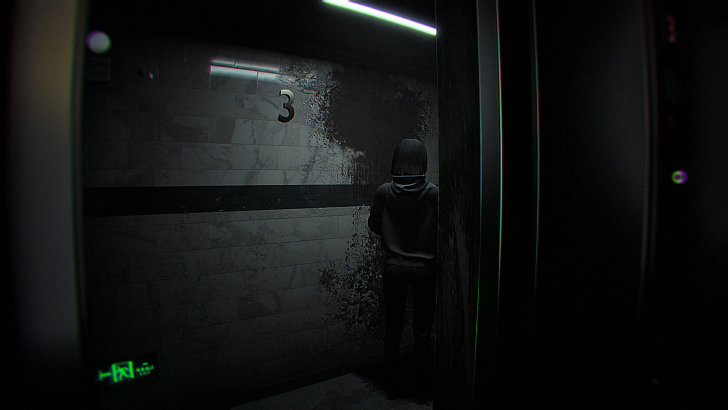
But Dread Neighbor is not terrible even with all its linearity. There are moments where it genuinely escalates tension through chase sequences. These sections give the characters a sense of agency, making you feel like you are no longer just a helpless victim, but a budding survivor taking control of the situation. But as quickly as you can say the "Hash-Slinging Slasher," these great segments are cut short once the game knows it has successfully led you to its intended location, often reducing the experience to simply holding the W key. This ultimately undermines that feeling of control as it reveals themselves to be largely scripted.
Multiple Characters, One Problem

Dread Neighbor’s multiple characters are a breath of fresh air for someone coming from Dread Flats’ singular protagonist. However, it is not exactly an evolution from its predecessor, as one noticeable flaw is that it has very little meaningful distinction between them beyond serving as prey to the game’s unstoppable force. The story moves too quickly from one point of view to the next, leaving little room to understand or connect with its characters. This reduces my concern for them, turning their potential demise into a passing sight rather than something I need to grieve.
There is very little nuance driving me forward beyond watching characters get brutally cleaved and seeing the antagonist win for the nth time.
It just does not feel exciting to play a horror game with no means to fight back. As each character’s arc came to an end, I kept begging the game to at least give me a gun or even a broomstick to fend off the evil threat, but to my dismay, I was left with nothing but my own wits and feeble mortality as I faced death head-on. There is no way to fight back against a malevolent force with these ordinary characters, removing any semblance of "fight" in a fight-or-flight scenario.
I was expecting something closer to first-person horror games like Bloober Team’s Layers of Fear, where character arcs are placed firmly at the center. Here, the lack of growth in Dread Neighbor’s characters feels empty to me when it could have been more. As each chapter ended, I was often left thinking, "That’s it?" before the game immediately shifted to the next unfortunate victim of the Dread Neighbor.
Instead, I found myself slogging through several underdeveloped perspectives that feel included mainly to pad the story’s playtime. Many of these characters exist solely to set up scares and moments of shock value rather than contribute anything meaningful to the narrative.
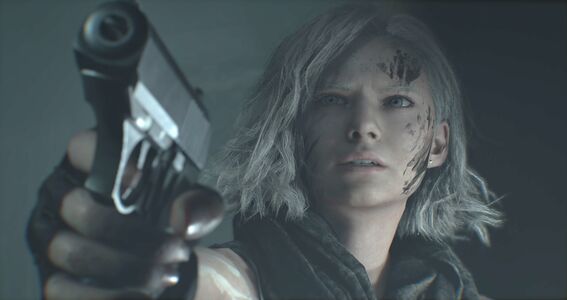
The game gives me almost no reason to care about most of its cast, save for the final girl, who honestly feels like she could have been the sole protagonist from the very beginning. Without giving too much away, she is easily the most well-rounded member of the cast, with a more developed backstory and a stronger emotional setup compared to everyone else.
Impeccable Atmosphere
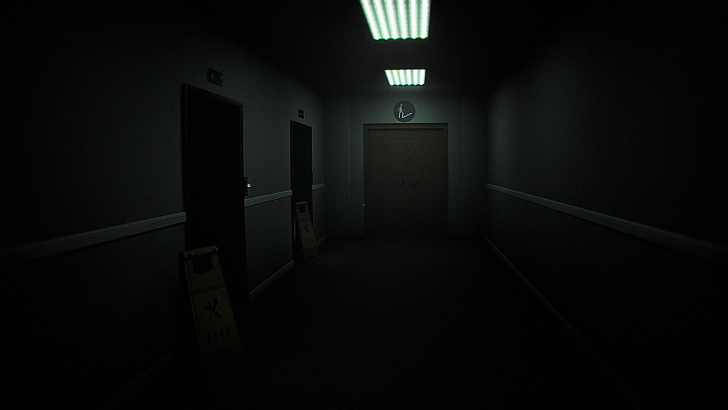
But enough about its downsides, and more about its bigger positives. If there is one thing Dread Neighbor gets right, it is the way it handles atmosphere, thanks to how the developer balances sound and visuals effectively, built using only the Unity Engine.
Moments like trudging through the apartment complex’s long, dark corridors are particularly well handled, reinforcing a sense of isolation for these protagonists, with no way to call out to friends or family in the face of immediate danger. Empty trash bags are scattered around, while faint shafts of light cut through the darkness from distant exit signs.
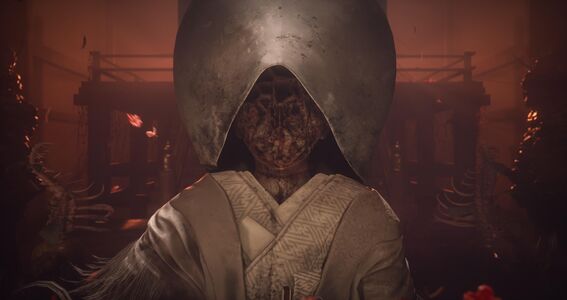
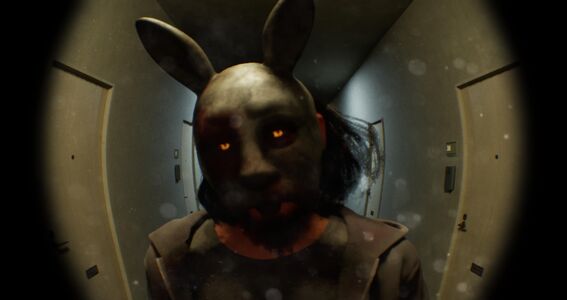
One moment in particular stands out: a sequence where I was stuck in an elevator while the killer deliberately delays the doors from closing. The killer’s footsteps grow more audible by the second, hinting that this might be the end for my character. My cortisol levels spike the moment the killer appears in front of my character, its disfigured visage filling the frame. I have not been that scared in a long time, not since the Beneviento section in Resident Evil Village
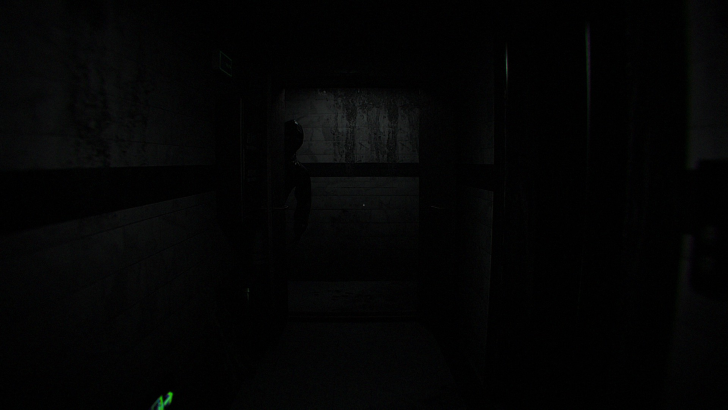
If you have played the game’s 30-minute demo available on Steam, you can already see how it sets up its scares by combining negative space with unsettling sound design. While it does not reach the same level of quality as AAA horror titles with their dynamic fog and lighting, Dread Neighbor makes do with its limited resources, using pitch-black darkness and the illusion of unease at every moment, and it is still very effective.
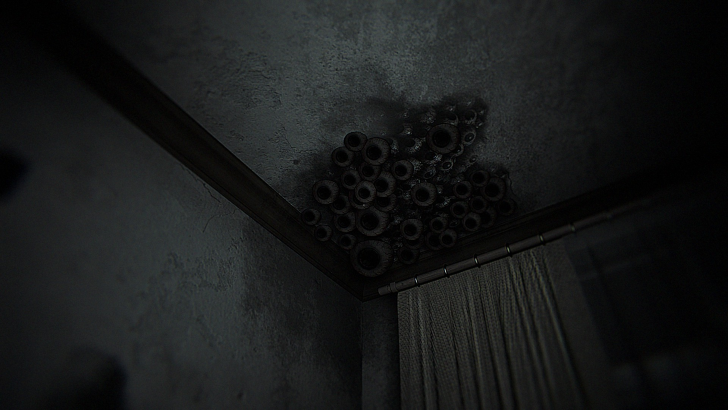
Even when its individual character arcs struggle with barebones storytelling, Dread Neighbor still does a good job of giving each character their own set of scares. For example, the fisherman gradually pulling in something strange from the river, or the fashion student being startled by falling mannequin heads. This adds variety to each perspective and creates a broader sense of the kind of horror the game is aiming to deliver, making the experience feel more like an anthology than a single, unified narrative.
The succeeding chapters, on the other hand, shift toward more deranged methods of hunting, like a predator toying with its prey in a manner reminiscent of Pennywise from It. It is not exactly a pleasant thought, but for a horror game, it works.
Multiple Endings Adds Extra Flavor
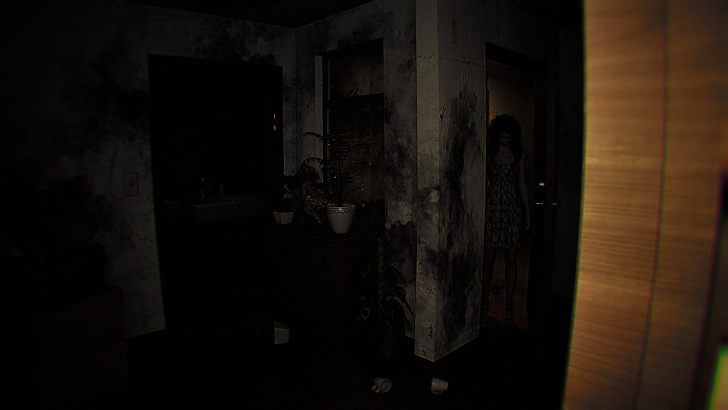
Another high point in Dread Neighbor is its multiple endings. For a game that is otherwise plagued by rigidity, there are moments where you are given choices that push the story in different directions. These decisions are not necessarily groundbreaking compared to the more obtuse questlines and plot structures often seen in FromSoftware games. They are, for the most part, fairly obvious and easy to anticipate, but the simple act of being able to choose after so much linearity adds a bit of spice to the overall experience.
These choices branch into three major endings, though the system is not as complex as in visual novels, where the weight of consequences significantly reshapes the overall narrative. Staring the killer directly in the face does not end the way you might expect, while taking the door and escaping feels like the safer, more instinctive option. Considering it is a game built by a small studio that started its halcyon days on itch.io, the addition of multiple endings is effective enough to make you wonder how different choices could have led to entirely different outcomes.
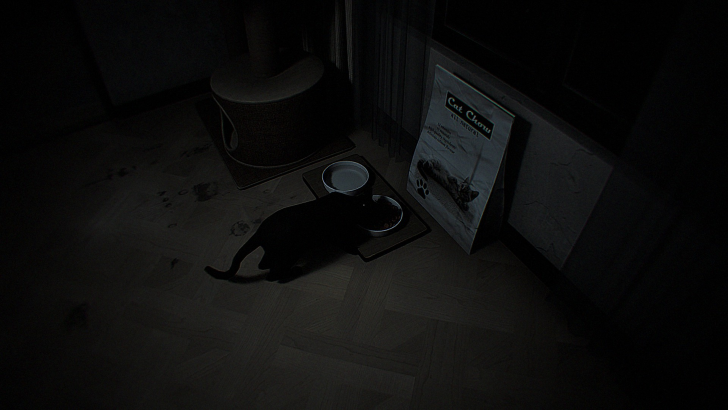
If you're worried about which ending to pick, there is no need to stress too much, as the game doesn’t require multiple full playthroughs to see the other outcomes. Dread Neighbor conveniently brings you back to the last checkpoint before that major decision, so completionists don’t need to replay the entire game just to see alternate endings, adding once again to the illusion of choice these decisions create. While not particularly game-breaking, the system remains fairly simplistic overall.
Is the Dread Neighbor Worth It?
Well Worth the Scares and the Price Tag
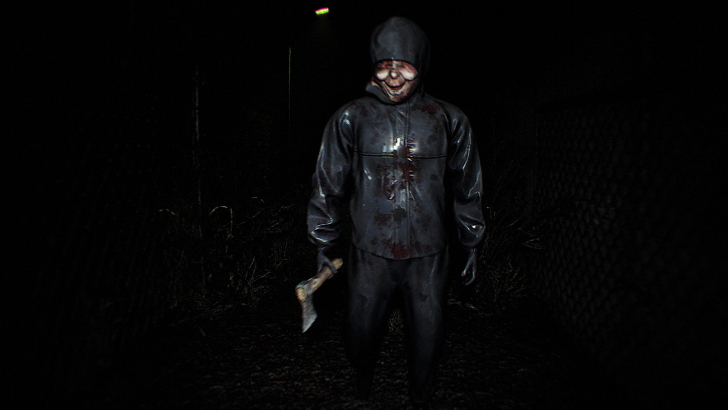
While Dread Neighbor suffers from the pitfalls of cheap jumpscares and muddled storytelling, it makes up for it with a terrifying atmosphere delivered through its multiple character perspectives, improving on what Ghostcase attempted in its previous game, Dread Flats. It’s the kind of game best played in one sitting with friends watching you on Discord or a stream, given its roughly two-hour length. While the short runtime might raise some concerns, its five-dollar price tag makes it an easy recommendation if you are looking for a few quick scares.
For the price of a single cup of coffee, Dread Neighbor captures the feeling of a traditional slasher against an unstoppable threat that you don't quite know how to deal with. It is a genuinely terrifying experience, especially in its strong build-up during the opening hours, though it could have benefited from more time to flesh out its characters and encourage exploration. If you enjoy first-person horror games like Visage or Layers of Fear, Dread Neighbor has enough scares to get your heart racing, but do not expect a story that will stick with you for long.
FAQ
Is Dread Neighbor Connected to Dread Flats?
No, Dread Neighbor is not connected to Dread Flats despite sharing the same Dread
in its name. It is a standalone horror experience taking place in a different area.
Does Dread Neighbor Have Online Multiplayer?
No, Dread Neighbor is a single-player game only.
How Many Endings Does Dread Neighbor Have?
Dread Neighbor features three endings depending on your choices at the end of the game. The game takes you back to the previous checkpoint if you want to make a different choice.
Game8 Reviews