



Dinoblade is an action RPG soulslike where you play as a dinosaur wielding a giant sword. Learn more about the game's story, gameplay, release date, our review of the game, and more.
Overview
What is Dinoblade?
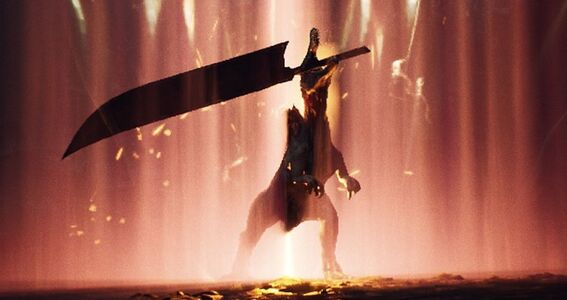
Dinoblade is a soulslike game where you take control of a Spinosaurus wielding a massive sword. Like an epic adventure, you'll journey across vast prehistoric lands teeming with life and danger, eventually uncovering the mysteries behind an impending catastrophe while facing other dinosaurs armed with their own melee weapons.
Dinoblade's gameplay draws inspiration from popular action RPGs, particularly FromSoftware's soulslike titles such as Elden Ring and Dark Souls. Other mechanics include parry-focused combat à la Sekiro and Lies of P. You'll also be able to summon the souls of other dinosaurs to gain an advantage in battle, while upgrading your character's stats through a progression system similar to those found in traditional soulslike games.
Dinoblade features:
⚫︎ A Spinosaurus With a Giant Sword
⚫︎ Fight Dinosaurs With Giant Weapons
⚫︎ Soulslike Experience
⚫︎ Rock & Roll Soundtrack
⚫︎ Single-Player Adventure
⚫︎ Started from Memes
| Digital Storefronts | |||
|---|---|---|---|
 Steam Steam |
$19.99 | ||
Dinoblade Review: Rough Around the Edges, but It Still Has Bite
This Spinosaurus Can Throw Hands
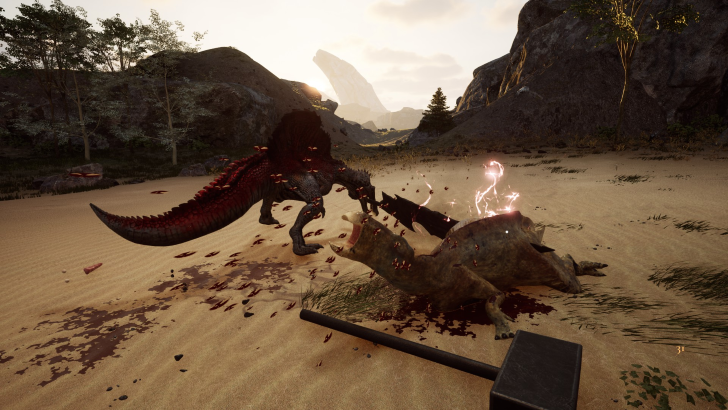
Dinoblade, developed by Team Spino, is a new soulslike in an increasingly crowded genre. What makes it stand out, however, is its absurd premise of a Spinosaurus wielding a massive sword. Yes, it's completely ridiculous. But that's exactly what makes one question so fascinating: How did this game even come to be?
It all started when a senior animator at Sucker Punch Productions, Jean Nguyen, who worked on Ghost of Tsushima and Ghost of Yotei, posted a short animation of a Spinosaurus wielding a giant sword four years ago. The clip was originally meant as a fun animation exercise, but it quickly went viral across social media, particularly on X (formerly Twitter) and Reddit. Fans couldn't get enough of the hilarious concept and encouraged Nguyen to turn it into a real game.
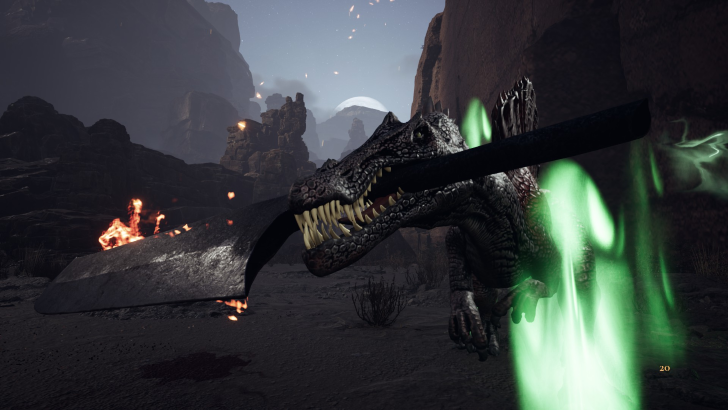
What began as a meme eventually evolved into a serious indie project, amassing more than 600,000 wishlists on Steam before launch. That's how Dinoblade was born.
Its easy-to-grasp melee combat, translated into the soulslike formula, makes its bizarre prehistoric concept genuinely enjoyable. This sword-wielding Spinosaurus has a surprising amount of confidence behind it. However, the longer I played, though, the more apparent it became that this is a game that needs more time in the oven before it can truly become its own apex in the genre.
Dino May Cry? Or Dino Sauls?
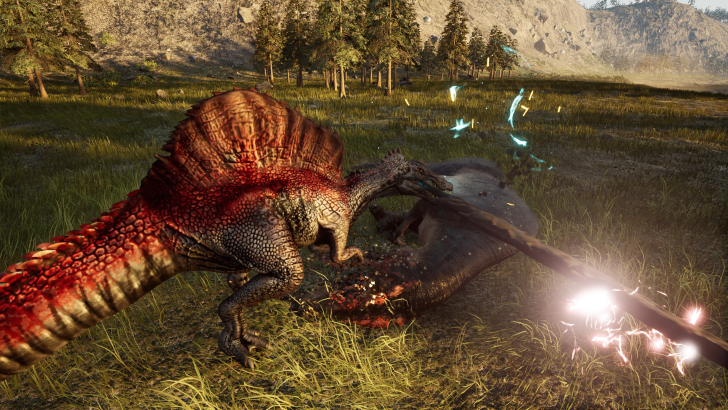
No matter how you look at it, Dinoblade's concept is ridiculous. But considering the current indie gaming climate, where developers continue to embrace delightfully bizarre ideas like the shonen-inspired platforming adventure Denshattack! or the hilarious labor force of robots working at the end of the world in FixForce, a dinosaur wielding a giant sword hardly feels out of place anymore.
For starters, Dinoblade takes place in an alternate Earth, where fantasy elements are layered atop of our prehistoric history. Here, dinosaurs have embraced the art of the blade like edgy anime protagonists instead of relying solely on their claws and teeth. Like cavemen discovering fire for the first time, the invention of weapons transforms these prehistoric creatures into hardened warriors capable of parrying, dodging, and pulling off pirouettes like it's second nature.
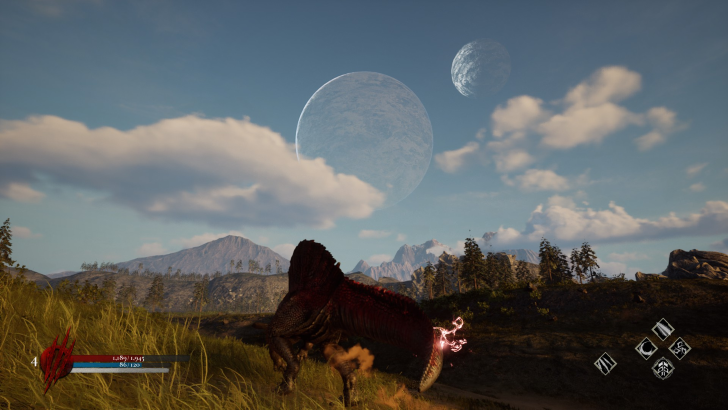
As a sword-wielding Spinosaurus, or John Spinosaurus (as I'd like to call my character), you're tasked with slaying powerful bosses and collecting their souls... for reasons that aren't fully explained until the end of the game. It's a long and arduous journey that takes you through dank forests, wide-open glades, and ominous woodlands, each filled with dangerous foes eager to test your skills.
Even better, accompanying your adventure is a surprisingly energetic rock soundtrack that constantly reminded me of Bring Me The Horizon, almost as if the band had recorded an instrumental album just without Oli Sykes on vocals. It fits the game's over-the-top action far better than I ever expected and gives every boss fight an extra shot of adrenaline.
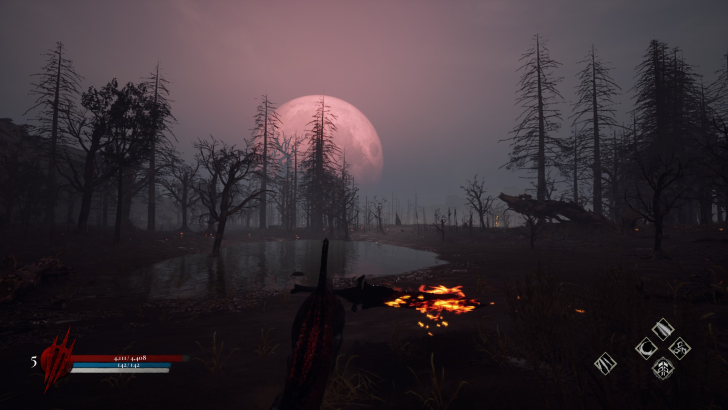
There isn't really much to take away from Dinoblade's plot, and that's admittedly disappointing. I expected it to lean further into its prehistoric power fantasy, especially since there's a noticeable lack of NPCs to flesh out the world and offer their own perspectives. The game doesn't quite capture any sense of mystery, leaving its world feeling far less memorable than its premise deserves.
That said, I wasn't exactly expecting deep philosophical storytelling from a game about a sword-wielding dinosaur, much less a cast of chatty prehistoric NPCs. Instead, Dinoblade is content with sending you sword-first through a gauntlet of prehistoric hunts, each wielding their own unique weapons, in a world on the brink of destruction.
Parry This, You Cretacean
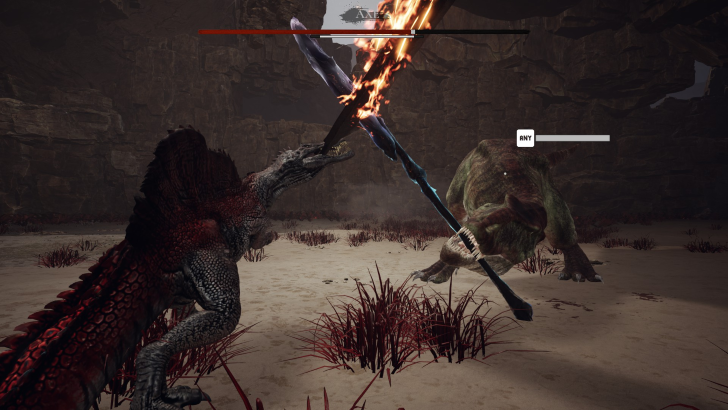
Dinoblade is a soulslike, and its inspirations are evident in nearly everything it does. Estus Flask-style healing, bonfire-like checkpoints, and suspiciously obvious boss arenas are all here.
The thing about Dinoblade's gameplay is just how much it borrows from FromSoftware's catalog of soulslikes. You’ve got your familiar Light and Heavy attacks, as well as your typical dodge-and-strike maneuvers. But one thing that sold me on the game was its parry mechanic, which I think is its strongest feature.
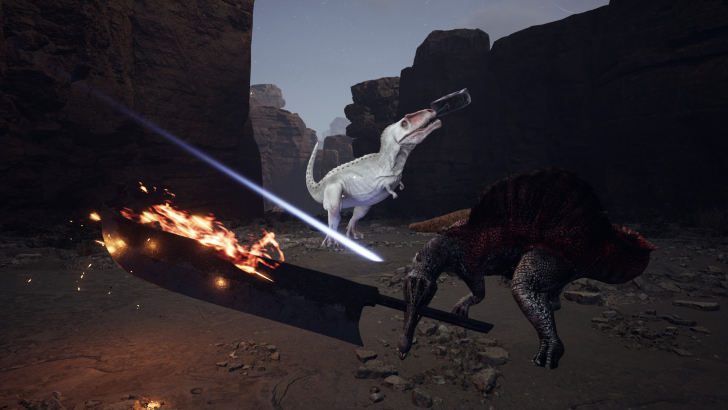
You can parry almost every attack thrown your way, eventually making combat feel like a mini rhythm game. Whether it's a massive halberd swung by a T-Rex or a crushing flail wielded by a Stegosaurus, the game actively encourages perfect parries, as bosses have a stagger meter that fills with every successful clash, eventually opening them up for a devastating attack. These stagger moments also give you a brief window to catch your breath, heal, or prepare your next move before the fight resumes. It's a small touch, but one that makes difficult encounters feel much more manageable.
Sure, learning enemy patterns and movesets is still essential, but mastering the parry system makes even the toughest boss encounters far more manageable than simply relying on the traditional dodge-and-strike routine we're all familiar with.
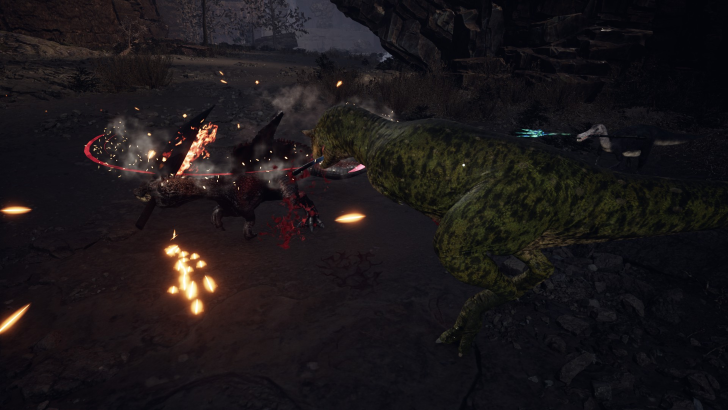
There's one issue with its combat, though, as the parry system doesn't always work as intended. During my first few hours, I relied on it heavily, but there were plenty of moments when I couldn't understand why some of my parries failed to register, even though my timing was spot on. It could have been my own inputs, or perhaps the startup animation for John Spinosaurus raising his sword is just a little too slow. Whatever the cause, it's incredibly frustrating, especially during boss fights that can unleash attacks so quickly that reacting in time already feels like a challenge.
The issue is made even worse by Dinoblade's lack of clear visual feedback, which I’ll talk more about in a later section.
More Than Just Tooth and Blade
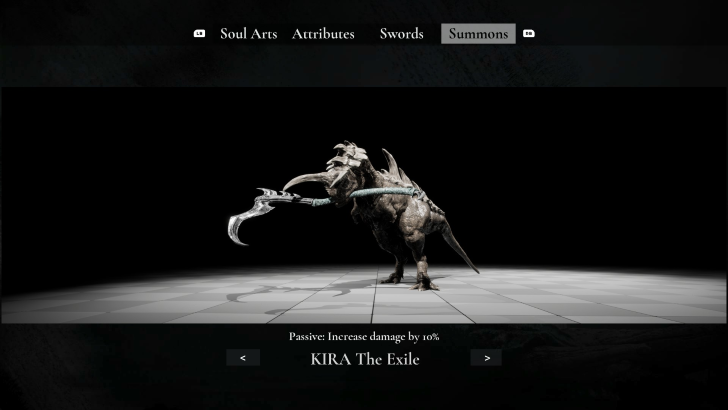
But Dinoblade is more than just John Spinosaurus casually hacking and slashing his way through enemies. It also features secondary gameplay mechanics, such as the ability to summon the souls of defeated bosses during combat. One example being the Axe summon, which boosts stamina recovery when called. It's incredibly useful whenever I've exhausted myself from excessive dodging and missed perfect parries, making it a reliable lifeline during longer fights.
As you defeat more bosses, you'll unlock more summons, giving you plenty of options to experiment with and tailor your playstyle. While I found myself sticking to the core melee combat for most of my playthrough, these summons are a welcome addition that add variety without overshadowing the game's strongest mechanics, which is cleaving enemies with your massive sword.
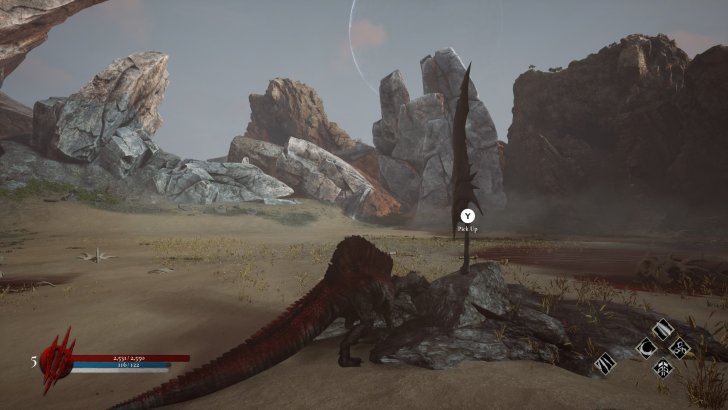
There's also Dinoblade's skill tree, which I found a bit underwhelming because they leave you wide open to incoming attacks. These are classic high-risk, high-reward tradeoffs, but even when they look cool, I rarely found myself using them because of how vulnerable they made me feel. The one exception was the skill that grants you a second chance by reviving you after death, which proved far more practical than the offensive abilities I unlocked during my time with the game.
Regardless, these additional combat mechanics do a good job of reinforcing Dinoblade's soulslike identity, even if they don't completely change how the game is played. If you're the type of player who enjoys using magic, summons, and special abilities in soulslikes, you'll likely get a lot of mileage out of these systems.
On the other hand, if you just want to go full unga bunga and cave in enemies' skulls with a giant sword, these mechanics probably won't be your main focus.
Held Back by Jank
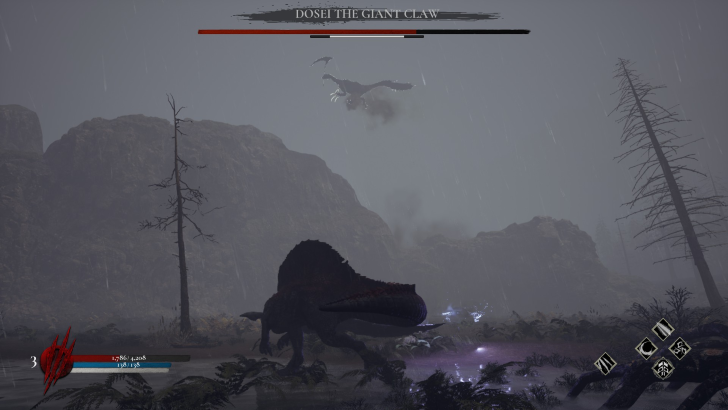
Dinoblade is a fun game, but I wouldn't call it a polished experience. At first, I considered its jank part of the charm, but the further I progressed through its boss fights, the more the bugs and glitches became impossible to ignore.
Combat, while hilariously over-the-top, becomes more problematic than it should be because of its lack of visual cues. Issues against smaller enemies persist, which have very few attack telegraphs, making their swings difficult to anticipate. Bosses at least signal their unblockable attacks with a distinct red glint, but regular mobs don't offer the same level of clarity. The problem only gets worse in the final area, where the difficulty spikes dramatically by throwing packs of smaller enemies at you alongside bosses with barely any readable attack animations.
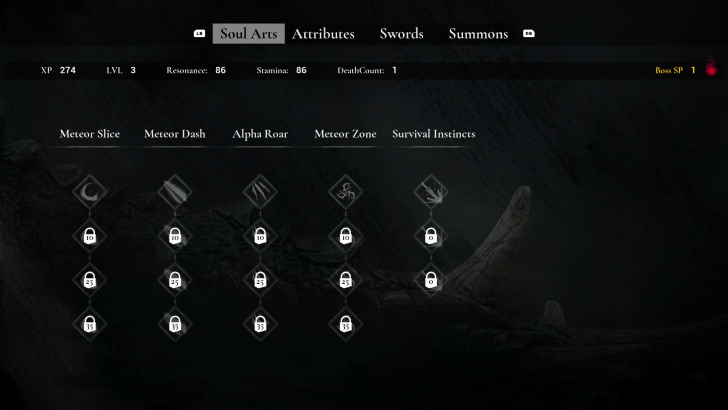
The issue becomes even more noticeable during certain boss fights, such as an Ankylosaurus wielding a tiny hammer. Instead of struggling against the boss itself, I often found myself struggling against the camera, turning what should have been a test of skill into a battle for visibility. Call it skill issue, but that encounter alone accounted for my first 10 deaths
With so little visual feedback, many encounters feel less like tests of skill and more like exercises in trial and error. As a result, I found myself getting frustrated far more often than I expected, especially against its final boss that brought back memories of repeatedly getting killed by Prime Consort Radahn before he got patched.
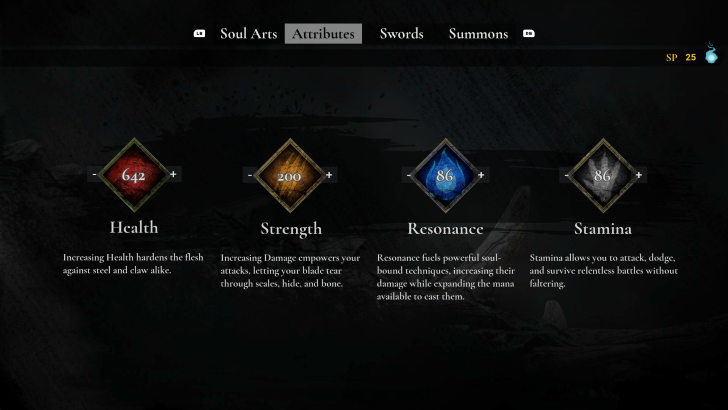
Lastly, the game suffers from some odd performance issues that could easily push away interested players. While I can understand Dinoblade for some of its jank and technical shortcomings given its low-budget indie roots, there are moments where performance drops so severely that the game becomes nigh unplayable. My frame rate frequently falls from the low 30s into the low 20s during certain boss fights, making an already demanding soulslike feel sluggish and far less responsive.
Outside of those encounters, however, performance was mostly smooth, even with my graphics settings hovering between Medium and High. It makes the slowdown feel more like an isolated optimization issue than a problem with the game as a whole. Though what initially felt like small technical issues gradually turned into annoyances that undermined an otherwise enjoyable experience.
A Rogue’s Gallery That Roars
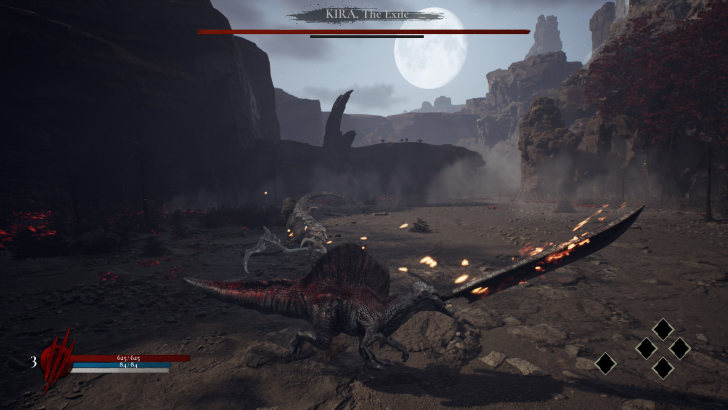
And while the cracks begin to show the longer you play, Dinoblade is far from a bad game. In fact, one of the biggest reasons it kept pulling me back was its selection of boss fights, which consistently surpassed my expectations. As someone who loves the sheer insanity of soulslike encounters like Bayle the Dread from Elden Ring: Shadow of the Erdtree or the towering Amygdala from Bloodborne, Dinoblade has no shortage of bosses that will leave you wondering what on Earth you're even fighting.
The one that challenged me the most was, of all things, a giant dinosaur chicken. As ridiculous as that sounds, it's easily my favorite boss in the game.
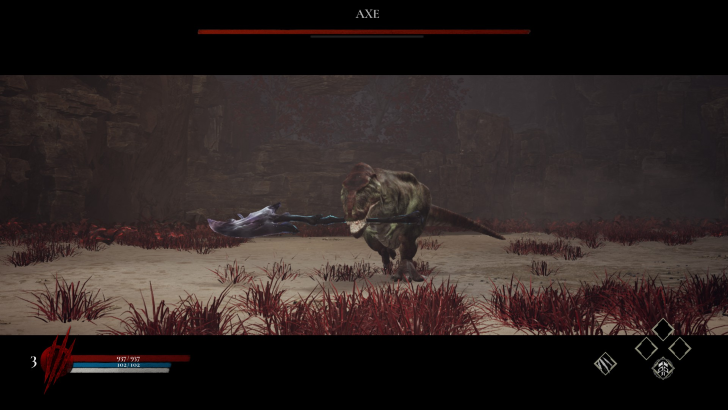
It perfectly captures what Dinoblade does best: taking an absurd idea and turning it into a genuinely memorable encounter that demands everything you've learned, from precise parries to smart summon usage and well-timed abilities.
Other than that, I'd say its lineup of bosses, right up to the final encounter, is an excellent offering for a $20 soulslike. You'll still run into the genre's traditional gank fights, where you're forced to battle multiple enemies at once, alongside brutal skill-check bosses that can keep you retrying for hours before everything finally clicks.
This goes without saying that while the game has very rough edges, its boss roster is easily one of its greatest strengths and the reason I kept pushing forward. If Team Spino can smooth out the technical issues in future updates, they'll already have the most important part of a great soulslike firmly in place: bosses you'll actually remember long after the credits roll.
Is Dinoblade Worth It?
Fun, But Rough Around the Edges
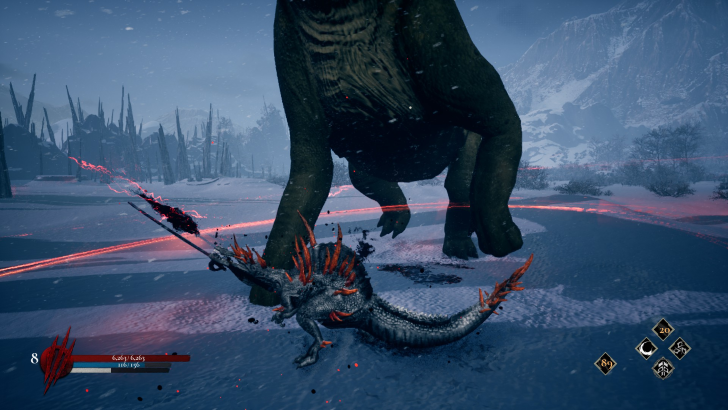
Dinoblade is an enjoyable soulslike held back by technical issues and the limitations of a small indie team. Is it janky? Absolutely. But then again, how many games let you duel a Velociraptor that can perfectly parry a giant sword? That alone speaks to how committed Team Spino is to its wonderfully ridiculous premise. Despite its shortcomings, this is far from a bad game. Its combat and progression systems are built on solid soulslike foundations that clearly take inspiration from the genre's biggest names, while its sword-wielding prehistoric cast gives it an identity that's unmistakably its own.
The fact that a three-second animation evolved into an 8 to 10-hour adventure is an impressive achievement in itself and a testament to Jean Nguyen and Team Spino's passion for turning an animation joke into a genuine game that’s worth the price of two coffees.
Overall, Dinoblade delivers on the fantasy of becoming a giant Spinosaurus wielding an oversized sword in a land before time, and despite its rough edges, that fantasy is so confidently realized that it's hard not to recommend giving it a shot.
FAQ
How Long is Dinoblade?
Dinoblade is a 6 to 10-hour adventure, depending on your familiarity with the soulslike genre and how much time you spend grinding for levels and upgrades.
Is Dinoblade a Soulslike?
Yes, Dinoblade is a soulslike that takes familiar inspiration from FromSoftware titles like Sekiro: Shadows Die Twice with its parry mechanics, as well as Dark Souls with its stamina-based movement.
Can You Play Dinoblade Using a Controller?
Yes, you can play Dinoblade fully using any controller that Steam supports.
What are the System Requirements to Play Dinoblade on Steam?
The System Requirements as listed on Steam are as follows:
| Specifications | Minimum | - |
|---|---|---|
| OS | Windows 10/11 with the latest updates | |
| Processor | Intel Core i5-7500 / AMD Ryzen 5 1600 | - |
| Memory | 4 GB RAM | |
| Graphics | NVIDIA GeForce GTX 1050 4GB / AMD Radeon RX 560 | - |
| Storage | 13 GB | |
| Additional Specs | Direct X12 | SSD required |
Game8 Reviews